Facebook advertising success creates a strange problem: the better your campaigns perform, the harder they become to manage. What starts as five ad sets testing different audiences quickly balloons into dozens of variations—each requiring monitoring, optimization, and constant adjustment. You find yourself copying winning ads, tweaking headlines, adjusting budgets, and duplicating campaigns until the spreadsheets become overwhelming.
This is the scaling paradox. The manual processes that got you to $10K in monthly ad spend simply break down at $50K or $100K. Testing velocity slows to a crawl. Opportunities slip through the cracks. You're working harder but growing slower.
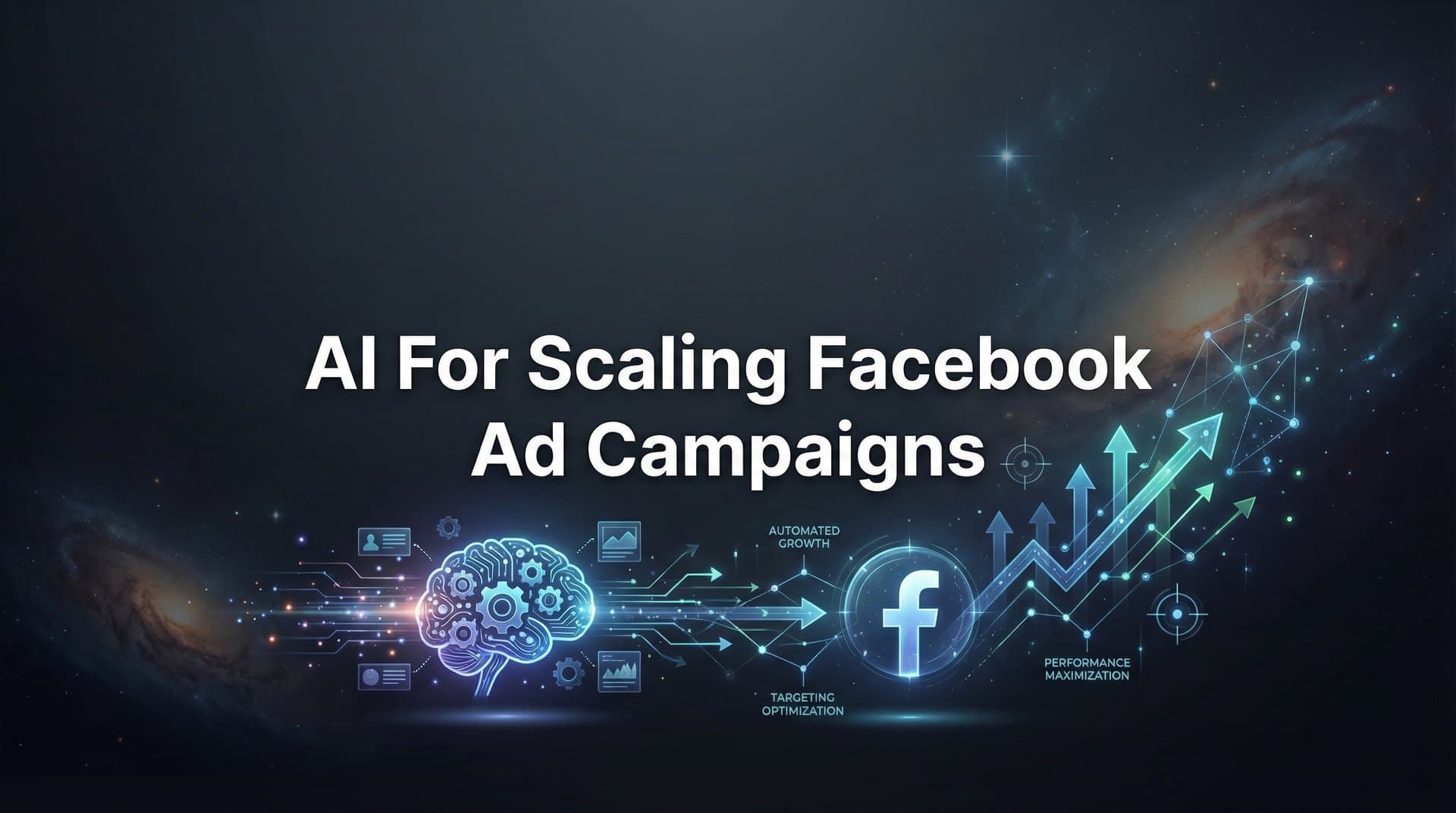
AI for scaling Facebook ad campaigns solves this bottleneck—not by replacing your strategic thinking, but by executing it at machine speed. While you focus on big-picture strategy and creative direction, AI handles the repetitive, data-intensive work that consumes most of your day. It analyzes performance patterns, builds campaign variations, optimizes budgets, and identifies winners faster than any human team could manage.
This guide breaks down exactly how AI transforms Facebook ad scaling from a labor-intensive grind into a systematic, data-driven process that compounds results over time.
The Scaling Ceiling: Why Manual Campaign Management Hits a Wall
Let's start with the math problem every advertiser eventually faces. You're running three ad creatives, testing five audiences, and promoting two offers. That's already 30 possible combinations to test properly. Add another creative variation? Now it's 40. Introduce a third offer? You're at 60 combinations.
This exponential complexity is why scaling hits a wall. Each new element you want to test multiplies the total workload. What feels manageable at small scale becomes impossible to execute manually when you're trying to grow aggressively. Understanding the difficulty scaling Facebook ad campaigns helps explain why so many advertisers plateau despite having winning creative.
The time bottleneck compounds the problem. Building a single campaign manually—selecting audiences, uploading creatives, writing copy variations, setting budgets—takes 20 to 30 minutes. Multiply that across dozens of campaigns, and you're spending entire days just on setup. That's before monitoring performance, making optimization decisions, or analyzing results.
Then there's the human limitation factor. Even the best media buyers experience decision fatigue after reviewing hundreds of data points. You miss patterns. You forget to pause underperforming ads. You accidentally duplicate the wrong campaign. Small errors accumulate into wasted budget and missed opportunities.
Here's where it gets worse: the optimal testing velocity for Facebook campaigns requires constant iteration. You should be launching new variations weekly, if not daily. You should be testing creative angles, audience expansions, and copy approaches simultaneously. The gap between Facebook automation vs manual campaigns becomes increasingly apparent as spend increases.
The result? Most advertisers plateau. They find a few winning campaigns and milk them until performance degrades. They avoid testing because it's too time-consuming. They scale conservatively because aggressive expansion feels unmanageable. The ceiling isn't their strategy—it's their execution capacity.
How AI Actually Works Inside Facebook Ad Campaigns
AI in advertising isn't magic—it's pattern recognition operating at scale. Think of it as a system that analyzes thousands of data points from your campaign history, identifies what actually drives results, and applies those insights automatically to future decisions.
The foundation is historical performance data. AI examines which creative elements (images, videos, headlines), audience characteristics (demographics, interests, behaviors), and campaign structures (budget allocations, placement strategies) have delivered the best results. It's not guessing—it's learning from what your actual customers respond to.
This is where predictive modeling enters the picture. Once AI understands your performance patterns, it can forecast which new combinations are most likely to succeed. If audiences interested in "digital marketing" and "entrepreneurship" convert well, AI can predict that "small business owners" might also respond positively. Implementing an effective AI targeting strategy for Facebook ads accelerates this discovery process significantly.
The feedback loop is what makes AI increasingly valuable over time. Every campaign you run generates new data. AI analyzes those results, refines its understanding of what works, and applies improved insights to the next round of campaigns. This creates a compounding effect—each iteration makes the system smarter.
But here's the critical distinction: AI handles execution, not strategy. You still define business goals, brand voice, and creative direction. You decide which products to promote and what offers to test. AI takes those strategic inputs and executes them at machine speed across hundreds of variations simultaneously.
Think of it this way: you're the architect designing the building. AI is the construction crew that can build it in a fraction of the time, following your blueprint exactly but working 24/7 without fatigue or oversight errors.
Modern AI systems also provide transparency into decision-making. When AI recommends pausing an ad or shifting budget, it explains why based on performance metrics. This isn't a black box—it's an automated assistant showing its work, allowing you to maintain strategic control while benefiting from execution speed. The best AI tools for Facebook ads balance automation with visibility into every optimization decision.
The practical impact? Tasks that consumed hours now happen in minutes. Campaign variations that would take days to build manually launch in under an hour. Optimization decisions that required constant monitoring now happen automatically in real-time. You're not working less—you're focusing your time on high-value strategic thinking instead of repetitive execution.
Five Core Functions AI Performs When Scaling Campaigns
Automated Creative Testing and Selection: AI analyzes which images, videos, and headlines drive the best performance, then systematically builds new variations around those winners. Instead of manually testing five creatives and picking the best one, AI can test 50 variations simultaneously, identify the top performers within days, and automatically generate new iterations based on winning elements. It recognizes patterns humans might miss—like certain color schemes performing better with specific audiences, or particular headline structures driving higher click-through rates.
Intelligent Audience Expansion: Once AI identifies your best-performing audience segments, it systematically explores adjacent targeting options. If "marketing managers at tech companies" converts well, AI tests related audiences like "digital marketing directors," "growth marketers," or "SaaS marketing professionals." It's not random exploration—it's strategic expansion based on behavioral similarities and demographic overlaps. This allows you to scale reach while maintaining conversion efficiency, discovering new customer segments you might never have considered manually.
Budget Allocation and Bid Optimization: AI monitors campaign performance in real-time and shifts spending toward winners without waiting for your weekly review. If one ad set is delivering $30 cost per acquisition while another is at $60, AI automatically reallocates budget to maximize efficiency. It adjusts bids based on competitive dynamics throughout the day, ensuring you're not overpaying during low-competition hours or getting outbid during peak times. This real-time optimization captures opportunities that manual management simply cannot match.
Bulk Campaign Creation: Instead of building campaigns one at a time, AI generates dozens of variations simultaneously based on proven templates. You provide the strategic inputs—target audiences, creative assets, budget parameters—and AI assembles complete campaigns in minutes. This bulk Facebook ad creation for media buyers transforms testing velocity. What used to take a full day of manual work now happens while you're reviewing the first cup of coffee.
Performance Prediction and Early Warning: AI doesn't just react to results—it predicts them. By analyzing early performance signals, AI can flag underperforming campaigns within hours instead of days, recommending pauses before significant budget waste accumulates. It also identifies campaigns showing strong early indicators, suggesting budget increases to capitalize on momentum. This predictive capability turns campaign management from reactive firefighting into proactive optimization.
These five functions work together as a system. AI identifies winning creatives, finds new audiences to show them to, allocates budget efficiently across variations, builds new campaigns at scale, and continuously monitors performance to catch issues early. Each function amplifies the others, creating a scaling engine that operates faster and more efficiently than any manual process could achieve.
From 10 Ads to 100: A Practical Scaling Framework
Scaling with AI follows a systematic progression. You don't flip a switch and suddenly run 100 campaigns. You build the foundation, establish patterns, and expand methodically as the system learns.
Start by having AI analyze your existing top performers. Which campaigns have delivered the best results over the past 60 to 90 days? What creative elements, audiences, and copy approaches consistently drive conversions? This analysis creates your baseline—the proven winners that AI will use as templates for expansion.
Next, implement the winners library concept. This is a cataloged collection of your best-performing creative assets, audience segments, headline formulas, and campaign structures. Every time you discover something that works, it goes into the library. AI can then pull from this library to remix and redeploy winning elements in new combinations. A headline that performed well with one audience gets tested with different creatives. An image that drove engagement gets paired with new copy variations.
The expansion phase happens in waves. First wave: AI creates variations of your top three campaigns, testing them across adjacent audiences. Second wave: successful variations from the first wave become new templates for further expansion. Third wave: AI begins testing creative combinations and audience segments that performed well independently but haven't been paired together yet. Learning how to scale Facebook ad campaigns systematically prevents the chaos that derails most scaling attempts.
This phased approach prevents chaos. You're not launching 100 untested campaigns simultaneously. You're methodically expanding based on validated performance, with each wave building on insights from the previous one. Testing velocity increases, but it's controlled growth backed by data.
The continuous learning loop is what makes this framework powerful over time. Every campaign provides data that improves future performance. AI learns which audience expansion strategies work best for your business. It discovers which creative patterns resonate with different customer segments. It refines budget allocation strategies based on actual conversion patterns rather than assumptions.
After three months of this systematic approach, you're not just running more campaigns—you're running smarter campaigns. The AI has developed a deep understanding of what works for your specific business, allowing it to make increasingly accurate predictions and optimizations. This is where the compounding effect becomes visible. Results improve not just because you're testing more, but because each test makes the entire system more intelligent.
Common Pitfalls When Implementing AI for Ad Scaling
The biggest mistake advertisers make is treating AI as a "set and forget" solution. They configure the system, launch campaigns, and assume everything will optimize itself without oversight. AI is powerful, but it needs strategic guidance and periodic human review to perform optimally.
Think of AI as an extremely capable assistant, not an autonomous replacement. You still need to review performance trends weekly, evaluate whether the AI's decisions align with business objectives, and adjust strategic parameters as market conditions change. The AI handles execution brilliantly, but it can't adapt to shifting business priorities or new product launches without your input.
Data quality is the second critical pitfall. AI learns from historical performance, which means it's only as good as the data it's trained on. If your tracking is inconsistent, your conversion data is incomplete, or you're feeding the system campaigns that never had proper testing volume, the AI will make flawed decisions based on flawed inputs. Garbage in, garbage out applies absolutely here.
Before implementing AI scaling, ensure your foundational tracking is solid. Verify that conversions are being recorded accurately. Confirm that your attribution window aligns with your actual customer journey. Clean up any campaigns with incomplete data or tracking errors. The investment in data hygiene pays massive dividends once AI starts learning from that clean data. Understanding how to structure Facebook ad campaigns properly creates the foundation AI needs to optimize effectively.
Brand consistency becomes challenging when AI generates variations at speed. Without proper guardrails, you might end up with ad copy that's technically effective but doesn't sound like your brand. Or creative combinations that perform well but don't align with your visual identity.
The solution is establishing clear brand guidelines within your AI system. Define approved messaging frameworks, specify visual standards, and set up approval workflows for new creative variations. Many AI platforms allow you to create templates that maintain brand consistency while still enabling systematic testing. You get the speed benefits without sacrificing brand integrity. An AI copywriter for Facebook ads works best when trained on your brand voice and messaging guidelines.
Measuring Success: KPIs That Matter for AI-Scaled Campaigns
Traditional campaign metrics still matter, but AI-scaled operations require additional measurement frameworks to evaluate true performance. Cost per acquisition remains important, but the real question is: how is CPA trending over time as the AI learns? You should see gradual improvement as the system accumulates data and refines its optimization strategies.
Time saved on campaign management is a critical but often overlooked metric. Track how many hours per week you spent on manual campaign building, monitoring, and optimization before AI implementation. Compare that to your current time investment. The difference represents capacity you can now redirect toward strategic initiatives—creative development, audience research, offer testing, or simply scaling Facebook ads without increasing team size.
Testing velocity measures how many campaign variations you can launch and evaluate in a given timeframe. Before AI, you might have tested 10 to 15 new campaigns per month. With AI, that number should increase to 50, 100, or more. This acceleration compounds over time—more tests mean faster learning, which enables better optimization, which improves results.
Evaluate AI performance through the lens of continuous improvement, not just immediate results. A campaign that performs moderately well in week one but provides valuable data for future optimization is more valuable than it appears on surface metrics. The AI is learning patterns that will improve all subsequent campaigns.
Establish clear baselines before implementing AI. Document your current performance across key metrics: average CPA, monthly testing volume, time spent on campaign management, conversion rates by audience segment. These baselines allow you to measure AI impact accurately rather than relying on subjective impressions.
Look for compounding indicators. Are your winning campaigns performing better over time as AI refines targeting? Is your cost per acquisition decreasing month-over-month even as you scale spend? Are new campaign launches becoming more successful because AI is applying learnings from previous iterations? These compounding effects are the real proof that scaling Facebook ads efficiently with AI is working.
Finally, track efficiency ratios. Calculate revenue per hour of human time invested in campaign management. Measure cost per acquisition relative to testing volume—are you maintaining or improving efficiency even as you dramatically increase the number of active campaigns? These ratios reveal whether AI is truly amplifying your effectiveness or just creating more activity without proportional results.
The Compounding Advantage of AI-Powered Scaling
AI for scaling Facebook ad campaigns isn't about removing human judgment from advertising—it's about amplifying your strategic thinking through systematic execution. The transformation is fundamental: instead of manually building individual ads and hoping they perform, you're orchestrating an intelligent system that tests, learns, and optimizes continuously.
The manual approach to campaign scaling hits an inevitable ceiling. There are only so many hours in a day, only so many campaigns you can monitor effectively, only so much testing you can execute before complexity overwhelms capacity. AI breaks through that ceiling by handling the execution layer—the repetitive, data-intensive tasks that consume most of your time but don't require strategic insight.
What makes this transformation powerful isn't just the immediate time savings or efficiency gains. It's the compounding effect of continuous learning. Each campaign makes the AI smarter. Each test refines its understanding of what works for your specific business. Each optimization improves future performance. Six months of AI-powered scaling doesn't just mean you've run more campaigns—it means you've built a system that gets measurably better at predicting winners, allocating budget, and identifying opportunities.
The advertisers who adopt AI scaling now are building a compounding advantage over those still stuck in manual workflows. While competitors spend hours duplicating campaigns and adjusting budgets, you're testing 10× more variations and capturing opportunities at machine speed. While they plateau at their execution capacity, you're scaling systematically based on data-driven insights that improve with every iteration.
This isn't a future trend—it's the current reality of competitive Facebook advertising. The question isn't whether to implement AI for scaling, but how quickly you can build the systems that amplify your strategic advantage.
Ready to transform your advertising strategy? Start Free Trial With AdStellar AI and be among the first to launch and scale your ad campaigns 10× faster with our intelligent platform that automatically builds and tests winning ads based on real performance data. Our seven specialized AI agents analyze your top performers, build complete campaigns in under 60 seconds, and continuously optimize based on what's actually driving results for your business.