Let's be honest about something most performance marketers already know: ROAS is the number that actually tells you whether your ad spend is working. Not impressions, not reach, not even click-through rate. Revenue divided by spend. Simple in theory, brutally difficult to consistently improve in practice.
The challenge is not a lack of effort. Most Meta advertisers are pulling reports, analyzing performance, pausing underperformers, and testing new creatives regularly. The problem is that the system they are trying to optimize is genuinely complex. Creatives, audiences, copy, placements, bid strategies, and timing all interact with each other simultaneously, and the combinations multiply fast. Keeping up manually is a structural problem, not a skill problem.
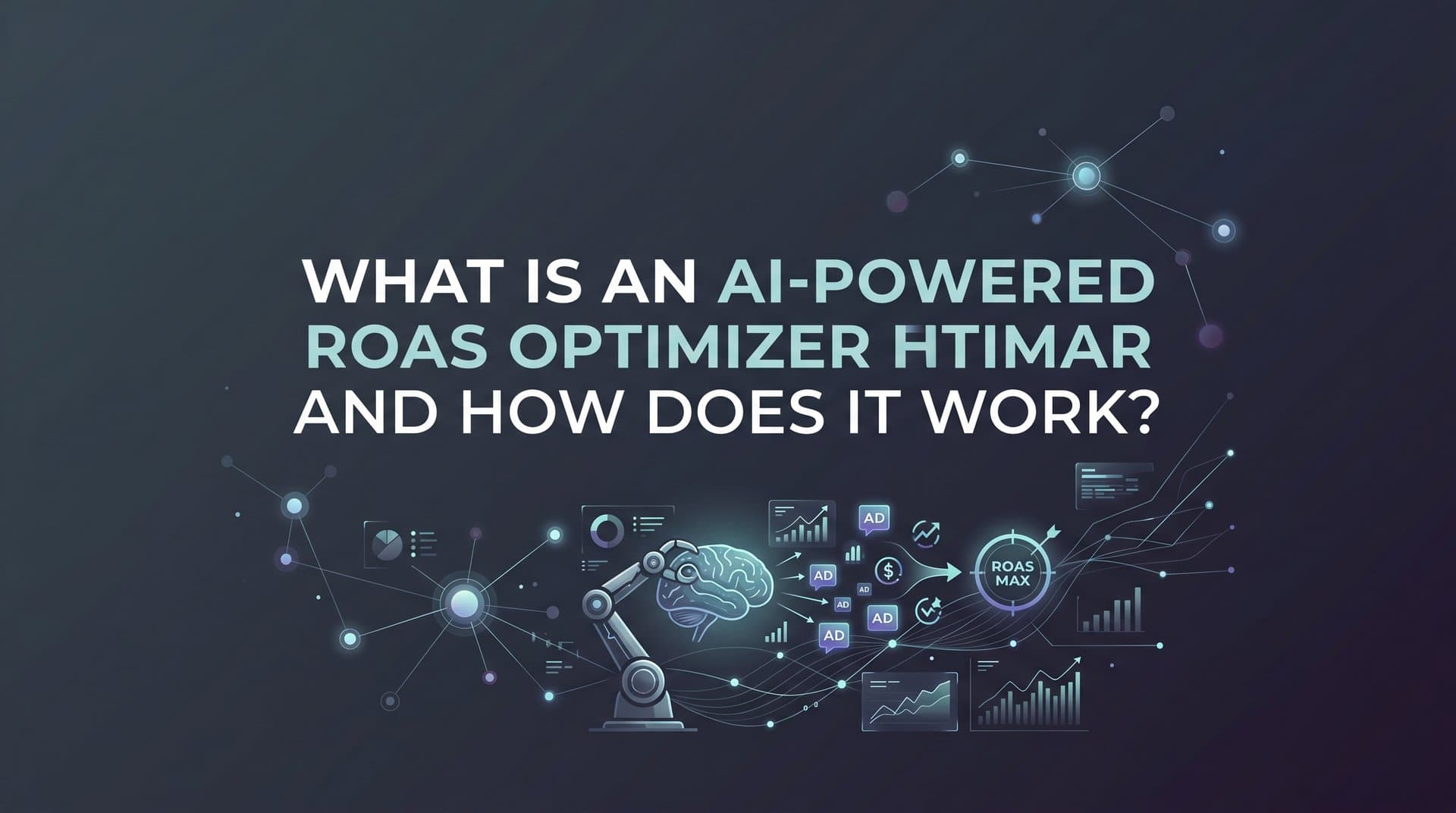
This is where AI-powered ROAS optimizers enter the picture. Rather than waiting for a human analyst to spot a pattern and act on it, these systems continuously ingest performance data, score every element against your goals, and surface what to scale, what to test, and what to retire. The shift from reactive reporting to proactive optimization is significant, and understanding how these tools actually work is the first step toward using them well.
This article breaks down exactly that: what ROAS optimization means, why manual approaches hit a ceiling, how AI systems handle the complexity, and what to look for when evaluating a platform.
Why ROAS Is the Metric That Actually Matters
ROAS is calculated simply: revenue generated divided by ad spend. If you spend $1,000 on a campaign and it generates $4,000 in revenue, your ROAS is 4x. That directness is what makes it the north star metric for paid advertising. Unlike impressions, which measure how many times your ad appeared, or clicks, which measure engagement without connecting to outcomes, ROAS ties your spend directly to business results.
This distinction matters more than it might seem. A campaign can have excellent click-through rates and still be unprofitable. An audience can be large and engaged and still convert at a rate that makes the economics unworkable. ROAS cuts through all of that noise and asks the only question that ultimately counts: for every dollar spent, how much revenue came back?
What makes ROAS particularly powerful as an optimization target is that it reflects the cumulative effect of every decision in your campaign. The creative you chose, the audience you targeted, the headline you wrote, the bid strategy you set, and the landing page you sent traffic to all feed into that final number. A weak ROAS is a signal that something in that chain is underperforming. A strong ROAS is a signal that the combination is working and potentially scalable.
That last point is important. ROAS is not just a diagnostic metric. It is a growth signal. When you find a combination that delivers strong ROAS consistently, increasing budget behind it should produce proportional returns. This is why advertisers who optimize for ROAS are not just trying to reduce waste. They are trying to identify the configurations worth scaling. Understanding how to calculate ROAS accurately is the foundation every optimization effort has to be built on.
The complication is that the variables driving ROAS interact in ways that are difficult to untangle manually. A creative that performs well with one audience might underperform with another. A headline that drives conversions on desktop might not translate to mobile. A bid strategy that works during one week might produce different results the next as auction competition shifts. Every variable affects the others, and there are often hundreds of possible combinations across even a moderately sized campaign. This combinatorial complexity is precisely where manual optimization runs into its limits.
The Ceiling Every Manual Optimizer Eventually Hits
Manual ROAS optimization follows a familiar workflow. You run campaigns, pull performance reports after a few days or a week, identify which ad sets or creatives are underperforming, pause or adjust them, and test something new. Repeat. It is a reasonable process, and skilled analysts can make meaningful improvements through it.
The problem is timing. By the time you have pulled a report, identified a pattern, decided on an action, and implemented the change, the conditions that created that pattern may have already shifted. Meta's auction environment responds to seasonal changes, competitor activity, platform algorithm updates, and shifts in audience behavior. A creative that was underperforming on Tuesday might have been a strong performer on Wednesday if the auction dynamics changed. A manual workflow will never catch that in real time.
There is also the issue of scope. Consider a campaign with five creatives, four audience segments, three headlines, and two placements. That is 120 possible combinations at the ad level alone, and that is a modest setup. Most active advertisers are running far more variables than that. A human analyst reviewing performance data can evaluate a handful of combinations at a time, but they cannot hold the full interaction matrix in view simultaneously. Decisions get made based on the most visible signals, which are not always the most accurate ones.
Budget allocation is another area where manual processes struggle. Shifting spend toward higher-performing ad sets and away from underperformers sounds straightforward, but doing it continuously and proportionally across a complex account requires constant attention. Most teams end up making these adjustments periodically rather than continuously, which means money keeps flowing to underperformers between review cycles. A dedicated Meta ads budget optimizer can handle this reallocation continuously without the gaps that manual review cycles create.
None of this reflects poorly on the marketers doing the work. It reflects the structural reality that human attention and processing capacity have limits that scale poorly with campaign complexity. As accounts grow and more variables are introduced, the gap between what a manual process can optimize and what is theoretically achievable widens. This is the ceiling that AI-powered optimization is designed to push through.
How an AI-Powered ROAS Optimizer Actually Works
At its core, an AI-powered ROAS optimizer is a system that ingests historical campaign data, identifies statistical patterns connecting input variables to output metrics, and uses those patterns to score, rank, and prioritize elements continuously. The inputs include creative type, visual style, headline, primary copy, audience segment, placement, and bid strategy. The outputs it is optimizing toward are metrics like ROAS, CPA, and CTR, weighted according to your specific goals.
The first step is pattern recognition at scale. Where a human analyst might review performance across dozens of variables, an AI system can process thousands of data points simultaneously, looking for correlations that would be invisible in a standard report. Which creative formats consistently produce lower CPAs with a particular audience segment? Which headlines drive higher conversion rates on mobile placements? Which audience and copy combinations generate the strongest ROAS when paired with video creatives? These are the kinds of multi-variable relationships that AI-powered ad optimization can surface reliably and quickly.
Once patterns are identified, the system assigns scores to each element based on how strongly it correlates with your target metrics. A creative that consistently outperforms benchmarks gets a high score. A headline that underperforms across multiple audience segments gets flagged for retirement. These scores are not static. They update continuously as new data comes in, which means the system is always working from the most current picture of what is performing.
This brings us to the continuous learning loop, which is arguably the most important structural advantage of AI optimization. Every campaign you run generates new data. In a manual workflow, that data gets reviewed periodically and informs future decisions in a general way. In an AI-powered system, that data feeds directly back into the model, sharpening its recommendations with each cycle. The more campaigns the system has seen, the more precise its scoring becomes. Over time, the recommendations get progressively better because the model is learning from a growing body of evidence specific to your account.
Transparency is a feature worth highlighting here, not just a nice-to-have. The most effective AI optimization systems do not just produce outputs. They explain their reasoning. Why was this creative ranked highly? What signal drove this audience recommendation? When marketers can see the rationale behind each decision, they can build on it, challenge it when context warrants, and develop genuine strategic understanding rather than simply following instructions from a black box.
From Creative to Campaign: Where AI Optimization Touches Everything
A common misconception about ROAS optimization is that it is primarily a bidding or budget allocation problem. Adjust the bids, shift the spend, and the numbers improve. In practice, creative quality is one of the most significant drivers of ad performance on Meta, and any optimization system that ignores the creative layer is working with a fundamental blind spot.
Meta's auction system rewards relevance and engagement. Ads that resonate with their target audience achieve better delivery at lower cost, which directly improves ROAS independent of any bid adjustment. This means the creative you are running is not just a visual element. It is an economic variable. A stronger creative can deliver the same result for less spend, or better results for the same spend. ROAS optimization that starts at the creative level has a much larger lever to pull than one that only touches bids and budgets. Platforms focused on reducing Meta ad costs consistently point to creative quality as the highest-impact variable available to advertisers.
AI-powered platforms address this by generating and testing ad creatives as part of the optimization workflow. Rather than waiting for a designer to produce new variants, the system can generate image ads, video ads, and UGC-style content from a product URL or brief, then immediately queue them for testing. This compresses the creative production timeline significantly and keeps fresh content moving into the rotation continuously, which matters on Meta where audience fatigue can set in quickly.
Bulk launching takes this further. Instead of testing one creative against another sequentially, an AI-driven system can generate hundreds of ad variations by mixing multiple creatives, headlines, audiences, and copy combinations, then launch them all simultaneously. The bulk ad creation approach compresses the timeline to identify winners dramatically. What might take weeks of sequential A/B testing can surface meaningful performance signals in days when multiple combinations run at the same time.
Once campaigns are running, leaderboard-style insights bring the optimization loop full circle. Rather than digging through ad manager reports to piece together what is working, a well-designed AI platform surfaces rankings for every element: which creatives are driving the best ROAS, which headlines are producing the lowest CPAs, which audiences are converting most efficiently, which landing pages are holding conversion rates. These rankings are tied to real metrics, not just engagement signals, so the picture you are looking at is grounded in actual revenue performance.
The result is a continuous cycle: generate creatives, launch combinations in bulk, surface winners through real-time ranking, and feed those winners back into the next campaign. Each cycle produces better inputs for the next one, and the system improves progressively rather than plateauing.
What to Look for in an AI-Powered ROAS Optimizer
Not all AI-powered optimization tools are built the same way, and the differences matter significantly when you are making decisions about where to invest your ad spend. Here are the qualities worth prioritizing when evaluating a platform.
Transparency and explainability: The tool should show you why it is making each recommendation, not just what the recommendation is. When an AI system surfaces a top-performing creative or recommends a particular audience, you should be able to see the reasoning behind that call. This is not just about trust. It is about building strategic knowledge. Marketers who understand why something works can apply that understanding across campaigns, while those who only receive outputs remain dependent on the tool without developing expertise.
Full-funnel coverage: Look for platforms that handle creative generation, campaign building, bulk launching, and performance analysis in one integrated system rather than requiring you to stitch together multiple disconnected tools. When creative production, campaign management, and performance reporting are separated across different platforms, data gets siloed, handoffs create delays, and the optimization loop breaks down. A single platform that covers the full workflow keeps everything connected and allows the learning loop to function properly. Reviewing the best ad automation platforms available can help you benchmark what full-funnel coverage actually looks like in practice.
Attribution integration: ROAS is only as reliable as the conversion data behind it. If your tracking is incomplete or inaccurate, the AI is optimizing toward a flawed signal, and the recommendations it produces will reflect that. Platforms that integrate with dedicated attribution tools provide a more reliable foundation for ROAS-based decisions. Before trusting any AI optimizer's recommendations, verify that the revenue signals it is working from are accurate. An optimizer built on bad attribution data will confidently point you in the wrong direction.
Goal-based benchmarking: Target ROAS varies by industry, product margin, and business model. A platform that applies a universal threshold misses the point. Look for systems that allow you to set your own performance benchmarks so the AI is scoring everything against your specific goals, not a generic standard that may not apply to your economics. Tools that incorporate performance analytics for ads with customizable goal-setting give you far more actionable signal than platforms locked to fixed benchmarks.
Continuous learning: The system should improve with use. Each campaign should generate data that feeds back into the model, making future recommendations sharper. A platform that treats each campaign as a standalone event rather than part of a learning sequence is not truly optimizing. It is just automating the same analysis you could do manually.
Putting It All Together
The shift that AI-powered ROAS optimization represents is not incremental. It is a change in the fundamental operating model for Meta advertising. Manual optimization is reactive by nature: you run campaigns, collect data, analyze it, and adjust. The cycle takes days or weeks, and the adjustments you make are always based on conditions that existed in the past.
AI-powered optimization makes the process continuous and proactive. The system is always analyzing, always scoring, always updating recommendations based on the most current data. It does not wait for a reporting cycle to identify an underperformer or a winner. It surfaces those signals in real time and connects them directly to the next action.
The biggest gains come when AI handles the full stack rather than just one slice of the workflow. An optimizer that only adjusts bids is working with a narrow lever. An optimizer that also generates creatives, builds complete campaigns, launches hundreds of variations in parallel, and ranks every element by real revenue metrics is working with the full picture. That is where the compounding advantage comes from: each part of the system feeds the others, and the learning loop improves every cycle.
AdStellar is built to cover exactly that workflow. From generating scroll-stopping image ads, video ads, and UGC-style creatives from a product URL, to building complete Meta campaigns with AI agents that analyze your historical data, to bulk launching hundreds of ad variations in minutes, to surfacing winners through real-time leaderboard rankings tied to ROAS and CPA. Every decision comes with a clear explanation so you understand the strategy, not just the output. And with integration for accurate attribution tracking, the signals driving every recommendation are grounded in real revenue data.
If you are ready to move beyond reactive reporting and put continuous AI-powered optimization to work on your Meta campaigns, Start Free Trial With AdStellar and see what a full-stack approach to ROAS optimization actually looks like in practice. The 7-day free trial gives you full access to explore every feature without commitment.