Running successful ad campaigns used to mean endless spreadsheets, manual bid adjustments at 2 AM, and constantly second-guessing which creative would perform best. For most marketing teams, this meant choosing between scaling their efforts or maintaining quality—rarely could they achieve both.
The advertising landscape has fundamentally changed. AI-powered automation now handles the repetitive, data-intensive work that once consumed entire teams. Platforms analyze millions of data points in real-time, identify winning patterns, and launch optimized campaigns faster than any human could manually coordinate.
But here's what most marketers miss: automation isn't just about saving time. The real transformation happens when AI uncovers performance patterns invisible to manual analysis, tests variations at impossible scale, and optimizes across channels simultaneously. Companies using automated ad platforms report 40-60% time savings while often seeing improved performance metrics across the board.
The question isn't whether to automate anymore—it's which platform delivers the specific benefits your business needs. Some excel at creative testing, others at audience discovery, and a few handle end-to-end campaign management. The right choice depends on your current bottlenecks, team structure, and growth goals.
Here are the leading platforms transforming how businesses approach paid advertising—and the measurable benefits that come with making the switch.
1. AdStellar AI
Best for: AI-powered campaign creation that automatically builds and launches ad variations based on your top-performing content
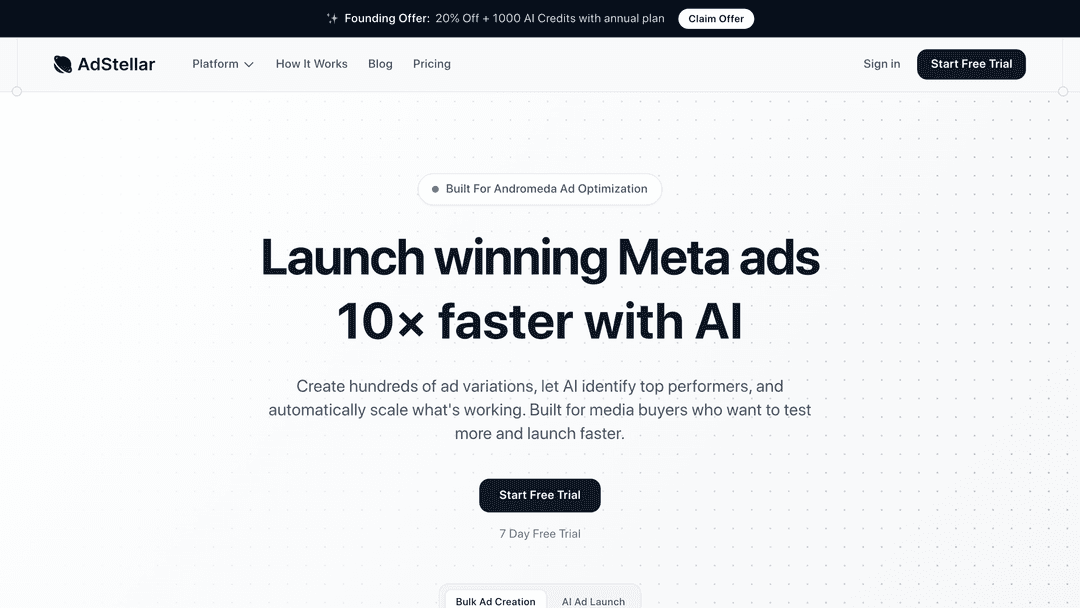
AdStellar AI represents the next evolution in advertising automation, where AI doesn't just optimize existing campaigns—it creates new ones.
Where This Tool Shines
Think of AdStellar as your campaign creation assistant that never sleeps. While you're focused on strategy and creative direction, the platform analyzes every piece of performance data from your advertising history—which headlines drove clicks, which images generated conversions, which audience segments responded best to specific messaging combinations.
Here's where it gets interesting: instead of just telling you what worked, AdStellar automatically builds new campaign variations using those winning elements. You provide the raw materials—your best creatives, proven headlines, successful audience segments—and the AI handles the assembly line work of creating, configuring, and launching new test campaigns.
The platform examines patterns most marketers miss. Maybe your product images perform exceptionally well with one audience segment when paired with benefit-focused headlines, but that same audience responds better to lifestyle imagery when the headline emphasizes social proof. Manual testing would take weeks to uncover these nuanced patterns. AdStellar identifies them continuously and generates campaigns optimized for each combination.
This approach particularly benefits teams running multiple campaigns across different audience segments, where manual variation testing becomes prohibitively time-consuming. Instead of spending hours in campaign managers clicking through setup screens, you're reviewing AI-generated campaigns ready for approval and launch.
The system continuously learns from new performance data, refining its campaign generation logic to produce increasingly effective variations over time. Early campaigns might test obvious combinations, but as the AI processes more results, it identifies sophisticated patterns about which creative elements work together and which audience characteristics predict response to specific messaging approaches.
Key Features & Capabilities
Performance-Based Campaign Generation: The platform doesn't create random variations—it analyzes your historical winners and automatically builds new campaigns using your best-performing elements. This means every generated campaign starts from proven success rather than guesswork.
Multi-Variant Testing at Scale: Launch dozens of campaign combinations simultaneously to identify winners faster than manual testing allows. The system handles budget distribution, monitors early performance signals, and scales promising variations while containing underperformers.
Audience Intelligence: AdStellar analyzes which audience segments respond best to specific creative and messaging combinations. This goes beyond basic demographic targeting to understand behavioral patterns and preference signals that predict campaign success.
Automated Launch Workflows: The platform handles campaign setup, targeting configuration, and initial bid strategies without manual intervention. You define the parameters and approval thresholds, then AdStellar executes the technical implementation work.
Continuous Optimization: Performance monitoring doesn't stop after launch. The system tracks results in real-time, adjusting campaigns based on incoming data and feeding insights back into future campaign generation.
2. Madgicx
Best for: Meta advertising automation with AI-powered audience targeting and creative insights
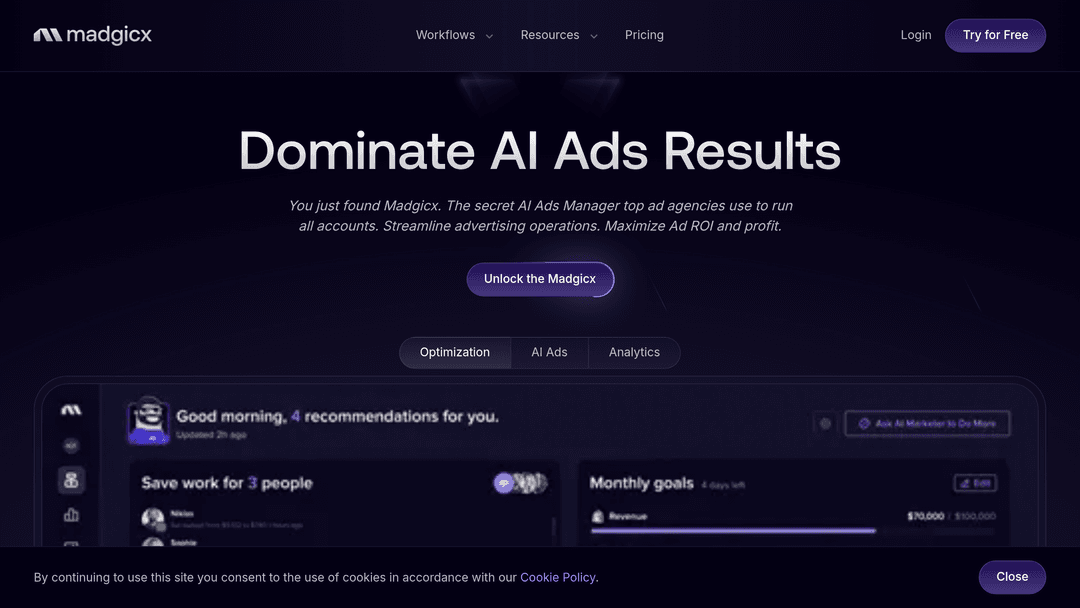
Madgicx specializes exclusively in Facebook and Instagram advertising automation, offering deep integration with Meta's advertising ecosystem that general-purpose platforms can't match.
Where This Tool Shines
Meta advertising presents a unique paradox: the platform offers incredibly granular targeting options, yet this abundance creates its own challenge. Most advertisers spread budgets across too many audience segments, dilute creative impact through inconsistent messaging, and miss the subtle signals indicating when campaigns need refreshing.
The platform's core strength lies in solving Meta advertising's biggest operational challenge: audience fragmentation combined with creative fatigue. While Meta's Ads Manager shows you what's happening, Madgicx tells you why it's happening and automatically fixes it.
Their AI Audience Launcher analyzes your existing campaign performance to identify behavioral patterns in converting users. Instead of manually creating lookalike audiences or testing interest combinations, the system automatically generates micro-segments that respond to specific creative approaches. Think of it as having an analyst who studies every conversion, identifies commonalities invisible to manual review, and creates targeted audience groups before you even realize the opportunity exists.
The Creative Intelligence feature addresses the other half of the equation. It doesn't just track which ads perform best—it analyzes which specific visual elements, color schemes, layout approaches, and messaging angles drive engagement within each audience segment. This granular insight helps you understand not just that an ad works, but exactly why it resonates with particular users.
Here's where it gets interesting: Madgicx's Autonomous Budget Optimizer doesn't wait for you to notice performance shifts. The system monitors campaigns continuously and reallocates spending toward winning combinations in real-time. When an audience segment starts responding better to a specific creative approach, budgets shift automatically while the opportunity window remains open.
For brands heavily invested in Meta advertising, this provides visibility into performance drivers that Meta's native tools don't surface clearly. You'll discover that certain color palettes outperform others for specific demographics, or that particular messaging angles resonate with audiences at different funnel stages—insights that would require weeks of manual analysis to uncover.
Key Features & Capabilities
AI Audience Launcher: Automatically creates and tests new audience segments based on performance patterns. The system identifies characteristics of your best converters and generates targeting combinations you wouldn't manually consider.
Creative Intelligence: Analyzes which creative elements—colors, layouts, messaging, calls-to-action—drive conversions within specific audience segments. This goes beyond simple A/B testing to understand the "why" behind performance.
Autonomous Budget Optimizer: Reallocates spending toward winning combinations in real-time without waiting for manual intervention.
3. Birch (formally Revealbot)
Best for: Cross-platform automation rules and bulk campaign management across Meta, Google, TikTok, and Snapchat
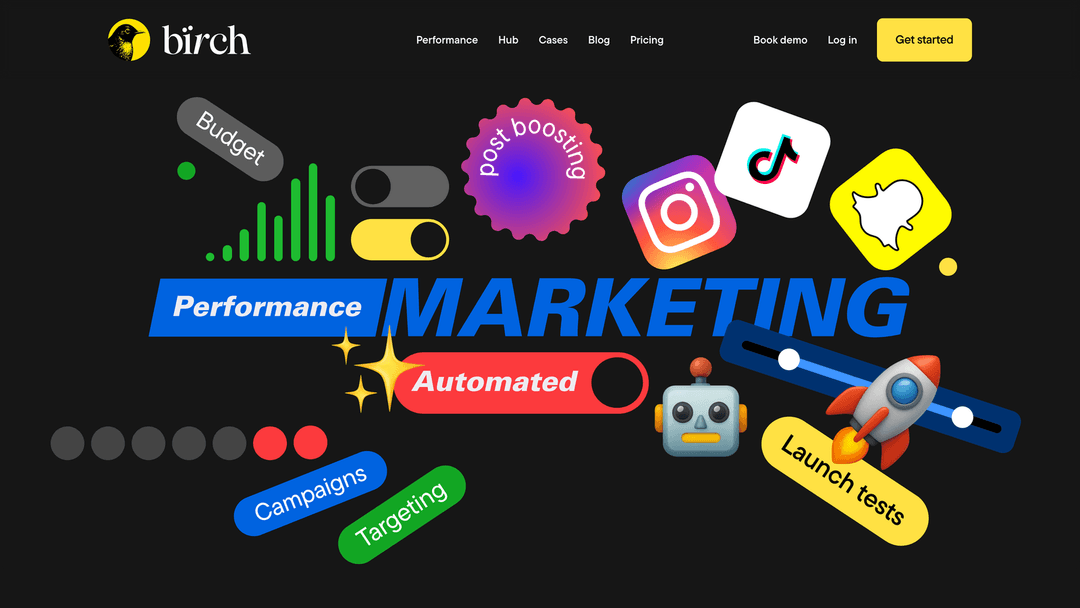
Revealbot provides powerful automation rules that work across multiple advertising platforms simultaneously.
Where This Tool Shines
Think of Revealbot as your campaign control center that speaks every advertising platform's language fluently. While most automation tools force you into their predetermined optimization strategies, Revealbot hands you the keys to build exactly the automation logic your business needs.
Revealbot's real power emerges when you're managing campaigns across multiple platforms and need consistent optimization logic everywhere. Picture this: you've identified that pausing ads when cost per acquisition exceeds $50 while simultaneously increasing budgets on campaigns performing below $30 CPA drives your best results. With manual management, executing this strategy across Meta, Google, TikTok, and Snapchat means logging into four different platforms, checking metrics individually, and making adjustments one by one.
Revealbot eliminates this fragmentation entirely. You create the rule once, and it executes across all platforms simultaneously from a unified dashboard.
The flexibility stands out immediately. Instead of choosing from pre-built templates that might not match your optimization approach, you construct custom conditional logic using any combination of metrics and actions. Want to pause ads when frequency exceeds 3.5 on Meta while cost per click rises above $2.50 on Google Ads? Build that exact rule. Need to increase budgets by 20% when return on ad spend hits 4x, but only between 9 AM and 5 PM on weekdays? Revealbot handles these complex scenarios without forcing you into simplified automation frameworks.
The bulk ad launcher capabilities transform how you manage large campaign portfolios. When you need to adjust bids across 200 ad sets or update targeting parameters for dozens of campaigns, Revealbot's bulk tools complete in minutes what would consume hours of manual work. This efficiency becomes critical during seasonal campaigns, product launches, or when responding to market changes requiring swift adjustments across your entire advertising operation.
Automated reporting keeps stakeholders informed without manual data compilation. Schedule performance reports delivered directly to Slack channels, email inboxes, or Google Sheets on whatever cadence your team needs. This continuous visibility means everyone stays aligned on campaign performance without pulling reports manually or waiting for weekly meetings.
Key Features & Capabilities
Custom Automation Rules: Create conditional logic for any combination of metrics and actions. The rule builder lets you stack multiple conditions with AND/OR logic, set specific time windows for execution, and define exactly what actions trigger when conditions are met. This flexibility means your automation matches your strategy rather than forcing strategy changes to fit platform limitations.
4. Smartly.io
Best for: Enterprise-level creative automation and campaign management across social platforms
Smartly.io transforms enterprise advertising operations through creative automation and campaign management designed specifically for large-scale advertisers.
Where This Tool Shines
When your advertising operation reaches a certain scale, creative production becomes the bottleneck that limits everything else. You've got the budget, the audience data, and the optimization strategy—but manually creating hundreds of ad variations for different products, markets, and audience segments simply isn't feasible.
Smartly.io's Creative Studio solves a problem most automation platforms ignore: the creative production bottleneck. Their dynamic template system automatically generates hundreds—even thousands—of ad variations from your product feeds without requiring manual creation of each individual ad.
Picture this: You're an e-commerce brand with 500 products. Traditional advertising means either manually creating ads for your top sellers (leaving most inventory unadvertised) or investing massive creative resources to cover your catalog. Smartly.io's templates pull product images, prices, descriptions, and specifications directly from your feed, generating unique ads for each item automatically.
The platform's predictive budget allocation sets it apart from reactive optimization tools. Instead of waiting for campaigns to underperform before shifting budgets, Smartly.io's machine learning forecasts performance trends and reallocates spending proactively. This forward-looking approach prevents wasted spend rather than just responding to it after the fact.
For enterprise teams managing campaigns across multiple brands, markets, or product lines, Smartly.io provides the workflow management infrastructure that makes coordinated execution possible. Campaign approval processes, team collaboration tools, and access controls ensure brand consistency while enabling the speed that automated systems provide.
The platform particularly excels when creative production volume becomes your primary constraint on testing velocity and campaign scale. If you're limiting your advertising reach because you can't produce enough creative variations, Smartly.io fundamentally changes what's possible.
Key Features & Capabilities
Dynamic Creative Templates: Generate thousands of ad variations automatically from product catalogs. Single templates adapt to different products, pulling relevant data from feeds to create unique ads without manual production work.
Predictive Budget Allocation: Machine learning forecasts campaign performance and shifts spending before underperformance occurs. This proactive approach prevents wasted budget rather than just reacting to poor results.
Cross-Channel Campaign Management: Unified control across Meta, Snapchat, Pinterest, and TikTok from a single interface. Maintain consistent optimization logic while respecting platform-specific best practices.
Workflow & Approval Systems: Enterprise-grade collaboration tools for large marketing teams.
5. AdEspresso by Hootsuite
Best for: Simplified Meta and Google advertising with built-in split testing and optimization
AdEspresso makes advertising automation accessible for small to mid-sized businesses without extensive technical expertise.
Where This Tool Shines
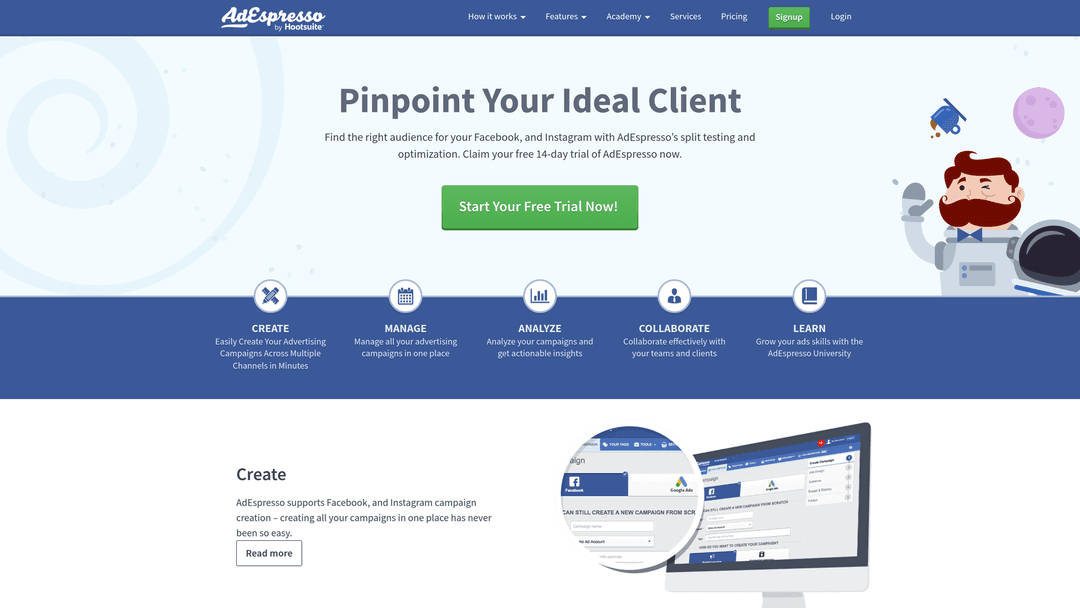
AdEspresso removes the complexity from split testing and campaign optimization. The platform's grid-based testing interface lets marketers create dozens of ad variations by selecting different images, headlines, and descriptions—then automatically distributes budget to find winning combinations.
Think of it like a visual recipe builder for ads. You select your ingredients (images, headlines, body copy), and AdEspresso automatically creates every possible combination. Instead of manually building 20 separate ads to test different elements, you set up one grid and the platform handles the rest.
Unlike enterprise platforms requiring significant setup, AdEspresso works out of the box with sensible defaults that suit most small business needs. The automated optimization rules handle common scenarios like pausing underperforming ads or increasing budgets on winners without requiring custom rule creation.
For teams new to advertising automation or lacking dedicated technical resources, AdEspresso provides immediate value without overwhelming complexity. The learning curve is gentle—most marketers start seeing results within their first week rather than spending months mastering the platform.
Key Features & Capabilities
Grid-Based Split Testing: The visual interface lets you create multiple ad variations simultaneously by selecting different combinations of creative elements. This approach makes systematic testing accessible to marketers who find traditional A/B testing tools confusing or time-consuming.
Automatic Optimization: Pre-built rules pause poor performers and scale winning ads without manual intervention. The platform monitors performance continuously and makes adjustments based on your defined success metrics, whether that's conversions, clicks, or engagement.
Unified Dashboard: Manage Meta and Google Ads campaigns from a single interface rather than switching between platforms. This consolidated view makes it easier to spot patterns and compare performance across advertising channels.
Performance Analytics: Clear reporting shows which variations drive results, breaking down performance by individual elements. You'll see exactly which headlines, images, or audience combinations work best, making future campaign planning more strategic.
Campaign Templates: Pre-configured setups for common advertising objectives help you launch campaigns faster. Whether you're driving website traffic, generating leads, or promoting products, templates provide proven starting points.
Best For / Ideal Users
Small to mid-sized businesses, solo marketers, and teams new to advertising automation benefit most. Companies running modest advertising budgets who need results without complexity find AdEspresso's approach ideal.
6. Acquisio
Best for: AI-powered bid and budget management across search and social platforms
Acquisio focuses on intelligent bid optimization and budget allocation using machine learning algorithms.
Where This Tool Shines
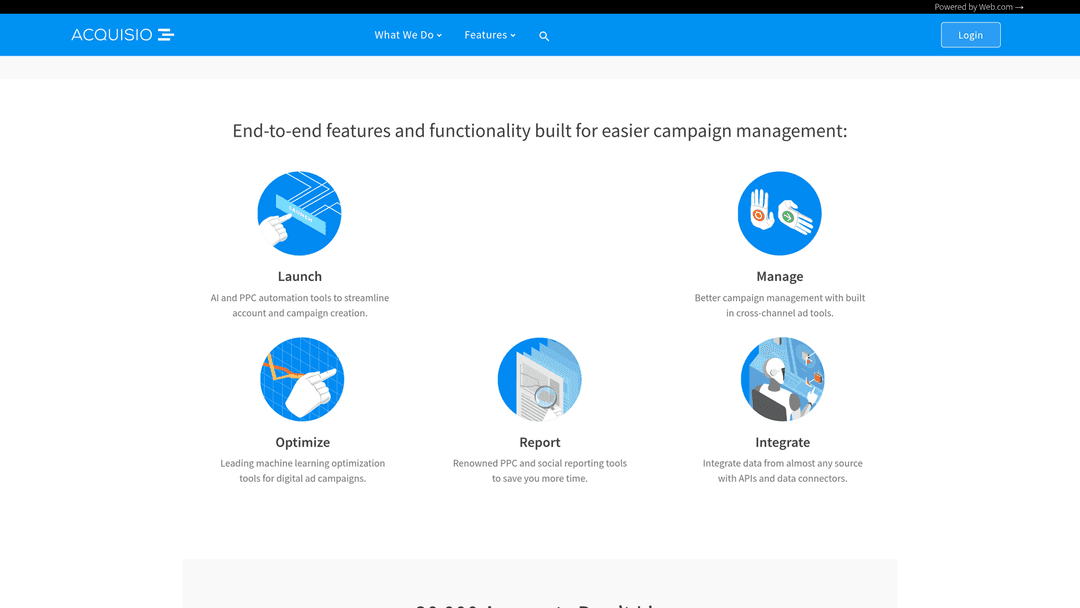
Acquisio's machine learning algorithms excel at the continuous micro-adjustments that maximize campaign efficiency. Think of it like having a tireless analyst monitoring every auction, every hour of every day, making bid adjustments based on conversion probability rather than simple performance thresholds.
The platform's Bid and Budget Management tool analyzes historical performance data to predict optimal bid levels and budget allocations across campaigns. Rather than applying simple rules like "increase bids by 10% when ROAS exceeds target," Acquisio's AI considers seasonal patterns, day-of-week effects, and competitive dynamics when making optimization decisions.
Here's where it gets interesting: the system doesn't just react to what happened yesterday. It forecasts what's likely to happen tomorrow based on historical patterns and current market conditions. This predictive approach means budgets shift toward high-opportunity moments before your competitors recognize the same patterns.
The platform particularly helps advertisers managing campaigns across both search and social platforms, where manual bid management becomes impractical at scale. Trying to optimize Google Ads, Microsoft Advertising, and Meta campaigns simultaneously while accounting for cross-platform performance patterns? That's exactly the scenario where Acquisio delivers measurable value.
For agencies managing multiple client accounts, Acquisio's portfolio-level optimization ensures budget efficiency across entire client rosters rather than optimizing each account in isolation. The system identifies when shifting budget from Client A's underperforming campaign to Client B's high-opportunity campaign improves overall portfolio performance—a level of coordination impossible with manual management.
Key Features & Capabilities
Machine Learning Bid Optimization: AI-powered bid adjustments based on conversion probability rather than simple performance rules. The system learns which bid levels maximize conversions at your target cost, adjusting continuously as market conditions change.
Cross-Platform Budget Allocation: Automatically distributes spending across Google, Meta, and Microsoft Ads based on where each dollar generates the best return. This goes beyond individual campaign optimization to coordinate spending across your entire advertising ecosystem.
Performance Forecasting: Predicts campaign outcomes based on historical patterns and market conditions. This forward-looking approach enables proactive optimization rather than reactive adjustments after performance declines.
Anomaly Detection: Alerts when performance deviates from expected patterns, catching issues before they significantly impact results. The system distinguishes between normal performance fluctuations and genuine problems requiring attention.
Multi-Account Management: Agency tools for managing multiple client portfolios with portfolio-level optimization.
7. Trapica
Best for: AI-powered audience targeting and creative optimization using deep learning
Trapica uses deep learning algorithms to uncover patterns that manual analysis typically misses.
Where This Tool Shines
Most advertising platforms tell you what happened. Trapica tells you why it happened—and what to do next.
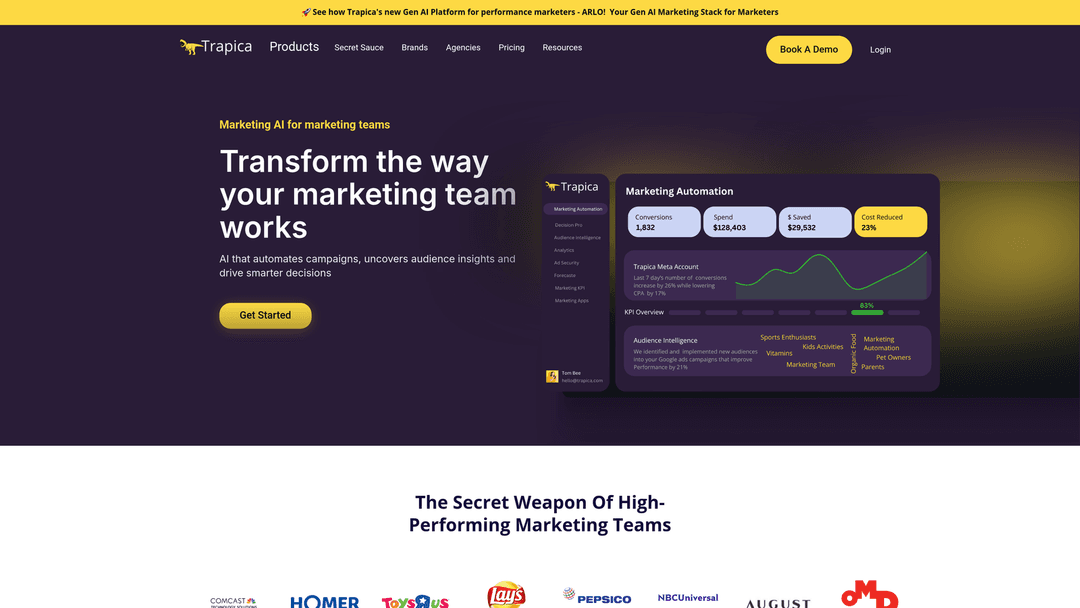
The platform's deep learning algorithms analyze campaign performance data to uncover patterns that manual analysis typically misses. While you might notice that certain ads perform better, Trapica identifies the specific audience characteristics and creative elements driving those results, then automatically creates new campaigns optimizing for those factors.
Trapica's Automated Targeting feature represents a fundamental shift from manual audience building. The system analyzes your converting users to identify shared characteristics—not just demographics, but behavioral patterns, interest combinations, and engagement signals that indicate purchase intent.
Here's where it gets interesting: instead of creating broad lookalike audiences, Trapica generates micro-segments based on these patterns. A fashion retailer might discover that users who engage with sustainable fashion content and follow specific lifestyle influencers convert at significantly higher rates than general fashion audiences. The platform automatically creates campaigns targeting these precise segments.
The Creative AI component evaluates which visual elements, messaging approaches, and calls-to-action resonate with different audience segments. Unlike simple A/B testing, the system identifies patterns across multiple creative dimensions simultaneously. It might discover that minimalist product photography outperforms lifestyle images for budget-conscious segments, while aspirational imagery drives conversions among premium buyers.
What sets Trapica apart from rule-based automation is its ability to identify non-obvious correlations. Manual analysis might reveal that ads with blue backgrounds perform well. Trapica discovers that blue backgrounds specifically drive conversions among mobile users aged 25-34 who engage with content during evening hours—then automatically pairs that creative with precisely targeted audiences.
The platform particularly benefits advertisers experiencing audience saturation or creative fatigue. When traditional targeting approaches yield diminishing returns, Trapica's AI discovers fresh audience segments and creative combinations that manual testing would take months to identify.
Key Features & Capabilities
AI Audience Discovery: The platform continuously analyzes converting users to identify new audience segments sharing performance-driving characteristics. This automated discovery expands targeting beyond manual audience building limitations.
Creative Intelligence: Deep learning algorithms evaluate which visual elements, messaging styles, and creative formats drive engagement across different audience segments. The system automatically pairs creative with audiences for maximum impact.
Automated Campaign Creation: Based on performance patterns, Trapica generates new campaigns combining high-performing audiences with optimized creative. This automation accelerates testing velocity beyond manual campaign creation capacity.
Real-Time Optimization: The platform continuously adjusts targeting parameters and creative selection based on incoming performance data.
8. Optmyzr
Best for: Advanced PPC automation and optimization for Google Ads and Microsoft Advertising
Optmyzr provides comprehensive PPC management tools with powerful automation capabilities for search advertising.
Where This Tool Shines
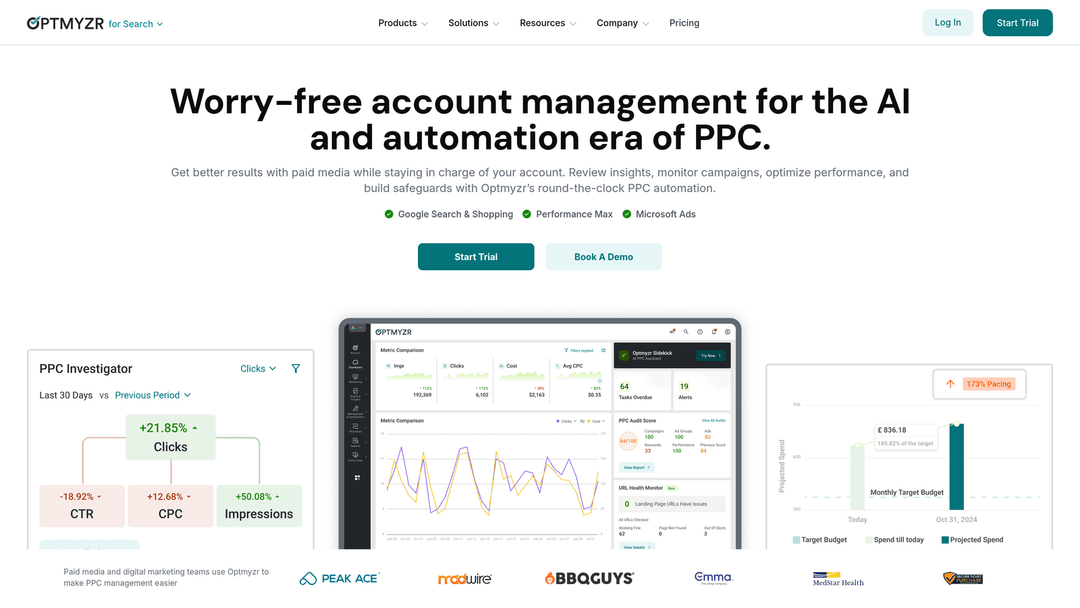
Optmyzr excels at the detailed optimization work that separates good PPC campaigns from great ones. The platform's One-Click Optimizations analyze account structure, keyword performance, ad copy effectiveness, and bid strategies, then present actionable recommendations that implement with a single click.
Think of it as having a PPC specialist constantly reviewing your campaigns, but instead of waiting for weekly check-ins, you get instant recommendations based on real-time data analysis. The platform examines thousands of data points across your account—quality scores, search term reports, ad group structures, negative keyword opportunities—and surfaces the optimizations that will move the needle.
Their Shopping Campaign optimization tools help e-commerce advertisers manage product feeds and bidding strategies across thousands of SKUs. When you're advertising hundreds or thousands of products, manual bid management becomes impossible. Optmyzr's automation handles the complexity, adjusting bids based on product performance, inventory levels, and profit margins.
The Rule Engine provides sophisticated automation for experienced PPC managers who understand exactly how they want campaigns optimized. Unlike platforms that force you into pre-built templates, Optmyzr lets you create complex conditional logic matching your specific strategy. Want to increase bids on high-converting keywords during business hours while decreasing them overnight? The Rule Engine handles these nuanced optimization strategies automatically.
For agencies and in-house teams managing substantial Google Ads and Microsoft Advertising accounts, Optmyzr surfaces optimization opportunities that manual analysis typically misses while dramatically reducing execution time. The platform particularly shines when managing complex account structures with numerous campaigns, ad groups, and keywords where systematic optimization becomes humanly impractical.
Key Features & Capabilities
One-Click Optimizations: Pre-analyzed recommendations for account improvements that implement instantly. The platform identifies opportunities like adding negative keywords, adjusting bids on underperforming terms, or restructuring ad groups for better quality scores—then applies changes with a single click.
Shopping Campaign Tools: Specialized features for e-commerce product feed management. Optmyzr helps optimize product titles, manage bidding strategies across product groups, and identify inventory issues affecting campaign performance. The platform makes catalog-scale advertising manageable without proportional manual effort.
Advanced Rule Engine: Create complex automation workflows for sophisticated optimization strategies. Build conditional logic that considers multiple metrics, time-based factors, and performance thresholds. The flexibility allows experienced PPC managers to automate their proven strategies rather than adapting to platform limitations.
Making the Right Choice
The right automation platform depends entirely on where your campaigns currently break down. If you're drowning in manual campaign creation and variation testing, AdStellar's AI-powered generation approach eliminates that bottleneck entirely. For teams heavily invested in Meta advertising, Madgicx's audience intelligence and creative insights provide visibility that Meta's native tools simply don't offer. And if you're managing campaigns across multiple platforms with established optimization strategies, Revealbot's flexible rule engine gives you the control you need without platform-switching headaches.
Here's the practical reality: most teams start with one platform addressing their biggest pain point, then expand automation as they see results. E-commerce brands typically benefit most from creative automation tools like Smartly.io or AdEspresso's split testing. Agencies managing multiple clients find cross-platform solutions like Acquisio or Optmyzr deliver the efficiency gains that directly impact profitability. And businesses ready to let AI handle end-to-end campaign management discover that platforms like AdStellar or Trapica unlock testing velocity impossible with manual workflows.
The transformation isn't just about time savings—though reclaiming 40-60% of your week matters. It's about finally testing at the scale your campaigns deserve, discovering audience segments you'd never find manually, and optimizing across dimensions that human analysis simply can't process effectively.
Start by identifying your primary bottleneck: Is it campaign creation? Audience targeting? Bid management? Creative testing? Match that constraint to the platform built specifically to solve it. Most offer free trials or demos—use them to validate the fit before committing. The advertising landscape rewards those who automate intelligently, and the platforms above represent your fastest path to competitive advantage in 2025.