Every digital marketer knows the sinking feeling: you've launched 47 ad variations across your Meta campaigns, and now you're drowning in performance data. Which creatives are actually driving conversions? Which ones are bleeding budget? By the time you've exported the spreadsheet, filtered the columns, and highlighted the winners, your worst performers have already burned through another $500.
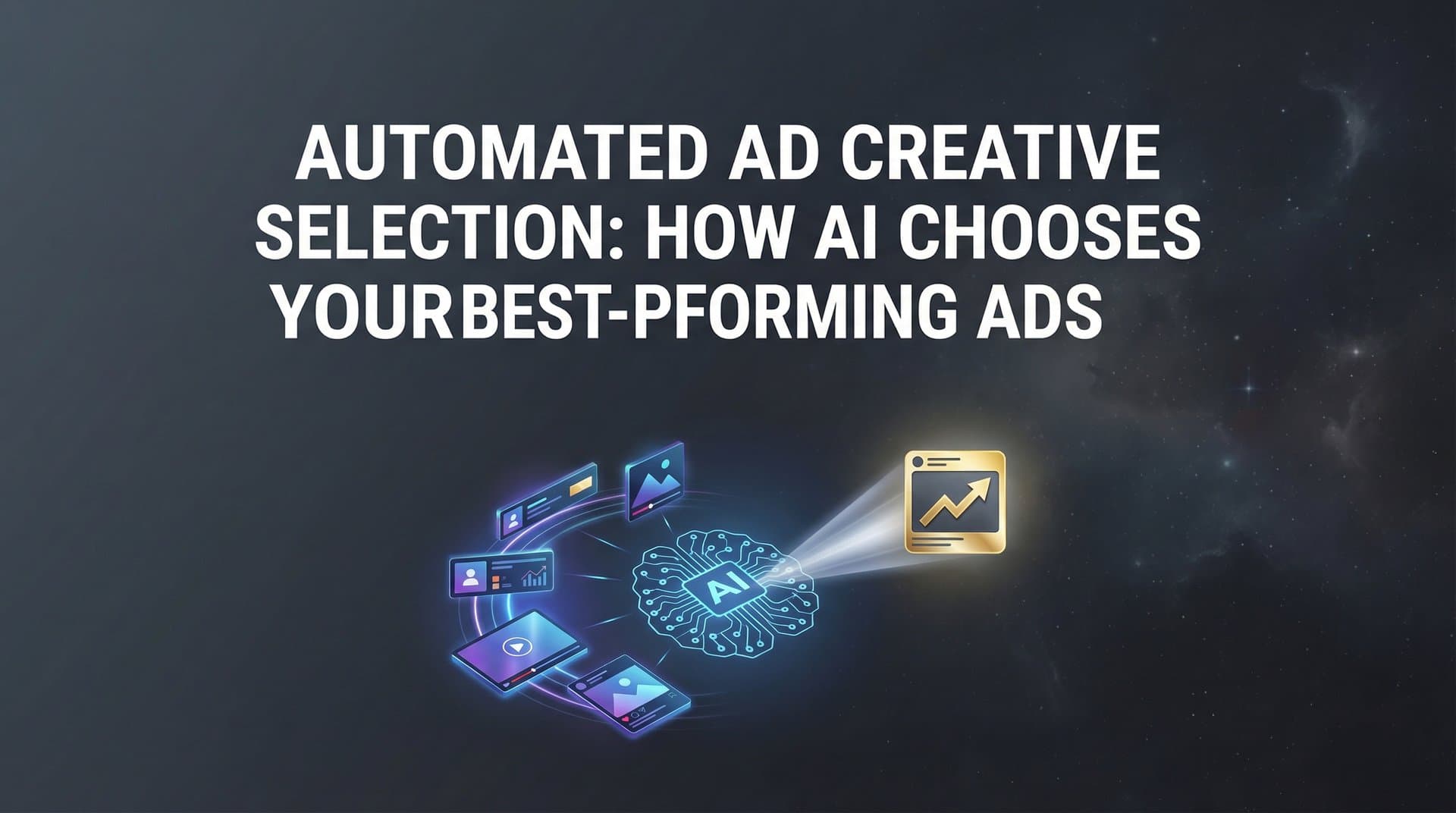
Automated ad creative selection changes this entire equation. Instead of manually analyzing performance metrics and making gut-call decisions about which ads to scale or pause, AI systems continuously evaluate your creative variations against real-time performance data—identifying winners within hours and reallocating budget before underperformers drain your resources.
This isn't about replacing human creativity or strategic thinking. It's about leveraging machine learning to handle the relentless, data-intensive work of performance analysis so you can focus on what actually moves the needle: developing better creative concepts, refining your targeting strategy, and scaling what works.
The Science Behind AI-Powered Creative Analysis
At its core, automated creative selection uses machine learning algorithms to evaluate ad performance across multiple dimensions simultaneously. While you might manually check conversion rate and cost per acquisition, AI systems analyze dozens of performance signals at once—click-through rate, engagement quality, video completion percentage, conversion value, return on ad spend, and more—identifying patterns that would be impossible to spot through manual analysis.
Here's what makes this approach fundamentally different from traditional analysis: pattern recognition at scale. Machine learning models can identify which specific visual elements, copy styles, headline formats, and call-to-action phrases correlate with better performance for particular audience segments. An AI might discover that carousel ads with product close-ups outperform lifestyle imagery for your retargeting audiences, while the reverse holds true for cold traffic—a nuanced insight that would require weeks of manual A/B testing to uncover.
The speed advantage is equally transformative. Traditional creative analysis happens in batches—you might review campaign performance weekly or even monthly, making decisions based on aggregated data from extended time periods. Automated systems process performance signals continuously, detecting trends within hours rather than days.
This real-time responsiveness matters because ad performance is dynamic. A creative that performed brilliantly last week might experience fatigue as your audience sees it repeatedly. An underperformer in its first 24 hours might be gathering momentum with a specific demographic. Automated selection catches these shifts as they happen, adjusting budget optimization for Meta ads before performance trends become costly problems.
The algorithms themselves typically employ supervised learning approaches, trained on historical performance data to understand what "good" looks like for your specific business objectives. They learn from every campaign you run, building increasingly sophisticated models of what drives results in your unique context—your industry, your audience, your creative style, your conversion funnel.
But sophisticated doesn't mean opaque. Modern automated selection systems provide transparency into their decision-making process, showing you which metrics influenced each selection decision and why certain creatives were promoted or demoted. This transparency allows you to validate the AI's choices against your strategic understanding and adjust selection criteria when needed.
From Data to Decisions: The Automated Selection Process
Understanding how automated systems transform raw performance data into actionable creative decisions demystifies the entire process. It's not magic—it's a methodical workflow that happens continuously in the background while you focus on strategy.
The process begins with data ingestion. The system continuously pulls performance metrics from your Meta ad account through direct API integration, capturing impression counts, click data, conversion events, and cost information for every active creative variation. This happens in real-time, ensuring the selection engine always works with current data rather than yesterday's snapshot.
Next comes normalization and scoring. Because different creatives may have vastly different exposure levels—some with thousands of impressions, others just launching—the system applies statistical methods to create fair comparisons. A creative with 100 impressions and 5 conversions isn't necessarily better than one with 10,000 impressions and 400 conversions, even though the first has a higher conversion rate. The scoring model accounts for sample size and statistical confidence.
This is where statistical significance and confidence intervals become critical. Premature decisions based on insufficient data are one of the biggest pitfalls in creative testing. Automated systems typically require a minimum threshold of impressions or conversions before making definitive judgments about creative performance. This prevents the system from pausing a potentially strong creative that simply hasn't had enough exposure to prove itself.
The scoring phase applies your configured performance criteria. If you've prioritized return on ad spend, the algorithm weights ROAS heavily in its evaluation. If you're running an awareness campaign, engagement metrics and cost per thousand impressions might take precedence. This configurability ensures the selection process aligns with your specific campaign objectives rather than applying a one-size-fits-all approach.
Once scores are calculated, the ranking and selection phase begins. Creatives are sorted by their composite performance scores, and the system makes allocation decisions: increase budget for top performers, maintain current spending for middle-tier creatives that need more data, and reduce or pause budget for clear underperformers that have sufficient data to confirm poor performance.
The final piece is the feedback loop. The best automated systems don't just select winners—they analyze what made those winners successful and feed those insights back into future creative generation. If video ads consistently outperform static images for your audience, that pattern informs future creative recommendations. If headlines featuring specific benefit statements drive higher conversion rates, that linguistic pattern gets incorporated into automated ad copy generation suggestions.
This continuous improvement cycle transforms creative selection from a one-time decision into an evolving optimization engine that gets smarter with every campaign you run.
Key Metrics That Drive Creative Selection
Not all performance metrics carry equal weight in creative selection, and understanding which signals matter most for your objectives is essential for configuring automated systems effectively.
Primary Performance Indicators: These are the metrics that directly reflect your campaign's bottom-line success. Cost per acquisition tells you exactly how much you're paying to achieve your conversion goal, whether that's a purchase, lead submission, or app install. Return on ad spend provides the revenue perspective—for every dollar spent on this creative, how many dollars came back? Conversion value captures the total value generated, crucial when different conversions have different worth to your business.
For most performance-focused campaigns, these primary metrics should dominate your selection criteria. A creative with a $25 CPA is objectively better than one with a $50 CPA if all other factors are equal. A creative generating 4:1 ROAS deserves more budget than one returning 2:1.
Secondary Signals: These metrics don't directly measure conversions but provide valuable context about creative quality and audience engagement. Thumb-stop rate—the percentage of users who pause scrolling when they see your ad—indicates whether your creative captures attention in a crowded feed. Video completion rate shows whether viewers find your content compelling enough to watch through to the end. Engagement quality scores consider not just quantity of interactions but their nature—meaningful comments and shares versus generic emoji reactions.
Secondary signals become particularly important in two scenarios: when you're running awareness campaigns where engagement matters more than immediate conversions, and when you're evaluating new creatives that haven't yet generated sufficient conversion data. A creative with strong engagement signals but limited conversion history might deserve continued testing rather than immediate dismissal.
Metric Weighting and Campaign Objectives: The art of automated creative selection lies in configuring how different metrics combine to produce overall performance scores. A lead generation campaign might weight cost per lead at 60%, lead quality indicators at 30%, and engagement metrics at 10%. An e-commerce campaign focused on revenue might prioritize ROAS at 70%, with conversion rate and average order value splitting the remaining weight.
This weighting flexibility ensures the automated system optimizes for what actually matters to your business rather than chasing vanity metrics or applying generic "good performance" definitions that don't align with your goals.
Manual vs. Automated Selection: A Practical Comparison
The difference between manual and automated creative selection isn't just about speed—it's about fundamentally different approaches to campaign management, each with distinct limitations and capabilities.
Time Investment: Manual selection typically happens in dedicated analysis sessions. You export performance data, build comparison spreadsheets, calculate derived metrics, identify patterns, and make adjustment decisions. For a campaign with 20 creative variations, this might consume 2-3 hours weekly. For agencies managing multiple clients with dozens of campaigns each, this analysis work can dominate entire workdays. Automated selection handles this continuously in the background, making micro-adjustments based on hourly performance updates rather than weekly reviews.
Bias Elimination: Human decision-making inevitably carries cognitive biases that can skew creative selection. Recency bias makes us overweight recent performance while discounting historical trends. Confirmation bias leads us to favor creatives that align with our preconceptions about what "should" work. The sunk cost fallacy keeps us running underperforming creatives because we invested significant effort in creating them. Automated systems evaluate creatives purely on performance data, immune to these psychological influences.
This doesn't mean human judgment has no place—strategic decisions about brand positioning, messaging direction, and creative concepts absolutely require human insight. But the tactical decision of "which of these 30 variations should get more budget today?" benefits from bias-free, data-driven automation.
Scale Limitations: Manual analysis works reasonably well when you're testing 5-10 creative variations. You can mentally track which ones perform best, spot obvious winners and losers, and make informed decisions. But modern Meta advertising often involves testing dozens of variations simultaneously—different images, videos, headlines, body copy, and call-to-action combinations. At this scale, manual analysis becomes impractical. You can't maintain mental models of 50 different creatives' performance trajectories across multiple audience segments and time periods.
Automated selection scales effortlessly. Whether you're testing 10 variations or 100, the system applies the same rigorous analysis to each, ensuring every creative gets fair evaluation based on its actual performance rather than which ones you happened to notice during your last manual review.
Implementing Automated Creative Selection in Your Workflow
Moving from manual to automated creative selection requires proper groundwork. Rushing into automation without the right foundation leads to unreliable results and misplaced trust in the system's recommendations.
Prerequisites: Start with tracking infrastructure. Automated selection is only as good as the data it analyzes, which means your conversion tracking must be accurate and comprehensive. Install the Meta Pixel correctly, configure conversion events properly, and validate that your attribution is capturing the actions that matter to your business. Consider implementing server-side tracking for improved accuracy and resilience against browser restrictions.
Data volume matters tremendously. Automated systems need sufficient performance data to make reliable decisions. If you're spending $50 per day across 20 creative variations, each creative receives minimal exposure—not enough for the system to confidently identify winners. Generally, each creative should receive at least several hundred impressions and ideally multiple conversions before selection decisions carry real weight. This often means either increasing budget or reducing the number of simultaneous variations you test.
Clear campaign objectives are essential for configuration. Before enabling automated selection, define what success looks like for this specific campaign. Are you optimizing for lowest cost per acquisition? Highest return on ad spend? Maximum conversion volume within a target CPA? The system needs explicit objectives to optimize toward.
Integration Points: Automated creative selection doesn't exist in isolation—it's most powerful when integrated with your broader campaign management workflow. Connect it with your creative production process so insights about winning elements inform future creative development. Link it with your ad building tools so top-performing creatives can be quickly adapted into new variations testing different angles. Integrate it with your budget allocation system so winning creatives automatically receive increased investment.
For platforms like AdStellar AI, this integration is built-in—the Creative Curator agent that handles creative selection works seamlessly with the other six agents handling campaign structure building, targeting, copywriting, and budget allocation, creating a unified automated workflow rather than disconnected point solutions.
Best Practices for Selection Criteria: Start with conservative thresholds until you understand how the system behaves with your specific account. Set minimum impression requirements before creatives can be paused—typically several thousand impressions to ensure statistical validity. Define clear performance bands: what constitutes a "winner" deserving budget increases versus a "contender" that should continue testing versus an "underperformer" that should be paused.
Build in human oversight checkpoints. Review the system's selection decisions regularly, especially in the first few weeks of implementation. Look for patterns in what it's promoting and demoting. Validate that its choices align with your strategic understanding. Adjust selection criteria if you notice systematic issues—perhaps it's too aggressive in pausing creatives that need more time, or too conservative in promoting clear winners.
Putting It All Together: Building a Self-Improving Ad System
Automated creative selection reaches its full potential when it becomes part of a comprehensive, self-improving advertising system rather than a standalone optimization tactic.
The continuous improvement cycle works like this: automated selection identifies which creatives drive the best results. Those performance insights feed back into creative strategy, informing which visual styles, messaging angles, and formats to emphasize in future creative development. New creatives incorporating these winning elements enter testing. The selection system evaluates them against current top performers. Patterns emerge about what's working now versus what worked last month, revealing audience preference shifts. This intelligence guides the next creative iteration.
Over time, this cycle compounds. Your creative library becomes increasingly sophisticated, populated with variations that have been battle-tested against real audience responses rather than theoretical best practices. Your understanding of what resonates with your specific audience deepens with every campaign. The system learns your brand's unique performance patterns—which might differ significantly from industry averages or competitor approaches.
Combining creative selection with automated ad campaign launches amplifies these benefits. Instead of laboriously building and launching each creative variation manually, you can rapidly deploy dozens of test variations, let automated selection identify the winners, then quickly generate and launch new variations building on those insights. This acceleration transforms creative testing from a quarterly exercise into a continuous optimization engine.
AI-powered optimization takes this further by not just selecting among existing creatives but actively suggesting new creative directions based on performance patterns. If the system notices that ads featuring customer testimonials consistently outperform product-focused ads, it might suggest prioritizing social proof in your next creative batch. If video ads under 15 seconds show higher completion rates than longer formats, it might recommend focusing on concise storytelling.
The end state is a marketing operation that learns and improves automatically, where insights from today's performance directly shape tomorrow's strategy, and where the gap between identifying what works and doing more of it shrinks from weeks to hours.
Moving Beyond Manual Creative Management
Automated ad creative selection represents a fundamental shift in how we approach campaign management—from reactive analysis of what happened last week to proactive, real-time optimization of what's happening right now. It removes the guesswork from creative evaluation, replacing gut feelings and spreadsheet fatigue with data-driven decisions that scale across dozens or hundreds of variations simultaneously.
The technology isn't about replacing human creativity or strategic thinking. It's about augmenting your capabilities, handling the relentless analytical work that bogs down manual campaign management so you can focus on higher-level strategy: developing compelling creative concepts, refining automated Facebook audience targeting, and identifying new growth opportunities.
For marketers still manually reviewing campaign performance in weekly spreadsheet sessions, the efficiency gains alone justify the transition. But the real value runs deeper—it's the ability to test more variations, learn faster from your audience's responses, and build a continuously improving advertising system that gets smarter with every campaign you run.
The question isn't whether to adopt automated creative selection, but how quickly you can implement it before your competitors gain the testing velocity and optimization advantages it provides.
Ready to transform your advertising strategy? Start Free Trial With AdStellar AI and be among the first to launch and scale your ad campaigns 10× faster with our intelligent platform that automatically builds and tests winning ads based on real performance data. The Creative Curator agent handles creative selection as part of a complete 7-agent system that plans, builds, and optimizes your Meta campaigns—transforming weeks of manual work into minutes of automated execution.