Manual A/B testing feels productive until you realize you've spent three hours staring at performance dashboards, trying to decode why Creative Set A outperformed Creative Set B with Audience 1 but tanked with Audience 2. You're drowning in spreadsheets, second-guessing every creative choice, and watching your ad budget evaporate on variations that clearly aren't working—but you won't know for certain until you've burned through another few hundred dollars.
This is the reality for most Meta advertisers: endless cycles of testing, analyzing, adjusting, and hoping the next combination finally clicks. Meanwhile, your best-performing elements are buried somewhere in last month's campaigns, and you're essentially starting from scratch with each new launch.
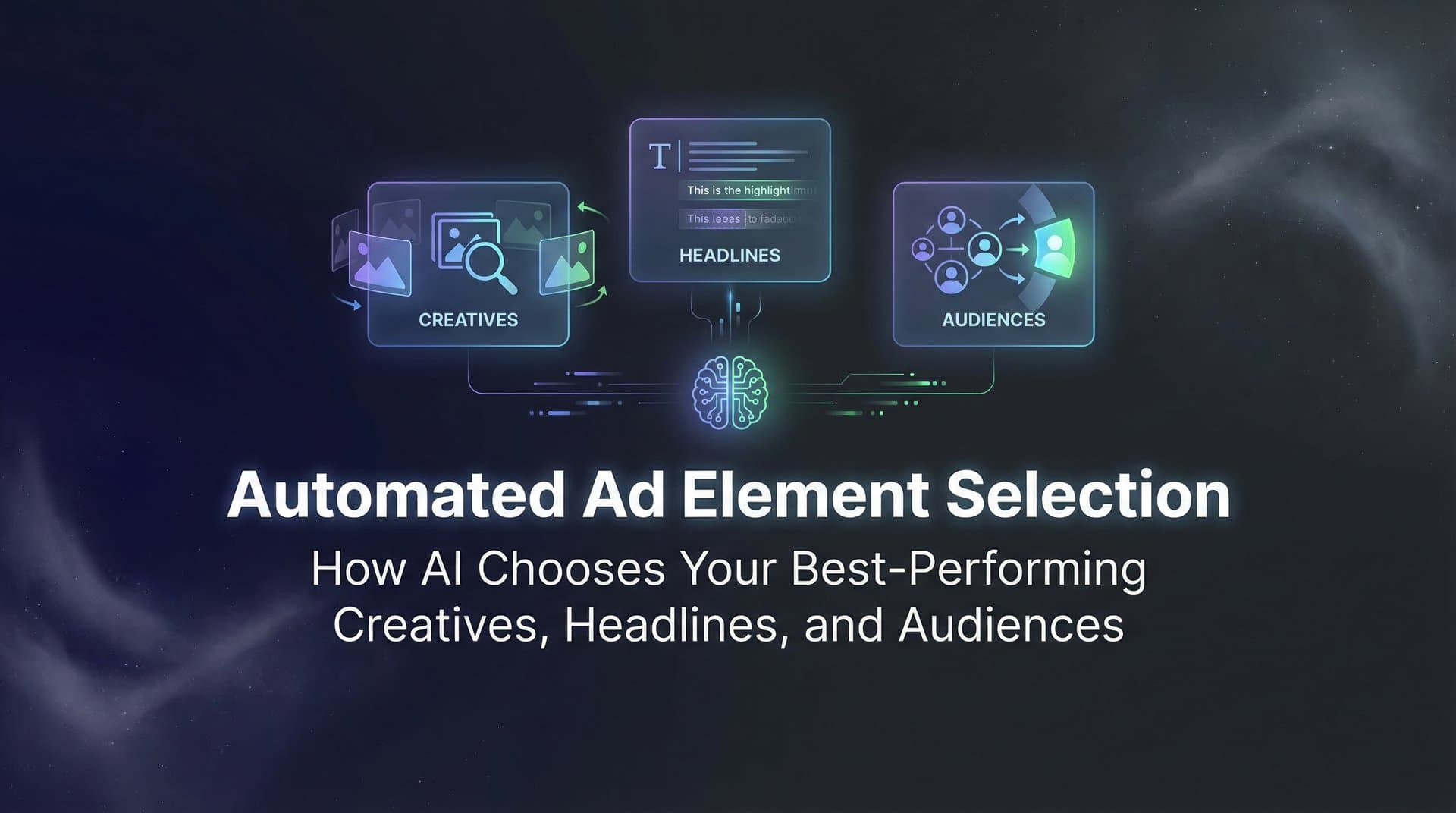
Automated ad element selection changes this entire equation. Instead of relying on gut feelings and manual analysis, AI-powered systems analyze your historical performance data to identify exactly which creatives, headlines, and audiences have actually delivered results. Then they use those proven winners to build your next campaigns—automatically selecting the combinations most likely to succeed based on what's already worked.
This isn't about replacing your creative judgment. It's about letting technology handle the data analysis and pattern recognition that humans simply can't do at scale. When you're managing campaigns with dozens of creative variations, multiple audience segments, and constantly shifting performance metrics, automated selection becomes the difference between reactive guesswork and proactive optimization.
The Building Blocks: Understanding Ad Elements and Why Selection Matters
Every Meta ad campaign is built from discrete components that work together to drive performance. Your creatives—the images or videos that catch attention in the feed. Your headlines that promise value. The primary text that tells your story. The call-to-action button that drives the click. And the audience segments that determine who actually sees your message.
Each element is a variable. Change the creative, and your CTR might jump 40% or plummet 60%. Swap the headline, and your conversion rate shifts. Target a different audience, and suddenly your cost per acquisition doubles—or halves.
Here's where the math becomes overwhelming. Let's say you have five different creatives you want to test. Five headline variations. And five audience segments. That's 125 possible combinations. Add another creative option? Now you're at 150 combinations. Include multiple CTA variations? The numbers explode exponentially.
Testing all these combinations manually is impractical. You'd need months and massive budgets to gather statistically significant data on each variation. So most marketers do what seems reasonable: they test a few combinations, pick what looks best, and move forward. The problem? You're making decisions based on a tiny sample of possibilities, potentially missing the combination that would have delivered 3× better results.
This is why element selection matters so fundamentally. The difference between choosing Creative A with Headline B for Audience C versus Creative D with Headline E for Audience F isn't just marginal—it can determine whether your campaign achieves profitable ROAS or burns through budget with nothing to show for it.
When you're selecting elements manually, you're constrained by time, attention, and the limits of pattern recognition in human cognition. You might notice that video creatives generally outperform static images, but you're unlikely to catch that specific video styles perform 60% better with lookalike audiences versus interest-based targeting, or that certain headline structures drive higher conversion rates on Instagram placement compared to Facebook feed. Understanding winning elements identification becomes critical at this scale.
How Automated Selection Actually Works: The AI Decision-Making Process
Automated ad element selection starts with data ingestion. The system connects to your Meta advertising account and pulls historical performance data across all your campaigns—impressions, clicks, conversions, spend, revenue, and every other metric Meta tracks. This creates a comprehensive performance database that captures how each element has actually performed in real-world conditions.
Next comes pattern recognition. AI algorithms analyze this data to identify correlations between specific elements and performance outcomes. Which creatives consistently generate high click-through rates? Which headlines drive conversions? Which audience segments deliver the lowest cost per acquisition? The system isn't just looking at individual element performance—it's identifying how elements work together.
This is where automated creative selection for ads becomes powerful. The AI might discover that your lifestyle product photos perform exceptionally well with lookalike audiences but underperform with interest-based targeting, while your user-generated content creatives show the opposite pattern. Or that question-based headlines drive 30% more engagement when paired with testimonial-style creatives, but benefit-focused headlines work better with product demonstration videos.
These are insights humans would struggle to extract from raw data, especially across dozens of campaigns and hundreds of ad variations. The system processes performance patterns at scale, identifying relationships that would take weeks of manual analysis to uncover—if you caught them at all.
The algorithms then assign performance scores to each element based on multiple factors: historical conversion rates, engagement metrics, cost efficiency, and statistical confidence levels. An element that's only been shown 100 times might have a high conversion rate, but the system recognizes that's not enough data for confident selection. Meanwhile, a creative with 10,000 impressions and consistently strong performance gets weighted heavily.
When it's time to build a new campaign, the selection system ranks available elements by their performance scores and probability of success. It might select your top three creatives, your five highest-performing headlines, and your two most efficient audience segments—then intelligently pair them based on historical patterns of what combinations have worked together.
The critical component is the feedback loop. After each campaign launches, new performance data flows back into the system. The AI observes which selected combinations actually delivered results and which underperformed. This information refines the scoring algorithms, making future selections progressively more accurate. The system learns from every campaign, continuously improving its ability to predict which elements will succeed.
Think of it as compound learning. Your first automated campaign might perform 20% better than manual selection because it's leveraging historical data. Your tenth campaign performs 40% better because the system has learned from nine previous rounds of feedback. By your fiftieth campaign, the selection accuracy has reached a level that would be impossible to achieve through manual analysis.
Beyond Random Testing: Strategic Element Pairing and Audience Matching
Traditional A/B testing follows a simple logic: change one variable at a time, measure the results, pick the winner, then test the next variable. It's methodical, but it's also painfully slow and fundamentally limited. You're testing elements in isolation, missing the reality that ad performance depends on how elements interact with each other.
Automated selection operates on a different principle: intelligent multi-element optimization. Instead of testing Creative A versus Creative B in isolation, the system evaluates how Creative A performs when paired with different headlines, different audiences, and different placements simultaneously. It's looking for winning combinations, not just winning individual elements.
This matters because elements don't perform consistently across all contexts. Your highest-performing creative might be a video testimonial that crushes it with warm audiences who already know your brand—but completely flops with cold traffic who need more education first. Your benefit-focused headline might drive conversions with one demographic but fall flat with another that responds better to social proof.
Automated systems excel at audience-creative alignment. They identify which creative styles resonate with specific audience segments based on actual performance data. If your carousel ads consistently outperform single-image creatives with lookalike audiences but show no advantage with interest-based targeting, the system learns this pattern and makes selections accordingly. This is where automated Facebook audience targeting delivers significant advantages.
The same principle applies to headline-creative pairing. Certain headline structures naturally complement specific creative types. A question-based headline might amplify engagement when paired with problem-agitation creative, while a benefit-focused headline works better with solution-demonstration videos. Automated selection identifies these relationships and builds campaigns that leverage them.
Performance thresholds play a crucial role in determining when an element qualifies as a proven winner. The system doesn't just look at raw performance numbers—it considers statistical confidence. An element needs sufficient exposure and consistent results before the AI trusts it for future selection. This prevents the system from over-indexing on flukes or small sample sizes that don't represent true performance.
Confidence scoring adds another layer of intelligence. Elements with extensive performance history and consistent results get high confidence scores, making them priority selections. Newer elements with limited data get lower confidence scores—they might be included in campaigns for testing purposes, but they won't dominate the selection until they've proven themselves.
This approach creates a balanced portfolio effect. Your campaigns leverage proven winners for predictable performance while strategically testing newer elements to discover the next generation of high performers. You're not abandoning testing—you're making it strategic rather than random.
Real-World Applications: From Single Campaigns to Scale
The true power of automated element selection emerges when you move beyond individual campaigns to systematic scale. Instead of manually building one campaign at a time, you can launch dozens of variations simultaneously—each one built from proven elements and intelligent combinations.
Picture this: You have a library of 20 creatives, 15 headlines, and 8 audience segments. Manually testing all possible combinations would require months and astronomical budgets. With automated selection, you can launch 30 high-probability variations in the time it used to take to build three campaigns manually. Each variation is strategically constructed based on historical performance patterns, not random guesswork.
This bulk campaign capability transforms how you approach testing. Rather than the traditional approach of launching one campaign, waiting days for data, analyzing results, then building the next iteration, you can run parallel tests across multiple element combinations simultaneously. You gather more data faster, identify winners sooner, and iterate more rapidly. Implementing an automated Facebook ads testing platform makes this parallel testing approach practical.
For marketing agencies managing multiple client accounts, automated selection solves the scalability challenge. Each client has their own creative library, audience segments, and performance goals. Manually analyzing each account's historical data and making selection decisions doesn't scale beyond a handful of clients. Automated systems handle this analysis across all accounts simultaneously, making intelligent selections for each client based on their specific performance patterns.
The efficiency gains compound over time. Your first round of automated campaigns identifies winning combinations. Round two uses those winners as the foundation, testing new variations against proven performers. Round three builds on the learnings from rounds one and two. Each cycle produces better results than the last because you're continuously building on validated success rather than starting from scratch.
This creates a compounding improvement cycle that manual testing can't match. Manual approaches suffer from recency bias—you remember last week's winners but forget about strong performers from three months ago. Building a winning ad elements library ensures that proven elements remain in rotation regardless of when they last ran.
The applications extend beyond just campaign building. Automated selection enables strategic budget allocation across variations. Instead of spreading budget evenly across all campaigns, you can weight spending toward combinations with the highest probability of success while maintaining smaller budgets for testing variations. This optimizes spend efficiency while preserving learning opportunities.
Getting Started: What You Need for Effective Automated Selection
Implementing automated ad element selection requires the right foundation. The most critical requirement is sufficient historical performance data. The system needs enough campaign history to identify patterns and make confident selections. If you're launching your first Meta campaign ever, you'll need to build some performance history before automation delivers its full value.
How much data is enough? There's no universal threshold, but generally, having run at least 10-15 campaigns with varied elements provides enough information for meaningful pattern recognition. The key is diversity in that history—campaigns with different creatives, headlines, and audiences give the system more patterns to learn from.
Your creative asset library matters enormously. Automated selection can only choose from what you provide. If your library consists of five similar product photos and three nearly identical headlines, the system has limited options to work with. Diversity in your creative assets—different formats, styles, messaging angles, and visual approaches—gives automated selection more material to create winning combinations.
This doesn't mean you need hundreds of assets before starting. Begin with what you have, but commit to continuously expanding your library. Create variations with different emotional tones, visual styles, and messaging approaches. Test product-focused creatives alongside lifestyle imagery. Try question-based headlines alongside benefit-focused ones. Each addition gives the automated system more options to test and optimize. Leveraging automated ad copy generation can help you rapidly expand your headline and text variations.
Clear performance goals are essential. The system needs to know what success looks like for your business. Are you optimizing for return on ad spend? Cost per acquisition? Conversion rate? Different goals require different selection strategies. An element that drives high click-through rates might not deliver strong conversion rates, so the system needs to know which metric matters most to your business.
Proper tracking infrastructure ensures accurate data. If your conversion tracking isn't set up correctly, the system is making decisions based on incomplete information. Verify that your Meta pixel is firing correctly, conversion events are properly configured, and attribution windows align with your business model. Garbage in, garbage out—automated selection is only as good as the data feeding it.
Start with an audit of your existing campaigns. Pull performance data from the past 90 days and identify your top performers across each element type. Which three creatives generated the most conversions? Which headlines drove the highest click-through rates? Which audiences delivered the lowest cost per acquisition? These become your initial baseline for automated selection. Understanding reusing winning ad elements efficiently helps you maximize the value of this historical data.
Organize your assets systematically. Create a clear naming convention for creatives, headlines, and audiences so you can easily track performance across campaigns. When the automated system selects elements, you want to quickly understand what's being used and why. Consistent organization makes analysis and optimization dramatically easier.
The Future of Campaign Building Is Already Here
Automated ad element selection represents more than an incremental improvement in campaign management—it's a fundamental shift from reactive decision-making to proactive, data-driven optimization. Instead of spending hours analyzing spreadsheets and second-guessing creative choices, you're leveraging AI to handle the pattern recognition and selection process that humans simply can't do at scale.
The time savings alone justify the transition. What used to take hours of analysis and manual campaign building now happens in minutes, freeing you to focus on strategy, creative development, and higher-level optimization. But the real value goes beyond efficiency—it's the performance improvements that come from consistently selecting elements based on actual historical data rather than intuition or limited manual analysis.
This technology continues to improve with every campaign you run. Each new data point refines the selection algorithms, making future choices progressively more accurate. Your fiftieth automated campaign will outperform your first because the system has learned from 49 previous rounds of real-world performance feedback. This compound learning effect creates momentum that manual approaches can't match.
The competitive advantage is clear. While others are still manually testing one variable at a time, you're running parallel tests across dozens of intelligent combinations, gathering data faster, and iterating more rapidly. You're building on proven winners instead of starting from scratch with each new campaign. You're scaling with confidence because your selections are grounded in performance data, not guesswork.
Ready to transform your advertising strategy? Start Free Trial With AdStellar AI and be among the first to launch and scale your ad campaigns 10× faster with our intelligent platform that automatically builds and tests winning ads based on real performance data. Our specialized AI agents—including the Creative Curator that handles element selection—analyze your historical performance, identify your top-performing combinations, and build optimized campaigns automatically. Stop spending hours on manual analysis and start leveraging AI to make smarter, faster campaign decisions that actually improve with every launch.