Most advertisers know they should be split testing their Facebook ads. The problem? Setting up tests manually means duplicating campaigns, tracking spreadsheets, checking results daily, and making optimization decisions based on partial data. It's exhausting, time-consuming, and nearly impossible to do at scale.
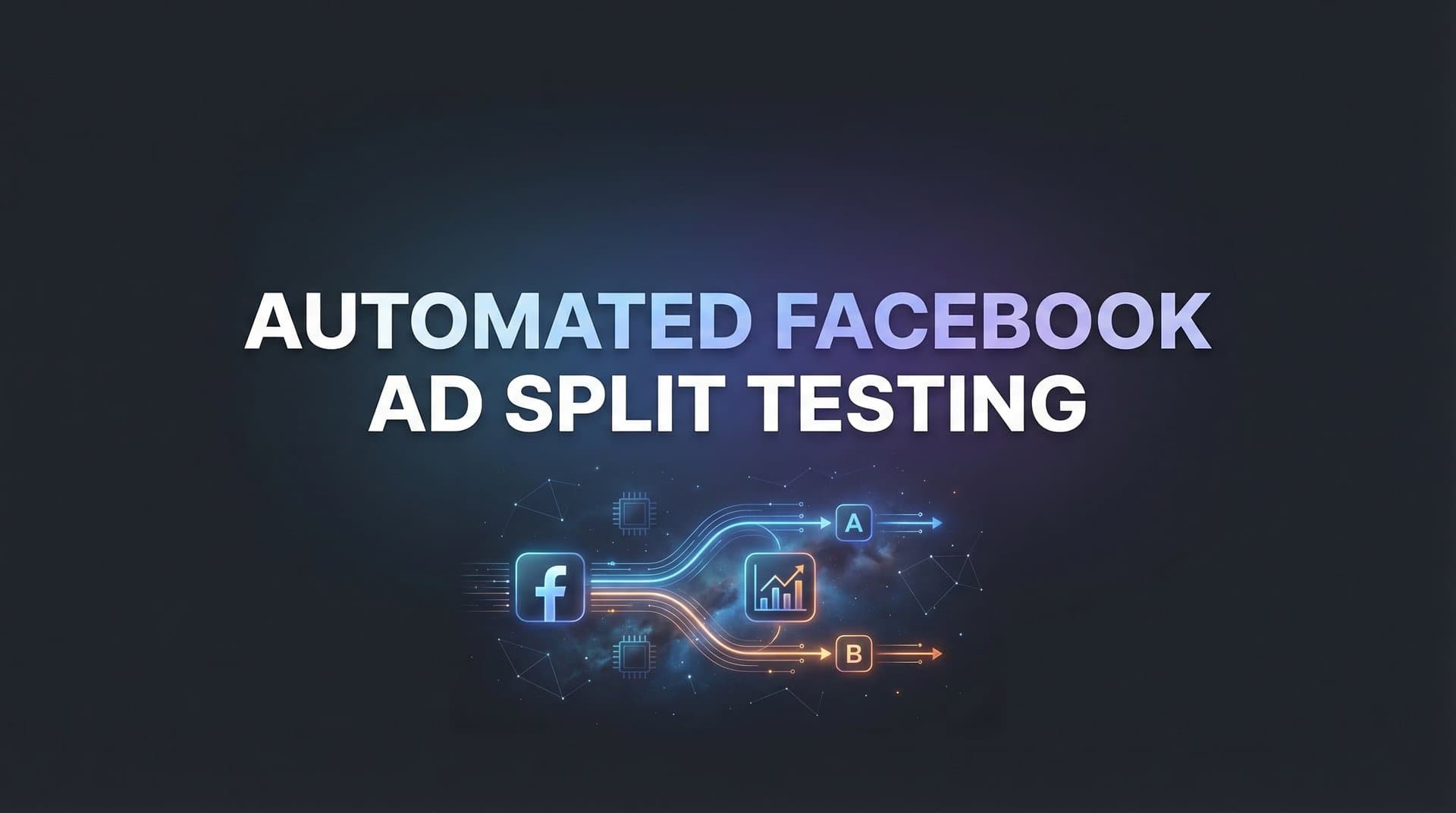
Automated Facebook ad split testing solves this entirely. Instead of manually creating variations and babysitting performance metrics, you set up a system that continuously tests creatives, audiences, and copy while AI handles the analysis and optimization. The result? Better-performing ads with a fraction of the effort.
This guide walks you through building an automated split testing system from scratch. Whether you're running your first A/B test or managing dozens of campaigns simultaneously, you'll learn how to structure tests that deliver clean data, configure automation rules that optimize in real-time, and create a continuous learning loop that compounds your advertising performance over time.
Let's get started.
Step 1: Define Your Testing Variables and Success Metrics
Before launching a single ad variation, you need clarity on what you're testing and how you'll measure success. Random testing wastes budget. Strategic testing builds knowledge.
Start by identifying your testing category. Facebook ad testing falls into three core buckets: creative elements (images, videos, carousels, formats), copy variations (headlines, primary text, calls-to-action), and audience segments (demographics, interests, lookalikes, custom audiences). Pick one category per test cycle. Testing multiple variables simultaneously makes it impossible to isolate what actually drove performance changes.
Creative Testing: Compare different visual approaches. Static image versus video. Product-focused versus lifestyle imagery. Short-form versus long-form video content. The key is testing genuinely different creative directions, not minor color tweaks.
Copy Testing: Experiment with messaging angles. Benefit-driven headlines versus curiosity-driven. Long-form storytelling versus punchy one-liners. Different value propositions or pain points addressed in your primary text.
Audience Testing: Validate which customer segments respond best. Broad targeting versus specific interests. Cold audiences versus warm retargeting. Different lookalike percentages or custom audience combinations.
Next, select your primary success metric. This becomes your optimization north star. Choose based on your campaign objective—ROAS (return on ad spend) for e-commerce, CPA (cost per acquisition) for lead generation, CTR (click-through rate) for awareness campaigns, or conversion rate for bottom-funnel offers. You can track secondary metrics, but optimization decisions should center on one primary KPI.
Document your testing hypothesis before launching. Write it down: "Video testimonials will outperform product demos for cold audiences because they build trust faster." Or: "Benefit-focused headlines will beat feature-focused headlines for our enterprise audience." A clear hypothesis keeps testing strategic rather than random, and helps you extract learnable insights even from losing variations.
Finally, establish your statistical significance requirements. How many impressions or conversions do you need before making decisions? A common baseline: at least 1,000 impressions and 50 conversions per variation before declaring a winner. Smaller sample sizes lead to false conclusions. Patience at this stage prevents costly mistakes later. Building a solid Facebook ad testing framework from the start ensures every test generates actionable data.
Step 2: Structure Your Campaign for Automated Testing
Campaign structure determines whether your automation works smoothly or fights against you. Get this foundation right, and everything else flows naturally.
Enable Campaign Budget Optimization (CBO) at the campaign level. CBO lets Meta's algorithm automatically distribute your budget across ad sets based on performance. Instead of manually adjusting budgets between variations, the system shifts spend toward winners in real-time. This is essential for automated testing—it means your best-performing ads get more delivery without constant manual intervention.
Create a naming convention that makes automated tracking possible. Your naming system should instantly communicate what's being tested. For example: "TEST_Creative_Video-vs-Static_2026-03-15_v1" or "TEST_Audience_Lookalike-vs-Interest_2026-03-15_v1". Include the test variable, launch date, and version number. Consistent naming allows automation tools to group related tests, track performance over time, and generate meaningful reports without manual categorization.
Structure your ad sets with isolated variables. If you're testing creative, keep audience and copy identical across variations. If you're testing audiences, use the same creative and copy in each ad set. This isolation is critical—when you change multiple elements simultaneously, you can't determine which change drove results. Clean data requires controlled testing.
Configure automated rules directly in Meta Ads Manager or connect an AI-powered platform for hands-off optimization. Meta's native automation lets you set basic rules (pause ads below certain performance thresholds, increase budgets on winners). Understanding what Facebook ad automation can accomplish helps you choose the right tools for your needs. AI platforms take this further by analyzing patterns across multiple tests, predicting which variations will succeed, and automatically launching new test iterations based on historical performance data.
Set your campaign objective to match your success metric. If you're optimizing for conversions, use the Conversions objective. For traffic, use Traffic. For engagement, use Engagement. Meta's algorithm optimizes delivery based on your chosen objective, so misalignment here undermines your entire testing system.
Step 3: Build Your Initial Test Variations at Scale
Creating test variations manually—duplicating ads, swapping images, adjusting copy—burns hours for every test cycle. Bulk launching tools eliminate this bottleneck entirely.
Start with 3-5 variations per variable. This range balances statistical power with budget efficiency. Two variations don't provide enough data points to identify patterns. Ten variations spread your budget too thin, delaying statistical significance. Three to five hits the sweet spot for most advertisers.
Ensure genuine creative diversity. The biggest testing mistake? Creating variations that are too similar. Testing a blue button versus a green button rarely moves the needle. Test fundamentally different approaches instead. For creative: lifestyle imagery versus product close-ups versus user-generated content. For copy: emotional storytelling versus data-driven benefits versus problem-agitation-solution frameworks. Big swings generate learnable insights.
Use bulk launching capabilities to create multiple ad combinations without manual duplication. Platforms like AdStellar AI let you upload multiple creatives and copy variations, then automatically generate all possible combinations in seconds. What used to take an hour of clicking through Meta's interface now happens in under a minute. This speed matters—the faster you can launch tests, the more learning cycles you complete, and the faster your performance compounds. Learn more about bulk Facebook ad creation for media buyers to streamline your workflow.
Set consistent parameters across all variations. Every ad in your test should use identical placement settings, bidding strategies, and optimization events. If one ad runs on Instagram only while another includes Facebook feed, you're not testing creative—you're testing placement. Lock down everything except your isolated variable. Consistency ensures your results reflect the actual element you're testing, not confounding factors.
Front-load your creative production. The constraint on testing velocity is rarely budget—it's creative supply. If you can only produce one new video per month, your testing cadence stalls. Build a content pipeline that generates multiple variations rapidly. Repurpose existing assets, test different hooks on the same video, or use AI tools to generate copy variations at scale.
Step 4: Configure Automation Rules for Real-Time Optimization
Manual optimization means checking dashboards daily, making subjective decisions, and reacting to performance changes hours or days late. Automation rules respond instantly, based on objective criteria you define once.
Set up automatic pause rules for underperforming ads. Define your failure threshold before launching—for example, "Pause any ad where CPA exceeds my target by 50% after 1,000 impressions" or "Pause ads with CTR below 0.5% after 500 impressions." These rules prevent bad ads from draining budget while you're focused elsewhere. The key is balancing speed (pausing losers quickly) with statistical validity (allowing enough data to distinguish signal from noise).
Create scaling rules to increase budget on winning variations automatically. When an ad hits your success criteria—say, CPA 30% below target with at least 20 conversions—automation can increase its budget by 20% daily until it reaches a cap or performance degrades. This compounds wins without requiring constant monitoring. Your best ads get more delivery automatically, maximizing return from proven performers. Discover how to scale Facebook ad campaigns faster with the right automation setup.
Enable AI-powered analysis to identify patterns across multiple tests. While basic automation handles individual ad performance, AI platforms analyze your entire testing history to surface insights. They identify which creative elements consistently perform (short-form video outperforms static images across all audiences), which copy angles resonate (benefit-driven headlines beat feature lists), and which audience combinations work best. These meta-insights inform future test design, making each new test smarter than the last.
Schedule regular refresh cycles to prevent ad fatigue. Even winning ads eventually decline as audiences see them repeatedly. Set up automation to pause ads after they've run for a certain duration (30-45 days is common) or after frequency exceeds a threshold (3-4 times per user). Simultaneously, launch new test variations to replace fatigued winners. This creates continuous turnover that maintains performance while gathering fresh data.
Configure budget pacing rules to prevent overspend. Set daily or lifetime budget caps that automation rules cannot exceed. This safeguard prevents runaway spending if an ad performs well initially but doesn't maintain results. Your automation should optimize aggressively within guardrails, not operate without limits.
Step 5: Analyze Results and Feed Winners Back Into Your System
Collecting data means nothing without analysis. The difference between random testing and systematic optimization is what you do with your results.
Review performance dashboards to identify statistically significant winners versus noise. Look beyond surface-level metrics. An ad with a 2% CTR isn't necessarily better than one with 1.8% CTR if the sample size is small. Check confidence intervals and statistical significance before declaring winners. Many platforms now include built-in significance testing—use it. Making decisions on insufficient data leads to false conclusions and wasted budget scaling the wrong variations.
Document winning elements in a centralized library. Create a "Winners Hub" where you store every creative, headline, audience segment, and copy angle that outperformed. Tag each asset with performance metrics, testing date, and the context where it succeeded. This library becomes your competitive advantage—a growing collection of proven elements you can remix and reuse across future campaigns. When launching new tests, start with variations of past winners rather than random guesses. Learn strategies to reuse winning Facebook ad campaigns effectively.
Create new test iterations based on insights from previous rounds. If short-form video outperformed static images, your next test should explore different video hooks or formats. If benefit-driven headlines beat feature lists, test different benefit angles. Each test should build on the last, creating a learning progression rather than isolated experiments. This is where continuous testing compounds—each cycle narrows in on what works, making subsequent tests more likely to produce winners.
Build a continuous learning loop where insights flow back into campaign planning. Schedule weekly or bi-weekly review sessions to analyze testing results, extract patterns, and plan next iterations. What creative themes are emerging as consistent winners? Which audience segments show the highest ROAS? Which copy frameworks drive the most conversions? These patterns should directly inform your content production, audience strategy, and messaging approach.
Track your testing velocity as a key performance indicator. How many test cycles are you completing per month? How quickly do tests reach statistical significance? Faster testing velocity means faster learning, which translates to faster performance improvement. If tests are taking too long to conclude, you may need to increase budgets, reduce the number of variations, or focus on higher-volume campaigns where significance arrives quickly. If your Facebook ad testing takes too long, it's time to reassess your approach.
Step 6: Scale Your Testing System Across Multiple Campaigns
Once your testing system works for one campaign, the real leverage comes from scaling it across your entire advertising operation.
Apply proven winners to new audience segments and campaign objectives. A creative that crushes for cold audiences might also work for retargeting with adjusted copy. A headline that drives conversions in one product category might resonate in another. Don't silo your learnings—cross-pollinate winning elements across campaigns. This multiplies the value of each test by extracting insights that apply broadly rather than narrowly.
Use workspace management to run parallel tests across different ad accounts or clients. If you're managing multiple brands or running an agency, set up isolated testing environments for each account while maintaining centralized reporting. Explore Facebook campaign management for media buyers to streamline multi-account operations. This lets you compare performance across accounts, identify universal patterns, and share winning strategies between clients without manual coordination.
Set up cross-campaign analysis to identify universal winning patterns. Some insights are campaign-specific—a particular audience works for one product but not others. Other insights apply universally—short-form video outperforms static images across all your campaigns, or benefit-driven copy beats feature lists regardless of product. Identifying these universal patterns lets you apply best practices systematically, raising baseline performance across your entire advertising portfolio.
Automate reporting to track testing velocity and cumulative performance improvements. Create dashboards that show how many tests you've run this month, what percentage reached statistical significance, and how winning variations performed compared to your baseline. Track cumulative metrics over time—is your average ROAS improving month-over-month as your testing system compounds? Are you launching tests faster now than three months ago? These meta-metrics reveal whether your testing system itself is improving, not just individual campaign performance.
Your Automated Testing System Is Ready to Launch
You now have a complete framework for automated Facebook ad split testing that runs continuously, optimizes in real-time, and compounds your advertising performance over time.
Quick implementation checklist: Define one primary metric and write your testing hypothesis before launching. Structure campaigns with CBO enabled and isolated variables per ad set. Build 3-5 genuine variations using bulk launching tools. Configure automation rules to pause losers and scale winners automatically. Document insights and feed winning elements back into new test iterations.
Start with a single campaign and one variable—creative format works particularly well for first tests since visual differences are easy to isolate and analyze. Once you see results flowing in automatically and your first winning variations emerge, expand to copy testing, then audience segments. The compounding effect of continuous, automated testing is where the real performance gains emerge. Each test informs the next, your Winners Hub grows, and your baseline performance rises month after month.
The difference between advertisers who struggle with Facebook ads and those who scale profitably often comes down to testing velocity. Manual testing creates a bottleneck—you can only run so many tests, analyze so much data, and launch so many variations. Automation removes that constraint entirely, letting you test at a pace that manual optimization simply cannot match.
Ready to transform your advertising strategy? Start Free Trial With AdStellar AI and be among the first to launch and scale your ad campaigns 10× faster with our intelligent platform that automatically builds and tests winning ads based on real performance data. Seven specialized AI agents analyze your top-performing creatives, headlines, and audiences—then build, test, and launch new variations at scale while you focus on strategy instead of execution.