Facebook advertising has become a fundamentally different game than it was just a few years ago. The manual approaches that worked in 2022—spending hours building campaign structures, guessing at audience combinations, manually adjusting budgets across ad sets—simply can't keep pace with the speed and complexity of today's Meta ecosystem.
The reality? AI has moved from "nice to have" to essential infrastructure for competitive Facebook advertisers. But here's where most marketers get stuck: the market is flooded with AI tools making big promises, and it's genuinely difficult to separate genuine capability from marketing hype.
This guide focuses exclusively on AI strategies that solve real problems in your advertising workflow. These aren't theoretical approaches—they're practical implementations that address the specific bottlenecks advertisers face daily: campaign building speed, targeting accuracy, budget efficiency, creative scaling, and attribution clarity.
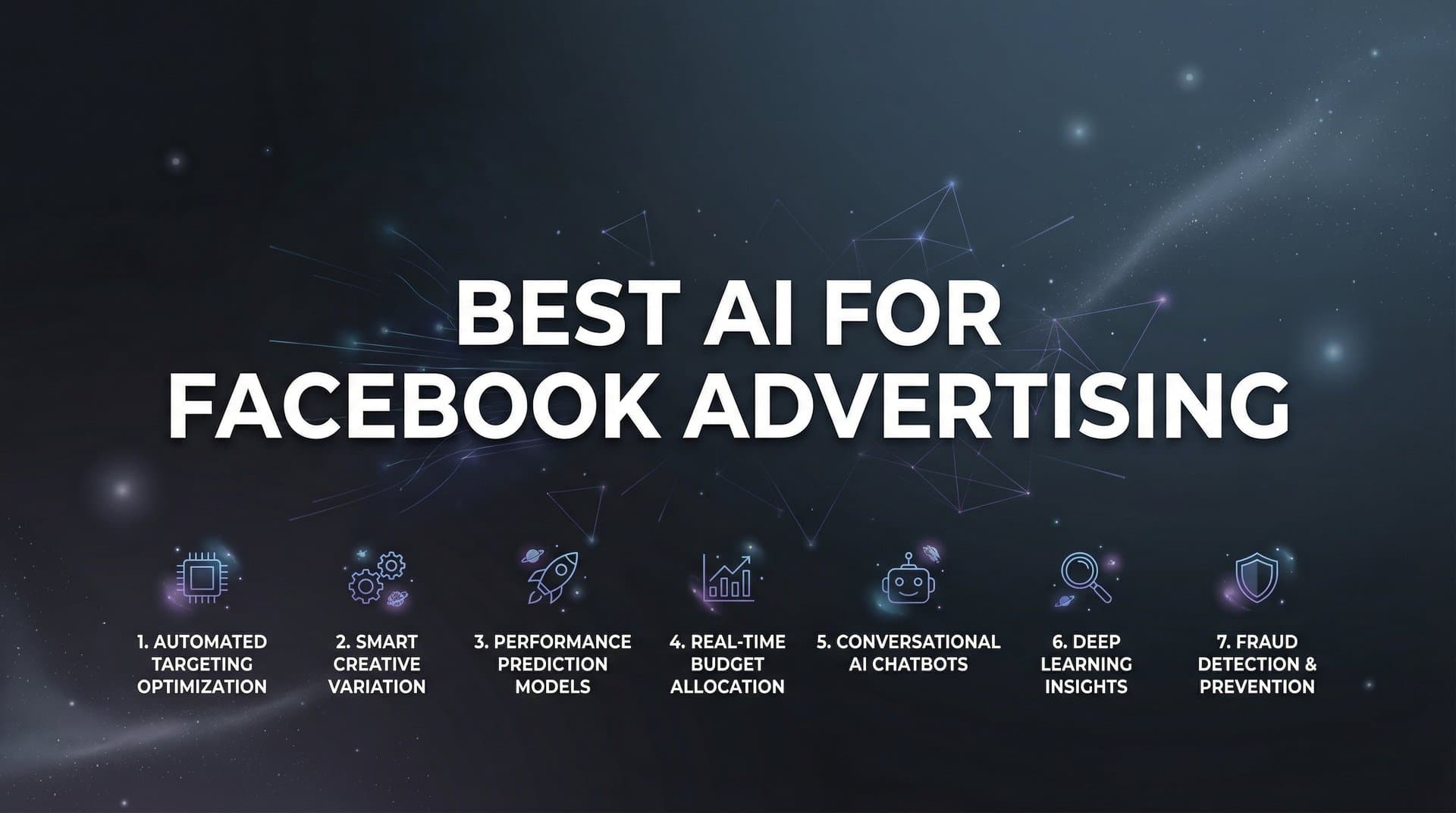
Whether you're managing campaigns for multiple clients or scaling your own business, these seven strategies represent the most effective ways to leverage AI in Facebook advertising right now. Each one is designed to work with the realities of Meta's current platform, privacy restrictions, and algorithm behavior.
1. Deploy Multi-Agent AI Systems for End-to-End Campaign Building
The Challenge It Solves
Building a Facebook campaign from scratch involves dozens of interconnected decisions. You need to analyze your landing page, structure your campaign hierarchy, select targeting parameters, choose creative assets, write ad copy, and allocate budgets—all while ensuring everything aligns strategically.
Most AI tools tackle one piece of this puzzle. You might use one tool for copy, another for targeting suggestions, and a third for creative analysis. The problem? These tools don't communicate with each other, creating disconnected workflows where you're still manually bridging the gaps.
The Strategy Explained
Multi-agent AI systems take a fundamentally different approach. Instead of one AI trying to handle everything, specialized agents work simultaneously on different campaign components—each focused on its specific domain while coordinating with the others.
Think of it like having a team of specialists rather than one generalist. One agent analyzes your landing page to extract key selling points. Another designs the campaign structure based on your goals. A third identifies optimal targeting. A fourth selects creative assets. A fifth writes ad copy. A sixth allocates budgets. A seventh coordinates everything.
The power comes from specialization and coordination. Each agent develops deep expertise in its domain while the system ensures all components work together cohesively. What normally takes 45-60 minutes of manual work happens in under a minute.
Implementation Steps
1. Choose a platform with true multi-agent architecture where different AI models handle distinct campaign components rather than a single AI attempting everything.
2. Connect your Meta account and provide the AI with access to your historical campaign data so agents can learn from your past performance patterns.
3. Start with a complete campaign build—input your landing page URL and campaign objective, then let the agent system analyze and construct the full campaign structure.
4. Review the AI's rationale for each decision (targeting choices, creative selections, budget allocations) to understand the strategic thinking behind recommendations.
5. Launch campaigns and feed results back into the system so agents continuously improve their decision-making based on actual performance data.
Pro Tips
The best multi-agent systems provide transparency into each agent's reasoning. Look for platforms that explain why specific targeting was chosen or why certain creative assets were prioritized. This transparency lets you maintain strategic control while benefiting from AI speed. Also, start by letting the AI handle complete campaign builds rather than trying to override individual agent decisions—the coordination between agents is where much of the value lives.
2. Use AI-Powered Audience Analysis to Eliminate Targeting Guesswork
The Challenge It Solves
Facebook's targeting options are simultaneously powerful and overwhelming. With thousands of potential interest combinations, demographic overlays, and behavior signals, most advertisers either stick with overly broad audiences or spend hours testing narrow segments that may never reach scale.
The guesswork problem compounds over time. You might have historical data showing which audiences performed well, but manually analyzing patterns across dozens of campaigns to identify consistent winners is practically impossible. So you end up repeating the same targeting approaches or making educated guesses for each new campaign.
The Strategy Explained
AI audience analysis works by processing your entire campaign history to identify which specific targeting parameters consistently correlate with strong performance. It's not about what audiences theoretically should work—it's about what has actually worked for your specific business.
The AI looks for patterns humans miss. Maybe certain interest combinations only perform well when paired with specific age ranges. Perhaps some geographic targeting works brilliantly for one product but fails for another. The system identifies these nuanced relationships by analyzing thousands of data points simultaneously.
Rather than presenting you with generic audience suggestions, AI-powered analysis generates recommendations specifically calibrated to your historical performance. It can even predict which untested audience segments are likely to succeed based on their similarity to proven winners.
Implementation Steps
1. Ensure your AI platform has access to at least 30-90 days of campaign history—the more data available, the more accurate the pattern recognition becomes.
2. Let the AI complete an initial analysis of your top-performing campaigns to identify which targeting parameters appear most frequently in successful ad sets.
3. Review the AI's targeting recommendations for your next campaign, paying special attention to the rationale explaining why specific audiences were selected.
4. Test AI recommendations alongside your traditional targeting approaches to build confidence in the system's accuracy.
5. Establish a feedback loop where campaign results continuously refine the AI's understanding of which audiences work best for your specific business.
Pro Tips
Don't expect AI to immediately identify miracle audiences you've never considered. The real value is consistency and pattern recognition across large datasets. The AI excels at identifying which of your existing successful approaches are most reliable and which audience combinations to avoid based on historical underperformance. Also, pay attention to seasonal patterns—effective AI systems will recognize when certain audiences perform differently during specific time periods.
3. Implement Predictive Budget Allocation Across Campaign Sets
The Challenge It Solves
Budget allocation is where many Facebook campaigns leak profitability. You might set equal budgets across ad sets at launch, then manually adjust based on early performance. But by the time you notice one ad set outperforming others and shift budget accordingly, you've already wasted spend on underperformers.
Static budget splits also fail to account for performance trends. An ad set might start strong then decline, or vice versa. Manual monitoring and adjustment require constant attention—and even then, you're always reacting to past performance rather than anticipating future trends.
The Strategy Explained
Predictive budget allocation uses AI to forecast performance trends and automatically distribute spend where it's most likely to generate results. Instead of waiting to see which campaigns perform well, the AI analyzes early signals and performance trajectories to predict outcomes.
The system considers multiple factors simultaneously: current performance metrics, historical patterns for similar campaigns, time-of-day trends, audience saturation signals, and creative fatigue indicators. It then calculates optimal budget distribution across your active campaigns and ad sets.
What makes this powerful is speed and scale. While you might manually adjust budgets once or twice daily, AI can optimize allocation continuously throughout the day as performance data updates. It can also manage budget distribution across dozens of campaigns simultaneously—something practically impossible to do manually with any precision.
Implementation Steps
1. Start by establishing clear performance goals for your campaigns—whether that's CPA targets, ROAS thresholds, or conversion volume objectives.
2. Configure your AI system to automatically allocate budgets based on these goals, setting parameters for minimum and maximum spend per campaign or ad set.
3. Begin with a test period where you run AI-allocated budgets alongside your manual approach to compare performance outcomes.
4. Monitor the AI's allocation decisions to understand its logic—most systems should provide transparency into why budget was increased or decreased for specific campaigns.
5. Gradually expand the AI's authority to manage larger budget pools as you build confidence in its decision-making accuracy.
Pro Tips
Set guardrails rather than trying to micromanage every allocation decision. Define minimum daily budgets for campaigns you want to keep running regardless of performance, and maximum budgets to prevent overspend on any single campaign. The AI works best when given clear boundaries but flexibility within those boundaries. Also, pay attention to how quickly the AI responds to performance changes—the best systems balance responsiveness with stability, avoiding knee-jerk reactions to short-term fluctuations.
4. Leverage AI Creative Analysis to Scale Winning Ad Variations
The Challenge It Solves
You finally find a winning ad creative—it's driving conversions at a profitable rate. Now you face a dilemma: keep running it until performance declines from creative fatigue, or try to create variations that maintain the winning elements while providing freshness.
The manual approach to creative variation is hit-or-miss. You might change the image background, adjust the text overlay, or try a different product angle. But without systematic analysis of which specific creative elements drive performance, you're essentially guessing. Most variations fail to match the original's performance.
The Strategy Explained
AI creative analysis identifies the specific elements within your winning ads that correlate with strong performance. It's not just about whether an ad works overall—it's about understanding which components make it work.
The AI analyzes visual elements (color schemes, composition, product positioning), format choices (carousel vs. single image vs. video), text elements (headline hooks, description length, CTA phrasing), and engagement patterns. It identifies which combinations of these elements consistently drive results.
Once the AI understands what works, it can systematically generate variations that preserve winning elements while testing new combinations. This creates a structured approach to creative testing rather than random experimentation.
Implementation Steps
1. Feed your historical creative assets into the AI system along with their performance data so it can identify patterns in what drives results.
2. Let the AI analyze your top-performing ads to extract the specific creative elements that appear most frequently in winners.
3. Use the AI to generate new creative variations that maintain these proven elements while introducing controlled changes to test fresh approaches.
4. Launch these AI-generated variations as new ads within your existing campaigns to directly compare performance against originals.
5. Create a systematic workflow where winning variations become the new baseline for the next round of AI-generated tests.
Pro Tips
Build a "winners library" of creative elements that have proven successful—specific images, headline formulas, description structures, and CTA approaches. The AI becomes more effective as this library grows because it has more proven components to work with. Also, don't test too many variables simultaneously in each variation. The best approach is incremental testing where each variation changes one or two elements, making it clear which changes impact performance.
5. Automate Ad Copy Generation with Performance-Trained AI
The Challenge It Solves
Writing effective ad copy at scale is one of the most time-intensive aspects of Facebook advertising. Each campaign needs multiple headline variations, description options, and CTA approaches. Multiply this across multiple campaigns, ad sets, and ongoing tests, and you're spending hours writing copy every week.
Generic AI copywriting tools can generate text quickly, but they lack understanding of your brand voice, product positioning, and most importantly, which messaging approaches actually drive conversions for your specific audience. The result is copy that sounds plausible but doesn't perform.
The Strategy Explained
Performance-trained AI copywriting learns from your historical ad copy data to understand what works for your specific business. Instead of generic marketing language, it generates copy variations calibrated to your proven messaging patterns.
The AI analyzes your top-performing ads to identify successful headline structures, description frameworks, emotional appeals, and CTA phrasing. It recognizes patterns like whether your audience responds better to benefit-focused or feature-focused messaging, whether urgency language improves performance, and which tone resonates most strongly.
When generating new copy, the AI maintains your brand voice while systematically testing variations of proven approaches. It's not creating entirely new messaging strategies—it's scaling and optimizing what already works.
Implementation Steps
1. Compile your highest-performing ad copy from the past 3-6 months, including headlines, descriptions, and CTAs along with their performance metrics.
2. Train the AI on this historical data so it learns which messaging patterns correlate with strong performance for your specific audience.
3. Generate multiple copy variations for your next campaign, reviewing them to ensure brand voice alignment and strategic consistency.
4. Test AI-generated copy against your manually written copy to validate that the system is producing effective messaging.
5. Continuously feed performance results back into the AI so it refines its understanding of which copy approaches work best.
Pro Tips
The AI should provide transparency into why it generated specific copy—which historical patterns or successful elements it's drawing from. This lets you maintain creative control while benefiting from AI speed. Also, use the AI to generate more variations than you'd typically test manually. The marginal cost of AI-generated copy is near zero, so you can afford to test 10-15 headline variations instead of the 3-4 you might write manually. This expanded testing surface area often reveals winning messages you wouldn't have thought to try.
6. Build Continuous Learning Loops for Campaign Optimization
The Challenge It Solves
Most AI tools operate in isolation—they make recommendations or automate tasks, but they don't systematically learn from outcomes. You might use AI to build a campaign, but whether that campaign succeeds or fails, the AI doesn't necessarily improve its future recommendations based on that result.
This creates a static system where the AI's effectiveness remains constant over time. You don't benefit from accumulated knowledge across dozens or hundreds of campaigns. Each new campaign starts from the same baseline rather than building on past learnings.
The Strategy Explained
Continuous learning loops create AI systems that improve with every campaign you run. The AI doesn't just execute tasks—it analyzes outcomes, identifies what worked and what didn't, and adjusts its decision-making models accordingly.
This creates a compounding advantage over time. Your first AI-built campaign might perform comparably to manual campaigns. But by your tenth campaign, the AI has learned from nine previous outcomes. By your hundredth campaign, it's operating with insights from ninety-nine prior results.
The learning happens across multiple dimensions simultaneously. The AI refines its understanding of which audiences work best, which creative elements drive results, which budget allocations optimize performance, and which campaign structures deliver efficiency. Each campaign adds data points that improve future decisions.
Implementation Steps
1. Verify that your AI platform actually implements continuous learning rather than just using static models—ask specifically how the system incorporates campaign results into future recommendations.
2. Establish clear success metrics so the AI knows what outcomes to optimize for when learning from campaign results.
3. Run multiple campaigns through the AI system rather than one-off tests—the learning benefits only materialize across repeated use.
4. Periodically review how the AI's recommendations evolve over time to confirm that learning is actually occurring and improving decision quality.
5. Provide feedback on AI decisions when you notice patterns that don't align with your strategic goals, helping guide the learning process.
Pro Tips
The learning loop works best when you maintain consistency in your campaign objectives and success metrics. If you're constantly changing what "success" means, the AI struggles to identify reliable patterns. Also, be patient with the learning process—you might not see dramatic improvements in the first few campaigns, but the compounding benefits become substantial over time. The marketers seeing the best results are those who commit to using the AI system consistently rather than switching between different tools.
7. Integrate AI Attribution Tracking for Accurate ROI Measurement
The Challenge It Solves
Facebook's native attribution has become increasingly limited due to iOS privacy changes and tracking restrictions. You might see one conversion count in Ads Manager while your actual sales data tells a different story. This attribution gap makes it nearly impossible to accurately assess campaign performance or make informed optimization decisions.
When your AI automation makes decisions based on inaccurate conversion data, it optimizes for the wrong outcomes. You might be scaling campaigns that appear profitable in Ads Manager but are actually losing money, or pausing campaigns that seem ineffective but are driving significant revenue.
The Strategy Explained
AI-enhanced attribution tracking creates a more complete picture of campaign performance by combining multiple data sources and using AI to identify conversion patterns that native tracking misses. This gives your campaign automation accurate data to optimize against.
The system tracks conversions across multiple touchpoints, accounts for view-through attribution, and uses AI to probabilistically match conversions to campaigns even when direct tracking isn't available. It reconciles data between your ad platform, analytics tools, and actual sales systems to identify discrepancies.
When integrated with your campaign automation, this accurate attribution data ensures that AI optimization decisions are based on real performance rather than incomplete tracking. Campaigns get scaled or paused based on actual ROI, not misleading metrics.
Implementation Steps
1. Implement a third-party attribution platform that offers AI-enhanced tracking and can integrate with your campaign automation system.
2. Connect all relevant data sources—your ad accounts, website analytics, CRM, and sales systems—so the attribution platform has complete visibility into the customer journey.
3. Configure your attribution model to align with your business reality, whether that's first-click, last-click, or multi-touch attribution.
4. Integrate the attribution data with your campaign automation so AI decisions are based on accurate conversion information rather than native platform data.
5. Regularly audit the attribution data against your actual sales to ensure accuracy and identify any tracking gaps that need addressing.
Pro Tips
The integration between attribution tracking and campaign automation is where the real value lives. It's not enough to have accurate attribution data if your AI system is still making decisions based on incomplete native tracking. Ensure your campaign automation platform can actually consume and optimize against third-party attribution data. Also, understand that no attribution solution is perfect—the goal is materially better accuracy than native tracking, not absolute precision. Focus on directional correctness and relative performance comparison rather than expecting exact conversion counts.
Your Implementation Roadmap
These seven strategies represent the most effective ways to leverage AI in Facebook advertising today. But implementing all of them simultaneously would be overwhelming and counterproductive. The marketers seeing the best results aren't those using the most AI tools—they're the ones who've thoughtfully integrated AI where it creates the most value.
Start by identifying your biggest current bottleneck. For most advertisers, that's either campaign building speed or budget allocation efficiency. If you're spending hours building campaigns manually, Strategy 1 (multi-agent campaign building) delivers immediate time savings. If your challenge is optimizing spend across multiple campaigns, Strategy 3 (predictive budget allocation) provides the most impact.
Once you've established one AI-powered workflow and proven its value, expand systematically. Add creative analysis to scale your winning ads. Implement performance-trained copywriting to accelerate testing. Build continuous learning loops so your AI improves over time. Integrate accurate attribution so optimization decisions are based on real performance data.
The key is building an integrated system rather than accumulating disconnected tools. The strategies in this guide work best when they complement each other—multi-agent campaign building feeds data into continuous learning loops, which improves targeting accuracy, which generates better creative insights, which creates more effective copy variations.
Think of AI as your execution engine while you remain the strategic director. The AI handles the time-intensive work of campaign building, budget optimization, creative variation, and copy generation. You focus on overall strategy, creative direction, and business decisions that require human judgment.
Your next step is straightforward: audit your current campaign workflow and identify the single point where AI automation would save the most time or improve the most decisions. Start there. Build confidence in that one AI-powered process. Then expand to the next strategy that addresses your next-biggest bottleneck.
The advertisers winning in 2026 aren't working harder—they're working with AI systems that amplify their strategic thinking while eliminating execution bottlenecks. Start Free Trial With AdStellar AI and be among the first to launch and scale your ad campaigns 10× faster with our intelligent platform that automatically builds and tests winning ads based on real performance data.