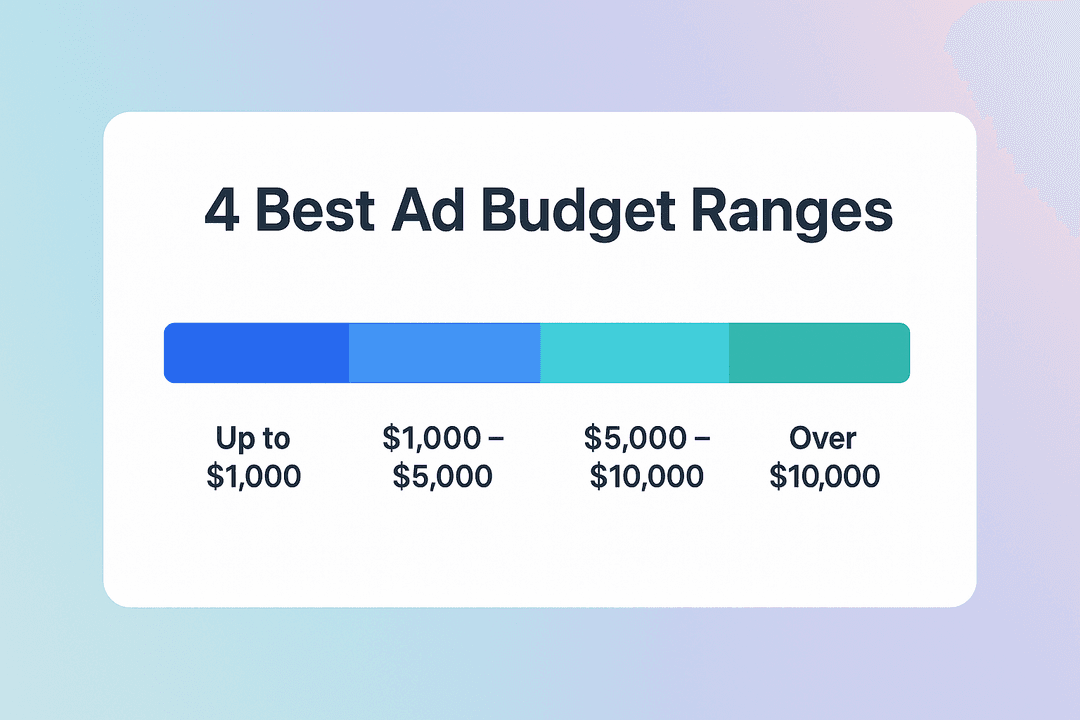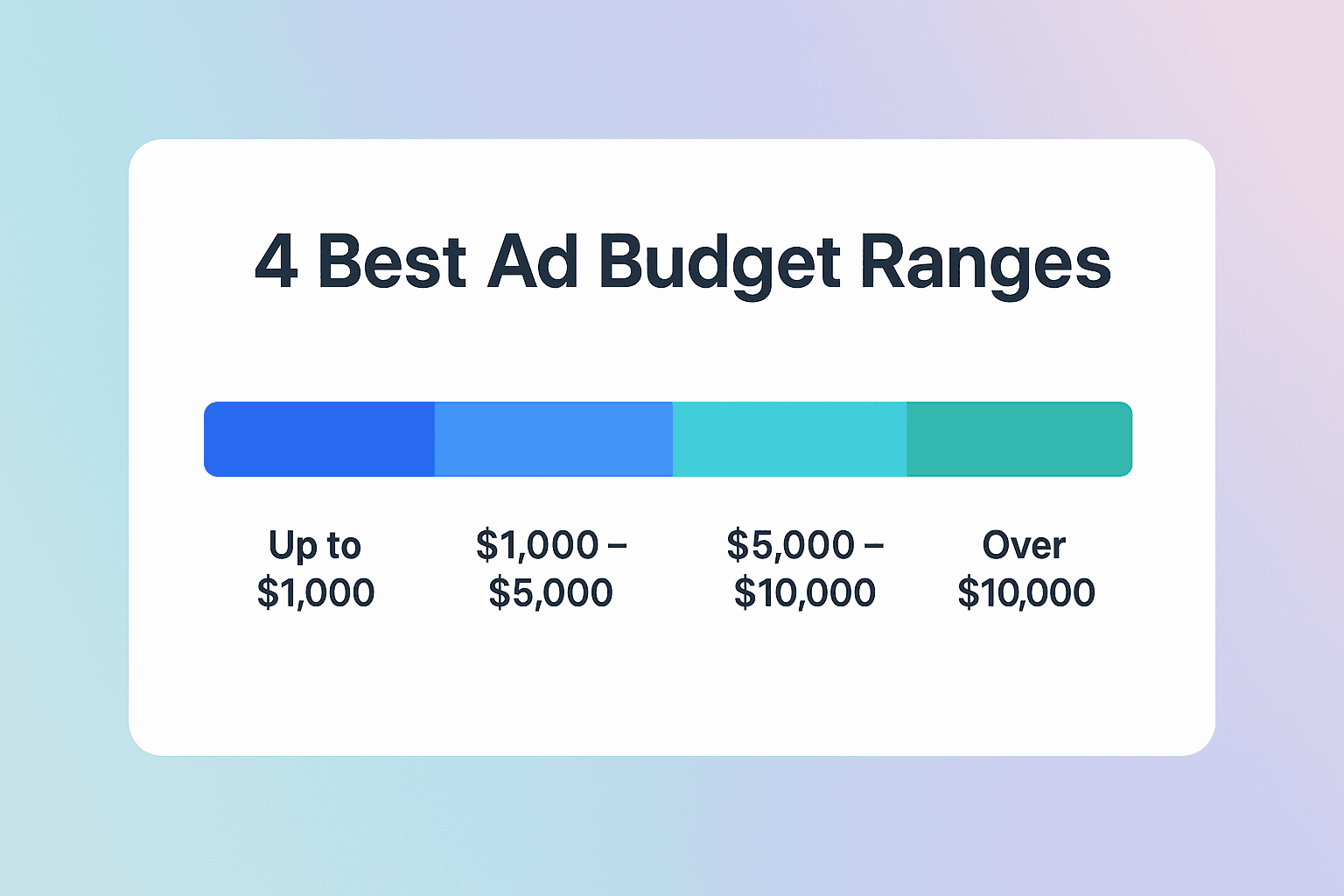
You've just launched what you thought was a perfectly optimized AI advertising campaign, only to watch your budget drain away with minimal results. Sound familiar? The harsh reality is that most marketers are operating within budget ranges that actually handicap their AI tools rather than empower them.
AI advertising platforms aren't one-size-fits-all solutions. Each platform requires specific spending thresholds to unlock its machine learning capabilities, gather sufficient data for optimization, and deliver the performance you're expecting. Too little budget starves the AI of the data it needs to learn and improve. Too much budget without proper structure leads to wasteful spending and diminishing returns.
The difference between AI advertising success and failure often comes down to matching your budget range with the right platform's optimization sweet spot. After analyzing performance data across hundreds of campaigns, certain budget ranges consistently deliver superior AI performance across different business sizes and objectives.
Here are the seven budget ranges that unlock maximum AI advertising potential, along with the specific platforms and strategies that thrive within each tier.
1. Choose one primary platform
The $50-$150 daily budget range represents the critical threshold where AI advertising transitions from theoretical possibility to practical reality for small businesses and startups. This isn't about having the biggest budget in your industry—it's about having enough concentrated spending power to feed AI algorithms the data they need to learn, adapt, and optimize your campaigns effectively.
Think of AI advertising platforms like students learning a new subject. They need enough examples to identify patterns and make intelligent decisions. Spread your budget too thin across multiple platforms, and each AI system gets only fragments of data—like trying to learn mathematics from random pages torn from different textbooks. Concentrate that same budget on a single platform, and suddenly the AI has a complete curriculum to master.
The Platform Selection Decision: Your first critical choice determines everything that follows. Meta Advantage+ campaigns excel in this budget range because they're specifically engineered for automated optimization with lower spending thresholds. The platform's AI can effectively target local audiences, test creative variations, and optimize delivery without requiring enterprise-level budgets. Google Smart Bidding works equally well for businesses where customers actively search for solutions—the high-intent nature of search traffic means fewer conversions are needed for the AI to identify optimization patterns.
The 80/20 Budget Allocation Framework: Dedicate 80% of your budget to your primary platform where your audience demonstrates the highest engagement. This concentration gives the AI sufficient data velocity to complete learning phases and begin meaningful optimization. The remaining 20% serves as your testing allocation for secondary channels—enough to gather preliminary performance data without fragmenting your primary platform's optimization capacity.
Conversion Tracking as Foundation: Before launching any AI-optimized campaign, your conversion tracking infrastructure must be flawless. AI algorithms optimize based on the signals you provide—if those signals are incomplete or inaccurate, the AI will optimize toward the wrong objectives. Install platform pixels, configure conversion events, and verify tracking accuracy with test transactions before committing budget.
The 14-Day Patience Protocol: Most AI advertising platforms require 10-14 days to exit their initial learning phases. During this period, the algorithm gathers baseline performance data, tests different delivery approaches, and begins identifying patterns in audience response. Making changes during this learning window resets the entire process, forcing the AI to start over. Monitor performance daily, but resist the urge to intervene unless results indicate fundamental campaign issues like zero conversions or catastrophically high costs.
Single-Platform Mastery Before Expansion: The most common mistake at this budget level is premature multi-platform expansion. Marketers see competitors advertising on multiple channels and assume they need the same presence. But spreading $150 daily across three platforms gives each AI system only $50 daily to work with—often below the threshold for effective optimization. Master one platform first, establish consistent performance, then consider expanding to additional channels.
Creative Simplification Strategy: Limit initial creative testing to 2-3 variations maximum. More variations fragment your already-limited budget, preventing the AI from gathering sufficient data on any single creative approach. Start with your strongest creative concepts, let the AI identify which performs best, then iterate based on those insights.
Local Business Advantages: If you're a local service business—dental practices, home improvement companies, professional services—this budget range offers particular advantages. Geographic targeting reduces your total addressable audience, allowing smaller budgets to achieve meaningful impression volume within your service area. The AI can effectively optimize for local conversions without competing against national advertisers with massive budgets.
Your key action step: Choose your primary platform today based on where your target audience demonstrates the highest engagement and intent. Implement conversion tracking, launch a single campaign with 2-3 creative variations, and commit to 14 days of consistent spending without intervention. This disciplined approach gives AI algorithms the concentrated data they need to deliver meaningful optimization within budget constraints that work for growing businesses.
2. Establish data management platform
The $500-$2,000 daily budget range represents the critical inflection point where AI advertising transforms from single-campaign optimization to sophisticated multi-variant testing. This is where your marketing operation shifts from managing individual campaigns to orchestrating an entire ecosystem of AI-driven experiments across audience segments, creative approaches, and messaging strategies.
Think of it like this: At the $50-$150 level, you're teaching one AI system to optimize one approach. At this mid-tier range, you're enabling multiple AI systems to compete against each other, identifying which combinations of audience, creative, and messaging drive the best results. The budget provides enough fuel for each variation to gather meaningful data while maintaining overall efficiency.
Why This Range Unlocks Advanced AI Capabilities
Most AI advertising platforms require minimum budget thresholds per campaign to exit learning phases and begin optimization. When you're spending $500-$2,000 daily, you can run 3-5 distinct campaigns simultaneously, each with sufficient budget for individual AI optimization. This creates a competitive testing environment where AI systems essentially race against each other to identify winning approaches.
The magic happens in the comparison. When you run a single campaign, AI optimizes within that campaign's constraints. When you run multiple campaigns with different audience segments or creative approaches, AI reveals which fundamental strategies work best for your business. You're not just optimizing tactics—you're discovering strategic insights about your market.
Implementing Multi-Campaign AI Architecture
Audience Segmentation Strategy: Divide your target market into 3-5 distinct segments based on meaningful behavioral or demographic differences. Don't create arbitrary segments—focus on characteristics that likely influence purchase decisions. B2C e-commerce might segment by purchase history (first-time buyers vs. repeat customers vs. high-value customers), while B2B companies might segment by company size, industry, or decision-maker role.
Creative Variation Framework: Develop 5-10 creative variations that test different value propositions, visual approaches, and messaging angles. The key is creating modular assets—headlines, images, body copy, and calls-to-action that can be mixed and matched. This allows AI to identify which specific elements resonate with each audience segment rather than just which complete ads perform best.
Automated Decision Rules: Establish clear KPI thresholds that trigger automated scaling or pausing decisions. For example, campaigns achieving below 50% of target ROAS after 7 days automatically pause, while campaigns exceeding 150% of target ROAS automatically receive 20% budget increases. These rules allow AI to make real-time optimization decisions without constant manual intervention.
Campaign Management Infrastructure: At this budget level, manual campaign management becomes unsustainable. You need automation tools that can launch multiple campaign variations simultaneously, monitor performance across all campaigns, and execute optimization decisions based on your predefined rules. This is where specialized ad launch tools become essential for maintaining efficiency while scaling campaign complexity.
The Strategic Shift: From Operator to AI Strategist
Your role fundamentally changes at this budget tier. Instead of managing individual campaigns, you're setting strategic direction and letting AI handle tactical execution. Weekly reviews should focus on identifying patterns across campaigns rather than making individual campaign adjustments.
Look for insights like: Which audience segments consistently deliver higher lifetime value? Which creative elements work across multiple segments versus those that only resonate with specific audiences? Which value propositions drive immediate conversions versus those that generate engagement but require longer consideration periods?
These strategic insights inform your next round of testing. If AI reveals that video creative outperforms static images across all segments, your next creative development cycle should emphasize video production. If certain audience segments consistently underperform despite creative variations, you might eliminate those segments and reallocate budget to higher-performing audiences.
Common Pitfalls to Avoid
The most frequent mistake at this budget level is creating too many campaign variations too quickly. While you have budget for 3-5 campaigns, launching all variations simultaneously fragments your data and delays optimization. Start with 2-3 campaigns, let them stabilize, then add additional variations based on initial learnings.
Another common error is inconsistent budget allocation across campaigns. If you're testing audience segments, each campaign needs similar budget levels to ensure fair comparison. Giving one campaign $1,000 daily and another $200 daily doesn't reveal which audience performs better—it only shows which campaign had more budget to optimize.
3. Implement unified customer data platform
The $5,000-$10,000 daily budget range represents the critical threshold where unified customer data platforms transform from optional infrastructure into essential competitive advantages. At this enterprise level, AI advertising success depends entirely on your ability to coordinate optimization across multiple channels while maintaining accurate attribution across increasingly complex customer journeys.
Most enterprise businesses reach this budget tier and immediately face a paradox: their AI tools are more sophisticated than ever, yet campaign performance becomes harder to measure and optimize. The problem isn't the AI—it's the fragmented data infrastructure trying to support it.
Without a unified customer data platform, your AI advertising systems are essentially blind. Meta's algorithm optimizes based on Meta data. Google's AI uses Google signals. Your programmatic platforms work with their own audience insights. Each system operates in isolation, creating optimization conflicts and attribution gaps that waste significant portions of enterprise advertising budgets.
Why Customer Data Platforms Unlock Enterprise AI Performance
A unified customer data platform serves as the central nervous system for enterprise AI advertising. It aggregates customer interactions across every touchpoint—website visits, email engagement, purchase history, customer service interactions, offline conversions—into comprehensive customer profiles that inform AI optimization across all advertising channels simultaneously.
The strategic value becomes clear when you consider how enterprise customers actually behave. They might discover your brand through a Meta ad, research on Google, compare options on review sites, engage with retargeting campaigns, and finally convert through a direct website visit weeks later. Without unified data, each advertising platform claims credit for the conversion, leading to budget misallocation and optimization conflicts.
Customer data platforms solve this by creating a single source of truth. Every advertising AI system receives the same comprehensive customer intelligence, enabling coordinated optimization rather than competing algorithms working at cross-purposes.
Implementation Requirements for Enterprise Success
Implementing a unified customer data platform at the enterprise level requires significant technical infrastructure and organizational commitment. The foundation starts with data integration—connecting every customer touchpoint into a centralized system that can process and distribute insights in real-time.
Your CDP must integrate with advertising platforms through direct API connections, not just pixel-based tracking. This enables bidirectional data flow where customer insights inform AI optimization while campaign performance data enriches customer profiles. The system should support identity resolution across devices and channels, creating persistent customer profiles even as individuals move between touchpoints.
Data governance becomes critical at this scale. Establish clear protocols for data collection, storage, and usage that comply with privacy regulations while maximizing advertising effectiveness. Your CDP should support consent management and data privacy controls that adapt to different regional requirements automatically.
The technical implementation typically requires 60-90 days for full deployment, including data integration, identity resolution configuration, audience segment creation, and advertising platform connections. Budget for both platform costs and implementation services—enterprise CDPs typically range from $50,000-$200,000 annually depending on data volume and feature requirements.
Cross-Channel Optimization Strategies
Once your unified customer data platform is operational, AI advertising optimization transforms from channel-specific tactics to orchestrated cross-channel strategies. Your advertising AI systems can now optimize based on complete customer journeys rather than isolated interactions.
Sequential Messaging Coordination: Use CDP data to ensure customers see coordinated messages across channels based on their journey stage. Someone who engaged with awareness content on Meta shouldn't see the same messaging in Google search ads—your AI should automatically adjust creative and targeting based on their progression through the funnel.
Dynamic Audience Suppression: Prevent budget waste by automatically suppressing audiences across channels once they convert or demonstrate disinterest. Your CDP should trigger real-time audience updates across all advertising platforms, ensuring AI optimization focuses on genuinely valuable prospects.
Value-Based Optimization: Enable AI systems to optimize for customer lifetime value rather than immediate conversion value. Your CDP can calculate predicted LTV based on customer attributes and behavior patterns, allowing advertising platforms to bid more aggressively for high-value prospects even if their initial conversion value appears modest.
4. Create modular creative assets
The $1,500-$4,000 daily budget range represents the critical threshold where creative production becomes your primary bottleneck rather than budget constraints. At this level, AI platforms have sufficient spending power to test creative variations aggressively, but most marketing teams struggle to produce enough creative assets to feed the algorithm's appetite for testing.
This is where modular creative architecture transforms campaign performance. Instead of creating complete ad variations one at a time, you build a library of interchangeable components that AI can automatically combine and test across different audience segments.
Understanding Modular Creative Systems
Modular creative assets work like building blocks. You create individual components—headlines, body copy variations, images, calls-to-action, and offers—that can be mixed and matched automatically. A library of 10 headlines, 8 images, 6 body copy variations, and 4 CTAs can generate 1,920 unique ad combinations without creating each one manually.
This approach solves the fundamental challenge of creative testing at scale. Traditional creative production requires designing, reviewing, and launching each ad variation individually. With modular assets, you create the components once, then let AI platforms automatically generate and test combinations based on performance data.
The strategic advantage extends beyond production efficiency. Modular systems allow AI to identify which specific creative elements drive performance rather than just which complete ads work best. You might discover that a particular headline performs exceptionally well with one audience segment when paired with specific imagery, while a different headline-image combination resonates with another segment.
Building Your Modular Creative Library
Start by deconstructing your best-performing ads into individual components. Analyze which elements appear consistently in winning variations—specific value propositions, emotional triggers, visual styles, or offer structures. These patterns become the foundation for your modular system.
Headline Development: Create 8-12 headline variations that test different value propositions, emotional appeals, and messaging angles. Include headlines focused on benefits, features, social proof, urgency, and curiosity. Each headline should work independently regardless of which image or body copy it's paired with.
Visual Asset Creation: Develop 6-10 image or video variations that showcase different product angles, use cases, or emotional contexts. Ensure visual consistency across assets while testing different compositional approaches. Images should complement any headline rather than requiring specific copy to make sense.
Body Copy Variations: Write 5-8 body copy options that elaborate on different aspects of your value proposition. Some should focus on features, others on benefits, social proof, or objection handling. Keep copy modular enough to work with any headline-image combination.
Call-to-Action Options: Create 4-6 CTA variations testing different action verbs, urgency levels, and value propositions. Test direct CTAs like "Shop Now" against softer approaches like "Learn More" or value-focused options like "Get Your Free Guide."
Implementing Dynamic Creative Optimization
Meta's Advantage+ Creative and Google's Responsive Search Ads are built specifically for modular creative testing. These platforms automatically generate combinations, test them across audience segments, and allocate more budget to winning variations.
Upload your modular components to the platform's dynamic creative interface. The AI will automatically generate combinations, test them against each other, and identify which specific elements drive the best performance with different audience segments. This happens continuously without manual intervention.
Set up performance monitoring that tracks individual component effectiveness rather than just complete ad performance. Most platforms provide breakdowns showing which headlines, images, and descriptions appear most frequently in top-performing combinations. Use these insights to refine your component library over time.
Establish refresh cadences for different component types. Headlines and offers might need updating every 2-3 weeks to maintain freshness, while visual assets can often perform effectively for 4-6 weeks before requiring rotation. Monitor frequency metrics to identify when creative fatigue begins affecting performance.
Making the Right Choice
The path to AI advertising success isn't about having the biggest budget—it's about matching your spending capacity with platforms and strategies that can deliver meaningful optimization within your constraints. Whether you're starting with $50 daily or scaling to $8,000+, the key is consistency and strategic alignment.
If you're just beginning your AI advertising journey, the $50-$150 range with Meta Advantage+ or Google Smart Bidding provides the foundation you need. Growing businesses ready to scale will find the $500-$2,000 range unlocks sophisticated multi-campaign automation that transforms efficiency. Enterprise operations benefit from the $5,000+ ranges that enable true cross-channel coordination and advanced attribution modeling.
The most critical decision you'll make isn't choosing a budget range—it's committing to sustained investment within that range for at least 90 days. AI algorithms reward patience and consistency with increasingly sophisticated optimization capabilities that compound over time. Start where your current spend aligns, focus on one or two platforms rather than fragmenting your budget, and let the AI systems gather the data they need to deliver results.
Ready to maximize your AI advertising performance without the manual complexity? Start Free Trial With AdStellar AI and let our specialized marketing agents automatically analyze your top-performing campaigns, test winning variations, and launch optimized ads at scale—all within your chosen budget range.