Managing a successful Meta Ads account in 2025 means grappling with relentless optimization, constant A/B testing, and an ever-growing number of campaign variables. The manual approach of tweaking bids, pausing underperforming creatives, and scaling winning ad sets is no longer just inefficient; it's a direct path to falling behind your competition. The core problem is clear: the scale and complexity of modern ad platforms have outpaced human capacity for micromanagement. This is where dedicated Facebook ads automation tools become essential, transforming campaign management from a reactive chore into a proactive, data-driven strategy.
This resource is designed to cut through the noise and help you identify the right platform for your specific needs, whether you're a nimble e-commerce brand, a fast-moving growth team, or a digital agency juggling multiple client accounts. We will provide a comprehensive breakdown of the market's leading solutions, moving beyond surface-level feature lists to offer a genuine analysis. For each tool, you'll find a detailed review covering:
- Core features and performance automation capabilities.
- Ideal use cases and target users.
- Pricing tiers and what you get at each level.
- Honest pros and cons based on real-world application.
- Integration and setup considerations.
To truly grasp the transformative power of these solutions, it’s beneficial to review a broader spectrum of other top-rated social media automation tools to see how they fit into a wider marketing stack. Our goal here is to equip you with the insights needed to make a confident, informed decision, saving you hours of research and costly trial-and-error. Let's find the tool that will automate your repetitive tasks and unlock new levels of campaign performance.
1. AdStellar AI
AdStellar AI is a powerful and intelligent platform engineered to solve one of the most significant challenges in Meta advertising: launching, testing, and scaling campaigns at speed without sacrificing data integrity. Positioned as a premier choice among Facebook ads automation tools, it excels at transforming creative assets into hundreds of structured ad variations, allowing performance marketers to move from concept to live campaign in minutes, not days. Its core strength lies in combining bulk ad creation with a sophisticated AI learning layer.
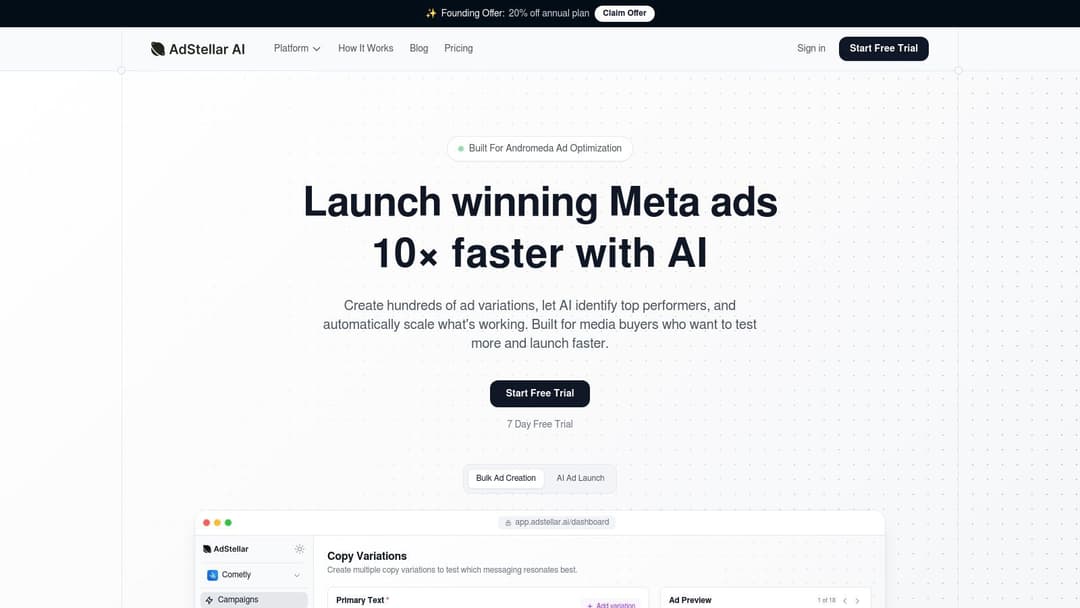
The platform securely connects to your Meta Ads Manager via OAuth, ingesting historical performance data to understand what truly drives results for your specific business goals, whether that's ROAS, CPL, or CPA. This data-driven approach removes guesswork from creative and audience selection. The AI Insights engine ranks your best-performing assets, while the AI Launch engine assembles new campaigns using only these proven combinations. This creates a continuous optimization loop where every new launch is smarter than the last. For a deeper dive into optimizing your campaigns with these insights, you can explore detailed strategies for Facebook ad optimization.
Key Features & Use Cases
AdStellar’s features are built for high-tempo teams that need to test relentlessly and scale efficiently.
- Bulk Ad Creation: Generate over 100 unique ad variations by combining multiple creatives, headlines, copy, and audiences. This is ideal for agencies and e-commerce brands needing to run A/B tests at scale.
- AI-Powered Insights: The platform analyzes your account history to rank top-performing creatives, copy, and audiences. Growth teams can use this to quickly identify winning patterns and double down on what works.
- One-Click AI Launch & Auto-Scaling: Push entire campaigns built from AI-ranked components live with a single click. The system also monitors performance and can automatically scale budgets for high-performing ads, ensuring you never miss an opportunity.
- Centralized Workflow: Manage campaigns, creatives, audiences, and performance analytics from a single, unified dashboard. This reduces manual setup errors and streamlines team collaboration.
Pricing and Availability
AdStellar AI does not publicly list its pricing tiers. However, they provide a 7-day free trial for new users to evaluate the platform's full capabilities. They also offer a founding member discount of 20% off an annual plan, making it an attractive option for teams ready to commit.
Pros and Cons
| Pros | Cons |
|---|---|
| Massive Speed & Scale: Launch hundreds of ads in minutes. | Meta-Only Focus: Does not support Google, TikTok, or other ad channels. |
| Data-Driven AI: Learns from your Meta data to improve decision-making. | Dependent on Historical Data: Accounts with limited history may see slower AI learning. |
| Automated Scaling: Automatically allocates budget to top performers. | |
| Centralized Workflow: Reduces manual errors and streamlines operations. |
Website: https://www.adstellar.ai
2. Meta Ads automation (Meta Advantage suite and Automated Rules)
Before exploring third-party software, it’s essential to master the powerful facebook ads automation tools built directly into Meta’s platform. The Meta Advantage suite is the company’s AI-driven solution for simplifying and optimizing campaigns, making it the best starting point for any advertiser.
Advantage+ campaigns, especially Advantage+ Shopping, automate nearly every aspect of campaign management. This includes audience targeting, budget allocation, placements, and even creative combinations. Meta’s AI analyzes vast data sets to find high-intent users and dynamically shifts your budget to the best-performing assets, significantly reducing manual oversight. While this powerful automation is a huge time-saver, it does mean relinquishing some granular control compared to manual setups.
For those who need more control, Meta’s Automated Rules offer a perfect middle ground. You can set up "if-then" conditions to manage campaigns, such as automatically pausing underperforming ads or increasing budgets on successful ad sets when they hit specific KPIs.
Core Features & Use Case
- Best For: Advertisers of all sizes, especially e-commerce brands and lead-gen businesses who want to leverage Meta’s powerful AI without incurring additional software costs.
- Key Feature: Advantage+ Shopping Campaigns which automate the entire sales campaign process from audience to creative delivery.
- Implementation: Accessible directly within your Meta Ads Manager account. To learn more about navigating the platform, check out this guide on how to use Facebook Ads Manager.
Since Advantage+ heavily relies on creative assets to find winning combinations, scaling your content pipeline is crucial. Using dedicated AI short video generator tools can help you produce a high volume of diverse ad creatives needed to fuel the algorithm effectively for platforms like Instagram Reels and Facebook Stories.
| Pros | Cons |
|---|---|
| No additional cost - it's included | Less manual control with Advantage+ |
| Deepest integration with Meta's algorithm | Automated Rules have a steeper learning curve than simple toggles |
| Immediate access to new AI features | UX for some features is in transition from legacy systems |
Website: facebook.com/business/ads/automation
3. Smartly.io
Smartly.io is an enterprise-grade social advertising platform designed for large brands and agencies managing complex, high-spend campaigns. It goes beyond simple rules by integrating creative production and media buying into a single, powerful workflow. This makes it one of the most comprehensive Facebook ads automation tools for teams that need to scale both ad creation and campaign management simultaneously.
The platform excels at creative automation, allowing users to build dynamic image and video templates that can pull from product feeds to generate thousands of ad variations instantly. This is combined with sophisticated, rule-based optimization for media buying, cross-channel campaign management, and robust reporting capabilities. For organizations needing strict governance and collaboration features, Smartly.io provides a centralized environment to manage user permissions and workflows effectively.
Core Features & Use Case
- Best For: Large-scale advertisers, global brands, and performance marketing agencies managing significant ad spend across multiple social channels.
- Key Feature: Integrated creative and media automation, allowing for the mass production of personalized ads using dynamic templates and product feeds.
- Implementation: Requires a demo and custom setup. The platform's advanced features mean there is a learning curve, but its power is in its ability to manage complex ad accounts. For deeper insights on managing large budgets, you can learn more about how to optimize ad budget allocation.
The tool's strength lies in unifying workflows that are often siloed. A creative team can work on templates within the same platform the media buyers use to set up automation rules, ensuring a cohesive and efficient campaign launch process from start to finish.
| Pros | Cons |
|---|---|
| Proven for large, complex paid-social programs | Pricing is custom/enterprise and not suitable for small budgets |
| Strong combined creative and media workflow | Steeper learning curve compared to simpler tools |
| Deep automation and reporting capabilities | Can be overly complex for teams with straightforward needs |
Website: https://www.smartly.io
4. Madgicx
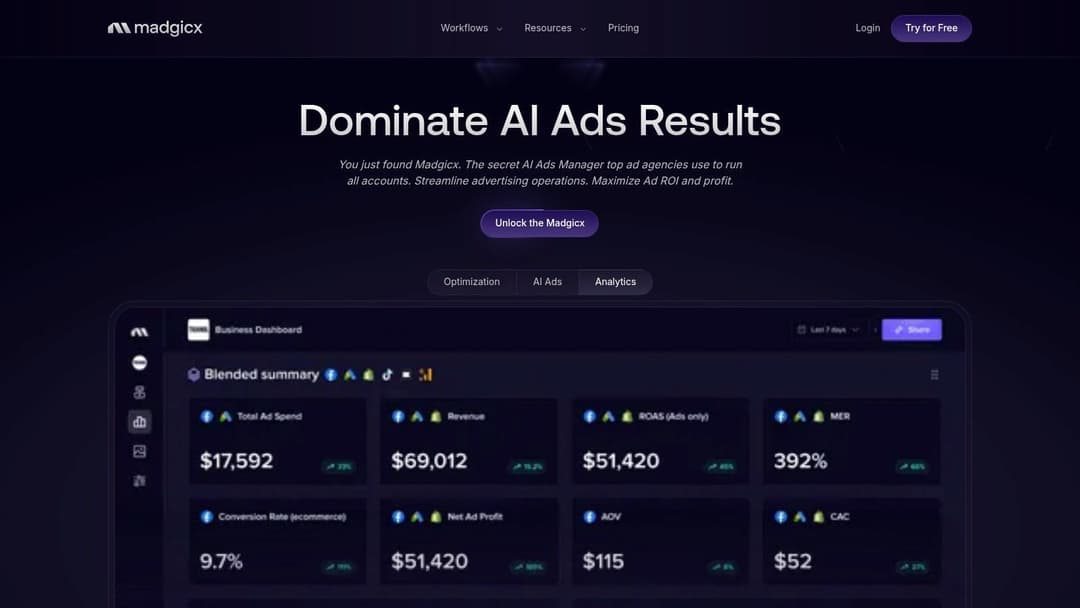
Madgicx is an AI-powered advertising platform designed specifically to optimize and automate Meta ad campaigns. It serves as a comprehensive ads manager, offering advanced automation for budgeting, rule-based triggers, creative testing, and in-depth analytics that go beyond the native Ads Manager interface. The platform is particularly popular among e-commerce brands and agencies looking for a unified tool to manage ad operations and scale their testing efforts efficiently.
Madgicx distinguishes itself by combining rule-based automations with AI-driven recommendations. Its AI Marketer feature provides strategic insights and suggestions, while its rule engine handles tactical tasks like budget shifting and ad pausing. The platform also includes features for creative generation and automated ad launches, streamlining the entire workflow from asset creation to campaign management.
Core Features & Use Case
- Best For: E-commerce businesses and performance marketing agencies seeking an all-in-one platform for Meta ad automation, creative management, and analytics.
- Key Feature: A combination of rule-based automations and AI-powered strategic recommendations for budget optimization and audience targeting.
- Implementation: Integrates with your Meta Ads account via API access. Pricing is based on ad spend and is only visible after signing up for a trial. Be sure to review the terms carefully, as some users have reported mixed experiences with billing.
Madgicx also offers a "One-Click Report" feature that consolidates data from Meta, Google, and TikTok into cross-channel dashboards, providing a holistic view of your advertising performance. This is a significant advantage for marketers managing campaigns across multiple platforms who need a single source of truth for their analytics.
| Pros | Cons |
|---|---|
| Broad feature set for Meta ad operations in one tool | Pricing is shown only inside the app and varies by spend |
| Combines tactical rule automation with AI insights | Mixed user feedback online about billing/refunds - evaluate terms |
| 7-day free trial to test automations | Can feel complex for beginners not familiar with advanced ad ops |
Website: https://madgicx.com
5. Bïrch (formerly Revealbot)
As one of the long-standing rule-based facebook ads automation tools, Bïrch (which recently rebranded from Revealbot) has a strong reputation for its granular control. It specializes in helping advertisers create complex, multi-layered "if-then" scenarios to manage campaigns with precision, going beyond what Meta’s native rules can offer.
The platform is designed for performance marketers who want to automate their best practices without giving up strategic oversight. For example, you can build rules that check metrics over multiple timeframes or combine conditions from both Facebook and external analytics tools like Google Analytics or Hyros. This level of detail makes Bïrch a powerful ally for agencies and in-house teams managing significant ad spend.
Beyond just rules, Bïrch provides useful reporting features, including insights into top-performing audiences and creatives. Integrations with tools like Slack and Google Sheets allow for automated reporting and alerts, keeping your team informed without constant manual checks in Ads Manager.
Core Features & Use Case
- Best For: Agencies and performance marketing teams that rely on sophisticated, rule-based strategies to scale and optimize campaigns.
- Key Feature: Smart Rules that allow for building complex, multi-condition automation sequences using custom metrics and lookback windows.
- Implementation: Connects directly to your Meta Ads account via API. Setup involves defining your first set of rules within the Bïrch dashboard.
The clear user interface makes it relatively straightforward to build out even the most intricate rule structures. For advertisers focused on optimizing existing workflows rather than creative production, Bïrch offers a focused and powerful solution.
| Pros | Cons |
|---|---|
| Transparent starter pricing with a 14-day free trial | Pricing is tied to monthly ad spend and overages may apply |
| Clear UI for building complex automation rules | Fewer creative production ops compared with end-to-end suites |
| Integrates with third-party tracking tools for better data | Can be complex for beginners unfamiliar with rule-based automation |
Website: https://bir.ch
6. Skai (formerly Kenshoo)
Skai positions itself as an omnichannel intelligence and activation platform designed for enterprise-level advertisers. Far more than just a Meta tool, it integrates paid social, search, and retail media into a unified dashboard. This makes it an ideal choice for large organizations managing substantial, multi-channel advertising budgets who need robust governance, cross-platform insights, and predictive forecasting.
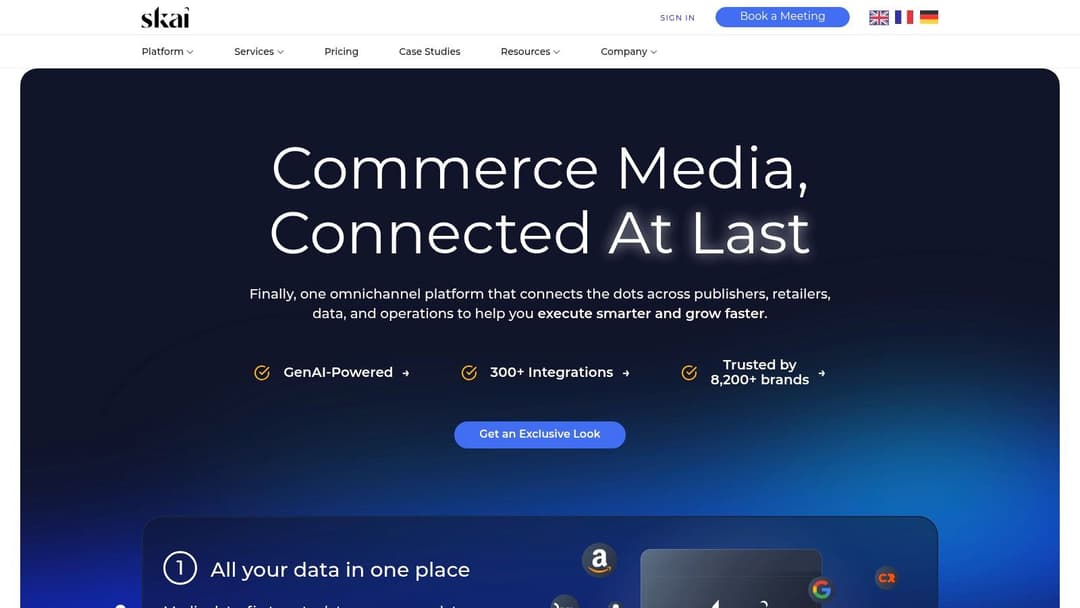
The platform's strength lies in its AI-powered optimization engine, which automates budget pacing and performance adjustments across channels, not just within the Meta ecosystem. While its primary audience is enterprise clients, Skai's comprehensive approach to Facebook ads automation tools provides a holistic view of how social ads contribute to the broader marketing mix. However, the high annual fees and significant onboarding effort make it unsuitable for SMBs or smaller teams.
Core Features & Use Case
- Best For: Large enterprise brands and agencies that manage high-volume, multi-channel ad spend and require sophisticated forecasting and governance.
- Key Feature: AI-powered budget pacing and optimization that allocates spend across paid search, social, and retail media for a holistic performance view.
- Implementation: Requires a significant onboarding process with dedicated support from Skai’s team, reflecting its enterprise-level complexity and cost.
Skai is built for scale, offering competitive intelligence and journey analytics that help large teams make strategic decisions. The platform provides a level of control and insight that is necessary when coordinating massive campaigns across different global markets and advertising platforms.
| Pros | Cons |
|---|---|
| Robust automation at scale with deep enterprise support | High annual fees; not SMB-friendly |
| Unifies social, search, and retail media data | Implementation and onboarding require significant effort |
| Advanced forecasting and budget management tools | The interface can be complex for users new to enterprise tools |
Website: skai.io
7. Sprinklr – Social Advertising
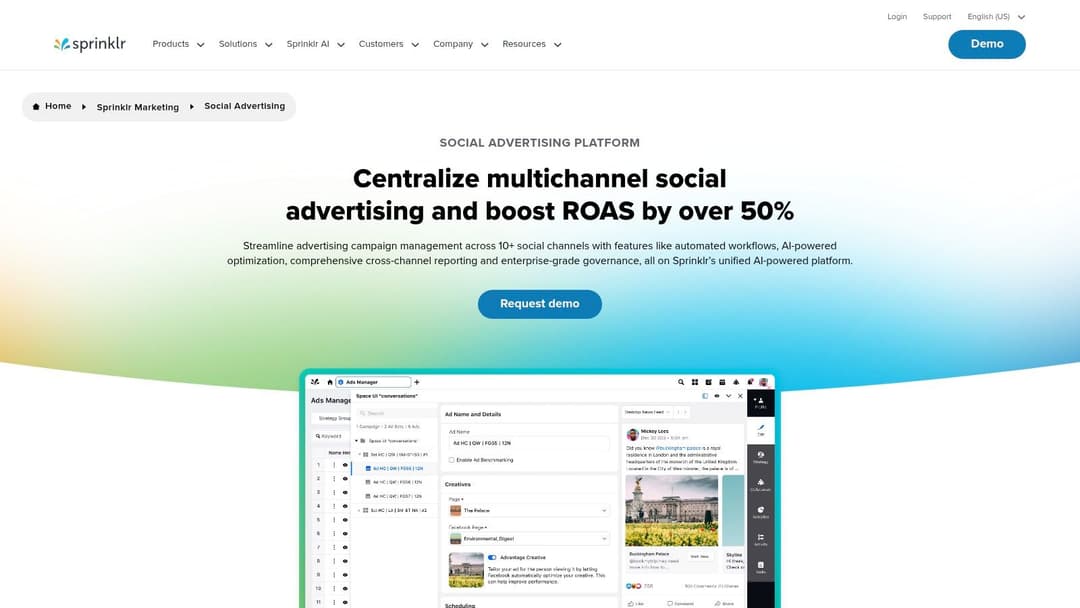
Sprinklr is an enterprise-grade platform designed for large organizations that need a unified solution for both paid and organic social media management. It offers sophisticated facebook ads automation tools focused on governance, compliance, and cross-channel visibility, making it a powerful choice for global brands operating in regulated industries or managing complex team structures.
The platform excels at centralizing ad operations with AI-driven budget and bid optimization, dynamic creative management, and automated ad rotation. Sprinklr’s strength lies in its ability to streamline workflows, allowing large teams to plan, execute, and report on campaigns within a single, controlled environment. This is less a point solution and more of a holistic marketing and advertising command center.
Core Features & Use Case
- Best For: Large enterprise brands, particularly in regulated sectors like finance or pharmaceuticals, that require robust approval workflows and a unified view of paid and organic social activities.
- Key Feature: Enterprise-level governance and compliance tools, including multi-step approval workflows and comprehensive, unified reporting across all social channels.
- Implementation: Requires a more involved setup process compared to plug-and-play tools, often involving dedicated onboarding and integration with existing martech stacks.
Sprinklr’s approach provides a level of control and oversight that is critical for brand safety and message consistency at scale. The platform ensures every ad aligns with brand guidelines and legal requirements before it goes live, a crucial feature for large, decentralized marketing teams.
| Pros | Cons |
|---|---|
| Strong compliance and approval workflows | Pricing available on request and typically enterprise-level |
| Single platform for paid and organic social visibility | Heavier implementation versus lightweight automation tools |
| Advanced AI for budget, bidding, and pacing optimization | Can be overly complex for smaller businesses or agencies |
Website: sprinklr.com/products/marketing-and-advertising/social-advertising/
8. AdRoll (with Social Ads add-on)
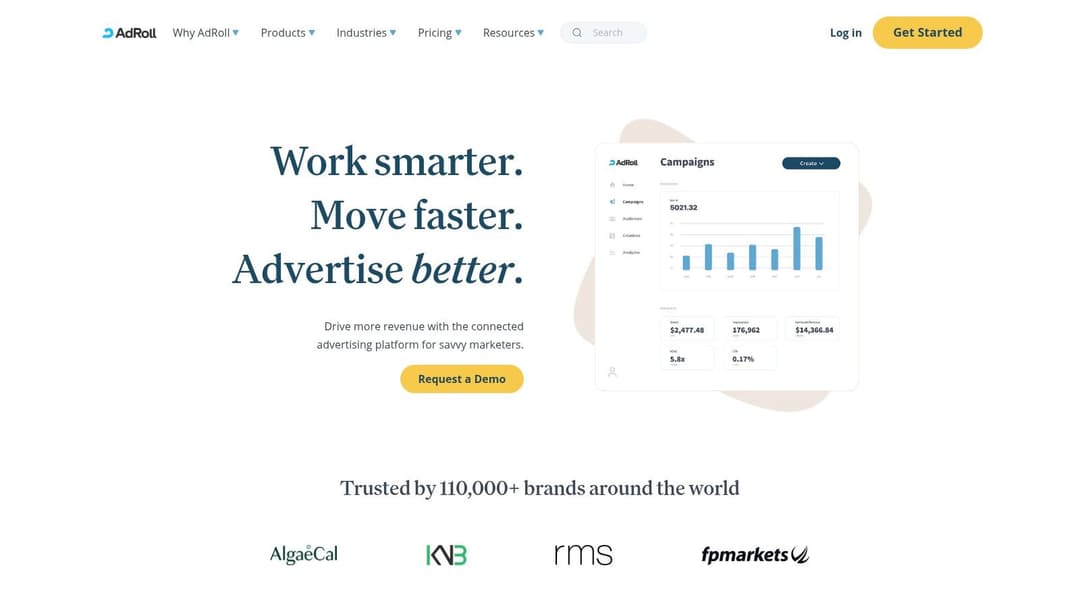
AdRoll is a well-known cross-channel advertising platform that extends its capabilities to social media with its Social Ads add-on. It's designed for brands, particularly in e-commerce, that want to unify their advertising efforts across the open web and social platforms like Facebook and Instagram from a single dashboard. Its strength lies in simplifying multi-channel budget allocation and remarketing.
The platform's automation "Recipes" allow advertisers to set rules that can dynamically shift budgets between channels, including Meta, based on performance. This is particularly useful for businesses running coordinated campaigns who want a hands-off approach to budget optimization. AdRoll also automates dynamic ad creation and remarketing, pulling from product catalogs to serve relevant ads to past website visitors.
Core Features & Use Case
- Best For: E-commerce brands wanting a simplified way to manage remarketing and dynamic ads across both Meta platforms and the wider web.
- Key Feature: Cross-channel budget automation that allocates spend between Meta and other channels to maximize overall campaign performance.
- Implementation: Integrates directly with major e-commerce platforms like Shopify and WooCommerce. The Social Ads feature is an add-on to the core AdRoll subscription.
AdRoll's automated audience features work well for retargeting, but combining them with Meta's native prospecting tools is key for growth. Expanding your reach with powerful targeting options is crucial, so be sure to check out this guide on how to use Facebook Lookalike Audiences to find new customers effectively.
| Pros | Cons |
|---|---|
| Low barrier to entry with pay-as-you-go media options | Advanced Meta-specific controls are lighter than specialist suites |
| Direct e-commerce integrations (Shopify, WooCommerce, etc.) | Some key automation features require paid add-ons |
| Unifies social and open web ad management | Primarily focused on remarketing rather than full-funnel automation |
Website: https://www.adroll.com
9. ROI Hunter
For large-scale e-commerce advertisers, managing dynamic ads across a massive product catalog is a monumental task. ROI Hunter is an enterprise-level platform designed specifically for this challenge, providing sophisticated automation tools that connect product-level performance data with your ad campaigns on Meta and Google.
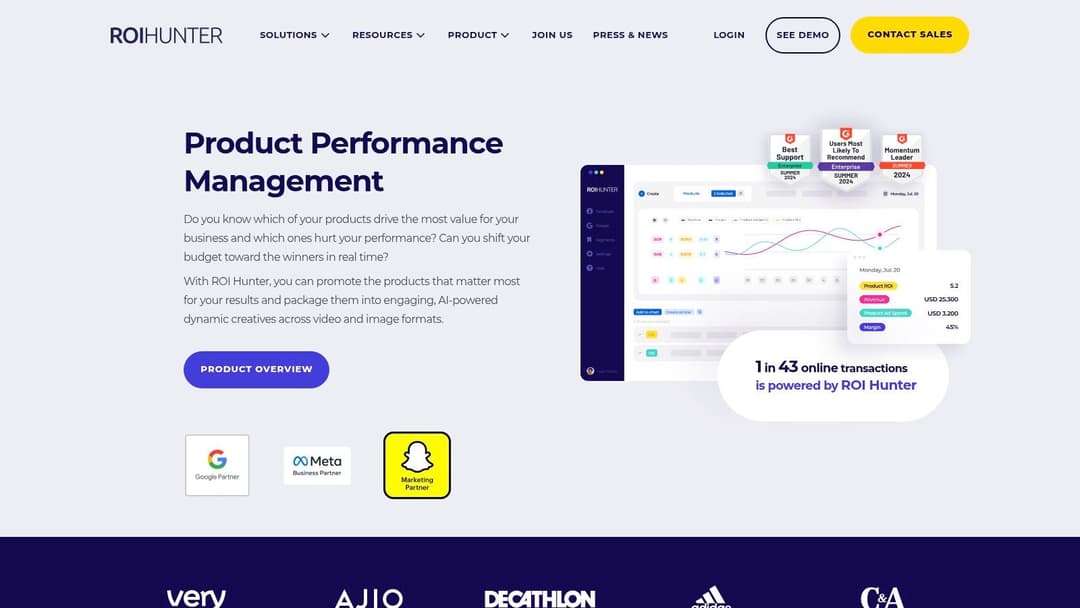
The platform’s core strength lies in its ability to merge data from your product feed, ad performance, and even merchandising analytics like stock levels or profit margins. This allows you to create rules that automatically promote your most profitable products or pause ads for out-of-stock items. Its Creative Factory feature also automates the creation of on-brand, dynamic ad templates that pull directly from your catalog, ensuring your creatives are always relevant and up-to-date at scale.
Core Features & Use Case
- Best For: Enterprise e-commerce brands and large retailers with extensive product catalogs who need to automate dynamic product ads based on business data.
- Key Feature: Product Insights, which combines catalog data with ad performance metrics to enable profit-driven automation rules.
- Implementation: Requires significant setup, including clean product data feeds and integration with analytics. ROI Hunter offers managed onboarding to guide new clients.
The platform is one of the more advanced facebook ads automation tools for catalog-based businesses. To get the most out of it, ensure your product feed hygiene is impeccable, as the automation relies heavily on the quality of this data.
| Pros | Cons |
|---|---|
| Catalog-aware automation targets high-ROAS products | Requires significant ad spend and extensive product data |
| Documented success stories for dynamic ads at scale | Pricing is a percentage of ad spend, which can become costly |
| Powerful template editor for on-brand dynamic creative | Steeper learning curve compared to more generalized automation platforms |
Website: https://www.roihunter.com
10. Optmyzr (Optmyzr for Social)
Best known for its robust PPC management capabilities, Optmyzr extends its powerful automation framework to social media with Optmyzr for Social. This platform is a natural fit for agencies and marketing teams already leveraging Optmyzr for Google Ads who want to unify their optimization and reporting workflows under a single, familiar interface. It brings a data-driven, rule-based approach to Meta Ads management.
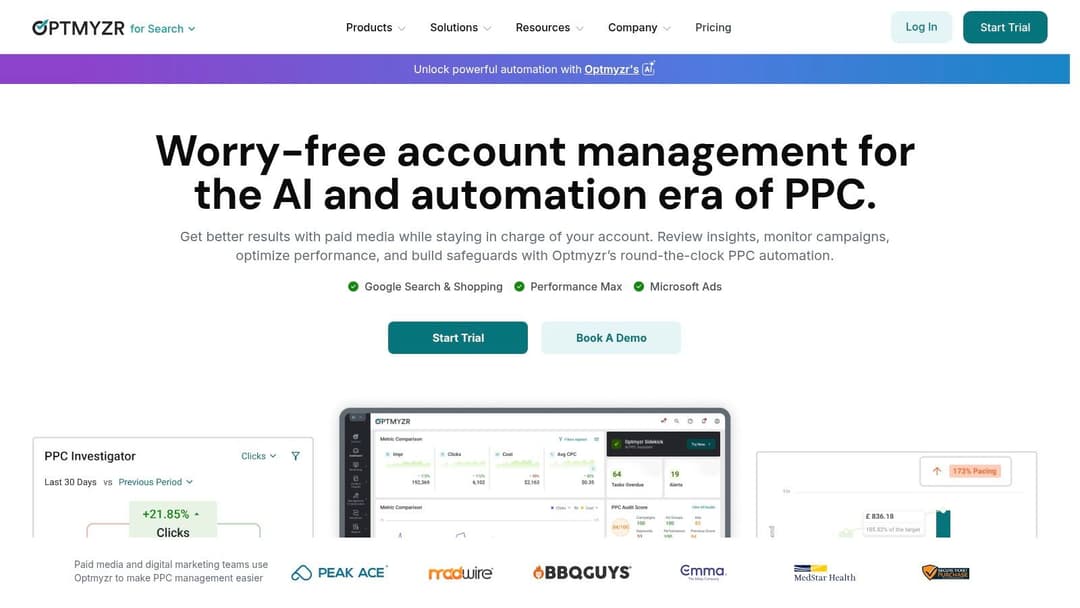
The core strength of Optmyzr for Social lies in its ability to consolidate insights and automate actions across both search and social channels. Instead of building separate processes, teams can apply similar logic for performance monitoring, budget adjustments, and alert systems. The platform provides a centralized Social Campaign Manager and dedicated reporting widgets, making cross-channel performance analysis much more streamlined and efficient. While its social features are still evolving, it stands out as one of the best facebook ads automation tools for PPC-centric teams.
Core Features & Use Case
- Best For: PPC agencies and in-house teams who already use Optmyzr and want to extend their rule-based automation and consolidated reporting to Meta Ads.
- Key Feature: The ability to create custom, rule-based optimization strategies and alerts for Meta campaigns that mirror the logic used for PPC management.
- Implementation: Integrates with existing Optmyzr accounts. The social features are part of their broader subscription plans, which require a direct inquiry for pricing details.
While Optmyzr is excellent for rule-based management and reporting, it doesn't focus on creative generation. Teams using its workflow can significantly benefit from pairing it with AI-powered creative tools to produce the ad variations needed for testing. This combination allows marketers to automate both the analytical and the creative aspects of campaign optimization.
| Pros | Cons |
|---|---|
| Unified workflow for search and social ads | Social features are less mature than its core PPC offerings |
| Consolidates reporting across Google and Meta | Pricing is not publicly listed and requires a custom quote |
| Familiar interface for existing Optmyzr users | Broader social platform support beyond Meta is still under development |
Website: https://www.optmyzr.com
11. Hunch
Hunch is a creative and media automation platform specializing in enhancing catalog-driven campaigns on Meta. It excels at transforming standard Dynamic Product Ads (DPAs) into highly personalized, visually compelling creatives at scale, making it a powerful tool for e-commerce and retail brands.
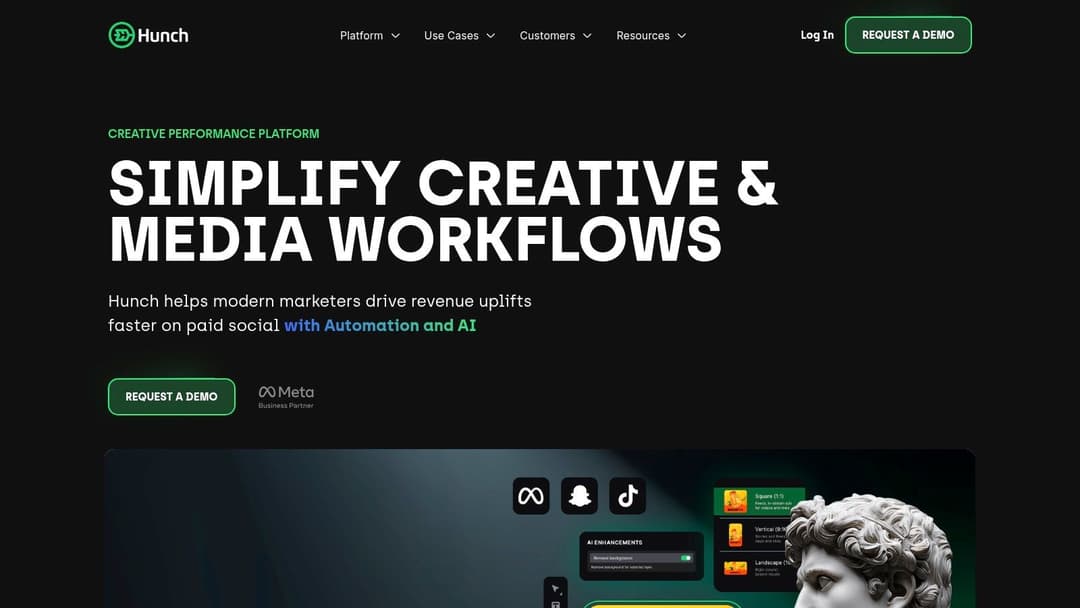
The platform automates the production of thousands of creative variations by pulling from product feeds and layering on branded templates, dynamic overlays, and contextual data like pricing or local store information. This level of personalization moves far beyond standard DPAs, allowing businesses to run hyper-relevant campaigns for different locations, audiences, or promotions without manual design work. Hunch is one of the more advanced facebook ads automation tools focused squarely on the creative aspect of campaign performance.
For brands looking to elevate their product-focused ads, Hunch’s approach is a form of advanced Dynamic Creative Optimization. To better understand the principles behind this strategy, explore this guide on what is Dynamic Creative Optimization.
Core Features & Use Case
- Best For: Large e-commerce brands, retailers with physical stores, and agencies managing complex, catalog-heavy ad accounts.
- Key Feature: AI-powered creative enrichment for Dynamic Product Ads, enabling on-brand, data-driven personalization at an unprecedented scale.
- Implementation: Requires integrating your product catalog and setting up creative templates within the Hunch platform before launching campaigns.
| Pros | Cons |
|---|---|
| Purpose-built for catalog and e-commerce automation | Pricing is partner/sales-led and not publicly listed |
| Documented performance lift vs. standard creatives | Best results require solid product feed hygiene and creative ops |
| Scales localized and store-level creative variations easily | Can have a significant learning curve for smaller teams |
Website: https://www.hunchads.com
12. Adwisely
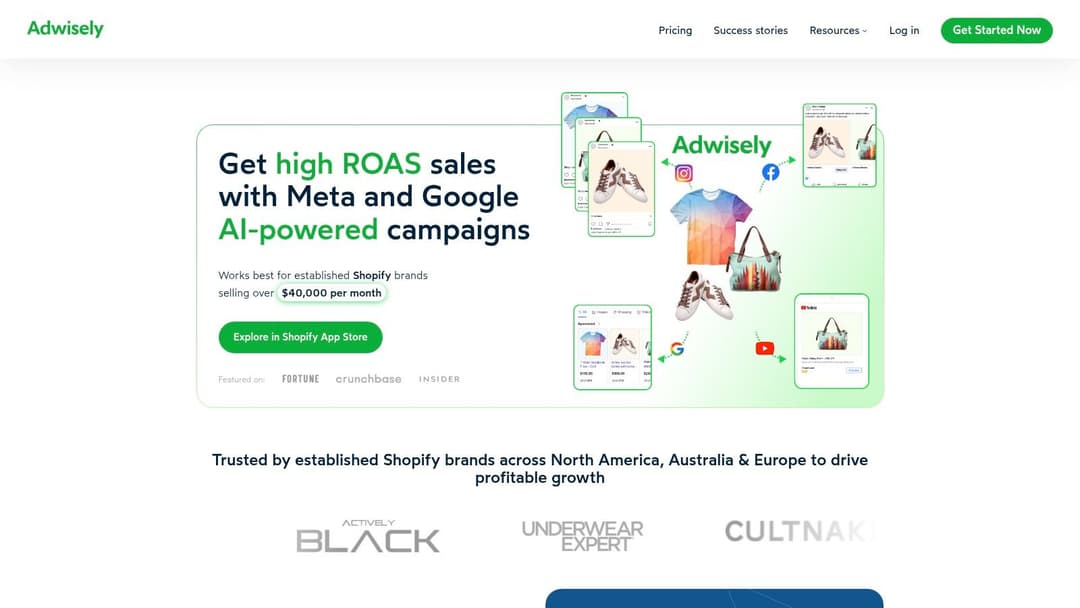
Adwisely is an AI-powered ad automation platform built specifically for e-commerce, with a strong focus on the Shopify ecosystem. It simplifies running prospecting and retargeting campaigns across both Meta and Google by handling the entire process from setup to ongoing optimization. This hands-off approach makes it an excellent choice for DTC brands that want expert-level results without the complexity of managing campaigns manually.
The platform's main appeal lies in its transparent, spend-based pricing model, which includes a fee cap at higher ad spend levels, preventing platform costs from spiraling. For brands needing extra guidance, Adwisely also offers optional access to human advertising experts, blending the efficiency of automation with the strategic oversight of a professional.
Core Features & Use Case
- Best For: Shopify DTC brands looking for a "set it and forget it" solution to run profitable Meta and Google ads with clear, scalable pricing.
- Key Feature: Fully automated prospecting and retargeting campaign creation and management, powered by AI and backed by optional human expertise.
- Implementation: A straightforward setup via their Shopify app, with a simple onboarding process that gets campaigns live quickly.
Adwisely is one of the more accessible facebook ads automation tools for merchants just starting with paid acquisition, as its model removes much of the initial guesswork and technical hurdles. The 7-day free trial allows store owners to test the platform's performance before committing.
| Pros | Cons |
|---|---|
| Transparent, low-entry pricing with a 7-day free trial | Best suited for Shopify/e-commerce, less flexible for complex B2B |
| Platform fee is capped at higher spends to limit monthly costs | Platform fees or overage charges apply above certain spend thresholds |
| Seamless integration with Shopify for quick setup | Automation may feel restrictive for advanced, hands-on media buyers |
Website: https://adwisely.com
Facebook Ads Automation: 12-Tool Feature Comparison
| Product | Core features | Performance / UX | Unique selling point | Target audience | Pricing |
|---|---|---|---|---|---|
| AdStellar AI (Recommended) | Bulk creative + copy + audience generation; AI Insights; one-click launch; auto-scaling | Very fast launch (100+ variants in minutes); AI ranks winners vs ROAS/CPL/CPA | Speed + data-driven automation to scale proven winners | Performance marketers, growth teams, DTC/e‑commerce, agencies | 7‑day free trial; founding 20% off annual (pricing not public) |
| Meta Ads automation (Advantage+ & Rules) | Native Advantage+ campaigns; automated rules; placement/budget/creative optimization | Deep Meta integration; fastest access to platform features; limited manual control in Advantage+ | Meta-native AI and first-party automation without third-party fees | Advertisers wanting native Meta automation | Pay only ad spend; included in Meta Ads Manager |
| Smartly.io | Dynamic creative templates; cross-channel automation; reporting & governance | Enterprise-grade reliability; steeper learning curve | End-to-end creative + media workflow across channels | Large brands and global agencies | Custom / enterprise pricing |
| Madgicx | Rule automations; creative generation/refresh; cross-channel dashboards | Broad feature set; approachable for midsize teams; some UX learning | Strong Meta-focused ops with AI recommendations | Ecommerce brands, agencies seeking advanced Meta ops | Pricing in-app; 7-day free trial |
| Bïrch (Revealbot) | Smart rules, strategies, post boosting; integrations (Slack, Sheets) | Clear UI for complex rules; transparent starter plans | Rule automation + integrations at affordable entry | Small–mid teams needing rule-based automation | Starter pricing visible; 14-day free trial; spend-tied fees |
| Skai (formerly Kenshoo) | Cross-channel optimization, forecasting, budget pacing | Robust enterprise support; heavy implementation | Omnichannel forecasting and governance at scale | High-spend advertisers, enterprise marketers | High annual fees; enterprise tiers |
| Sprinklr – Social Advertising | AI bidding/pacing; dynamic creative; approvals & governance | Unified paid + organic visibility; heavier onboarding | Compliance, approvals, and global workflow controls | Regulated/global brands and large teams | Enterprise pricing on request |
| AdRoll (with Social Ads) | Dynamic ads, remarketing, Recipes for budget allocation | Easy onboarding; pay-as-you-go media model | Simple ecommerce integrations + cross-channel remarketing | DTC ecommerce brands, SMBs | Low-entry; add-ons may be paid |
| ROI Hunter | Catalog-aware automation; template editor; product insights | Strong for large catalogs; needs feed hygiene | Product-level automation to drive SKU ROAS | Retailers with large ecommerce catalogs | Pricing often % of ad spend (1–5%); enterprise deals |
| Optmyzr (Optmyzr for Social) | Account insights; social campaign manager; scheduled reports | Familiar PPC workflows for teams; limited broader social features | Consolidates search + Meta optimization/reporting | PPC teams expanding into Meta | Pricing by inquiry / existing subscription |
| Hunch | Enriched DPAs; automated creative personalization; localization | Good lift for DPAs; requires strong feed & ops | Advanced DPA personalization and localized variations | Retailers needing catalog personalization | Partner/sales-led pricing (not public) |
| Adwisely | Shopify-first automated prospecting & retargeting; expert support | Simple onboarding via Shopify app; hands-off automation | Transparent spend-scaled fees with fee cap at high spend | Shopify DTC brands seeking managed automation | Transparent, spend-scaled fees; 7-day free trial |
From Manual Tasks to Strategic Growth: Making Your Choice
Navigating the landscape of Facebook ads automation tools can feel overwhelming. We've journeyed through a comprehensive list, from Meta’s native solutions and enterprise-grade platforms like Smartly.io and Skai, to specialized tools like Madgicx and ROI Hunter. Each offers a unique pathway to escape the drudgery of manual campaign management and unlock new levels of performance. The central theme is clear: automation isn't about replacing the marketer; it's about elevating them from a tactical operator to a strategic architect.
The right tool acts as a force multiplier, handling the repetitive, data-heavy tasks that consume valuable hours. This allows you and your team to refocus on what truly matters: creative strategy, audience psychology, and high-level growth initiatives. By automating budget pacing, bid adjustments, and rule-based optimizations, you are freed from the constant, reactive monitoring of campaigns and can instead proactively shape market-moving strategies.
Key Takeaways and Your Next Steps
The primary takeaway is that there is no single "best" tool for everyone. The ideal choice is deeply rooted in your specific context, including your business model, team size, budget, and ultimate marketing objectives. To make an informed decision, you need a clear framework for evaluation.
Actionable Steps for Selecting Your Tool:
- Audit Your Current Workflow: Before you look outward, look inward. Document the most time-consuming, repetitive tasks your team performs daily. Are you spending hours duplicating ad sets? Manually pausing underperforming ads? Struggling to scale creative testing? Your biggest pain points are the best starting point.
- Define Your "Must-Have" Features: Based on your audit, create a checklist. For an e-commerce brand, this might include dynamic product ad (DPA) customization and ROAS-based bidding rules. For an agency, multi-account management and automated client reporting are non-negotiable.
- Evaluate Based on Your Scale and Maturity:
- Startups and Small Teams: Begin with Meta’s native Automated Rules and Advantage+ suite. They are free and powerful enough for initial scaling. Tools like Adwisely or Madgicx offer a logical next step with more sophisticated features at a manageable price point.
- Growth-Stage Companies and Agencies: This is the sweet spot for platforms like Bïrch, Hunch, or our own AdStellar AI. These tools provide a robust balance of creative automation, advanced rule-building, and performance optimization without the enterprise-level price tag.
- Large Enterprises: For those managing millions in ad spend across numerous markets, enterprise solutions like Smartly.io, Skai, or Sprinklr offer the comprehensive, cross-channel capabilities and dedicated support required for massive scale.
Final Considerations for Implementation
Once you’ve shortlisted your preferred Facebook ads automation tools, the journey isn't over. A successful implementation requires a strategic mindset. Remember to start small by automating a single, well-understood workflow. Set clear KPIs to measure the tool's impact against your manual efforts. Is it saving time? Is it improving ROAS?
Most importantly, foster a culture of learning and adaptation within your team. These platforms are not "set it and forget it" solutions. They are powerful instruments that, in the hands of a skilled marketer, can transform campaign performance from good to exceptional. The goal is to evolve from simply managing ads to strategically engineering sustainable growth, and the right automation partner is your key to getting there.
Ready to move beyond basic rules and unlock AI-powered growth? AdStellar AI was built to solve the core challenges of scaling on Meta by combining intelligent, bulk ad creation with a self-learning optimization engine that automates performance at a level manual adjustments can't match. See how our platform can become your strategic advantage by visiting AdStellar AI and booking a demo today.