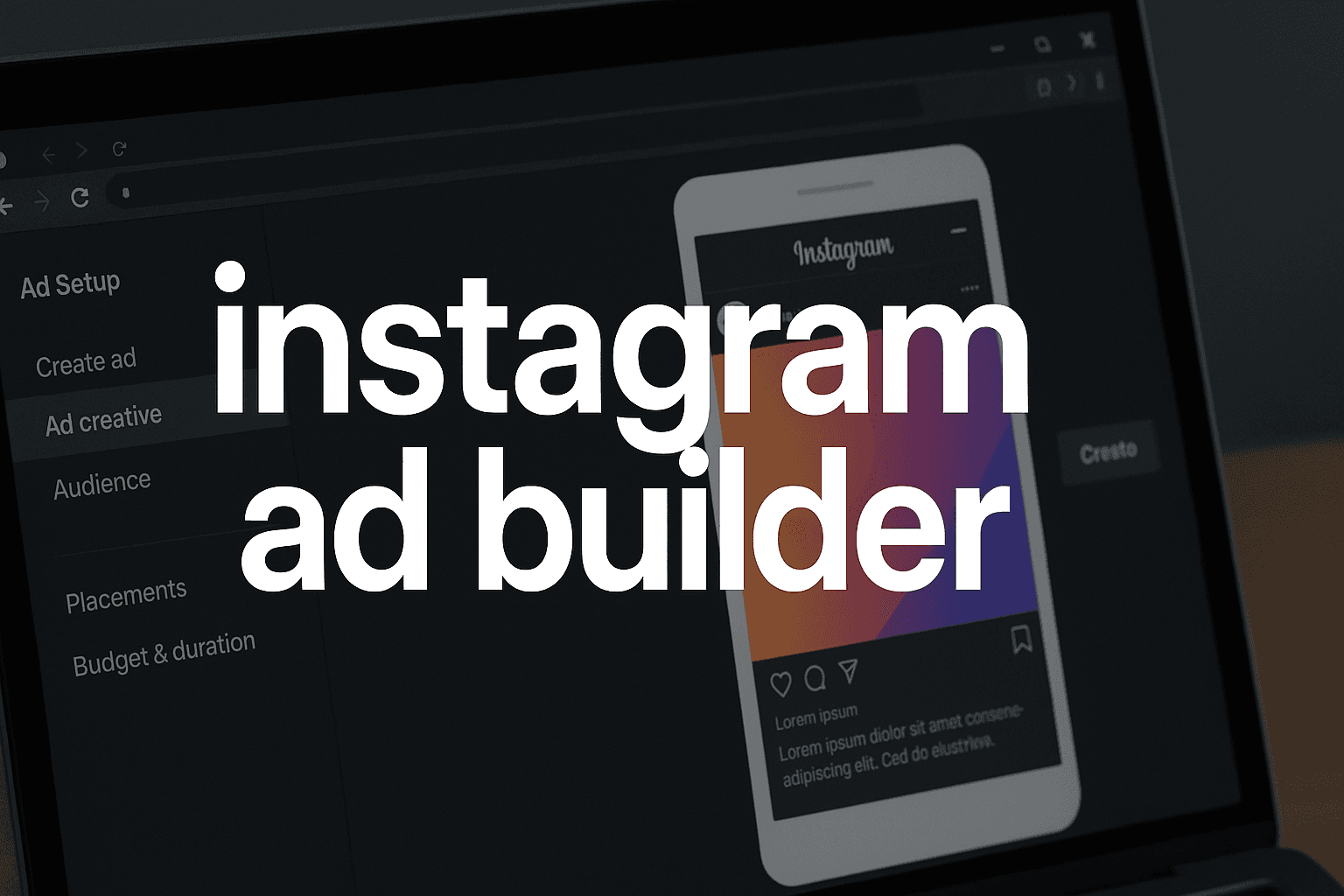
You've spent the last hour staring at Instagram's ad builder, cycling through stock photos and generic templates that all look the same. Your competitor's ads seem to effortlessly capture attention and drive sales, while yours get lost in the endless scroll. The frustration isn't just about creating something visually appealing—it's about building ads that actually convert browsers into buyers while you're managing a dozen other marketing priorities.
The gap between ads that perform and ads that flop rarely comes down to budget or creative talent. It's about strategic approach. Most marketers create beautiful content that doesn't connect, waste hours on manual tweaks that barely move the needle, or watch winning campaigns collapse the moment they try to scale. With over 2 billion monthly active users scrolling past thousands of posts daily, your ads need systematic strategies that combine creative psychology with data-driven optimization.
The most successful Instagram advertisers have cracked the code on building repeatable processes that deliver consistent results across industries and budgets. These aren't theoretical concepts—they're proven methodologies that transform how you approach ad creation and campaign management. Whether you're launching your first Instagram campaign or optimizing existing efforts, these strategies will help you build ads that actually move the needle for your business.
Here are the top Instagram ad builder strategies that separate high-performing campaigns from the rest.
1. Master the Hook-Story-Offer Framework
Most Instagram ads fail in the first two seconds because they jump straight into selling without earning attention or building context. Users scroll past generic promotional content at lightning speed, but they stop cold when something speaks directly to their current situation. The difference between an ad that gets scrolled past and one that drives action often comes down to a simple three-part structure that mirrors how people naturally make decisions.
The Challenge It Solves
The fundamental problem with most Instagram advertising is the disconnect between what advertisers want to communicate and what users are willing to hear. When you lead with your product or offer, you're asking people to care about your solution before they understand the problem. This creates immediate resistance because users haven't yet connected your message to their own experience.
Think about your own Instagram behavior. You scroll quickly, stopping only when something catches your eye or speaks to a specific need you're experiencing. Generic ads that start with "Buy now" or "Limited time offer" trigger immediate skepticism because they haven't earned your attention or trust. The Hook-Story-Offer framework solves this by creating a natural progression that aligns with how your brain actually processes information and makes purchasing decisions.
The Strategy Explained
The Hook-Story-Offer framework consists of three distinct components that work together to guide prospects from attention to action. Each element serves a specific psychological purpose in the persuasion process.
The Hook: Your hook is the pattern interrupt that stops the scroll. It works by activating recognition—making users think "that's exactly my situation" or "I need to know more about this." The most effective hooks reference specific, concrete situations rather than abstract benefits. Instead of "Want better marketing results?" try "Spending 3 hours creating one Instagram post?" The specificity signals relevance immediately.
The Story: Once you've captured attention, the story builds emotional connection and provides context. This isn't about telling your brand's origin story—it's about showing transformation or revealing insight that reframes the viewer's understanding. Your story might demonstrate the contrast between current struggle and desired outcome, share a discovery that changes perspective, or validate frustrations the audience already feels.
The Offer: After establishing relevance and building context, your offer presents the solution as a logical next step rather than an interruption. The key is positioning your product or service as helpful information rather than a sales pitch. Frame it as "here's how to solve this" instead of "buy this product."
Implementation Steps
Start by identifying the specific moment of frustration, desire, or curiosity your audience experiences. This becomes your hook foundation. Avoid generic pain points that could apply to anyone. Instead, reference concrete situations with measurable elements—specific time investments, recurring frustrations, or precise scenarios your ideal customers face regularly.
Develop your story by choosing one of three approaches. The contrast method shows the stark difference between current state and desired state. The discovery method reveals an insight or approach the audience hasn't considered. The validation method confirms suspicions or frustrations, building trust before presenting solutions. Keep your story concise—Instagram's fast-paced environment demands brevity. Aim for 2-3 sentences that create emotional resonance without overextending attention spans.
Craft your offer to directly address the problem established in your hook. The connection should feel obvious and natural. If your hook references spending hours on content creation, your offer should clearly explain how your solution reduces that time investment. Include specific value propositions that make the benefit tangible rather than abstract.
Test different hook variations systematically while keeping story and offer constant. This isolation allows you to identify which problem statements or curiosity triggers resonate most strongly with your audience. Track both click-through rates and conversion rates, as some hooks may generate clicks without qualified interest. Document which hooks perform best for different audience segments.
Analyze performance data to understand not just which hooks work, but why they resonate with your specific audience. This insight becomes the foundation for creating more effective ads across all your campaigns.
2. Implement Creative Testing at Scale
Most Instagram advertisers create one or two ad variations, launch them, and hope for the best. This approach leaves massive performance gains on the table because you're essentially guessing what will resonate with your audience. The reality? Even experienced marketers can't predict which creative elements will drive the best results until they test systematically.
Creative testing at scale means launching multiple ad variations simultaneously to identify which specific elements—headlines, images, opening lines, or calls-to-action—actually drive conversions. This isn't about creating dozens of completely different ads. It's about isolating individual variables to understand what works and why.
The Core Testing Methodology: Start by identifying one element to test while keeping everything else constant. If you're testing headlines, use the same image, body copy, and call-to-action across all variations. Change only the headline. This isolation reveals which specific element drives performance differences rather than creating confusion about what actually worked.
Setting Up Your First Test: Create 3-4 variations of your chosen element. For headline testing, you might try a question-based headline, a benefit-focused headline, a curiosity-driven headline, and a direct statement. Launch all variations with equal budget allocation and identical targeting parameters. This ensures fair comparison without budget or audience bias affecting results.
The Data Collection Phase: Run your test for at least 3-7 days before making decisions. Many advertisers make the critical mistake of calling winners after 24-48 hours, but performance patterns need time to stabilize. Instagram's algorithm requires a learning phase, and early results often don't reflect long-term performance. Aim for at least 100 clicks per variation before drawing conclusions.
Analyzing Results Effectively: Look beyond surface-level metrics like click-through rates. A headline might generate more clicks but fewer conversions, resulting in higher costs per acquisition. Focus on metrics that align with your business objectives—whether that's cost per conversion, return on ad spend, or customer acquisition cost. The variation that drives the most engagement isn't always the one that drives the most revenue.
Scaling Winning Elements: Once you identify winning creative elements, apply those insights across your campaigns. If a specific headline style consistently outperforms others, use that approach in future ads. If certain image compositions drive better results, incorporate those principles into new creative development. This systematic approach transforms testing from isolated experiments into a continuous improvement system.
Common Testing Pitfalls: Avoid testing multiple variables simultaneously. If you change both the headline and image, you won't know which element drove performance changes. Don't spread your budget too thin across too many variations—insufficient data for each variation leads to unreliable conclusions. And resist the temptation to make decisions based on small sample sizes or short time periods.
Building a Testing Calendar: Develop a systematic testing schedule rather than sporadic experiments. Plan which elements you'll test each month, ensuring you're continuously gathering insights about what resonates with your audience. This disciplined approach prevents the common pattern of testing enthusiastically for a few weeks, then abandoning the practice when daily management demands take over.
When implementing systematic creative testing, consider how ad creation software can streamline the production of multiple variations. Producing 3-4 versions of each ad manually becomes time-intensive at scale, but the right tools can accelerate this process while maintaining quality and consistency across your testing program.
Your Next Step: Choose one creative element to test this week. Create three variations, launch them with equal budgets, and commit to running the test for at least five days before analyzing results. Document your findings in a simple spreadsheet—which variation won, by how much, and what insight you gained. This single test will reveal more about your audience than months of guessing.
3. Leverage User-Generated Content for Authenticity
Polished brand content often triggers immediate skepticism among Instagram users who've developed sophisticated ad blindness. When your ad looks too perfect, too produced, or too "corporate," viewers instinctively dismiss it as just another sales pitch. The disconnect between professional advertising aesthetics and the authentic, peer-to-peer content that dominates Instagram feeds creates a credibility gap that costs conversions.
User-generated content fundamentally changes this dynamic by leveraging the most powerful form of marketing: genuine customer advocacy. When real people share authentic experiences with your product in their own words and visual style, it creates social proof that feels natural within Instagram's environment rather than intrusive.
Why User-Generated Content Outperforms Traditional Ads
The psychology behind UGC's effectiveness centers on trust transfer. Instagram users trust content from people like themselves far more than content from brands. When a real customer shares their experience, viewers process it as peer recommendation rather than advertising, dramatically lowering psychological resistance.
UGC also benefits from aesthetic authenticity. The slight imperfections—natural lighting, casual composition, genuine expressions—signal realness in ways that professional photography cannot replicate. These "flaws" actually enhance credibility because they match the visual language of organic Instagram content.
Additionally, UGC provides diverse perspectives and use cases that brands struggle to create internally. Different customers naturally showcase products in varied contexts, demonstrating versatility and real-world application more convincingly than staged scenarios.
Sourcing and Securing User-Generated Content
Identify Potential Contributors: Start by monitoring your brand mentions, hashtags, and tagged posts. Look for customers who've already shared positive experiences organically. These individuals have demonstrated genuine enthusiasm and created content without prompting, making them ideal candidates for advertising partnerships.
Establish Permission Protocols: Always obtain explicit written permission before using customer content in paid advertising. Reach out via direct message with a clear, professional request that explains how you'd like to use their content, where it will appear, and what compensation or recognition you're offering. Many customers are happy to participate for product credit, exclusive discounts, or simply the recognition of being featured.
Create Incentive Programs: Develop systematic approaches for encouraging UGC creation. Consider running campaigns that invite customers to share their experiences with specific hashtags, offer rewards for the best submissions, or create ambassador programs for your most engaged customers. The key is making participation easy and rewarding.
Maintain Authentic Attribution: When using UGC in ads, include the customer's name and Instagram handle (with their permission). This attribution enhances credibility by showing real people stand behind the testimonial. It also provides social proof through the implicit endorsement of allowing their identity to be associated with your brand.
Adapting UGC for Advertising Effectiveness
While maintaining authenticity is crucial, raw UGC often needs strategic enhancement to function effectively as advertising. The goal is improving clarity and impact without sacrificing the genuine feel that makes UGC powerful.
Preserve Visual Authenticity: Resist the temptation to over-edit UGC. Minor adjustments to brightness, contrast, or cropping are acceptable, but heavy filtering or retouching destroys the authentic aesthetic that makes UGC effective. The content should still look like it came from a real person's Instagram feed, not a professional studio.
Add Strategic Copy Elements: Combine UGC visuals with carefully crafted copy that reinforces the customer's message and guides viewers toward action. The copy should feel like it's amplifying the customer's voice rather than contradicting it. Frame the text as context or additional information rather than traditional advertising language.
4. Optimize for Instagram's Algorithm Preferences
Instagram's algorithm doesn't just determine which organic posts users see—it directly impacts your ad performance and costs. The platform prioritizes content that generates meaningful engagement, and ads that align with these preferences receive better distribution at lower costs. Most advertisers create ads optimized purely for direct response, missing the opportunity to leverage algorithmic advantages that could dramatically improve their campaign economics.
The key insight here is that Instagram's algorithm treats ads similarly to organic content in many ways. When your ads generate the types of engagement the platform values—comments, shares, saves, and extended viewing time—the algorithm interprets this as quality content worth showing to more users. This creates a virtuous cycle where better engagement leads to better distribution, which leads to lower costs per result.
Understanding Algorithm Priorities
Instagram's algorithm evaluates content based on several key signals that indicate value to users. The platform has moved away from simple engagement metrics like likes toward deeper interaction patterns that suggest genuine interest and value.
Comment Quality and Conversation: The algorithm distinguishes between generic emoji reactions and substantive comments that spark conversation. When users leave thoughtful comments and others respond, it signals that your content is generating meaningful discussion. This carries significantly more weight than passive engagement.
Save Behavior: When users save your content to reference later, it sends a powerful signal that your ad provides lasting value beyond immediate consumption. The algorithm interprets saves as a strong indicator of content quality, as users are essentially bookmarking your content for future reference.
Share Actions: Content that users share with friends or to their Stories demonstrates social value—the content is worth recommending to others. This peer-to-peer distribution signal is highly valued by the algorithm as it indicates content that strengthens social connections.
Watch Time and Completion: For video content, the algorithm tracks how much of your video users actually watch. Higher completion rates and longer average watch times signal engaging content that holds attention, leading to better distribution and lower costs.
Creating Algorithm-Friendly Ad Content
The challenge is creating ads that drive both algorithmic engagement and business results. The solution lies in designing content that naturally encourages the behaviors Instagram rewards while maintaining clear commercial intent.
Question-Based Hooks: Start your ads with genuine questions that prompt users to share their experiences or opinions in comments. Avoid generic questions like "What do you think?" Instead, ask specific questions related to your product category that invite detailed responses. For example, "What's your biggest frustration with [problem your product solves]?" naturally generates substantive comments.
Valuable Content Integration: Include genuinely useful information within your ad that users might want to save or share. This could be a quick tip, a resource list, or an insight that provides value independent of your product. The key is making your ad worth saving even if the user doesn't convert immediately.
Conversation Starters: Present perspectives or insights that naturally spark discussion. Sharing a counterintuitive approach or challenging common assumptions in your industry encourages users to comment with their own experiences and viewpoints. This generates the type of conversation the algorithm rewards.
Story-Driven Video: For video ads, focus on narrative structures that encourage viewers to watch until the end. Start with a compelling hook, build tension or curiosity, and deliver payoff that makes the full viewing experience worthwhile. Avoid front-loading your entire message in the first few seconds, as this reduces watch time.
Active Engagement Management
Creating engagement-worthy content is only half the equation. How you respond to engagement significantly impacts algorithmic performance and campaign effectiveness.
5. Deploy Dynamic Retargeting Sequences
Most Instagram advertisers treat retargeting as an afterthought—showing the same generic ad to everyone who visited their website, regardless of what they looked at or how they engaged. This one-size-fits-all approach misses the fundamental reality of modern buyer behavior: people need different information at different stages of their decision-making process.
Think about your own buying journey for anything significant. You don't see a product once and immediately purchase. You research, compare options, read reviews, consider alternatives, and gradually build confidence in your decision. Your prospects follow the same pattern, yet most retargeting strategies ignore these distinct stages entirely.
Dynamic retargeting sequences solve this by delivering progressively relevant messages based on specific user behaviors and engagement levels. Instead of bombarding prospects with the same offer repeatedly, you guide them through a strategic journey that acknowledges where they are and what they need next.
Understanding the Sequence Architecture
Effective retargeting sequences operate on a simple principle: match your message to the prospect's awareness level and demonstrated interest. Someone who spent thirty seconds on your homepage needs different information than someone who added items to cart but didn't complete checkout.
The architecture typically includes three core stages, each with distinct messaging objectives:
Awareness Stage: For users who engaged minimally with your content—perhaps viewing a single page or watching a few seconds of video. These prospects need education about the problem you solve and why it matters. Your ads should focus on value delivery rather than direct selling, positioning your brand as a helpful resource.
Consideration Stage: For users who demonstrated clear interest—viewing multiple pages, watching significant video content, or engaging with your social media. These prospects understand the problem and are evaluating solutions. Your ads should emphasize differentiation, social proof, and specific benefits that set you apart from alternatives.
Decision Stage: For users who showed purchase intent—adding items to cart, initiating checkout, or repeatedly visiting product pages. These prospects are ready to buy but need a final push. Your ads should address specific objections, offer incentives when appropriate, and create urgency around taking action.
Building Your Sequence Framework
Start by mapping the specific behaviors that indicate each stage of interest. Install Facebook Pixel tracking across your website to capture detailed user actions. Create custom audiences based on these behaviors, ensuring each audience excludes users who have progressed to later stages.
For awareness-stage prospects, develop educational content that provides genuine value. This might include how-to guides, industry insights, or problem-solving frameworks. The goal is building trust and establishing your expertise without aggressive selling.
For consideration-stage prospects, create content that showcases your unique approach and demonstrates results. Customer testimonials, product demonstrations, and comparison content work well here. You're answering the question "Why should I choose you?" with concrete evidence.
For decision-stage prospects, address the specific barriers preventing purchase. This might include limited-time offers, risk-reversal guarantees, or direct responses to common objections. You're providing the final reassurance needed to convert interest into action.
Timing and Frequency Optimization
Sequence timing dramatically impacts effectiveness. Show awareness-stage content for 3-7 days after initial engagement, giving prospects time to recognize the problem and consider solutions. Transition to consideration-stage messaging for another 7-14 days as they actively evaluate options.
Decision-stage messaging should appear when purchase intent is highest—typically within 24-72 hours of cart abandonment or repeated product page visits. This timing capitalizes on active interest before it cools.
Implement frequency caps to prevent ad fatigue while maintaining visibility. Tools like automated meta campaigns can help manage these complex sequences without overwhelming manual oversight requirements.
6. Master Audience Layering Techniques
Most Instagram advertisers make one of two critical mistakes with targeting: they cast too wide a net and waste budget on unqualified prospects, or they narrow their focus so aggressively that they starve the algorithm of the data it needs to optimize effectively. The sweet spot lies in audience layering—a sophisticated approach that combines multiple targeting criteria to create highly qualified prospect pools while maintaining the scale necessary for Instagram's machine learning to work its magic.
Think of audience layering like creating a Venn diagram where each circle represents a different targeting criterion. The overlap—where multiple criteria intersect—contains your highest-probability prospects. Someone interested in fitness is a broad audience. Someone interested in fitness who also follows nutrition accounts and has recently engaged with supplement content represents a much more qualified prospect for a protein powder brand.
Understanding the Core Layering Approach
Audience layering works by stacking complementary targeting parameters that each add qualification without over-restricting reach. The foundation typically starts with interest-based targeting, then adds behavioral signals that indicate purchase intent or relevant lifestyle patterns. Demographics come last, applied only when they genuinely correlate with your customer base rather than assumptions about who "should" buy your product.
The key is understanding that Instagram's algorithm performs better with audiences of at least 100,000 people. Below this threshold, you limit the platform's ability to find optimization patterns and drive down costs. Above 500,000, you may be including too many unqualified prospects. The ideal range for most campaigns sits between 150,000 and 400,000 people—large enough for optimization, focused enough for relevance.
Building Your First Layered Audience
Start with Primary Interest Identification: Begin by identifying the 3-5 core interests that define your ideal customer's lifestyle or professional focus. For a project management software company, this might include interests in productivity, business management, and team collaboration. These broad interests establish your foundational audience pool.
Add Behavioral Qualification Layers: Stack behavioral indicators that suggest purchase readiness or relevant engagement patterns. This might include users who have clicked on ads in your category, engaged with business tool content, or shown interest in professional development. These layers filter for users who don't just have passive interest but actively engage with related content.
Apply Strategic Demographic Filters: Add demographic criteria only when they genuinely correlate with your customer data. If your analytics show that 80% of customers are in specific age ranges or job titles, apply those filters. If demographics don't show clear patterns in your customer base, skip this layer entirely—you'll often perform better without it.
Implement Exclusion Audiences: Create negative audiences to prevent wasted impressions on people who've already converted, aren't qualified, or have shown clear disinterest. Exclude recent customers (unless running retention campaigns), competitors' employees, and users who've visited your site but bounced immediately without engagement.
Testing Layer Combinations Systematically
The most effective approach involves testing different layer combinations rather than assuming you know the optimal configuration. Create 3-4 audience variations with different layering approaches, allocate equal budget to each, and let performance data reveal which combination delivers the best cost per acquisition.
One variation might use broad interests with minimal behavioral layers. Another might stack multiple behavioral signals with looser interest targeting. A third might focus heavily on demographic qualification. This systematic testing reveals which layering approach works best for your specific offer and market.
Monitor not just cost per click but cost per conversion and customer lifetime value by audience. Sometimes audiences with higher initial acquisition costs deliver customers with significantly better retention and lifetime value, making them more profitable despite appearing less efficient on surface metrics.
Putting It All Together
Implementing these Instagram ad builder strategies isn't about perfection—it's about systematic improvement. The Hook-Story-Offer framework gives you immediate stopping power, while creative testing at scale reveals what actually resonates with your audience. User-generated content builds trust faster than any polished brand message, and dynamic retargeting sequences nurture prospects through their entire journey rather than hoping for instant conversions.
Start with the strategies that address your biggest current challenges. If your ads aren't getting attention, focus on mastering hooks and mobile-first optimization. If you're getting clicks but no conversions, prioritize audience layering and retargeting sequences. If you're struggling to maintain performance at scale, systematic creative testing and performance monitoring become your foundation.
The most successful Instagram advertisers don't manually execute every tactic—they build repeatable processes that combine strategic thinking with automation. Document what works for your specific audience, then systematically apply those insights across all your campaigns. Test continuously, scale what performs, and retire what doesn't.
Ready to implement these strategies without the manual complexity? Start Free Trial With AdStellar AI and let AI handle the heavy lifting of creative testing, audience optimization, and campaign scaling while you focus on strategy and growth.