Managing Instagram advertising at scale creates a predictable problem: the more campaigns you run, the more time disappears into repetitive ad building tasks. You're copying audiences between ad sets, duplicating creative variations manually, and watching hours evaporate while your competitor launches three times as many tests in the same timeframe.
An Instagram ad builder with automation capabilities fundamentally changes this equation. Instead of treating each campaign as a manual project, automation transforms ad building into a systematic process where performance data guides decisions, creative components recombine intelligently, and campaigns launch at velocities impossible through manual workflows.
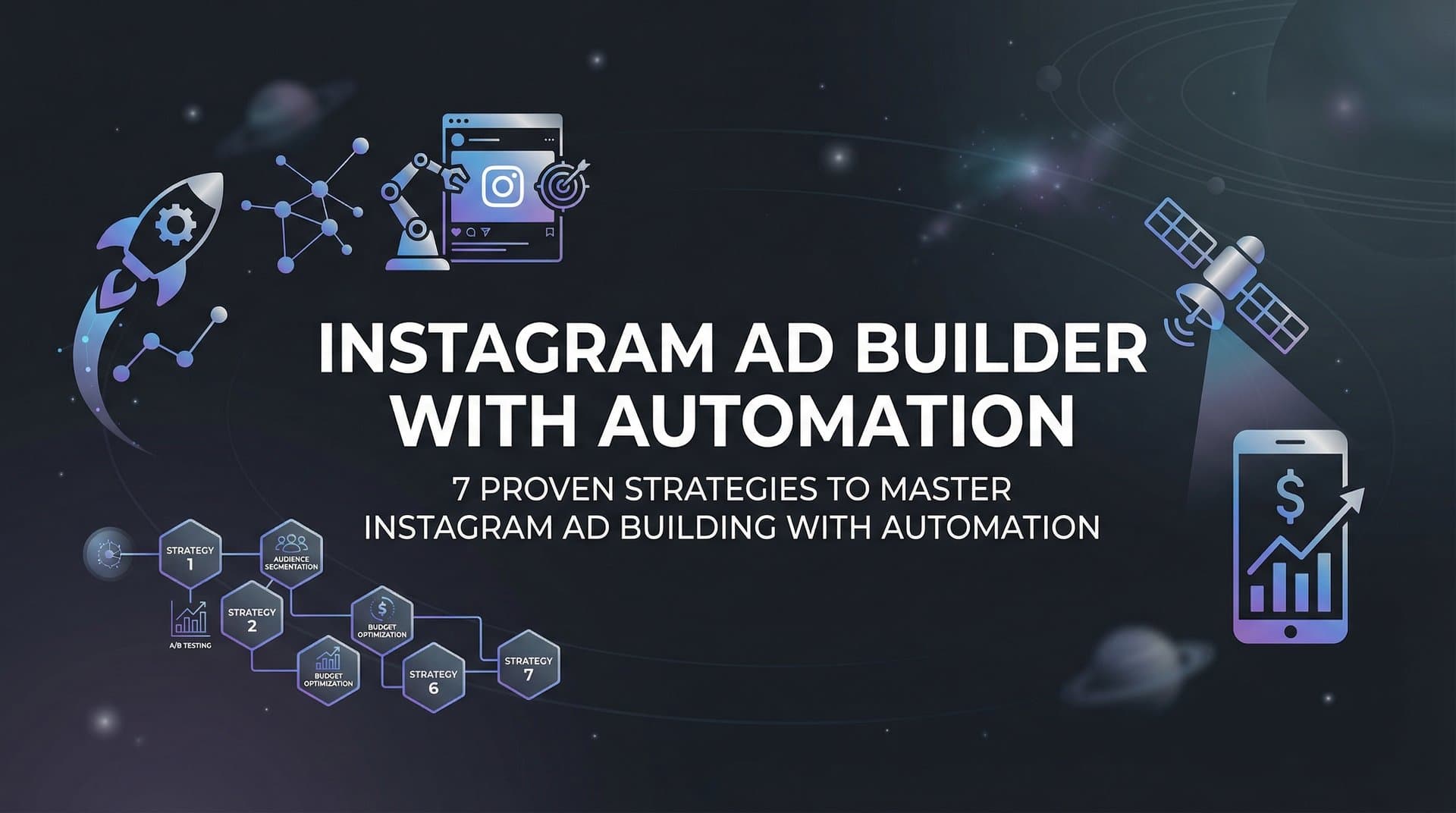
The marketers pulling ahead aren't just working faster—they're implementing specific strategies that compound efficiency over time. These seven approaches help you leverage automation effectively, from foundational setup through advanced optimization techniques that create sustainable competitive advantages.
1. Start with Performance Data Integration
The Challenge It Solves
Building automated campaigns without historical performance context is like navigating without a map. Your automation tools might work quickly, but they're making decisions blind to what's actually worked for your specific audience, products, and creative style.
When automation systems lack performance data, they default to generic best practices that may not align with your proven winners. You end up testing variations of approaches that already underperformed while ignoring the patterns that drove your best results.
The Strategy Explained
Before launching your first automated campaign, connect your Instagram ad builder to historical performance data from previous campaigns. This foundation enables automation systems to identify patterns in what's worked—which creative formats drove conversions, which audience segments responded best, which ad copy angles generated engagement.
The goal isn't just data storage. You're creating a learning foundation that informs every automated decision. When your system knows that carousel ads outperformed single images by meaningful margins for your product category, it prioritizes carousel formats in future builds. When data shows certain audience interests consistently underperform, automation can deprioritize or exclude them.
This approach transforms automation from a speed tool into an intelligence amplifier. Instead of building faster versions of average campaigns, you're building faster versions of campaigns informed by your specific success patterns.
Implementation Steps
1. Audit your existing campaign data to identify at least 30-90 days of performance history across multiple campaigns, ensuring you have sufficient signal for pattern recognition.
2. Connect your Instagram ad account to your automation platform with full read permissions, allowing the system to analyze performance metrics including ROAS, conversion rates, engagement patterns, and audience response data.
3. Run an initial analysis to identify your top-performing creative elements, audience segments, and campaign structures—these become the templates your automation system prioritizes in future builds.
Pro Tips
Focus on statistically significant data rather than isolated wins. A single campaign that happened to perform well during a holiday spike isn't as valuable as consistent patterns across multiple campaigns. Look for elements that repeatedly appear in your top performers—those are the signals your automation should amplify.
2. Build Modular Creative Libraries
The Challenge It Solves
Traditional ad creation treats each ad as a complete unit—you design the whole thing, upload it, and move on. This approach creates massive inefficiencies when testing variations because changing one element means recreating the entire ad.
When you want to test different headlines against the same image, or swap product photos while keeping copy consistent, the manual duplication work multiplies exponentially. Testing ten headline variations across five images means creating fifty individual ads manually.
The Strategy Explained
Modular creative libraries separate ad components into individual elements that automation can intelligently recombine. Instead of uploading complete ads, you build libraries of headlines, body copy variations, images, videos, and calls-to-action as discrete components.
Your Instagram ad builder with automation then mixes and matches these elements based on performance data and testing parameters you define. Want to test every headline against every image? The system generates all combinations automatically. Need to refresh underperforming ads with new creative while keeping winning copy? Swap image modules without touching text.
This structure enables testing velocity that's impossible with traditional approaches. Marketers using modular systems often test 10-20× more creative variations in the same timeframe, accelerating learning and winner identification.
Implementation Steps
1. Organize existing creative assets into component categories—separate folders for product images, lifestyle photos, headlines, body copy variations, and CTA buttons—treating each as an independent module.
2. Create standardized naming conventions that identify each component's purpose and performance history, enabling quick identification of top performers when building new combinations.
3. Upload modular components to your automation platform with metadata tags indicating product lines, campaign objectives, and audience segments each element targets best.
Pro Tips
Start with your proven winners. Before creating new modular components, break down your best-performing ads into their constituent elements. This gives your automation system a library of validated components to work with immediately, rather than starting from scratch with untested elements.
3. Implement Audience Segmentation Hierarchies
The Challenge It Solves
Broad audience targeting simplifies campaign setup but sacrifices the nuanced understanding of how different customer segments respond to your messaging. Meanwhile, creating highly specific audiences manually for every campaign variation creates unsustainable workload.
The result is a compromise where marketers either use overly broad audiences that dilute performance or limit testing scope because creating granular segments takes too much time. Both approaches leave money on the table.
The Strategy Explained
Audience segmentation hierarchies create layered targeting structures that automation can apply systematically across campaigns. You define audience tiers—from broad awareness segments down to highly specific intent-based audiences—then let automation test messaging variations against appropriate segments simultaneously.
Think of it as creating audience templates rather than building audiences from scratch each time. Your hierarchy might include brand awareness segments (interests and demographics), consideration segments (engaged with content or visited site), and conversion segments (abandoned cart or past purchasers). Automation applies the relevant tier based on campaign objectives.
This approach enables simultaneous multi-segment testing without manual duplication. Your system launches the same creative variations across different audience tiers, identifying which combinations of message and audience drive optimal performance for each campaign goal.
Implementation Steps
1. Map your customer journey stages and define 3-5 audience tiers that correspond to awareness, consideration, and conversion phases, ensuring each tier has distinct targeting criteria.
2. Build saved audiences in Meta Ads Manager for each tier, using consistent naming conventions that indicate the tier level and segment characteristics for easy identification.
3. Configure your automation platform to apply appropriate audience tiers based on campaign objectives—awareness campaigns target top-tier audiences while retargeting campaigns focus on bottom-tier conversion segments.
Pro Tips
Resist the temptation to create too many micro-segments initially. Start with 3-5 clear tiers that cover your main customer journey stages. You can always add granularity later, but starting too complex creates analysis paralysis and dilutes budget across too many small audiences to generate meaningful signals.
4. Configure Smart Budget Allocation Rules
The Challenge It Solves
Manual budget management forces you to check campaign performance daily, make adjustment decisions, and implement changes one campaign at a time. By the time you identify a winner and shift budget toward it, you've already spent days funding underperformers.
The lag between performance signals and budget adjustments means you're constantly reacting to yesterday's data rather than optimizing in real-time. High-performing campaigns stay underfunded while poor performers continue burning budget simply because you haven't gotten around to making changes yet.
The Strategy Explained
Smart budget allocation rules automate the budget shifting process based on performance thresholds you define. Instead of manually monitoring and adjusting, you establish rules that automatically increase budget to campaigns exceeding performance targets and decrease or pause campaigns falling below acceptable thresholds.
These rules operate continuously, responding to performance signals within hours rather than days. When a campaign demonstrates strong ROAS or conversion rates, automation incrementally increases its budget. When performance drops, the system reduces spending before significant waste occurs.
The key is defining rules that balance responsiveness with statistical validity. You want automation to act on meaningful performance signals while avoiding overreaction to normal variance.
Implementation Steps
1. Define your performance thresholds for different campaign objectives—establish minimum acceptable ROAS for conversion campaigns, cost-per-click targets for traffic campaigns, and engagement rate benchmarks for awareness campaigns.
2. Create scaling rules that specify budget increase increments when campaigns exceed targets, typically starting with 20-30% increases to avoid shocking the algorithm with dramatic budget jumps.
3. Establish safety rules that pause campaigns falling significantly below thresholds after spending a minimum amount that ensures statistical significance, preventing premature pausing of campaigns that haven't had adequate testing budget.
Pro Tips
Build in waiting periods before automation makes budget decisions. Requiring campaigns to spend a minimum amount or run for a minimum duration before triggering budget rules prevents overreaction to early variance. A campaign that starts slow might find its audience after a day or two—give it time to generate meaningful data before automation intervenes.
5. Establish Continuous Learning Feedback Loops
The Challenge It Solves
Most marketing teams treat each campaign as an isolated project. You launch campaigns, analyze results, and maybe remember to apply learnings to future efforts. But this manual knowledge transfer is inconsistent—insights get forgotten, successful patterns aren't systematically replicated, and new team members start from zero.
Without structured feedback loops, your campaigns don't get smarter over time. You're constantly starting fresh rather than building on accumulated knowledge about what works for your specific business.
The Strategy Explained
Continuous learning feedback loops systematically capture performance data from completed campaigns and feed those insights back into future campaign builds. When automation identifies winning creative elements, audience segments, or campaign structures, that information automatically influences how the system builds subsequent campaigns.
This creates compounding improvements over time. Your tenth automated campaign is smarter than your first because it's informed by nine previous campaigns' worth of performance data. Winning patterns get reinforced and amplified while underperforming approaches get deprioritized or eliminated.
The feedback loop operates at multiple levels—creative component performance, audience response patterns, budget allocation efficiency, and overall campaign structure effectiveness all feed back into the system's decision-making process.
Implementation Steps
1. Configure your automation platform to tag winning elements from completed campaigns, marking creative components, audiences, and campaign structures that exceeded performance targets for prioritization in future builds.
2. Establish regular review cycles where you analyze cross-campaign patterns rather than individual campaign results, identifying trends that appear across multiple successful campaigns rather than one-off wins.
3. Update your modular creative libraries and audience hierarchies based on feedback loop insights, promoting proven winners to higher priority tiers and archiving consistently underperforming elements.
Pro Tips
Document why certain elements won, not just that they won. Context matters—a creative that performed well during a seasonal promotion might not work year-round. Capture the conditions under which winners succeeded so your feedback loop applies insights appropriately rather than blindly replicating past approaches in different contexts.
6. Use Bulk Launching for Testing Velocity
The Challenge It Solves
Sequential testing approaches limit learning speed. You launch one campaign, wait for results, analyze performance, then launch the next variation. This methodical process feels safe but creates a fundamental bottleneck—you're only learning from one test at a time.
Meanwhile, algorithm changes, competitor moves, and audience behavior shifts are happening continuously. By the time you've tested three variations sequentially, the market conditions that made your first test relevant have already changed.
The Strategy Explained
Bulk launching enables simultaneous deployment of multiple campaign variations, dramatically accelerating your testing velocity and learning rate. Instead of testing one headline against another sequentially, you launch ten headline variations simultaneously and let real audience response determine winners.
An Instagram ad builder with automation makes bulk launching practical by handling the technical complexity of creating and managing dozens of campaign variations. You define your testing parameters—which creative combinations, audience segments, and budget allocations to test—and automation generates and launches all variations in minutes rather than hours.
This parallel testing approach compresses learning timelines. What might take weeks through sequential testing happens in days through bulk launching, enabling faster optimization cycles and more responsive campaign management.
Implementation Steps
1. Identify your highest-priority testing questions for the current campaign period, focusing on variables that could significantly impact performance rather than minor tweaks with limited upside.
2. Use your modular creative library to define all variations you want to test, selecting the specific combinations of headlines, images, copy, and CTAs that address your testing priorities.
3. Configure bulk launch parameters in your automation platform, setting budget allocations, audience segments, and performance monitoring rules that will govern all variations, then launch the entire test batch simultaneously.
Pro Tips
Start with focused bulk tests rather than testing everything at once. Your first bulk launch might test 5-10 headline variations while keeping other variables constant. Once you identify winning headlines, launch a second bulk test exploring image variations with your winning headline. This staged approach maintains statistical validity while still dramatically accelerating learning compared to sequential testing.
7. Create a Winners Hub for Replicable Success
The Challenge It Solves
Your best-performing ads represent validated market insights—proof of what messaging, creative approaches, and audience targeting combinations actually drive results for your business. But without systematic capture and organization, these insights scatter across campaign archives where they're difficult to find and easy to forget.
Teams end up recreating winning approaches from memory or accidentally abandoning successful patterns simply because no one remembered they worked well six months ago. Valuable institutional knowledge exists but remains inaccessible when you need it.
The Strategy Explained
A Winners Hub systematically captures and organizes your highest-performing ad elements in a centralized library that makes proven success patterns immediately accessible for replication. Every time a campaign exceeds performance thresholds, its winning components automatically get added to the hub with performance context.
This creates a growing repository of validated approaches. Need to launch a new product campaign? Start by browsing Winners Hub elements that performed well for similar products. Entering a new market segment? Review winning creative that resonated with comparable audiences.
The hub transforms past success from scattered historical data into actionable templates. Instead of starting every campaign from scratch, you begin with proven foundations and focus your testing energy on meaningful variations rather than reinventing basics.
Implementation Steps
1. Define performance thresholds that qualify ads for Winners Hub inclusion, establishing clear criteria like minimum ROAS, conversion rates, or engagement metrics that indicate genuine success rather than random variance.
2. Configure automatic capture rules in your automation platform that add qualifying campaigns to your Winners Hub with metadata including performance metrics, audience segments, campaign objectives, and timing context.
3. Organize your Winners Hub with categorization that enables quick discovery, using tags for product lines, audience segments, creative formats, and campaign objectives so you can find relevant winners when building new campaigns.
Pro Tips
Include performance context with every Winners Hub entry. Knowing a creative drove 4× ROAS is valuable, but knowing it achieved that during a holiday promotion targeting abandoned cart audiences with a 20% discount offer provides the context needed to replicate success appropriately. Capture the full picture, not just the performance number.
Putting It All Together
These seven strategies work together to transform Instagram ad building from a manual bottleneck into a systematic, scalable operation that improves automatically over time. The key is implementation sequencing—start with foundations that enable everything else.
Begin by connecting your performance data and building modular creative libraries. These two foundational steps create the infrastructure that makes the other strategies possible. You can't implement smart budget rules without performance data to guide them. You can't leverage bulk launching effectively without modular components to recombine.
Once your foundation is solid, layer in audience segmentation hierarchies and continuous learning feedback loops. These create the intelligence layer that makes your automation truly smart rather than just fast. Your system starts recognizing patterns and applying insights automatically.
Finally, activate bulk launching and your Winners Hub to accelerate execution and compound success. You're now testing faster than competitors while systematically capturing and reusing what works.
The marketers seeing transformational results treat automation not as a replacement for strategic thinking, but as an amplifier that lets them execute faster and learn quicker than teams still building ads manually. They're running more tests, identifying winners faster, and scaling success systematically while their competitors are still copying audiences between ad sets.
Start Free Trial With AdStellar AI and be among the first to launch and scale your ad campaigns 10× faster with our intelligent platform that automatically builds and tests winning ads based on real performance data.