If you've ever stared at a blank canvas trying to produce Instagram Story ads fast enough to keep up with your campaign calendar, you already know the problem. Story ads are vertical, time-sensitive, and visually demanding. They need to stop the scroll in under two seconds, fit a precise 9:16 format, and communicate a full message before a viewer swipes away.
For most marketers and agencies, the bottleneck isn't strategy. It's production speed. Briefing a designer, waiting on revisions, resizing assets, writing copy variations, and then repeating the entire cycle for every new audience or offer turns a simple ad into a multi-day project. Multiply that by the number of campaigns you're running and the problem compounds quickly.
This guide covers seven practical strategies to break that bottleneck. Whether you're a solo performance marketer managing multiple ad accounts or an agency running campaigns for dozens of clients, these approaches will help you produce more Story ads in less time without sacrificing quality or performance. Each strategy addresses a specific cause of slowness, from creative production to copy, testing, and campaign launch. By the end, you'll have a clear action plan to speed up every stage of the Story ad workflow.
1. Start From a Product URL, Not a Blank Canvas
The Challenge It Solves
The blank canvas is one of the most underrated productivity killers in ad production. Before a single pixel gets placed, someone has to gather brand assets, pull product details, decide on a visual direction, and figure out what message to lead with. For Story ads specifically, this upfront work is particularly painful because the vertical format leaves little room for error. A weak opening frame and the viewer is already gone.
The Strategy Explained
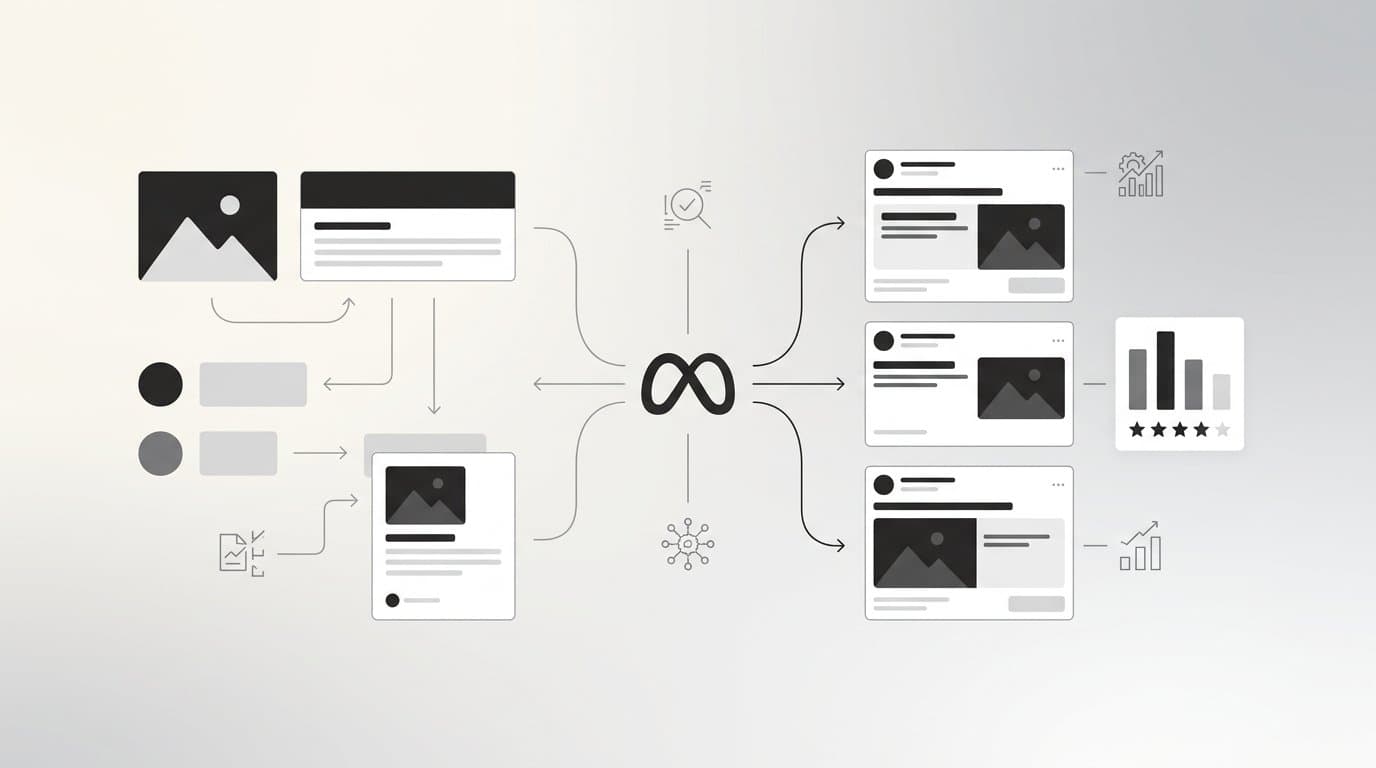
Instead of building from nothing, start from something that already exists: your product page. AI creative tools like AdStellar can extract brand assets, product details, and messaging context directly from a product URL and use that information to generate Story-ready ad creatives automatically. The AI handles the vertical format, the visual hierarchy, and the initial copy framing so you're editing and refining rather than building from scratch.

This approach shifts your role from creator to curator. You're reviewing options and selecting the strongest direction rather than staring at an empty artboard waiting for inspiration to arrive. That mental shift alone can cut hours off your production time per ad.
Implementation Steps
1. Paste your product URL into an AI creative generation tool that supports Story formats (9:16 ratio, 1080x1920px).
2. Review the generated creatives and select the two or three directions that best align with your campaign goal.
3. Use chat-based editing to refine headlines, adjust visuals, or swap out copy elements without rebuilding the ad from scratch.
4. Save the strongest output as a template foundation for future campaigns targeting similar audiences or offers.
Pro Tips
If your product page isn't well-optimized, the AI output will reflect that. Before running URL-based generation at scale, make sure your product page has a clear headline, strong imagery, and a defined value proposition. The better the input, the stronger the generated creative. Think of your product page as a creative brief that writes itself.
2. Build a Swipe File by Cloning What Already Works
The Challenge It Solves
Creative ideation takes time, and most of that time is spent on questions that have already been answered by your competitors. What format performs in this niche? What hook style works for this audience? What visual treatment fits the Story placement? Instead of figuring this out from scratch, you can shortcut the process by studying ads that are already running and converting in your space.
The Strategy Explained
The Meta Ad Library is a publicly available tool that lets you search active and inactive ads across Facebook and Instagram, including Story placements. Use it to identify competitors or brands in adjacent niches that are running Story ads consistently. Consistent spend usually signals consistent performance. Study the structure: how they use the first frame, where they place text, what their call-to-action looks like, and how they handle the vertical canvas.

Once you've identified structures that resonate, clone them into your own workflow. AdStellar lets you pull competitor ads directly from the Meta Ad Library and use them as the foundation for new creatives, replacing their assets and messaging with your own while keeping the proven structural framework intact.
Implementation Steps
1. Open the Meta Ad Library and search for brands in your niche or category.
2. Filter for active ads and look for patterns in Story ad formats that appear repeatedly, which often signals they're working.
3. Save or screenshot the structural elements you want to reference: hook framing, text placement, visual pacing, and CTA style.
4. Use an AI creative tool to clone the structure and populate it with your own brand assets, product imagery, and messaging.
Pro Tips
Don't just clone one competitor. Build a swipe file with five to ten structural frameworks from different brands so you have a variety of proven starting points. When one format stops performing, you have others ready to test. Treat the Meta Ad Library as a living research tool you revisit monthly, not a one-time reference.
3. Create Dozens of Variations in One Session With Bulk Generation
The Challenge It Solves
Producing Story ads one at a time is the single biggest reason creative pipelines fall behind campaign calendars. Each variation requires its own setup, its own copy pass, its own export. For proper A/B testing, you need multiple distinct creatives per audience. For multiple audiences, you need multiple sets. The math turns a manageable task into an overwhelming backlog very quickly.
The Strategy Explained
Bulk generation flips the production model entirely. Instead of building one ad and then starting over, you define your creative variables upfront and let the system generate every combination automatically. Mix three creatives with four headlines and two copy variations and you have 24 distinct ads ready to launch, produced in the time it used to take to build one.
AdStellar's bulk ad launch feature is designed specifically for this workflow. You can mix multiple creatives, headlines, audiences, and copy at both the ad set and ad level. The platform generates every combination and launches them to Meta in clicks rather than hours. This means you can go from a creative session to a live multi-variation campaign without the repetitive manual work that usually fills the gap between those two steps.
Implementation Steps
1. Prepare your creative assets: at least two to three Story-format visuals ready for use.
2. Write two to four headline variations and two to three body copy options for the campaign.
3. Define your audience segments for this campaign cycle.
4. Load all variables into a bulk creation tool and generate every combination in a single session.
5. Review the output for any obvious quality issues, then launch the full set to Meta at once.
Pro Tips
Resist the urge to over-engineer the combinations before you have performance data. Start with a focused set of variables, let the data tell you what's working, and then expand from there. Bulk generation is most powerful when paired with strong performance tracking so you can quickly identify which combinations are driving results.
4. Stop Writing Story Ad Copy From Scratch Every Time
The Challenge It Solves
Copy is often the last thing that gets written and the first thing that gets rushed. For Story ads, this is a real problem because the copy has to do heavy lifting in very little space. Text overlays compete with visual elements, and the message has to land before the viewer swipes away. Writing fresh copy for every new ad variation from a blank document is both slow and inconsistent.
The Strategy Explained
Build a reusable copy framework tailored to the Story format and use AI to generate variations within that structure rather than starting from zero each time. A Story ad copy framework typically includes three components: a hook that stops the scroll in the first line, a value statement that communicates the benefit quickly, and a CTA that tells the viewer exactly what to do next.
Once that framework exists, AI can generate dozens of variations in seconds by swapping out the specific language while keeping the structure intact. More importantly, you should be pulling from your own performance data. If a particular hook phrasing or CTA style has driven strong results in past campaigns, that copy element belongs in your Winners Hub, ready to be redeployed rather than recreated.
Implementation Steps
1. Document your Story ad copy framework: hook structure, value statement format, and CTA style that aligns with your campaign goals.
2. Use AI copy generation tied to your specific goal (conversions, traffic, awareness) to produce variations within that framework.
3. After each campaign cycle, review which copy elements drove the best performance metrics.
4. Save high-performing hooks, value statements, and CTAs as reusable building blocks for future campaigns.
Pro Tips
Keep your Story ad copy short by default. Even if the format technically allows more text, treat every word as competing for attention with your visual. A tight three-line structure (hook, benefit, CTA) almost always outperforms longer copy in the Story placement. Use AI to generate variations of that tight structure rather than longer alternatives.
5. Use UGC-Style Creatives Without Hiring Creators or Scheduling Shoots
The Challenge It Solves
UGC-style content has become one of the most effective formats for Story ads because it feels native to the environment. Users are already accustomed to seeing casual, authentic-looking vertical video from friends and creators in their Stories feed. When an ad matches that visual language, it tends to blend in rather than interrupt. The problem is that producing real UGC requires finding creators, coordinating briefs, scheduling shoots, reviewing footage, and editing the final product. That process takes days or weeks and doesn't scale well.
The Strategy Explained
AI avatar technology removes the production bottleneck entirely. Instead of coordinating with real creators, you generate UGC-style Story ads using AI avatars that deliver your script in a natural, authentic-feeling format. No scheduling, no filming, no editing overhead. The output is a vertical video that fits the Story placement and carries the visual tone of organic creator content.
AdStellar's AI creative hub includes UGC avatar ad generation, which means you can produce this format in the same workflow where you're already building image ads and video ads. There's no separate production pipeline to manage. You write the script, select an avatar, and generate the creative alongside your other Story ad variations.
Implementation Steps
1. Write a short script that follows your Story copy framework: hook, benefit, CTA, all delivered conversationally as if speaking directly to the viewer.
2. Select an AI avatar that fits the demographic and tone appropriate for your target audience.
3. Generate the UGC-style video creative and review it for pacing, tone, and message clarity.
4. Include the UGC variation alongside your static and video Story ads in your bulk launch set to test format performance directly.
Pro Tips
The script matters more than the avatar. UGC-style ads perform well when the language sounds natural and conversational, not like ad copy read aloud. Write the script the way a real person would talk about the product, including natural pauses and direct address. Run it through AI generation and refine from there rather than trying to write a polished script first.
6. Let AI Build the Campaign While You Review the Strategy
The Challenge It Solves
Even after the creatives are ready, there's still a significant amount of work between "ad is done" and "ad is live." Audience selection, placement configuration, budget allocation, bid strategy, and campaign structure all need to be set up correctly. For experienced media buyers, this is second nature but it still takes time. For teams managing multiple accounts or running high-volume campaigns, manual campaign setup becomes a genuine bottleneck that slows down every launch.
The Strategy Explained
AI campaign builders can analyze your historical performance data and pre-select the audiences, placements, and budget structures most likely to drive results for your current campaign goal. Instead of configuring everything from scratch, you review what the AI has built, understand the rationale behind each decision, and approve or adjust before launching.
AdStellar's AI Campaign Builder uses specialized AI agents that analyze past campaigns, rank every creative, headline, and audience by performance, and build complete Meta ad campaigns in minutes. Every decision comes with full transparency so you understand the strategy behind the output, not just the output itself. The AI gets smarter with each campaign cycle, which means the recommendations improve over time as more data accumulates.
Implementation Steps
1. Connect your Meta ad account and ensure historical campaign data is accessible to the AI campaign builder.
2. Define your campaign goal (conversions, traffic, reach) and set your budget parameters.
3. Review the AI-generated campaign structure, including audience selections, placement settings, and budget allocation.
4. Check the AI rationale for each major decision to confirm it aligns with your strategy before approving the launch.
Pro Tips
Use the transparency feature as a learning tool, not just a confirmation step. When the AI explains why it selected a particular audience or budget split, that reasoning often surfaces insights about your historical performance that you might not have noticed through manual review. Over time, reviewing AI rationale builds your own strategic intuition faster than reviewing raw data alone.
7. Recycle Winners Instead of Rebuilding From Zero Each Cycle
The Challenge It Solves
Most teams treat each campaign cycle as a fresh start. Previous ads get archived, performance data gets buried in dashboards, and the next round of Story ads gets built from scratch as if nothing came before. This is one of the most common and most costly sources of slowness in ad production. You already have proven creative elements. You're just not using them efficiently.
The Strategy Explained
A structured Winners Hub changes how you approach each new campaign. Instead of starting from zero, you start from your best-performing creatives, headlines, copy, and audience combinations. These aren't just references or inspiration; they're deployable assets with real performance data attached. When you build your next Story ad campaign, your starting point is a proven winner rather than a blank canvas.
AdStellar's Winners Hub stores your best-performing creatives, headlines, audiences, and more in one place with real performance data attached to each element. AI Insights leaderboards rank everything by metrics like ROAS, CPA, and CTR against your specific goals. When you're ready to build the next campaign, you can select any winner and instantly add it to your new campaign rather than rebuilding from scratch.
Implementation Steps
1. Set clear performance benchmarks for your Story ads based on your campaign goals (target CPA, minimum ROAS, CTR threshold).
2. After each campaign cycle, review the AI Insights leaderboard to identify which creatives, headlines, and audiences exceeded your benchmarks.
3. Save the top performers to your Winners Hub with notes on the campaign context where they performed well.
4. When starting a new campaign, open the Winners Hub first and select proven elements as your foundation before generating anything new.
Pro Tips
Don't just save the top-performing complete ad. Break winners down into their individual components. A headline that drove strong CTR on one creative might work even better paired with a different visual. A hook that converted well for one audience segment might be worth testing with adjacent audiences. Storing components separately gives you more flexibility than storing only finished ads.
Putting It All Together
Slow Instagram Story ad creation is almost always a systems problem, not a talent problem. When every ad requires a full design brief, a round of revisions, manual copy writing, and step-by-step campaign setup, speed becomes impossible regardless of how skilled your team is.
The seven strategies in this guide each target a different stage of that workflow. Start by removing the blank canvas problem with URL-based generation. Build a reference library from competitor ads in the Meta Ad Library. Use bulk creation to produce variations in one session instead of one at a time. Standardize your copy framework so you're not writing from scratch every cycle. Add UGC-style formats without the production overhead of real creator coordination. Let AI handle campaign configuration while you focus on strategy. And stop leaving your best-performing ads sitting idle when they could be the foundation of your next campaign.
You don't need to implement all seven at once. Pick the stage where you feel the most friction today and start there. As each bottleneck clears, the entire workflow accelerates. The goal isn't just to move faster. It's to move faster while testing more ideas, finding winners sooner, and scaling what's already proven to work.
Tools like AdStellar are built specifically to remove these friction points so your team can focus on what actually matters. If you're ready to stop rebuilding Story ads from scratch and start running a production workflow that compounds over time, Start Free Trial With AdStellar and be among the first to launch and scale your ad campaigns faster with an intelligent platform that automatically builds and tests winning ads based on real performance data.