Managing Meta advertising campaigns used to mean spending hours analyzing spreadsheets, manually testing creative variations, and making educated guesses about what might work. You'd launch campaigns, wait days for enough data to accumulate, then start the optimization process all over again. The problem? By the time you identified a winning combination, market conditions had shifted, creative fatigue had set in, or your budget was already burned.
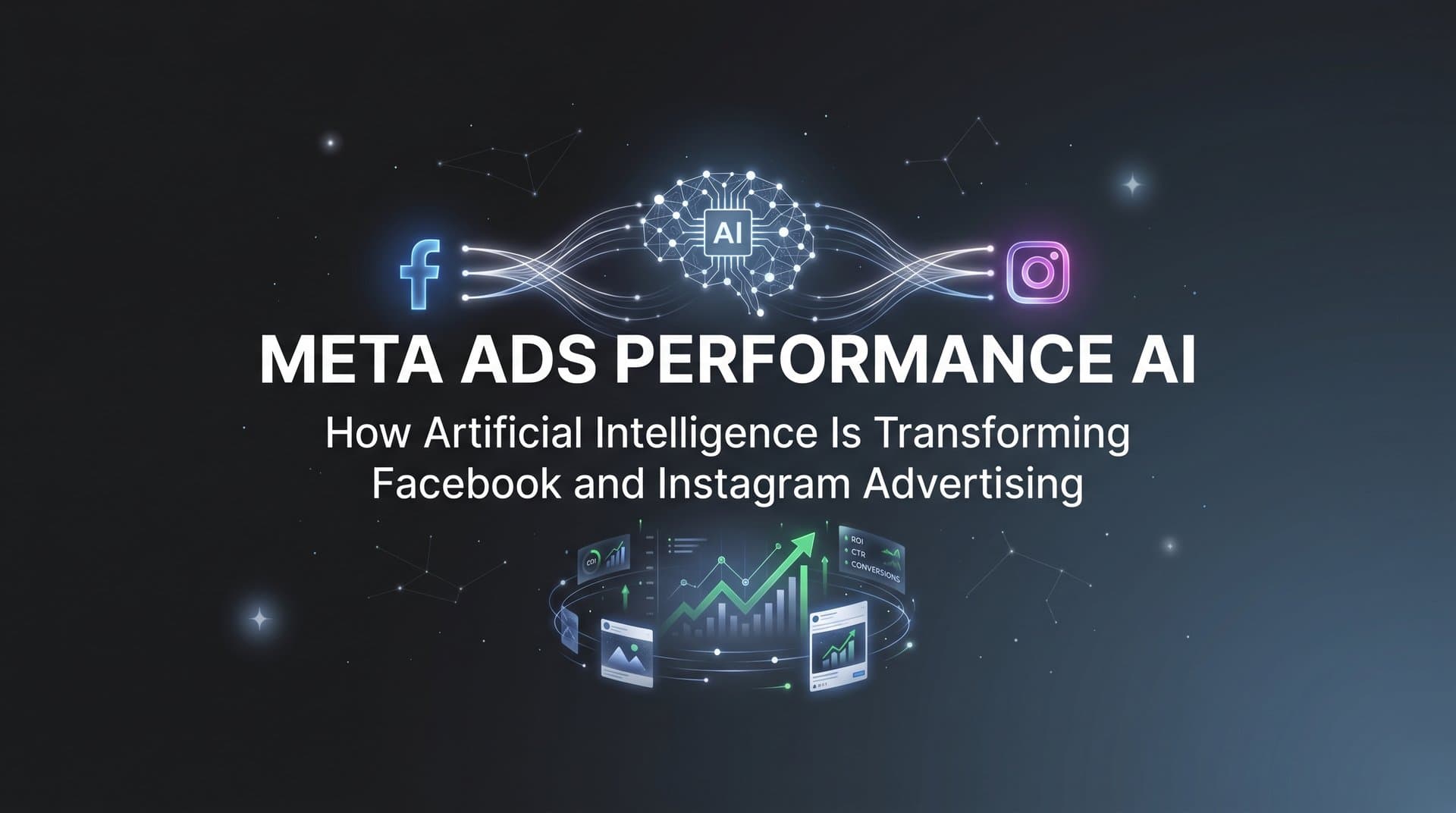
Meta Ads performance AI changes this entire paradigm. Instead of reactive optimization based on limited human analysis, artificial intelligence now processes thousands of data points simultaneously, identifies winning patterns before you spend significant budget, and continuously learns from every campaign you run. This technology doesn't just automate existing processes—it fundamentally transforms how marketers approach Facebook and Instagram advertising.
This guide explains how Meta Ads performance AI actually works, what capabilities separate effective platforms from basic automation tools, and how you can leverage this technology to improve campaign outcomes without the manual grind. We'll break down the core systems that power AI-driven advertising, from creative generation to performance scoring, and show you what to look for when evaluating AI ad platforms.
From Manual Testing to Predictive Intelligence
Traditional Meta advertising required marketers to function as human optimization engines. You'd create multiple ad variations, set up audience segments based on assumptions, launch campaigns, and then wait. After accumulating enough data—usually requiring significant ad spend—you'd manually analyze which combinations performed best. This reactive approach meant you were always optimizing based on what already happened, not what would work next.
The limitations of manual optimization become clear at scale. Testing five creative variations against three audience segments with different ad copy creates 15 unique combinations. Add placement options, headline variations, and landing pages, and you're suddenly managing hundreds of potential combinations. Human analysis simply cannot process this complexity efficiently while campaigns are live.
AI-powered performance tools process this complexity as their baseline function. These systems analyze thousands of data points simultaneously—creative elements, audience behaviors, placement performance, time-of-day patterns, and historical trends—to identify winning combinations before significant budget is spent. The technology recognizes patterns across your entire campaign history that would be invisible in manual analysis.
This shift represents moving from reactive to predictive optimization. Instead of adjusting campaigns after poor performance, AI anticipates what will work based on historical patterns and current market conditions. The system learns which creative styles resonate with specific audience segments, which headlines drive conversions for particular products, and which placements deliver the best return for your goals.
The continuous learning loop creates compounding advantages. Every campaign you run feeds data back into the AI system, making future predictions more accurate. The platform learns your specific business context—your audience preferences, your conversion patterns, your seasonal trends—and applies those insights automatically to new campaigns. This means your tenth campaign performs better than your first, not because you've become a better marketer, but because the AI has accumulated more knowledge about what works for your specific situation. Understanding performance analytics becomes essential for maximizing these AI-driven insights.
What AI-Powered Platforms Actually Do
Meta Ads performance AI platforms typically combine three core capabilities that work together to handle the entire campaign lifecycle. Understanding these systems helps you evaluate which platforms deliver genuine intelligence versus basic automation.
Creative Generation and Analysis: AI creative systems generate scroll-stopping image ads, video ads, and UGC-style content from minimal input. You provide a product URL or describe your offer, and the AI produces multiple creative variations optimized for Meta's platform. Advanced systems can also clone competitor ads from Meta's Ad Library, analyzing what's working in your market and adapting those approaches to your brand.
The analysis component scores each creative element against performance benchmarks. The AI evaluates image composition, color schemes, text overlay placement, video pacing, and messaging angles based on what has historically driven results. This scoring happens before you spend a dollar on ads, giving you data-driven creative direction instead of relying on subjective preferences. A robust campaign scoring system makes this evaluation process transparent and actionable.
Automated Campaign Building: AI agents analyze your historical campaign data to identify winning patterns across headlines, audiences, ad copy, and placements. The system then constructs complete Meta Ad campaigns by selecting the highest-performing combinations based on your specific goals. This goes beyond simple template filling—the AI makes strategic decisions about budget allocation, audience targeting, and creative-audience matching based on learned patterns.
The transparency factor matters here. Effective AI platforms explain every decision, showing you why specific audiences were selected, why certain headlines were paired with particular creatives, and what historical performance data informed these choices. You're not blindly accepting AI recommendations; you're learning the strategic reasoning behind them.
Performance Scoring and Ranking: Leaderboards rank every element of your campaigns—creatives, headlines, audiences, landing pages—by metrics that matter to your business: ROAS, CPA, CTR, conversion rate. The AI doesn't just report numbers; it scores each element against your specific goals and benchmarks, instantly highlighting what meets your targets and what doesn't. Learn more about performance metrics explained to understand what each measurement reveals about your campaigns.
This goal-based scoring system adapts to your business context. If you're focused on customer acquisition cost, the AI prioritizes and scores elements based on CPA performance. If ROAS is your primary metric, scoring shifts accordingly. The system understands that a "winning" ad for one goal might be a poor performer for another, and it ranks accordingly.
How AI Identifies and Surfaces Your Winners
The most valuable capability of Meta Ads performance AI is its ability to identify winning combinations from massive data sets and surface them for immediate use. This process operates through three interconnected systems that work continuously throughout your campaigns.
Continuous Testing Loops: AI platforms enable bulk launching that creates hundreds of ad variations in minutes. You select multiple creatives, headlines, audience segments, and copy variations, and the AI generates every possible combination, then launches them to Meta automatically. This isn't random testing—the AI prioritizes combinations based on historical performance patterns, testing the most promising variations first. Discover how to launch multiple Meta ads at once to accelerate your testing velocity.
As these variations run, the AI monitors performance in real-time, identifying which combinations are meeting your goals and which are underperforming. The system adjusts budget allocation toward winners and away from poor performers, all while learning which specific elements contribute to success. A creative might perform well with one audience but poorly with another, and the AI captures these nuanced patterns.
The learning happens at the element level, not just the campaign level. The AI doesn't just know that "Campaign A performed well"—it knows that the blue product image outperformed the lifestyle shot by 34% for the 25-34 age demographic, while the lifestyle shot worked better for 35-44. This granular learning informs future campaign decisions.
Goal-Based Scoring Systems: Rather than generic performance metrics, AI platforms score each element against your specific targets. You set your benchmarks—perhaps a target CPA of $25 or a minimum ROAS of 3.5x—and the AI instantly highlights which creatives, headlines, and audiences meet or exceed these goals.
This scoring creates actionable intelligence. You don't need to manually analyze performance data to find winners; the AI has already identified them based on your criteria. The system might show you that three of your ten creatives are hitting your ROAS target, two specific headlines consistently drive conversions below your CPA goal, and one audience segment outperforms all others across multiple metrics. A comprehensive performance tracking dashboard centralizes all these insights in one view.
Winners Hub Organization: Top-performing elements are automatically organized in a centralized hub with real performance data attached. Your best creatives, highest-converting headlines, most profitable audiences, and top-performing landing pages are all accessible in one place, ready to deploy in future campaigns.
This organizational system creates compounding efficiency. When building your next campaign, you're not starting from scratch or trying to remember which elements worked last time. The AI has already identified and organized your winners, complete with performance context that shows why they succeeded. You can instantly add proven elements to new campaigns, combining them in fresh ways while maintaining the core components that drive results.
Why AI Transparency Matters More Than Raw Power
The difference between effective AI ad platforms and frustrating black boxes comes down to transparency. When AI makes decisions about your advertising budget, you need to understand the reasoning behind those choices, not just accept them blindly. Many marketers struggle with campaign transparency issues when using opaque automation tools.
Understanding the Rationale: Effective AI platforms explain every decision with clear reasoning tied to your actual performance data. When the AI selects a specific audience for your campaign, it shows you the historical performance data that informed this choice. When it recommends pairing a particular creative with certain headlines, it explains the conversion patterns that support this combination.
This transparency serves multiple purposes. First, it builds trust in AI recommendations. You can validate the logic against your own business knowledge and market understanding. Second, it creates learning opportunities. By seeing why the AI makes specific choices, you develop better intuition about what drives results in your market. Third, it enables intelligent overrides. When you understand the AI's reasoning, you can make informed decisions about when to follow recommendations and when your business context suggests a different approach.
Learning From AI Insights: The explanations AI provides become educational tools that improve your marketing skills. You might discover that your audience responds better to benefit-focused headlines than feature-focused ones, or that video ads consistently outperform static images for your specific product category. These insights, derived from AI analysis of your actual campaign data, are more valuable than generic best practices.
The AI essentially functions as a data analyst that never sleeps, continuously identifying patterns and surfacing insights you can apply to broader marketing decisions. The knowledge doesn't stay locked in the algorithm—it transfers to you through clear explanations and performance breakdowns.
Maintaining Strategic Control: Transparency ensures you remain the strategic decision-maker while the AI handles tactical execution. You set the goals, define the brand parameters, and make high-level strategic choices. The AI optimizes within those boundaries, explaining its tactical decisions so you can adjust the strategy as needed.
This relationship prevents the black box problem where marketers feel they've lost control of their advertising. You're not hoping the AI makes good choices; you're actively collaborating with it, understanding its recommendations, and maintaining final decision authority while benefiting from its analytical capabilities.
Applying AI Across Your Entire Campaign Workflow
Meta Ads performance AI delivers value throughout the campaign lifecycle, from initial creative development through ongoing optimization. Understanding how to apply AI at each stage maximizes the technology's impact on your results.
Creative Development Phase: Generate scroll-stopping ads from minimal input. Provide a product URL, and AI creates multiple image ad variations, video content, and UGC-style creatives optimized for Meta's platform. The system analyzes successful ads in your market, identifies effective visual patterns and messaging approaches, then applies those insights to your brand.
You can also clone competitor approaches from Meta's Ad Library. The AI analyzes what's working for competitors, adapts the creative strategy to your brand voice and visual identity, then generates variations you can test. This competitive intelligence happens automatically, without manual research or creative briefing.
Chat-based editing refines any creative in seconds. You describe the changes you want—"make the headline more urgent" or "emphasize the discount more prominently"—and the AI adjusts the creative accordingly. This eliminates the back-and-forth with designers and the delays of traditional creative production.
Campaign Launch and Scaling: Build complete campaigns in minutes with AI-optimized audiences, headlines, and ad copy. The AI analyzes your historical performance data, identifies which audience segments have driven the best results, selects proven headlines and copy angles, then constructs campaigns ready to launch. An AI campaign builder for Meta ads streamlines this entire process into a few clicks.
Bulk launching creates hundreds of ad variations without manual setup. Mix multiple creatives with different headlines, audiences, and copy at both the ad set and ad level. The AI generates every combination, organizes them into proper campaign structure, and launches them to Meta in clicks instead of hours. This testing scale would be impossible with manual campaign building.
The AI handles the technical complexity of campaign structure—budget allocation across ad sets, placement selection, bidding strategy—while you focus on strategic decisions about which products to promote, which markets to target, and what goals to pursue.
Ongoing Optimization Phase: Real-time insights and reporting across every creative, audience, and campaign enable continuous improvement without constant manual monitoring. The AI tracks performance against your goals, identifies winning combinations as they emerge, and surfaces actionable recommendations for budget reallocation or creative refreshes. Implementing performance tracking automation ensures you never miss critical optimization opportunities.
The optimization happens at granular levels. The AI might identify that a specific creative is performing well with one audience but poorly with another, then automatically adjust budget allocation to maximize the winning combination while reducing spend on the underperforming pairing. These micro-optimizations compound into significant performance improvements across your account.
Performance alerts notify you when campaigns exceed or fall below your benchmarks, when creative fatigue sets in, or when new winning combinations emerge. You're not manually checking dashboards multiple times daily; the AI monitors performance continuously and alerts you to situations requiring attention.
Choosing the Right AI Platform for Your Needs
Not all AI ad platforms deliver the same capabilities or value. Understanding what separates effective solutions from basic automation tools helps you select platforms that will actually improve your results.
Full-Stack Capabilities Matter: Look for platforms that handle the entire workflow from creative generation through performance analysis in one system. Platforms that only automate one piece of the process create integration headaches and data silos. You want AI that generates creatives, builds campaigns, launches to Meta, and analyzes results all in one workflow, so insights from one stage inform decisions at other stages. Explore the best Meta ads campaign tools to understand what full-stack solutions offer.
This integration enables the continuous learning loop that makes AI valuable. When the same system handles creative generation and performance analysis, it learns which creative approaches drive results and applies those insights to future creative generation. Disconnected tools can't create this feedback loop.
Historical Data Analysis Capabilities: AI platforms that analyze your existing campaign history can immediately identify patterns and winning elements to build upon. This means you benefit from AI insights starting with your first campaign, rather than waiting for the system to accumulate enough new data to make recommendations.
The platform should be able to ingest your historical Meta Ads data, identify which creatives, headlines, audiences, and placements have driven your best results, then use those insights to inform new campaign creation. This historical analysis creates immediate value rather than requiring months of data collection.
Continuous Learning Systems: Choose solutions where AI gets smarter with each campaign you run, rather than starting fresh each time. The platform should maintain a knowledge base about your specific account—your audience preferences, your seasonal patterns, your creative performance trends—and apply those insights automatically to new campaigns.
Ask how the platform's AI learns and improves over time. Does it simply apply generic best practices, or does it develop account-specific intelligence based on your unique performance data? The most valuable AI platforms become increasingly effective the longer you use them, as they accumulate more knowledge about what works for your specific business.
The Future of Meta Advertising Is Already Here
Meta Ads performance AI represents a fundamental shift in how marketers approach Facebook and Instagram advertising. The technology moves beyond basic automation to deliver genuine intelligence that generates creatives, builds campaigns, identifies winning combinations, and continuously learns from every campaign you run.
The core capabilities covered in this guide—creative generation with performance scoring, automated campaign building with transparent rationale, goal-based ranking systems, and continuous learning loops—are transforming advertising from a manual, reactive process into an intelligent, predictive system. Marketers who leverage these AI capabilities gain compounding advantages: better creative, faster testing, more accurate optimization, and continuous improvement as the AI learns from each campaign.
The competitive landscape is shifting rapidly. As AI-powered platforms become more sophisticated and accessible, they're becoming essential tools rather than nice-to-have extras. Marketers still manually testing creatives, building campaigns by hand, and optimizing based on limited data analysis are competing against teams leveraging AI that processes thousands of data points simultaneously and identifies winning patterns before significant budget is spent.
The question isn't whether to adopt AI for Meta advertising, but which platform delivers the capabilities that matter: end-to-end workflow integration, transparent decision-making, continuous learning, and genuine performance improvements. The right platform doesn't just automate existing processes—it transforms how you approach advertising, enabling testing scale and optimization precision that simply weren't possible with manual methods.
Ready to transform your advertising strategy? Start Free Trial With AdStellar and be among the first to launch and scale your ad campaigns 10× faster with our intelligent platform that automatically builds and tests winning ads based on real performance data.