Your creative team spends three days designing ad variations in Canva. You manually upload them to Meta Ads Manager, build audiences from scratch, copy-paste headlines across dozens of ad sets, then jump to a separate analytics dashboard to track results. Two weeks later, you're still piecing together spreadsheets trying to figure out which creative actually drove conversions.
This isn't just inefficient. It's costing you money and competitive advantage every single day.
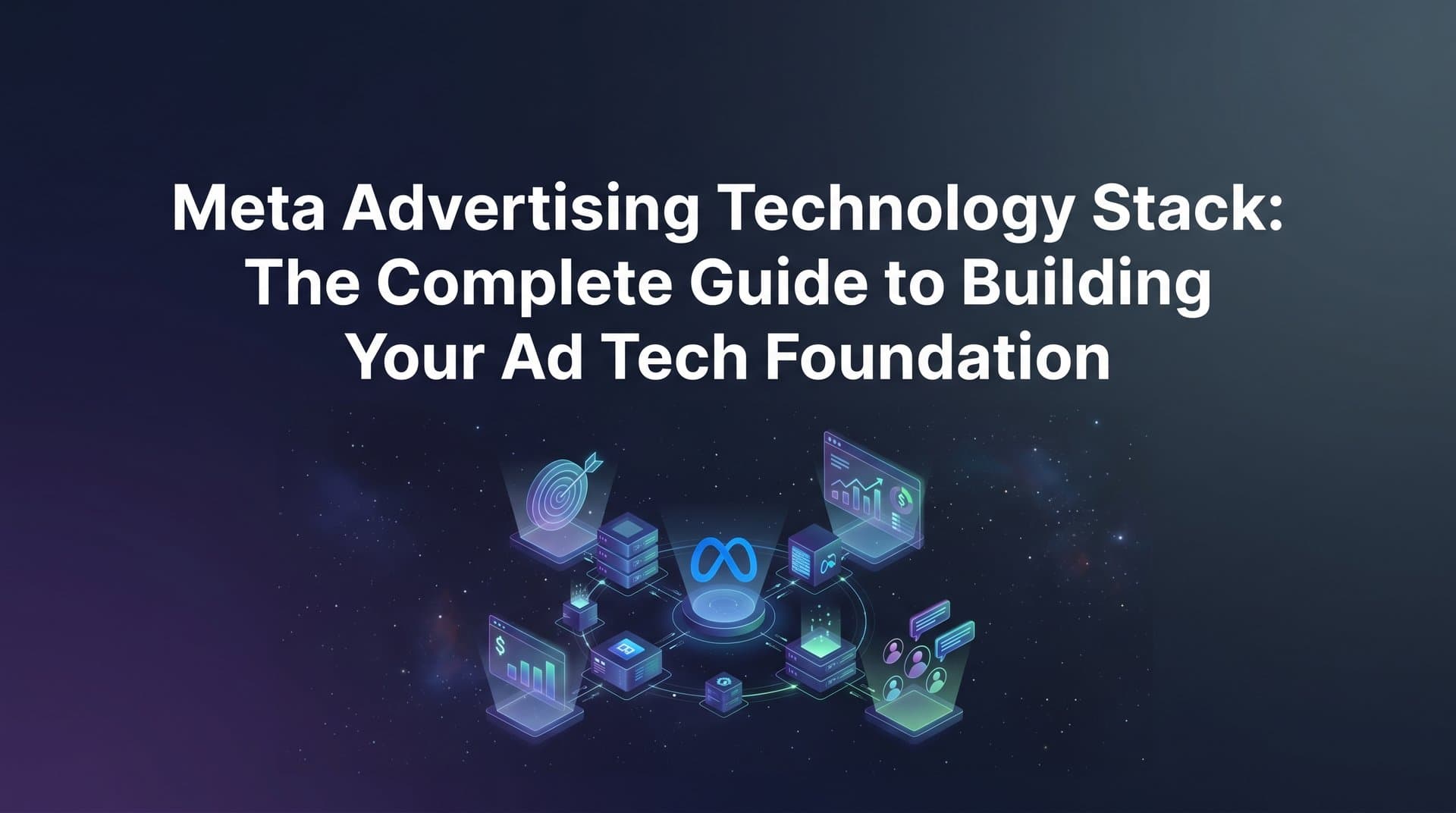
The meta advertising technology stack is the integrated ecosystem of tools that power your Facebook and Instagram campaigns from initial creative concept through final conversion tracking. But here's the challenge: most marketers are running sophisticated ad campaigns with technology stacks built like Frankenstein's monster, stitching together disconnected tools that were never designed to work together.
The result? Data trapped in silos, insights that arrive too late to matter, and creative decisions made in a vacuum without performance feedback. This guide breaks down what actually belongs in a modern meta advertising technology stack, why the traditional approach creates bottlenecks, and how the shift toward AI-integrated platforms is changing the game for performance marketers.
The Three Pillars of Your Meta Ad Tech Foundation
Every successful meta advertising technology stack is built on three core layers that need to communicate seamlessly. Think of them as the foundation, walls, and roof of your advertising house. Remove any one piece, and the whole structure becomes unstable.
The Creative Generation Layer: This is where your ad content comes to life. Traditional stacks rely on design tools like Photoshop, Canva, or video editing software that require manual creation of every asset. Modern approaches use AI to generate image ads directly from product URLs, create video content without filming, and produce UGC-style avatar ads that look like authentic user testimonials. The key distinction is speed and scale. Where manual design might produce five variations in a day, AI-powered creative generation can produce fifty variations in minutes, each optimized for different audience segments.
The Campaign Management Layer: This is your command center for building, launching, and orchestrating campaigns across Facebook and Instagram. At minimum, this includes Meta Ads Manager itself, but sophisticated advertisers layer on platforms that can bulk launch hundreds of ad variations, automatically test different audience combinations, and manage campaign budgets across multiple ad accounts. The critical capability here is automation. Manual campaign building means you're limited by how fast you can click through interfaces and copy-paste settings. Automated systems can launch complete campaigns with multiple creatives, audiences, and copy variations in the time it takes you to set up a single ad set manually.
The Analytics and Attribution Layer: This is where you measure what's actually working. Basic setups rely on Meta's native reporting, but that only tells you what happened inside the platform. Sophisticated stacks include attribution tools that track the full customer journey from ad click through purchase, analytics platforms that identify patterns across campaigns, and intelligence systems that rank every creative element by actual performance metrics like ROAS and CPA. The difference between basic and advanced analytics isn't just prettier dashboards. It's the ability to answer questions like "Which headline converts best with this audience?" or "What creative elements appear in all my top performers?" without spending hours in spreadsheets.
The problem most marketers face isn't missing one of these layers entirely. It's that each layer exists in isolation, forcing you to manually bridge the gaps between creative production, campaign execution, and performance analysis.
The Hidden Tax of Disconnected Tools
Context switching is killing your campaign velocity, and you probably don't even realize how much it's costing you.
Picture your typical workflow: Design an ad in Canva, download it, upload it to Meta Ads Manager, manually enter targeting parameters, copy the same headline across twelve ad sets, launch the campaign, then open a separate analytics tool to track performance. Each transition between tools requires you to rebuild context, remember what you were doing, and manually transfer information that should flow automatically.
A typical advertiser context-switches between tools 40-60 times per campaign setup. Each switch costs an average of 2-3 minutes in lost focus and manual data transfer. That's two hours of pure friction before your campaign even launches. Multiply that across weekly campaign refreshes, and you're losing a full workday every month just moving information between disconnected systems. These workflow inefficiencies compound over time, creating significant competitive disadvantages.
Data Silos That Prevent Real-Time Optimization: Your creative team doesn't see performance data. Your media buyers don't see which creative elements are winning. Your analytics team reports on what happened last week, but has no direct connection to the creative production process. This isn't just inconvenient. It means insights arrive too late to inform decisions when they matter most.
When your top-performing ad uses a specific color scheme, headline format, and call-to-action combination, that insight should immediately flow back to creative production. Instead, it lives in a spreadsheet that gets reviewed in next week's meeting, maybe gets communicated to the creative team, and might influence ads that launch two weeks from now. By then, audience behavior has shifted and the insight is stale.
Manual Handoffs That Destroy Testing Velocity: Want to test twenty creative variations against five audiences? In a disconnected stack, that means manually creating one hundred individual ads. Even if you're fast, that's hours of repetitive clicking and copy-pasting. The real cost isn't just time. It's the tests you never run because the manual effort is too high.
Testing velocity directly correlates with campaign performance. The more variations you can test quickly, the faster you find winners. But manual processes create a ceiling on how much you can test, which means you're leaving winning combinations undiscovered simply because your technology stack can't keep up with your ideas.
How AI Is Rebuilding the Advertising Technology Stack
The most significant shift in meta advertising technology isn't happening in any single tool. It's happening in how functions that used to require separate platforms are being consolidated through artificial intelligence.
Traditional stacks separated creative, campaign management, and analytics because each required different specialized skills and software. Designers used design tools. Media buyers used campaign management platforms. Analysts used BI software. This division made sense when each function was entirely manual.
AI changes the equation by automating the connective tissue between these functions. Instead of a designer manually creating variations, AI generates them from product data. Instead of a media buyer manually configuring audiences, AI analyzes historical performance to recommend optimal targeting. Instead of an analyst manually building reports, AI surfaces patterns and ranks elements by performance automatically. Understanding the future of advertising technology helps marketers prepare for these fundamental shifts.
For advertisers focused on Facebook and Instagram, reviewing the best AI tools for Facebook ads surfaces platform-specific options beyond what generic stacks offer.
Machine Learning That Gets Smarter With Every Campaign: The real power of AI-integrated platforms isn't just automation. It's continuous learning. Every campaign you run feeds data back into the system. The AI analyzes which creative elements, audiences, and copy combinations drove results, then applies those learnings to future campaigns automatically.
This creates a compounding advantage that disconnected tools can't match. Your tenth campaign is informed by insights from the previous nine. Your creative generation improves because it knows what performed well historically. Your audience selection sharpens because it understands which segments converted. This continuous improvement loop means your advertising effectiveness increases over time without proportional increases in manual effort.
Platforms That Handle Creative Through Conversion: The emerging category of full-stack advertising platforms represents a fundamental rethinking of the technology stack. Instead of stitching together separate tools for creative, launch, and analysis, these platforms handle the entire workflow in one integrated environment.
You start with a product URL. The platform generates image ads, video ads, and UGC-style creatives automatically. It analyzes your historical campaigns to identify winning patterns, then builds complete campaign structures with optimized audiences and copy. It launches hundreds of variations in bulk, tests every combination, and surfaces the top performers with real performance data. All without leaving the platform or manually transferring data between systems.
This isn't just convenience. It's a structural advantage. When creative generation, campaign management, and performance analysis happen in the same system, data flows instantly. Insights inform decisions in real time. The feedback loop between what you create and what performs tightens from weeks to minutes.
What to Look for When Evaluating Ad Tech Solutions
Not all advertising platforms are built the same, and the feature list on a pricing page rarely tells you what actually matters for performance. Here's what separates tools that look impressive from platforms that genuinely accelerate results.
Creative Capabilities That Match Modern Demands: Can the platform generate image ads from just a product URL, or does it require you to upload pre-made assets? Can it create video content without filming, or is video just an upload feature? Does it offer UGC-style avatar ads that look like authentic testimonials, or are you limited to static images? Can you clone successful competitor ads directly from the Meta Ad Library to understand what's working in your space?
The difference between basic and advanced creative capabilities is the difference between producing five ad variations per day and producing fifty. If creative generation is still a manual bottleneck, you haven't actually solved the scaling problem.
Chat-based editing is another critical feature. Being able to refine any generated ad with simple text instructions means you're not locked into whatever the AI produces first. You can iterate quickly without starting over or switching to a separate editing tool.
Campaign Building That Eliminates Manual Setup: Does the platform analyze your historical performance data to inform new campaigns, or does it start from scratch every time? Can it build complete campaign structures with audiences, headlines, and copy automatically, or are you still configuring everything manually? Does it explain why it made specific decisions, or is it a black box that gives you output without rationale? When evaluating options, reviewing automation software reviews can provide valuable insights from other advertisers.
Transparency matters enormously here. AI that shows you why it selected certain audiences or headlines helps you learn and make better decisions over time. Black box systems that just output campaigns without explanation might save time, but they don't build your strategic capabilities.
Bulk launching is non-negotiable for serious testing. If you can't create hundreds of ad variations by mixing multiple creatives, headlines, audiences, and copy at both ad set and ad level, you're still operating with artificial constraints on testing velocity.
Performance Intelligence That Drives Action: Does the platform just show you standard metrics, or does it rank every creative, headline, audience, and landing page by actual performance? Can you set target goals and have the system score everything against your benchmarks automatically? Does it identify your winners and make them easily reusable in future campaigns?
Leaderboards that rank elements by ROAS, CPA, and CTR transform analytics from descriptive to prescriptive. Instead of looking at reports and trying to figure out what worked, you instantly see what's winning and can double down on those elements immediately.
A winners hub that collects your best-performing assets with real performance data attached means you're building a library of proven elements that compound over time. Every successful campaign contributes winners that make future campaigns start from a higher baseline.
Matching Your Stack to Your Scale
The right meta advertising technology stack for a startup testing its first campaigns looks very different from the right stack for an agency managing millions in monthly ad spend. The key is understanding where you are now and where you're heading.
When You're Just Starting: If you're running your first Meta campaigns or spending less than a few thousand dollars monthly, you need a stack that reduces the learning curve, not one that adds complexity. Look for platforms that handle creative generation and campaign setup automatically so you can focus on learning what messages and offers resonate with your audience. The goal at this stage is testing velocity. You want to run more experiments faster, not get bogged down in tool complexity. A dedicated meta advertising platform for startups can provide the right balance of power and simplicity.
Starting with an integrated platform that can grow with you is smarter than cobbling together free tools that you'll need to replace as you scale. The time you save on manual work at this stage should go into strategic thinking about positioning and offer, not tool administration.
When You're Scaling Spend: As monthly ad spend crosses five figures, the inefficiencies of disconnected tools start costing real money. Manual campaign setup that took an hour when you were running two campaigns weekly becomes unsustainable when you're launching daily. This is when bulk launching, automated testing, and performance intelligence move from nice-to-have to essential.
The continuous learning advantage becomes critical at scale. A platform that gets smarter with every campaign means your efficiency improves as spend increases, rather than hitting a ceiling where more spend just means more manual work. For agencies handling multiple clients, exploring meta advertising solutions for agencies becomes essential for maintaining profitability.
The Case for Consolidation Versus Specialization: There's a temptation to think that specialized point solutions are always better than integrated platforms. After all, a tool that only does one thing should do it better than a platform that does many things, right? Not necessarily.
Specialized tools made sense when each function was entirely manual and required deep expertise. But when AI handles the core functions, integration becomes the differentiator. A specialized creative tool might have more manual editing features, but an integrated platform that generates creatives, tests them automatically, and feeds performance data back into future creative decisions will outperform it in practice.
The question isn't whether a specialized tool has more features. It's whether those features actually improve results or just add complexity. More often than not, the friction of moving data between specialized tools costs more in lost insights and slowed decision-making than you gain from marginally better individual features.
From Technology Stack to Performance System
Building an effective meta advertising technology stack isn't a one-time decision. It's an ongoing process of evaluating what's working, identifying bottlenecks, and optimizing for the workflow that drives results.
Start With an Honest Stack Audit: Map out every tool you currently use from initial creative concept through final attribution. For each tool, ask: What specific function does this serve? Where does data flow in from? Where does data flow out to? How much manual work happens at the handoff points? Understanding your attribution tracking capabilities is crucial for this assessment.
The gaps and redundancies will become obvious. You'll see where you're using three tools that could be replaced by one integrated platform. You'll identify where manual data transfer is creating bottlenecks. You'll spot where insights are getting lost because they're trapped in a tool that doesn't connect to your creative production process.
Prioritize Data Flow Over Individual Features: When evaluating new tools, resist the urge to make decisions based on feature checklists. Instead, focus on how data flows through the system. Can performance insights automatically inform creative decisions? Do campaign learnings feed back into audience optimization? Does the platform surface actionable intelligence without requiring manual analysis?
A platform with fewer features but seamless data flow will outperform a feature-rich collection of disconnected tools every time. The value is in the connections, not the components.
Choose Platforms That Grow From Creative to Conversion: The ideal meta advertising technology stack isn't about finding the best creative tool, the best campaign manager, and the best analytics platform. It's about finding a platform that handles the entire workflow in one integrated environment, eliminating the friction points where insights get lost and opportunities slip through the cracks.
Look for solutions that start with creative generation, flow seamlessly into campaign building and bulk launching, and automatically surface performance intelligence that informs your next creative decisions. This closed loop is what transforms advertising from a series of manual tasks into a continuous optimization system.
Building Your Competitive Advantage
The meta advertising technology stack you choose isn't just about operational efficiency. It's about competitive positioning. Every hour you spend on manual campaign setup is an hour you're not spending on strategy. Every insight that gets lost in disconnected tools is an opportunity your competitors might be capturing.
The shift toward AI-integrated platforms isn't a future trend. It's happening now, and the advertisers who adopt these systems early are building compounding advantages that get harder to overcome with every campaign they run. Their creative production gets faster. Their testing becomes more sophisticated. Their performance intelligence grows richer. Meanwhile, advertisers stuck in manual workflows are running harder just to stay in place.
A modern meta advertising technology stack should reduce manual work, accelerate testing velocity, and continuously improve performance through automated learning. It should eliminate the context switching that drains productivity and the data silos that prevent optimization. Most importantly, it should free you to focus on strategy, creative messaging, and audience understanding rather than tool administration and manual data transfer.
The question isn't whether to upgrade your advertising technology stack. It's whether you'll do it before or after your competitors gain an insurmountable advantage. Start Free Trial With AdStellar and experience what happens when creative generation, campaign management, and performance intelligence work together in one AI-powered platform that gets smarter with every campaign you run.