Digital advertising has evolved into a high-stakes balancing act. You're managing creative production timelines, analyzing performance across dozens of ad sets, adjusting budgets based on shifting platform algorithms, and trying to stay ahead of competitors who seem to launch fresh campaigns every week. The manual workflows that felt manageable a few years ago now create bottlenecks that slow your testing cycles and limit your ability to scale what works.
AI has fundamentally changed what's possible for advertisers of every size. What once required large creative teams, data analysts, and months of trial-and-error can now happen in hours with the right AI-powered approach. The difference isn't just speed. It's the ability to test more variables, learn from every campaign, and compound your results over time instead of starting from scratch with each new initiative.
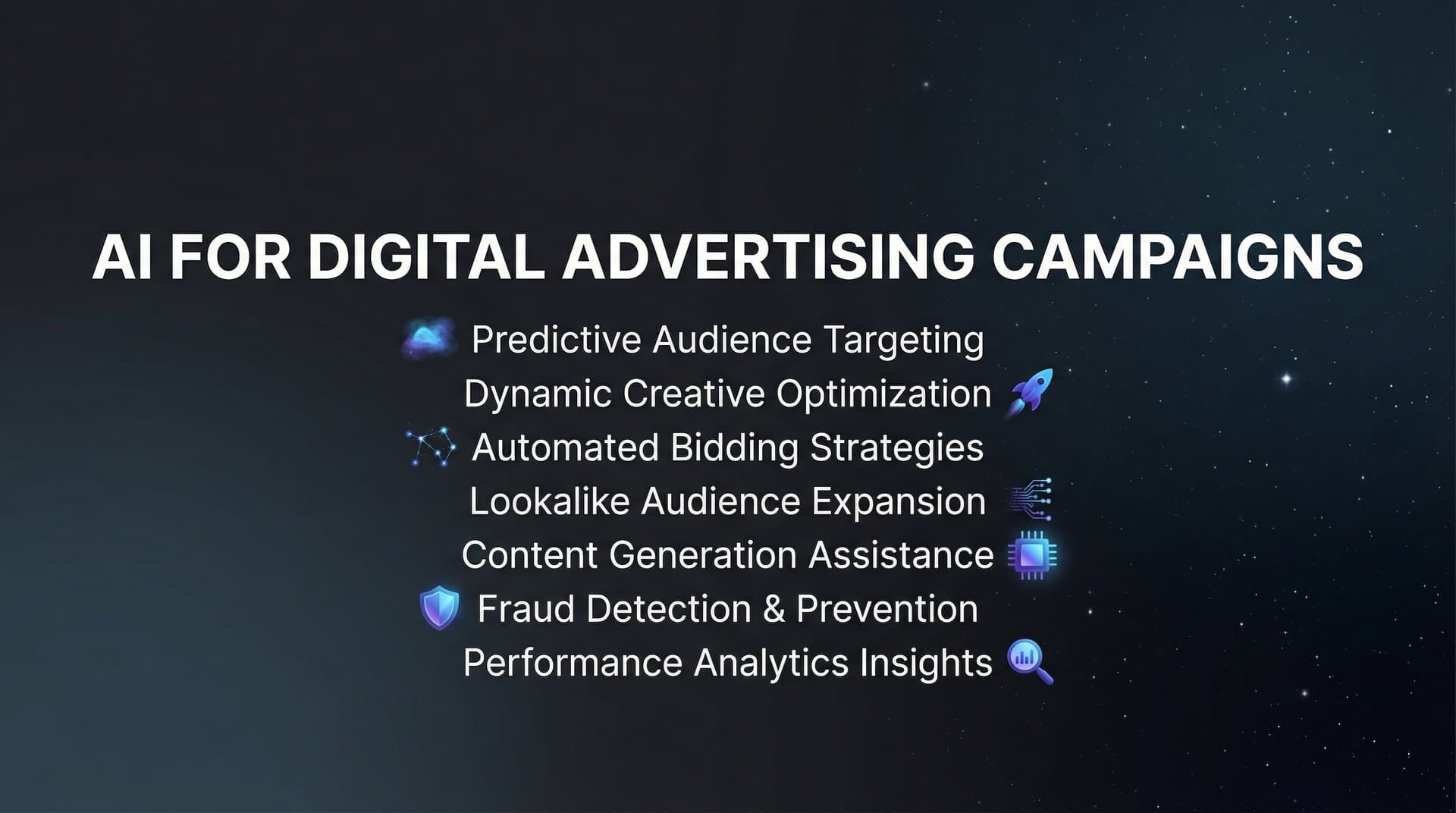
This guide walks through seven proven strategies for integrating AI into your digital advertising campaigns. These aren't theoretical concepts or vague promises about automation. They're specific, actionable tactics that performance marketers and agencies are using right now to generate more creative variations, launch campaigns faster, and surface winning combinations with less manual effort. Whether you're running Meta campaigns for a single brand or managing multiple client accounts, these strategies will help you compete at a level that manual processes simply can't match.
1. Automate Creative Generation at Scale
The Challenge It Solves
Creative production is often the biggest bottleneck in digital advertising. You need fresh ad variations to combat creative fatigue, test new angles, and give platform algorithms more options to optimize. But traditional production requires designers for image ads, video editors for motion content, and actors for UGC-style creatives. This process is expensive, time-consuming, and creates a gap between when you identify a need and when you can actually test new creative.
The Strategy Explained
AI creative generation eliminates the production bottleneck by creating scroll-stopping image ads, video ads, and UGC-style content directly from product information or competitor inspiration. Instead of waiting weeks for a designer's availability, you can generate dozens of creative variations in minutes. The AI handles everything from visual composition to messaging hierarchy, creating ads that match platform best practices without requiring specialized creative skills.
This approach works particularly well when you need to test multiple creative angles quickly. Feed the AI a product URL, and it analyzes the offering to generate creatives highlighting different features, benefits, and emotional appeals. The result is a library of professional-quality ads ready for immediate testing, all created faster than you could brief a traditional creative team. Many advertisers are now using AI marketing tools for Facebook campaigns to streamline this entire process.
Implementation Steps
1. Start with your product URL or key product information as the creative brief, letting AI analyze features, benefits, and positioning to generate initial ad concepts.
2. Generate multiple creative variations exploring different angles like problem-solution positioning, feature highlights, social proof emphasis, or lifestyle integration.
3. Use chat-based editing to refine any creative that's close but needs adjustments, treating the AI as a collaborative creative partner rather than a one-shot generator.
4. Build a systematic testing calendar where you introduce new AI-generated creatives weekly, preventing creative fatigue before it impacts performance.
Pro Tips
Don't try to perfect every creative before testing. The beauty of AI generation is volume. Create more variations than you think you need, launch them quickly, and let performance data reveal which angles resonate. You'll often discover that creatives you weren't sure about outperform the ones you spent time perfecting.
2. Let AI Build Campaigns From Historical Performance Data
The Challenge It Solves
Most advertisers sit on goldmines of performance data but struggle to extract actionable insights from it. You know certain creatives performed well last quarter, but which specific elements made them successful? Was it the headline, the visual, the audience targeting, or the combination? Manual analysis of campaign history is time-intensive and often leads to surface-level conclusions that miss the nuanced patterns hiding in your data.
The Strategy Explained
AI campaign builders analyze your complete campaign history to identify which creatives, headlines, audiences, and copy variations have actually driven results. The system ranks every element by performance metrics that matter to your goals, then uses these insights to build new campaigns optimized from the start. Instead of guessing which combinations might work, you're building campaigns on a foundation of proven performance patterns from your own data.
The transparency matters as much as the recommendations. Quality AI systems explain their reasoning for every decision, showing you why specific creatives were selected, which audience segments performed best historically, and how different elements work together. Platforms offering Meta advertising with AI insights make this analysis accessible without requiring data science expertise.
Implementation Steps
1. Connect your advertising accounts to give AI access to historical campaign data, including performance metrics across all your past creatives, audiences, and messaging variations.
2. Review the AI's analysis of your top performers, paying attention to patterns you might have missed like specific headline structures that consistently drive conversions or audience combinations that deliver better ROAS.
3. Let AI build your next campaign using these insights, but review the recommendations to understand the strategy rather than just accepting the output blindly.
4. Compare performance between AI-built campaigns using historical insights versus campaigns built with traditional manual planning to validate the approach with your specific account.
Pro Tips
The AI gets smarter with every campaign you run. Early recommendations might feel safe or conservative as the system learns your performance patterns. As you feed it more data through additional campaigns, the insights become sharper and the recommendations more sophisticated. Think of it as a compounding asset that improves over time.
3. Deploy Bulk Variation Testing to Find Winners Faster
The Challenge It Solves
Effective testing requires volume, but creating hundreds of ad variations manually is practically impossible. You might want to test five creatives against four audiences with three headline variations and two different copy approaches. That's 120 unique ads, each requiring individual setup in Ads Manager. The manual work involved means most advertisers test far fewer variations than they should, leaving potential winners undiscovered.
The Strategy Explained
Bulk ad launching solves the volume problem by automatically generating every possible combination of your creatives, headlines, audiences, and copy at both the ad set and ad level. You define the components you want to test, and the system creates all variations instantly, ready to launch. What would take hours or days of manual setup happens in minutes, enabling the kind of comprehensive testing that actually surfaces winners.
This approach transforms your testing strategy from cautious and limited to aggressive and comprehensive. Instead of carefully selecting a handful of combinations you think might work, you can test everything and let performance data reveal the winners. Understanding how to scale Facebook advertising campaigns becomes much easier when you can launch and test at this volume.
Implementation Steps
1. Prepare your testing components by creating or selecting multiple creatives, writing several headline variations, defining target audiences, and drafting different copy approaches you want to test.
2. Use bulk launching to generate every combination automatically, mixing elements at both ad set level for audience testing and ad level for creative and messaging variations.
3. Launch all variations simultaneously with equal initial budgets, giving each combination a fair chance to prove performance before optimization kicks in.
4. Monitor early performance indicators after 24-48 hours to identify clear losers you can pause, then let winning variations run longer to confirm sustained performance.
Pro Tips
Don't overthink which combinations to create. The whole point of bulk testing is to let data drive decisions instead of your assumptions. You'll frequently discover that combinations you thought were unlikely to work actually outperform your "safe" choices. The more combinations you test, the more likely you are to stumble onto unexpected winners.
4. Implement AI-Powered Audience Targeting and Optimization
The Challenge It Solves
Audience targeting has become simultaneously more important and more complex. Privacy changes have limited traditional targeting options while platform algorithms have grown more sophisticated in finding relevant users. Many advertisers stick with broad targeting or basic demographic segments because building and testing detailed audience strategies requires expertise and time they don't have. This leaves performance on the table.
The Strategy Explained
AI audience targeting analyzes your performance patterns to recommend high-potential audience segments based on your specific goals and historical results. The system identifies which audience characteristics correlate with better ROAS, lower CPA, or higher conversion rates in your account, then suggests new segments that share those characteristics. This goes beyond basic demographic targeting to understand behavioral patterns and intent signals that drive results.
The optimization continues after launch. As campaigns run, AI monitors which audiences are actually delivering against your goals and can recommend budget shifts or audience refinements based on real performance. The top Meta advertising automation platforms excel at this continuous optimization process.
Implementation Steps
1. Define your campaign goals clearly, whether that's maximizing ROAS, minimizing CPA, driving volume at acceptable efficiency, or another objective that should guide audience selection.
2. Review AI-recommended audiences based on your historical performance data, paying attention to the reasoning behind each suggestion to understand what patterns the system identified.
3. Test recommended audiences against your current targeting approach in separate ad sets to validate performance improvements with real data from your account.
4. Monitor audience-level performance metrics and let AI suggest optimizations like budget reallocation toward top performers or audience expansion strategies based on what's working.
Pro Tips
Audience insights often reveal surprising patterns about who actually converts versus who you thought would convert. Stay open to testing segments that don't match your initial assumptions. The data might show that a completely different audience profile responds better to your offer than your original target persona.
5. Use Performance Leaderboards to Surface Winners Automatically
The Challenge It Solves
When you're running multiple campaigns with dozens or hundreds of ad variations, identifying your true top performers becomes overwhelming. You can sort by individual metrics in Ads Manager, but understanding which creatives, headlines, audiences, and landing pages are actually driving your goals requires cross-referencing multiple reports and building custom views. Important insights get lost in the noise, and you miss opportunities to double down on what works.
The Strategy Explained
Performance leaderboards automatically rank every element of your campaigns by the metrics that matter to your business. Set your target goals like desired ROAS or maximum CPA, and the system scores everything against those benchmarks. Your best-performing creatives, headlines, copy variations, audiences, and landing pages rise to the top with real performance data showing exactly why they won. You can instantly see what's working without building complex reports or analyzing spreadsheets.
This creates a feedback loop that improves your strategy over time. When you can quickly identify which specific elements drive results, you can reuse those winners in future campaigns, test variations of successful approaches, and avoid repeating elements that consistently underperform. Learning about AI in digital advertising helps you understand how these systems surface insights automatically.
Implementation Steps
1. Define your success metrics and target benchmarks based on your business goals, whether that's ROAS thresholds, CPA limits, CTR targets, or conversion volume objectives.
2. Let the system automatically score and rank all campaign elements against your benchmarks, creating leaderboards for creatives, headlines, audiences, copy, and landing pages.
3. Review top performers regularly to identify patterns in what works, looking for common themes across winning creatives or consistent characteristics of high-performing audiences.
4. Build a Winners Hub where you collect proven performers with their performance data, creating a library of validated assets you can quickly deploy in new campaigns.
Pro Tips
Don't just look at the top of the leaderboard. Pay attention to the bottom too. Elements that consistently underperform across multiple campaigns are telling you something important about what doesn't resonate with your audience. Eliminating proven losers is as valuable as identifying winners.
6. Clone and Adapt Competitor Ad Strategies
The Challenge It Solves
Your competitors' advertising strategies contain valuable insights about what messaging, offers, and creative approaches are working in your market. The Meta Ad Library makes all active ads publicly visible, but manually analyzing competitor campaigns and then recreating similar concepts with your own positioning is time-consuming. Most advertisers check competitor ads occasionally but struggle to systematically learn from and adapt successful approaches.
The Strategy Explained
AI-powered competitor cloning lets you pull ads directly from the Meta Ad Library and generate variations with your unique positioning, offers, and brand voice. Instead of manually recreating concepts you like, the AI analyzes the competitor ad structure and generates similar versions tailored to your product. You get the benefit of learning from proven creative approaches in your market without copying directly or spending hours on manual adaptation.
This strategy works best when you're entering a new market, testing new product positioning, or looking for fresh creative angles. Competitor ads that have run for extended periods are likely performing well. An AI agent for advertising campaigns can automate much of this competitive analysis and adaptation process.
Implementation Steps
1. Identify top competitors and regularly review their active ads in the Meta Ad Library, paying attention to ads that run consistently over time as indicators of strong performance.
2. Select competitor ads with creative approaches, messaging angles, or offer structures that could work for your product with proper adaptation.
3. Use AI to clone the ad structure while infusing your unique value proposition, brand voice, and specific product benefits rather than direct copying.
4. Test your adapted versions against your existing creative to see if the competitor-inspired approach outperforms your current strategy, validating whether the concept translates to your audience.
Pro Tips
Look beyond your direct competitors to adjacent markets or complementary products. Sometimes the best creative inspiration comes from brands solving similar problems for different audiences. The structural approach might work perfectly for your market even though the specific product is different.
7. Create a Continuous Learning Loop for Compounding Results
The Challenge It Solves
Most advertising strategies treat each campaign as a separate initiative. You launch, analyze results, and then start fresh with the next campaign using only surface-level insights from previous efforts. This approach leaves massive value on the table because you're not systematically capturing and applying learnings. The insights that could make your tenth campaign dramatically better than your first get lost in the gaps between initiatives.
The Strategy Explained
A continuous learning loop means every campaign feeds data back into the system, making future recommendations smarter and more accurate. The AI doesn't just analyze individual campaign performance. It identifies patterns across all your campaigns, learning which creative approaches work for different objectives, which audience segments respond to specific messaging, and which combinations consistently drive results. Each campaign becomes a data point that improves everything that comes after it.
This creates compounding returns over time. Your first AI-assisted campaign might perform similarly to manual efforts as the system learns your patterns. But by your fifth campaign, the AI has analyzed enough of your specific data to make recommendations that would be impossible to derive manually. The future of advertising technology is built on these self-improving systems that get smarter with every campaign.
Implementation Steps
1. Commit to running campaigns through the same AI system consistently rather than switching tools, allowing the platform to accumulate meaningful performance data specific to your account and audience.
2. Review how AI recommendations evolve over time, noting how early suggestions differ from later ones as the system learns your specific performance patterns and audience behaviors.
3. Document insights that emerge from AI analysis that you wouldn't have discovered manually, creating your own knowledge base of what works for your specific business and market.
4. Use the accumulated learnings to inform broader strategy decisions beyond just campaign setup, like product positioning, offer development, or market expansion priorities.
Pro Tips
The learning loop works best when you give it diverse data to learn from. Don't just run the same campaign type repeatedly. Test different objectives, audiences, creative approaches, and offers. The more varied your campaigns, the more comprehensive the AI's understanding of what works across different scenarios.
Putting These AI Strategies Into Action
The seven strategies above represent a fundamental shift in how digital advertising campaigns can be built, tested, and optimized. The manual workflows that create bottlenecks in creative production, limit your testing volume, and leave insights buried in performance data don't have to be your reality anymore. AI handles the repetitive, time-intensive work while surfacing the patterns and opportunities that drive better results.
Start with the strategy that addresses your biggest current bottleneck. If creative production slows your testing cycles, begin with automated creative generation. If you're struggling to make sense of campaign data, implement performance leaderboards and historical analysis. If manual campaign setup limits your testing volume, deploy bulk variation launching. Each strategy compounds the others, creating a system that gets smarter and more effective over time.
The competitive advantage goes to advertisers who can test more variables, learn faster from results, and scale what works without proportionally scaling team size or workload. These AI strategies make that possible for teams of any size, leveling the playing field between solo marketers and enterprise advertising departments.
Ready to transform your advertising strategy? Start Free Trial With AdStellar and be among the first to launch and scale your ad campaigns 10× faster with our intelligent platform that automatically builds and tests winning ads based on real performance data.