Pricing pages for AI Meta ads tools have a way of raising more questions than they answer. The feature comparison table looks impressive, the tier names sound meaningful, and then you spend twenty minutes trying to figure out whether "advanced AI optimization" on the mid-tier plan is actually different from "AI-powered insights" on the entry plan. It rarely is obvious, and that ambiguity is frustrating when you're trying to make a real budget decision.
Here's what's worth understanding before you commit to any tier: the pricing structure of a well-built AI ad tool is not arbitrary. It reflects genuine differences in computational resources, creative output volume, automation depth, and the sophistication of the AI doing the work. A tool that generates one image ad from a product URL is doing something fundamentally different from a platform that analyzes six months of campaign data, ranks every creative and audience by ROAS, builds a complete campaign structure, and launches hundreds of ad variations simultaneously.
Those differences have real costs, and they map to real differences in advertiser needs. The challenge is knowing which capabilities you actually need right now versus which ones you're paying for in advance of needing them. This article breaks down how AI Meta ads tool pricing tiers are structured, what the core feature differences look like at each level, how AdStellar's Hobby, Pro, and Ultra tiers map to specific advertiser profiles, and what to watch for when comparing platforms before you commit.
The Logic Behind Tiered Pricing for AI Ad Tools
AI ad tools are not one-size-fits-all products, and the pricing reflects that. Unlike traditional SaaS tools where tiers might simply mean more user seats or storage, AI ad platforms have fundamentally different cost drivers depending on how you use them.
Creative generation is one of the most resource-intensive operations on these platforms. Every time the AI generates an image ad, renders a video, or produces a UGC-style avatar creative, it's making significant model calls. At low volume, that's manageable. At scale, when an agency is generating hundreds of creative variations across dozens of client accounts, the computational load is entirely different.
Campaign analysis adds another layer of complexity. When an AI agent is parsing historical performance data, ranking creatives by CPA, identifying which headline patterns correlate with higher ROAS, and building a complete campaign structure with explained rationale, that's not the same operation as generating a single static ad. It requires access to your data, model processing time, and a more sophisticated AI layer than basic creative generation.
Bulk launching compounds both of these. Creating hundreds of ad set and ad level combinations, mixing multiple creatives with multiple headlines, audiences, and copy variations, and pushing all of it to Meta simultaneously is a high-throughput operation that requires infrastructure built for scale.
Understanding these cost drivers helps you evaluate whether a tier's price reflects genuine value or an artificial paywall. The right question isn't "which tier has the most features?" It's "which tier's cost drivers match my actual usage patterns?" A solo advertiser running two campaigns a month doesn't need bulk launching infrastructure. An agency managing twelve client accounts absolutely does, and paying for that capability is justified.
Tiers also exist to let you grow without switching platforms. The best Meta ads automation tools are structured so that you can start at an entry level, validate the platform's value, and upgrade as your volume and complexity increase, rather than outgrowing the tool and starting over somewhere else.
How Feature Depth Changes Across Pricing Tiers
The feature differences between pricing tiers on AI Meta ads tools tend to follow a consistent pattern, regardless of the specific platform. Understanding that pattern helps you read any pricing page more clearly.
Entry-level tiers: Creative generation fundamentals. At the base level, you're getting AI-powered creative production. This means the ability to generate image ads, video ads, and sometimes UGC-style content from a product URL or a prompt. The AI handles the visual and copy production, which eliminates the need for a designer or video editor for basic creative work. Performance reporting at this level is typically essential: you can see what's running, but the AI isn't yet deeply analyzing what's working and why.
Mid-tier plans: Campaign intelligence and performance analysis. This is where the AI Campaign Builder layer comes in. Rather than just generating creatives, the AI starts analyzing your historical campaign data, ranking creatives and audiences by real metrics like ROAS, CPA, and CTR, and building complete campaign structures with explained rationale. The transparency piece matters here: a quality mid-tier plan doesn't just tell you what to run, it explains why the AI made each decision, which is how you actually learn from the platform rather than just executing its outputs blindly.
Mid-tier plans often also unlock competitive intelligence features, like the ability to clone competitor ads directly from the Meta Ad Library and use them as creative starting points. This is a meaningful capability for performance marketers who want to understand what's working in their category before building their own variations.
Top-tier plans: Scale, speed, and compounding intelligence. The highest tiers are built for volume. Bulk ad launching that creates hundreds of ad variations across every combination of creative, headline, audience, and copy. A Winners Hub that organizes your best-performing elements so you can redeploy them instantly rather than hunting through campaign history. Attribution integrations that connect ad spend to actual revenue. And a continuous learning loop where the AI gets smarter with every campaign you run, meaning the platform's value compounds over time rather than staying static.
The jump from mid to top tier is primarily about operational throughput. If launching and testing at scale is your bottleneck, the top tier eliminates it. If it isn't, you're paying for capacity you won't use.
AdStellar's Three Tiers: What Each One Actually Covers
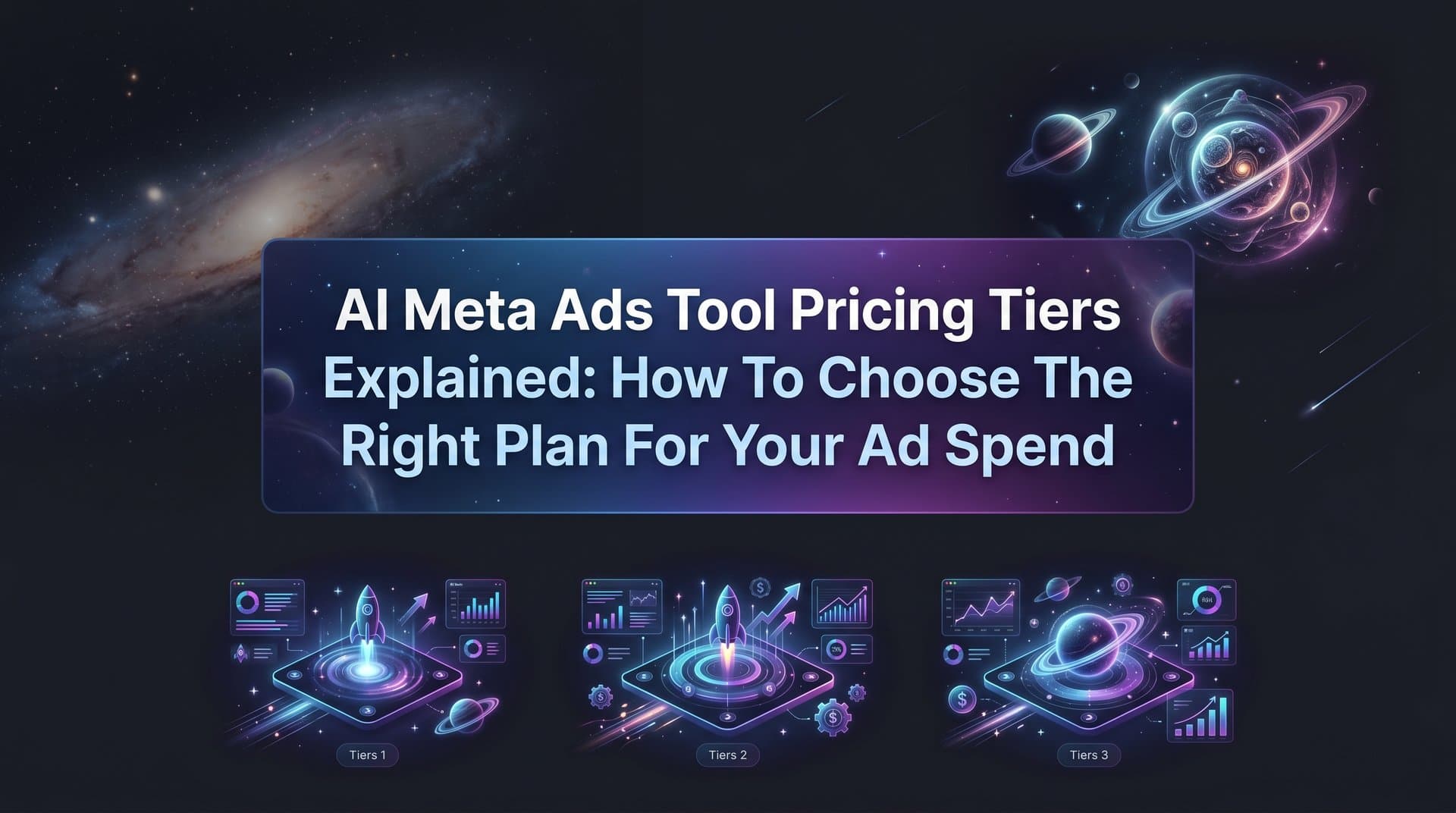
AdStellar structures its pricing across three tiers: Hobby at $49/month, Pro at $129/month, and Ultra at $499/month. All three include a 7-day free trial, which matters because the best way to evaluate any AI ad platform is to run real campaigns through it before committing.
Hobby ($49/month): AI creative production without the overhead. The Hobby tier is designed for individual advertisers and small businesses who are ready to replace manual creative production with AI but aren't yet running campaigns at a volume that demands deep automation. You get access to AdStellar's AI Ad Creative tools, which means generating image ads, video ads, and UGC-style avatar content from a product URL, refining any ad with chat-based editing, and launching campaigns to Meta without needing a designer, video editor, or production team.
Core campaign building and essential performance insights are included. This is a meaningful starting point: you're not just getting a creative generator, you're getting a platform that connects creative production to campaign launch in one workflow. For an advertiser who's been cobbling together Canva, a copywriter, and manual Meta Ads Manager uploads, the efficiency gain at the Hobby tier is immediate and tangible. If you're newer to paid social, Facebook ads tools for beginners can help frame what to expect from entry-level AI platforms.
Pro ($129/month): Performance intelligence for active marketers. The Pro tier is built for growth-stage businesses and performance marketers who are actively testing audiences, iterating on ad copy across campaigns, and need the AI to surface what's actually working rather than just producing more creative output. The full AI Campaign Builder is the centerpiece here.
At the Pro level, AdStellar's AI analyzes your historical campaign data, ranks every creative, headline, and audience by real performance metrics, and builds complete Meta Ad campaigns with full transparency into its reasoning. You understand the strategy, not just the output. This is the tier where the platform starts functioning as a genuine Meta ads campaign planning software rather than a creative production tool.
Pro also includes AI Insights leaderboards, which rank your creatives, headlines, copy, audiences, and landing pages against your actual goals. Set your target benchmarks and the AI scores everything against them, so identifying winners and cutting underperformers becomes a systematic process rather than a judgment call. The ability to clone competitor ads directly from the Meta Ad Library is also unlocked at this tier, which is a significant competitive research capability.
Ultra ($499/month): Built for agencies and high-volume advertisers. Ultra is engineered for the workflows that break at lower tiers: managing multiple ad accounts, launching hundreds of ad variations simultaneously, reporting to clients, and needing attribution data that connects ad spend to actual revenue.
Bulk ad launching at the Ultra tier means mixing multiple creatives, headlines, audiences, and copy combinations at both the ad set and ad level, with AdStellar generating every combination and pushing them to Meta in minutes rather than hours. The complete Winners Hub organizes your best-performing creatives, headlines, audiences, and more in one place with real performance data attached, so you can select any winner and add it to your next campaign instantly. Cometly attribution integration is included, which connects Meta ad spend to downstream revenue and gives you the full picture of what's actually driving results. For agencies evaluating this level of tooling, a dedicated Meta ads management tool for agencies comparison is worth reviewing alongside AdStellar's Ultra tier.
The continuous learning loop is most powerful at this tier: the more campaigns you run through AdStellar, the smarter the AI scoring becomes, which means the platform's value compounds rather than plateaus.
Mapping Your Advertising Workflow to the Right Tier
The most common mistake advertisers make when evaluating pricing tiers is choosing based on aspiration rather than current workflow. It's tempting to buy the tier that reflects where you want to be in six months. But the smarter approach is to start at the tier that matches where you are today, then upgrade when a specific bottleneck appears.
The Hobby tier fits you if: You're running one or two Meta campaigns per month with a modest budget, and your primary pain point is the time and cost of creative production. You want AI to handle image and video ad creation without paying a designer or video editor. You're not yet at a volume where you need the AI to analyze historical data and build campaigns automatically. The Hobby tier gives you genuine AI creative generation without paying for automation features you won't use yet.
The Pro tier fits you if: You're actively testing multiple audiences, iterating on ad copy across campaigns, and spending meaningful time manually reviewing performance data to figure out what's working. If you're doing that analysis yourself in spreadsheets or in Meta Ads Manager, the Pro tier's AI Campaign Builder and Insights leaderboards automate that work and do it more systematically than manual review allows. The efficiency gains at this tier appear in analysis time saved and in the quality of campaign decisions, because the AI is ranking performance against your actual goals rather than giving you raw data to interpret. This is also where Meta ads tools for digital marketers focused on growth tend to find the most immediate ROI.
The Ultra tier fits you if: Your workflow involves launching large numbers of ad variations, managing multiple ad accounts or clients, or reporting results that need to be tied back to actual revenue. At this level, the bottleneck isn't creative production or campaign analysis: it's operational throughput. Bulk launching eliminates the hours spent manually creating ad set combinations. The Winners Hub eliminates the time spent hunting for your best-performing elements across campaign history. And Cometly attribution gives you the revenue data you need to make defensible decisions about where to scale spend.
A useful gut check: think about where you want your advertising operation to be in three to six months. If the Pro tier's capabilities are where you're heading, starting at Hobby and upgrading in a few months is a completely rational approach. You'll validate the platform's value at lower cost before scaling your commitment.
What to Watch for When Comparing AI Meta Ads Tool Pricing
Not every AI Meta ads tool structures its tiers with the same logic, and some pricing pages obscure the real cost of usage. Here are the specific things worth scrutinizing before you commit to any platform.
Creative output limits and per-generation costs. Some tools advertise a low monthly price but charge per creative generated or cap monthly creative outputs at a level that becomes restrictive quickly. If you're planning to test multiple creative concepts across multiple campaigns, a low headline price can become expensive at volume. Look for clear disclosure of how many creatives, campaigns, or ad sets each tier supports, and do the math against your actual expected usage before comparing sticker prices. A thorough Meta ads management tool comparison can surface these hidden cost differences across platforms.
Transparency of AI decisions. This is a meaningful differentiator that's easy to overlook. Many tools at lower price points give you outputs without explanation: here's your campaign structure, here are your recommended audiences. Quality platforms at higher tiers explain the reasoning behind every AI decision, which matters when you need to understand why a campaign was built a certain way, refine the strategy, or explain results to a client or stakeholder. AdStellar's AI Campaign Builder includes full rationale for every decision across all tiers, but this is worth verifying specifically with any platform you evaluate.
Integration and attribution depth. Entry-level tiers on many platforms exclude conversion tracking integrations entirely. If you need accurate attribution data to connect ad spend to actual revenue, confirming which tier unlocks that capability before committing is essential. Discovering that attribution integration requires an upgrade after you've already built your workflow around a lower tier is an avoidable frustration. Reviewing Meta ads API integration tools in detail will help you understand what's available at each pricing level.
Bulk launching as a real capability versus a checkbox feature. Some tools list "bulk ad creation" as a feature across multiple tiers but limit the actual volume or combinations in ways that make it impractical at scale. If bulk launching is important to your workflow, test it during the free trial period rather than assuming the feature works at the volume you need.
Getting Real Value from Whichever Tier You Choose
The 7-day free trial that AdStellar offers across all tiers is the most reliable way to evaluate whether a tier's features match your actual workflow. Use that trial period to run real creative generation and campaign building, not just to explore the interface. The goal is to identify which specific features you reach for and which ones you ignore, because that tells you more about which tier fits than any feature comparison table.
When thinking about upgrading between tiers, the right trigger is a specific workflow bottleneck, not a vague sense that more features would be better. The signal to move from Hobby to Pro is when you find yourself manually doing the analysis that the AI Campaign Builder handles automatically: reviewing performance data in spreadsheets, manually ranking audiences, or spending hours figuring out what's working across campaigns. The signal to move from Pro to Ultra is when launching and testing at scale becomes the constraint on your results.
The Winners Hub and AI Insights features are worth treating as compounding assets rather than static tools. The more campaigns you run through AdStellar, the more the AI learns about what performs in your specific context, and the more accurate its scoring and recommendations become. This means higher tiers deliver increasing returns over time rather than a fixed feature set. That compounding effect is one of the genuine advantages of running your advertising through a platform with a continuous AI learning loop for Meta campaigns rather than switching tools frequently.
One practical note: don't overbuy based on where you want to be. Starting at Hobby or Pro and upgrading when you hit a real bottleneck is a more efficient path than paying for Ultra capabilities you're not yet using. The platform is designed to scale with you, so starting lean is a legitimate strategy, not a compromise.
Choosing the Tier That Matches Your Momentum
AI Meta ads tool pricing tiers are ultimately about matching the right level of automation, creative output, and campaign intelligence to where you are in your advertising journey. The differences between tiers are not cosmetic: they reflect genuine differences in what the AI can do, at what volume, and with what depth of analysis and transparency.
AdStellar's three tiers are designed so that advertisers can start lean and scale without switching platforms. Hobby gives you AI creative production without the overhead. Pro gives you campaign intelligence and performance analysis that replaces manual review work. Ultra gives you the bulk launching, Winners Hub, and attribution depth that agencies and high-volume advertisers need to operate at scale.
The clearest way to know which tier fits is to run real work through the platform before committing. Start Free Trial With AdStellar and use the 7-day free trial to generate actual creatives, build a real campaign, and see which features you reach for naturally. That hands-on experience will tell you more about the right tier than any pricing page comparison, and it costs nothing to find out.