Meta's advertising platform offers thousands of targeting combinations. Interests, behaviors, demographics, lookalikes, custom audiences—the options multiply exponentially with each campaign you build. This abundance should be empowering. Instead, it creates a paralyzing question: which audience segments will actually convert?
Most advertisers approach this challenge through trial and error. You launch a campaign targeting "fitness enthusiasts aged 25-34." It underperforms. Next, you try "gym equipment purchasers" combined with "health magazine readers." Still mediocre results. By the time you've tested five variations, you've burned through budget and patience.
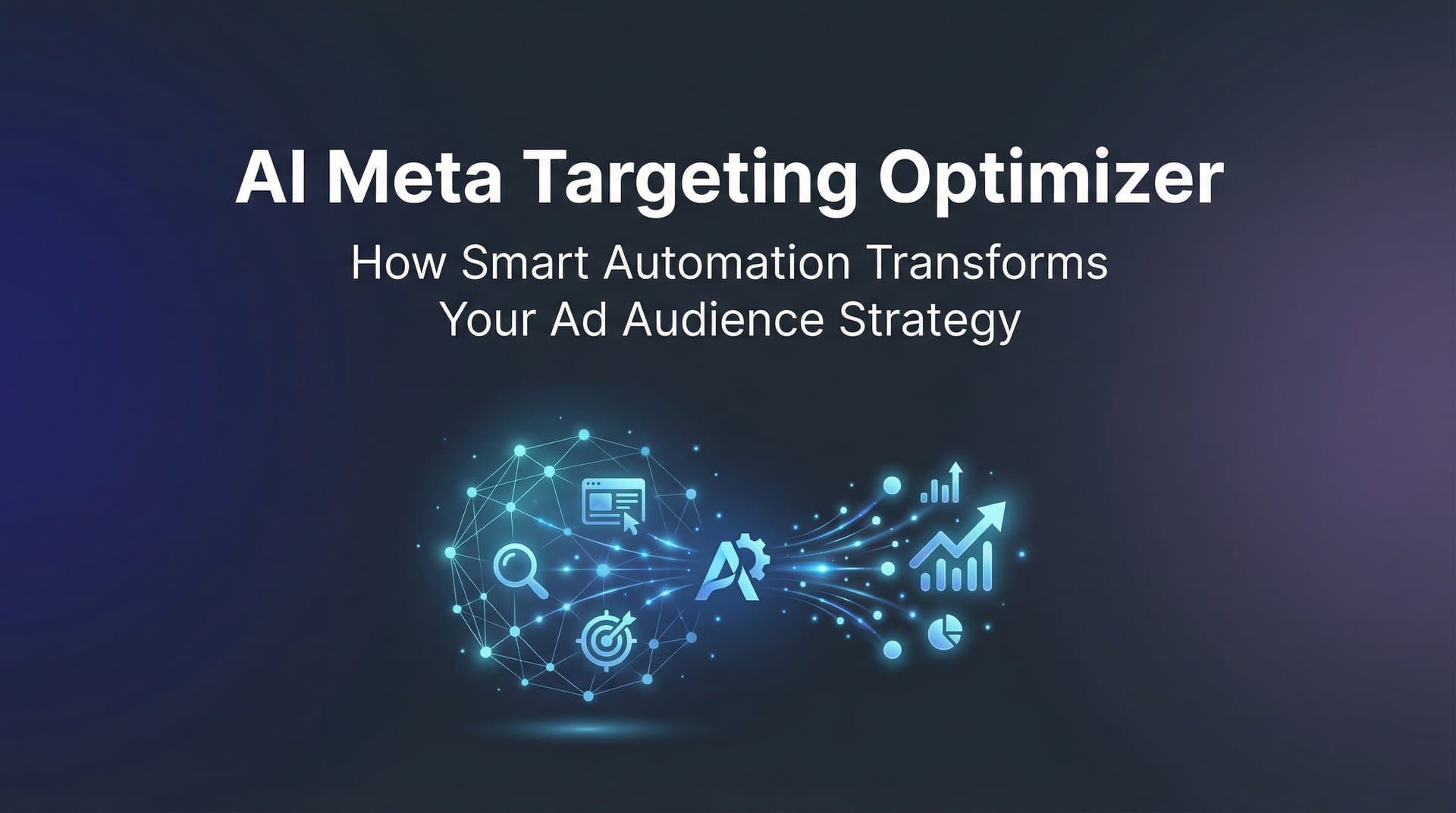
An AI Meta targeting optimizer changes this equation entirely. Rather than guessing which audiences might work, these systems analyze your historical performance data to identify which audience characteristics consistently correlate with conversions. They test combinations at scale, learn from every interaction, and continuously refine targeting parameters—all while you focus on creative strategy and business growth.
The Targeting Complexity Problem Meta Advertisers Face Today
Meta's targeting capabilities have evolved dramatically over the past few years. The platform now offers granular interest categories, behavioral signals from across Facebook and Instagram, sophisticated lookalike modeling, and custom audience options that let you target based on website activity, app engagement, or customer lists.
This expansion creates a fundamental problem: more options mean more opportunities to waste money on the wrong audiences.
Consider the math. If you're testing just five interest categories, three age ranges, and two geographic regions, you're already looking at 30 potential combinations. Add in lookalike variations and placement options, and the number explodes into the hundreds. Testing each combination properly requires sufficient budget and time for Meta's algorithm to exit the learning phase—typically 50 conversions per ad set. Understanding Meta ads targeting complexity is essential before attempting any optimization strategy.
For most advertisers, this creates an impossible bottleneck. You don't have the budget to test dozens of audience variations simultaneously. Manual A/B testing becomes a months-long process, and by the time you identify a winner, market conditions have shifted or audience fatigue has set in.
The learning phase penalty compounds this challenge. Every time you launch a new audience test, Meta's algorithm starts from zero. It needs fresh data to understand which users within that audience are most likely to convert. During this learning period—which can last days or weeks—your cost per result typically runs higher than it will once optimization stabilizes.
This means every audience experiment carries real cost, not just in ad spend but in lost opportunity. While you're testing audience variation #7, your competitors might already be scaling with proven segments.
Many advertisers respond by playing it safe—sticking with broad audiences or relying on Meta's Advantage+ targeting to make decisions automatically. But broad targeting often includes substantial waste, and Advantage+ operates as a black box, offering no insight into which specific audience characteristics are driving results. If you've ever felt that Facebook ad targeting is too complicated, you're not alone in that frustration.
How AI Targeting Optimization Actually Works
AI targeting optimization operates on a fundamentally different model than manual audience selection. Instead of testing one variable at a time, these systems analyze all your historical campaign data simultaneously to identify patterns that predict conversion likelihood.
The process begins with data aggregation. An AI targeting optimizer pulls performance metrics from every campaign you've run—impressions, clicks, conversions, cost per result—and maps this data against the audience parameters used in each campaign. It's looking for correlations: which combinations of age ranges, interests, behaviors, and geographic locations consistently deliver better results?
This analysis goes deeper than surface-level metrics. The system examines conversion rates at different times of day, performance variations across device types, and how different audience segments respond to specific creative approaches. It identifies second-order effects that manual analysis typically misses—like how "yoga enthusiasts" combined with "organic food purchasers" converts 40% better than either interest alone.
Once patterns emerge, the system shifts into predictive modeling. Using machine learning algorithms, it forecasts which audience combinations are most likely to achieve your specific goals. If you're optimizing for purchases, it predicts which segments will generate the lowest cost per acquisition. If you're focused on reach, it identifies audiences with high impression potential and low competition. This is the foundation of any effective AI targeting strategy for Meta ads.
These predictions aren't static. As new performance data flows in from active campaigns, the AI continuously refines its models. An audience that performed well last month but shows declining engagement this week gets automatically deprioritized. A segment that initially seemed unpromising but suddenly shows conversion momentum gets increased allocation.
This creates a learning loop that compounds over time. Each campaign generates data that improves future predictions. The system builds institutional knowledge about your ideal customers—which characteristics matter most, which combinations amplify performance, and which segments exhaust quickly versus maintaining consistency.
The technical implementation typically involves several machine learning approaches working together. Clustering algorithms group similar audience segments to identify broader patterns. Classification models predict conversion probability for new audience combinations. Reinforcement learning optimizes the exploration-exploitation tradeoff—balancing tests of new audiences against scaling proven winners.
What makes this approach powerful is speed and scale. While a human marketer might test three audience variations over two weeks, an AI system can evaluate dozens of combinations simultaneously, reaching statistical significance in days rather than months. It processes thousands of data points per second, identifying subtle correlations that manual analysis would never uncover.
Five Core Capabilities That Define Effective AI Targeting Tools
Not all AI targeting solutions deliver equal value. The most effective systems share several core capabilities that separate genuine optimization from basic automation.
Audience Discovery: The best AI targeting tools don't just optimize audiences you manually select—they proactively identify high-potential segments you haven't considered. By analyzing your customer data, website pixel information, and engagement patterns, these systems surface audience combinations that share characteristics with your best converters. This might reveal that your product resonates unexpectedly well with a demographic you'd overlooked, or that a specific interest combination consistently predicts purchase intent. Exploring the best Meta ad targeting software options can help you find tools with strong discovery capabilities.
Cross-Campaign Learning: Superior AI systems apply insights from one campaign to inform others. If your prospecting campaign discovers that "small business owners" interested in "productivity software" convert exceptionally well, that insight should automatically influence your retargeting strategy, lookalike audience creation, and future campaign builds. This cross-pollination of knowledge prevents you from learning the same lessons repeatedly across isolated campaigns.
Budget-to-Audience Matching: Effective AI targeting doesn't just identify good audiences—it dynamically allocates spend toward segments showing the strongest performance signals. If Audience A is converting at $15 CPA while Audience B sits at $45 CPA, the system automatically shifts budget toward A while reducing exposure to B. This happens in real-time, responding to performance fluctuations throughout the day rather than waiting for weekly manual reviews. A dedicated Meta ads budget optimizer can handle this allocation automatically.
Fatigue Detection and Rotation: Even the best-performing audiences eventually exhaust. Frequency climbs, engagement drops, and cost per result deteriorates. Advanced AI systems monitor these fatigue signals and automatically rotate in fresh audience segments before performance crashes. This prevents the common scenario where a winning campaign gradually becomes unprofitable because you scaled it beyond the audience's capacity.
Transparent Decision-Making: The most valuable AI targeting tools explain their recommendations rather than operating as black boxes. When the system suggests targeting "fitness equipment purchasers" aged 35-50 in suburban areas, it should articulate why—perhaps this segment showed 60% higher conversion rates in your historical data, or engagement patterns indicate strong purchase intent. This transparency lets you apply strategic judgment to AI recommendations rather than blindly following algorithmic suggestions.
These capabilities work synergistically. Audience discovery feeds cross-campaign learning, which improves budget allocation decisions, while fatigue detection ensures you're always testing fresh segments that feed back into the discovery process. The result is a self-improving system that gets smarter with every campaign you run.
Real-World Applications Across Different Campaign Types
AI targeting optimization adapts to different campaign objectives, with distinct applications depending on whether you're prospecting for new customers, retargeting warm audiences, or scaling proven campaigns.
For prospecting campaigns, AI targeting excels at expanding reach while maintaining quality. Many advertisers struggle with this balance—broad audiences generate volume but include substantial waste, while narrow targeting limits scale. AI systems navigate this tradeoff by identifying lookalike variations that outperform Meta's standard lookalike audiences.
The technology analyzes which characteristics of your existing customers most strongly predict conversion likelihood. It might discover that purchase timing matters more than demographic data—customers who engage with your content on weekday evenings convert at higher rates than weekend browsers. Or that specific interest combinations create compounding effects that simple lookalikes miss. Implementing automated ad targeting strategies can help you capitalize on these insights systematically.
This enables a prospecting strategy that continuously tests audience expansions while maintaining efficiency. The AI might start with your core converting audience, then systematically test adjacent segments—people who share two of three key characteristics, or who engage with related but not identical interests. Successful expansions get scaled while underperformers get quickly eliminated.
Retargeting optimization takes a different approach. Here, AI targeting focuses on segmenting warm audiences by engagement level and purchase intent. Not everyone who visits your website shows equal conversion probability. Someone who viewed your pricing page three times and added items to cart demonstrates higher intent than someone who read one blog post.
AI systems create dynamic audience segments based on these behavioral signals, then match messaging intensity to intent level. High-intent users might see aggressive offers with short urgency windows, while early-stage browsers receive educational content that builds consideration. This personalization happens automatically as the AI tracks user progression through your funnel.
Scaling scenarios present their own challenges. What works at $1,000 daily spend often breaks at $10,000. Audiences that seemed infinite at small scale reach saturation quickly when you increase budgets. Learning how to scale Meta ads efficiently requires understanding these dynamics and having systems that adapt automatically.
The system monitors frequency, engagement rates, and cost per result trends to detect early fatigue signals. Before performance deteriorates significantly, it begins testing audience expansions—broader interest categories, lookalike percentage increases, or geographic expansions. This proactive rotation maintains efficiency during scaling rather than reacting after costs have already climbed.
Evaluating AI Targeting Solutions: What to Look For
As AI targeting tools proliferate, distinguishing effective solutions from marketing hype becomes critical. Several key factors separate genuine optimization platforms from basic automation.
Transparency should be non-negotiable. Any AI targeting tool worth using must explain its recommendations. When the system suggests a specific audience combination, you should understand why—which historical data supports this choice, what conversion patterns it identified, and what assumptions it's making. Black-box optimization might work initially, but it prevents you from building strategic understanding of your customers and limits your ability to apply judgment when AI suggestions seem off-target.
Integration depth determines data quality. The best AI targeting solutions connect directly to Meta's API, pulling real-time performance data rather than relying on delayed reporting or manual exports. This real-time connection enables faster optimization cycles and more accurate predictions. It also ensures the AI system sees the same data Meta's algorithm uses, preventing discrepancies that can lead to poor decisions. For technical details, our guide on understanding Meta API integration covers what matters most.
Learning loop quality separates sophisticated systems from simple rule-based automation. Ask whether the tool improves with each campaign or simply repeats the same optimization logic. The best platforms build institutional knowledge—they remember which audiences worked for similar products, how your specific customers respond to different approaches, and which seasonal patterns affect performance. This accumulated intelligence compounds over time, making the system increasingly valuable the longer you use it.
Customization flexibility matters because every business has unique requirements. Can you define custom optimization goals beyond Meta's standard options? If you care more about customer lifetime value than immediate conversion rates, can the AI optimize accordingly? If certain audience segments align with your brand positioning even if they don't show the lowest CPA, can you weight decisions to account for strategic considerations?
Testing methodology reveals technical sophistication. How does the tool balance exploring new audiences against exploiting proven winners? Naive systems either test too conservatively—missing opportunities—or too aggressively, wasting budget on unlikely winners. Advanced platforms use statistical methods to determine optimal testing intensity based on your budget constraints and performance variance.
Finally, consider the human element. The best AI targeting tools augment human judgment rather than replacing it. They should make it easy to override recommendations when you have market knowledge the algorithm lacks, to set guardrails that prevent targeting outside your brand parameters, and to understand performance in ways that inform your broader marketing strategy. Reviewing the best AI tools for Meta advertising can help you identify platforms that strike this balance.
Putting AI Targeting Optimization Into Practice
Implementing AI targeting optimization successfully requires more than just activating a tool. The transition from manual audience selection to AI-augmented targeting works best when approached systematically.
Start by feeding the system your historical performance data. AI targeting optimizers need baseline information to identify patterns and make predictions. Connect your best-performing campaigns from the past 3-6 months—these provide the training data that teaches the system what success looks like for your business. The more campaign history you can provide, the faster the AI reaches reliable predictions. Our guide on how to get started with Meta ads automation walks through this setup process in detail.
Set clear optimization goals from the outset. AI needs to know what you're optimizing for—conversions, ROAS, reach, or custom metrics that matter to your business. Different objectives require different targeting strategies. A campaign optimizing for maximum conversions might accept higher costs per result to increase volume, while ROAS optimization prioritizes efficiency over scale. Be explicit about these priorities so the AI aligns its recommendations with your actual goals.
Trust the process, but verify recommendations against your market knowledge. AI systems excel at pattern recognition across large datasets, but they lack contextual understanding of your industry, competitive landscape, and brand positioning. Early recommendations might seem counterintuitive—the system might suggest audiences you'd never considered or deprioritize segments you assumed were valuable.
Evaluate these suggestions critically. Does the AI recommendation conflict with fundamental knowledge about your customers? If so, investigate why—sometimes the data reveals surprising truths about who actually converts versus who you think should convert. Other times, the AI needs more data or better context to make appropriate decisions. Avoiding common Facebook ad audience targeting mistakes requires this kind of critical evaluation.
Monitor the learning curve during the first few weeks. AI targeting systems typically show rapid improvement initially as they process new performance data, then plateau as they converge on optimal strategies. Expect some experimentation during this learning phase—the system is testing hypotheses about which audiences work best. Performance might fluctuate more than you're accustomed to with manual targeting.
As the system matures, shift your focus from daily optimization to strategic oversight. Let the AI handle tactical decisions about budget allocation and audience adjustments. Concentrate your energy on higher-level questions: Are we targeting the right markets? Does our creative resonate with the audiences AI identifies as high-potential? Should we expand into new product categories or geographic regions?
This division of labor—AI handling optimization execution while humans focus on strategy—represents the ideal implementation. You're not abdicating control; you're delegating computational tasks to systems designed for rapid data processing while reserving judgment-based decisions for human intelligence.
The Strategic Advantage of AI-Powered Targeting
AI Meta targeting optimization represents more than incremental improvement in campaign performance. It fundamentally changes how competitive advantage works in paid social advertising.
Traditional advertising success relied heavily on creative intuition and market knowledge. The best advertisers understood their customers deeply and crafted targeting strategies based on experience and instinct. This expertise took years to develop and remained largely tacit—difficult to scale or systematize.
AI targeting doesn't eliminate the need for strategic thinking, but it democratizes access to optimization capabilities that were previously available only to large advertisers with dedicated analytics teams. A small business can now leverage computational power that analyzes thousands of data points simultaneously, identifying patterns that would take humans months to uncover manually.
The competitive advantage shifts toward advertisers who effectively combine strategic judgment with AI-powered execution. You still need to understand your market, craft compelling offers, and develop creative that resonates. But you can now test audience strategies at scale, learn from performance data systematically, and optimize continuously without drowning in spreadsheets.
This creates a compounding advantage. Every campaign you run generates data that improves future targeting decisions. Your AI system builds institutional knowledge about your ideal customers—which characteristics matter most, how different segments respond to various approaches, and which audience combinations create unexpected synergies. Competitors starting from zero face an increasingly steep learning curve to match your optimization sophistication.
The tools that make this possible are evolving rapidly. AdStellar AI's Targeting Strategist agent represents this new generation of optimization technology—analyzing your historical performance data to identify winning audience segments, providing transparent rationale for every targeting decision, and continuously refining recommendations as new performance data flows in. The system builds complete campaigns in under 60 seconds, applying cross-campaign learning to every new build.
Ready to transform your advertising strategy? Start Free Trial With AdStellar AI and be among the first to launch and scale your ad campaigns 10× faster with our intelligent platform that automatically builds and tests winning ads based on real performance data. Let AI handle the computational heavy lifting while you focus on the strategic decisions that drive business growth.