At 2:47 AM, marketing manager Sarah Chen was still tweaking Facebook ad targeting, watching her cost-per-click climb while her boss expected results by morning. She'd spent six hours setting up this campaign—researching audiences, writing copy variations, configuring budgets across twelve ad sets—and now she was manually adjusting bids because performance wasn't matching her projections.
Sound familiar?
Manual Facebook advertising traps smart marketers in an exhausting cycle. You research audiences based on assumptions. You create campaigns using yesterday's best practices. You monitor performance reactively, making adjustments hours after opportunities have passed. And when something finally works, you're too burned out to scale it effectively.
The hidden cost isn't just the late nights—it's the performance inconsistency. Human decision-making degrades under cognitive load. Your morning campaign decisions differ from your evening ones. Your Monday optimization strategy shifts by Friday. This inconsistency creates unpredictable results that make forecasting impossible and scaling terrifying.
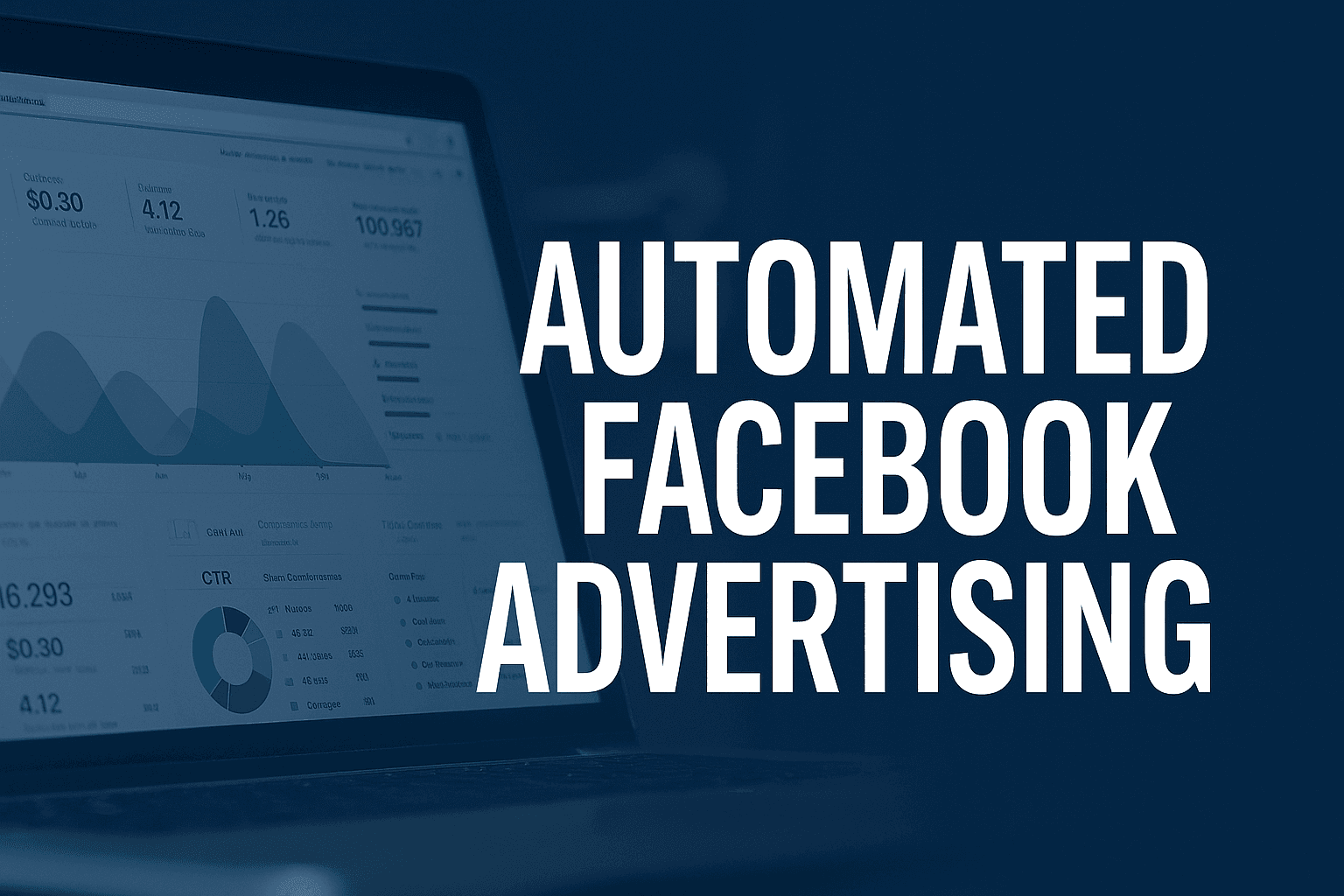
Automated Facebook advertising eliminates this chaos through AI-driven systems that handle optimization, testing, and scaling continuously. Instead of spending hours configuring campaigns manually, you leverage historical performance data to train AI systems that launch campaigns in under 60 seconds. Instead of reacting to performance changes hours later, automated systems adjust bids, budgets, and targeting in real-time based on conversion probability.
The transformation isn't just about time savings—though reclaiming 15-20 hours per week matters. It's about achieving performance consistency that manual management can't match. AI systems don't experience decision fatigue. They don't make emotional adjustments based on short-term fluctuations. They analyze thousands of performance signals simultaneously and optimize based on statistical patterns that human analysis would miss.
This guide walks you through implementing automated Facebook advertising step-by-step. You'll learn how to extract performance intelligence from your historical data, configure audience automation that continuously improves targeting, set up creative testing systems that scale your best-performing assets, and launch campaigns that optimize themselves while you focus on strategy.
By the end, you'll understand exactly how to transform your Facebook advertising from manual chaos to AI-powered efficiency—without sacrificing control or brand consistency.
Let's walk through how to automate your Facebook advertising step-by-step.
Step 1: Extracting Performance Intelligence From Your Data
Your Facebook ad account contains a goldmine of performance intelligence—but most marketers never dig deep enough to find it. They glance at top-line metrics, make gut-based decisions, and wonder why their new campaigns underperform. The difference between mediocre automation and game-changing results starts here: transforming raw campaign data into actionable insights that train AI systems to outperform your best manual efforts.
Think of your historical data as the curriculum for your automation system. Just as a student learns better from comprehensive, well-organized materials than from scattered notes, AI systems optimize more effectively when trained on clean, structured performance data that reveals genuine patterns rather than random noise.
Identifying Your Winning Elements
The foundation of successful automated facebook campaigns lies in identifying which creative elements, audience segments, and messaging angles have historically driven your best results. This isn't about cherry-picking your highest-performing campaign and calling it done—it's about systematic analysis that reveals patterns across multiple campaigns and time periods.
Start by analyzing your top-performing creative elements across the past 90 days. Which image styles consistently generate higher click-through rates? Do video ads outperform static images for your audience? Are testimonial-based creatives converting better than product-focused ones? Document these patterns with specific examples: "Customer success story videos generate 2.3x higher conversion rates than feature demonstration videos."
Next, examine your highest-converting audience segments. Look beyond basic demographics to understand behavioral patterns. Which lookalike audience percentages deliver the best cost-per-acquisition? Are broad interest targeting groups outperforming narrow ones? Do certain geographic regions consistently show stronger engagement? The goal is identifying audience characteristics that predict conversion likelihood, not just surface-level demographics.
Finally, analyze your budget allocation patterns using ai tools for campaign management to identify which campaign objectives have delivered the most efficient results. At what daily budget levels do your campaigns perform optimally before hitting diminishing returns? Understanding these spending patterns helps automation systems allocate budgets intelligently from day one rather than learning through expensive trial and error.
Data Quality Assessment And Cleanup
Clean, well-structured historical data provides the foundation for effective optimization, whether you're optimizing manually or training AI systems to make automated decisions. Garbage in, garbage out isn't just a cliché—it's the primary reason automation systems fail to deliver expected results.
Begin by removing campaigns with insufficient data for meaningful analysis. Any campaign that spent less than $500 or ran for fewer than seven days likely lacks statistical significance. These outliers skew your performance baselines and teach automation systems to optimize for anomalies rather than sustainable patterns. Create a separate archive for these campaigns rather than deleting them entirely—you may want to reference them later, but they shouldn't influence your automation training data.
Standardize your naming conventions across all historical campaigns using automated meta advertising best practices to ensure consistency. Inconsistent naming makes pattern recognition nearly impossible for AI systems. Implement a clear structure like "ObjectiveAudienceCreative_Date" so automation can quickly identify which elements contributed to performance outcomes. If your historical campaigns use random or inconsistent names, invest 2-3 hours creating a mapping document that translates old names into your new standardized format.
Step 2: Configuring Audience Automation Systems
Once you've extracted performance intelligence from your historical data, the next critical step is configuring audience automation that continuously discovers and optimizes targeting without manual intervention. Most marketers approach audience targeting with static assumptions—they define demographics, select interests, and hope for the best. This approach worked when Facebook advertising was simpler, but today's algorithm rewards dynamic systems that adapt to real-time performance signals.
Audience automation transforms targeting from a one-time setup task into a continuous optimization process. Instead of manually creating audience segments based on demographic guesses, you implement systems that test variations systematically, identify winning patterns, and scale profitable segments automatically.
Building Dynamic Audience Testing Frameworks
The foundation of effective audience automation is a testing framework that evaluates multiple targeting approaches simultaneously. Rather than launching campaigns with a single audience and hoping it performs, you create structured tests that compare broad targeting against interest-based segments, lookalike audiences at different percentages, and behavioral targeting variations.
Start by implementing ai based customer targeting solutions that automatically generate audience variations based on your historical performance data. These systems analyze which demographic characteristics, interests, and behaviors have correlated with conversions in your past campaigns, then create new audience segments that combine these winning elements in novel ways.
Configure your testing framework to allocate budget proportionally based on early performance signals. Instead of splitting budget evenly across all audience variations, implement dynamic allocation that increases spending on segments showing strong conversion rates while reducing investment in underperforming audiences. This approach accelerates learning and maximizes return on ad spend during the testing phase.
Scaling Winning Audience Segments
Once your testing framework identifies high-performing audience segments, the next challenge is scaling them without sacrificing efficiency. Manual scaling often fails because marketers increase budgets too aggressively, triggering Facebook's learning phase and degrading performance. Automated systems scale gradually based on statistical confidence rather than arbitrary budget increases.
Implement scaling rules that increase daily budgets by 20-30% every 48-72 hours for audiences maintaining target cost-per-acquisition thresholds. This gradual approach keeps campaigns stable while expanding reach. When performance degrades during scaling, automation systems automatically reduce budgets to previous levels and test alternative expansion strategies like geographic expansion or interest layering.
Step 3: Implementing Creative Testing Automation
With audience automation configured, the next layer is creative testing systems that continuously identify winning ad variations and scale them across your campaigns. Creative performance determines whether your perfectly targeted audiences convert or scroll past your ads. Yet most marketers approach creative testing reactively—they launch a few variations, pick a winner based on limited data, and run it until performance degrades.
Automated creative testing transforms this reactive approach into a systematic process that generates insights faster and scales winners more effectively. Instead of manually creating ad variations and monitoring performance spreadsheets, you implement systems that test creative elements methodically and optimize based on statistical significance rather than gut feelings.
Structuring Systematic Creative Tests
Effective creative automation starts with structured testing that isolates individual creative elements rather than comparing completely different ads. When you test ads that differ in multiple ways simultaneously—different images, headlines, and body copy—you can't determine which element drove performance differences. Systematic testing changes one variable at a time, building knowledge about what works for your specific audience.
Begin by implementing automated ad testing frameworks that generate variations of your best-performing creative assets. These systems create multiple versions of successful ads by testing different headlines, adjusting image compositions, or varying call-to-action buttons while keeping other elements constant. This approach identifies which specific creative elements drive performance improvements rather than relying on random variation.
Configure your testing system to evaluate creative performance based on your primary conversion objective rather than vanity metrics like click-through rate. An ad generating high clicks but low conversions wastes budget. Automated systems optimize for the metrics that matter to your business—cost per acquisition, return on ad spend, or conversion rate—ensuring creative winners actually drive business results.
Scaling High-Performance Creative Assets
Once testing identifies winning creative variations, automated systems scale them across campaigns and audience segments without manual intervention. This scaling process isn't simply increasing budget on winning ads—it's strategically deploying proven creative assets to new contexts where they're likely to perform well.
Implement creative scaling rules that automatically duplicate high-performing ads to similar audience segments. When an ad achieves target performance thresholds in one audience, automation systems test it in related audiences with comparable demographics or interests. This approach accelerates the discovery of creative-audience combinations that drive exceptional results.
Use bulk ad creation capabilities to deploy winning creative variations across multiple campaigns simultaneously. Instead of manually recreating successful ads in each campaign, automated systems generate variations at scale, maintaining consistent messaging while adapting to different audience contexts. This efficiency allows you to test more creative approaches faster, building competitive advantages through superior learning velocity.
Step 4: Launching Self-Optimizing Campaigns
With data extraction, audience automation, and creative testing configured, you're ready to launch campaigns that optimize themselves continuously. This is where all previous steps converge into a unified system that handles campaign management with minimal manual intervention. Self-optimizing campaigns don't just run on autopilot—they actively improve performance by adjusting bids, reallocating budgets, and pausing underperforming elements based on real-time data.
The transformation from manual campaign management to automated optimization happens through intelligent rules that codify your decision-making process. Instead of checking campaign performance multiple times daily and making reactive adjustments, you define the conditions that trigger optimization actions and let automation execute them consistently.
Configuring Real-Time Optimization Rules
Self-optimizing campaigns rely on optimization rules that monitor performance continuously and adjust campaigns when specific conditions are met. These rules transform your strategic knowledge into automated actions that execute faster and more consistently than manual management.
Start by implementing bid optimization rules that adjust based on conversion probability. When campaigns achieve target cost-per-acquisition at current bid levels, automation increases bids gradually to expand reach while maintaining efficiency. When costs exceed targets, systems reduce bids automatically to protect profitability. This dynamic bidding responds to auction dynamics in real-time rather than hours after performance shifts.
Configure budget reallocation rules using automated meta campaigns strategies that shift spending from underperforming ad sets to high-performers. Instead of maintaining static budget allocations regardless of results, automated systems continuously evaluate relative performance and move budget to where it generates the best returns. This dynamic allocation maximizes overall campaign efficiency without requiring constant manual monitoring.
Implementing Performance-Based Scaling
The final component of self-optimizing campaigns is automated scaling that expands successful campaigns while maintaining performance standards. Manual scaling often fails because marketers increase budgets based on arbitrary timelines rather than statistical confidence in sustained performance.
Implement scaling automation that increases campaign budgets only after maintaining target performance thresholds for defined periods. When campaigns achieve cost-per-acquisition targets for 72 consecutive hours, systems increase daily budgets by 25%. This gradual, performance-based scaling prevents the dramatic performance drops that often accompany aggressive manual budget increases.
Configure geographic expansion rules that test new markets automatically when existing ones reach saturation. When campaign frequency exceeds optimal levels in current target regions, automation expands to similar geographic areas with comparable demographic profiles. This systematic expansion discovers new growth opportunities without the risk of over-saturating existing audiences.
Putting It All Together
You've just walked through the complete framework for transforming manual Facebook advertising chaos into AI-powered efficiency. The journey from late-night campaign tweaking to automated optimization isn't about replacing your marketing expertise—it's about amplifying it through systems that handle execution while you focus on strategy.
Start with your data foundation. Clean historical performance data trains AI systems that make smarter decisions than manual guesswork ever could. Configure audience automation that discovers profitable segments through systematic testing rather than demographic assumptions. Implement creative systems that scale your winning patterns while continuously testing new variations. Launch campaigns that optimize themselves in real-time, reacting to performance changes in minutes instead of hours.
The transformation happens faster than you expect. Most marketers see measurable improvements within the first two weeks—better performance consistency, reclaimed time, and the confidence to scale without the fear of manual management breaking down. Your role shifts from campaign operator to strategic director, focusing on the creative and strategic decisions that actually move your business forward.
Ready to experience automated Facebook advertising that outperforms your best manual efforts? Start Free Trial With AdStellar AI and launch your first AI-optimized campaign in under 60 seconds. Our platform handles everything from audience targeting to creative optimization, giving you the performance consistency and time savings that manual management can't match.