Manual budget management on Facebook Ads feels like playing whack-a-mole with your marketing budget. You check performance at 9 AM and shift $500 from an underperforming ad set to your winner. By noon, that winner has exhausted its budget while a previously dormant ad set suddenly starts converting. You adjust again. By 3 PM, everything's changed once more, and you're back in Ads Manager moving money around like a day trader watching volatile stocks.
The exhausting part isn't just the time investment. It's watching your best-performing ads sit idle with zero budget while mediocre campaigns continue burning through spend because you were in a meeting or, heaven forbid, trying to focus on actual strategy work.
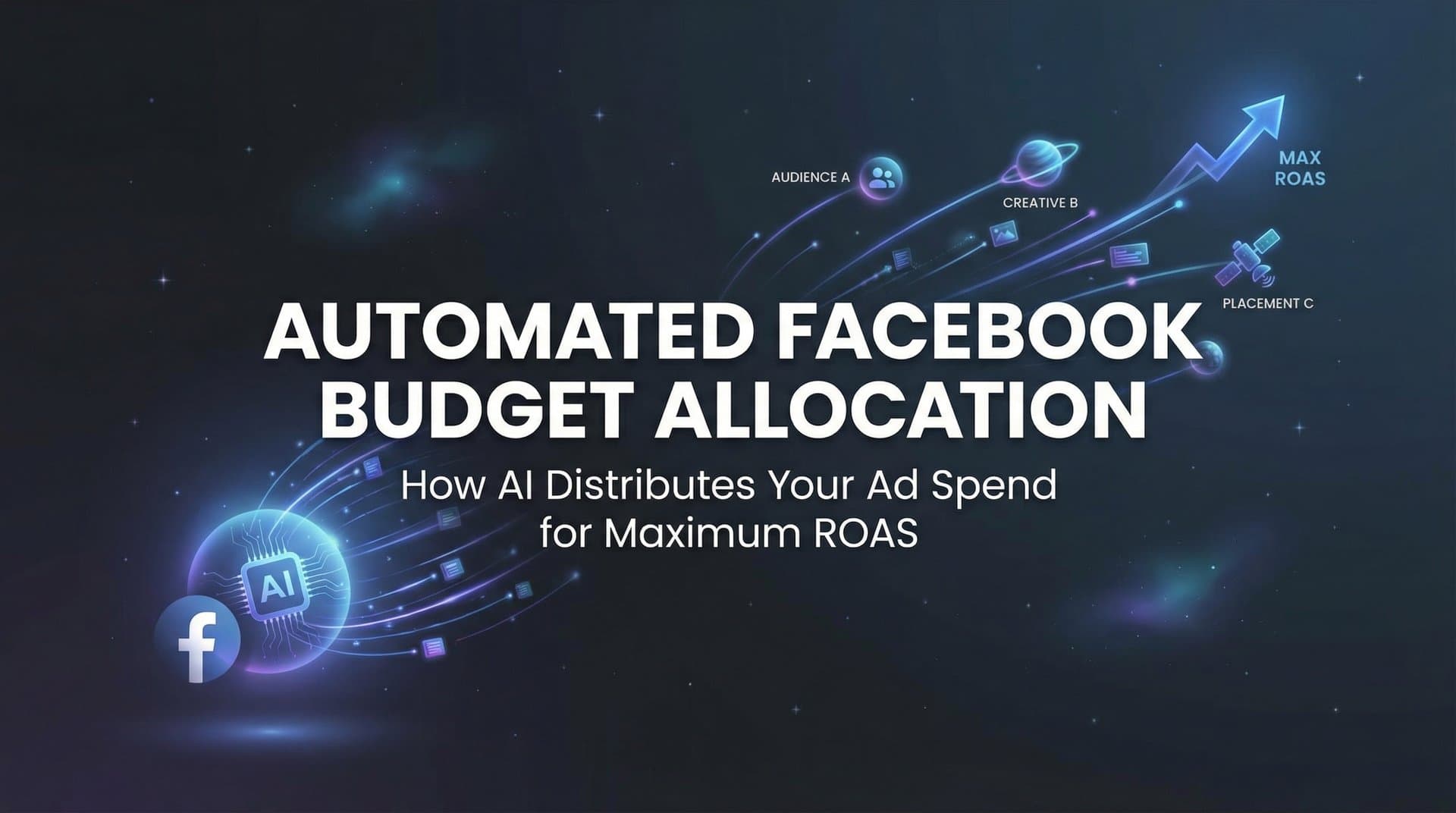
Automated Facebook budget allocation solves this problem by continuously monitoring performance and redistributing your ad spend in real-time. Instead of manually checking metrics and making allocation decisions multiple times per day, the system automatically funnels more budget toward winning ads and pulls back from underperformers based on your optimization goals. This guide breaks down exactly how budget automation works, when to use it, how to set it up correctly, and what mistakes to avoid so your ad spend works harder without constant babysitting.
The Real Cost of Manual Budget Management
Let's talk about what manual budget management actually costs you beyond the obvious time drain. Sure, logging into Ads Manager three to five times per day to check performance and shuffle budgets eats up hours you could spend on creative strategy or analyzing broader campaign trends. But the real damage runs deeper.
The fundamental problem with manual management is reaction time. Facebook's algorithm moves fast, testing and learning from every impression, click, and conversion in real-time. When you check in every few hours, you're already behind. That ad set that started tanking at 10 AM? It's been wasting your budget for hours before you noticed and made the adjustment. Meanwhile, the ad set that found its groove and started converting efficiently hit its daily budget cap and stopped delivering at 11 AM while you were in a client call.
This delayed response creates a compounding effect. Every hour that passes with suboptimal budget distribution means missed opportunities and wasted spend. Your best ads aren't getting the fuel they need to scale, while your worst ads continue burning money simply because you haven't gotten around to adjusting them yet. Understanding Facebook Ads budget allocation problems helps you recognize these patterns before they drain your account.
Then there's decision fatigue. Making the same types of budget allocation decisions multiple times per day, every day, wears down your judgment. Should you shift $200 or $500? Should you pause that ad set completely or just reduce its budget by 30%? Is this performance dip temporary or a real trend? When you're making dozens of these micro-decisions daily, consistency goes out the window. You become more conservative when you're tired, more aggressive when you're feeling optimistic, and your optimization strategy becomes a reflection of your mood rather than data-driven logic.
Human bias compounds the problem. You might favor certain ad sets because you personally like the creative, even when the data shows it's underperforming. Or you might be reluctant to pull budget from a campaign that performed well last week, even though it's clearly declining now. These emotional attachments to particular ads or strategies prevent you from making the ruthless, data-first decisions that drive optimal performance.
How Automated Budget Allocation Actually Works
Automated budget allocation operates on a continuous feedback loop that monitors performance and adjusts spend distribution without human intervention. Think of it as having a dedicated analyst watching every single impression, click, and conversion across all your campaigns, making split-second decisions about where each dollar should go based on which ads are delivering the best results right now.
The system starts by establishing your optimization goal. This could be maximizing return on ad spend (ROAS), minimizing cost per acquisition (CPA), driving the most conversions, or achieving the lowest cost per click. This goal becomes the North Star for all allocation decisions. Every ad set and campaign gets evaluated against this metric in real-time, and budget flows toward whatever is performing best against your chosen objective.
Here's where it gets interesting. The algorithm doesn't just look at current performance in isolation. It considers historical patterns, time-of-day trends, audience behavior, and dozens of other signals to predict future performance. An ad set that's converting well right now but showing signs of creative fatigue might get less aggressive budget increases than an ad set that's just starting to find its stride with improving metrics. Exploring different Facebook ad budget allocation methods reveals how these systems make decisions.
The learning phase is critical to understand. When you first enable automated budget allocation, the system needs time to gather sufficient data and establish baseline performance patterns. Meta's algorithm typically requires around 50 optimization events (conversions, purchases, leads, whatever you're optimizing for) before it stabilizes and starts making confident allocation decisions. During this learning period, performance might fluctuate as the system tests different budget distributions to understand what works.
Once the learning phase completes, the automation becomes more aggressive and confident in its decisions. Budget shifts happen more dramatically and more frequently as the system identifies clear winners and losers. An ad set that suddenly starts converting at twice your target CPA might see its budget doubled within hours. An ad set that's consistently underperforming might get its budget cut to near-zero without any manual intervention required.
The beauty of this approach is speed and consistency. The algorithm can process performance data and make allocation decisions in milliseconds, thousands of times per day. It doesn't get tired, doesn't have emotional attachments to particular creatives, and doesn't need to sleep or take meetings. It simply follows the data and continuously optimizes toward your goal with mechanical precision.
What makes modern automation particularly powerful is how it handles multiple variables simultaneously. It's not just looking at which ad sets perform best. It's considering creative performance, audience quality, placement efficiency, time-of-day patterns, and dozens of other factors that would be impossible for a human to track manually. This multidimensional analysis leads to allocation decisions that are far more sophisticated than simple "this ad set is winning, give it more budget" logic.
Meta's Native Options vs. Third-Party AI Tools
Campaign Budget Optimization (CBO) is Meta's built-in solution for automated budget allocation within Facebook Ads Manager. When you enable CBO at the campaign level, you set a single campaign budget, and Facebook's algorithm automatically distributes that budget across your ad sets based on performance. It's powerful, it's free, and it's integrated directly into the platform you're already using.
CBO works well for straightforward scenarios. If you're running multiple ad sets within a single campaign targeting different audiences or testing different creatives, CBO handles the heavy lifting of determining which ad sets deserve more budget. The algorithm monitors delivery, conversions, and costs in real-time, shifting budget toward top performers while reducing spend on underperformers. For many advertisers, particularly those running focused campaigns with clear objectives, CBO provides everything they need.
But CBO has limitations that become apparent as your advertising operation grows more complex. First, it only works within individual campaigns. If you're running multiple campaigns simultaneously, CBO can't shift budget between them. Your e-commerce campaign and your lead generation campaign each have their own budget silos, even if one is dramatically outperforming the other. You're still making manual decisions about how to allocate your total ad budget across campaigns. Understanding Facebook campaign budget allocation helps you navigate these cross-campaign challenges.
Second, CBO offers limited control over allocation rules and constraints. You can set minimum and maximum budgets for individual ad sets, but you can't create sophisticated rules like "never allocate more than 40% of campaign budget to a single ad set" or "prioritize ad sets with ROAS above 3x before allocating to others." The algorithm makes its own decisions based on Meta's optimization objectives, which might not perfectly align with your specific business goals or risk tolerance.
Third-party AI-powered advertising platforms extend automation beyond what native CBO offers. These tools can optimize budget allocation across multiple campaigns simultaneously, not just within individual campaigns. If your prospecting campaign is suddenly delivering stellar results while your retargeting campaign is underperforming, an AI platform can automatically shift budget between them without requiring manual intervention. An automated budget allocation tool provides this cross-campaign flexibility.
Advanced automation platforms also integrate creative performance data into allocation decisions. They don't just look at which ad sets are performing well. They analyze which specific creatives, headlines, and copy variations are driving results, and they can automatically generate new variations of winning elements while pulling budget from creative that's showing fatigue. This creates a virtuous cycle where budget flows toward proven creative patterns while the system continuously tests new variations to find the next winners.
The transparency and control offered by AI platforms often exceeds what CBO provides. You can typically set detailed rules about allocation behavior, define custom performance thresholds, and receive explanations for why specific budget decisions were made. Some platforms even allow you to approve or reject suggested allocation changes before they're implemented, giving you a safety net while still benefiting from AI-driven recommendations.
So when should you use each approach? CBO works beautifully for contained campaigns with multiple ad sets where you want hands-off optimization within that campaign. It's ideal for testing different audiences against the same creative, or testing creative variations against the same audience. Use CBO when you're running focused campaigns with straightforward objectives and you're comfortable letting Meta's algorithm make allocation decisions within those campaigns.
Consider third-party AI tools when you're managing complex advertising operations with multiple campaigns, when you need cross-campaign budget optimization, when you want to integrate creative performance data into allocation decisions, or when you need more granular control over how automation behaves. The additional sophistication comes with added cost, but for advertisers spending significant budgets across multiple campaigns, the improved efficiency typically justifies the investment.
Setting Up Automated Allocation for Success
Automated budget allocation isn't a "set it and forget it" solution you can just flip on and expect magic. The system needs proper setup and structure to deliver optimal results. Think of it like hiring a highly skilled employee. They're talented and capable, but they still need clear direction, appropriate resources, and a well-organized work environment to perform at their best.
Campaign structure matters enormously. The automation algorithm works best when it has multiple viable options to choose from. Running a single ad set with automated budgeting doesn't give the system any allocation decisions to make. You need at least three to five ad sets within a campaign to provide enough options for meaningful optimization. These ad sets should test genuinely different variables, whether that's different audience segments, creative approaches, or messaging angles. Proper automated Facebook campaign setup establishes this foundation correctly.
Audience size consistency is important but often overlooked. If one ad set targets an audience of 50,000 people while another targets 5 million, the algorithm faces an inherently uneven playing field. The larger audience has far more room to scale and will naturally consume more budget. This isn't necessarily wrong, but it can mask performance differences. When possible, structure your ad sets with relatively similar audience sizes so allocation decisions reflect true performance differences rather than just audience size constraints.
Your performance goals need to be crystal clear and measurable. Don't just tell the system to "optimize for conversions." Define exactly what success looks like. Is it achieving a 3x ROAS? Keeping CPA under $50? Maximizing total conversion volume regardless of cost? The more specific your goal, the better the automation can optimize toward it. Many platforms allow you to set target metrics that guide allocation decisions, so an ad set delivering 4x ROAS might get more aggressive budget increases than one delivering 2.5x ROAS, even though both are technically profitable.
Minimum spend thresholds prevent the algorithm from making allocation decisions based on insufficient data. If an ad set has only spent $20 and generated two conversions, that's not enough information to confidently determine if it's a winner or just got lucky. Set minimum spend requirements (typically at least $100-200 per ad set, depending on your conversion costs) before allowing the system to make major allocation shifts. This ensures decisions are based on statistically meaningful data rather than random variance.
Budget adequacy is non-negotiable. Automated allocation needs sufficient total budget to make meaningful decisions. If your total campaign budget is $50 per day split across five ad sets, the system has almost no room to maneuver. Each ad set gets $10, and even if one is clearly winning, the algorithm can't dramatically increase its budget without starving the others of the minimum spend needed to deliver. As a general rule, your total campaign budget should be at least 10x your target CPA multiplied by the number of ad sets you're running.
Monitoring the right signals tells you whether automation is working correctly. Watch for budget concentration trends. Over time, you should see budget increasingly flow toward your top-performing ad sets while underperformers receive less. If budget remains evenly distributed after the learning phase, something's wrong. Either your ad sets are performing too similarly for the algorithm to differentiate, or your campaign structure needs adjustment.
Performance stability is another key indicator. After the learning phase, your overall campaign metrics should stabilize and ideally improve as the algorithm gets better at identifying and funding winners. If performance remains volatile or trends downward, the automation might be fighting against other issues like creative fatigue, audience saturation, or fundamental campaign structure problems that no amount of budget optimization can solve.
Common Automation Pitfalls and How to Avoid Them
The biggest mistake advertisers make with automated budget allocation is starting with insufficient budget for the system to gather meaningful data. Automation needs volume to work. If your total campaign budget is so small that individual ad sets only generate a handful of conversions per day, the algorithm is essentially making decisions based on coin flips. Random variance dominates, and what looks like a "winning" ad set today might just be statistical noise that reverses tomorrow.
This is particularly problematic during the learning phase. Remember that the system needs approximately 50 optimization events to stabilize. If your budget is so constrained that reaching 50 conversions takes two weeks, you're forcing the algorithm to operate in learning mode for an extended period, making tentative decisions based on incomplete data. The solution is straightforward but often uncomfortable: don't enable automation until you have sufficient budget to generate meaningful data volume within a reasonable timeframe. Reviewing common Facebook ad budget allocation mistakes helps you avoid these costly errors.
Interfering during the learning phase is the second most common mistake. You enable automated allocation, check back after two days, see performance that doesn't match your expectations, and start making manual adjustments. You shift budgets, pause ad sets, or change targeting. Each time you do this, you reset the learning phase and force the algorithm to start over. It's like constantly interrupting someone trying to learn a new skill and then complaining they're not improving fast enough.
The learning phase requires patience and trust. Performance will fluctuate. Some days will look great, others concerning. This is normal and expected as the system tests different allocation strategies to understand what works. Unless you're seeing truly catastrophic results (spending your entire monthly budget in a day with zero conversions), resist the urge to intervene. Set a calendar reminder for one week after enabling automation, and don't touch anything until then. Let the system do its job.
Ignoring creative fatigue while obsessing over budget allocation is a subtler but equally damaging mistake. Automated budget allocation can optimize how your money is distributed, but it can't fix fundamentally underperforming creative. If all your ads are experiencing creative fatigue, the algorithm can only choose which declining ad set gets more budget. You're optimizing the distribution of a shrinking pie. Pairing budget automation with automated Facebook ad testing solves this problem.
Smart advertisers pair budget automation with continuous creative testing. While the system handles allocation, you should be regularly introducing new creative variations, testing different hooks and angles, and refreshing ads that show declining engagement metrics. Budget automation and creative testing work synergistically. The automation identifies which creative approaches are working, and you double down by creating more variations in that direction while the system automatically funds them appropriately.
Setting unrealistic performance expectations for the automation is another common trap. Automated budget allocation makes your existing campaigns more efficient by directing spend toward what's working. It doesn't magically transform bad campaigns into good ones or overcome fundamental issues with your offer, targeting, or creative. If your manual campaigns were barely profitable, automation might improve them to solidly profitable. But if your manual campaigns were losing money because of poor product-market fit or weak creative, automation won't save them.
Finally, many advertisers fail to account for external factors that affect performance independently of budget allocation. Seasonal trends, competitive changes, platform algorithm updates, and market conditions all impact results. If your performance declines after enabling automation, the automation might not be the cause. It could be that you launched right before a major holiday when your audience's buying behavior shifts, or a competitor just launched an aggressive campaign targeting the same audience. Always consider the broader context before blaming the automation for performance changes.
Putting Automated Budget Allocation Into Practice
Start with a single campaign as your automation testing ground. Choose a campaign that's already performing reasonably well with manual management, has sufficient budget to generate meaningful data, and includes at least three to five ad sets testing different variables. This gives you a controlled environment to observe how automation affects performance without risking your entire advertising operation.
Document your baseline performance before enabling automation. Record your current ROAS, CPA, conversion rate, and total spend across the campaign. You need these benchmarks to objectively evaluate whether automation is improving performance. Without clear before-and-after data, you're left with subjective impressions that might not reflect reality. Understanding the differences between automated vs manual Facebook ads helps set realistic expectations.
Enable the automation, set your performance goals and any constraints, and then step back. Mark your calendar for a one-week review and commit to not making manual interventions during that period unless something truly catastrophic occurs. This discipline is harder than it sounds. You'll be tempted to check performance daily and tweak things. Resist. Give the system time to learn and optimize.
Combine budget automation with systematic creative testing for compounding results. While the automation handles budget distribution, establish a regular cadence of introducing new creative variations. This could be weekly or bi-weekly depending on your budget and creative production capacity. The automation will automatically identify which new creatives are performing and allocate budget accordingly, creating a virtuous cycle of testing, learning, and scaling.
Review performance weekly rather than daily. Daily performance data is too noisy and volatile to inform good decisions. Weekly reviews give you enough data to spot genuine trends while avoiding the temptation to react to random daily fluctuations. During these reviews, look at overall campaign performance metrics, budget distribution patterns, and individual ad set trends. Are winning ad sets receiving more budget over time? Is overall campaign efficiency improving? Are there any ad sets that should be paused entirely rather than just receiving less budget?
Scale gradually once you've validated that automation is working. If your test campaign shows improved efficiency after a few weeks, expand automation to additional campaigns one at a time. This measured approach lets you maintain control while building confidence in the system. Eventually, you might have your entire account running on automated budget allocation, but getting there should be a deliberate process, not a flip-the-switch-everywhere moment.
The Automated Advantage
Automated Facebook budget allocation removes the constant monitoring, manual adjustments, and decision fatigue that plague traditional campaign management. The system works 24/7, making split-second allocation decisions based on real-time performance data with a speed and consistency that manual management simply cannot match. Your winning ads get the budget they need to scale the moment they start performing, while underperformers automatically receive less spend without requiring your intervention.
The real power emerges when you pair intelligent budget distribution with high-performing creative. Budget automation ensures your money flows to what's working, but you still need winning ads for it to fund. This is where the combination of creative generation, campaign optimization, and automated budget allocation creates something greater than the sum of its parts. The system identifies winners, allocates budget appropriately, and continuously learns which creative elements, audiences, and approaches deliver the best results for your specific goals.
Ready to transform your advertising strategy? Start Free Trial With AdStellar and be among the first to launch and scale your ad campaigns 10× faster with our intelligent platform that automatically builds and tests winning ads based on real performance data. Generate scroll-stopping creatives with AI, launch complete campaigns in minutes, and let the platform surface your top performers while automatically optimizing budget distribution across every creative, audience, and campaign. No designers, no constant monitoring, no guesswork. Just one platform that handles everything from creative to conversion.