Facebook video ads are one of the most powerful formats available to performance marketers today. Meta has made its video-first direction clear across Feed, Reels, and Stories, and audiences engage with video content at rates that consistently outpace static creatives. Yet for most marketers, the gap between knowing video works and actually producing it at scale remains frustratingly wide.
The reasons vary. Some teams lack the budget for professional production. Others have creatives but watch performance decay within days as frequency climbs. Some struggle to keep up with Meta's technical requirements across placements, while others simply do not know where to start when staring at a blank timeline in a video editor.
These are not edge cases. They are the everyday reality for solo performance marketers, growing e-commerce brands, and agencies managing dozens of accounts simultaneously. The good news is that each of these obstacles has a practical solution, and many of them can be addressed with tools and workflows that exist right now.
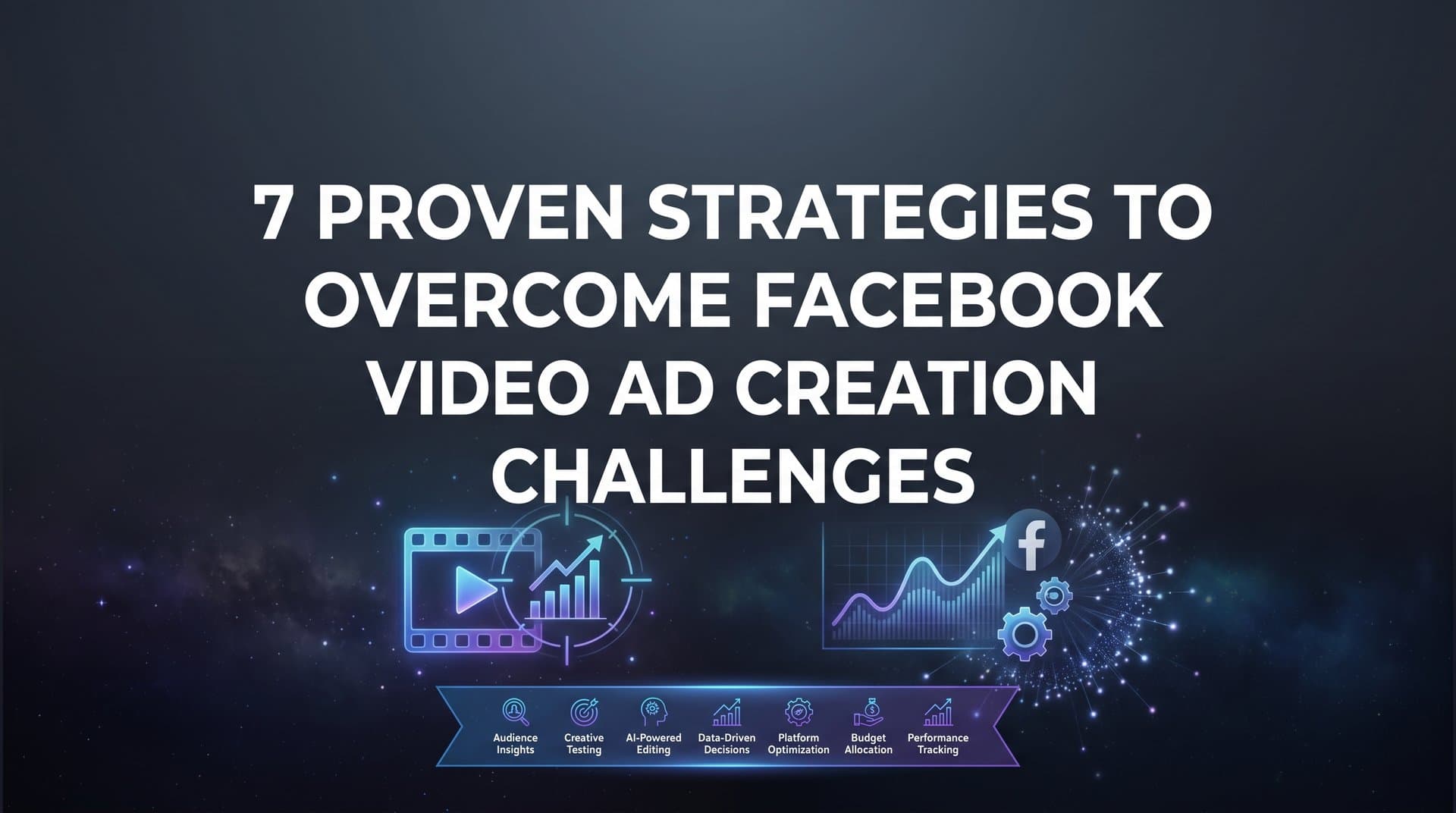
This guide walks through seven of the most common Facebook video ad creation challenges and pairs each one with a concrete strategy you can implement immediately. By the end, you will have a clearer picture of how to turn video ad production from a bottleneck into a genuine competitive advantage.
1. Replace Expensive Production With AI-Generated Video Creatives
The Challenge It Solves
Traditional video production is expensive and slow. Hiring a videographer, coordinating talent, editing footage, and iterating on revisions can take weeks and cost thousands of dollars per asset. For teams running multiple campaigns simultaneously, this pace is simply unsustainable. Many marketers either avoid video altogether or recycle the same few assets until performance collapses.
The Strategy Explained
AI-powered creative tools have fundamentally changed what is possible without a production budget. Platforms like AdStellar allow you to generate video ads directly from a product URL, a text prompt, or by referencing an existing creative. The output includes image ads, video ads, and UGC-style avatar content, all without needing designers, video editors, or on-screen talent.
This approach is not about cutting corners on quality. UGC-style video content, which feels authentic and conversational rather than polished and produced, frequently outperforms studio-quality ads in direct response campaigns. Compared to AI vs manual Facebook ad creation workflows, AI generation lets you produce this style of content at volume, quickly and affordably.
Implementation Steps
1. Start with your product URL. Input it into an AI creative platform and let the tool pull product details, imagery, and key selling points to build the initial video concept.
2. Generate multiple creative directions in a single session. Aim for at least three to five distinct concepts covering different angles such as problem-solution, social proof, and feature highlights.
3. Use chat-based refinement to adjust messaging, pacing, or visual style without rebuilding from scratch. Treat the first output as a starting point, not a final product.
4. Export in the formats required for your target placements before launching.
Pro Tips
Do not wait until you need a new creative to start generating. Build a production habit where you generate a fresh batch of video concepts at the start of every campaign cycle. This keeps your creative pipeline full and reduces the pressure that leads to recycling tired assets.
2. Fight Creative Fatigue With Bulk Variation Testing
The Challenge It Solves
Creative fatigue is one of the most common reasons Facebook ad performance drops without an obvious cause. When the same audience sees the same creative repeatedly, engagement falls, costs rise, and the algorithm starts working against you. Many marketers respond by pausing campaigns or increasing budgets, when the real fix is refreshing the creative itself.
The Strategy Explained
The antidote to creative fatigue is volume and variety. Instead of launching one or two video creatives and hoping they hold, the goal is to enter every campaign with a wide range of variations covering different hooks, visual treatments, and copy angles. When one creative starts to tire, others are already in rotation and ready to take over.
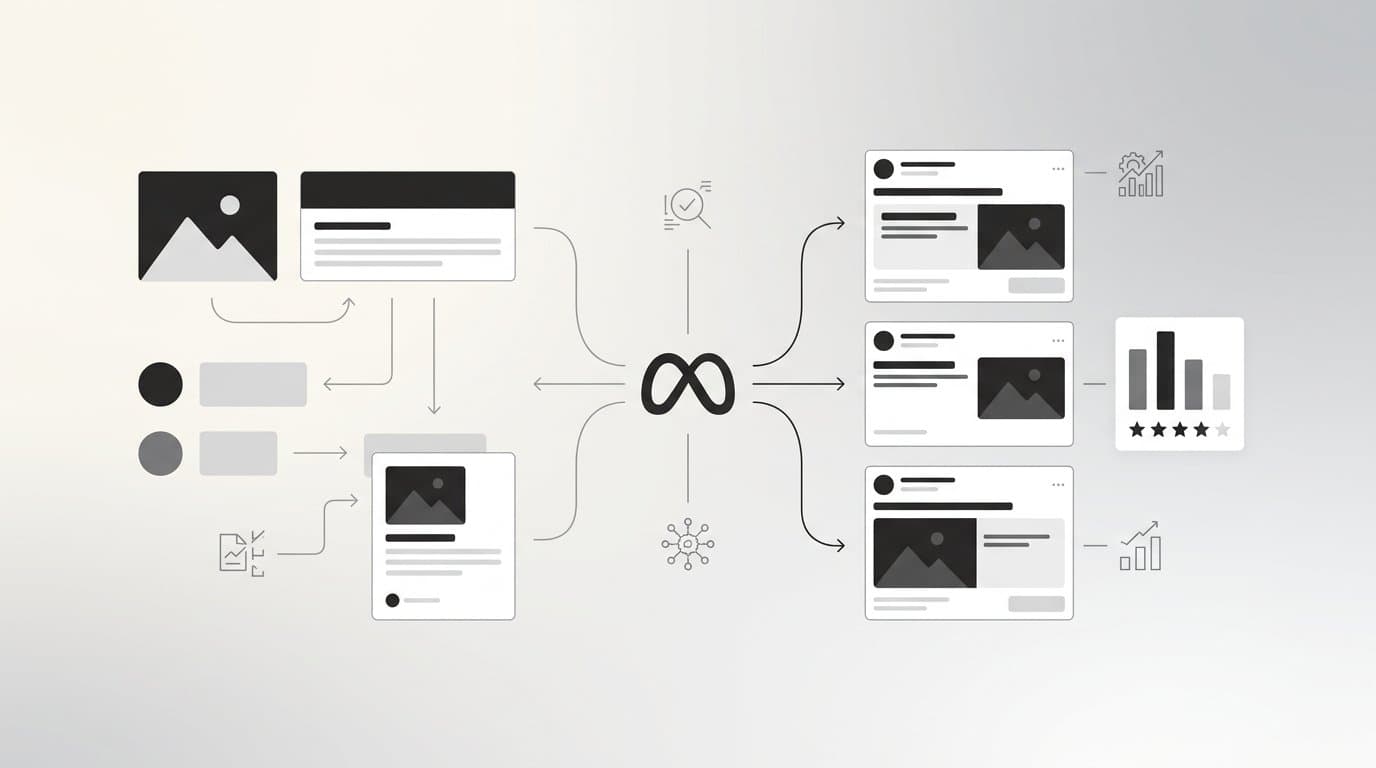
Bulk ad launching tools make this scalable. AdStellar's Bulk Ad Launch feature lets you mix multiple creatives, headlines, audiences, and copy combinations at both the ad set and ad level, generating every possible combination and pushing them to Meta in minutes rather than hours. Learn more about how to launch multiple Facebook ads quickly to stay ahead of fatigue.
Implementation Steps
1. Identify the core variables you want to test: opening hook, visual style, headline, and primary copy. Aim for at least three options per variable.
2. Use an AI creative platform to generate video variations for each hook and visual direction. Focus on the first three seconds, since that is where attention is won or lost.
3. Input all combinations into a bulk launching tool and let it generate the full matrix of ad variations automatically.
4. Monitor frequency metrics alongside performance. When frequency climbs past a threshold that historically signals fatigue in your account, rotate in the next set of variations.
Pro Tips
Pay particular attention to your video hooks. Changing the opening two to three seconds of a video while keeping the rest of the creative identical is one of the fastest ways to refresh an ad without rebuilding it entirely.
3. Solve Format and Spec Confusion With a Placement-First Workflow
The Challenge It Solves
Meta supports a wide range of placements, each with its own technical requirements. Feed ads favor 1:1 or 4:5 ratios. Stories and Reels demand 9:16 vertical formats. In-stream video traditionally uses 16:9 horizontal. When creatives are built for one placement and served across others, the result is awkward cropping, obscured text, and a poor user experience that hurts both performance and brand perception.
The Strategy Explained
The placement-first workflow flips the typical production process. Rather than designing a video and then trying to adapt it to multiple formats, you start with the most restrictive placement, typically 9:16 vertical for Stories and Reels, and build outward from there. A 9:16 creative can be cropped to 4:5 or 1:1 far more easily than the reverse, and key visual elements placed within the central safe zone will display correctly across all surfaces. For a deeper dive into specifications, check out this guide on Facebook video ad dimensions.
Understanding Meta's safe zones is critical here. Text overlays, logos, and calls to action should stay within the central portion of the frame to avoid being covered by UI elements like profile icons, captions, and action buttons that vary by placement.
Implementation Steps
1. Map out which placements you intend to use before production begins. Identify the most restrictive format in your mix and designate it as your primary canvas.
2. Design your video with all key visual elements, text, and branding contained within a central safe zone that accounts for UI overlays across placements.
3. Export your primary 9:16 version first, then create 4:5 and 1:1 crops as secondary exports. Review each version independently to confirm nothing critical is cut off.
4. Use Meta's ad preview tool before publishing to check how each creative renders across placements in real conditions.
Pro Tips
Keep text minimal in video ads. Heavy text overlays become a liability when formats shift. Let the visuals carry the story and reserve text for short, punchy headlines that work at any size.
4. Overcome the Blank Canvas Problem by Cloning Proven Competitor Ads
The Challenge It Solves
Starting a video ad from scratch is one of the most paralyzing parts of the creative process. Without a clear direction, teams can spend hours debating concepts, only to produce something generic that does not resonate. This blank canvas problem wastes time and often produces weaker results than simply studying what is already working in the market.
The Strategy Explained
The Meta Ad Library is a free, publicly available tool that lets you search active ads from any advertiser on Meta's platforms. It is one of the most underused competitive research resources available to performance marketers. By studying what competitors are running, how long those ads have been active (a strong signal of performance), and what creative structures they favor, you can build an informed brief rather than guessing from scratch.
AdStellar takes this a step further by allowing you to clone competitor ads directly from the Meta Ad Library and use their structure as a creative springboard. This is not about copying. It is about using proven frameworks as a starting point and adding your own product, messaging, and brand voice on top. This approach helps you reduce Facebook ad creation time significantly.
Implementation Steps
1. Open the Meta Ad Library and search for competitors in your category. Filter by active ads and sort by longest-running to identify creatives that are likely performing well enough to keep spending behind.
2. Analyze the structure of top-performing competitor videos. Note the hook format, pacing, use of text overlays, call to action placement, and overall narrative arc.
3. Use an AI creative tool to generate a video ad inspired by that structure, substituting your product, unique value proposition, and brand aesthetic.
4. Test your version against your existing creatives to see whether the competitor-informed structure outperforms your current approach.
Pro Tips
Look beyond your direct competitors. Brands in adjacent categories often develop creative formats that have not yet been adopted in your space, giving you an early mover advantage when you bring those structures to your audience.
5. Bridge the Skills Gap With Chat-Based Creative Editing
The Challenge It Solves
Not everyone on a marketing team has video editing skills, and not every team has budget for a dedicated creative resource. When iteration requires opening complex software, adjusting timelines, and exporting files, non-designers either avoid making changes or wait for a specialist to become available. Both outcomes slow down the testing cycle and limit how quickly you can respond to performance data. These are common manual Facebook ad creation problems that plague teams of all sizes.
The Strategy Explained
Chat-based creative editing removes the technical barrier between having an idea and executing it. Instead of navigating a timeline editor, you describe the change you want in plain language and the AI applies it. Want to swap the opening hook? Ask for it. Need to adjust the headline text or change the background color? Type the instruction and review the result.
This capability, built into AdStellar's AI Creative Hub, means that anyone on the team can iterate on video ads regardless of their design background. It also dramatically shortens the feedback loop between seeing a performance insight and acting on it with a creative change.
Implementation Steps
1. After generating an initial video creative, review it against your campaign brief and identify specific elements you want to adjust: the hook, the pacing, the call to action, or the visual style.
2. Write your edit requests as clear, specific instructions. "Make the opening hook focus on the price benefit rather than the product feature" is more useful than "change the beginning."
3. Review each iteration and keep a record of which versions you tested and why. This creates a feedback trail that informs future creative decisions.
4. Involve non-design team members such as copywriters, strategists, and account managers in the iteration process. Their perspectives often surface improvements that a designer focused on execution might miss.
Pro Tips
Treat chat-based editing as a rapid prototyping tool rather than a final polish step. Generate multiple directions quickly, then narrow down to the two or three strongest candidates before investing time in final refinement.
6. Stop Guessing Which Creatives Win by Using Performance-Based Scoring
The Challenge It Solves
Running multiple video ad variations simultaneously creates a new problem: too much data to interpret manually. When you have dozens of creatives live across multiple campaigns, identifying which ones are genuinely outperforming and why becomes a time-consuming analysis task. Many marketers either make gut-feel decisions or rely on a single metric like CTR, which can be misleading without full-funnel context. Managing too many Facebook ad variables without a scoring system leads to poor optimization decisions.
The Strategy Explained
Performance-based scoring systems replace manual analysis with automated ranking. Instead of pulling reports and building spreadsheets, you set your target goals, such as ROAS, CPA, or CTR, and the platform scores every creative, headline, audience, and landing page against those benchmarks in real time.
AdStellar's AI Insights feature does exactly this. Leaderboards surface your top performers across every element of a campaign, and the scoring is tied directly to the goals you define. You can see at a glance which video creatives are winning, which are underperforming, and where to reallocate attention and budget. This is essential for anyone looking to improve Facebook ad ROI consistently.
Implementation Steps
1. Define your primary KPI before launching. Whether it is ROAS, CPA, or click-through rate, having a single north star metric makes scoring meaningful and consistent.
2. Set up your performance scoring benchmarks in your analytics platform at the start of each campaign. These benchmarks should reflect your historical baseline or target goals, not industry averages.
3. Review leaderboard rankings at a regular cadence, such as every three to five days for active campaigns, rather than checking in reactively when something looks wrong.
4. Use the scoring data to make scaling decisions. Increase budget behind creatives that consistently score above your benchmark and pause those that fall below it after sufficient data has accumulated.
Pro Tips
Do not optimize too early. Video ads often need a few days and a meaningful number of impressions before the data stabilizes. Set a minimum spend or impression threshold before making scaling or pausing decisions based on scores.
7. Build a Reusable Creative Library to Accelerate Future Campaigns
The Challenge It Solves
Every time a campaign ends, a significant amount of institutional knowledge walks out the door with it. Which hooks resonated with which audiences? Which video formats drove the lowest CPA last quarter? Without a structured system for capturing and organizing this information, teams repeat the same discovery process from scratch with every new campaign, wasting time and budget relearning lessons they have already paid for.
The Strategy Explained
A reusable creative library is more than a folder of saved assets. It is a curated collection of top-performing creatives with real performance data attached, organized in a way that makes it easy to pull winners into new campaigns quickly. When you start a new campaign, you are not starting from zero. You are starting from a foundation of proven elements that help you build Facebook ad campaigns faster.
AdStellar's Winners Hub is built specifically for this purpose. It stores your best-performing creatives, headlines, audiences, and copy with actual performance metrics attached. When building a new campaign, you can pull directly from the Winners Hub and immediately apply what has already been proven to work.
Implementation Steps
1. Establish a consistent tagging system for your creative library. Tag assets by format, placement, campaign objective, audience type, and creative angle so you can filter quickly when searching for relevant winners.
2. After each campaign cycle, review performance data and add top-performing video creatives to the library with key metrics attached. Include notes on what made each creative effective and which audience it resonated with most.
3. Before starting any new campaign, spend fifteen minutes reviewing the library for relevant winners. Look for creatives that performed well with similar audiences or objectives and use them as your baseline.
4. Treat the library as a living resource. Remove assets that have become outdated or overexposed and continuously add new winners as campaigns generate fresh data.
Pro Tips
Include failed experiments in your library too, clearly labeled. Knowing what did not work with a specific audience or during a particular season is just as valuable as knowing what did. It prevents teams from repeating costly mistakes.
Putting It All Together
Overcoming Facebook video ad creation challenges is not about finding a single silver bullet. It is about building a connected system where production, testing, analysis, and iteration reinforce each other in a continuous loop.
The most practical way to approach this is to start with your biggest bottleneck. If production cost and speed are holding you back, begin with AI-generated video creatives. If you have creatives but cannot identify what is working, focus on performance-based scoring and building your Winners Hub. If format confusion is causing rejected ads and poor delivery, implement the placement-first workflow before anything else.
Here is a prioritized starting point based on the most common constraints:
For teams with limited production resources: Start with strategies 1 and 5. AI generation and chat-based editing will unlock your ability to produce video at volume without hiring specialists.
For teams with plenty of creatives but declining performance: Focus on strategies 2 and 6. Bulk variation testing combined with performance scoring will help you identify what to keep, what to cut, and what to test next.
For teams starting new campaigns frequently: Prioritize strategies 4 and 7. Competitor research and a reusable creative library will dramatically reduce the time and cost of each new campaign launch.
The marketers winning on Meta in 2026 are not the ones with the biggest budgets. They are the ones with the tightest feedback loops between creative production and performance data. Every strategy in this guide is designed to tighten that loop.
Platforms like AdStellar bring all of these strategies together in one place, from AI creative generation and bulk launching to performance leaderboards and a Winners Hub, so you can move from concept to conversion without stitching together a dozen different tools. Start Free Trial With AdStellar and see how quickly these challenges become a thing of the past.