Your Instagram campaign was printing money three weeks ago. ROAS sat at 4.2x, your cost per acquisition hovered around $18, and you felt like you'd finally cracked the code. Then something shifted. Same audience, same budget, same targeting—but suddenly your CPA climbed to $45 and your conversion rate dropped by 60%.
Welcome to creative burnout, the performance killer that doesn't announce itself with error messages or broken pixels. It just quietly drains your campaign effectiveness until you're left wondering what went wrong.
Here's the reality: every Instagram ad has an expiration date. The question isn't whether your creatives will burn out, but when—and whether you'll catch it before it destroys your metrics. This guide breaks down the science behind why your ads stop working, how to spot burnout before it tanks your campaigns, and how to build systems that keep your creative pipeline flowing without exhausting your team.
The Science Behind Why Your Instagram Ads Stop Converting
Instagram's algorithm doesn't care about your creative genius. It cares about one thing: keeping users engaged on the platform. When your ad stops generating engagement, the algorithm responds accordingly.
Here's what happens behind the scenes. Every time someone scrolls past your ad without engaging, Meta's system takes note. Skip it once, maybe they weren't interested. Skip it three times, the algorithm interprets this as a signal that this creative isn't resonating with this user. Skip it five times, and the algorithm actively starts showing your ad to fewer people because it's learned that this creative generates poor engagement.
This is frequency fatigue in action. Your audience isn't just ignoring your ad—they're training Meta's algorithm to deprioritize it. Understanding Meta ad creative burnout patterns helps you anticipate when this decline will occur.
The psychological principle at work here is called ad blindness, and it's the same reason you can walk past the same billboard for six months without consciously registering what it says. When our brains recognize a familiar pattern, they automatically filter it out as non-essential information. Your scroll-stopping creative from week one becomes visual wallpaper by week four.
What makes this particularly brutal for Instagram advertisers is how Meta's delivery system compounds the problem. The algorithm constantly evaluates creative performance against thousands of competing ads. When your engagement metrics decline, Meta doesn't just show your ad less frequently—it also starts placing it in less valuable inventory positions and showing it to less receptive audience segments.
This creates a downward spiral effect. Lower engagement leads to worse placement, which leads to even lower engagement, which triggers higher CPMs as the algorithm struggles to find anyone who will interact with your creative. Before you know it, you're paying 3x more to reach an audience that's actively tuned out your message.
The timeline varies based on audience size, budget, and creative format, but the pattern remains consistent. Fresh creatives generate strong engagement, engagement declines as exposure increases, and eventually the creative becomes a cost center rather than a revenue driver. Understanding this cycle is the first step toward managing it effectively.
Early Warning Signs Your Creatives Are Burning Out
Creative burnout doesn't happen overnight. It leaves breadcrumbs in your metrics if you know where to look.
The most reliable early indicator is rising CPM combined with flat or declining reach. When you see your cost per thousand impressions climbing by 20-30% while your reach numbers stay stable or drop, it means Meta's algorithm is working harder to find people who will engage with your creative. The platform is essentially telling you that your ad is running out of receptive audience members.
Watch your click-through rate over time, not just as a snapshot. A creative that starts with a 2.1% CTR and gradually declines to 0.9% over three weeks is showing classic burnout symptoms. The impression volume might look fine, but the quality of those impressions is deteriorating as your audience becomes desensitized to the creative. Implementing proper Instagram ad creative testing methods helps you catch these declines early.
Frequency metrics tell the story of overexposure. When your frequency climbs above 3-4 within your target audience segments, you're entering the danger zone. This means the average person in your audience has seen your ad three to four times. Some have seen it seven or eight times. Those users aren't just ignoring your ad anymore—they're actively developing negative associations with it.
Conversion rate decay is another critical signal, especially when it happens independently of other changes. If your landing page performance stays consistent but your ad-to-landing-page conversion rate drops by 40%, your creative isn't attracting the same quality of traffic it once did. The algorithm is scraping the bottom of your audience barrel, showing your ad to progressively less qualified users.
Cost per acquisition trends reveal the cumulative impact of burnout. When your CPA increases by 50% or more over a two-week period without changes to targeting or budget, your creative effectiveness has fundamentally shifted. You're paying more to convince fewer people, which is exactly what burnout looks like in dollar terms.
The key is monitoring these signals together, not in isolation. A single metric spike might be noise. Multiple metrics trending negative simultaneously is creative burnout announcing itself before it completely destroys your campaign economics.
Common Causes That Accelerate Creative Fatigue
Some advertisers burn through creatives in days while others maintain performance for weeks. The difference usually comes down to these structural factors.
Narrow audience targeting acts like a creative accelerant. When you're targeting a highly specific segment—say, 25-34 year old women in Seattle interested in sustainable fashion—you're working with a finite pool of users. Your creative exhausts that audience faster because there are fewer people to show it to. The algorithm cycles through your available audience quickly, driving up frequency and triggering burnout in a fraction of the time it would take with broader targeting.
Over-reliance on a single creative format creates predictability that audiences tune out. If every ad you run features the same visual style, color palette, and compositional structure, your audience learns to recognize and ignore your brand's aesthetic signature. They don't need to consciously process your ad because their brain has already categorized it as "that company with the blue background and white text."
Insufficient creative volume relative to spend is the most common structural problem. If you're spending $500 per day but only rotating between three creatives, you're asking each asset to carry too much weight. The math doesn't work. High spend concentrates impressions quickly, which drives up frequency, which accelerates burnout. You need creative volume that matches your distribution velocity. Learning how to scale Instagram ads efficiently requires balancing spend with creative output.
Static creative elements that never change compound the problem. Using the same headline across multiple image variations, or the same opening hook across different video ads, means you're not actually creating variety—you're just rearranging deck chairs. Audiences recognize the familiar elements and tune out even when other components change.
Ignoring creative format diversity leaves performance on the table. Image ads, video ads, and UGC-style content all burn at different rates. Static images typically fatigue fastest because they're easiest for the brain to process and dismiss. Video content maintains engagement longer because it introduces motion and narrative progression. UGC-style creatives often sustain performance because their authentic, varied appearance makes each impression feel less repetitive.
The solution isn't just producing more creatives—it's building systems that generate strategic variety across formats, messaging angles, and visual approaches. Volume without variation still leads to burnout, just with more assets burning simultaneously.
Building a Creative Refresh System That Scales
Managing creative burnout requires systems, not heroics. Here's how to build a refresh cadence that keeps performance stable without overwhelming your team.
Start with rotation schedules tied to your spend levels and audience size. If you're spending under $1,000 per day with broad targeting, plan to introduce new creatives every 7-10 days. Between $1,000-$5,000 daily spend, you need fresh assets every 5-7 days. Above $5,000 per day, you're looking at 3-5 day refresh cycles to stay ahead of fatigue. These aren't arbitrary numbers—they reflect how quickly high-volume campaigns exhaust creative effectiveness within their target audiences.
Create modular creative frameworks where elements can be mixed and matched rather than producing completely unique ads from scratch every time. Think of it like building blocks. You might have five different visual styles, ten different headline variations, eight different opening hooks, and six different calls-to-action. Systematically combining these elements generates hundreds of unique creative variations without requiring hundreds of separate production efforts.
This modular approach also reveals which specific elements drive performance versus which burn fastest. Maybe your "social proof" headlines maintain effectiveness across multiple creative iterations while your "urgency-based" headlines fatigue within days. That intelligence tells you where to focus your creative development efforts and which patterns to replicate. A solid Facebook ad creative management system helps you track these patterns across campaigns.
Use performance data to establish creative longevity benchmarks for your specific audience and product. Track how long each creative maintains above-average CTR and conversion rates. You'll likely discover patterns—certain visual styles or messaging angles that sustain engagement longer than others. Clone those patterns, not just individual winning ads.
Build a creative pipeline with assets at different stages of readiness. You should have active campaigns running, proven backup creatives ready to deploy when current ads show fatigue signals, and new concepts in production for future rotation. This three-tier system prevents the panic of scrambling to produce new creatives when your current campaigns tank.
Establish clear retirement criteria so you're not wasting budget on burned-out creatives hoping they'll recover. When a creative's CTR drops 40% below its peak performance or its CPA exceeds your target by 50% for three consecutive days, retire it. Don't try to resurrect it with minor tweaks—move on to fresh concepts.
The goal is creating a sustainable creative production rhythm where new assets flow into your campaigns before burnout occurs, not after it's already destroyed your metrics.
How AI Tools Are Changing the Creative Production Game
The traditional creative production bottleneck—where design and video work take days or weeks—fundamentally limited how quickly advertisers could respond to burnout signals. AI tools are changing that equation.
AI-powered creative generation enables advertisers to produce high volumes of variations without expanding team size or budget. Instead of waiting three days for a designer to create five new image ads, you can generate fifty variations in minutes by feeding AI your product information, brand guidelines, and performance data. An AI Instagram ad generator can dramatically accelerate this process. The speed shift isn't incremental—it's exponential.
This volume capability matters because it changes the entire creative strategy. When production is slow and expensive, you're forced to be conservative. You create a few carefully crafted ads and hope they work. When production is fast and scalable, you can be aggressive. You can test dozens of concepts simultaneously, let the data reveal what resonates, and double down on winners while retiring losers—all within the same budget cycle.
Automated performance analysis surfaces winning elements so you can clone success patterns rather than guessing what made a creative work. AI can analyze hundreds of your past campaigns, identify that ads featuring specific color schemes or compositional layouts consistently outperform others, and automatically incorporate those elements into new creative variations. You're not starting from scratch every time—you're building on documented success patterns.
The transparency matters as much as the output. When AI explains why it selected certain creative elements based on your historical performance data, you understand the strategy behind each decision. You're learning what works for your specific audience and product, not just getting random creative suggestions.
Bulk launching capabilities let you test hundreds of creative combinations simultaneously to find fresh winners faster. Instead of launching five ads and waiting a week to see which performs best, you can launch fifty variations at once, let Meta's algorithm identify the top performers within 48 hours, and scale the winners while retiring the losers. Mastering bulk Instagram ad creation is essential for staying ahead of fatigue. This compressed testing timeline means you're always working with current performance data rather than making decisions based on week-old insights.
The practical impact is that creative burnout becomes less catastrophic. When you can generate and test new creatives in hours instead of weeks, a burned-out campaign is a minor setback rather than a business crisis. You simply spin up new variations, launch them, and move forward.
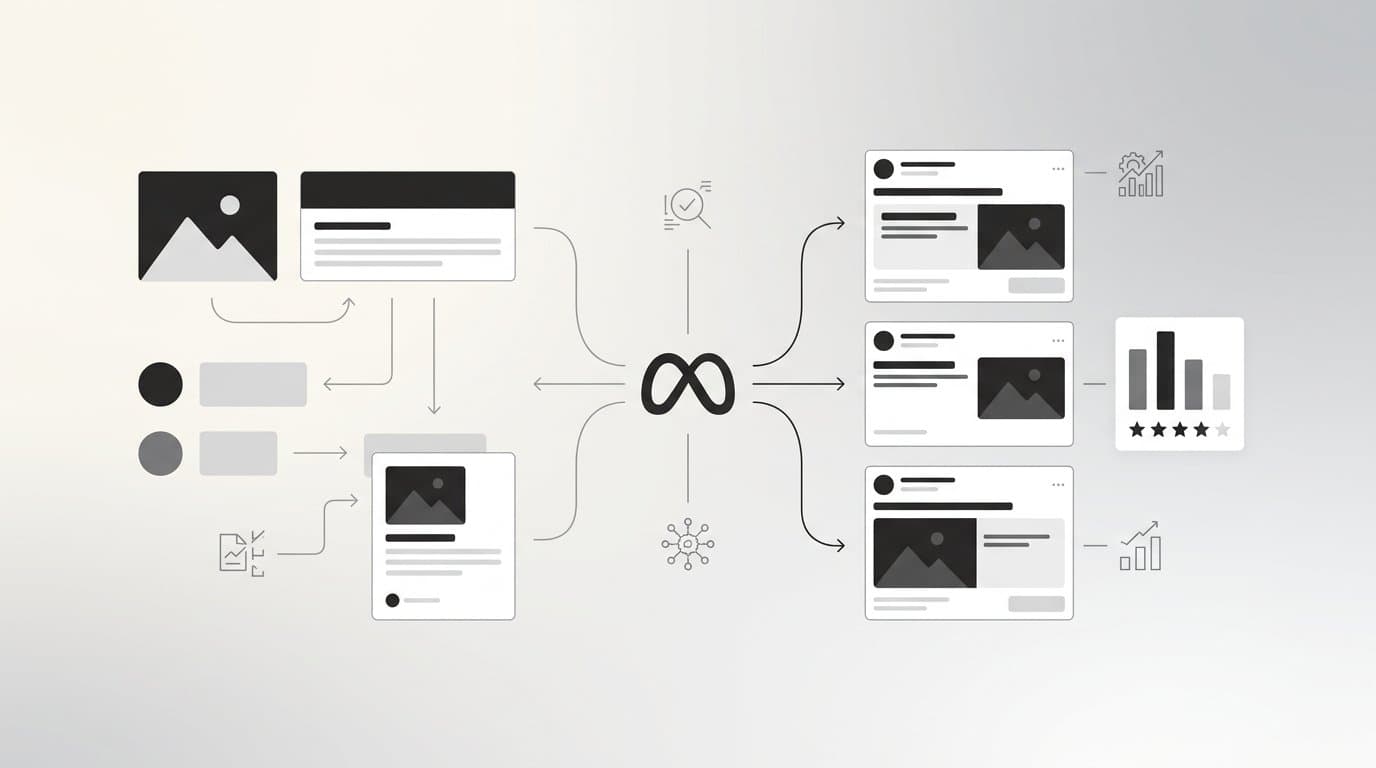
Tools like AdStellar's AI Creative Hub handle this entire workflow—generating image ads, video ads, and UGC-style content from product URLs, analyzing your historical performance to identify winning patterns, and bulk launching hundreds of variations to Meta. The AI Campaign Builder even constructs complete campaigns by analyzing past performance and selecting the creative elements, audiences, and messaging most likely to succeed based on your actual data.
This isn't about replacing creative strategy with automation. It's about removing the production bottleneck so your strategy can actually execute at the speed and scale modern Instagram advertising demands.
Your Anti-Burnout Action Plan
Theory is useful, but execution requires specific actions. Here's your practical roadmap for managing creative burnout systematically.
Weekly Monitoring Checklist: Every Monday, review these metrics for each active campaign: frequency trends over the past seven days, CTR comparison between this week and last week, CPM trajectory, and CPA changes. If frequency exceeds 3.5, CTR dropped more than 15%, or CPA increased more than 25%, flag that campaign for creative refresh within 48 hours.
Creative Pipeline Targets: Maintain a 3:1 ratio between available creatives and active campaigns. If you're running five campaigns, you should have fifteen creatives ready to deploy—five currently active, five proven backups, and five new concepts in testing. For monthly ad spend under $10,000, maintain a minimum of twenty total creative assets. Between $10,000-$50,000, aim for fifty assets. Above $50,000 monthly spend, you need 100+ creatives in various stages of the pipeline. Using Facebook ads creative library management tools keeps your assets organized and accessible.
Refresh Versus Retire Decisions: Refresh a creative when it's showing early burnout signals but still converting above your minimum acceptable CPA. This means swapping out one or two elements—changing the headline, updating the visual, or modifying the opening hook—while keeping the core concept intact. Retire a creative completely when it's been refreshed once already and still underperforming, or when its CPA exceeds your target by 75% or more. Retired creatives can be revisited after 60-90 days with different audiences, but don't keep beating a dead horse.
Format Rotation Schedule: Cycle between creative formats every two weeks. If you've been running primarily image ads, shift emphasis to video content. After video, introduce UGC-style creatives. This format rotation prevents audiences from developing format-specific blindness to your brand.
Performance Documentation: Track which creative elements maintain longevity in a simple spreadsheet. Note which headlines, visual styles, and messaging angles sustained performance longest. Implementing Facebook ad creative testing automation streamlines this documentation process. This historical intelligence becomes your creative development roadmap, showing you which patterns to replicate and which to avoid.
The system works when you work the system. Sporadic creative refreshes based on gut feel lead to performance roller coasters. Systematic monitoring and planned rotation create stable, scalable growth.
Moving Forward: Making Creative Burnout Manageable
Creative burnout isn't a problem you solve once—it's a dynamic challenge you manage continuously. Every successful Instagram advertiser deals with it. The difference between those who scale profitably and those who struggle comes down to systems and speed.
The traditional approach of manually producing creatives, launching them, waiting weeks for performance data, then starting the production cycle again simply cannot keep pace with how quickly modern audiences consume and dismiss advertising content. By the time you've identified burnout, produced new creatives, and launched replacements, you've already lost weeks of performance and thousands of dollars.
Modern Instagram advertising demands creative volume and velocity that manual production cannot sustain. You need the ability to generate dozens of variations quickly, test them systematically, identify winners based on real performance data, and scale those winners before they burn out. This isn't about working harder—it's about working with tools that match the speed of the platform.
AI-powered creative tools represent the practical solution for staying ahead of fatigue without exhausting your team. When you can generate fifty creative variations in the time it used to take to produce five, when you can launch hundreds of ad combinations simultaneously and let data identify the winners, and when you can continuously refresh your creative pipeline based on documented performance patterns rather than guesswork, creative burnout shifts from an existential threat to a manageable operational challenge.
The advertisers winning on Instagram in 2026 aren't necessarily the ones with the biggest budgets or the most creative talent. They're the ones who've built systems that generate, test, and refresh creatives faster than their competition. They're the ones who've embraced tools that remove production bottlenecks and let performance data drive creative decisions.
Ready to transform your advertising strategy? Start Free Trial With AdStellar and be among the first to launch and scale your ad campaigns 10× faster with our intelligent platform that automatically builds and tests winning ads based on real performance data. Generate scroll-stopping image ads, video ads, and UGC creatives with AI, launch complete campaigns with optimized audiences and copy, and let our AI insights surface your top performers so you can scale what works before burnout ever becomes a problem.