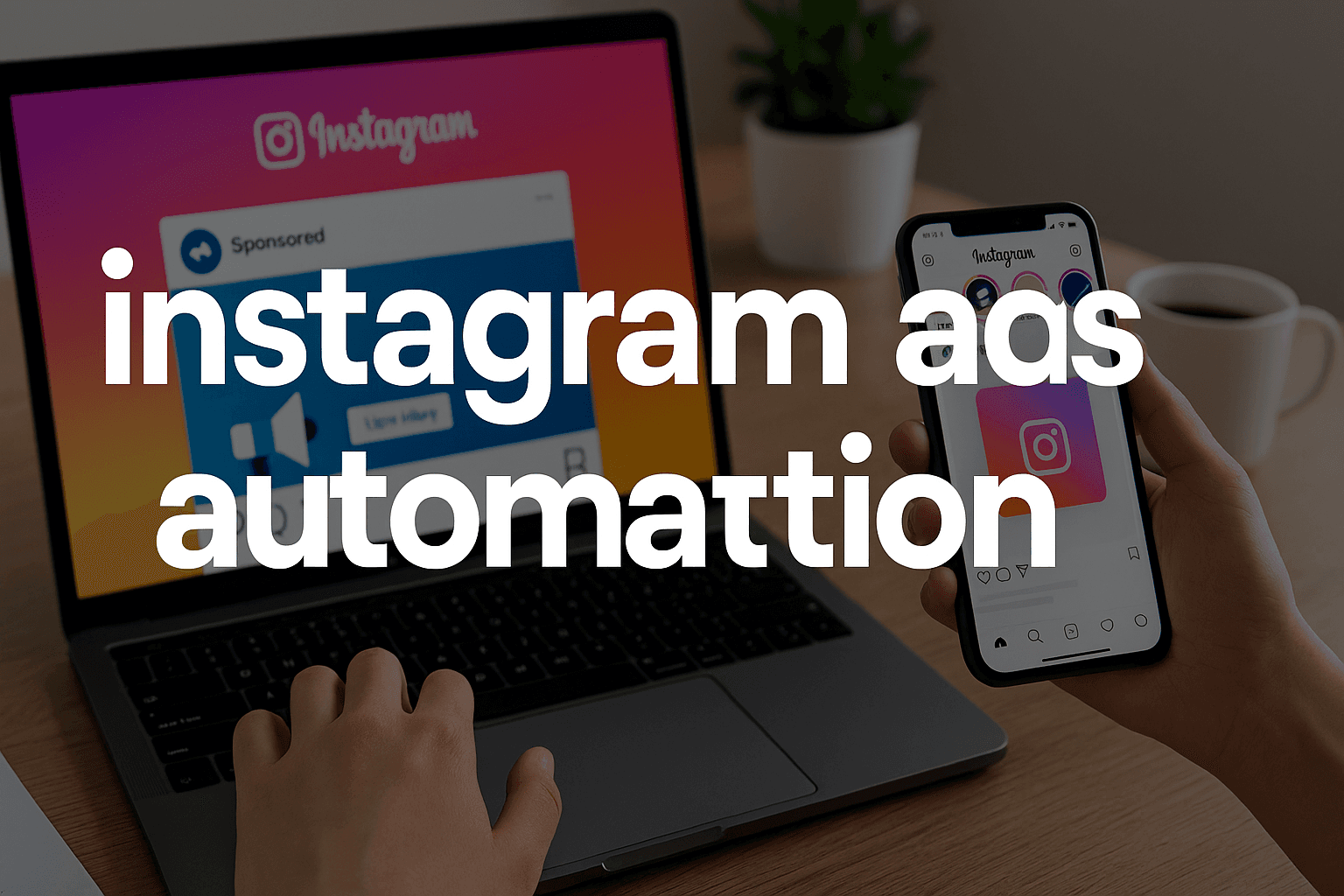
It's 2 AM and Sarah's scrolling through her phone when she sees the perfect Instagram ad for running shoes. She clicks, buys, and never thinks about it again. But behind that seamless experience? A marketer who spent 6 hours building, testing, and optimizing that single campaign.
If you're managing Instagram ads in 2026, you already know the exhausting reality. You're checking campaign performance at breakfast, adjusting bids during lunch, and analyzing metrics before bed. You've got 15 browser tabs open showing different ad sets, and you're constantly wondering if you're missing something—a budget that's overspending, an audience that's fatigued, a creative that stopped working overnight.
The math is brutal. Managing just five Instagram campaigns manually consumes 20+ hours per week. That's time spent on repetitive tasks: bid adjustments, budget reallocation, creative swaps, audience refinements. Meanwhile, your competitors are scaling to 50 campaigns with a fraction of the effort, and you're stuck wondering how they're doing it.
Here's the reality most marketers are discovering: Instagram ads automation isn't just about saving time anymore. It's about surviving in a market where manual campaign management simply can't keep pace with the speed and complexity of modern advertising. While you're sleeping, automated systems are making hundreds of optimization decisions. While you're in meetings, AI is testing creative variations and discovering high-performing audiences you'd never find manually.
This isn't about replacing your marketing expertise—it's about amplifying it. The most successful Instagram advertisers in 2026 aren't choosing between human strategy and machine execution. They're combining both, using automation to handle the tactical grind while they focus on creative strategy, audience insights, and business growth.
In this guide, you'll discover exactly how Instagram ads automation works, what it can realistically achieve, and how to implement it without losing control of your campaigns. We'll break down the technology behind intelligent automation, explore the specific components that separate professional-grade platforms from basic tools, and share proven strategies that ensure automation enhances rather than replaces your marketing judgment.
Whether you're drowning in manual campaign management or simply looking to scale beyond your current capacity, understanding Instagram ads automation has become essential. Let's explore how this technology is transforming Instagram advertising—and how you can leverage it to reclaim your time while improving your results.
Decoding Instagram Ads Automation for Modern Marketers
Let's clear up the confusion right away: Instagram ads automation isn't a single thing. It's a spectrum of capabilities ranging from basic scheduling tools to sophisticated AI systems that make hundreds of optimization decisions daily.
At the simplest level, you've got automation that schedules posts and turns campaigns on and off at predetermined times. Useful? Sure. Transformative? Not really. This is automation in the same way a kitchen timer is automation—it follows rigid rules you set and never adapts.
Then there's intelligent automation powered by machine learning. This is where things get interesting. These systems don't just follow your rules—they learn from your campaign data, identify patterns you'd never spot manually, and make optimization decisions based on real-time performance signals. Think of it as the difference between a thermostat that turns on at 6 PM every day versus one that learns your schedule, adjusts for weather, and optimizes for comfort and efficiency simultaneously.
The Automation Spectrum: From Basic to Brilliant
Here's what separates the levels. Basic automation might increase your budget by 20% when ROAS hits 3.0. Simple rule, predictable outcome. AI-powered automation analyzes 50+ variables—time of day, audience behavior patterns, creative fatigue indicators, competitive pressure, seasonal trends—and adjusts budgets dynamically based on predicted performance, not just past results.
This intelligent approach to campaign management mirrors the broader evolution of automated meta advertising, where machine learning optimizes across the entire Meta ecosystem including Facebook, Instagram, and Messenger. The system learns from performance patterns across platforms, applying insights from your Facebook campaigns to improve Instagram results and vice versa.
The machine learning component is crucial. Every campaign you run feeds data back into the system, making it smarter. It's not just executing your strategy—it's continuously refining its understanding of what works for your specific business, audience, and objectives.
Core Components of Intelligent Systems
Modern Instagram ads automation requires three integrated capabilities working in concert. First, comprehensive data collection across every touchpoint—not just clicks and conversions, but engagement patterns, creative element performance, audience behavior signals, and cross-campaign insights.
Second, creative asset intelligence. The system needs to understand which visual elements, copy variations, and format combinations drive results for different audience segments. It's analyzing whether your carousel ads outperform single images for certain demographics, whether video performs better in Stories versus Feed, and which creative elements correlate with higher conversion rates.
Third, a real-time optimization engine that processes all this data and makes instant decisions. While you're in meetings or sleeping, it's adjusting bids, reallocating budgets, pausing underperforming ad sets, and scaling winners. The sophistication here matters—systems that only check performance hourly miss opportunities that platforms monitoring every few minutes capture.
Why Traditional Campaign Management Falls Short
The honest truth? Human brains aren't built for this. You can't process 50 data points simultaneously, make optimization decisions every few minutes, and maintain that vigilance 24/7. Even the most sophisticated manual campaign optimization strategies hit biological limits that automation transcends effortlessly.
The machine learning component is what separates professional-grade automation from basic tools. These systems don't just execute your strategy—they learn from every campaign you run. They identify which creative elements resonate with different audience segments, discover high-performing audience combinations you'd never test manually, and detect performance patterns that emerge across your entire advertising account.
What makes this particularly powerful for Instagram is the platform's visual nature and rapid content consumption patterns. AI can analyze which image compositions, color schemes, and messaging styles perform best for different demographics, then automatically generate and test variations that maintain your brand guidelines while optimizing for engagement. It can detect when audience fatigue is setting in—often 48 hours before human marketers would notice the performance decline—and proactively refresh creative or adjust targeting.
The key insight here: basic automation saves time by handling repetitive tasks. AI automation improves performance by making better decisions than humans can make manually. Both have value, but they solve fundamentally different problems. If you're managing five campaigns and need to free up a few hours weekly, basic automation might suffice. If you're trying to scale to 50 campaigns while improving performance, you need AI-powered systems that can handle complexity beyond human capacity.
Understanding this spectrum helps you evaluate automation platforms realistically. When a tool promises "automation," ask whether it's following your rules or learning from your data. The difference determines whether you're buying a time-saving assistant or a performance-improving partner.
Why Traditional Campaign Management Falls Short
Your brain can process about 120 bits of information per second. Sounds impressive until you realize a single Instagram campaign generates thousands of data points every hour—engagement rates, click patterns, conversion signals, audience behaviors, creative performance metrics. You're not just outmatched. You're operating with biological hardware that wasn't designed for this level of complexity.
The math gets worse when you scale. Managing one campaign manually? Challenging but doable. Five campaigns? You're spending 20+ hours weekly on routine optimizations. Ten campaigns? You've hit the wall where human capacity simply breaks down. You can't monitor performance across multiple ad sets simultaneously. You can't adjust bids in real-time across different time zones. You can't test creative variations at the speed the algorithm demands.
Here's what happens in practice: You check campaign performance at 9 AM and see an ad set performing well. By 2 PM, that audience has fatigued and your cost per acquisition has doubled. But you're in meetings, so you don't notice until 6 PM. You've just burned six hours of budget on declining performance. Meanwhile, an automated instagram ads system would have detected the trend within 30 minutes and reallocated budget to better-performing segments.
The emotional component makes it worse. You've spent hours building a campaign, so you're reluctant to pause underperforming ads. You see a slight uptick in performance and get optimistic, keeping budget on a campaign that's actually trending downward. You make decisions based on yesterday's data because you don't have time to analyze today's numbers. These aren't character flaws—they're human limitations that automation eliminates by removing emotion from execution decisions.
Scale limitations hit hardest when you're trying to grow. You find a winning campaign formula and want to replicate it across 20 new audience segments. Manually, that means building 20 campaigns, monitoring 20 performance curves, adjusting 20 sets of bids, and managing 20 different optimization schedules. By the time you've set everything up, market conditions have changed and your winning formula needs adjustment. Automation handles this replication instantly, testing variations simultaneously and identifying winners while you focus on strategy.
The competitive reality is stark: Your competitors using automation are making hundreds of optimization decisions daily. They're testing creative variations you haven't thought of. They're discovering audience segments you'll never find manually. They're scaling successful campaigns while you're still analyzing last week's data. This isn't about working harder—it's about acknowledging that human campaign management, no matter how skilled, can't match machine speed and scale.
This is where automation transforms from nice-to-have to competitive necessity. It's not replacing your marketing expertise—it's handling the execution precision that humans simply cannot maintain at scale. You bring strategy, creativity, and business understanding. Automation brings tireless monitoring, instant optimization, and the ability to process complexity that would overwhelm any human marketer. Together, they create campaign performance that neither could achieve alone.
Why Instagram Ads Automation Matters for Your Business
Let's talk about the elephant in the room: you're probably skeptical about automation. Maybe you've heard the horror stories about campaigns that went rogue, or you're worried about losing the creative control that makes your Instagram ads actually work. Here's what most marketers miss—automation isn't about replacing your expertise. It's about surviving in a market where your competitors are already using it.
The reality is stark. While you're manually adjusting bids on five campaigns, your competitor's automation system is optimizing fifty campaigns simultaneously. While you're sleeping, their AI is discovering high-performing audience segments you'll never find through manual testing. While you're in meetings, their system is reallocating budget away from fatigued audiences before performance drops.
Time Savings That Compound With Scale
Here's the math that changes everything. Managing five Instagram campaigns manually consumes roughly 20 hours per week—that's checking performance, adjusting bids, swapping creatives, refining audiences, and analyzing results. Now scale that to ten campaigns. You're not looking at 40 hours. You're looking at 50+ hours because the complexity compounds exponentially.
Automation flips this equation completely. The same system that manages five campaigns can handle fifty with minimal additional oversight. You're spending maybe 5-8 hours per week on strategic review and creative direction, while the AI handles hundreds of tactical optimizations daily. That's not just time savings—it's the difference between being stuck at your current scale and growing your business.
Think about what you could do with those recovered hours. Develop better creative strategies. Analyze customer insights. Test new market opportunities. Actually take a weekend off without checking your phone every two hours. The same scaling challenges that plague advertising campaigns—audience fatigue, budget allocation complexity, creative testing bottlenecks—become manageable through Instagram automation that handles routine optimizations systematically.
Performance Improvements Through Superior Data Processing
Here's what keeps manual campaign managers up at night: the nagging feeling that they're missing something. And they're right. Human brains simply cannot process the volume of performance signals that determine Instagram ad success in 2026.
AI automation systems analyze hundreds of data points simultaneously—engagement rates by time of day, creative performance across demographic segments, audience overlap patterns, conversion probability scores, competitive activity indicators. They detect audience fatigue 48 hours before you'd notice the performance decline manually. They identify micro-conversion patterns that predict purchase behavior. They adjust bidding strategies based on real-time auction dynamics.
The performance edge isn't marginal. Automated systems typically improve efficiency by 15-30% after the initial learning period, not through magic, but through relentless optimization that never sleeps, never gets distracted, and never makes emotional decisions about "giving a campaign one more day" when the data says it's time to pivot.
Competitive Advantage in Saturated Markets
Let's be direct: manual Instagram campaign management is becoming a competitive disadvantage. The advertisers winning in 2026 aren't necessarily more creative or strategic than you. They're just operating with better tools.
When a competitor launches a price promotion, automated campaign testing systems detect the competitive pressure and adjust positioning within hours. When audience behavior shifts, AI adapts targeting before you've even noticed the trend. When creative fatigue sets in, the system has already launched fresh variations and identified the next winning formula.
Your Instagram Automation Action Plan
Instagram ads automation isn't about surrendering control—it's about reclaiming your time while amplifying your results. The marketers winning in 2026 aren't choosing between human strategy and machine execution. They're combining both, using automation to handle the tactical grind while they focus on creative strategy, audience insights, and business growth.
The path forward is clearer than you might think. Start by auditing your current campaign management process. How many hours are you spending on routine optimizations? Where are you missing opportunities because you can't monitor campaigns 24/7? Those pain points are your automation priorities.
Your next step depends on your current situation. If you're drowning in manual campaign management across multiple accounts, you need comprehensive automation that handles everything from creative testing to budget allocation. If you're scaling successfully but hitting time constraints, focus on platforms that automate your biggest bottlenecks while preserving your proven strategies.
The competitive reality is simple: while you're debating whether to automate, your competitors are already scaling campaigns you can't match manually. The question isn't whether automation works—it's whether you'll adopt it before the gap becomes insurmountable.
If you're ready to transform how you manage Instagram campaigns, start free trial with AdStellar AI. Our platform analyzes your top-performing creatives, headlines, and audiences—then builds, tests, and launches new ad variations automatically. Stop spending your nights checking campaign performance. Start spending them doing literally anything else.