UGC-style ads consistently outperform polished brand content on Instagram. That's not a matter of debate anymore. The authenticity, the native feel, the way a well-crafted UGC video blends seamlessly into a user's feed rather than screaming "advertisement" — it works. Marketers know it, and budgets are shifting accordingly.
But here's the challenge that doesn't get talked about enough: the production costs behind Instagram UGC ads can vary so wildly that two brands in the same industry might be spending ten times as much as each other for similar creative output. A single creator video might be relatively affordable on the surface, but once you factor in revisions, usage rights, exclusivity periods, and the sheer volume of variations needed for proper testing, the numbers can spiral fast.
The goal of this article is to pull back the curtain on every cost component involved in Instagram UGC ad production. We'll compare the four main approaches marketers use today, introduce a smarter framework for evaluating what you're actually spending, and help you build a production strategy that scales without burning through your budget. Whether you're running ads for a single brand or managing creative across multiple clients, understanding where your money goes is the first step toward spending it better.
Why UGC Ads Work on Instagram (And Why One or Two Isn't Enough)
The reason UGC-style ads dominate Instagram feeds comes down to one word: authenticity. When a real person holds a product, speaks directly to camera, and shares a genuine reaction, it triggers a different kind of attention than a slick studio production. The content looks organic. It feels like something a friend posted rather than something a brand paid for. That native quality is exactly what makes people pause their scroll.
Instagram's algorithm also rewards content that drives engagement, and UGC-style ads tend to generate higher engagement rates than traditional brand creative. The format signals to users that real people find this product worth talking about, which lowers psychological resistance and makes the path to conversion shorter.
But here's where many marketers run into trouble: they treat UGC ad production as a one-time project rather than an ongoing system. They commission a handful of videos, launch them, and expect results. What actually happens in practice is that creative fatigue sets in quickly on Meta platforms. The same audience sees the same ad repeatedly, engagement drops, costs per click rise, and performance deteriorates. Successful Instagram ad accounts need a constant pipeline of fresh creative variations to maintain performance.
The volume requirement is significant. Proper creative testing means running multiple variations simultaneously to understand what messaging, format, hook, and visual style resonates with different audience segments. Many performance marketers find that finding even one strong winner requires testing dozens of creative variations first. When you multiply that by the number of audience segments you're targeting, the creative volume needed to run a well-tested account adds up quickly.
This is why per-unit production cost matters so much. If each UGC video costs a significant amount to produce, the budget required to generate enough creative for meaningful testing becomes a real constraint. The economics of UGC ad production aren't just about what a single video costs. They're about what it costs to produce enough creative to find winners, and then keep refreshing those winners before fatigue sets in. That's a fundamentally different calculation, and it's the lens through which the rest of this article is written.
The Real Cost Breakdown: What Goes Into Every UGC Ad
When marketers budget for UGC ad production, they often think about the creator fee and stop there. That's the most visible line item, but it's rarely the only one. Understanding the full cost picture requires looking at every component that contributes to getting a finished, ready-to-launch ad in your account.
Creator fees: This is the base cost of hiring someone to appear in and film the content. Creator fees vary based on experience, audience size, production quality, niche expertise, and platform. A creator with a polished home studio setup and strong on-camera presence will typically charge more than someone just starting out, and that difference in quality is often worth it for ads that need to convert.
Scripting and briefing: Someone has to write the script or at least create a detailed brief. If your internal team handles this, it's a soft cost in staff time. If you hire a copywriter or use an agency to develop the creative brief, it becomes a direct expense. Either way, it's real time and real money that often goes unaccounted for in production budgets.
Editing and post-production: Raw footage from a creator usually needs editing before it's ready to run as an ad. Captions, text overlays, music, trimming for optimal length, and adding brand elements all take time. Some creators include basic editing in their fee; others don't. This can be a meaningful additional cost if you're handling it in-house or outsourcing it separately.
Music and sound licensing: Using unlicensed music in an ad is a compliance risk. Royalty-free music libraries solve this, but they come with subscription costs or per-track licensing fees that add up across a large volume of creatives.
Usage rights and exclusivity: This is the most commonly underestimated cost component in UGC ad production. A creator's base fee typically covers a limited usage window, often 30 to 90 days, for organic posting. When you want to run content as paid advertising, especially with exclusivity clauses that prevent the creator from working with competitors, the fee can increase substantially. Many marketers are surprised to discover that usage rights negotiations can double or even triple the original quote they received. If you're running evergreen campaigns or want to use content across multiple platforms and regions, the rights conversation becomes even more complex and expensive.
Revision rounds: Most creator agreements include one or two rounds of revisions. If the first delivery misses the brief, additional revision rounds cost time and sometimes additional fees. The back-and-forth communication alone, across multiple creators for a high-volume production schedule, creates a significant operational burden — a common ad creation bottleneck for whoever is managing the process.
Internal coordination time: This soft cost rarely appears in budget spreadsheets, but it's real. Sourcing creators, vetting their portfolios, negotiating terms, managing communication, reviewing drafts, requesting revisions, and coordinating final delivery all require hours of someone's time. For marketing teams producing UGC content at scale, this coordination overhead can become a part-time job in itself.
When you add all of these components together, the true cost of a single UGC ad is almost always higher than the initial creator quote suggests. Building an accurate production budget means accounting for every layer, not just the most visible one.
Four Production Approaches Compared: Cost, Speed, and Quality
There are four main ways marketers produce UGC-style ads for Instagram today. Each has a different cost profile, speed, and quality ceiling. Understanding the tradeoffs helps you choose the right approach for your specific situation.
Hiring individual UGC creators directly: Platforms like Fiverr, Billo, and JoinBrands have made it easier than ever to find creators who specialize in producing UGC-style video ads. You brief them, they film and deliver. The upside is authentic, human-generated content that can feel genuinely native on Instagram. The downside is inconsistency. Quality varies significantly between creators, turnaround times can be slow, and managing multiple creators simultaneously for high-volume production is operationally demanding. When you factor in usage rights and revisions, costs can range widely and unpredictably.
Creator marketplace platforms: Some platforms aggregate creators and standardize the ordering process, making it easier to manage volume. They typically charge platform fees on top of creator fees, and pricing models vary from per-video rates to subscription tiers. The benefit is a more streamlined workflow and some quality standardization. The tradeoff is less flexibility in creator selection and additional platform costs layered on top of creator fees.
UGC-focused agencies: Agencies that specialize in UGC content production handle everything from creator sourcing and briefing to editing and delivery. This is the highest-cost option, but it offers a managed process that makes sense for brands that need consistent high-volume output without the internal overhead of managing it themselves. Agencies are often the right choice for scaling brands that have proven their creative direction and need reliable execution at scale. The cost premium reflects the project management, quality control, and creative expertise they bring to the process.
Building an in-house content team: Some brands invest in a dedicated content creator or small creative team. This approach involves salary costs, equipment investment, studio or filming space, and ongoing software subscriptions. The advantage is full creative control and speed of iteration once the team is established. The disadvantage is fixed overhead costs that exist regardless of production volume, and the challenge of keeping content feeling authentic and not overly branded when it comes from an internal source.
AI-powered UGC ad generation: This is the emerging fourth option, and it's changing the economics of UGC ad production significantly. Platforms like AdStellar allow marketers to create UGC-style avatar ads directly from a product URL, without hiring a creator, filming any footage, or managing an editing workflow. The AI generates the creative, and the result is a native-feeling video ad that can be launched directly to Meta from within the same platform.
The cost structure is fundamentally different from any of the human-based approaches. Instead of paying per video with variable usage rights and revision costs, you're working within a platform subscription model that allows for high-volume creative generation. AdStellar's plans start at $49 per month, which makes the per-unit cost at meaningful production volumes dramatically lower than any creator-based approach. For marketers looking to reduce their Instagram ad creative costs, the speed and volume advantages are substantial.
Scaling Creative Without Scaling Costs
Here's the math problem that every performance marketer running Instagram ads eventually runs into. If finding a winning creative requires testing dozens of variations, and each variation costs a meaningful amount to produce through traditional methods, the budget required for proper creative testing becomes a serious constraint for most brands.
Let's think through the volume requirement. A well-structured creative testing program might involve testing different hooks, different value propositions, different visual formats, and different calls to action simultaneously. Multiply those variables across even a modest number of combinations, and you quickly arrive at a production requirement that traditional creator-based workflows simply can't fulfill economically.
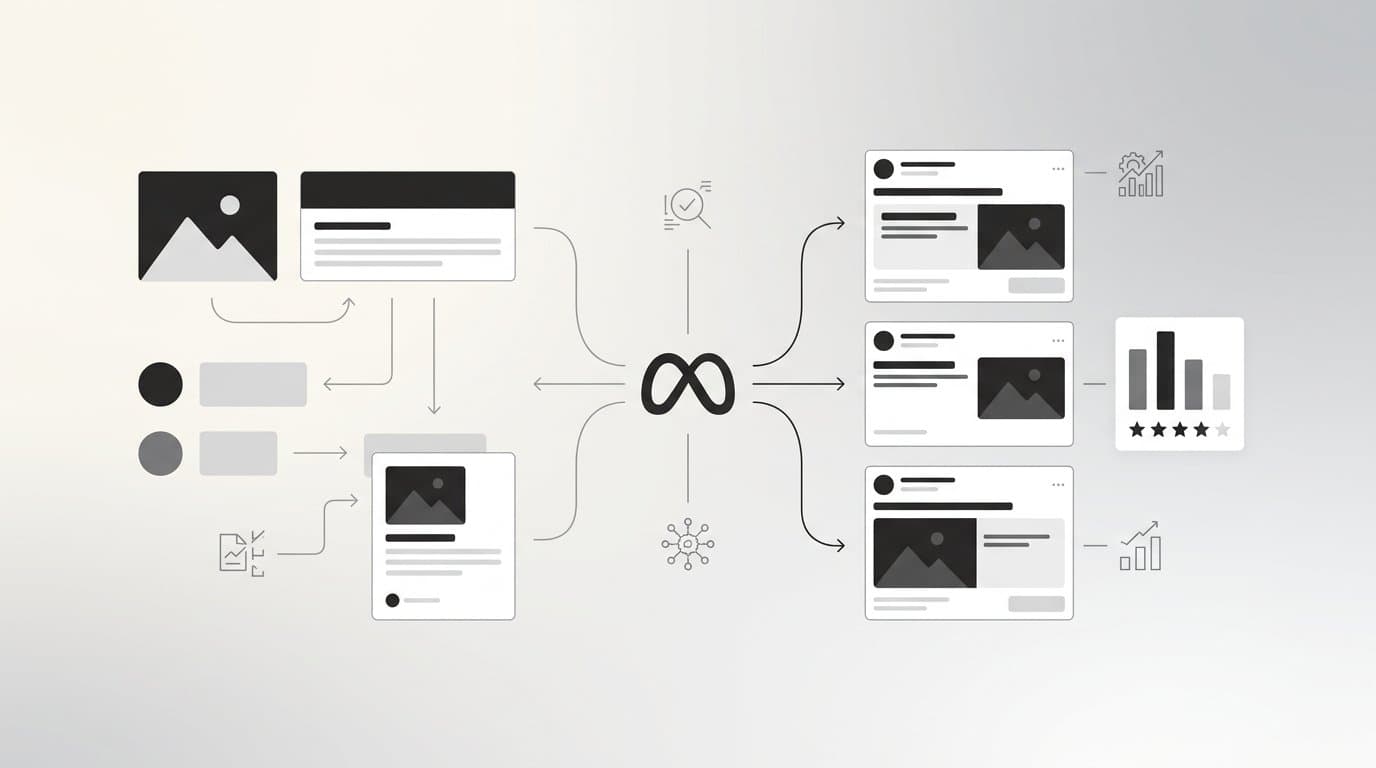
This is where bulk Instagram ad creation changes the economics entirely. Platforms that enable you to generate hundreds of ad variations by mixing creatives, headlines, audiences, and copy, and then launch them directly to Meta, transform what used to be a weeks-long production process into something that takes minutes. The per-unit cost drops dramatically, which means the budget required to run meaningful creative tests becomes accessible even for smaller brands and agencies.
AdStellar's Bulk Ad Launch feature is built specifically for this. You mix multiple creatives, headlines, audiences, and copy at both the ad set and ad level, and the platform generates every combination and launches them to Meta in clicks. What previously required a production team, a media buyer, and days of setup can now happen in a single session.
The testing advantage compounds over time. When your cost per creative variation is low, you can afford to test more aggressively. More tests mean faster identification of winners. Faster winner identification means you can reallocate budget toward scaling proven ads sooner, rather than continuing to fund new production in search of something that works. The brands that find winning creatives fastest have a structural advantage in paid social, and volume-based creative generation is a key enabler of that speed.
There's also an important feedback loop here. Every test generates performance data. That data tells you which hooks, formats, and messages resonate with which audiences. Over time, you're not just generating more creative, you're generating smarter creative informed by real performance signals. The system gets more efficient with each iteration, which is the opposite of the traditional approach where each creator engagement starts from scratch.
How to Evaluate Your True Cost Per Winning Ad
The most important reframe in this entire article is this: stop measuring production cost per asset, and start measuring cost per winning creative.
Here's why it matters. If you commission ten UGC videos and only two of them meet your performance benchmarks, your real cost per winner is the total production spend divided by two, not by ten. The eight underperforming ads weren't free. You paid for them, and their cost should be attributed to the two winners that are actually generating return.
This reframing has significant implications for how you evaluate different production approaches. A higher per-unit cost isn't necessarily more expensive if that approach produces a higher hit rate. Conversely, a lower per-unit cost approach might produce more winners in absolute terms even if the individual success rate is lower, simply because you can afford to test more volume. The relevant metric is always cost per winner, not cost per video.
Understanding this requires performance analytics that connect creative output to business results. Leaderboard-style insights that rank creatives by ROAS, CPA, and CTR give you the visibility to calculate true cost per winner across different production methods and creative formats. Addressing performance tracking difficulty is essential, and AdStellar's AI Insights feature does exactly this: it ranks your creatives, headlines, copy, audiences, and landing pages by real metrics, scores everything against your target benchmarks, and surfaces winners automatically so you're not manually digging through campaign data to find what's working.
The goal-based scoring is particularly useful here. Rather than looking at raw metrics in isolation, you can set specific performance targets and let the AI score every element against those benchmarks. This makes the cost-per-winner calculation much more straightforward, because you have a clear definition of what "winning" means before you start analyzing results.
Building a feedback loop from this data compounds your creative investment over time. When you save top-performing creatives, headlines, and audience combinations in a centralized location and systematically reuse winning elements in future campaigns, you're not starting from zero with each new production cycle. AdStellar's Winners Hub serves this function, keeping your best-performing assets organized with their performance data attached, so you can pull proven elements into new campaigns instantly.
Over time, a brand that consistently saves winners, analyzes what makes them work, and reuses those elements in new creative combinations builds a compounding advantage. Their average cost per winner decreases as the system learns, while a brand that treats each production cycle as independent never benefits from that accumulated knowledge.
Building a Budget-Smart UGC Ad Strategy for Instagram
Given everything covered above, what does a practical, budget-conscious UGC ad strategy actually look like in 2026? Here's a framework that many performance marketers are moving toward.
Start with AI-generated creatives for rapid testing: Before investing significant budget in human creator production, use AI Instagram ads to test your core messaging, hooks, and formats. The per-unit cost is low enough to run meaningful volume tests without a large upfront commitment. This phase is about learning, not perfecting. You're trying to identify which concepts, value propositions, and visual approaches resonate with your audience before you invest in higher-production execution.
Invest in human creators for proven concepts: Once you've identified concepts that show promise in testing, that's the right moment to bring in human creators for elevated execution. You're no longer guessing about what might work. You have data. The creator brief is sharper, the production investment is more justified, and the likelihood of getting a strong performer is higher. This sequencing flips the traditional approach on its head and makes the human creator investment much more efficient.
Key questions to ask before choosing a production method: What is your monthly creative volume requirement? If you need dozens of variations per month, creator-based production at any price point becomes difficult to sustain. What is your acceptable cost per winning ad? Work backward from that number to understand how many total creatives you need to produce to find enough winners. How fast do you need to iterate? If your campaigns need frequent creative refreshes to combat fatigue, turnaround speed becomes as important as cost.
The most cost-effective Instagram UGC ad strategy in 2026 combines AI speed and volume with strategic human creator partnerships. AI handles the high-volume testing layer, generating and launching hundreds of variations to find signals quickly. Human creators handle the elevated execution layer, producing content for concepts that have already demonstrated potential. Each approach does what it does best, and neither is asked to do what it's not suited for.
AdStellar is built to support exactly this kind of hybrid strategy. Starting at $49 per month with a 7-day free trial, it gives marketers access to AI ad creative generation, including UGC-style avatar ads from a product URL, an automated campaign creator, bulk ad launching, and performance insights, all within a single platform. The AI Campaign Builder analyzes your historical data, ranks every creative and audience by performance, and builds complete Meta campaigns with full transparency into the reasoning behind every decision.
The Bottom Line on UGC Ad Production Costs
Instagram UGC ad production costs are not fixed. They depend entirely on the approach you choose, the volume you need, and how you measure the return on that investment. A single creator video might look affordable in isolation, but the true cost of finding a winning creative is almost always higher than the sticker price on any individual asset.
The marketers who manage this most effectively treat creative production as a scalable system rather than a series of one-off projects. They think in terms of cost per winning creative, not cost per video. They use volume and data to their advantage. And increasingly, they're using AI-powered platforms to handle the testing layer at a cost and speed that traditional production simply can't match.
If you're spending more time managing creator logistics than analyzing what's actually working in your campaigns, that's a signal worth paying attention to. The tools exist to change that equation significantly.
Ready to see what AI-generated UGC-style creatives can do for your production costs and creative volume? Start Free Trial With AdStellar and be among the first to launch and scale your ad campaigns faster with an intelligent platform that automatically builds and tests winning ads based on real performance data.