You're spending 15+ hours every week manually launching Meta campaigns—building audiences, uploading creatives, setting budgets, monitoring performance—while your competitors deploy hundreds of variations in minutes. They're testing faster, optimizing smarter, and scaling campaigns while you're still stuck in the setup phase.
Here's the reality: manual Meta campaign management doesn't just consume your time. It creates a performance ceiling you can't break through.
Every hour you spend copying ad sets and adjusting bids is an hour you're not analyzing audience insights or developing creative strategy. When a campaign starts underperforming at 2 AM, you don't find out until morning—and by then, you've burned through budget that could have been reallocated instantly. When you finally launch that new product campaign, your competitor has already tested 50 variations and identified the winning formula.
The opportunity cost is staggering. Marketing teams report spending 60-70% of their time on campaign execution tasks that could be automated, leaving barely 30% for the strategic work that actually moves the needle. Agency owners managing multiple client accounts face an even harsher reality—they're forced to choose between scaling their business and maintaining campaign quality.
But here's what changes everything: meta advertising automation isn't about replacing your expertise. It's about multiplying it.
Automation systems handle the repetitive execution work—launching campaigns, testing variations, optimizing budgets, monitoring performance—while you focus on strategy, creative direction, and growth initiatives. The result? Campaigns that launch 10x faster, test systematically instead of randomly, and optimize continuously without manual intervention.
This guide walks you through building a complete Meta advertising automation system in six strategic steps. You'll learn how to architect campaigns for automated scaling, systematize creative production, configure intelligent launch triggers, implement AI-powered optimization, and scale successful patterns across your entire account structure.
By the end, you'll have a systematic approach that transforms Meta campaign management from a time-consuming bottleneck into an efficient, scalable growth engine. Let's build your automation system step by step, starting with the foundation that makes everything else possible.
Step 1: Architect Your Campaign Structure for Automation
Your campaign structure determines everything that follows. Build it wrong, and automation becomes impossible. Build it right, and scaling becomes systematic.
Most advertisers structure campaigns around products or promotions—a fragmented approach that creates chaos when you try to automate. Every campaign has different naming conventions, audience configurations, and optimization goals. Automation tools can't identify patterns, and you can't scale insights across campaigns.
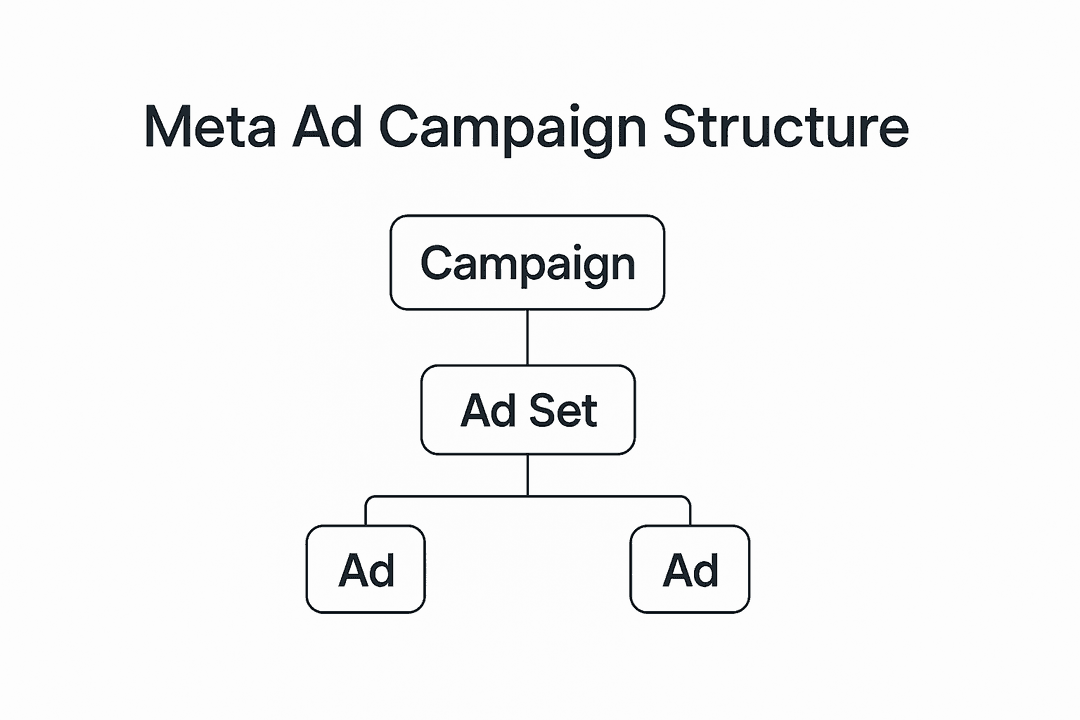
The automation-ready structure works differently. It's built around standardized templates that automation systems can recognize, replicate, and optimize systematically.
Start by defining your campaign templates. Each template represents a specific marketing objective with standardized components: naming convention, audience strategy, creative format, budget allocation, and optimization goal. A prospecting template might target broad interests with video creatives optimized for reach. A retargeting template might target website visitors with carousel ads optimized for conversions.
The key is consistency. When every prospecting campaign follows the same structure, ai tools for campaign management can identify what's working and replicate it instantly. When creative formats are standardized, you can test systematically instead of randomly.
Step 2: Systematize Creative Production and Testing
Your creative assets are the fuel for automated campaign scaling. Without a systematic approach to production and testing, automation simply amplifies mediocrity faster.
The challenge most advertisers face isn't creating one great ad—it's producing enough variations to test systematically while maintaining quality standards. Manual creative workflows create bottlenecks that limit testing velocity and prevent you from discovering winning combinations.
Build a creative production system that separates components into modular elements: headlines, primary text, descriptions, images, and videos. Instead of creating complete ads from scratch, you're assembling proven components in new combinations. This modular approach allows you to generate dozens of variations quickly while maintaining brand consistency.
Start by establishing your creative component library. Document your top-performing headlines, value propositions, calls-to-action, and visual themes. Organize them by campaign objective and audience segment. A prospecting campaign targeting business owners might use different messaging than a retargeting campaign for engaged website visitors.
The systematic testing framework follows a structured approach. Begin with foundational tests to identify your strongest creative elements—which headline format resonates, which visual style captures attention, which offer drives action. Once you've identified winning elements, move to combination testing where you mix and match proven components to find optimal pairings.
Document everything in a creative testing matrix that tracks which combinations you've tested, performance results, and insights gained. This prevents duplicate testing and creates a knowledge base that informs future creative development. When you discover a winning combination, you know exactly which elements contributed to success and can apply those insights across other campaigns.
Template your creative production workflow to maintain consistency. Define specifications for each ad format: image dimensions, video lengths, character counts, file naming conventions. When every asset follows the same standards, automation tools can deploy them seamlessly across campaigns without manual adjustments.
The goal is to reach a state where you can generate 20-50 ad variations for testing in the time it previously took to create five. This testing velocity is what separates advertisers who discover winning formulas quickly from those who guess randomly and hope for results.
Step 3: Configure Intelligent Campaign Launch Automation
Campaign launches consume enormous time not because the work is complex, but because it's repetitive and error-prone. Every new campaign requires the same sequence: audience configuration, creative upload, budget allocation, placement selection, conversion tracking setup.
Automation transforms this multi-hour process into minutes by executing your standardized templates instantly and accurately.
The foundation is rule-based launch triggers that initiate campaigns automatically based on specific conditions. You might configure triggers for seasonal promotions, inventory alerts, or competitive responses. When Black Friday approaches, your automation system can launch promotional campaigns across all product categories without manual intervention. When inventory for a specific product drops below threshold, retargeting campaigns can pause automatically to prevent advertising products you can't fulfill.
Start by mapping your campaign launch scenarios. What prompts you to launch new campaigns currently? New product releases, promotional periods, audience segments reaching specific sizes, creative assets completing production. Each scenario can become an automated trigger.
Configure your launch parameters within each trigger: which campaign template to deploy, audience targeting specifications, budget allocation, creative sets to include, optimization goals. The more detailed your configuration, the less manual adjustment required after launch.
Build quality controls into your automation workflow. Configure validation rules that check for common errors before campaigns go live: missing conversion tracking pixels, budget allocations exceeding account limits, audience sizes below minimum thresholds, creative assets not meeting Meta's specifications.
The sophisticated approach includes dynamic budget allocation based on historical performance data. Instead of distributing budgets evenly across new campaigns, your system can weight spending toward templates and audience segments that have historically delivered stronger results. This approach accelerates the path to profitability by prioritizing proven patterns.
Implement staged rollouts for higher-risk campaigns. Configure your system to launch with conservative budgets initially, then increase spending automatically once performance validates the approach. This protects against costly mistakes while still enabling rapid scaling when campaigns succeed.
The time savings compound quickly. What previously required hours of manual setup now happens in minutes, allowing you to test more variations, respond faster to opportunities, and scale winning campaigns before market conditions shift.
Step 4: Implement AI-Powered Performance Optimization
Campaign optimization is where automation delivers its most significant performance impact. Manual optimization is reactive and limited by human capacity—you check performance periodically and make adjustments based on what you observe. Automated optimization is proactive and continuous, analyzing performance data constantly and adjusting campaigns before problems escalate.
The intelligent optimization system monitors multiple performance dimensions simultaneously: cost per result, conversion rates, audience engagement, creative fatigue indicators, competitive pressure signals. It identifies patterns and anomalies that manual analysis would miss and responds with precision adjustments.
Configure optimization rules that define how your system should respond to specific performance scenarios. When cost per acquisition exceeds your target threshold by a certain percentage, the system might reduce budget allocation automatically. When a specific ad creative shows declining engagement rates indicating audience fatigue, it can pause that creative and activate fresh variations from your testing queue.
Budget reallocation automation is particularly powerful. Instead of distributing spending evenly across ad sets, intelligent systems can shift budgets dynamically toward top performers. When one audience segment delivers conversions at half the cost of another, the system increases investment in the efficient segment while reducing spend on underperformers. This continuous optimization maximizes return on ad spend without constant manual intervention.
Implement bid strategy optimization that adjusts based on performance trends rather than fixed rules. Your system might increase bids during high-converting time periods, reduce bids when audience quality declines, or shift between bid strategies as campaign objectives evolve from awareness to conversion.
Creative rotation automation prevents ad fatigue by monitoring engagement metrics and refreshing creatives systematically. When frequency reaches levels that typically correlate with declining performance, new creative variations deploy automatically. This maintains campaign freshness without requiring constant monitoring.
The sophisticated approach includes predictive optimization that anticipates performance issues before they impact results. By analyzing historical patterns, your system can recognize early warning signs—slight upticks in cost per result, gradual declines in click-through rates—and make preventive adjustments before performance deteriorates significantly.
Configure alert thresholds that notify you when manual intervention is needed for strategic decisions automation shouldn't make independently. The goal isn't removing human oversight entirely—it's focusing your attention on decisions that require strategic judgment while automation handles tactical optimizations.
Step 5: Scale Winning Patterns Systematically Across Your Account
Discovering a winning campaign is valuable. Replicating that success systematically across your entire account structure is transformative.
Most advertisers treat successful campaigns as isolated victories. They might manually duplicate a top performer or try to recreate the approach with other products, but they lack a systematic method for identifying winning patterns and deploying them at scale.
The automated scaling approach identifies success patterns at the component level and replicates them strategically. When a specific audience targeting approach delivers strong results in one campaign, your system can apply that targeting to relevant campaigns across your account. When a creative format outperforms others consistently, it becomes the default for new campaign launches.
Start by establishing your performance benchmarks and success criteria. Define what constitutes a winning pattern worth replicating—specific cost per result thresholds, conversion rates, return on ad spend targets. These benchmarks guide your automation system in identifying which patterns deserve scaling.
Configure pattern recognition rules that analyze performance across campaigns to identify common success factors. Your system might discover that campaigns targeting a specific age demographic consistently outperform others, or that video creatives featuring customer testimonials drive higher conversion rates than product demonstrations. These insights become replication opportunities.
Build replication workflows that deploy winning patterns systematically. When your system identifies a successful campaign structure, it can generate similar campaigns across other product categories, geographic markets, or seasonal periods. Instead of manually recreating success, you're scaling it automatically while maintaining the core elements that drove results.
Implement geographic expansion automation that tests successful campaigns in new markets methodically. Start with markets similar to your proven performers, then expand progressively as results validate the approach. Your system can adjust messaging and creative elements for cultural relevance while maintaining the structural elements that drove original success.
Product category expansion follows similar logic. When a campaign structure proves successful for one product line, automated replication can apply that structure to related categories. The system maintains winning elements—audience targeting, creative formats, optimization strategies—while swapping product-specific content.
The sophisticated scaling approach includes performance monitoring that validates each replication. Not every winning pattern translates perfectly across different contexts. Configure your system to launch replications with test budgets initially, then scale investment automatically once performance meets your success criteria.
Document scaling results to build institutional knowledge. Track which patterns replicate successfully across contexts and which require adaptation. This intelligence informs future scaling decisions and helps you understand the boundaries of each winning formula.
Step 6: Build Continuous Improvement Loops and Performance Intelligence
The final step transforms your automation system from a static toolset into a learning engine that improves continuously based on performance data and market feedback.
Most automation implementations stop at execution—they automate existing processes but don't evolve the processes themselves. The continuous improvement approach treats every campaign as a learning opportunity that informs system refinement.
Establish performance review cadences that analyze results systematically. Daily reviews might focus on tactical adjustments—budget reallocations, creative rotations, bid optimizations. Weekly reviews examine strategic patterns—which campaign templates are outperforming, which audience segments show emerging potential, which creative themes resonate most strongly. Monthly reviews assess broader trends and inform strategic pivots.
Configure automated reporting that surfaces insights rather than just data. Instead of reviewing endless performance tables, your system should highlight significant changes, identify opportunities, and flag potential issues. When a specific audience segment shows 30% improvement in conversion rates, that insight should surface automatically with recommendations for capitalizing on the trend.
Build feedback loops that connect campaign performance back to your creative production and campaign structure. When certain creative formats consistently outperform others, that intelligence should inform your creative component library and production priorities. When specific campaign structures deliver superior results, those templates should become your default for new launches.
Implement competitive intelligence monitoring that tracks market changes affecting your campaigns. Seasonal trends, competitive promotional activity, platform algorithm updates—these external factors impact performance and should inform system adjustments. Configure alerts for significant market shifts that require strategic responses.
The testing evolution framework systematizes how your testing approach advances over time. Early-stage testing might focus on foundational questions—which audiences respond, which offers convert, which creative formats engage. As you gather data, testing evolves toward optimization questions—which audience combinations perform best, which messaging variations drive highest lifetime value, which campaign structures scale most efficiently.
Document learnings in a centralized knowledge base that becomes your strategic asset. Capture not just what worked, but why it worked and under what conditions. Record failed experiments along with successful ones—understanding what doesn't work is as valuable as knowing what does.
Configure your automation system to apply learnings automatically. When your testing reveals that carousel ads outperform single image ads consistently, new campaigns should default to carousel format. When data shows that specific audience targeting combinations deliver superior results, those combinations should become standard in relevant campaign templates.
Build scenario planning capabilities that model how strategic changes might impact performance. Before making major budget reallocations or testing new campaign approaches, your system can project likely outcomes based on historical patterns. This reduces risk and helps you make informed decisions about resource allocation.
The ultimate goal is reaching a state where your Meta advertising operation becomes increasingly efficient and effective over time. Each campaign generates insights that improve future campaigns. Your automation system doesn't just execute faster—it makes smarter decisions based on accumulated intelligence.
With these six steps implemented, you've transformed Meta campaign management from a manual, time-intensive process into an intelligent system that scales efficiently, tests systematically, optimizes continuously, and improves with every campaign you run. The result is faster launches, better performance, and the freedom to focus on strategic growth initiatives rather than tactical execution tasks.
Ready to transform your advertising strategy? Get Started With AdStellar AI and be among the first to launch and scale your ad campaigns 10× faster with our intelligent platform that automatically builds and tests winning ads based on real performance data.