UGC-style ads have become one of the most reliable formats in performance marketing, and the reason is straightforward: they look like content, not advertising. When someone scrolling through their Instagram or Facebook feed encounters a video that feels like a genuine recommendation from a real person, they stop. When they see a polished brand creative with a logo in the corner and a tagline at the bottom, they keep moving.
The challenge has always been production. Finding creators, briefing them, managing revisions, handling usage rights, editing footage, and then figuring out how to scale the concepts that actually work. For many marketers, that friction has kept UGC ads out of reach or limited to a handful of creatives per quarter.
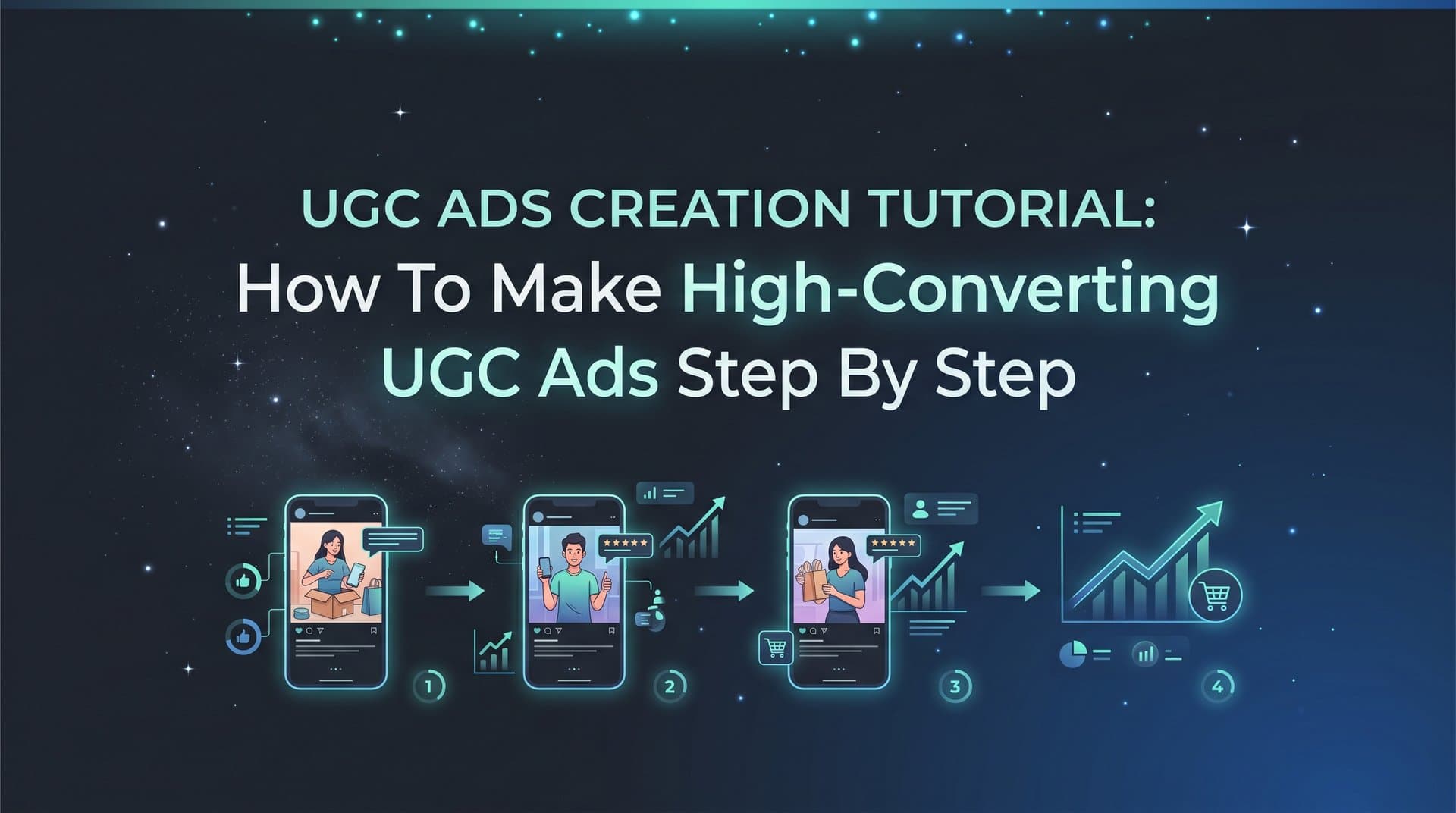
This tutorial changes that. What follows is a complete, step-by-step UGC ads creation process that covers everything from concept and hook strategy through creative production, copy writing, bulk launching, and performance analysis. The system works whether you are producing content with real creators or using AI-generated UGC avatar ads to move faster and test more concepts without the traditional overhead.
By the end of this guide, you will have a repeatable framework you can run every time you need to build a new UGC campaign. No production team required. No guesswork about what to test next.
Let's get into it.
Step 1: Define Your UGC Ad Concept and Hook Strategy
Before you open any creative tool, you need a concept. This is the step most marketers skip, and it is also the reason so many UGC ads end up feeling generic even when the production quality is solid.
Start by choosing your UGC format. There are three core formats that consistently perform well on Meta platforms:
Testimonial format: A person speaks directly to camera about their experience with the product. The focus is on transformation or results. This format works well for products where the before-and-after story is compelling and credible.
Demo or unboxing format: The creator shows the product in use, often walking through features or unpacking the experience in real time. This format works well for products where seeing is believing, like tools, gadgets, skincare, or food.
Problem-solution narrative: The ad opens by naming a specific frustration the target audience recognizes, then positions the product as the answer. This format tends to generate strong engagement because it leads with empathy before introducing the offer.
Once you have chosen your format, the next task is writing your hooks. The hook is the first two to three seconds of the ad, and it determines whether someone keeps watching or scrolls past. Do not skip this step or treat it as an afterthought.
Write at least three distinct hook options before touching any creative tool. Aim for variety across these three types:
Question hook: Opens with a question the audience is already asking themselves. Example: "Still spending hours on ad creative with nothing to show for it?"
Bold statement hook: Opens with a direct, surprising, or counterintuitive claim. Example: "Most UGC ads fail in the first three seconds. Here's why."
Relatable situation hook: Opens by describing a scenario the audience immediately recognizes. Example: "I used to dread launching new ad campaigns every single week."
Each hook should target a different emotional trigger: curiosity, urgency, or recognition. This gives you material to test and helps you understand which emotional angle resonates most with your specific audience.
Finally, map each concept to a specific campaign goal. A UGC ad built for awareness looks different from one built to drive purchases. Keeping the goal clear at the concept stage prevents you from creating content that is entertaining but does not move people toward action. Understanding Meta ads campaign structure best practices before you begin will help you align each creative concept with the right objective from the start.
Success indicator: You have at least three distinct hook angles written down, each targeting a different emotional trigger, and each mapped to a clear campaign objective.
Step 2: Gather Your Creative Inputs and Brand Assets
Good creative production, whether with real creators or AI tools, depends on having the right inputs organized before you start. This step is about preparation, and it will save you significant time downstream.
Collect the following before moving forward:
Product URL and product images: These are the foundation of any AI-generated creative. Your product URL allows tools like AdStellar to pull in product details automatically. High-quality product images give you raw material for image-based UGC formats.
Key benefit statements: Write out three to five specific benefits your product delivers, framed from the customer's perspective. Avoid generic language like "high quality" or "easy to use." Get specific: "Cuts ad production time from three days to thirty minutes" is more useful than "saves time."
Existing top-performing ad copy: Pull your best-performing headlines and primary text from past campaigns. These are proven building blocks you can adapt for your UGC creative brief.
Next, spend time in the Meta Ad Library researching your category. Search for competitors and look at the UGC-style ads they are currently running. Pay attention to the formats they use most, the hooks that appear repeatedly, and the types of social proof they include. Ads that have been running for a longer period often signal that the format is working, though this is a useful heuristic rather than a guarantee. Use these observations as structural inspiration, not as content to copy.
Prepare your brand guidelines document. This should include approved color palettes, font choices, logo placement rules, and any required disclosures or messaging. When generating multiple creative variations, having these parameters defined upfront ensures consistency across the batch. A structured Meta ads creation workflow makes this preparation stage significantly faster and less prone to gaps.
If you are working with real creators alongside AI tools, prepare a clear creative brief that includes your hook options, key talking points, tone direction, required disclosures, and target video length. A well-prepared brief eliminates back-and-forth and gives creators what they need to produce content that aligns with your campaign goals.
Success indicator: You have a single document or organized folder containing everything needed to build or brief the creative without stopping to hunt for information mid-process.
Step 3: Generate Your UGC-Style Creatives with AI
This is where the traditional UGC production bottleneck disappears. Instead of coordinating with creators, scheduling shoots, and waiting for edited footage, you can generate UGC-style video and image creatives directly from your product URL using AI.
AdStellar's AI Creative Hub is built specifically for this. You can generate UGC-style avatar video ads without actors, video editors, or a production budget. Here is how to approach the generation process effectively.
Start by entering your product URL into the Creative Hub. AdStellar pulls in product details automatically, which gives the AI the context it needs to build relevant creative. From there, select an AI avatar that matches your target audience demographic. Think about who your customer is and choose an avatar that would feel credible and relatable to that person. A fitness product aimed at women in their thirties calls for a different avatar than a B2B software tool aimed at marketing managers.
Input your hook script and key talking points into the creative builder. Use the hook options you wrote in Step 1 as your starting point. The chat-based editing feature lets you refine the tone, pacing, and messaging in real time without rebuilding the creative from scratch. If the first output feels too formal, you can prompt the AI to make it more conversational. If the pacing feels rushed, you can adjust it directly through the chat interface.
Generate multiple creative variations from a single concept. Adjust the hook, swap the avatar, or change the call to action to produce distinct versions from the same core idea. This is where the efficiency of AI generation becomes a real advantage: producing eight variations of a concept takes minutes rather than days. Marketers who have explored AI for Meta ads campaigns consistently report that this variation speed is one of the most significant competitive advantages available right now.
For image-based UGC formats, use AdStellar to generate lifestyle-style image ads that mimic organic social content rather than polished brand photography. These work particularly well for products where a real-world context adds credibility, like home goods, apparel, or consumer packaged goods.
AdStellar also lets you clone high-performing competitor ads directly from the Meta Ad Library. Use this feature to study the structure of ads that have been running successfully in your category and use that structure as the foundation for your own creative, with your own product, messaging, and brand voice.
One important mindset shift: do not generate two creatives and expect to find a winner immediately. Plan for at least five to eight variations per concept. The goal of this stage is not to produce the perfect ad. It is to produce enough material to run a meaningful test.
Success indicator: You have a batch of UGC-style creatives ready for review, covering at least two different hooks and two different formats, with enough variation to generate useful testing data.
Step 4: Write UGC-Matched Ad Copy and Headlines
Here is one of the most common places UGC campaigns fall apart. The creative looks authentic and native to the feed, but the copy reads like a press release. That mismatch breaks the experience and undermines the credibility the creative worked to build.
UGC ad copy has a distinct voice. It sounds like a recommendation from a real person, not a brand announcement. Getting this right requires a deliberate shift in how you approach writing.
Write your primary text in first-person or second-person language. Short sentences. Natural speech patterns. Read it out loud when you are done. If it sounds like something you would say to a friend, you are on the right track. If it sounds like a product brochure, rewrite it.
Compare these two versions:
Brand voice (wrong tone for UGC): "Introducing our revolutionary platform that transforms your advertising workflow with cutting-edge AI technology."
UGC-matched voice (right tone): "I used to spend half my week just building ad creatives. Now I get it done in under an hour and the results are actually better."
The second version sounds like something a real user would write. That is the target.
For each creative, write at least three headline variations:
Benefit-focused headline: Leads with the specific outcome the product delivers. Example: "Launch better Meta ads in a fraction of the time."
Curiosity-driven headline: Creates a gap the reader wants to close. Example: "Why your best-performing ad might already be in your account."
Social proof headline: Leans on the experience of others. Example: "Marketers are using this to cut creative costs without cutting results."
Match your call to action to the campaign goal and make it specific. "Start your free trial" is more effective than "Learn more" for a conversion campaign. "See how it works" fits better for a traffic or awareness objective.
AdStellar's AI Campaign Builder analyzes historical headline and copy performance from your account to recommend combinations that have worked before. This means your copy decisions are informed by real performance data rather than guesswork, and the recommendations improve as your account accumulates more campaign history. If you want to understand how this compares to building campaigns manually, the breakdown of Meta ads automation vs manual creation is worth reviewing before you finalize your workflow.
Success indicator: Your copy reads like something a satisfied customer would write, each creative has three headline variations ready to test, and your call to action matches the campaign objective.
Step 5: Launch Ad Variations in Bulk and Set Up Testing
You now have UGC-style creatives, matched copy, and multiple headline options. The next step is getting everything into a structured test without spending hours inside Meta Ads Manager building each variation by hand.
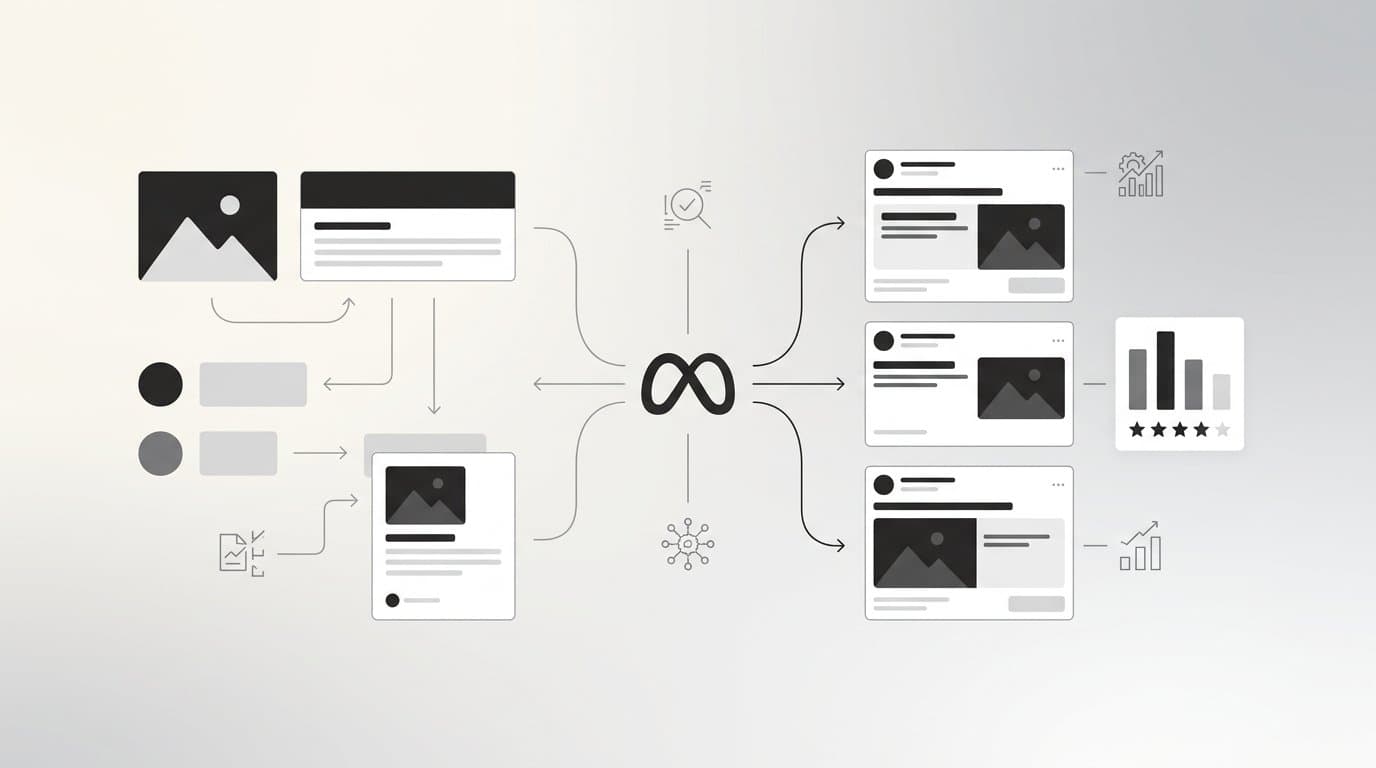
AdStellar's Bulk Ad Launch feature is designed for exactly this. You can mix your UGC creatives with multiple headline and copy combinations at both the ad set and ad level, and AdStellar generates every combination and launches them to Meta in minutes rather than hours. What would take a full afternoon of manual campaign building gets done in a few clicks. For a detailed walkthrough of this process, the Meta ads bulk creation tutorial covers the full setup from start to finish.
Before you launch, structure your test so that variables are isolated. This is the most important principle in ad testing and also the most frequently violated one.
Follow this sequence:
1. Test creatives against each other first. Keep the copy and audience consistent across your creative variations so that any performance difference is attributable to the creative itself.
2. Once you have creative signal, test copy variations. Take your top-performing creative and run it with your different headline and primary text combinations to identify the best copy pairing.
3. Test audiences last. Use AdStellar's AI Campaign Builder to select audiences based on historical performance data from your past campaigns. The AI analyzes what has worked before and builds audience recommendations accordingly, rather than requiring you to start from scratch each time.
Set realistic budgets for the testing phase. Spreading a small budget across too many variations means no single variation gets enough impressions to generate meaningful data. A focused test with fewer variables and adequate spend per variation produces faster, cleaner results.
Define your success metrics before the campaign goes live. Know in advance what ROAS, CPA, or CTR threshold will tell you a creative is worth scaling. Having this defined upfront removes the temptation to make decisions based on early data before statistical significance is reached. Reviewing how to launch multiple Meta ads at once can help you structure this phase more efficiently.
AdStellar launches directly to Meta from within the platform, so you are not rebuilding campaign structure or re-entering settings across two different tools. The campaign goes live from a single workflow.
Success indicator: Your campaign is live with multiple UGC creative variations running against defined audiences, isolated variables, adequate budget per variation, and clear performance benchmarks established before launch.
Step 6: Analyze Performance and Scale Your Winners
Launching the campaign is not the finish line. The real value of a structured UGC testing process comes from what you do with the data once it starts coming in.
AdStellar's AI Insights leaderboards rank your UGC creatives by the metrics that actually matter: ROAS, CPA, and CTR, measured against the target goals you set before launch. Rather than digging through spreadsheets or toggling between reports, you get a ranked view of which creatives, headlines, copy variations, and audiences are performing above and below your benchmarks.
Start your analysis by identifying which hook performed best. If your bold statement hook is driving a lower CPA than your question hook, that tells you something important about how your audience responds to different emotional triggers. That insight should directly inform your next creative brief.
Look at which avatar or format drove the lowest cost per result. Sometimes a specific visual style, a particular avatar demographic, or a specific video length consistently outperforms the others. These patterns are worth documenting and replicating. Platforms built around Meta ads dashboard software make this pattern recognition significantly faster than manual reporting.
Move your top-performing creatives into AdStellar's Winners Hub. This keeps your best assets organized and accessible for future campaigns without having to search through historical campaign data. When you are building your next campaign, you can pull directly from proven winners rather than starting from zero.
Once you identify a winning UGC concept, use AdStellar's AI Creative Hub to generate additional variations of that specific format. If a problem-solution testimonial with a specific hook structure is outperforming everything else, produce five more versions of that same structure with different avatars, slightly different scripts, or updated calls to action. Scale the angle, not just the single ad.
For underperforming ads, take time to diagnose before you discard. Ask whether the issue is the creative itself, the copy, the audience targeting, or the offer. A great creative paired with the wrong audience will underperform. A strong hook paired with weak copy will underperform. Separating these variables is what makes your next test smarter than your last one.
Use performance data to continuously improve your creative brief. If problem-solution hooks consistently outperform testimonial hooks in your category, that pattern becomes a standing input for every future UGC campaign you run.
Success indicator: You have at least one clear winner identified with supporting data, your top creatives are saved in the Winners Hub, and you have a concrete plan to produce more creatives based on the specific format and hook structure that performed best.
Your Complete UGC Launch Checklist
Creating UGC ads that convert comes down to a repeatable system. Start with a strong concept and hook strategy. Gather the right inputs before you touch any creative tool. Generate multiple creative variations efficiently. Match your copy to the conversational UGC tone. Launch in bulk with isolated variables to find winners fast. Then scale what the data tells you to scale.
The traditional approach to UGC production is slow and expensive. AI tools have fundamentally changed what is possible, letting marketers generate UGC-style avatar ads, test dozens of variations, and identify winners without a production team or a large creative budget.
Before you launch your next UGC campaign, run through this checklist:
Hook strategy: At least three distinct hook angles written down, each targeting a different emotional trigger.
Creative inputs: Product URL, benefit statements, brand guidelines, and competitor research organized in one place.
UGC creatives: Multiple variations generated covering at least two hooks and two formats.
Copy and headlines: Written in a conversational tone with at least three headline options per creative.
Bulk launch structure: Variables isolated, budgets set per variation, and performance benchmarks defined before going live.
Performance goals: ROAS, CPA, or CTR targets established so you know what winning looks like before the data comes in.
If you want to put this system into practice without stitching together multiple tools, AdStellar gives you everything in one place: AI creative generation for image ads, video ads, and UGC avatar content, bulk launching that creates hundreds of ad variations in minutes, and AI Insights leaderboards that tell you exactly what to scale. Start Free Trial With AdStellar and start building, launching, and scaling UGC ads the way performance marketers do it now.