Video ads consistently outperform static images on Meta platforms. Higher engagement, stronger brand recall, better conversion rates. The evidence is everywhere, and most marketers already know it. The problem is not understanding why video works. The problem is affording it.
Traditional video production piles on costs fast. You need a script, a location, a camera operator, talent, lighting, sound, editing, color grading, and revisions. Before a single ad goes live, you can easily spend thousands on one piece of creative. Then creative fatigue hits within weeks, and the whole cycle starts again.
For most digital marketers, performance agencies, and growing brands running Meta campaigns, this model simply does not scale. The result is a frustrating choice: skip video entirely, publish low-quality content that damages your brand, or blow through your budget before you see any meaningful return.
None of those options are acceptable, especially when competitors are running polished video ads at scale and capturing the audiences you are trying to reach.
The good news is that the traditional production model is no longer the only path. AI-powered tools, smarter repurposing strategies, and platform-native formats have fundamentally changed what is possible for marketers working with lean budgets. The barrier to running high-performing video ads has dropped significantly, and the strategies that are working right now do not require a production crew.
This guide covers seven practical approaches to producing and running video ads without the traditional price tag. Whether you are a solo marketer, an agency managing multiple client accounts, or a brand running Meta campaigns in-house, these strategies will help you keep your creative pipeline full without draining your budget.
1. Use AI to Generate Video Ads Without Actors or Editors
The Challenge It Solves
The biggest cost drivers in traditional video production are the people involved: actors, videographers, and editors. Even a simple UGC-style ad that looks casual and authentic typically requires hiring talent, coordinating a shoot, and paying an editor to pull it together. For brands that need a constant stream of fresh creative, this model becomes financially unsustainable very quickly.
The Strategy Explained
AI video ad generators have changed the equation entirely. Tools like AdStellar's AI Creative Hub can produce image ads, video ads, and UGC-style avatar content directly from a product URL. You do not need a production crew, actors, or a video editor. The AI handles creative generation from scratch, and chat-based refinement lets you adjust messaging, visuals, and format without starting over from the beginning.

This is particularly powerful for UGC-style avatar ads, which replicate the authentic, person-to-camera format that performs exceptionally well on Meta without requiring you to hire or coordinate with real talent. The output looks native to the platform, which is exactly what you want.
Implementation Steps
1. Enter your product URL into AdStellar's AI Creative Hub and let the AI analyze your product details, visuals, and messaging to generate initial video concepts.
2. Select the video format that matches your campaign goal, whether that is a UGC-style avatar ad, a product-focused video, or a direct-response format built for conversions.
3. Use the chat-based editing interface to refine the output. Adjust the hook, tweak the call to action, or change the visual style without rebuilding the ad from scratch.
4. Export and launch directly to Meta without leaving the platform.
Pro Tips
Generate multiple variations in the same session rather than perfecting a single version. Different hooks, different angles, and different formats will perform differently across audiences. Producing several versions at once costs no additional time and gives you built-in creative variety for testing without any extra production investment. If you are comparing this approach against AI ad tools vs manual creation, the time savings alone make a compelling case for automation.
2. Clone and Adapt Competitor Ads That Are Already Working
The Challenge It Solves
Starting from a blank creative brief is expensive in both time and money. You are essentially betting your production budget on an unproven concept. If the ad does not connect with your audience, that investment is gone. The smarter approach is to start from a proven creative foundation rather than guessing what will work.
The Strategy Explained
The Meta Ad Library is a publicly available tool at facebook.com/ads/library that lets anyone search active ads across Facebook and Instagram. When a competitor is actively running an ad, it means they are spending money to keep it live, which is a strong signal that it is performing. Adapting the format, structure, or messaging of a proven ad gives you a validated creative starting point without original production costs.

AdStellar takes this further by letting you clone competitor ads directly from the Meta Ad Library and adapt them within the platform. You get the creative intelligence of competitive research combined with AI-powered adaptation, so you are not just copying but building on what works for your specific product and audience.
Implementation Steps
1. Search the Meta Ad Library for competitors in your category and filter for active ads to identify what is currently running and presumably performing.
2. Note the structural patterns: the hook format, the visual approach, the call to action, and the overall length. These patterns are your creative brief.
3. Use AdStellar to pull competitor ads directly and generate adapted versions tailored to your product, offer, and brand voice.
4. Test your adapted version against your current creative to validate performance before scaling spend.
Pro Tips
Look beyond your direct competitors. Brands in adjacent categories often run creative formats that translate well to your product. A structure that works for a skincare brand may work just as effectively for a supplement or a fitness product. Cast a wide net when researching formats, and then adapt aggressively.
3. Repurpose Static Assets Into Motion-Based Ads
The Challenge It Solves
Most brands already have a library of product photography, brand graphics, and marketing visuals sitting unused after their original purpose. These assets represent real production investment that is not being fully leveraged. Shooting new video content to supplement these assets means paying twice for what could be solved with a smarter approach to what you already own.
The Strategy Explained
Product photos, lifestyle images, and brand graphics can be transformed into motion-based video ads using simple animation techniques. Panning across a product image, zooming into a key detail, layering animated text overlays, and adding motion to static backgrounds are all techniques that create the visual movement of video without requiring a reshoot.
This approach turns your existing asset library into new video inventory. On Meta, motion naturally draws the eye in a scrolling feed, so even simple movement on a strong static image can meaningfully improve engagement compared to a static version of the same creative.
Implementation Steps
1. Audit your existing creative assets: product photos, lifestyle shots, branded graphics, and any screenshots or testimonial visuals you have on hand.
2. Prioritize assets that already perform well as static ads. Strong-performing statics are a reliable signal that the visual or message resonates, making them good candidates for motion treatment.
3. Apply motion techniques: slow pan across a product image, zoom into a key visual element, animate text overlays to appear in sequence, or add a subtle background motion effect.
4. Add captions and a clear call to action optimized for sound-off viewing, since a large portion of Meta users watch video without audio.
Pro Tips
Keep the motion purposeful rather than decorative. Movement that directs the viewer's eye toward your key message or product detail serves a function. Random animation for its own sake can actually distract from your offer. When in doubt, less movement with more intention outperforms heavy animation with no clear focal point. Understanding the correct Facebook video ad dimensions before you animate ensures your repurposed assets display correctly across every placement.
4. Build a Bulk Testing System to Maximize Every Dollar Spent
The Challenge It Solves
One of the most expensive habits in digital advertising is concentrating budget on a single creative before it has been validated. When that ad does not perform, the entire production cost and the media spend behind it are lost. Spreading risk across multiple variations at lower spend per variation is both more cost-efficient and more likely to surface a winner quickly.
The Strategy Explained
Bulk ad creation tools let you mix video creatives with multiple headlines, copy variations, and audience segments to generate hundreds of ad combinations without manually building each one. Instead of betting everything on one polished ad, you run many lightweight variations and let performance data tell you which combination wins.
AdStellar's Bulk Ad Launch feature handles this at scale. You can mix multiple video creatives with different headlines, audiences, and copy at both the ad set and ad level, generating every combination and launching them to Meta in minutes rather than hours. This approach compresses the testing cycle dramatically and reduces the cost of finding a winning creative.

Implementation Steps
1. Prepare a set of video creatives, ideally three to five variations that test different hooks, formats, or messages.
2. Write multiple headline and copy variations for each creative. Even small changes to the headline can significantly affect performance.
3. Define your audience segments. Test the same creative across different audiences to understand which combination of message and audience drives the best results.
4. Use AdStellar's Bulk Ad Launch to generate every combination and deploy them simultaneously with a modest budget per variation.
5. Let the campaigns run until you have statistically meaningful data, then cut underperformers and reallocate budget to winners.
Pro Tips
Resist the urge to optimize too early. Cutting variations after minimal spend produces unreliable data and can eliminate creatives that would have performed well with more exposure. Set a minimum spend threshold per variation before making any decisions, and stick to it consistently across every test. Marketers who find Facebook ad testing too time consuming with manual methods will find that bulk launching compresses the entire cycle significantly.
5. Let Performance Data Tell You What to Produce Next
The Challenge It Solves
Without a data-driven production brief, creative decisions default to gut feeling, internal opinions, or whatever the last successful ad looked like. This leads to wasted production spend on creative that does not align with what your audience actually responds to. Every ad you produce without a data foundation is a more expensive gamble than it needs to be.
The Strategy Explained
Your existing campaign data is a production brief waiting to be read. ROAS, CPA, and CTR leaderboards that rank your creatives, headlines, copy, and audiences by real performance metrics tell you exactly what is resonating. When you understand which video formats, hooks, and messages are driving results, you can produce more of what works instead of starting from scratch with every new campaign.
AdStellar's AI Insights feature surfaces these leaderboards automatically. Every creative element is scored against your target goals, so you can instantly identify the patterns that are driving performance. This turns your analytics into a forward-looking production guide rather than just a backward-looking report.
Implementation Steps
1. Review your creative leaderboards after each campaign cycle. Identify the top-performing video formats, hooks, and messages by ROAS and CPA.
2. Look for patterns across winners. Is a particular video length consistently outperforming? Is a specific type of hook driving higher CTR? These patterns are your production priorities.
3. Set your target benchmarks in AdStellar so the AI can score every element against your specific goals rather than generic averages.
4. Use the insights from your winners to brief your next round of AI-generated video creatives. Feed the patterns back into production rather than starting fresh each time.
Pro Tips
Pay attention to what is underperforming just as much as what is winning. Understanding why certain formats or messages are not connecting with your audience helps you avoid repeating the same creative mistakes. Negative signals are as valuable as positive ones when you are trying to reduce wasted production spend. Using dedicated AI tools for campaign management makes it far easier to surface these patterns consistently across multiple accounts.
6. Optimize for Native Formats That Perform Without High Production Value
The Challenge It Solves
Many advertisers assume that performing well on Meta requires the kind of production quality you would see in a television commercial. This assumption drives up cost expectations and leads to over-investment in polish when the platform's own dynamics often favor something quite different. Understanding what Meta's algorithm and its users actually respond to changes the production calculus entirely.
The Strategy Explained
Authentic-looking, platform-native video often outperforms highly polished production on Meta. Content that feels native to the feed, whether that is a direct-to-camera format, a simple product demonstration, or a text-on-screen explainer, tends to blend into organic content in a way that reduces ad resistance and improves engagement.
Meta publicly documents the correct dimensions and specifications for different placements. The 9:16 aspect ratio is the standard for Stories and Reels. In-feed placements support 1:1 and 4:5 formats. Using the correct format for each placement is a technical requirement that affects delivery, and getting it wrong means your ad is being cropped or displayed incorrectly regardless of how good the content is.
Sound-off optimization is equally important. A significant portion of Meta users scroll with sound off, which means your video needs to communicate its message through visuals and captions alone. Adding clear, well-placed captions is not optional. It is a basic requirement for performance.
Implementation Steps
1. Produce your video ads in 9:16 format for Stories and Reels placements. If you are running in-feed, use 1:1 or 4:5 to maximize screen real estate.
2. Add captions to every video ad before launching. Ensure the captions are accurate, readable, and timed correctly to the audio.
3. Front-load your key message in the first two to three seconds. Attention drops off quickly in a scrolling feed, and your hook needs to earn continued viewing before the viewer scrolls past.
4. Test a native-looking version of your ad against a more polished version. Let the data determine which production style your specific audience prefers rather than assuming one is better than the other.
Pro Tips
When shooting or generating video content, aim for formats that feel organic to the platform. A clean, well-lit direct-to-camera video with strong messaging will often outperform a glossy production that looks like a traditional advertisement. The goal is to earn attention in a feed, not to win a production award. Reviewing the real time investment behind Facebook video ad production can help you set realistic expectations and identify exactly where your workflow can be streamlined.
7. Build a Continuous Creative Loop Instead of One-Off Productions
The Challenge It Solves
Treating every ad as a standalone production project is the primary reason video advertising feels so expensive. When each new creative requires a fresh brief, a new production cycle, and a separate investment, costs compound quickly and the pipeline stays perpetually thin. The one-off model is both expensive and slow, which is a dangerous combination when creative fatigue on Meta can set in within weeks of launching a campaign.
The Strategy Explained
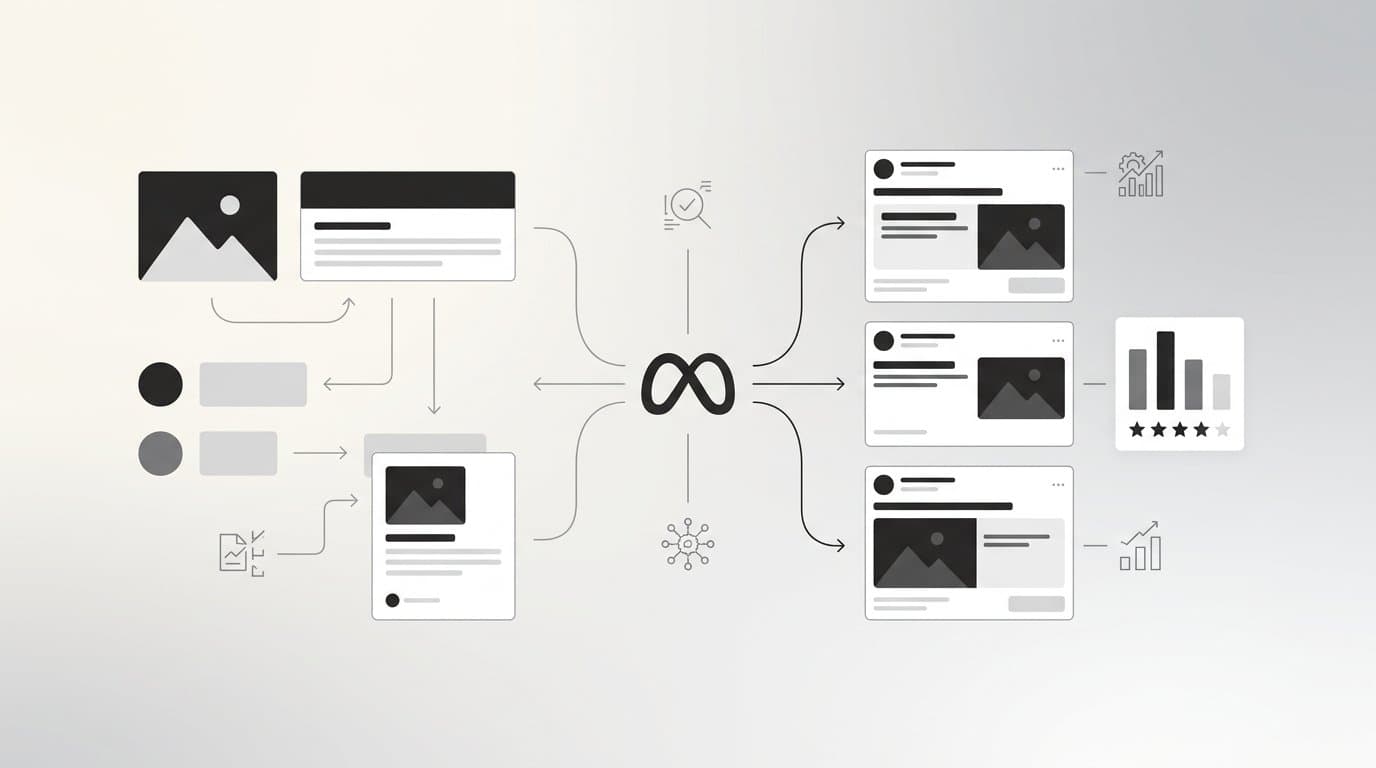
The shift from one-off production to a continuous creative loop is where the real efficiency gains compound over time. The loop connects four stages: AI creative generation, bulk launching and testing, performance analysis, and winner reuse. Each stage feeds the next, reducing per-unit creative cost as the system learns and improves with every cycle.
AdStellar is built specifically for this workflow. The AI Campaign Builder analyzes your historical campaign data, ranks every creative, headline, and audience by performance, and builds complete Meta campaigns with full transparency into every decision. The Winners Hub stores your best-performing creatives, headlines, and audiences with real performance data attached, so you can instantly pull proven elements into your next campaign without starting from scratch.
Over time, this loop gets smarter. The AI learns what works for your specific product and audience, and the creative system becomes progressively more efficient rather than more expensive.
Implementation Steps
1. Generate a batch of AI video creatives using AdStellar's AI Creative Hub. Aim for variety in format, hook, and message rather than producing multiple versions of the same concept.
2. Launch your creative batch using Bulk Ad Launch to test multiple combinations of video, headline, copy, and audience simultaneously.
3. Review performance data through AI Insights after each campaign cycle. Identify winners by ROAS, CPA, and CTR using the leaderboard rankings.
4. Move top performers into the Winners Hub and use them as the foundation for your next campaign cycle. Adapt and iterate on winners rather than replacing them entirely.
5. Repeat the cycle. Each iteration builds on the last, and your creative library grows with validated, performance-backed assets rather than untested new productions.
Pro Tips
Document the patterns you discover in each cycle. Which video formats consistently make it into the Winners Hub? Which hooks drive the highest CTR? These documented patterns become your creative playbook over time, reducing the decision-making overhead at the start of each new campaign and making the entire loop faster and more efficient. Agencies managing multiple clients will find that Facebook ad tools built for agencies make this continuous loop far easier to maintain across accounts at scale.
Putting It All Together
Video ad production does not have to be expensive. Every strategy in this guide shares a common thread: replacing the traditional production model with smarter, faster, and more data-driven approaches that deliver results without the overhead.
If you are starting from scratch, the clearest entry point is AI-generated video. Removing the production crew, talent, and editing costs eliminates the biggest barrier immediately. From there, layering in competitive intelligence through the Meta Ad Library, repurposing existing static assets, and building a bulk testing system means every dollar you spend is working harder than it would in a traditional workflow.
The real efficiency gain comes when these strategies connect into a continuous loop. When AI generation feeds bulk testing, bulk testing feeds performance analysis, and performance analysis feeds winner reuse, the cost per effective creative drops significantly over time. Your campaigns stay fresh, your audiences do not experience fatigue, and your cost per result improves with each cycle rather than resetting with every new production.
Here is a simple prioritization for getting started:
Week one: Generate your first AI video ad using AdStellar's AI Creative Hub and test it against your current best-performing creative.
Week two: Run a bulk test with multiple video variations, headlines, and audiences to identify your first data-backed winner.
Week three: Review your performance leaderboards, move winners into the Winners Hub, and use those insights to brief your next creative batch.
Ongoing: Repeat the loop, letting the system get smarter with every campaign cycle.
The goal is not to produce the most expensive ad. It is to produce the ad that wins. Start Free Trial With AdStellar and be among the first to launch and scale your video ad campaigns faster with an intelligent platform that automatically builds and tests winning ads based on real performance data.