It's 11 PM on a Tuesday, and you're staring at your screen with that familiar mix of excitement and dread. You just discovered a winning ad creative—3.2% CTR, crushing your usual benchmarks. Your brain is already racing through the possibilities: test 20 headline variations, segment across 15 audience groups, try 8 different placement combinations. You know exactly what needs to happen next.
But here's the problem. That's 240 individual ad variations you need to build. Six to eight hours of clicking, copying, pasting, configuring audiences, setting budgets, implementing tracking parameters, and triple-checking that everything's perfect. And you have a client call at 9 AM tomorrow morning.
So you make the calculation every performance marketer has made a thousand times: launch five variations manually and hope one of them hits. Meanwhile, your competitor who invested in automation? They've already launched 47 variations, and by the time you're presenting to your client tomorrow, they'll have identified three winners and started scaling them.
This isn't a story about one late night or one missed opportunity. It's about the systematic underperformance that happens when your strategic knowledge outpaces your execution capacity. You know what optimal testing looks like. You understand multivariate analysis, audience segmentation, and creative iteration. The bottleneck isn't your expertise—it's the physical limitation of manual campaign management.
And that bottleneck compounds every single day. While you're manually building Campaign #3, competitors are testing dozens of variations simultaneously. While you're copying and pasting ad text, AI-powered platforms are analyzing performance patterns across millions of impressions and automatically launching optimized variations. The gap isn't just growing—it's accelerating.
The real cost isn't the late-night hours you're putting in. It's the strategic opportunities you never get to explore because you're stuck in execution mode. It's the testing cycles you can't run because manual setup takes too long. It's the seasonal moments that pass while you're still building campaigns. It's the compounding effect of learning slower than the market changes.
Automated ad platforms eliminate this execution bottleneck entirely. They transform you from a tactical executor—someone who spends 70% of their time clicking buttons—into a strategic director who focuses on creative direction, audience insights, and growth strategy while AI handles the repetitive work at machine speed.
Here's why automated ad platforms have become non-negotiable for performance marketers who want to scale without burning out—and how they solve problems you might not even realize you have. We'll explore what these platforms actually do behind the scenes, reveal the hidden costs draining your campaign performance right now, and show you exactly how automation delivers superior results across every dimension that matters. By the end, you'll understand not just why automation works, but why manual campaign management can't compete in today's fast-moving advertising landscape.
Understanding the Automation Imperative in Modern Advertising
Performance marketing has reached an inflection point. The strategies that worked when you were managing five campaigns don't scale to fifty. The manual processes that felt manageable with one client become impossible with ten. And the competitive landscape has fundamentally shifted—your competitors aren't just working harder, they're working with AI-powered systems that operate at speeds and scales human execution simply cannot match.
This article examines why automated ad platforms have transitioned from "nice to have" optimization tools to essential infrastructure for any serious performance marketing operation. But we're not going to rehash the generic "automation saves time" messaging you've heard a thousand times.
Instead, we're exposing the hidden opportunity costs you're paying every single day without automation—costs that compound silently while you're focused on tactical execution. We're revealing how the execution bottleneck doesn't just slow you down, it fundamentally limits your strategic ceiling and creates a widening gap between what you know you should test and what you can actually launch.
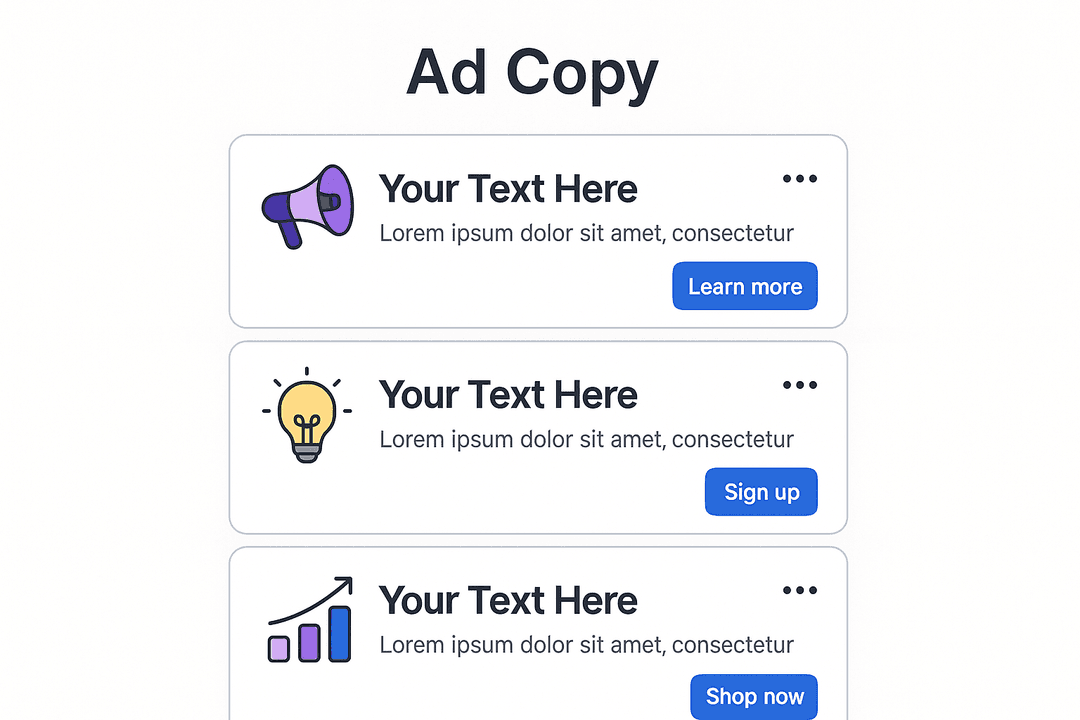
Modern ad platforms have evolved beyond static images and plain text. Animated ad formats—where elements move, text fades in sequentially, or UI components slide into view—have become increasingly common across Facebook, Instagram, LinkedIn, and other major platforms. These animated formats often adopt what's known in the design world as the "SaaS aesthetic"—clean interfaces with subtle animations, sans-serif typography, and that polished look popularized by design systems like Untitled UI.
The appeal is straightforward: animation catches the eye in a crowded feed. When someone is scrolling through dozens of static posts, a smoothly animated element creates just enough visual distinction to pause the scroll. This isn't about flashy effects or aggressive motion—it's about purposeful micro-animations that guide attention without overwhelming the viewer.
What makes these animated ads particularly effective is their ability to tell a story in layers. Instead of presenting all information simultaneously, animation lets you sequence your message. The headline fades in first, establishing context. Then a product screenshot or interface element slides into view, demonstrating the solution. Finally, your call-to-action appears, creating a natural progression that mimics how people process information.
The technical execution matters here. Poorly optimized animations can increase file sizes, slow load times, and drain mobile batteries—all factors that platforms like Facebook explicitly penalize in their ad delivery algorithms. Professional animated ads balance visual appeal with technical performance, typically using MP4 video formats or optimized GIF files that maintain quality while keeping file sizes reasonable.
From an automation perspective, these animated formats present an interesting challenge. Creating high-quality animations traditionally requires design expertise and tools like After Effects or similar motion graphics software. However, some modern platforms are beginning to incorporate templated animation options—allowing marketers to apply pre-built animation styles to their static creative assets without requiring specialized animation skills.
The "preview in feed" concept you're referencing typically shows how your ad will appear in the actual user environment—surrounded by organic content, displaying at the correct aspect ratio, and demonstrating how the animation plays in context. This preview capability helps marketers evaluate whether their animated creative actually stands out in the real-world environment where it will compete for attention, rather than just looking good in isolation on a design canvas.
When considering animated ad formats as part of an automated campaign strategy, the key is understanding which animation styles can be systematically replicated across variations. Simple animations like fade-ins, subtle parallax effects, or sequential text reveals can often be templated and applied to multiple creative variations. More complex custom animations might require individual design work, which can limit testing velocity unless you have dedicated design resources or access to animation template libraries.
The performance marketers, agency teams, and growth leaders who understand this shift aren't just working more efficiently. They're operating in a completely different paradigm—one where testing velocity determines competitive advantage, where AI handles the repetitive work at machine speed, and where human expertise focuses entirely on strategy and creative direction rather than clicking buttons.
This transformation matters because modern advertising success isn't determined by who has the best strategy anymore. Everyone has access to the same best practices, the same targeting capabilities, the same creative frameworks. The differentiator is execution capacity—specifically, how many variations you can test, how quickly you can identify winners, and how fast you can scale what works before market conditions change.
Manual campaign management creates an artificial ceiling on all three dimensions. You might know that testing 50 headline variations would reveal the optimal messaging. You might understand that segmenting across 15 audience groups would identify your highest-value customers. But if you're limited to launching 5-10 variations per week because that's all you can physically build, your strategic knowledge becomes irrelevant.
Automated ad platforms eliminate this execution bottleneck entirely. They transform the constraint from "how many campaigns can I manually build" to "how many strategic hypotheses do I want to test"—a fundamentally different question that unlocks exponentially greater growth potential.
Throughout this guide, we'll break down exactly what these platforms do behind the scenes, reveal the true costs of manual campaign management that most marketers never calculate, demonstrate why automation delivers superior performance across every metric that matters, and show you how to evaluate whether your current approach is limiting your growth potential.
Whether you're a media buyer drowning in tactical work, an agency leader trying to scale client results without proportionally scaling headcount, or a growth team competing against better-funded competitors, understanding the automation advantage isn't optional anymore. It's the difference between incremental optimization and transformational growth.
It's 11 PM on a Tuesday, and you're staring at your screen with that familiar mix of excitement and dread. You just discovered a winning ad creative—3.2% CTR, crushing your usual benchmarks. Your brain is already racing through the possibilities: test 20 headline variations, segment across 15 audience groups, try 8 different placement combinations. You know exactly what needs to happen next.
But here's the problem. That's 240 individual ad variations you need to build. Six to eight hours of clicking, copying, pasting, configuring audiences, setting budgets, implementing tracking parameters, and triple-checking that everything's perfect. And you have a client call at 9 AM tomorrow morning.
So you make the calculation every performance marketer has made a thousand times: launch five variations manually and hope one of them hits. Meanwhile, your competitor who invested in automation? They've already launched 47 variations, and by the time you're presenting to your client tomorrow, they'll have identified three winners and started scaling them.
This isn't a story about one late night or one missed opportunity. It's about the systematic underperformance that happens when your strategic knowledge outpaces your execution capacity. You know what optimal testing looks like. You understand multivariate analysis, audience segmentation, and creative iteration. The bottleneck isn't your expertise—it's the physical limitation of manual campaign management.
And that bottleneck compounds every single day. While you're manually building Campaign #3, competitors are testing dozens of variations simultaneously. While you're copying and pasting ad text, AI-powered platforms are analyzing performance patterns across millions of impressions and automatically launching optimized variations. The gap isn't just growing—it's accelerating.
The real cost isn't the late-night hours you're putting in. It's the strategic opportunities you never get to explore because you're stuck in execution mode. It's the testing cycles you can't run because manual setup takes too long. It's the seasonal moments that pass while you're still building campaigns. It's the compounding effect of learning slower than the market changes.
Automated ad platforms eliminate this execution bottleneck entirely. They transform you from a tactical executor—someone who spends 70% of their time clicking buttons—into a strategic director who focuses on creative direction, audience insights, and growth strategy while AI handles the repetitive work at machine speed.
Here's why automated ad platforms have become non-negotiable for performance marketers who want to scale without burning out—and how they solve problems you might not even realize you have.
Decoding Automated Ad Platforms: What They Are (And What They're Not)
Let's clear up the confusion right away. When most marketers hear "automated ad platforms," they picture something like scheduling tools that post content at predetermined times. That's not what we're talking about here.
Automated ad platforms are AI-powered systems that don't just execute tasks on a schedule—they learn from performance data and make increasingly intelligent decisions about your campaigns. Think of it as the difference between a timer that turns your lights on at 7 PM every night versus a smart system that learns your patterns, adjusts to seasonal changes, and optimizes energy usage based on real-time conditions.
The Core Definition: Intelligence That Scales Your Best Decisions
At their foundation, automated ad platforms use artificial intelligence and machine learning to handle campaign tasks without manual intervention. But here's what makes them transformational: they don't just automate repetitive work—they analyze patterns across thousands of campaigns and millions of data points to identify what's actually working.
The AI continuously learns from every impression, click, and conversion. It spots correlations between creative elements, audience behaviors, and performance outcomes that would take humans months to identify manually. Then it automatically applies those insights to optimize your campaigns in real-time.
Picture having a media buyer who never sleeps, never makes typos in campaign setup, and remembers every pattern from every campaign you've ever run—then applies that accumulated knowledge to every new ad you launch. That's the fundamental value proposition.
What Automated Platforms Actually Do Behind the Scenes
These platforms handle the entire campaign lifecycle from initial analysis through ongoing optimization. Here's what's happening while you're focused on strategy:
Performance Analysis: The system scans your account history to identify winning creatives, headlines, audiences, and messaging patterns. It's looking for statistical significance across variables you might not even think to test.
Campaign Generation: Based on proven templates and your best-performing elements, the platform creates systematic variations. Modern PPC automation tools handle everything from bid management to creative testing, with different platforms specializing in various aspects of campaign optimization.
Launch Execution: The platform builds complete campaign structures with proper tracking parameters, naming conventions, and targeting settings. Every campaign launches with the same precision—no forgotten UTM tags, no misplaced audience exclusions, no budget cap typos.
Real-Time Optimization: Performance monitoring happens continuously, not just when you check your dashboard. The system adjusts budgets toward winners and pauses underperformers based on statistical significance, not gut feeling or delayed manual analysis.
Iterative Learning: Results from each test inform the next round of variations. Understanding how to use AI to launch ads effectively requires grasping both the strategic setup—defining your testing parameters and creative direction—and the technical execution, where AI implements your strategy at scale.
For example, AdStellar AI analyzes your top-performing creatives, then automatically generates and launches 50+ variations testing different headlines, audiences, and placements—all while you're focusing on creative direction and strategic decisions.
Clearing Up Common Misconceptions
Let's address the elephant in the room: automation sounds too good to be true. And if you've been burned by "revolutionary" marketing tools that promised the world and delivered mediocrity, your skepticism is justified.
But here's the thing—most disappointment with automation comes from mismatched expectations, not platform failures. Understanding what automated ad launching tools actually do versus what the hype suggests is the difference between strategic success and expensive frustration.
Myth #1: "Set It and Forget It"
The biggest misconception? That automation means you can launch campaigns and walk away for six months while money prints itself. Reality check: automation handles execution, not strategy.
You still need to provide creative direction. You still need to define your target audiences and value propositions. You still need to analyze results and adjust strategic direction based on what you're learning. What changes is that instead of spending 70% of your time clicking buttons, you spend it on these high-value strategic decisions.
Think of it like having a brilliant assistant who handles all the tactical work flawlessly—but still needs you to set the direction and make judgment calls on positioning, messaging, and brand strategy.
Myth #2: "Automation Replaces Human Creativity"
Here's what keeps some marketers up at night: the fear that AI will make their creative skills obsolete. But automation doesn't replace creativity—it amplifies it.
You create the winning ad concept. You develop the compelling headline. You identify the audience insight that resonates. Automation then takes that single creative decision and tests it across 50 variations, 15 audience segments, and 8 placement combinations—revealing which specific execution of your creative idea performs best.
Your creative judgment becomes more powerful because it's tested at scale. Instead of guessing which variation might work, you get data-driven validation of your creative instincts—and discover unexpected winners you might never have tested manually. Tools focused on top AI-driven ad creative generation can help you produce more variations faster while maintaining creative quality.
Myth #3: "It's Just Fancy Campaign Scheduling"
This is where the confusion gets expensive. Some marketers think automation is just scheduling posts or setting campaigns to launch at specific times. That's like confusing a calculator with artificial intelligence.
The difference between AI vs traditional advertising methods is fundamental—one learns and optimizes based on performance data, the other just executes predetermined actions on a schedule.
Real automation uses machine learning to analyze patterns, identify what's working, and make optimization decisions in real-time. It's not following a script you wrote—it's learning from every impression, click, and conversion to make increasingly better decisions about budget allocation, audience targeting, and creative deployment.
Myth #4: "Anyone Can Use It Without Expertise"
Some platforms market automation as "no experience necessary"—and that's technically true in the same way that anyone can technically drive a Formula 1 car. The question is: will they win the race?
Automation doesn't eliminate the need for marketing expertise. It eliminates the need for manual execution expertise. You still need to understand your customer psychology, competitive positioning, and market dynamics. Learning how to create effective ad strategies remains essential—automation simply helps you execute those strategies at scale.
Making the Right Choice
The gap between manual campaign management and automated platforms isn't just about efficiency—it's about competitive survival. While you're spending hours on tactical execution, competitors using automation are testing faster, learning quicker, and scaling winners before you've finished building your first variation.
The hidden costs are real: opportunity cost from strategic work you never get to, consistency failures from human error, and the testing bottleneck that fundamentally limits how much you can learn. These aren't minor inconveniences—they're compounding disadvantages that grow wider every day you delay automation.
But here's the good news: you don't need to overhaul your entire operation overnight. Start by identifying your biggest bottleneck. Is it launch speed? Testing volume? Campaign consistency? Choose an automation solution that addresses your most painful constraint first, then expand from there.
Whether you need a bulk ad launcher to scale your testing velocity or want to understand how to improve ad engagement through systematic optimization, the key is starting with your most critical pain point and building from there.
The performance marketers winning right now aren't necessarily smarter or more creative—they're the ones who've eliminated execution bottlenecks and redirected their energy toward strategy, creative direction, and growth initiatives. They've transformed from tactical executors into strategic directors, and automation made that transformation possible.