The dropshipping game moves fast. One week you're watching a product take off on TikTok, and the next week three hundred competitors have flooded the market with the same item. Your window to capture profit isn't measured in months or quarters. It's measured in days, sometimes hours.
This speed creates a brutal advertising challenge. You need to test products constantly, generate fresh creatives that stop the scroll, and scale winners before the opportunity evaporates. The traditional approach of hiring designers, briefing them on each product, waiting for revisions, and manually building campaigns creates a bottleneck that kills momentum.
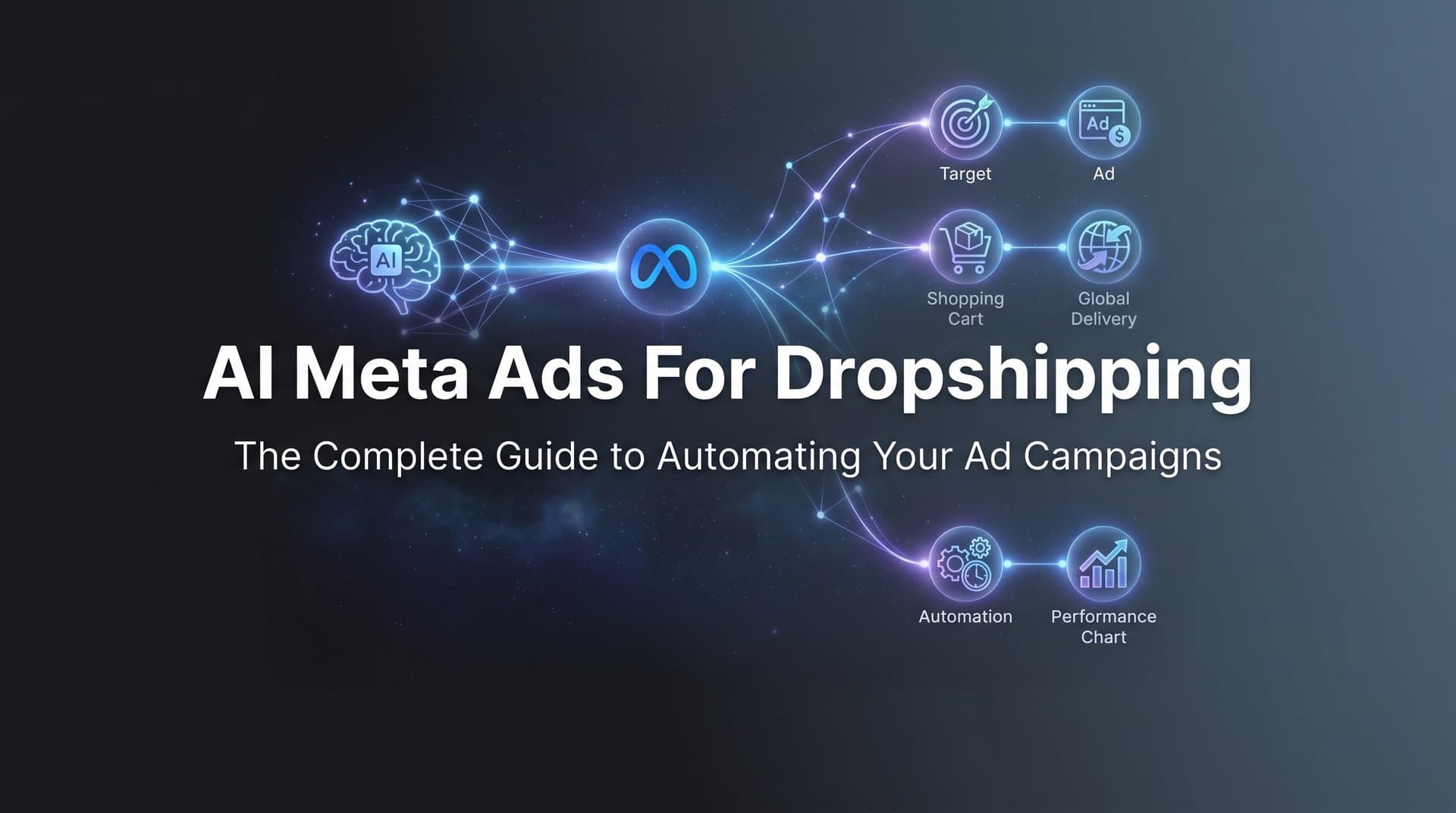
AI Meta ads change this equation completely. Instead of spending days creating and testing ads for a single product, you can generate scroll-stopping creatives, launch optimized campaigns, and identify winners in the time it used to take to write a creative brief. This isn't about incremental improvement. It's about transforming your entire advertising workflow from a creative bottleneck into an automated, data-driven system that scales at the speed of opportunity.
Why Dropshipping Demands a Different Advertising Approach
Dropshipping operates under constraints that make traditional advertising workflows impractical. Your product lifecycles are measured in weeks, not months. By the time you've perfected a creative strategy for one product, the trend has already shifted and your margins have compressed as competitors flood in.
This creates what many dropshippers call the "testing trap." You know you need to test multiple products simultaneously to find winners. But each product requires multiple ad variations, different angles, various audiences, and constant iteration. If you're creating everything manually, you're limited to testing maybe five to ten products at a time. Meanwhile, your competitors who've solved the creative bottleneck are testing fifty.
The math gets worse when you factor in margins. Dropshipping typically operates on thinner profit margins than traditional e-commerce. A poorly optimized campaign doesn't just underperform, it actively loses money. You can't afford to spend three days perfecting ads for a product that won't convert. You need to know within hours whether something has potential.
Traditional Meta advertising workflows compound these problems. You're either hiring designers who need briefs and revisions, using generic templates that look like every other dropshipping ad, or spending your own time in Canva when you should be analyzing data and finding the next product opportunity. Each of these approaches creates delays that cost you money.
The speed-to-scale imperative makes this even more critical. When you identify a winning product, you have a brief window where competition is low and customer acquisition costs are reasonable. The first dropshipper to find that product, validate it with data, and scale aggressively captures most of the available profit. Platforms designed for ecommerce Meta ads help you capitalize on these windows before they close.
This isn't a game you can win by working harder. You win by working systematically, using tools that eliminate bottlenecks and let you test, validate, and scale at a pace that manual workflows simply cannot match.
How AI Transforms Every Stage of Your Meta Ad Workflow
AI doesn't just make your existing workflow faster. It fundamentally restructures how you approach Meta advertising for dropshipping. The transformation starts at the creative stage, where the biggest bottleneck typically exists.
Traditional creative development means gathering product images, writing copy variations, designing static ads, potentially creating video content, and iterating based on initial performance. This process takes days even for a single product. AI creative generation collapses this timeline to minutes. You provide a product URL, and the system generates scroll-stopping image ads, video ads, and UGC-style avatar content automatically.
The quality difference matters here. These aren't template-based ads that look identical to every other dropshipper's content. AI analyzes the product, identifies key selling points, and creates variations that test different angles and hooks. One creative might emphasize the problem the product solves. Another might focus on social proof or urgency. A third might use humor or surprise to capture attention.
This variety is crucial for dropshipping because you often don't know which angle will resonate until you test it. AI lets you test ten different creative approaches in the time it used to take to create one manually. You're not guessing which hook will work. You're letting data tell you.
Campaign building gets the same transformation. Instead of manually selecting audiences, writing headline variations, and crafting ad copy based on intuition, AI analyzes your historical campaign data to identify what actually works. An AI campaign builder for Meta ads examines which audiences converted for similar products, which headlines drove clicks, and which copy elements led to purchases.
This matters because dropshipping success often comes from unexpected patterns. Maybe your winning audience isn't the obvious demographic match. Maybe your best-performing headlines use a specific emotional trigger you hadn't consciously identified. AI surfaces these patterns automatically, building campaigns around proven elements rather than assumptions.
The bulk launching capability addresses another critical dropshipping need: testing at scale. You can create hundreds of ad variations in minutes by mixing multiple creatives, headlines, audiences, and copy at both the ad set and ad level. The system generates every combination and launches them to Meta without manual campaign building.
Think about what this enables. You identify a promising product on Monday morning. By Monday afternoon, you have fifty ad variations live, testing different creative approaches across multiple audiences. By Tuesday, you have performance data showing which combinations work. By Wednesday, you're scaling the winners and cutting the losers. By Friday, you're either scaling a profitable campaign or you've moved on to the next product opportunity.
This speed isn't just convenient. It's the difference between capturing profit in a trend window versus arriving too late to compete effectively.
The Dropshipper's AI Ad Stack: Essential Capabilities to Look For
Not all AI ad platforms are built for the unique demands of dropshipping. The capabilities that matter most are those that address your specific workflow challenges and competitive pressures.
Creative cloning and competitor analysis should be at the top of your requirements list. The Meta Ad Library is a goldmine of intelligence about what's working in your niche. You can see exactly which ads your competitors are running, which ones they're scaling, and which creative approaches are getting traction. The problem is translating that intelligence into your own campaigns.
AI platforms that can clone competitor ads let you extract winning elements and adapt them to your products. You're not copying ads directly, which would be both unethical and ineffective. You're identifying successful patterns in hooks, visual styles, and messaging angles, then generating your own variations that incorporate those proven elements.
This capability dramatically shortens your learning curve. Instead of testing blind and hoping to stumble onto effective approaches, you're starting with intelligence about what already works in your market. You're still testing and iterating, but from a much stronger foundation.
Performance scoring and leaderboards transform how you evaluate campaign results. Instead of manually comparing metrics across dozens of ad variations, the system ranks every creative, headline, audience, and landing page by real conversion metrics like ROAS, CPA, and CTR. A robust Meta ads performance analytics platform lets you instantly see which elements are driving actual results versus which are just generating vanity metrics.
For dropshippers operating on thin margins, this clarity is essential. You need to know immediately which products justify continued ad spend and which should be cut. Goal-based scoring makes this binary decision automatic. You set your target ROAS or maximum CPA, and the system scores everything against those benchmarks. Winners are obvious. Losers are obvious. You can make scaling decisions based on data rather than hope.
The continuous learning loop is what separates basic automation from genuine intelligence. Every campaign you run feeds data back into the system, improving future recommendations. The AI learns which creative styles work for specific product categories, which audiences convert best for certain price points, and which messaging angles resonate with your particular customer base.
This matters because dropshipping success often comes from accumulated pattern recognition. After running hundreds of campaigns, experienced dropshippers develop intuition about what works. AI platforms with continuous learning capabilities develop that same intuition systematically, surfacing insights that might take months or years to discover manually.
The platform should also maintain a Winners Hub or similar repository where proven creatives, headlines, audiences, and other high-performing elements are organized with real performance data attached. When you launch a new campaign, you can instantly pull in elements that have already demonstrated success rather than starting from scratch each time.
Building Your First AI-Powered Dropshipping Campaign
The workflow from product identification to live Meta campaign becomes remarkably streamlined when AI handles the creative and optimization steps. Here's how the process actually works in practice.
Start with your product URL. You've identified something with potential, whether through trend research, supplier recommendations, or competitive analysis. Instead of gathering assets and briefing designers, you paste the product URL into your AI ad platform. The system scrapes the product page, analyzes the images and copy, and identifies key selling points automatically.
Within minutes, you have multiple ad creative variations generated. Image ads that highlight different product features. Video ads that demonstrate use cases. UGC-style avatar content that creates social proof without needing to hire actors or record testimonials. Each creative tests a different angle or hook based on what the AI identified as potentially compelling about the product.
You can refine any of these creatives through chat-based editing if you want to emphasize specific features or adjust the messaging. But the initial generation gives you a strong starting point that would have taken days to create manually.
Next comes campaign structure. The AI analyzes your historical campaign data to recommend audiences, headlines, and ad copy. If you're new to the platform and don't have historical data yet, it uses broader pattern recognition from similar products and categories. Understanding campaign structure for Meta ads helps you evaluate and refine these AI recommendations effectively.
Here's where goal-based benchmarks become critical. You set your target metrics before launching. Maybe you need a minimum 2.5x ROAS to make the product profitable. Maybe your maximum acceptable CPA is $15 based on your margins. The system uses these benchmarks to score performance automatically as data comes in.
Bulk launching lets you create comprehensive test campaigns without manual repetition. You select multiple creatives, multiple headline variations, and multiple audiences. The system generates every combination at both the ad set and ad level, creating hundreds of variations that test different elements simultaneously. This launches to Meta in clicks rather than the hours it would take to build manually.
As your campaign runs, performance data flows back into the platform. The AI scores every element against your goal benchmarks, identifying which creatives are hitting your targets and which are underperforming. This happens in real-time, not days later when you finally have time to analyze spreadsheets.
The Winners Hub automatically organizes your top performers. High-ROAS creatives, converting audiences, and effective headlines get tagged and stored with their actual performance metrics attached. When you launch your next campaign, whether for the same product or a similar one, you can instantly pull in these proven elements.
This creates a flywheel effect. Your first campaign generates data. That data informs your second campaign, which performs better and generates more insights. By your fifth or tenth campaign, the AI has learned specific patterns about what works for your business, your audiences, and your product categories. Each campaign gets smarter and more efficient.
Scaling Winners and Cutting Losers: AI-Driven Optimization
Finding a winning product is only half the battle. The real skill in dropshipping is scaling winners aggressively while cutting losers quickly enough to preserve your testing budget. AI transforms both sides of this equation.
Real-time insights eliminate the lag between performance and action. Traditional campaign analysis means exporting data, building spreadsheets, calculating metrics, and making decisions based on snapshots that might be hours or days old. AI platforms surface insights continuously, showing you which specific creatives, audiences, and landing pages are driving actual conversions right now.
This immediacy matters because Meta campaign performance can shift rapidly. An audience that was converting well yesterday might saturate today. A creative that was generating strong CTR might see engagement drop as ad fatigue sets in. Real-time visibility lets you catch these shifts early and adjust before they significantly impact your spend.
The leaderboard approach to performance ranking removes emotion from scaling decisions. Every dropshipper has experienced the temptation to keep running a campaign because the product seems promising or the creative looks great, even when the data says it's not working. AI scoring forces objectivity. If a campaign isn't hitting your target ROAS or is exceeding your maximum CPA, it gets ranked accordingly. You can see at a glance which campaigns deserve more budget and which should be paused.
This data-backed decision making is particularly valuable during the critical scaling phase. When you identify a winner, you need to increase budget aggressively to capture profit before competition intensifies. But scaling too fast can destabilize campaigns and tank performance. Leveraging Meta ads performance optimization software helps you find the optimal scaling pace by showing you exactly which elements are driving results and whether performance remains stable as you increase spend.
The iteration cycle becomes systematic rather than reactive. When you have a winning campaign, AI can analyze what's working and generate new creative variations based on those successful elements. If a particular visual style or messaging angle is converting well, the system creates additional variations that maintain those winning characteristics while testing new hooks or product angles.
This is where continuous learning creates compounding advantages. The platform doesn't just tell you that Creative A outperformed Creative B. It identifies why: the specific visual elements, the messaging structure, the emotional triggers that made the difference. It then applies those insights to future creative generation, systematically improving the quality of your starting point for each new campaign.
You can also use AI insights to optimize beyond the ad creative itself. Performance tracking across landing pages shows you which product page elements drive conversions. Maybe longer product descriptions work better for certain categories. Maybe video demonstrations significantly improve conversion rates for complex products. These insights inform your entire funnel optimization, not just your ad strategy.
The result is a testing and scaling system that improves with use. Your tenth campaign isn't just another test. It's informed by the patterns and insights from your previous nine campaigns, starting from a stronger position and reaching profitability faster.
Putting It All Together: Your AI Meta Ads Roadmap
The complete AI-powered dropshipping workflow transforms every stage from product discovery to profitable scale. You start with product research, identifying opportunities through trend analysis or competitive intelligence. When you find something promising, you paste the product URL into your AI platform and generate multiple creative variations in minutes.
The AI builds your campaign structure by analyzing historical data to recommend audiences, headlines, and ad copy. You set goal-based benchmarks that define success for this specific product given your margins and targets. Bulk launching creates hundreds of test variations simultaneously, deploying comprehensive campaigns in the time it used to take to build a single ad set.
As campaigns run, real-time insights surface winners and losers immediately. You scale what works, cut what doesn't, and iterate on successful elements to generate new variations. The Winners Hub organizes your proven assets for instant deployment in future campaigns. Each campaign feeds data back into the system, improving future recommendations and creative generation.
The key metrics to track as you scale focus on profitability and efficiency. ROAS tells you whether campaigns are generating positive returns. CPA shows whether you're acquiring customers at sustainable costs. CTR and engagement metrics indicate whether your creatives are resonating. Following a comprehensive Meta ads performance tracking guide ensures you're monitoring the right indicators at each stage of your campaign lifecycle.
But beyond individual metrics, watch for pattern development. Which creative styles consistently outperform? Which audiences convert across multiple products? Which messaging angles drive the highest ROAS? These patterns become your competitive advantages, the accumulated intelligence that lets you launch better campaigns faster than competitors who are still testing blindly.
Your next steps depend on where you are in your dropshipping journey. If you're just starting, focus on building that initial data foundation by running multiple test campaigns and letting the AI learn your patterns. If you're already running campaigns manually, the transition means migrating your proven winners into the AI system and then using bulk launching to expand your testing capacity.
The goal isn't to eliminate your judgment from the process. It's to eliminate the bottlenecks that prevent you from testing at the speed and scale necessary to compete in modern dropshipping. AI handles creative generation, campaign building, and performance analysis so you can focus on product selection, strategic decisions, and scaling winners.
From Creative Bottleneck to Systematic Advantage
The dropshipping landscape rewards speed, testing capacity, and the ability to scale winners before markets saturate. AI Meta ads don't just make these capabilities easier. They make them accessible to individual dropshippers competing against well-funded teams.
You're no longer limited by how many creatives your designer can produce or how many campaigns you can manually build and monitor. You're limited only by your ability to identify product opportunities and make data-driven scaling decisions. The creative bottleneck that used to cap your testing capacity at five or ten products becomes irrelevant when you can generate and launch campaigns for fifty products in the same timeframe.
This shift from guesswork to systematic optimization compounds over time. Your first AI-powered campaign might not dramatically outperform your manual efforts. But by your twentieth campaign, you're working with accumulated intelligence about what works for your specific audiences, product categories, and brand positioning. You're starting each test from a position of strength rather than starting from scratch.
The competitive advantage isn't just about working faster. It's about working smarter, with each campaign building on the insights from previous tests. While competitors are still debating which creative angle to try or which audience might convert, you're already testing ten variations and letting data provide the answers.
Ready to transform your dropshipping advertising from a creative bottleneck into an automated, data-driven system? Start Free Trial With AdStellar and experience a platform that handles everything from AI-powered creative generation to bulk campaign launching to real-time performance insights. Generate scroll-stopping image ads, video ads, and UGC-style content directly from product URLs. Launch hundreds of optimized ad variations in minutes. Surface your winners automatically with goal-based scoring and leaderboards. One platform from creative to conversion, built specifically for the speed and scale that dropshipping demands.