The real estate market moves fast. A hot listing that sits without visibility for even a few days can mean lost commissions, while competitors with better advertising strategies scoop up qualified buyers and sellers. Traditional approaches to Meta advertising require manual creative work for every property, guesswork about which neighborhoods to target, and weeks of testing to find what actually converts.
AI-powered Meta advertising is changing this equation completely. Instead of spending hours designing ads for each listing or wondering which audience segments will respond, AI tools now handle creative production, audience optimization, and performance analysis automatically. The result is faster campaign launches, better targeting precision, and the ability to scale your advertising without scaling your workload.
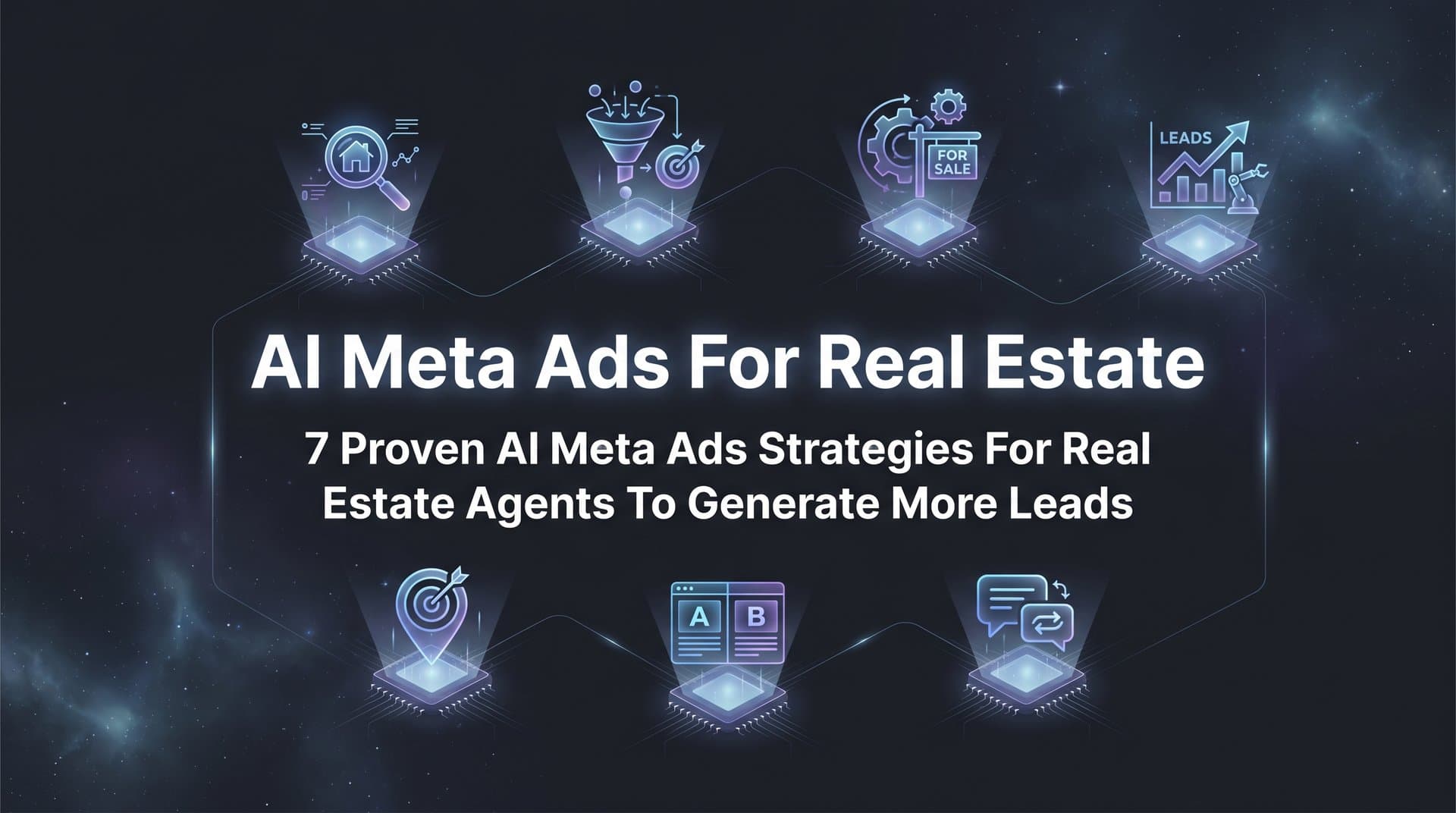
These seven strategies show you exactly how to leverage AI for real estate advertising on Facebook and Instagram. Each approach addresses a specific challenge agents face, from creating property-specific visuals to identifying your highest-performing local markets. Whether you're managing five listings or fifty, these tactics help you generate more leads while spending less time on campaign management.
1. Generate Property-Specific Ad Creatives at Scale with AI
The Challenge It Solves
Every new listing needs fresh advertising creative, but hiring designers or photographers for each property quickly becomes expensive and time-consuming. When you're juggling multiple active listings, manually creating ads for every property creates a bottleneck that delays your campaigns and limits your advertising reach. By the time traditional creative production finishes, the hottest properties may already have offers.
The Strategy Explained
AI creative tools can generate scroll-stopping image ads, video ads, and even UGC-style content directly from property listing URLs. You simply provide the listing link, and the AI analyzes the property details, pulls relevant images, and creates multiple ad variations optimized for Meta platforms. This automation transforms what used to take hours into a process that completes in minutes.
The technology goes beyond simple image resizing. AI understands which property features resonate with different buyer segments and emphasizes those elements in the creative. A luxury condo gets sleek, modern visuals highlighting amenities, while a family home showcases yard space and school proximity. The AI adapts the creative approach to match the property type and likely buyer profile.
Implementation Steps
1. Select an AI marketing platform for Meta ads that integrates with Meta and supports real estate content generation from listing URLs.
2. Input your property listing URL and let the AI analyze the available images, descriptions, and property details to generate initial creative variations.
3. Review the AI-generated options and use chat-based editing to refine specific elements like headline emphasis, image cropping, or feature highlights.
4. Generate multiple format variations including square images for Instagram feed, vertical formats for Stories, and video content for Reels to maximize placement coverage.
Pro Tips
Create a template library of your best-performing ad styles and let AI apply those design patterns to new listings. This maintains brand consistency while still customizing content for each property. For high-value listings, generate 10-15 creative variations to test different angles and features, then use AI insights to identify which approach drives the most qualified leads.
2. Build Hyper-Local Audience Segments Using AI Analysis
The Challenge It Solves
Real estate is fundamentally local, but identifying the exact geographic boundaries and demographic profiles that convert best requires extensive testing and data analysis. Manual audience building relies on assumptions about which neighborhoods contain your ideal buyers, often leading to wasted ad spend on broad targeting that includes people with no realistic interest in your properties.
The Strategy Explained
AI audience optimization analyzes your historical campaign performance to identify patterns in where your best leads actually come from. Instead of guessing which zip codes or radius distances work best, the AI examines conversion data across all your past campaigns and surfaces the geographic and demographic combinations that consistently deliver results. This approach reveals opportunities you might miss manually, like discovering that buyers for your downtown condos frequently live in specific suburban areas.
The system continuously refines audience definitions as it gathers more data. Early campaigns provide baseline performance, then AI adjusts targeting parameters based on which segments show strong engagement and conversion rates. Over time, this creates increasingly precise audience profiles that improve campaign efficiency.
Implementation Steps
1. Connect your Meta Ads account to an AI campaign builder that can access and analyze your historical performance data across all previous real estate campaigns.
2. Allow the AI to process your campaign history and identify patterns in geographic performance, demographic characteristics, and behavioral signals that correlate with conversions.
3. Review the AI-recommended audience segments and understand the rationale behind each targeting choice, including which past campaigns inform the recommendations.
4. Launch campaigns using the AI-optimized audiences while maintaining some budget for testing new segments the AI identifies as potentially high-performing based on similar market patterns.
Pro Tips
Segment your audience analysis by property type. The optimal targeting for luxury homes differs significantly from first-time buyer properties. Let AI build separate audience profiles for each category in your portfolio. Also leverage life event targeting that Meta offers, allowing AI to prioritize people showing signals like recent moves, new jobs, or marriage, which often precede real estate transactions.
3. Clone Competitor Ad Strategies from the Meta Ad Library
The Challenge It Solves
Successful competitors in your market are already running effective campaigns, but understanding what makes their ads work requires manual research and guesswork about replicating their approach. The Meta Ad Library provides transparency into active campaigns, yet most agents lack the time to systematically analyze competitor strategies and adapt winning elements for their own properties.
The Strategy Explained
AI-powered ad cloning tools can analyze competitor ads from the Meta Ad Library and recreate similar creative approaches tailored to your listings. This isn't about copying competitors directly, but rather understanding the visual styles, messaging frameworks, and creative patterns that resonate in your local market, then applying those insights to your own properties. The AI identifies what's working for top performers and helps you implement similar strategies faster than manual analysis allows.
This approach is particularly valuable when entering new markets or property segments. If you're expanding from residential to commercial real estate, analyzing how established commercial agents structure their ads provides immediate insights into what that audience expects and responds to.
Implementation Steps
1. Identify the top-performing real estate advertisers in your market by searching the Meta Ad Library for competitors with consistent, long-running campaigns, which typically indicates success.
2. Use AI cloning tools to analyze the creative elements, messaging approaches, and structural patterns in competitor ads that appear most frequently or have run longest.
3. Generate your own ad variations that incorporate successful patterns from competitor analysis while maintaining your unique brand voice and property-specific details.
4. Test these AI-adapted strategies against your current approach to validate whether competitor-inspired creative actually improves your performance metrics.
Pro Tips
Focus on competitors who serve similar property types and price ranges rather than trying to replicate luxury marketing for mid-market homes. The creative approaches that work for million-dollar estates rarely translate effectively to starter homes. Also track how competitor creative evolves over time, as changes often indicate they've discovered new winning approaches worth testing in your own campaigns.
4. Launch Bulk Ad Variations to Find Winning Combinations Faster
The Challenge It Solves
Finding the optimal combination of creative, headline, audience, and ad copy traditionally requires sequential testing over weeks or months. This slow process means you often finalize your winning formula just as the listing sells, never benefiting from the optimization work. Manual campaign setup also limits how many variations you can realistically test, forcing you to make assumptions about which combinations to prioritize.
The Strategy Explained
Bulk ad launching uses AI to generate and deploy hundreds of ad variations simultaneously by systematically combining multiple creatives, headlines, audiences, and copy variations at both the ad set and individual ad level. Instead of testing one variable at a time, you test comprehensive combinations all at once, dramatically accelerating the discovery of what works. The AI handles the technical complexity of creating every possible combination and launching them to Meta without manual campaign building.
This strategy works especially well for real estate because it accounts for the reality that buyer preferences vary significantly. Some respond to lifestyle imagery while others want property specs. Some prioritize school districts while others care about commute times. Bulk testing surfaces these preferences quickly by putting multiple approaches in market simultaneously.
Implementation Steps
1. Prepare your testing variables by creating 3-5 creative variations, 3-5 headline options, 2-3 audience segments, and 2-3 ad copy versions for a single property listing.
2. Use an AI bulk launch tool to configure how these elements combine, setting parameters for whether variations occur at the ad set level (different audiences) or ad level (different creative and copy combinations within the same audience).
3. Set appropriate budget allocations that give each variation enough spend to generate meaningful performance data without exhausting your total campaign budget too quickly.
4. Launch all variations simultaneously and monitor early performance indicators to identify patterns, allowing AI to automatically optimize budget distribution toward top performers.
Pro Tips
Start with smaller bulk tests for your first few campaigns to understand the performance patterns in your market before scaling to hundreds of variations. Also maintain consistent elements across variations so you can isolate what's actually driving performance differences. If you change creative, headline, audience, and copy all at once, you won't know which element made the difference. Consider using a Meta ads automation platform to streamline this process.
5. Use AI Insights to Identify and Replicate Top Performers
The Challenge It Solves
Meta Ads Manager provides extensive data, but extracting actionable insights from raw metrics requires significant analysis time. Most agents can see that one campaign outperformed another, but identifying exactly which creative element, headline, or audience segment drove that success gets buried in spreadsheets and dashboard complexity. This makes it difficult to confidently replicate winning elements in future campaigns.
The Strategy Explained
AI-powered insight platforms create leaderboards that rank every component of your campaigns by actual performance metrics like cost per lead, conversion rate, and return on ad spend. Instead of comparing entire campaigns, you see which specific creatives, headlines, ad copy, audiences, and even landing pages perform best across all your advertising activity. The AI scores each element against your target goals, making it instantly clear what's working and what's not.
These insights become increasingly valuable over time as you accumulate more campaign data. The AI identifies patterns that aren't obvious from individual campaigns, like discovering that certain headline structures consistently outperform others regardless of the specific property, or that particular visual styles drive higher engagement across multiple listings.
Implementation Steps
1. Configure your performance goals in the AI insights platform by setting target metrics for cost per lead, conversion rate, or ROAS based on your business economics.
2. Allow the AI to analyze your campaign history and generate initial leaderboards that rank all creative elements, copy variations, audiences, and other components by performance against your goals.
3. Review the top-performing elements in each category to identify patterns and commonalities, looking for insights like whether lifestyle imagery outperforms property features, or whether certain neighborhoods consistently deliver better leads.
4. Create a winners library by saving your best-performing elements for easy reuse in future campaigns, ensuring you build on proven success rather than starting from scratch with each new listing.
Pro Tips
Segment your insights by property type and price range since what works for luxury homes may not apply to starter properties. A comprehensive performance tracking dashboard helps visualize these patterns clearly. Also pay attention to seasonal patterns in your performance data, as buyer behavior often shifts between spring (active buying season) and winter (slower periods), requiring different creative and messaging approaches.
6. Automate Campaign Building Based on Historical Performance Data
The Challenge It Solves
Building optimized Meta campaigns requires decisions about budget allocation, audience selection, ad creative, bidding strategies, and placement options. Making these choices manually for every new listing is time-intensive and relies heavily on your memory of what worked previously. The cognitive load of remembering which combinations succeeded across dozens of past campaigns often leads to suboptimal choices or defaulting to the same safe approach repeatedly.
The Strategy Explained
AI campaign builders analyze your complete advertising history to construct new campaigns automatically using the patterns and elements that have proven successful. The system examines which creatives, audiences, headlines, and copy drove the best results in similar past campaigns, then assembles a new campaign incorporating those winning elements. Every decision comes with transparent rationale explaining why the AI selected specific components, so you understand the strategy rather than just accepting black-box recommendations.
The intelligence improves continuously as you run more campaigns. Early recommendations rely on general best practices and limited data, but over time the AI develops deep knowledge of what specifically works for your brand, your market, and your property types. This creates a compounding advantage where each campaign makes future campaigns smarter through AI marketing automation.
Implementation Steps
1. Connect an AI campaign builder to your Meta Ads account with permission to access historical campaign performance data across all your previous advertising activity.
2. Input basic information about your new listing including property type, price range, location, and target buyer profile to give the AI context for its recommendations.
3. Review the AI-generated campaign structure including recommended audiences, budget allocations, creative selections, and bidding strategies, reading the rationale provided for each decision.
4. Approve the campaign or make adjustments based on specific knowledge about this property that the AI might not capture, then launch directly to Meta from the platform.
Pro Tips
Use AI campaign builders for your standard listing campaigns while maintaining manual control for unique situations like luxury properties or unusual circumstances that fall outside normal patterns. The AI performs best when it has clear historical precedent to learn from. Also review the AI's decision rationale regularly to learn which patterns it identifies, improving your own strategic thinking even when you choose to build campaigns manually.
7. Create Video and UGC Ads Without Production Costs
The Challenge It Solves
Video content consistently outperforms static images on Meta platforms, but traditional video production requires hiring videographers, editors, and sometimes actors for testimonial content. These costs make video advertising impractical for many listings, especially in competitive markets where margins are tight. The result is that most agents stick with static images even though they know video would perform better.
The Strategy Explained
AI video generation tools can create professional video ads and UGC-style content without any filming or editing work. For property videos, the AI assembles listing photos into dynamic video presentations with transitions, text overlays, and music. For UGC-style testimonial content, AI avatar technology creates realistic spokesperson videos that deliver your script in a natural, conversational style. These tools eliminate production costs while still giving you the engagement benefits of video advertising.
The technology has advanced to where AI-generated videos look professional and authentic rather than obviously artificial. The key is using these tools strategically for appropriate content types rather than trying to replace all video needs. Property showcases and general market updates work particularly well with AI video generation, and many AI marketing tools now include this capability.
Implementation Steps
1. Select an AI platform that offers both property video generation from images and UGC avatar creation for testimonial-style content.
2. For property videos, upload your listing photos and let the AI create dynamic video presentations, then customize elements like transition speed, text overlays highlighting key features, and background music selection.
3. For UGC-style ads, write scripts that sound conversational and natural, then select an AI avatar that matches your target buyer demographic and generate the video content.
4. Test AI-generated video ads against your current static image ads to validate performance improvement and refine your approach based on which video styles drive the best engagement and conversion rates.
Pro Tips
Keep AI-generated videos short and focused, typically 15-30 seconds, as longer content increases the risk of viewers noticing artificial elements. Also create multiple video variations for each property just as you would with static images, testing different opening shots, feature emphasis, and messaging approaches. The production cost savings of AI video make this level of testing economically feasible for the first time.
Your Implementation Roadmap
Success with AI-powered Meta advertising comes from implementing these strategies systematically rather than trying everything at once. Start with automated creative production to solve your most immediate bottleneck. Generating property-specific ads at scale gives you the content foundation needed for everything else.
Next, implement bulk ad launching to accelerate your learning about what resonates in your market. The faster you identify winning combinations, the sooner you can focus budget on proven approaches. Combine this with AI insights to build your library of top-performing elements that you can reuse across multiple campaigns.
Finally, layer in AI campaign building and audience optimization to reduce the time you spend on campaign management. The goal is creating a workflow where AI handles the repetitive, analytical work while you focus on client relationships and closing deals. Agents who successfully implement this approach often find they can manage 2-3 times more active listings without increasing their advertising workload.
The competitive advantage comes not from any single strategy, but from combining them into an integrated system. Your creatives get better because AI learns which styles work. Your targeting improves because AI identifies your best audiences. Your campaigns launch faster because AI automates the building process. Each component reinforces the others, creating compounding returns on your advertising investment.
Start Free Trial With AdStellar and be among the first to launch and scale your ad campaigns 10× faster with our intelligent platform that automatically builds and tests winning ads based on real performance data. Transform your real estate advertising from time-consuming guesswork into an efficient, data-driven system that generates more qualified leads while you focus on what you do best.