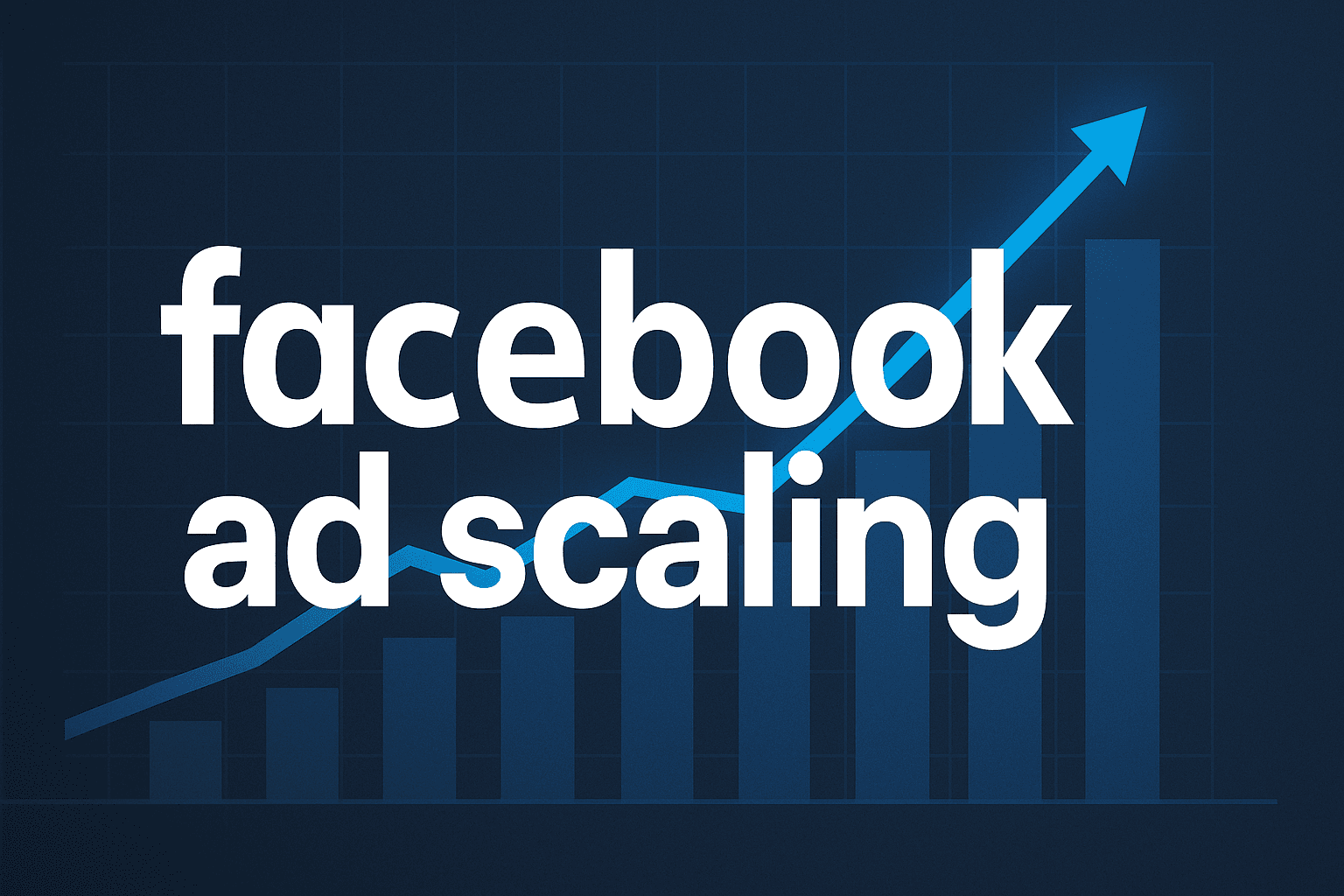
Facebook Ad Scaling: The Complete Step-by-Step Guide to Profitable Growth
Your Facebook ad just hit $10,000 in revenue at a 4x ROAS. The numbers look incredible. Naturally, you double the budget, expecting $20,000 in return.
Instead, you get $8,000 and watch your ROAS collapse to 2x.
This isn't bad luck. It's the scaling paradox that's costing advertisers thousands every single day—and it happens because most people treat scaling like a simple math problem. More budget equals more results, right?
Wrong.
Facebook's algorithm doesn't work that way. When you dramatically increase your budget, you're essentially hitting the reset button on everything the algorithm learned about your campaign. The delivery system that was efficiently finding your best customers suddenly gets thrown into chaos, scrambling to figure out how to spend your money effectively all over again.
But here's what makes this really frustrating: the problem isn't that scaling doesn't work. It's that most advertisers are using the wrong approach entirely.
Think of it like this—you wouldn't floor the gas pedal on an icy road and expect to maintain control. Scaling Facebook ads requires the same kind of systematic, measured approach. Small adjustments. Constant monitoring. Strategic timing.
The advertisers who successfully scale from $100/day to $1,000/day or more aren't just getting lucky. They're following a specific methodology that works with Facebook's algorithm instead of against it. They understand learning phases, audience saturation signals, and the precise timing that keeps performance stable during growth.
Over the next 4-6 weeks, you're going to learn this exact systematic approach. Not theory—actual implementation steps that take you from identifying which campaigns deserve scaling investment all the way through to maintaining profitability at significantly higher spend levels.
We'll walk through the five critical steps: building your foundation with proper tracking and baselines, identifying genuine scaling candidates using data rather than gut feel, choosing the right scaling strategy for your specific situation, executing budget increases that respect algorithm learning phases, and troubleshooting the inevitable challenges that arise during growth.
By the end, you'll know exactly how to scale your winning campaigns without watching them fall apart—and you'll understand why your previous scaling attempts failed in the first place.
Let's walk through how to do this step-by-step.
Step 1: Build Your Scaling Foundation
Here's the uncomfortable truth: most scaling failures happen before you ever touch the budget increase button.
The problem isn't your strategy or your creative. It's that you're trying to scale a house built on sand. Without proper tracking, organized campaign structure, and statistical confidence in your baseline performance, you're essentially guessing—and expensive guesses add up fast.
Think of this foundation phase as your insurance policy against scaling disasters. Skip it, and you'll watch profitable campaigns collapse the moment you increase spend. Nail it, and you'll have the data infrastructure that makes scaling decisions obvious instead of stressful.
Account Structure and Tracking Setup
Your campaign naming conventions matter more than you think. When you're managing multiple scaling tests simultaneously, generic names like "Campaign 1" or "Test Ad Set" become impossible to analyze quickly.
Use a systematic naming structure that tells you exactly what you're looking at: "Scale-Test-Lookalike-1%-Interests-Q1" immediately communicates the campaign purpose, audience type, percentage, targeting method, and time period. This isn't about being obsessive—it's about making data-driven decisions in seconds instead of minutes.
Your tracking setup needs to be bulletproof before scaling. Install both Facebook Pixel and Conversions API. The Pixel tracks browser-side events, while Conversions API captures server-side data. Together, they give you the most complete picture of campaign performance, especially as iOS privacy changes continue limiting pixel-only tracking.
Set your attribution windows strategically: 7-day click and 1-day view. This configuration captures the majority of genuine conversions without inflating your numbers with questionable attributions that make scaling decisions unreliable.
Performance Baseline Requirements
You need statistical significance before scaling, period. That means a minimum of 50 conversions over a 14-day period. Anything less, and you're scaling based on luck rather than performance.
Here's what this looks like in practice: Campaign A generates 127 conversions at 4.2x ROAS over 14 days with only 8% cost variance week-over-week. That's a scaling candidate. Campaign B hits 23 conversions at 5.1x ROAS—looks amazing, but you need to wait for more data before making scaling decisions.
Consistency matters as much as volume. Look for stable performance across multiple 7-day windows. If your ROAS bounces between 2x and 6x week-to-week, that's variance, not performance. You want cost per result stability with less than 20% variance before considering scale-up.
Check your frequency metrics too. If you're already hitting 2.5+ frequency at current spend levels, scaling will accelerate audience fatigue and kill performance faster than you can react.
Time Investment and Expectations
Proper scaling takes 4-6 weeks, not a single day. Week 1-2 focuses on foundation and baseline establishment—the work you're doing right now. Week 3-4 involves initial scaling tests with careful monitoring. Week 5-6 brings optimization and full-scale implementation.
This systematic scaling approach represents just one component of comprehensive facebook ad optimization that includes creative testing, audience refinement, and performance monitoring across your entire account structure.
Step 2: Identify Scaling Candidates
Not every winning campaign deserves your scaling budget.
That campaign with a 5x ROAS and 30 conversions? It's not ready. The ad set that performed brilliantly for two weeks then crashed? Not a candidate. The campaign that's been stable for months but shows 3.2+ frequency? You've missed your scaling window.
Identifying true scaling candidates requires looking beyond surface-level metrics. You need to understand what separates a lucky streak from sustainable performance—and that comes down to analyzing the right data points in the right sequence.
Performance Metrics Analysis
Start with your conversion volume threshold: 50+ conversions over 14 days minimum. This isn't arbitrary—it's the statistical significance floor that separates signal from noise. Below this threshold, you're looking at variance, not performance.
But volume alone doesn't tell the story. Look at your cost per result consistency across multiple 7-day windows. Calculate the coefficient of variation: if your cost per conversion swings more than 20% week-over-week, you don't have stability yet.
Your ROAS needs to exceed your target by at least 25% to account for scaling degradation. If you need 3x ROAS to be profitable, don't scale campaigns performing at 3.2x. Scale the ones hitting 3.75x or higher—you'll need that buffer when performance inevitably dips during the scaling process.
Check your click-through rate trends over the past 30 days. Declining CTR signals creative fatigue, which scaling will only accelerate. You want stable or improving CTR before adding budget pressure.
Audience Health Indicators
Frequency is your early warning system for audience saturation. At 2.0-2.5 frequency, you're in the safe zone for scaling. At 2.5-3.0, proceed with caution and monitor closely. Above 3.0 frequency, you're already saturating your audience—scaling will just burn money faster.
Look at your audience size relative to daily spend. A good rule: your audience should be at least 50x your daily budget. A $100/day campaign needs a minimum 5,000-person audience to scale sustainably. Smaller audiences hit saturation too quickly.
Analyze your reach percentage. If you're already reaching more than 60% of your target audience at current spend levels, scaling will force you into higher-cost, lower-quality impressions. This is especially critical for instagram ad scaling where audience sizes tend to be smaller than Facebook's broader reach.
Ready to transform your advertising strategy? Start Free Trial With AdStellar AI and be among the first to launch and scale your ad campaigns 10× faster with our intelligent platform that automatically builds and tests winning ads based on real performance data.