If you've spent any time comparing Meta ad tools, you've probably noticed that pricing seems to have no logical pattern. One platform charges $19/month, another charges $499/month, and both claim to help you run better Facebook and Instagram ads. So what's actually going on? And more importantly, what should you actually be paying for?
The question of facebook creative platform cost is genuinely complicated, but not because the market is irrational. It's complicated because these tools are solving fundamentally different problems. Some platforms hand you a canvas and a few templates. Others handle your entire ad operation from creative generation to campaign launch to performance analysis. The price gap between those two categories isn't arbitrary; it reflects how much of your workflow the platform actually owns.
This article is a practical guide to understanding what drives platform pricing, which features actually justify higher costs, and how to evaluate whether a tool is delivering real value against your ad spend. The goal here isn't to find the cheapest option. It's to find the option that produces the best return on everything you're investing, subscription fees included.
Why Creative Platform Pricing Varies So Wildly
At one end of the spectrum, you have basic design tools. These are platforms that give you templates, stock assets, and drag-and-drop editors. They're priced accordingly, often in the $0 to $30/month range, because what they provide is relatively simple: a way to make something that looks like an ad. Everything else is still your problem.
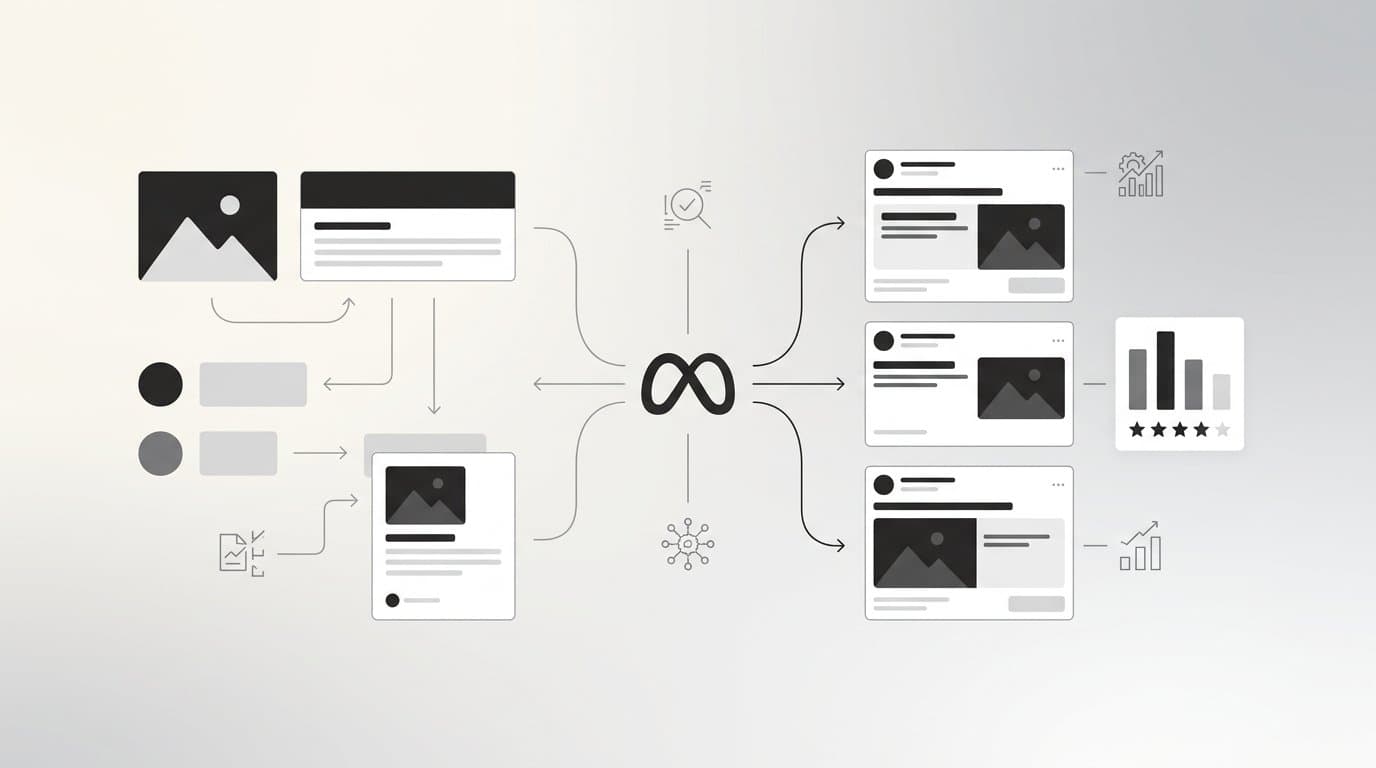
At the other end, you have full-stack AI ad platforms. These tools don't just generate a creative; they analyze your historical campaign data, build complete campaigns with optimized audiences and copy, launch hundreds of ad variations in bulk, and surface your top performers with real-time reporting. The price difference between a basic design tool and a full-stack AI ad platform isn't markup. It's a reflection of how much of the workflow has been automated.
Here's where a lot of advertisers get tripped up: they compare subscription costs in isolation. A $30/month design tool looks much cheaper than a $129/month AI platform until you account for everything the cheaper tool doesn't do.
Freelance designers: Even a simple image ad revision cycle can cost $50 to $200 per round depending on who you're working with. If you're testing multiple creative concepts monthly, that adds up fast.
Video editors and UGC creators: Short-form video ads and UGC-style content have become essential on Meta. Producing these through traditional channels means hiring editors or paying UGC creators, often at rates that dwarf any platform subscription.
Copywriters: Ad copy is a discipline. Platforms that generate headlines and body copy as part of the workflow eliminate a recurring cost that many advertisers don't track carefully.
Manual testing time: Building ad variations by hand, setting up split tests, and interpreting results takes hours. For a performance marketer or agency, that time has a real dollar value attached to it.
The honest comparison isn't platform A versus platform B on subscription price alone. It's platform A plus all the labor it still requires versus platform B's all-in cost. When you frame it that way, the pricing landscape starts to make a lot more sense.
The Real Cost Breakdown: Tiers, Features, and What You Get
Most creative platforms in the Meta advertising space follow a tiered pricing model. Understanding what you typically get at each level helps you figure out where your needs actually land.
Entry-level tiers ($0 to $50/month): These are designed for solo marketers or small businesses just getting started with paid social. At this level, you can typically expect basic creative generation, a limited number of exports or campaigns, and minimal automation. You're doing most of the strategic and operational work yourself. The platform is a production shortcut, not a campaign partner.
Mid-tier plans ($50 to $200/month): This is where the feature set starts to meaningfully expand. AI-driven creative generation, campaign building tools, bulk launching capabilities, and performance reporting tend to appear at this level. For growing DTC brands and performance marketers managing moderate ad spend, this tier often delivers the strongest cost-to-value ratio. AdStellar's Hobby plan at $49/month and Pro plan at $129/month sit in this range, covering core creative generation, AI campaign building, and bulk ad launching for advertisers who need real capability without enterprise-level overhead.
Enterprise and high-volume tiers ($200 to $500+/month): At the top end, you're paying for scale. Advanced analytics, multi-campaign management, deeper automation, and high-volume bulk launching are the differentiators here. Agencies managing significant monthly ad spend across multiple clients often find that the efficiency gains at this tier more than offset the subscription cost. AdStellar's Ultra plan at $499/month is built for exactly this use case, and understanding platform subscription costs at this level is key to justifying the investment.
The features worth paying more for tend to cluster around a few specific capabilities. AI creative generation that produces image ads, video ads, and UGC-style content from a product URL is a meaningful upgrade over template-based tools. Bulk launching that creates hundreds of ad variations across creatives, headlines, audiences, and copy in minutes rather than hours changes the economics of testing. Campaign automation that analyzes historical data and builds complete campaigns removes a significant layer of manual work. And performance analytics tied to real business metrics like ROAS, CPA, and CTR give you the feedback loop you need to actually improve over time.
The question to ask at any tier isn't just "what does this platform generate?" It's "what does this platform replace?" The more it replaces, the more the higher price point is justified.
Creative Generation: Where Platforms Earn Their Price Tag
Creative quality is the single biggest driver of Meta ad performance. It's not audience targeting, it's not bidding strategy, it's the creative. Which means the platform you use to generate and iterate on creatives has an outsized impact on your results.
The traditional workflow looks like this: brief a designer, wait for concepts, provide feedback, revise, approve, export, upload to Meta. For a single ad, that cycle might take days. For a full creative testing matrix, it can take weeks and cost more than most platform subscriptions combined.
AI-powered creative generation collapses that timeline. Platforms that can produce image ads, video ads, and UGC-style avatar content from a product URL eliminate the briefing and production cycle entirely. You input what you're selling, and the platform builds scroll-stopping creatives from scratch. No designers, no video editors, no actors needed.
But the more interesting capability is what happens when you move beyond generating from scratch. The Meta Ad Library is a publicly available resource that lets you see what any advertiser is running on Facebook and Instagram. Most marketers use it occasionally for research. Platforms that integrate it directly into the creative workflow let you clone competitor ads and iterate from proven concepts, turning competitive research into a production shortcut. If a creative format is working in your category, you're not guessing; you're building from evidence.
Chat-based creative editing is another feature that changes the cost equation in a practical way. The revision cycle between a marketer and a designer is one of the most expensive and time-consuming parts of ad creative management. When you can refine an ad through a conversational interface, describing what you want to change and seeing it applied immediately, you eliminate that back-and-forth entirely. What used to take a week of emails takes minutes.
When you add up the cost of a freelance designer, a video editor for short-form content, and a UGC creator for authentic-style ads, you're often looking at a monthly spend that exceeds even the highest-tier platform subscriptions. A platform that handles all three categories of creative output isn't expensive. It's a consolidation of costs you were already paying, just in less visible ways.
Campaign Automation and Bulk Launching: The Multiplier Effect on ROI
Generating great creatives is only half the equation. The other half is getting them into the market efficiently, testing them systematically, and learning from the results fast enough to act on them. This is where campaign automation and bulk launching capabilities separate high-value platforms from the rest.
An AI campaign builder that analyzes your historical performance data changes the cost-per-result equation in a fundamental way. Instead of starting each campaign from scratch, the AI reviews what has worked before, ranks every creative, headline, and audience by past performance, and builds a complete campaign structure informed by that analysis. Every decision comes with an explanation, so you understand the strategy behind the output rather than just accepting a black box recommendation. That transparency is a meaningful differentiator: you're gaining transferable knowledge about your audience, not just getting campaign outputs.
Bulk ad launching takes this further. The ability to mix multiple creatives, headlines, audiences, and copy variations at both the ad set and ad level, and then generate and launch every combination in minutes rather than hours, is a genuine competitive advantage on Meta. The platform's algorithm rewards advertisers who test more. More testing means more data. More data means faster optimization. The bottleneck for most performance marketers isn't budget; it's the time it takes to build and launch all those variations manually.
Think about what bulk launching actually replaces. Building a single ad set with five creatives, three headlines, and two audience segments manually might take an hour if you're efficient. Scale that to the kind of creative testing volume that actually moves the needle, and you're looking at days of setup work per campaign. A platform that generates every combination and launches them in clicks doesn't just save time; it enables a testing velocity that simply isn't achievable through manual processes.
The connection between automation depth and cost justification is direct. The more a platform handles autonomously, from creative generation to campaign building to bulk launching, the more it replaces expensive human labor. A performance marketer who used to spend 20 hours per month on campaign setup and creative production can redirect that time toward strategy, analysis, and growth. For an agency, that time savings scales with every client they manage.
Measuring Whether a Creative Platform Is Worth the Cost
Deciding whether a platform justifies its price requires more than gut feeling. You need a framework for measuring value, and that framework has to be grounded in the metrics that actually matter to your business.
Goal-based scoring and leaderboard rankings are the right starting point. Platforms that rank your creatives, headlines, copy, audiences, and landing pages by real metrics like ROAS, CPA, and CTR give you a clear picture of what's working and what isn't. When you set your target goals and the AI scores everything against your benchmarks, you're not guessing which ads to scale. You're looking at a ranked list of performers against the objectives you've defined.
The Winners Hub concept takes this a step further. Rather than treating each campaign as a standalone exercise, a platform that surfaces your best-performing creatives, headlines, and audiences in one place lets you build on proven elements over time. Select any winner and add it directly to your next campaign. This compounding effect is where the real long-term value of a platform shows up: you're not starting from zero each time. You're iterating from a library of what has already worked.
Attribution matters here too. The value of a creative platform is only measurable if you can tie creative performance to real business outcomes. Integration with attribution tools like Cometly ensures that the performance data you're seeing in-platform reflects actual conversions and revenue, not just vanity metrics. That connection between creative decisions and business results is what makes the ROI calculation credible.
The evaluation framework is straightforward. Take your total platform cost and compare it against the combined cost of everything it replaces: designer fees, video editor costs, UGC creator rates, copywriting, manual campaign setup time, and the cost of slower creative testing cycles. For most advertisers running active Meta campaigns, a full-stack platform that handles all of those functions is cheaper in total than assembling the same capability from separate vendors and labor. The platform subscription is often the most efficient line item in the entire advertising operation.
Choosing the Right Platform for Your Ad Budget and Scale
Not every advertiser needs the same level of platform capability, and the right choice depends heavily on your scale, your team structure, and how actively you're testing creative.
Solo marketers and small businesses: If you're managing your own Meta campaigns with a modest monthly ad spend, the priority is getting professional-quality creatives and basic campaign automation without a large overhead. An entry-level or Hobby-tier plan gives you AI creative generation and campaign building capability without requiring a team to operate it. The key question is whether the platform eliminates your dependency on freelance designers and manual campaign setup. If it does, the subscription pays for itself quickly.
Growing DTC brands: At this stage, creative testing velocity matters more. You're spending enough that the difference between a winning and losing creative has real revenue implications. A mid-tier plan with bulk launching, AI campaign building, and performance leaderboards gives you the testing infrastructure to find winners faster. The platform should be actively replacing agency fees or in-house production costs, not just supplementing them.
Agencies and high-volume advertisers: At scale, efficiency multiplies. An agency managing multiple clients needs a platform that can handle high-volume bulk launching, advanced analytics, and multi-campaign management for agencies without adding proportional headcount. The Ultra tier is built for this use case, where the platform's ability to generate and launch hundreds of variations across multiple accounts in minutes is the core value proposition.
Regardless of where you fall on that spectrum, the right approach to evaluating any platform is to test it against your real campaigns before committing. A 7-day free trial gives you enough runway to generate creatives, build a campaign, and see how the platform's outputs compare to your current process. You're not evaluating features in the abstract; you're measuring actual output quality and workflow efficiency against your specific needs.
Before signing up for any creative platform, ask three questions: What does it generate? What does it launch? How does it report? A platform that answers all three with real capability, not just promises, is one worth paying for.
The Bottom Line on Platform Cost
The cheapest creative platform is almost never the most cost-effective one. The real metric is what the platform replaces and what it produces. A $30/month tool that still requires a designer, a video editor, a copywriter, and hours of manual campaign setup is more expensive in practice than a $129/month platform that handles all of those functions autonomously.
The facebook creative platform cost question ultimately comes down to total cost of ownership versus total output. When you account for the labor, time, and production costs that a full-stack platform eliminates, the math usually favors investing in more capability, not less.
AdStellar is built to be exactly that kind of full-stack solution. From AI-generated image ads, video ads, and UGC-style creatives to AI campaign building, bulk ad launching, performance leaderboards, and a Winners Hub that compounds your results over time, it handles the entire workflow from creative to conversion in one place. No designers, no video editors, no guesswork.
If you're ready to see what that looks like against your actual campaigns, Start Free Trial With AdStellar and spend seven days testing the cost-to-value ratio firsthand. The numbers will make the decision for you.