Instagram advertising rewards creative quality above almost everything else. Your targeting can be precise, your budget generous, and your offer compelling, but if your creative stops no one mid-scroll, none of it matters.
This guide walks you through a proven, repeatable process for building Instagram ad creatives that capture attention, drive clicks, and convert. Whether you are a solo performance marketer managing a handful of campaigns or an agency running ads across dozens of accounts, these steps give you a clear framework to follow every time.
Here is what you will learn: how to define your creative strategy before touching a single design tool, which ad formats actually perform on Instagram, how to write copy that earns the click, and how to test your way to winning creatives systematically. You will also see how AI-powered tools are changing the speed and scale at which marketers can produce and iterate on creative, removing the bottleneck of designers and video editors from the process entirely.
The goal is a repeatable system rather than a guessing game. Let's get into it.
Step 1: Define Your Creative Strategy Before You Design Anything
The most common mistake in Instagram advertising is jumping straight into Canva or briefing a designer before answering the fundamental strategic questions. Creative that looks polished but communicates nothing specific to the audience is expensive noise.
Start with your campaign objective. Are you driving awareness, traffic, conversions, or catalog sales? This single decision shapes every creative choice that follows. A conversion campaign needs a direct, benefit-driven creative with a clear call to action. An awareness campaign can afford to be more brand-forward and storytelling-oriented. Mixing these up is how you end up with beautiful ads that generate zero revenue.
Next, define your target audience persona in specific terms. Not just demographics, but what they care about, what problem they are actively trying to solve, and what language they use to describe it. The more precisely you can articulate this, the more targeted your creative hook can be. A generic audience definition produces generic creative.
Choose a single primary message for each ad creative. One of the most common creative mistakes is trying to communicate three or four value propositions in a single ad. Pick the one message most likely to resonate with your specific audience at their specific stage in the funnel, and build the entire creative around it.
Speaking of funnel stage: your creative angle should change depending on where your audience sits. Cold audiences have never heard of you, so they need pattern interrupts and problem awareness to earn their attention. Warm audiences already know you exist, so they need social proof and differentiation to move them forward. Retargeting audiences have already shown interest, so they respond best to urgency and direct offers.
Before producing anything, document a creative brief. It does not need to be a lengthy document. It needs to cover four things: the hook, the core message, the call to action, and the visual direction. This brief becomes your quality filter. If a creative does not align with the brief, it does not get launched.
Common pitfall: Skipping the brief and going straight to design results in creatives that look polished but communicate nothing specific to the audience. The brief is not bureaucracy. It is the difference between intentional creative and expensive decoration.
Step 2: Choose the Right Instagram Ad Format for Your Goal
Instagram supports more ad formats than most marketers actively use, and each format has a different role to play depending on your goal, your audience, and your creative assets. Choosing the wrong format is not just a missed opportunity. It can actively hurt performance by delivering the wrong experience in the wrong context.
Single image ads are the fastest to produce and work well for direct response offers with a clear visual hook and minimal distraction. When your product has strong visual appeal or your offer can be communicated in a single compelling image, this format is hard to beat for speed and efficiency.
Video ads outperform static in most placements when the first two to three seconds deliver a strong hook. Video is particularly effective for demonstrating products in action, showing transformations, or telling a short story that builds emotional connection. If your video does not hook within the first few seconds, viewers scroll past before your message lands.
Carousel ads are effective for showcasing multiple products, walking through a process step by step, or telling a sequential story that rewards swiping. Each card can carry its own headline and link, making carousels especially useful for e-commerce brands with a range of products or for educational content that builds on itself.
UGC-style creatives are content that looks like organic user posts rather than polished ads. This format tends to blend into the feed and earn higher engagement, particularly for consumer brands. The authenticity of UGC-style content lowers the psychological resistance many users have toward traditional advertising.
Reels placement requires vertical 9x16 format without exception. Text overlays matter here because many viewers watch without sound. The first frame must stop the scroll, and the pacing needs to match the faster, more dynamic energy of the Reels feed.
Stories placement uses the full-screen vertical format and offers the option to incorporate interactive elements. The immersive full-screen experience can drive strong engagement when the creative is built specifically for the format rather than repurposed from feed placements. Understanding the correct size of Instagram Stories is essential before producing assets for this placement.
Practical tip: Produce at least two formats per campaign. Do not assume which format will win before you have data. Comparing performance across formats gives you real evidence to inform future creative decisions rather than relying on assumptions or industry generalizations.
Step 3: Build Creatives That Stop the Scroll
Everything in this Instagram ad creative guide comes down to one fundamental truth: if your creative does not earn attention in the first second, the rest of your work does not matter. The hook is not just important. It is everything.
For video ads, the first frame is your hook. For image ads, the dominant visual element is your hook. Both must create an immediate reason for the viewer to pause rather than continue scrolling. This is not about being loud or gimmicky. It is about being immediately relevant to the person you are trying to reach.
High-performing hook types include bold text statements that challenge a common belief your audience holds, before-and-after visuals that make the transformation immediately obvious, product in use in a relatable real-world setting that the viewer can see themselves in, and direct address to the target audience that makes them feel the ad was made specifically for them.
Visual hierarchy matters more than most marketers realize. The most important element in your creative should be immediately obvious without requiring the viewer to work for it. If someone has to scan your ad to figure out what it is about, you have already lost them. Use color contrast, scale, and negative space to direct attention to what matters most.
Text on creative should be short and used to reinforce the hook rather than explain the product. Keep it readable at mobile screen size, which is smaller than most designers expect when working on a desktop. If you need more than six to eight words on the creative itself, you are probably trying to do too much with the visual.
For video ads, think in three phases. The first three seconds are the hook. Seconds three through fifteen carry the core value proposition. The final seconds deliver the call to action. This structure keeps the video focused and ensures every second is earning its place. For a deeper dive into this format, the Instagram video ad creation guide covers each phase in detail.
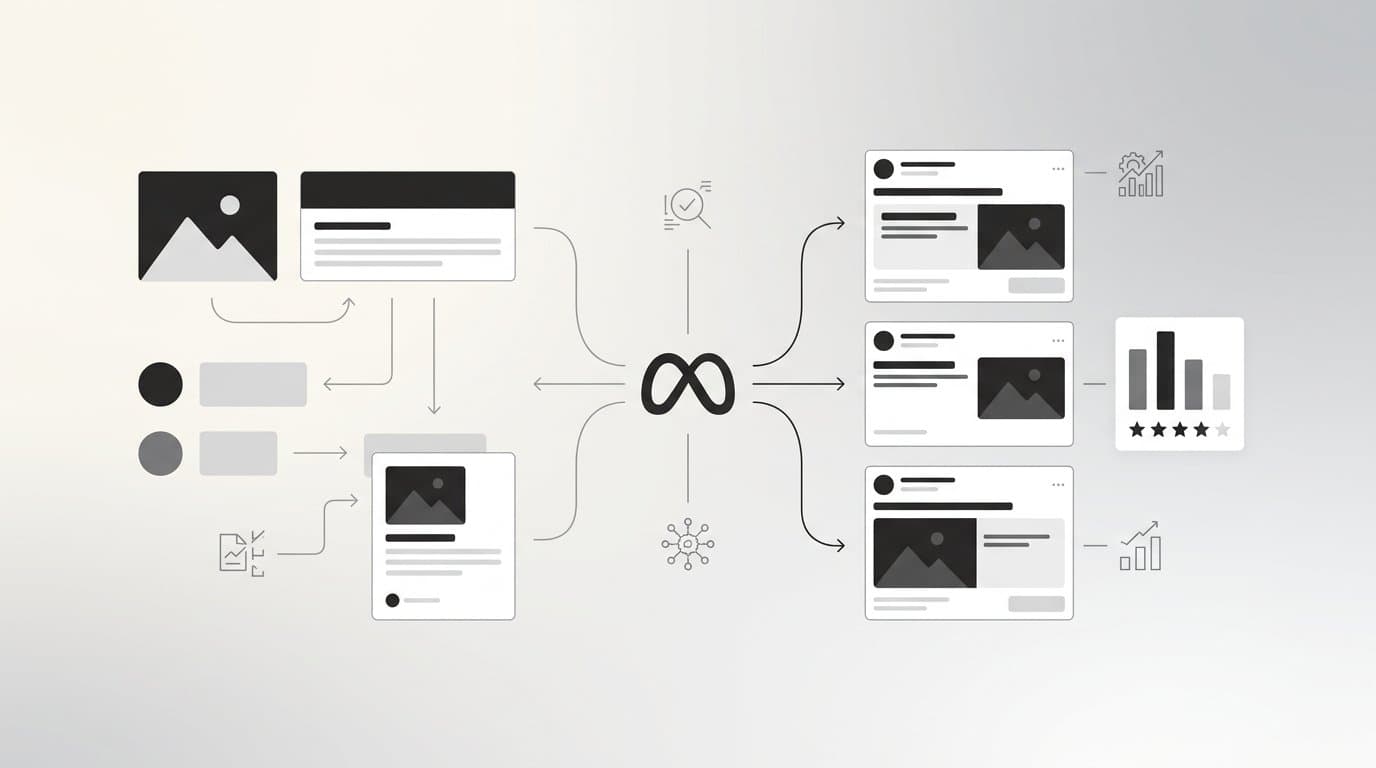
This is where AI-powered creative generation changes the game for many teams. Tools like AdStellar let you generate image ads, video ads, and UGC-style avatar creatives directly from a product URL, removing the need for a designer or video editor and dramatically shortening the production cycle. You can also pull competitor ads directly from the Meta Ad Library and use them as a starting point, so you can see what is already working in your category and build from proven concepts rather than starting from scratch.
Common pitfall: Over-designing creatives with too many elements, competing text blocks, and complex gradients reduces clarity and hurts performance. Simplicity is not a limitation. It is a performance advantage.
Step 4: Write Ad Copy That Earns the Click
Creative gets the attention. Copy earns the click. These two elements work together, and neglecting either one leaves performance on the table.
Instagram ad copy has three distinct components: the primary text above the image or video, the headline below, and the call-to-action button. Each plays a different role, and treating them as one undifferentiated block of text is a common mistake.
The primary text is where you make your case. Lead with the most relevant benefit or the most pressing pain point for your audience. Keep it scannable with short sentences or line breaks, because most people skim rather than read. Avoid jargon and internal language. Write the way your customer talks, not the way your marketing team talks in internal documents.
The headline is often the last thing a viewer reads before deciding whether to click. Make it specific and action-oriented rather than generic. "Get Your Free Sample" outperforms "Learn More About Our Products" because it tells the viewer exactly what happens when they click and makes the value concrete.
Match your call-to-action button to the funnel stage. Softer CTAs like "Learn More" work better for cold audiences who are not yet ready to commit. "Shop Now" or "Get Started" work better for warmer audiences who already have some familiarity with your brand or offer. Mismatching the CTA to the audience stage creates friction that reduces click-through rates.
Social proof elements in copy can improve conversion rates without requiring a separate creative element. Referencing customer outcomes, review counts, or trust signals within the primary text gives hesitant viewers a reason to trust the offer. This is particularly effective for warmer audiences who are evaluating rather than discovering.
Writing multiple copy variations is not optional if you want to test effectively. Aim for at least three primary text variations per creative to isolate which message resonates most with your audience. One variation might lead with the problem, one with the outcome, and one with the offer itself. The data will tell you which angle your audience responds to. Understanding Facebook ad targeting strategies can also inform how you tailor copy to different audience segments.
Common pitfall: Writing copy that describes the product instead of speaking to the outcome the customer wants. Customers do not buy products. They buy better versions of their situation. Your copy should reflect that.
Step 5: Launch Multiple Variations and Test Systematically
Here is a hard truth about creative testing: testing one or two creatives tells you almost nothing. You need volume to surface meaningful patterns. One ad performing better than another could be luck. Consistent patterns across dozens of variations reveal what is actually working.
Structure your tests to isolate variables. Test hooks separately from body copy. Test formats separately from offers. When you change multiple things at once, you cannot identify what drove the difference in performance. Single-variable testing produces cleaner data and faster learning, even if it requires more initial setup. The most common Facebook ad creative testing challenges stem directly from failing to isolate variables before launch.
The manual bottleneck in variation testing has traditionally been the time it takes to set up dozens of ad combinations in Meta Ads Manager. AdStellar's Bulk Ad Launch feature removes that bottleneck entirely. You can mix multiple creatives, headlines, audiences, and copy variations and launch every combination to Meta in minutes rather than hours. What used to take an afternoon of manual setup can happen in a fraction of the time.
Before launching, define your success metrics. What ROAS, CPA, or CTR threshold constitutes a winner for your specific campaign goal? Setting these thresholds before you launch removes the temptation to move the goalposts once you are emotionally invested in a particular creative performing well.
Give creatives enough budget and time to exit the learning phase before drawing conclusions. Pulling ads too early based on incomplete early data is one of the most common ways marketers kill winning creatives before they have a chance to prove themselves. The learning phase exists for a reason. Respect it.
AI-powered campaign builders take the systematic testing approach further by analyzing your historical campaign data, ranking every creative and audience combination by performance, and building complete campaigns with full transparency into the reasoning behind each decision. AdStellar's AI Campaign Builder does exactly this, and the system gets smarter with every campaign as it incorporates new performance data.
Common pitfall: Running too many variables simultaneously without enough budget to generate statistically meaningful data per variation. Spreading a limited budget across fifty variations means none of them gets enough impressions to tell you anything reliable. Be disciplined about the number of variables you test relative to your available budget.
Step 6: Analyze Performance and Identify Your Winners
Launching campaigns is the beginning of the work, not the end. The analysis phase is where your Instagram ad creative guide turns into a learning engine that compounds over time.
The metrics that matter most depend on your objective. For conversion campaigns, focus on CPA and ROAS. For traffic campaigns, focus on CTR and cost per click. For awareness campaigns, focus on CPM and reach. Using the wrong metrics to evaluate performance leads to optimization decisions that move in the wrong direction.
Look beyond top-level campaign metrics and analyze performance at the creative level. Which specific image, video, or copy variation is actually driving results? A campaign can have a strong overall ROAS while one creative is carrying the entire load and three others are dragging down the average. You need creative-level data to see this clearly.
AdStellar's AI Insights feature surfaces leaderboards that rank your creatives, headlines, copy, audiences, and landing pages by real metrics like ROAS, CPA, and CTR. You set your target goals, and the AI scores everything against your benchmarks so you can instantly see which elements are beating your targets and which are not. This removes the manual work of pulling data from multiple reports and trying to synthesize it yourself.
Identify patterns in your winners. Are certain visual styles consistently outperforming others? Are specific hooks driving higher CTR across multiple campaigns? Are certain audiences responding better to particular creative angles? These patterns are the raw material for your creative playbook, which you will build in the next step. Using a dedicated Instagram ad creative testing method ensures you are capturing these patterns systematically rather than relying on memory.
The Winners Hub in AdStellar organizes your best-performing creatives, headlines, and audiences in one place with their actual performance data attached. When you are building your next campaign, you can pull proven elements directly rather than starting from scratch or relying on memory about what worked three months ago.
Common pitfall: Optimizing toward vanity metrics like impressions or likes rather than metrics tied directly to business outcomes. Impressions tell you your ad was shown. ROAS tells you your ad made money. Know the difference and optimize accordingly.
Step 7: Scale What Works and Build a Repeatable Creative System
Finding a winning creative is a milestone. Building a system that consistently produces winning creatives is the actual goal. This final step is where most marketers underinvest, and it is the difference between sustainable advertising performance and a cycle of random wins followed by unexplained drops.
Scaling a winning creative means increasing budget incrementally rather than dramatically. Large budget jumps can reset the learning phase and destabilize performance that took weeks to build. Increase budgets gradually, monitor performance at each step, and give the algorithm time to recalibrate before making the next increase.
Extend the life of winning creatives by refreshing secondary elements rather than replacing everything at once. Swap the hook while keeping the proven body copy. Change the background while keeping the product shot. Test a new headline against the proven primary text. This approach lets you fight creative fatigue on Instagram while preserving the elements that are already proven to work.
Document your winning creative patterns in a playbook. Which hooks work for which audience segments? Which formats perform best in which placements? Which offers resonate at each funnel stage? This documentation transforms individual wins into institutional knowledge that benefits every future campaign you run.
Creative fatigue is a real and documented phenomenon on paid social platforms. Even top-performing ads see declining results over time as audiences become familiar with them. This means your system needs a continuous production pipeline, not a one-time creative sprint. You should always have fresh variations ready to test against your current winners before performance starts to decline.
AdStellar's continuous learning loop supports this ongoing production cycle. The AI gets smarter with every campaign, incorporating new performance data to improve creative selection and campaign building recommendations over time. Rather than starting each new campaign from scratch, you are building on an accumulating body of performance intelligence.
For agencies managing multiple client accounts, bulk Instagram ad creation and AI creative generation make it possible to maintain creative velocity across accounts without proportionally scaling headcount. The same systematic approach that works for a single account scales across ten or twenty accounts when the right tools are in place.
The goal is to move from reactive creative production, where you scramble to replace a dying ad, to a proactive system where fresh variations are always in the pipeline and your creative library is continuously growing with proven, data-backed elements.
Your Complete Creative System: Moving Forward
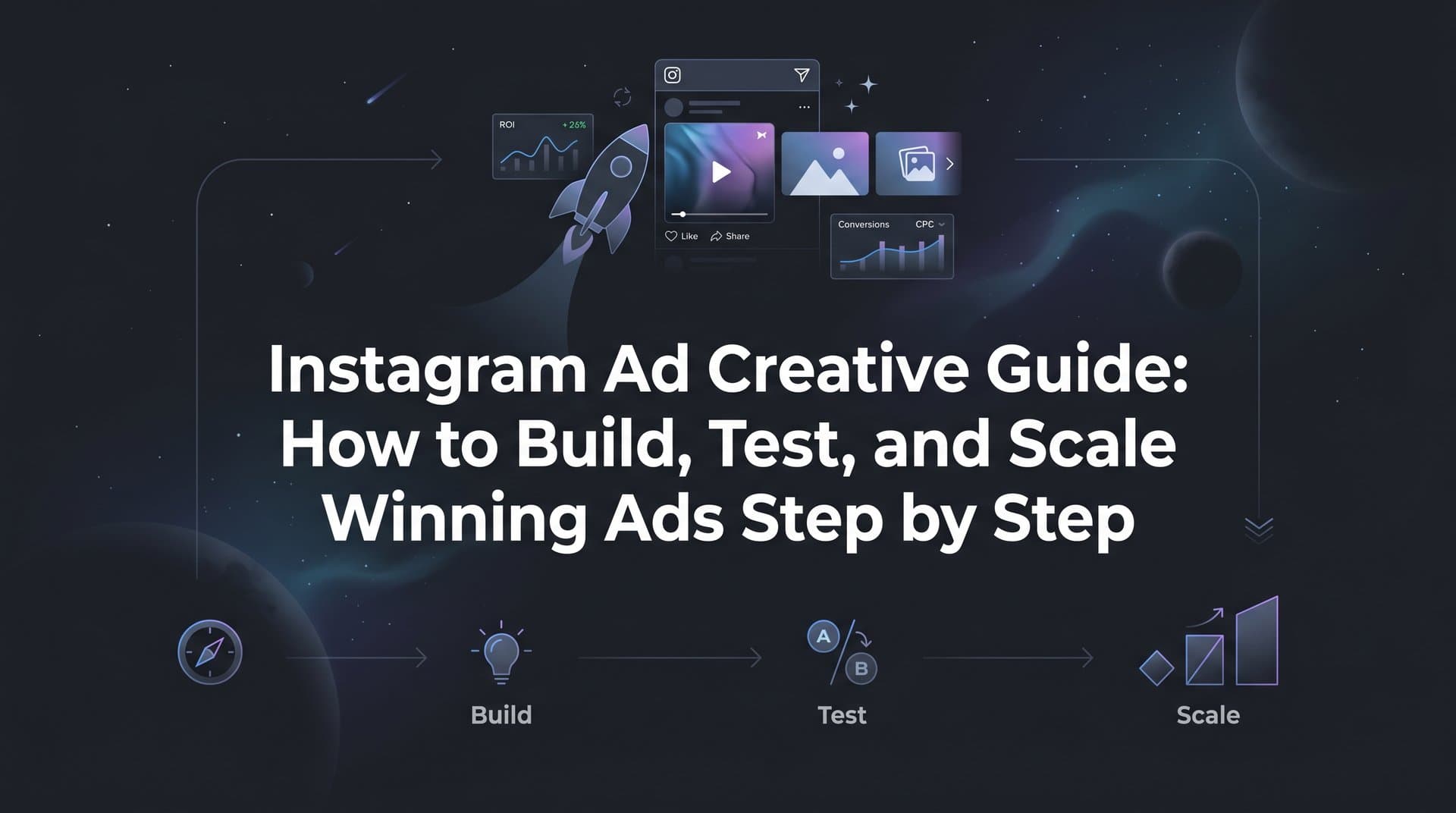
Building Instagram ad creatives that consistently perform is not about finding one perfect ad. It is about building a system that generates, tests, and scales winning creatives repeatedly. The seven steps in this guide give you that system.
Start with strategy, choose the right format, build scroll-stopping visuals, write copy that converts, test at volume, analyze what is actually working, and scale with a documented playbook. Each step builds on the one before it, and the whole system compounds over time as your creative library and performance data grow.
Before your next campaign, run through this quick checklist. Creative brief completed with audience, message, and funnel stage defined. At least two formats planned per campaign. Hook tested for impact in the first one to three seconds. Minimum three copy variations written. Bulk variations ready to launch and test simultaneously. Success metrics defined before launch. Performance review scheduled after the learning phase exits.
If you want to remove the manual bottleneck from every stage of this process, from creative generation to campaign building to bulk launching to performance analysis, one platform handles all of it. Start Free Trial With AdStellar and see how fast you can move from product URL to live campaign, with AI handling the heavy lifting at every step.