Picture this: You're managing 15 Instagram campaigns, manually adjusting budgets at 6 AM, testing new audiences during lunch breaks, and analyzing performance data until midnight. Sound familiar? Most marketers spend 60-70% of their time on repetitive campaign management tasks instead of strategic thinking and creative development.
The game has changed. Instagram campaign automation isn't just about scheduling posts anymore—it's about intelligent systems that analyze performance data, identify winning combinations, and scale successful campaigns while you focus on higher-level strategy. Modern automation tools can launch campaigns in minutes instead of hours, optimize budgets in real-time based on performance signals, and test creative variations at a scale impossible for human management.
These automation strategies will transform your Instagram advertising from a time-consuming manual process into a streamlined, data-driven system that works around the clock. Whether you're managing campaigns for a single business or multiple clients, these approaches will help you achieve better results with significantly less hands-on effort.
1. Set Up Performance-Based Budget Redistribution
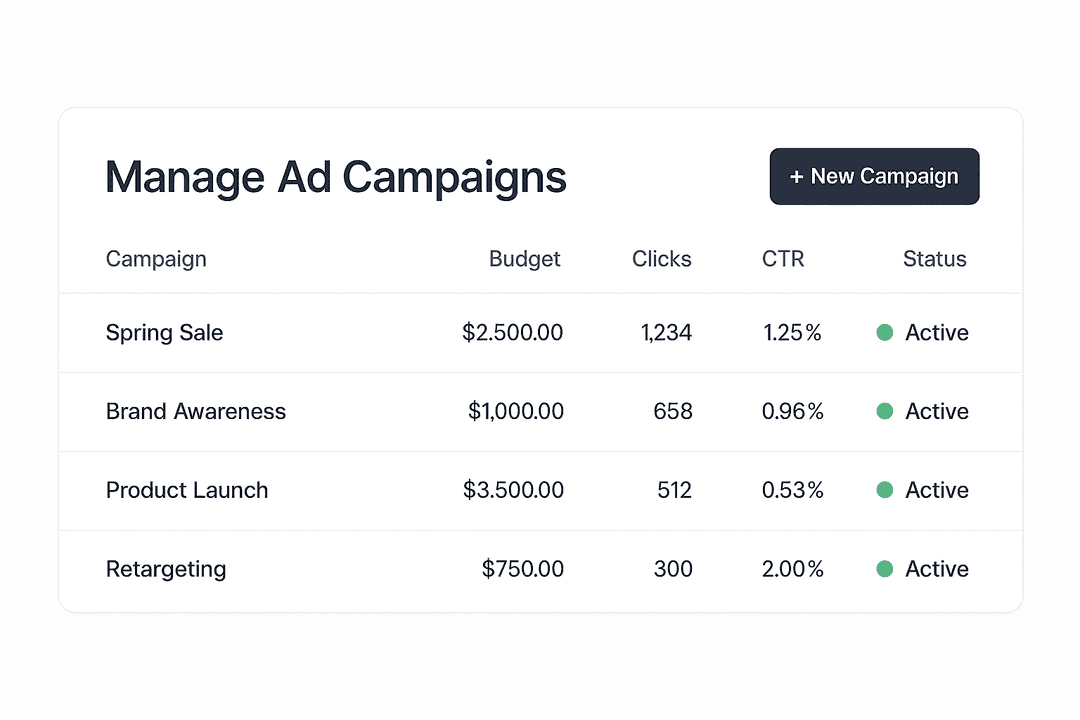
Manual budget management across multiple Instagram campaigns creates a constant drain on your time and mental energy. You're checking performance dashboards multiple times daily, making judgment calls about which campaigns deserve more budget, and second-guessing whether you're moving money too quickly or too slowly. Meanwhile, high-performing campaigns sit underfunded during their peak conversion windows, while underperforming ads continue burning through your budget until your next check-in.
Performance-based budget redistribution transforms this reactive process into a proactive system that works around the clock. The automation monitors your campaigns continuously, identifies performance shifts in real-time, and moves budget from low-performers to high-converters based on the specific metrics that matter to your business—whether that's cost per acquisition, return on ad spend, or conversion rate.
How the System Works
The foundation of automated budget redistribution is establishing clear performance thresholds that trigger budget adjustments. You define what "good performance" looks like for your campaigns—perhaps a CPA below $25 or a ROAS above 3.5—and the system automatically increases budgets for campaigns meeting or exceeding these benchmarks while reducing spend on campaigns falling short.
This isn't about making dramatic budget swings based on a single day's performance. Effective automation uses rolling averages across 3-7 days to identify genuine performance trends rather than reacting to normal daily fluctuations. A campaign that has a slow Tuesday doesn't get immediately defunded; the system recognizes this as typical variation and maintains course.
The real power emerges when you configure asymmetric thresholds—the system moves budget toward winners faster than it pulls from underperformers. This approach capitalizes on momentum while giving struggling campaigns time to recover or accumulate sufficient data for confident decisions.
Setting Up Your Automation Framework
Define Your Primary Success Metric: Choose the metric that directly reflects your business goals. E-commerce businesses typically focus on ROAS or CPA, while lead generation campaigns prioritize cost per lead or lead quality scores. This becomes your north star for all budget decisions.
Establish Performance Bands: Create three performance tiers—high performers that receive budget increases, acceptable performers that maintain current budgets, and underperformers that face budget reductions or pausing. For example, campaigns with CPA 20% below target get budget boosts, those within 20% of target hold steady, and those exceeding target by 30% get reduced.
Configure Budget Movement Rules: Determine how aggressively budgets shift. Conservative approaches might increase winning campaign budgets by 15-20% daily, while aggressive strategies could double budgets for exceptional performers. Set maximum daily budgets to prevent any single campaign from consuming your entire account budget during an unusual performance spike.
Implement Learning Period Protections: New campaigns need time to gather data and optimize delivery before automation should make budget decisions. Protect new campaigns for 7-14 days, allowing them to exit the learning phase and establish baseline performance before automated adjustments begin.
Create Manual Review Triggers: Set up alerts for significant budget movements requiring human oversight. When a campaign's budget increases by more than 50% in a single day or when total budget shifts exceed certain thresholds, you receive notifications to verify the automation is making sound decisions aligned with your strategy.
Avoiding Common Implementation Mistakes
The biggest mistake marketers make is setting thresholds too aggressively, causing the system to chase daily performance noise rather than responding to meaningful trends. A campaign that performs slightly below target for two days might be experiencing normal variation, not fundamental problems requiring immediate budget cuts.
Another critical consideration is maintaining portfolio diversity. Without proper constraints, automated systems can funnel all budget into a single high-performing campaign, leaving you vulnerable if that campaign suddenly hits saturation or faces increased competition.
2. Define your primary success metric
Set Performance Thresholds for Budget Increases and Decreases
After defining your primary success metric, the next critical step is establishing clear performance thresholds that trigger automated budget adjustments. This creates the decision-making framework your automation system uses to allocate resources intelligently without constant manual intervention.
Think of performance thresholds as the guardrails that keep your campaigns running efficiently. Without them, you're either making arbitrary budget decisions or spending hours analyzing data to make changes that should happen automatically.
Understanding Threshold Types:
Upper Performance Thresholds: These trigger budget increases when campaigns exceed your target metrics. If your target CPA is $50 and a campaign consistently delivers at $35, your automation should recognize this opportunity and allocate more budget to capture additional conversions at this favorable rate.
Lower Performance Thresholds: These trigger budget decreases or pauses when campaigns fall below acceptable performance levels. If that same campaign's CPA climbs to $75, the system should automatically reduce spend to prevent wasting budget on underperforming ads.
Setting Your Threshold Parameters:
Start with conservative thresholds that give campaigns room to fluctuate naturally. A common approach uses percentage-based bands around your target metric. For a $50 target CPA, you might set your upper threshold at 20% better performance ($40 CPA) and your lower threshold at 30% worse performance ($65 CPA).
The asymmetry here is intentional—you want to be slower to cut budgets than to increase them. Campaigns need time to stabilize, and premature budget cuts can interrupt the learning phase that platforms like Instagram require to optimize delivery.
Time-Based Considerations:
Never make threshold decisions based on single-day performance. Instagram campaign performance fluctuates due to auction dynamics, audience availability, and countless external factors. Use rolling averages over 3-7 days to smooth out daily volatility and make decisions based on genuine performance trends rather than random variation.
For new campaigns, implement learning period protections. Instagram's algorithm needs 7-14 days and approximately 50 conversions to optimize effectively. During this period, your thresholds should be wider or disabled entirely to prevent premature optimization that interrupts the learning process.
Budget Adjustment Mechanics:
When thresholds are triggered, determine how aggressively to adjust budgets. Percentage-based adjustments work better than fixed amounts because they scale appropriately with campaign size. A 20% budget increase on a $100 daily budget ($20 increase) is proportionally similar to a 20% increase on a $1,000 budget ($200 increase).
Implement daily adjustment caps to prevent dramatic swings. Even when performance justifies it, limiting increases to 20-30% per day maintains campaign stability and prevents shocking the delivery algorithm with sudden changes that could disrupt optimization.
Multi-Tier Threshold Systems:
Sophisticated automation uses multiple threshold tiers for graduated responses. Instead of a single "increase budget" threshold, create tiers like "increase 10%," "increase 25%," and "increase 50%" based on how dramatically performance exceeds targets. This creates proportional responses that match the strength of performance signals.
Emergency Thresholds:
Beyond standard optimization thresholds, set emergency thresholds for dramatic performance changes. If a campaign's CPA suddenly doubles or triples, you want immediate action—not a gradual budget reduction over several days. Emergency thresholds trigger instant pauses or dramatic budget cuts to prevent runaway spending on broken campaigns.
3. Deploy Dynamic Creative Testing and Optimization
Configure Automation Rules to Pause Campaigns Below Minimum Performance Standards
Every dollar spent on underperforming Instagram campaigns is a dollar that could be driving actual results. Yet most marketers let struggling campaigns run for days or weeks before manually intervening, hoping performance will improve on its own. This reactive approach drains budgets and prevents resources from flowing to campaigns that actually convert.
The solution lies in automated performance monitoring that acts as your campaign quality control system. By establishing clear minimum performance standards and configuring automation rules to pause campaigns that fall below these thresholds, you create a self-regulating system that protects your advertising budget around the clock.
Understanding Performance Thresholds: Your minimum performance standards should reflect the baseline metrics that make a campaign worth running. For conversion-focused campaigns, this might be a maximum cost per acquisition that aligns with your profit margins. For awareness campaigns, it could be a minimum click-through rate that indicates audience engagement. The key is defining specific, measurable thresholds that separate acceptable performance from budget waste.
Setting Up Multi-Tiered Pause Rules: Effective automation uses multiple performance triggers rather than a single threshold. Configure immediate pause rules for dramatic performance failures—like cost per acquisition exceeding 300% of your target or zero conversions after significant spend. Then establish secondary rules for gradual performance degradation, such as campaigns consistently underperforming your account average for 3-5 days.
The Learning Period Protection: New campaigns need time to accumulate data before automation should intervene. Configure your pause rules to exclude campaigns in their first 7-14 days, allowing the platform's algorithm to optimize delivery. During this learning period, set higher tolerance thresholds—perhaps 150% of your target CPA rather than the standard 120% you'd use for established campaigns.
Budget-Proportional Thresholds: A campaign spending $50 daily requires different pause criteria than one spending $500. Configure your automation to consider spend levels when evaluating performance. Smaller campaigns might need to reach 50 conversions before pause rules activate, while larger campaigns could be evaluated after just 20 conversions due to faster data accumulation.
Time-Based Pause Logic: Performance varies throughout the day and week. Your automation should account for these patterns rather than pausing campaigns during naturally slower periods. Configure rules that evaluate performance over rolling time windows—like the past 3 days or past 7 days—rather than reacting to single-day fluctuations that might reflect normal variance.
Alert Escalation Before Pausing: Build in warning stages before automatic pausing occurs. When a campaign approaches your minimum threshold, trigger alerts to your team while continuing to run. If performance doesn't improve within a specified timeframe (24-48 hours), then execute the automatic pause. This approach prevents premature pausing while ensuring human oversight for borderline cases.
Competitive Context Considerations: Sometimes poor performance reflects market conditions rather than campaign quality. Configure your automation to compare campaign performance against your account benchmarks and industry standards. A campaign performing below your target but above account average might warrant continued testing rather than immediate pausing.
Reactivation Protocols: Paused campaigns shouldn't stay dormant indefinitely. Set up automated campaign testing where paused campaigns are periodically restarted with reduced budgets to check if performance has improved. Market conditions change, audience behavior shifts, and campaigns that failed initially might succeed later with the same creative and targeting.
Documentation and Learning: Every paused campaign represents a learning opportunity. Configure your automation to tag paused campaigns with the specific threshold that triggered the pause and capture performance data at the time of pausing. This documentation helps refine your thresholds over time and identifies patterns in campaign failures.
4. Automate Dayparting and Scheduling Optimization
Most Instagram advertisers run campaigns 24/7 without considering when their audience actually converts. This approach wastes significant budget during low-performance hours while potentially under-investing during peak conversion windows. Manual scheduling based on assumptions about audience behavior rarely aligns with actual performance data.
Automated dayparting solves this by continuously analyzing your campaign performance across different hours and days, then automatically adjusting your campaign schedules and budget allocation to maximize results during proven high-performance periods.
How the Strategy Works:
The system monitors your campaign metrics by hour and day of week, identifying patterns in conversion rates, cost per acquisition, and engagement levels. Rather than spreading your budget evenly across all hours, automated dayparting concentrates spend during periods when your audience demonstrates the highest propensity to convert.
For B2B campaigns, you might discover that Instagram engagement peaks during weekday lunch hours (12-2 PM) and early evenings (5-7 PM) when professionals browse during breaks. B2C campaigns often show different patterns, with weekend mornings and evenings generating stronger performance as consumers have more leisure time for shopping and engagement.
Implementation Framework:
Start by analyzing at least 30 days of campaign performance data segmented by hour and day. Export your campaign metrics and identify clear performance patterns—look for consistent high-conversion periods and reliably low-performing time slots.
Configure your automation rules to increase budgets by 40-60% during peak performance hours while reducing spend by 30-50% during consistently underperforming periods. Some automation platforms allow you to pause campaigns entirely during hours that consistently fail to meet minimum performance thresholds.
Set up budget weighting that allocates your daily spend proportionally to performance potential. If your data shows that 6-9 PM generates 45% of your daily conversions, configure your system to allocate approximately 45% of your daily budget to that window.
Geographic and Seasonal Considerations:
Multi-market campaigns require sophisticated time zone handling. If you're targeting audiences across multiple regions, your automation system needs to apply dayparting rules based on each audience's local time rather than a single time zone reference.
Build seasonal adjustment capabilities into your automation. Holiday shopping periods, back-to-school seasons, and industry-specific events can shift performance patterns significantly. Your system should allow for temporary schedule overrides during these periods while maintaining your baseline optimization rules.
Advanced Optimization Techniques:
Layer dayparting with audience segmentation for more precise optimization. Different audience segments often show distinct time-based performance patterns. Young professionals might convert during evening hours, while stay-at-home parents show stronger mid-morning engagement.
Implement dynamic bid adjustments alongside scheduling optimization. During peak performance hours, increase your bids by 15-25% to ensure ad delivery and competitive positioning. During lower-performing periods, reduce bids to maintain presence while controlling costs.
Configure your system to automatically detect performance pattern shifts. Consumer behavior evolves, and yesterday's peak hours might not remain optimal indefinitely. Set up monthly performance reviews that recalibrate your dayparting rules based on recent data trends.
Common Pitfalls to Avoid:
Don't over-optimize based on insufficient data. A single strong conversion during a typically low-performing hour doesn't indicate a pattern shift. Use rolling averages across multiple weeks to identify genuine performance trends rather than random fluctuations.
Avoid completely pausing campaigns during off-peak hours unless data strongly supports it. Maintaining some presence throughout the day can capture unexpected opportunities and provides ongoing data for pattern refinement.
Account for platform-specific delivery dynamics when implementing automated Instagram ads scheduling. Instagram's algorithm may need consistent delivery patterns to optimize effectively, so dramatic on-off scheduling can sometimes disrupt campaign learning and performance.
5. Configure Automated Competitor Response Campaigns
Create Alerts for Significant Budget Shifts Requiring Manual Review
While automation handles routine budget adjustments efficiently, certain performance changes demand human strategic judgment. Automated alert systems act as your early warning system, flagging unusual budget movements before they impact your bottom line or miss critical opportunities.
The challenge most marketers face is finding the balance between automation efficiency and strategic control. Your automated systems might redistribute budgets perfectly based on performance data, but what happens when a campaign suddenly requires 300% more budget due to unexpected viral engagement? Or when costs spike dramatically due to increased competition you weren't anticipating?
Smart alert configuration ensures you maintain strategic oversight while letting automation handle the routine work. These alerts transform you from a campaign micromanager into a strategic decision-maker who intervenes only when human judgment adds real value.
Understanding Alert Trigger Types
Effective alert systems monitor multiple performance dimensions simultaneously. Budget velocity alerts trigger when daily spending increases or decreases beyond predetermined thresholds—typically 50-100% changes from baseline performance. These catch both opportunities and problems early.
Performance anomaly alerts flag when key metrics deviate significantly from expected ranges. If your cost per acquisition suddenly doubles or your conversion rate drops by 40%, you need to know immediately, not during your weekly review. These alerts often indicate external factors requiring strategic response rather than simple budget adjustment.
Competitive pressure alerts monitor when multiple campaigns simultaneously require budget increases, suggesting market-wide changes like increased competition or seasonal demand shifts. These situations often require portfolio-level strategic decisions rather than individual campaign adjustments.
Configuring Alert Thresholds
Setting appropriate alert sensitivity prevents both alert fatigue and missed opportunities. Conservative thresholds (75-100% budget changes) work well for established campaigns with stable performance patterns. These campaigns rarely need intervention, so significant changes warrant immediate attention.
More sensitive thresholds (30-50% changes) suit new campaigns or those in testing phases where performance volatility is expected but still requires monitoring. You want visibility into learning patterns without constant interruptions for normal optimization fluctuations.
Time-based thresholds add another layer of intelligence. A 50% budget increase over one day might be normal optimization, but the same increase sustained over three consecutive days signals a trend requiring strategic evaluation. Rolling average alerts reduce false positives from daily volatility.
Strategic Response Frameworks
When alerts trigger, having predefined response frameworks accelerates decision-making. Budget increase alerts typically indicate strong performance worth capitalizing on, but require verification that the opportunity aligns with current business priorities and available budget reserves.
Budget decrease alerts often signal performance degradation requiring root cause analysis. Is creative fatigue setting in? Has audience saturation occurred? Are competitors intensifying their campaigns? The alert prompts investigation, but your strategic judgment determines the appropriate response.
Portfolio-level alerts indicating widespread budget shifts might reveal seasonal trends, market changes, or platform algorithm updates. These situations often require strategic pivots rather than campaign-level adjustments—perhaps reallocating budget across different campaign objectives or adjusting overall advertising strategy.
Alert Routing and Escalation
Different alert types warrant different response urgency and team member involvement. Critical alerts—like campaigns exceeding daily budget caps or performance dropping below minimum acceptable thresholds—should trigger immediate notifications to campaign managers with authority to make quick decisions.
Strategic alerts indicating significant budget reallocation opportunities can route to senior marketing leadership for approval before implementation. This ensures major spending decisions align with broader business objectives and budget availability.
Informational alerts documenting successful automated optimizations can feed into weekly reporting without requiring immediate action. These create an audit trail of automation decisions while keeping stakeholders informed without overwhelming them with constant notifications.
Integration with Automation Rules
The most effective alert systems integrate seamlessly with your Facebook ads automation tools and broader campaign management workflows. When an alert triggers, the system should provide context about what automation rules are currently active, what changes have been made recently, and what options are available for manual intervention.
6. Deploy Cross-Campaign Learning and Optimization
Most marketers run Instagram campaigns in silos, treating each campaign as an independent experiment. When Campaign A discovers that carousel ads with user testimonials drive 40% better conversion rates, that insight stays locked within that single campaign. Meanwhile, Campaign B continues testing the same creative approaches from scratch, wasting budget rediscovering what Campaign A already proved.
This siloed approach creates massive inefficiency. Your advertising account contains a wealth of performance intelligence—winning audience segments, high-converting creative elements, optimal bidding strategies, and effective messaging frameworks. Cross-campaign learning systems break down these silos by analyzing patterns across your entire campaign portfolio and automatically applying successful elements to relevant campaigns.
The strategy works by establishing intelligent connections between campaigns. When the system identifies a winning element—whether it's a specific audience segment, creative format, or optimization approach—it evaluates which other campaigns could benefit from similar tactics. Rather than waiting for manual discovery, the automation tests these proven elements across your campaign portfolio systematically.
Building Your Cross-Campaign Intelligence System
Start by categorizing your campaigns into logical groups based on shared characteristics. Product-based campaigns, geographic campaigns, and objective-based campaigns (awareness vs. conversion) should be grouped separately because insights transfer more effectively within similar contexts.
Configure automated analysis to identify top-performing elements across each campaign group. The system should track which audiences consistently outperform, which creative formats drive the highest engagement, which headlines generate the most conversions, and which bidding strategies deliver the best efficiency. This creates a living database of proven tactics specific to your business.
Set up automatic testing protocols that introduce successful elements into relevant campaigns. When Campaign A's video testimonials outperform static images, the system should automatically test similar video approaches in Campaigns B, C, and D—but only where contextually appropriate. A winning audience segment for winter coats shouldn't automatically transfer to summer dress campaigns, but it might work perfectly for other cold-weather products.
Establish performance benchmarks that determine when cross-campaign elements get adopted permanently. A new creative format tested from another campaign should meet or exceed your existing performance standards before replacing current approaches. This prevents degrading campaign performance in pursuit of optimization.
Create approval workflows for significant campaign modifications. While minor tests can run automatically, major changes—like completely restructuring a campaign based on insights from another—should trigger review notifications. This maintains strategic oversight while allowing the system to handle routine optimization.
Practical Application Across Campaign Types
E-commerce brands often discover that specific product photography styles perform exceptionally well for one category. Cross-campaign learning systems can identify these patterns and automatically test similar visual approaches across related product lines. When lifestyle photography outperforms white-background product shots for athletic wear, the system tests lifestyle imagery for other active lifestyle products.
Service-based businesses frequently find that certain value propositions resonate strongly with specific audience segments. When "time-saving" messaging drives conversions for one service offering, the system can test similar benefit-focused messaging across other services where time efficiency provides value.
B2B companies running campaigns across different industries might discover that certain content formats—like case studies or data visualizations—perform consistently well. The system identifies these patterns and ensures successful formats get tested across all relevant campaigns rather than remaining isolated discoveries.
Advanced Optimization Techniques
Audience Intelligence Transfer: When a specific demographic or interest-based audience segment performs exceptionally well in one campaign, the system creates similar audience segments for testing in related campaigns. This accelerates audience discovery and prevents repeatedly testing the same audience hypotheses across multiple campaigns.
Creative Element Libraries: Build automated libraries of proven creative elements—headlines, images, videos, CTAs—tagged by performance metrics and campaign context. When launching new campaigns, the system automatically suggests or tests top-performing elements from similar historical campaigns, dramatically reducing the time required to identify winning creative approaches.
Bidding Strategy Propagation: When a particular bidding strategy consistently outperforms across multiple campaigns in a category, the system can recommend or automatically apply similar strategies to new campaigns. This prevents new campaigns from starting with suboptimal bidding approaches while still allowing for testing and refinement.
Negative Learning Transfer: Cross-campaign learning isn't just about replicating successes—it's also about avoiding repeated failures. When certain audience segments, creative approaches, or targeting strategies consistently underperform across multiple campaigns, the system can flag these elements for exclusion in future campaigns or require additional justification before testing them again.
Putting It All Together
Successfully implementing Instagram campaign automation requires a strategic approach that builds complexity gradually while maintaining control over your advertising performance. Start with one or two automation strategies that address your biggest time-consuming tasks—performance-based budget redistribution and dynamic creative testing typically deliver the fastest impact—then expand your automated systems as you gain confidence and see measurable results.
The most effective approach combines multiple automation strategies that work together: performance-based budget redistribution ensures your money flows to winning campaigns, while automated audience expansion discovers new profitable segments. Dynamic creative testing optimizes your messaging, while anomaly detection protects against performance issues before they drain your budget.
Remember that automation enhances human strategy rather than replacing it. Your role evolves from manual campaign management to strategic oversight, creative direction, and system optimization. The time saved through automation should be reinvested in higher-level strategic thinking, competitive analysis, and creative development that drives long-term growth.
Ready to transform your Instagram advertising from a time-intensive manual process into a scalable, data-driven system? Start Free Trial With AdStellar AI and let AI automatically launch, test, and optimize your campaigns based on real performance data—so you can focus on strategy instead of spreadsheets.