Cost Per Lead, or CPL, is pretty simple on the surface: it’s the total amount you spend on marketing to get one new lead for your business. Think of it as the price tag for acquiring a potential customer's interest. This number is crucial because it tells you exactly how efficient your campaigns are.
Understanding Cost Per Lead and Why It Matters

Let’s imagine you set up a booth at a local farmer's market. Your goal isn't just to sell a few things today; you want to build a customer list for the future. So, you offer free samples in exchange for people signing up for your newsletter. At the end of the day, your cost per lead is everything you spent—the booth fee, the samples, your time—divided by the number of people who gave you their email.
Digital marketing works the exact same way. Your CPL is the direct investment you make to turn a stranger scrolling online into someone who’s actually interested in what you have to offer.
Defining What a Lead Is
Before you can track your CPL, you have to get crystal clear on what a "lead" actually means for your business. It’s not just any click or view; it’s a specific, meaningful action that signals real interest.
A lead could be someone who:
- Signs up for your email newsletter
- Downloads a whitepaper or an ebook
- Requests a product demonstration
- Fills out a contact form to talk to your sales team
The common thread here is that they willingly hand over their contact info for something valuable in return. That simple exchange moves them from being a passive observer to an active prospect in your sales funnel.
Why Tracking CPL Is Essential
Keeping a close eye on your CPL is fundamental if you want to build a marketing machine that’s both predictable and profitable. It’s a vital health metric for your campaigns, telling you if you’re spending smart or just burning cash. Without it, you’re flying blind and just guessing where your budget should go next.
A low CPL is a great sign. It means your campaigns are hitting the mark and generating interest without breaking the bank. On the other hand, a high CPL can be an early warning that your targeting, message, or offer just isn't connecting with your audience.
Understanding this metric helps you forecast profitability and gives you the confidence to scale your advertising. It’s the first piece of a much larger financial puzzle. For instance, CPL is a major driver of your Customer Acquisition Cost (CAC)—the total cost to land an actual paying customer. A healthy CPL makes getting to a profitable CAC much easier.
CPL is also a key input for figuring out if your campaigns are truly making money. You can learn more about connecting the dots by reading our guide on how to calculate return on ad spend.
How to Accurately Calculate and Track Your CPL
Getting a handle on your Cost Per Lead (CPL) is the first real step toward mastering your marketing budget. At its core, the formula is refreshingly simple. It cuts through the noise and gives you a hard number to measure how efficiently your campaigns are running.
Think of it as the ultimate reality check for your ad spend.
Total Ad Spend / Total New Leads = Cost Per Lead (CPL)
This little equation tells you exactly what you paid to get each person to raise their hand and say, "I'm interested." It's the bedrock for understanding your campaign's financial health and making smarter calls on where your money goes next.
The Nuances of Attribution Models
While the math is easy, the real world throws a few curveballs. The biggest one is attribution—deciding which marketing touchpoint actually gets the credit for bringing in a lead. The model you pick here directly shapes your CPL.
You'll generally see two main approaches:
- First-Touch Attribution: This one's straightforward. It gives 100% of the credit to the very first interaction a person had with your brand. So, if someone clicks a Meta ad today but doesn't convert until they get an email next week, that first Meta ad gets all the glory.
- Multi-Touch Attribution: This model is a bit more sophisticated. It spreads the credit across several touchpoints, recognizing that most people don't convert after a single interaction. It’s a team effort, and this model treats it that way.
Which one is right for you? It really depends on your sales cycle. First-touch is clean and simple but can give too much weight to top-of-funnel channels. Multi-touch is more complex but paints a much more realistic picture of how all your marketing efforts are working together.
Putting the CPL Formula into Practice
Let's make this real. Imagine a B2B SaaS company is running a Meta Ads campaign to get more demo requests.
- Total Ad Spend: They put $5,000 into the campaign for the month.
- Total New Leads: The campaign pulls in 100 qualified demo requests.
Plugging this into our formula:
$5,000 (Ad Spend) / 100 (New Leads) = $50 CPL
Boom. They now know they paid $50 for every single person who booked a demo. With this benchmark, they can start comparing their performance to industry standards and figure out if their campaign is actually a good investment.
Tracking CPL Across Your Platforms
You can't calculate what you don't track. The best place to start is right inside your ad platforms, like Meta Ads Manager. But for this to work, you absolutely need to have conversion tracking set up correctly. This usually means installing a tracking pixel on your website.
If you're new to this, don't worry. We've got a detailed guide on how to set up the Facebook pixel that will walk you through it step-by-step.
Once that's running, you’ll see CPL reported directly in your dashboard. But hold on—most businesses don't just run ads on one platform. To get the full story, you need to calculate a blended CPL, which rolls up the costs and leads from all your channels—paid search, social, content, you name it. This holistic view is crucial; it stops you from over-investing in a channel that looks great on its own but is actually less efficient than others.
What's a Good Cost Per Lead, Really? Benchmarks by Industry
Asking "What's a good cost per lead?" is a lot like asking, "How much should a car cost?" Well, are we talking about a reliable daily driver or a commercial sixteen-wheeler? The price tags are worlds apart because they serve completely different purposes.
The same logic applies to your CPL. A high CPL isn't automatically a sign of trouble, and a low CPL isn't always a win. It’s all about context. A wealth management firm might pop the champagne over a $500 CPL that lands a client worth tens of thousands, while an e-commerce store selling t-shirts would go bankrupt with those numbers.
Getting a handle on these differences is the first step toward setting goals that actually make sense for your business.
Why CPL Varies So Wildly
The gap in CPLs between industries isn't just a few dollars here and there. We're talking about fundamental economic differences that dictate how companies approach marketing.
Here are the big drivers:
- Customer Lifetime Value (LTV): This is the heavyweight champion of CPL factors. Businesses with a high LTV, like a B2B software company or a law firm, can comfortably spend more upfront to get a lead in the door.
- Sales Cycle Length: If your sales process is a long, winding road with multiple decision-makers (think enterprise software), you'll naturally spend more on marketing touchpoints. That drives up CPL. For a quick impulse buy, the cost is much lower.
- Market Competition: How many other advertisers are chasing the same eyeballs? Crowded and lucrative spaces like finance and legal often have sky-high ad costs, which feeds directly into a higher cost per lead.
- Regulatory Hurdles: Industries like healthcare and finance have to navigate a maze of compliance rules. This adds layers of complexity—and cost—to creating and running ad campaigns.
At its core, the math is simple. Your CPL is just a ratio of what you spend versus what you get.
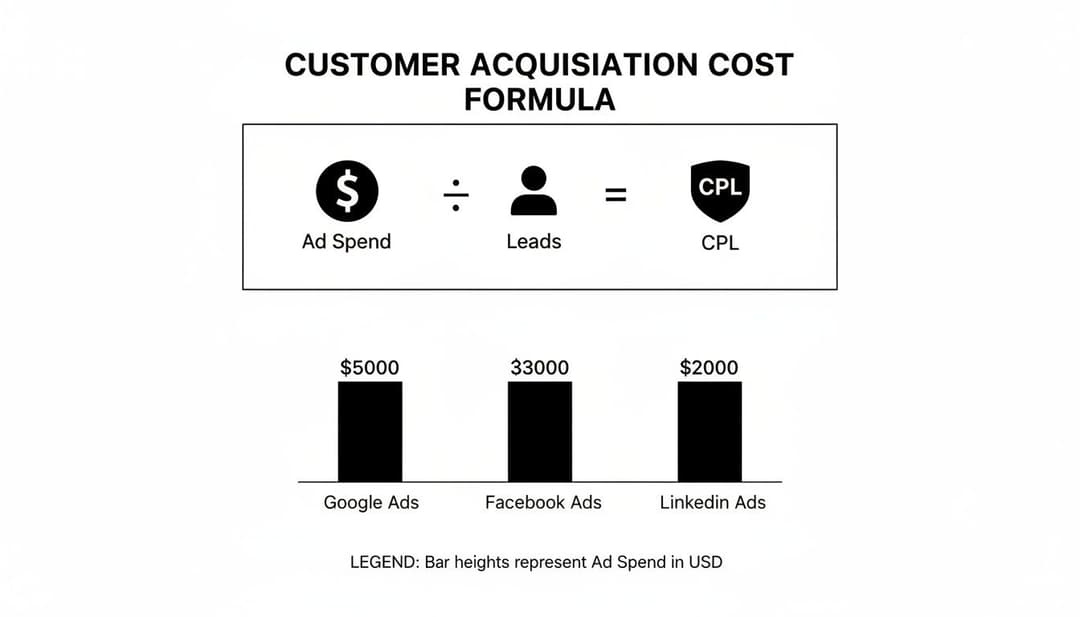
This formula is your north star for measuring how efficiently you're turning ad dollars into potential customers.
A Look at the Numbers: Average CPL by Industry
So, what do the numbers actually look like in the wild? To help you benchmark your own efforts, we've pulled together some data on average CPLs across several key industries. Just remember, these are averages—your mileage will definitely vary.
Average Cost Per Lead by Industry
A comparison of blended, paid, and organic Cost Per Lead (CPL) across key industries to help marketers benchmark their campaign performance.
| Industry | Blended CPL | Paid Channel CPL | Organic Channel CPL |
|---|---|---|---|
| Financial Services | $461 | $761 | $160 |
| Legal Services | $650 | $784 | $516 |
| B2B SaaS | $237 | $310 | $164 |
| E-commerce/Retail | $91 | $98 | $83 |
| Healthcare | $162 | $180 | $144 |
(Source: Martal.ca)
The pattern here is crystal clear. Industries with high-value customers and complex sales—like legal and financial services—have a much higher tolerance for CPL. On the flip side, e-commerce can thrive with much lower numbers thanks to quicker sales and massive scale.
This is just one piece of the puzzle. To get the full picture, you need to understand the total investment required. Our guide on social media marketing cost breaks it down even further.
Ultimately, your goal shouldn't be to chase the lowest possible CPL. It's about finding the sweet spot that fuels profitable, sustainable growth for your business.
The Key Levers That Control Your CPL
Knowing your cost per lead is one thing. Actually controlling it is a whole different ballgame.
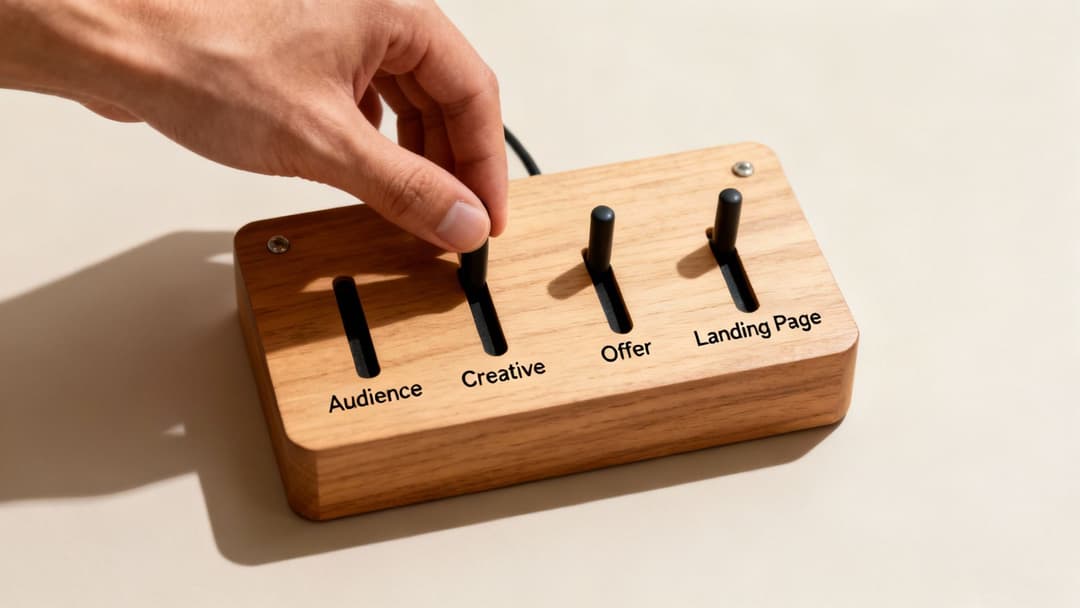
Think of your CPL as a control panel with a few critical levers. Pull the right ones, and your costs go down. Neglect them, and you’ll watch your ad spend spiral out of control. To get a handle on your campaigns, you need to understand the core pillars that directly dictate your CPL.
These factors don't exist in a vacuum; they're all interconnected. A killer creative won't save a terrible offer, and a perfect audience won't convert on a broken landing page. Let's break down each lever so you can build a practical toolkit to diagnose issues and systematically drive down your CPL.
Your Audience Targeting Precision
The first—and arguably most important—lever is who you're talking to. Your audience targeting sets the baseline cost for even reaching potential customers. It’s a constant balancing act between reaching enough people and reaching the right people.
Broad Targeting: Going too wide is like trying to sell premium steaks at a vegan festival. You'll spend a ton of money showing ads to people with zero interest, which absolutely tanks your conversion rate and sends your CPL through the roof.
Hyper-Specific Targeting: On the flip side, getting too narrow can also backfire. The leads might be top-notch, but the competition for a tiny pool of users can drive your ad costs sky-high, inflating your cost per lead.
The goal is to find that sweet spot: a well-defined audience that truly matches your ideal customer profile but isn't so restrictive that it becomes unaffordable to reach them. This is how you ensure your ad spend is focused where it'll actually make an impact.
The Quality and Resonance of Your Ad Creative
Once you've zeroed in on the right audience, you have to grab their attention. In a feed overflowing with content, a boring, generic ad is as good as invisible. Your ad creative—the images, videos, and copy—is your first handshake, and it has a massive impact on your CPL.
Great creative that resonates with your audience stops the scroll and earns clicks, boosting your click-through rates (CTRs). A high CTR signals to platforms like Meta that your ad is relevant, which they often reward with lower costs. On the other hand, weak creative or ad fatigue (when people get sick of seeing the same ad) leads to poor engagement and a higher cost per lead.
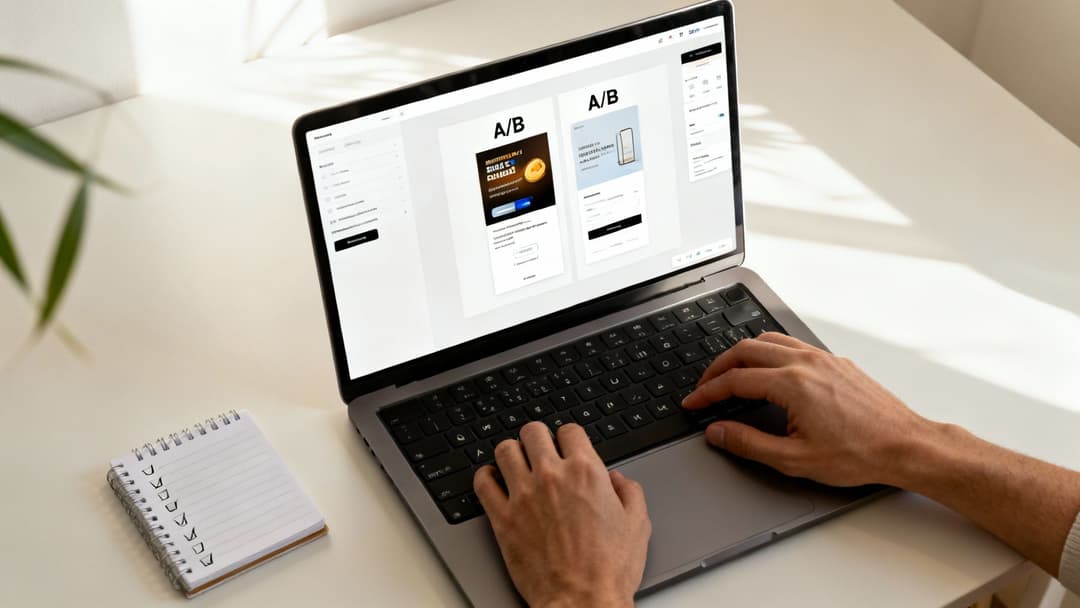
A/B testing isn't just a "best practice"; it's a non-negotiable. Systematically testing different images, headlines, and calls-to-action is the only real way to discover what actually connects with your audience and brings down costs.
The Strength and Appeal of Your Offer
You could have the most dialed-in audience and a stunning, award-worthy ad, but if your offer falls flat, no one is going to convert. Simple as that. The offer, or lead magnet, is the value you give in exchange for someone's contact information. This is where the transaction happens.
A powerful offer solves a real, urgent problem for your audience. Put yourself in their shoes: is a generic "sign up for our newsletter" as tempting as a free, data-rich industry report or a personalized product demo? The perceived value of your offer is directly tied to your conversion rate.
An offer that feels like a no-brainer makes the decision to convert easy, which means more leads and a much, much lower CPL.
The Landing Page and Conversion Experience
Finally, the journey isn't over when they click the ad. The landing page is the final hurdle between a prospect and a lead. Any friction at this stage is a conversion killer and will make your cost per lead soar.
A page that loads at a snail's pace, a confusing layout, or a form that asks for their life story will cause people to bounce before they ever convert.
Your landing page needs to feel like a seamless extension of your ad. The message must be consistent, the design clean, and the call-to-action impossible to miss. For instance, just cutting the number of form fields from ten down to four can sometimes double conversion rates overnight. Optimizing this final step is how you make sure the traffic you paid for actually turns into the leads you need.
Actionable Strategies to Lower Your Cost Per Lead
Knowing what drives your cost per lead is one thing, but actually doing something about it is where the real work begins. Let's shift from diagnosis to action. Lowering your CPL isn’t about finding one silver bullet; it's about systematically fine-tuning every single part of your marketing funnel.
This is where theory hits the pavement. The strategies below are a proven playbook for sharpening your campaigns, boosting efficiency, and turning your ad spend into a predictable growth engine. Each one is a clear, concrete step you can start working on today.
Refine Your Audience Targeting
The quickest way to burn through your budget is to show ads to the wrong people. Think of precision targeting as your first line of defense against a sky-high CPL. Platforms like Meta give you incredibly powerful tools to go way beyond broad demographics and connect with users who are actually likely to convert.
Start by getting familiar with these core audience types:
- Custom Audiences: This is your low-hanging fruit. You can upload your existing customer list to create an audience of people who already know and like your brand. It’s perfect for upselling, cross-selling, or re-engagement campaigns.
- Lookalike Audiences: Here’s where the magic really happens for scaling. Meta can analyze your best customers from a Custom Audience and then find new people who share similar traits. A 1% Lookalike Audience is an amazing place to start for finding high-quality prospects who have never heard of you.
When you focus your ad spend on these hyper-relevant groups, your message lands with people who are already warmed up to what you have to say. That naturally drives down your acquisition costs.
Build a Robust Creative Testing Framework
Your ad creative is not a "set it and forget it" kind of thing. It's a living, breathing part of your campaign that needs constant testing and fresh ideas to beat ad fatigue and figure out what truly clicks with your audience. A structured testing framework is non-negotiable for reducing your cost per lead.
The key is to isolate variables. Test one thing at a time—the headline, the image, the call-to-action button—so you can get clean data on what’s actually moving the needle. When you see an ad's click-through rate start to dip, that’s your cue to swap in something new. Better creative leads to better ad relevance, and the platforms reward that with lower costs.
Consistently testing new ad variations is the single most effective way to keep campaigns fresh and efficient. A winning ad from last quarter could be tomorrow's biggest budget drain if you're not paying attention to performance data.
Improving ad performance is a continuous process. For a deeper dive into boosting engagement, check out our guide on how to improve your click-through rate.
Master Landing Page Optimization
Your landing page is the final, crucial step where the conversion actually happens. All the hard work you put into targeting and creative goes right out the window if your landing page drops the ball. Even tiny improvements here can have a massive impact on your CPL.
Focus on making the experience as smooth as possible:
- Ensure Message Match: The headline and offer on your landing page need to be a perfect mirror of the ad that got the user there. Any disconnect creates confusion and sends your bounce rate soaring.
- Simplify Your Forms: Only ask for what you absolutely need to qualify the lead. Every extra field you add is another bit of friction and another reason for someone to abandon the form.
- Optimize for Speed: A slow-loading page is a conversion killer. Make sure your page is optimized for mobile and loads in under three seconds, or you’ll lose people before they even see your offer.
To effectively lower your CPL, it's also crucial to adopt proven B2B lead generation best practices that ensure high-quality and efficient lead acquisition.
For instance, B2B SaaS marketers face a blended CPL of $237, with paid channels hitting $310. While Google Ads can deliver leads around $70.11, LinkedIn commands a premium at $110 due to its superior professional targeting. This makes optimizing every step of the funnel critical for SaaS growth teams trying to acquire customers without inflating costs. Read more about the latest industry CPL data on First Page Sage.
Using AI Automation to Reduce CPL at Scale
If you’ve ever tried to lower your cost per lead by hand, you know the grind. It's a constant battle against ad fatigue, audience saturation, and competitors who seem to have endless budgets. This old-school approach is slow, eats up resources, and often feels like you're just making educated guesses. The second you think you’ve cracked the code, the market shifts, and you're right back at the beginning.
This reactive cycle makes it almost impossible to scale your lead generation with any kind of predictability. In fact, competition alone has driven a 5% year-over-year CPL increase on platforms like Google Ads, a trend that’s hitting performance marketers everywhere, including Meta.
So, what if you could ditch the reactive adjustments and adopt a proactive, data-driven strategy instead? This is exactly where AI automation tools like AdStellar are changing the game for good.
AI-Driven Creative and Audience Testing
The single biggest obstacle to lowering CPL is the sheer volume of testing it takes to find what actually works. A human team can only create and manage so many ad variations before they're completely swamped. AI-powered platforms shatter that limitation.
Imagine being able to test hundreds of creative and copy combinations across dozens of audiences all at once. AI makes this a reality. It lets you:
- Create massive batches of ad variations in minutes, not days.
- Pinpoint winning elements—images, headlines, CTAs—with statistical proof.
- Automatically discover new high-value audience segments you might have never found on your own.
This kind of high-speed testing uncovers optimization opportunities at a scale no manual process could ever hope to match, which has a direct, positive impact on your cost per lead. It turns campaign management from a chore into a system of constant learning and improvement. Our guide on using AI for Facebook ads dives much deeper into this process.
Intelligent Budget Scaling and Optimization
Finding a winning ad is only half the battle. The real magic happens when you capitalize on it, and that’s what truly drives down your CPL over time. AI-powered auto-scaling automates this critical step by monitoring your campaigns 24/7 and automatically shifting your budget to the best-performing ad combinations.
By connecting directly to your Meta Ads account, these platforms learn from your historical data to understand what success looks like for your business. This eliminates wasted ad spend on underperforming assets and ensures every dollar is working as hard as possible.
The best AI solutions can even help streamline what happens after you get the lead. For example, an AI Receptionist integration with CRM systems can dramatically improve how quickly and efficiently you follow up. This kind of end-to-end thinking ensures the high-quality leads you generate are handled perfectly, boosting your overall ROI.
Ultimately, AI automation takes that chaotic stream of campaign data and turns it into clear, actionable directives. It empowers you to make smarter, faster decisions that consistently lower your cost per lead and unlock true, scalable growth.
Still Have Questions About Cost Per Lead?
Navigating the world of lead gen metrics can feel like you're trying to read a foreign language sometimes. But once you get the hang of the core concepts, you can start managing your campaigns with a lot more confidence.
Let's clear up some of the most common questions marketers have about cost per lead.
What's the Difference Between CPL and CPA?
Think of it like dating. CPL is the cost of getting someone's phone number—it shows interest, but it's far from a commitment. CPA is the cost of getting them to agree to a second date or even marriage—it's the real deal.
CPL (Cost Per Lead) measures how much you pay for that initial sign of interest, like a newsletter signup or a guide download. It’s an early-funnel metric that tells you how efficiently you’re starting conversations.
CPA (Cost Per Acquisition), on the other hand, measures the cost to get an actual paying customer. This is a bottom-funnel metric that’s tied directly to revenue. You can have an amazing CPL and a terrible CPA if all those cheap leads are low-quality and never actually buy anything.
My CPL Is Too High. Where Do I Start?
If your CPL is creeping up, don't panic. There are usually three main culprits, and running a quick diagnostic on them will almost always point you to the biggest problem.
Start your audit here:
- Check Your Ad Creative: Is your ad still grabbing attention, or has it gone stale? Ad fatigue is real, and what worked last month might be getting ignored today.
- Review Your Targeting: Are you casting too wide a net and paying to reach people who couldn't care less? Or have you gone too narrow, driving up auction costs because you're competing in a tiny, overpriced pond?
- Audit Your Landing Page: This is the big one. Does the page load fast? Is the form simple? Most importantly, does the offer on the page perfectly match the promise you made in your ad? Any friction here will kill your conversion rate.
A high bounce rate on your landing page is often the silent killer of a good CPL. Fixing a clunky, confusing, or slow landing page is one of the fastest ways to slash your lead costs.
How Do I Get a Low CPL Without Sacrificing Lead Quality?
This is the million-dollar question, isn't it? Chasing a rock-bottom CPL is a classic rookie mistake. The cheapest leads are almost never the best ones. You end up with a list full of tire-kickers who clog up your pipeline and waste your sales team's time.
The real key is to stop optimizing for CPL alone. Instead, focus on metrics that happen after the lead comes in, like your Lead-to-Customer conversion rate or your overall Return on Ad Spend (ROAS).
Make sure your ad copy and landing page offers are crystal clear about who your product is for and what problem it solves. This acts as a natural filter. It’s always better to pay a bit more for a high-intent lead who is ready to talk than to get a super cheap cost per lead from someone who will never buy.
Ready to stop guessing and start scaling? AdStellar AI automates creative generation, audience testing, and budget optimization to help you lower your CPL and unlock more revenue from your Meta ads. Learn how AdStellar can transform your campaigns today.