Influencer content and paid advertising have an awkward relationship. A creator posts a beautifully shot Reel, it performs well organically, a brand decides to boost it, and then... it falls flat. The comments dry up, the click-through rate disappoints, and the budget disappears with little to show for it.
This disconnect happens because most marketers treat Instagram influencer ad collaboration as a creative decision rather than a paid media strategy. They focus on finding the right creator, negotiating the post, and approving the content. But they give almost no structured attention to the paid amplification layer: the usage rights, the whitelisting setup, the creative brief designed specifically for paid placements, or the testing architecture that turns one piece of influencer content into a scalable campaign.
The brands actually winning with this approach think about it differently. They treat the influencer relationship as the source of raw creative material, and they build a systematic paid media process around that material. The creator brings authenticity and cultural relevance. The brand brings targeting precision, budget control, and optimization rigor. When those two things work together, the results tend to outperform both standard brand creative and organic influencer posts on their own.
This article covers the full picture. You will learn how Instagram's Partnership Ads feature actually works, how to structure collaboration deals so you have the rights and access you need before you ever open Ads Manager, what makes influencer creative convert in paid placements, how to launch and test at scale, and how to read the data to know when to push budget and when to pull back. If you are already running paid social and want to layer in influencer creative the right way, this is the playbook.
Organic Post vs. Paid Collaboration: Why the Distinction Matters
When an influencer posts content on their Instagram profile, that content reaches a portion of their existing followers through the algorithm. It might get shared, saved, and commented on. But the audience it reaches is fundamentally limited to people who already have a relationship with that creator. As a brand, you have no control over who sees it, when they see it, or how many times.
A paid Instagram influencer ad collaboration changes all of that. Through Meta's Partnership Ads feature (previously called Branded Content Ads), brands can take an influencer's post and run it as a paid ad directly from the creator's Instagram handle. Not from the brand's account. From the creator's. The ad appears in feeds, Stories, and Reels with the creator's name and profile picture attached, and you control every targeting, budget, and optimization decision behind it.
This matters for a specific reason: trust signals. When a user sees an ad coming from a creator they follow, it reads differently than an ad from a brand they may not recognize. The creative carries the creator's social proof, their aesthetic, and their implied endorsement. That combination tends to produce stronger engagement rates and lower cost-per-click compared to the same creative running from a brand account.
The practical implication for performance marketers is that the creative asset and the distribution channel are now two separate decisions. You choose the influencer based on creative fit, audience alignment, and content quality. You then control the targeting completely independently. You can exclude the influencer's own followers entirely and use the creative to reach cold audiences. You can build lookalikes, retarget website visitors, or layer interest targeting on Instagram. The influencer's handle becomes a creative wrapper around your paid media strategy.
This is a fundamentally different mental model than "boosting a post." Boosting a post amplifies reach to an audience Meta defines for you. Partnership Ads give you full Ads Manager functionality with influencer-native creative. That distinction is worth internalizing before you structure a single collaboration deal.
Structuring the Deal So Paid Amplification Actually Works
The most common reason influencer ad collaborations fail before they even launch is a contract problem. Specifically, usage rights. Most standard influencer agreements cover organic posting: the creator publishes content on their profile for an agreed period. That is it. If you want to run that content as a paid ad, you need explicit written permission that covers the platform (Meta), the ad formats (feed, Stories, Reels), the geographic scope, and the duration.
Without this language in the contract, you are technically running ads without authorization. More practically, if the relationship sours or the creator wants to renegotiate, you have no legal ground to stand on. Get this in writing before any content is created, not after.
Beyond the contract, there is a technical setup requirement that many marketers underestimate. Whitelisting, which is the industry term for granting a brand permission to run paid ads from a creator's account, requires specific steps inside Meta Business Suite. The influencer needs to connect their Instagram account to their Facebook Page, then grant your Business Manager partner access at the ad account level. This is done through the Instagram app under Settings, then Creator, then Branded Content. The creator approves your account as an advertiser, which gives you the ability to run Partnership Ads from their handle.
This sounds straightforward, but it often creates delays if you wait until the content is finished to initiate it. Build the whitelisting setup into your onboarding process with every creator, ideally before content production begins. Understanding Instagram ad setup complexity upfront can save significant time and prevent costly launch delays.
Compensation is the third structural element to get right. Paid amplification is a different ask than organic posting. You are using the creator's identity, handle, and audience trust to power a paid campaign that may run for weeks or months. Many creators charge a base content creation fee plus a separate usage fee tied either to ad spend levels or campaign duration. This is standard practice and worth budgeting for. Aligning on this upfront prevents friction later, especially when a creative performs well and you want to scale the budget significantly.
What Makes Influencer Creative Convert in Paid Placements
The reason influencer content often underperforms when boosted is not the creator's fault. It is usually a brief problem. The content was designed for organic performance, not paid performance. Those are different briefs with different requirements.
Native-feeling content consistently outperforms polished brand creative in paid placements. This is a well-documented observation among performance marketers: content that blends into the feed does not trigger the mental pattern-matching that causes users to scroll past obvious ads. Specific production signals that preserve this native quality include vertical 9:16 format, minimal heavy color grading, captions burned into the video for silent viewing, and a hook in the first two seconds that mirrors how organic Reels naturally open. A creator talking directly to camera, starting mid-thought, will outperform a branded intro card almost every time.
The brief you provide the creator determines whether you get content that converts or content that just looks good. A strong paid-ad brief does a few specific things. It identifies the single action you want viewers to take. It specifies the key proof point or offer to lead with. It flags any compliance requirements. And then it stops. The creative execution belongs to the creator. Over-scripting kills the authenticity that makes the format work in the first place. If you want a polished brand video, hire a production company. If you want influencer creative that converts, give the creator a clear objective and get out of the way.
One of the most underused tactics in influencer ad collaboration is creative repurposing. A single 60-second video from one creator gives you far more than one ad. You can cut a 15-second hook-only clip for Reels placements. You can pull the strongest frame as a static image ad. You can break individual scenes into a carousel ad format. That is three distinct ad formats from one piece of content, which multiplies your testing surface without additional creator fees. Most brands leave this on the table entirely.
Launching and Testing Influencer Ads at Scale
Running a single influencer ad is not a strategy. It is a guess. The performance of any single creative against any single audience tells you almost nothing actionable. To build a real understanding of what works, you need to test multiple creators, multiple hooks, and multiple audience segments simultaneously. That requires volume.
Audience strategy for influencer ads deserves its own thinking. Cold broad audiences are typically not the best starting point for first-time influencer ad launches. Audiences that tend to perform better include lookalikes built from the influencer's follower list (which Meta can generate if you have that data), retargeting audiences made up of people who engaged with the creator's organic content, and interest-based audiences aligned tightly with the creator's niche. These audiences already have some contextual relationship with the creator's world, which makes the paid content land differently than it would for someone encountering the creator for the first time.
The volume problem is where most teams hit a wall. Building multiple variations of an influencer ad in Meta Ads Manager manually, across multiple audience segments, is genuinely tedious work. You end up with a long queue of ad set configurations, each requiring individual setup, and the process can take hours even for a moderately sized test. Understanding Instagram ad creative testing methods is essential before you invest significant budget in any single influencer asset.
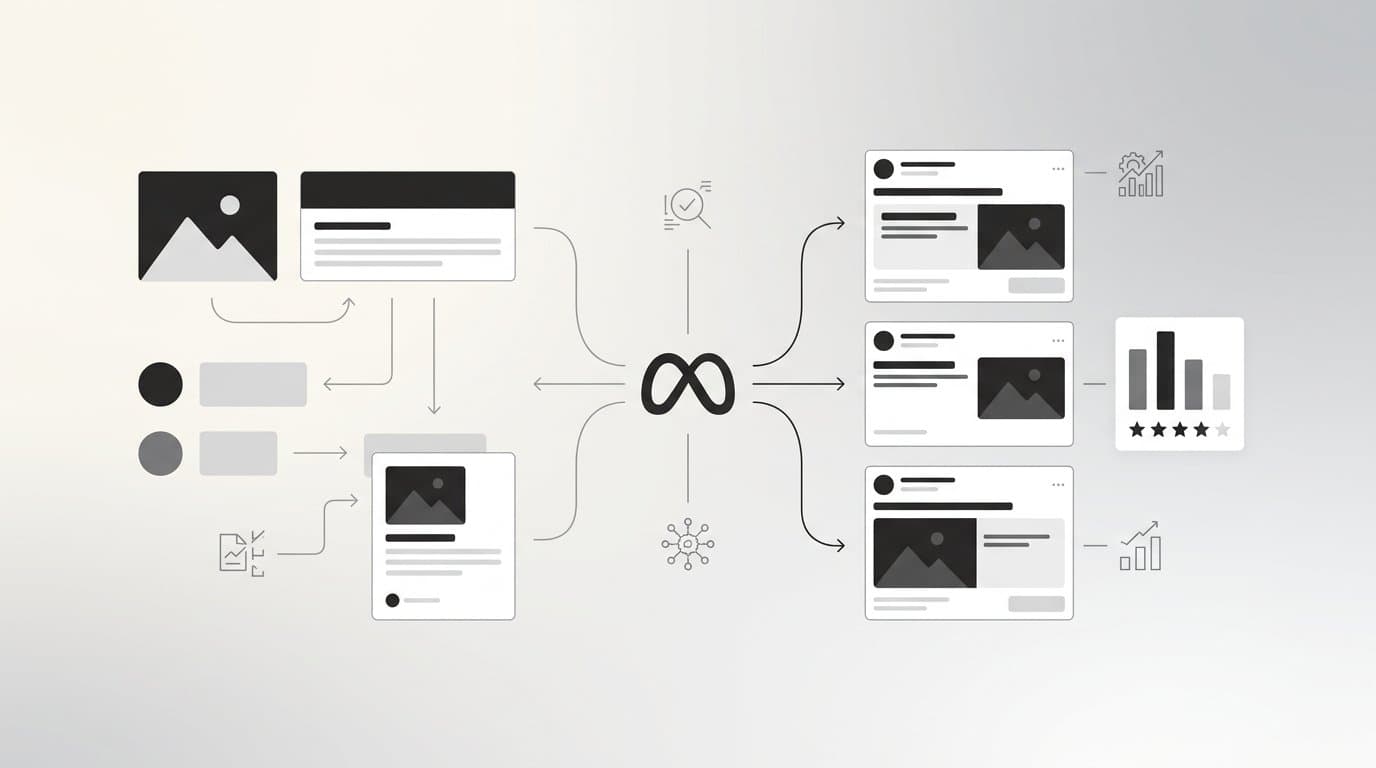
This is exactly where AI-powered tools change the math. AdStellar's Bulk Ad Launch feature lets you take a single influencer creative asset, mix in multiple headlines, copy variations, and audience segments, and generate every combination automatically. The platform then launches all of those variations to Meta simultaneously. What used to take a full afternoon in Ads Manager compresses into minutes. For teams running multiple influencer collaborations in parallel, this is not a minor efficiency gain. It is the difference between running a real test and running a token one.
AdStellar's AI Campaign Builder also analyzes past campaign performance to rank creatives, headlines, and audiences before you launch, so you are not starting from scratch with each new influencer asset. The system gets smarter over time, which means your influencer ad testing process improves with every campaign you run.
Measuring What Matters and Knowing When to Scale
Influencer ad collaboration has a slightly different measurement framework than standard paid social, and conflating the two leads to bad decisions.
ROAS and CPA are still your primary performance indicators. But for influencer creative specifically, two additional metrics deserve close attention. Thumb-stop rate tells you whether the creative is doing its job in the first two seconds. If your thumb-stop rate is strong but your conversion rate is low, the creative is not the problem. Your landing page, your offer, or your audience targeting is. That distinction matters because it tells you where to fix things. Video view rate (the percentage of viewers who watch past 25% or 50% of the video) tells you whether the content holds attention after the hook. A strong hook with a weak body means the creator nailed the opening but lost the thread. Both metrics give you specific creative feedback, not just overall campaign feedback.
Attribution requires careful setup when you are running influencer content both organically and as paid ads simultaneously. The same creative appearing in both contexts will generate both organic engagement and paid conversions, and without clean tracking, those numbers bleed together. The standard solution is UTM parameters specific to each influencer ad set, with organic and paid reporting kept completely separate in Meta. This sounds basic, but it is frequently skipped in the rush to launch, and the result is attribution data you cannot trust. Tackling Instagram ad performance tracking difficulty with a structured approach from the start protects the integrity of every decision you make downstream.
Scaling decisions should be data-driven, not intuition-driven. AdStellar's AI Insights leaderboards score every creative against your target ROAS and CPA benchmarks in real time. Instead of manually pulling reports to figure out which influencer asset is earning more budget, the platform surfaces that answer directly. Creatives that are hitting your benchmarks get flagged for scaling Instagram ads efficiently. Creatives that are draining spend without results get flagged for pausing. The Winners Hub keeps your top-performing influencer assets in one place so you can pull them into future campaigns without hunting through old ad sets.
From Creator Brief to Live Campaign: The Full Workflow
Pulling all of this together, the end-to-end workflow for a high-performing Instagram influencer ad collaboration looks like this.
Start by identifying the right creator based on audience alignment and content style, not just follower count. Secure usage rights and whitelisting access in the contract before production begins. Brief the creator specifically for paid-ad-native performance: clear objective, strong hook, single call to action, and creative freedom for execution. Receive the content, repurpose it into multiple formats and variations, and use those variations to build a structured test across multiple audience segments.
Launch with volume. Test multiple hooks, multiple copy angles, and multiple audiences simultaneously rather than running one ad and waiting. Monitor thumb-stop rate and video view rate alongside ROAS and CPA to get specific creative feedback. Use UTM parameters to keep organic and paid attribution clean. Scale what the data tells you to scale, and pause what is not earning its budget.
AdStellar handles the execution layer of this workflow. The AI Creative tools let you generate influencer-style image ads, video ads, and UGC-style content from a product URL, clone competitor ads from the Meta Ad Library, or build from scratch with chat-based editing. The Bulk Ad Launch feature generates every ad variation and pushes them all to Meta in minutes. AI Insights and the Winners Hub surface your best performers automatically so you always know where to put the next dollar.
The creator relationship and the campaign strategy belong to you. The manual execution in Ads Manager does not have to.
The Bottom Line on Influencer Ad Collaboration
Instagram influencer ad collaboration is one of the highest-leverage paid media strategies available on Meta right now. But leverage only materializes when the paid amplification layer is executed with the same rigor as the creative layer. Influencer content is not a shortcut to performance. It is a creative input into a systematic testing and optimization process.
The brands winning with this approach do not treat it as a brand awareness play dressed up in performance marketing language. They secure proper usage rights. They brief for paid performance. They test at volume. They read the data at the creative level, not just the campaign level. And they scale based on what the numbers say, not what feels right.
If you are ready to stop guessing and start running influencer ad collaborations the way performance marketers actually should, AdStellar gives you the tools to do it. Generate influencer-style creatives, launch hundreds of variations at scale, and let AI surface your winners automatically, without designers, video editors, or hours in Ads Manager.
Start Free Trial With AdStellar and be among the first to launch and scale your influencer ad campaigns faster with a platform that builds, tests, and optimizes winning ads based on real performance data.