Instagram Stories ads sit in one of the most valuable placements on Meta's entire network. They appear full-screen, between organic content, with no competing posts or captions fighting for attention. Users are already in a tap-forward mindset, moving quickly through content they chose to see. When your ad appears in that stream, you have a fraction of a second to earn their attention before they tap past.
The format rewards marketers who get both the technical side and the creative side right. Get the specs wrong and Meta crops your creative, overlaps UI elements on your headline, or reduces delivery. Get the creative wrong and you waste a perfect placement on an ad that users tap through without registering.
This guide covers every layer of the Instagram story ad format: the exact technical specifications, safe zone rules, creative principles, copy structure, campaign setup, testing methodology, and performance analysis. Each step builds on the previous one so that by the end, you have a complete, launch-ready approach rather than a collection of disconnected tips.
Whether you are creating Stories ads for the first time, managing campaigns for multiple clients, or looking to systematize what is already working, this walkthrough gives you the full picture. Let's get into it.
Step 1: Master the Technical Specs Before You Build Anything
Before you open a design tool or brief a creative team, the technical specifications need to be locked in. Building a Stories ad at the wrong dimensions is one of the most common and most avoidable mistakes in Meta advertising. It leads to cropped visuals, UI overlap, and delivery issues that no amount of good copy can fix.
Core Dimensions: The required format for Instagram Stories ads is 1080 x 1920 pixels at a 9:16 aspect ratio. This is non-negotiable. Meta does accept a minimum of 500 x 889 pixels, but you should always design at the full 1080 x 1920 to ensure sharpness across all device sizes. For a deeper look at how these dimensions compare across placements, the size of Instagram Stories breakdown covers every format in detail.
File Types: For video ads, use MP4 or MOV. For image ads, use JPG or PNG. These are the only formats Meta reliably processes without conversion issues.
File Size Limits: Video files can be up to 250MB. Image files should stay under 30MB. In practice, a well-compressed video for a 15-second Stories ad will typically come in well under the 250MB ceiling, but it is worth checking before upload.
Video Length: For the Stories placement specifically, the maximum video length is 15 seconds. If your video is longer, Meta will either reject it or truncate it. Design your video to deliver the complete message within 15 seconds, with the core offer visible in the first two seconds.
Safe Zone Rules: This is where many well-designed ads fail silently. The top portion of the Stories frame, roughly the top 250 pixels, is occupied by the profile icon, advertiser name, and timestamp. The bottom portion, roughly the bottom 340 pixels, is where the CTA button and swipe-up area appear. Any critical text, logos, or CTAs placed in these zones will be partially or fully covered by Meta's UI elements.
Keep all essential content within the center 1080 x 1420 pixel zone. Think of it as a safety margin: design for the full canvas, but treat the center area as your content zone.
Text Overlay: Meta no longer enforces a hard 20% text rule, but their own creative guidance recommends keeping text minimal. Heavy text overlays can trigger reduced delivery, particularly for image ads. Let your visual carry the weight and use text sparingly.
Common Pitfall: Designing at 1080 x 1080 (square) and attempting to adapt it to Stories. This forces letterboxing, leaves black bars at the top and bottom, and makes your ad immediately identifiable as a repurposed asset rather than a native Stories experience.
Success Indicator: Your creative passes Meta's ad preview without any warnings, cropping alerts, or text overlay flags. The preview in Ads Manager should show your creative filling the entire screen with no black bars and no UI elements overlapping your headline or CTA.
Step 2: Design Creatives That Stop the Tap
Technical compliance gets your ad into the placement. Creative quality determines whether anyone actually stops to look at it. Stories is a tap-forward environment. Users move through content quickly, and the default behavior is to tap through anything that does not immediately register as worth watching.
Your creative has approximately half a second to communicate something worth stopping for. That is not a metaphor. It is the practical reality of how people consume Stories content, and every design decision should be made with that constraint in mind.
Vertical-First Composition: Place your primary subject in the upper-center third of the frame, within the safe zone. The eye naturally lands there first on a vertical screen. Avoid centering everything in the absolute middle, which can feel static and flat on a mobile display.
Bold, High-Contrast Visuals: For direct response Stories ads, bold and high-contrast outperforms subtle or purely lifestyle imagery. If a viewer cannot identify the product and the general offer within the first second, the visual is not working hard enough. Lifestyle imagery works well when it is paired with a clear, prominent product element.
Motion Beats Static: Even a simple zoom, a text animation, or a product reveal adds enough movement to increase watch time compared to a completely static image. Video does not need to be elaborate. A clean product clip with animated text often outperforms a heavily produced video because it feels native to the Stories format. If you want a full walkthrough on producing this type of content, the guide on Instagram video ads that convert covers the production process step by step.
Three Creative Formats That Perform Well in Stories:
1. Product Demo Clips: Short, focused videos showing the product in use. Keep it to the core benefit and show it within the first three seconds.
2. UGC-Style Testimonials: Authentic-looking, person-to-camera content that blends with organic Stories. These tend to perform well because they feel less like traditional advertising and more like a recommendation from someone the viewer follows.
3. Bold Offer Announcements: High-contrast text on a strong background color, leading with the offer directly. Works particularly well for promotions, limited-time deals, and clear value propositions.
Copy Structure on the Creative: One headline, one supporting line, one CTA. That is the proven structure for Stories. Every additional element competes with the CTA and reduces the clarity of the message. Viewers should not have to decide what to look at.
Brand Consistency: Include your logo, but place it in a corner of the frame that sits outside the bottom safe zone strip. The top corners work well. Keep it small enough that it does not compete with the main visual.
Tools like AdStellar can generate image ads, video ads, and UGC-style avatar creatives directly from a product URL, removing the need for designers or video editors. You can also clone competitor ads from the Meta Ad Library and refine any creative with chat-based editing, which makes it practical to produce multiple high-quality variations without a production team.
Success Indicator: Show your creative to a colleague who is unfamiliar with your brand. They should be able to identify the offer and the CTA within three seconds. If they cannot, the creative needs simplification, not more elements.
Step 3: Write Ad Copy That Works With the Format
Stories ad copy operates on two levels, and most marketers only think about one of them. The first is the overlay text on the creative itself. The second is the primary text field in Ads Manager, which appears below the Stories frame on certain placements and device configurations.
Both layers need to be intentional, and they need to work together rather than repeat each other.
Overlay Text on the Creative: Keep it to five to seven words maximum. Use action verbs. Make the benefit explicit rather than clever. "Get 40% Off Your First Order" is more effective than "Discover Something Amazing" because it tells the viewer exactly what they get and what to do. Vague copy in a fast-moving format is copy that gets ignored.
Primary Text in Ads Manager: This field reinforces the creative message for viewers who read it. Use it to add context or urgency that the overlay text does not have room for. If your creative says "Limited Offer Ends Sunday," your primary text can explain what the offer actually includes. Do not use this field to repeat what is already on the creative.
CTA Button Selection: The CTA button appears at the bottom of the Stories frame. For direct response campaigns, "Shop Now," "Learn More," and "Get Offer" consistently outperform generic options like "Contact Us" or "Subscribe" in terms of click-through rate. Match the CTA to the action you are asking the viewer to take. If you are driving to a product page, "Shop Now" is clearer than "Learn More."
Urgency and Specificity: The Stories format is inherently fast-moving. Copy that creates a reason to act now performs better than copy that invites consideration. Specific claims outperform vague ones. "Free Shipping on Orders Over $50 This Weekend Only" gives the viewer a concrete reason to swipe up immediately. Understanding how Instagram Story ads underperform often comes down to copy that lacks this kind of specificity.
Avoid Duplication Between Layers: Use overlay text and primary text to complement each other. The overlay text should lead with the benefit or offer. The primary text should add context, reinforce urgency, or address a potential objection. If both say the same thing, you have wasted one of your copy layers.
Common Pitfall: Writing copy for feed ads and repurposing it to Stories without editing for brevity. Feed ad copy often runs longer and relies on the viewer having more time to read. Stories viewers do not. Every word in a Stories ad should earn its place.
Success Indicator: Your overlay text is readable on both light and dark backgrounds at normal viewing distance on a mobile screen. If it requires zooming in or straining to read, reduce the word count or increase the contrast.
Step 4: Set Up Your Stories Campaign in Meta Ads Manager
A correctly designed creative placed in the wrong campaign structure will underperform. Campaign setup determines who sees your ad, how Meta optimizes delivery, and whether your 9:16 creative actually appears as a full-screen Story or gets cropped into something unrecognizable.
Choose the Right Objective: For Stories ads focused on driving action, Conversions, Traffic, and App Installs are the most common campaign objectives. Conversions is the right choice when you have enough conversion data for Meta to optimize delivery. Traffic works when you are driving to a landing page and want to maximize link clicks. Choose your objective based on the action you want users to take, not on what sounds most ambitious. A step-by-step Instagram ad campaign setup tutorial can help if you are working through this process for the first time.
Placement Selection: This is a critical decision. If you use Advantage+ placements, Meta will distribute your creative across multiple surfaces, including Feed, Reels, Marketplace, and Stories. If your creative is designed specifically for 9:16, Advantage+ placements will attempt to adapt it to other formats, which can result in cropping or letterboxing in non-Stories placements.
If you want your Stories ad to appear exactly as designed, use Manual Placements and select Instagram Stories specifically. This gives you control over the format and ensures your 9:16 creative is used as intended. If you are running Advantage+ placements, make sure you have format-appropriate creatives for each surface or use the asset customization feature to assign your 9:16 creative specifically to the Stories placement.
Audience Setup: Stories ads tend to perform well with two distinct audience types. Warm audiences, including website visitors and engagement audiences, respond well because they already have some familiarity with the brand. Broad cold audiences with strong creative also work in Stories because the full-screen format gives the creative enough room to do the selling without relying on prior brand awareness. For a deeper look at how to structure this, the guide on automated targeting for Instagram ads walks through how to build and refine audience segments efficiently.
Ad Set Level Settings: Before moving to the ad level, confirm your optimization event, bid strategy, and schedule. If you are optimizing for purchases, make sure your pixel is firing correctly and that you have enough conversion data for Meta to optimize effectively. Set your daily or lifetime budget at the ad set level, not the campaign level, unless you are using campaign budget optimization.
Ad Level Setup: Upload your 9:16 creative, add your overlay copy and primary text, select your CTA button, and then use the ad preview tool to check the Stories format specifically. The preview should show your creative filling the full screen with no black bars, no cropping of key elements, and no UI overlap on your headline or CTA.
Platforms like AdStellar take this further by analyzing your historical campaign performance and building complete Meta campaigns with AI-selected audiences, headlines, and copy. Every decision comes with a full explanation so you understand the strategy behind it, and the AI improves with each campaign it runs.
Common Pitfall: Using Automatic or Advantage+ placements with a square or landscape creative. Meta will attempt to letterbox it into the Stories format, resulting in black bars and a significantly worse user experience. Always match your creative format to your placement selection.
Success Indicator: The ad preview in Ads Manager shows your creative filling the full Stories frame with no black bars, no cropping of essential content, and no UI elements overlapping your headline or CTA button.
Step 5: Launch Multiple Variations and Let Data Decide
Launching a single Stories creative and waiting to see if it works is not a testing strategy. It is a coin flip. The Stories format rewards marketers who treat every launch as a structured experiment, not a one-shot attempt at finding a winner.
What to Test: Keep your test variables isolated so you can draw clean conclusions. The most impactful variables to test in Stories ads are creative format (image versus video versus UGC-style), headline text, CTA button choice, and offer framing. Testing all of these simultaneously in a single ad set makes it impossible to know which variable drove the difference in performance. The methods covered in this guide to Instagram ad creative testing give you a structured framework for keeping variables clean.
How Many Variations to Start With: A minimum of three to five creative variations per ad set gives you enough range to generate meaningful performance differences without spreading your budget too thin. If your budget is limited, start with three variations and expand once you have identified a direction that is working.
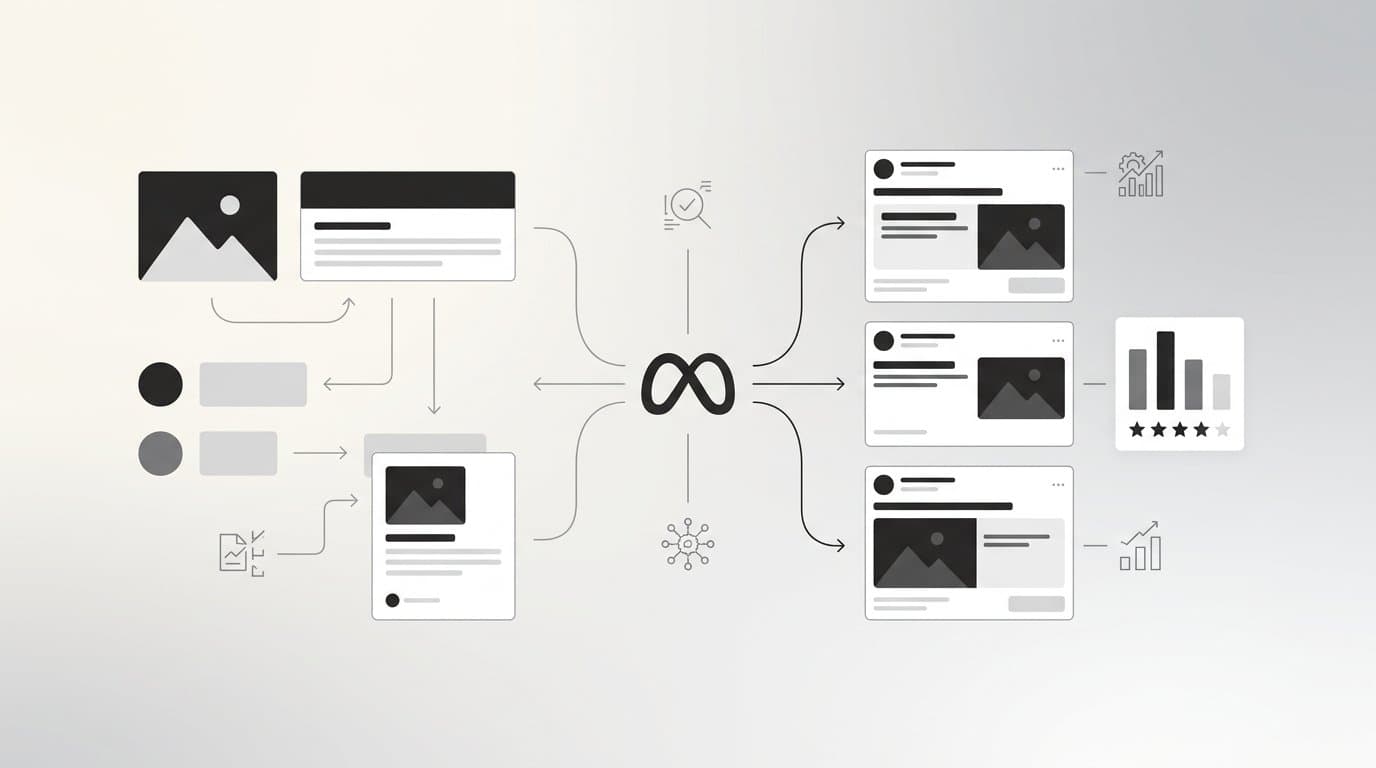
Bulk Launching: Setting up multiple variations manually in Ads Manager is time-consuming. Bulk launching tools solve this by letting you input multiple creatives, headlines, audiences, and copy combinations and then generating every possible combination automatically. AdStellar's Bulk Ad Launch feature creates hundreds of ad variations in minutes by mixing these elements at both the ad set and ad level, turning what would be hours of manual setup into a process that takes a few clicks. For a closer look at how this works at scale, the overview of bulk Instagram ad creation explains the full workflow.
Set Your Testing Parameters Before Launch: Decide on your testing budget and timeline before the campaign goes live. Know how much you are willing to spend per variation before making a decision, and set a minimum time window that allows the campaign to exit the learning phase. Making decisions based on two days of data from a campaign that is still in the learning phase leads to pausing ads that would have performed well with more time.
Common Pitfall: Pausing ads too early. Meta's learning phase requires a minimum number of optimization events before the algorithm can deliver efficiently. Pausing an ad set before it reaches that threshold means you are making decisions based on data from an algorithm that has not yet found its optimal delivery pattern. Give your variations enough time and budget to generate statistically meaningful results.
Success Indicator: Your campaign has enough variation to surface clear performance differences within your testing window, and you have a predefined decision framework for what you will do with the results before you look at them.
Step 6: Analyze Performance and Scale Your Winners
Launching and testing is only half the job. The other half is knowing which metrics actually tell you something useful, and then acting on what they reveal.
Stories-Specific Metrics to Track: The most useful Stories-specific metric is thumb-stop rate, calculated as three-second video views divided by impressions. A strong thumb-stop rate tells you the creative is doing its job of stopping the tap. A weak thumb-stop rate with strong downstream metrics is unusual but can indicate that your audience is highly targeted. Generally, thumb-stop rate is your first signal of creative quality. If you want to understand how impressions factor into this calculation, the explainer on what impressions mean on Instagram provides useful context.
Swipe-up rate or link click rate tells you whether the copy and offer are compelling enough to drive action after the viewer has stopped. A high thumb-stop rate with a low swipe-up rate typically points to a copy or offer problem, not a creative problem. A low thumb-stop rate with a high swipe-up rate is rare but suggests your creative is selective in who it engages.
CPA and ROAS are the downstream metrics that matter most for conversion-focused campaigns. Click rates are useful for diagnosing creative and copy issues, but scaling decisions should be based on cost per acquisition and return on ad spend, not on clicks alone.
Use Leaderboard-Style Reporting: Reviewing creatives in isolation makes it hard to see relative performance. Ranking your creatives, headlines, and audiences side by side by ROAS and CPA gives you an immediate view of what is working and what is not. AdStellar's AI Insights feature does exactly this: it ranks creatives, headlines, copy, and audiences by real metrics including ROAS, CPA, and CTR, with goal-based scoring so you can instantly identify which combinations are hitting your benchmarks.
Winners Hub: Once a Stories creative consistently hits your performance targets, it becomes an anchor asset. AdStellar's Winners Hub collects your best-performing creatives, headlines, and audiences in one place with real performance data attached, so when you build your next campaign, you are starting from proven elements rather than starting from scratch.
Scaling Approach: When you identify a winning ad set, increase the budget incrementally rather than duplicating the ad set and relaunching. Duplicating resets the learning phase and forces the algorithm to relearn delivery patterns from scratch. Gradual budget increases on a proven ad set allow the algorithm to scale delivery while maintaining the optimization it has already built. The strategies outlined in this guide to scaling Instagram ads efficiently walk through exactly how to approach this without disrupting performance.
Attribution: The path from a Stories swipe-up to a completed purchase often involves multiple touchpoints. Attribution tools like Cometly, which integrates with AdStellar, connect ad-level performance to actual revenue so your scaling decisions are based on profit rather than proxy metrics. Without accurate attribution, you risk scaling ad sets that drive clicks but not conversions.
Common Pitfall: Optimizing for CTR alone without connecting it to downstream conversion data. Click-through rate is a useful diagnostic metric, but it is not a business outcome. An ad set with a high CTR and a poor CPA is not a winner.
Success Indicator: You have identified at least one creative, one headline, and one audience combination that consistently hits your CPA or ROAS target across your testing window. That combination becomes the foundation for your next round of scaling and iteration.
Your Stories Ad Launch Checklist
Before any Stories campaign goes live, run through this checklist. It covers every step in this guide and gives you a clear go/no-go signal for each element.
Technical Specs: Creative is 1080 x 1920 pixels at 9:16 aspect ratio. File type is MP4, MOV, JPG, or PNG. File size is within limits (250MB for video, 30MB for image). Video length is 15 seconds or under.
Safe Zones: All critical text, logos, and CTAs sit within the center 1080 x 1420 pixel zone. Nothing important is placed in the top 250 pixels or bottom 340 pixels of the frame.
Creative Quality: The creative passes the three-second test. A fresh viewer can identify the offer and CTA within three seconds. Motion is present in video ads within the first two seconds. Text overlay is minimal and readable on both light and dark backgrounds.
Copy: Overlay text is five to seven words, benefit-driven, and action-oriented. Primary text in Ads Manager adds context rather than repeating the overlay. CTA button matches the desired action.
Campaign Setup: Objective matches the desired action. Placement is set to Instagram Stories specifically or creative customization is applied for Advantage+ placements. Audience is defined and appropriate for the campaign goal. Ad preview shows no black bars, no cropping, and no UI overlap.
Testing: At least three creative variations are live. Test variables are isolated. Testing budget and timeline are defined before launch.
Performance Tracking: Thumb-stop rate, link click rate, CPA, and ROAS are all being tracked. Attribution is connected to downstream conversion data.
If you want to handle creative generation, bulk launching, and performance analysis from a single platform, Start Free Trial With AdStellar and see how quickly you can go from product URL to live Stories campaign, with AI handling the creative, the campaign structure, and the winner identification so you can focus on scaling what works.