Every Meta advertiser has experienced it. A campaign that was delivering strong returns suddenly starts to slip. The numbers soften. Cost per acquisition creeps up. Click-through rate dips. You check the budget, the audience, the targeting settings. Nothing changed. So what went wrong?
The answer, more often than not, is ad fatigue. And the solution is something far too many advertisers treat as an afterthought: creative refresh rate.
Creative refresh rate is one of the most underrated performance levers in Meta advertising. It does not get the same attention as audience targeting or bid strategy, but it quietly determines whether your campaigns maintain momentum or slowly stall out. The advertisers who scale consistently on Meta are rarely the ones with the biggest budgets or the most sophisticated funnels. They are the ones who understand that creative has a shelf life, and they have built systems to manage it.
By the end of this article, you will have a clear understanding of what creative refresh rate actually means, how to recognize when your creatives are past their prime, what factors determine the right refresh cadence for your specific campaigns, and how to build a sustainable system that keeps your Meta ads performing without burning out your team in the process.
The Hidden Performance Killer in Your Meta Campaigns
To understand creative refresh rate, you first need to understand what ad fatigue actually is and what it does to your campaigns at a mechanical level.
Meta's ad delivery system is built around an auction. Every time there is an opportunity to show an ad to someone in your target audience, Meta evaluates your creative, your bid, and your estimated action rate to decide whether to show it. When your audience is fresh and your creative is new, the algorithm has plenty of people to reach and a strong signal that your ad is relevant. Performance tends to be efficient.
Here is where fatigue enters the picture. Frequency is calculated as impressions divided by reach. A frequency score of 3 means the average person in your audience has seen that specific ad three times. As frequency climbs, Meta runs out of new people to show your ad to within that audience. The algorithm starts re-serving the ad to people who have already seen it, often multiple times. Those people are less likely to engage or convert. Estimated action rates drop. To maintain delivery, Meta has to bid higher in the auction, which drives up CPM. Your cost per result rises, and your overall campaign efficiency deteriorates.
This is ad fatigue in action. It is not a mysterious force. It is a predictable outcome of showing the same creative to the same people too many times.
Creative refresh rate is the cadence at which you introduce new or updated creatives into your active campaigns to counteract this cycle. It is the rhythm of your creative pipeline: how frequently you swap in fresh assets, test new angles, and retire creatives that have run their course.
It is worth drawing a clear distinction here. Refreshing a creative is not the same as restructuring a campaign. A creative refresh means changing the visual, the copy, the format, or the hook at the asset level. You are not rebuilding your audience, adjusting your campaign objective, or overhauling your account structure. The refresh happens at the creative layer, and that is what makes it a relatively low-disruption but high-impact lever when managed well.
Warning Signs Your Creatives Need a Refresh Now
Knowing that fatigue exists is one thing. Knowing when it has actually arrived in your campaigns is another. The good news is that Meta Ads Manager gives you the signals. You just need to know where to look and what to watch for.
Rising frequency: This is the most direct indicator. When frequency on a specific creative starts climbing steadily week over week, it means your audience is seeing that ad repeatedly. Frequency alone does not guarantee poor performance, but when it rises alongside other warning signs, it confirms that fatigue is setting in.
Declining CTR: A drop in click-through rate on a creative that previously performed well is a strong signal that your audience has stopped responding. They have seen it, processed it, and moved on. The ad is no longer earning their attention.
Increasing CPM: As the algorithm struggles to find engaged users within your audience, it bids more aggressively to maintain delivery. Rising CPM without a corresponding improvement in results is a classic fatigue symptom.
Worsening CPA and ROAS: These are the downstream consequences of the signals above. When CTR falls and CPM rises, your cost per acquisition follows. If your ROAS is trending downward on a creative that was previously efficient, fatigue is a likely contributor.
Relevance diagnostic shifts: Meta surfaces quality ranking, engagement rate ranking, and conversion rate ranking at the ad level. When these diagnostics slip from average to below average, it is a signal that Meta's system has detected reduced relevance for your creative relative to competing ads.
One of the most important habits you can develop is monitoring at the creative level rather than the campaign level. Campaign-level data aggregates performance across all your ads, which can mask fatigue on individual creatives. A strong new creative can temporarily prop up the numbers while an older one quietly deteriorates. By reviewing creative-level metrics regularly, you can catch fatigue early at the asset level before it drags down overall campaign performance.
A common question is whether there is a universal frequency threshold that should trigger a refresh. There is not. The right threshold depends on your audience size, your campaign objective, and your creative type. A retargeting audience of a few thousand people will hit problematic frequency levels far faster than a broad prospecting audience of several million. A conversion campaign will show fatigue signals earlier than an awareness campaign. Rather than chasing a specific number, focus on the trend. When multiple metrics are moving in the wrong direction simultaneously, that is your signal to act.
How Often Should You Actually Refresh Meta Ad Creatives
There is no single answer to how often you should refresh your Meta ad creatives, but there are clear factors that determine the right cadence for your specific situation. Understanding these variables lets you set realistic expectations and build a refresh schedule that matches your campaign reality.
Audience size is the most important variable. A broad prospecting audience of several million people has a large pool of individuals who have never seen your ad. Frequency accumulates slowly because Meta has plenty of new reach to work with. Creatives in these campaigns can often sustain strong performance for weeks or even months before fatigue becomes a meaningful issue.
Retargeting audiences are a completely different story. When you are targeting a pool of a few thousand website visitors or video viewers, frequency climbs rapidly. Those same people are seeing your ad again and again within days. Retargeting campaigns often need fresh creatives on a weekly basis to avoid burning out a small audience that you cannot afford to alienate.
Campaign objective shapes how quickly fatigue manifests. Awareness and reach campaigns tolerate higher frequency before performance degrades because the goal is simply exposure. Seeing an ad multiple times can actually reinforce brand recognition in these contexts.
Conversion campaigns are far less forgiving. The algorithm is pushing hard for a specific action from a defined group of people. When someone has seen your conversion ad three or four times without converting, they have effectively told the algorithm they are not interested. Continuing to serve them the same creative wastes budget and signals poor relevance. Conversion campaigns typically need more frequent refreshes than top-of-funnel campaigns.
Daily budget and spend pace directly compress your refresh window. A campaign spending a modest daily budget on a large audience will accumulate frequency slowly. A campaign pushing significant daily spend through a smaller audience will burn through that audience much faster. Higher budgets accelerate frequency, which means the window before a refresh is needed gets shorter as you scale.
This is one of the reasons scaling on Meta is harder than it looks. Increasing budget without a corresponding increase in creative output often leads to accelerated fatigue, which erodes the efficiency gains you were trying to achieve by spending more.
As a practical starting point, many performance marketers review creative-level metrics weekly for conversion campaigns and set up a refresh cadence that keeps new creative variations entering the rotation before existing ones fully exhaust their audience. The goal is to be proactive rather than reactive, introducing fresh creatives while current ones are still performing, not waiting until performance has already collapsed.
What Counts as a Creative Refresh (and What Does Not)
Not all changes to an ad constitute a meaningful refresh. This distinction matters because a superficial tweak will not reset how your audience perceives and responds to the creative. Understanding what actually moves the needle helps you invest your creative energy in the right places.
Meaningful refreshes that genuinely reset audience response include:
New visual formats: Switching from a static image to a video, or from a polished brand video to a UGC-style creative, presents a fundamentally different experience to the viewer. Even if the underlying message is similar, the format change is enough to recapture attention from people who had tuned out the previous version.
New hooks in the first three seconds: For video ads especially, the opening moment determines whether someone stops scrolling or keeps going. A new hook, a different opening line, a surprising visual, or a changed first frame can dramatically alter how the same audience responds to what is essentially the same ad concept.
New value propositions or offers in the copy: If your previous creative led with price, try leading with convenience or social proof. Shifting the core message gives people who saw the original ad a reason to engage with the new version.
New creative angles targeting different pain points: Your product solves multiple problems for different types of customers. A creative that speaks to one pain point will resonate differently than one that addresses another. Rotating angles keeps your creative relevant to different segments of your audience.
On the other side of this, minor color tweaks, small text edits, and resizing an existing creative without changing the core message or visual concept do not constitute a true refresh. These changes are invisible to an audience that has already processed and dismissed the original ad. The brain pattern-matches quickly. If the visual and message feel familiar, the response will be the same.
This is where a creative testing matrix becomes valuable. Rather than waiting until a creative is exhausted and then scrambling to produce something new, a testing matrix means you always have a pipeline of distinct creative concepts ready to rotate in. You maintain proven winners in active rotation while testing new angles alongside them. When a winner starts to fade, a replacement is already in the queue with performance data behind it.
The goal is to never be in a position where creative fatigue forces a reactive scramble. The pipeline does the work so your campaigns do not have to wait.
Building a Sustainable Creative Refresh System
Knowing when to refresh and what a real refresh looks like is valuable. But the advertisers who consistently outperform on Meta are the ones who have turned this knowledge into an operational system rather than a series of one-off decisions.
A sustainable refresh system starts with a regular performance monitoring schedule. Set a specific day each week to review creative-level metrics across your active campaigns. Look at frequency trends, CTR movement, CPM shifts, and CPA changes at the individual ad level. This weekly check-in gives you early warning before fatigue becomes a crisis, and it builds the habit of proactive management rather than reactive firefighting.
Next, define your personal fatigue thresholds based on your historical data rather than generic industry rules. Over time, you will develop a sense for the frequency level or CTR drop that reliably predicts performance decline in your specific account. These personalized benchmarks become your trigger points for action.
The third element is the creative backlog. This is the piece most advertisers skip, and it is the one that makes everything else possible. A backlog means you always have a set of tested or ready-to-test creative variations waiting to be deployed. When a current creative shows fatigue signals, you are not starting from scratch. You are pulling from a queue.
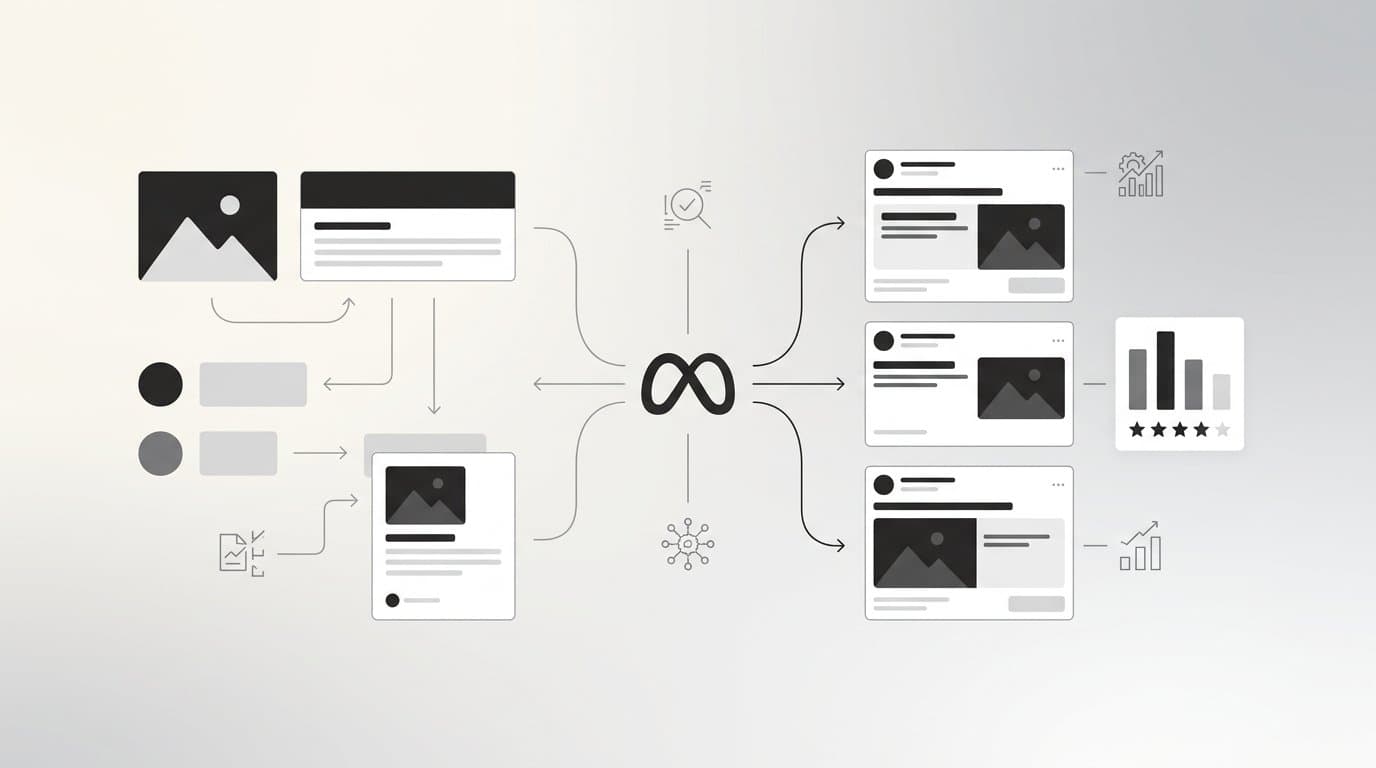
Building this backlog used to require significant time and resources: briefing designers, waiting for revisions, manually setting up new ad sets. Bulk ad creation tools change this equation entirely. Platforms like AdStellar let you generate image ads, video ads, and UGC-style creatives from a product URL and launch hundreds of ad variations in minutes by mixing different creatives, headlines, audiences, and copy combinations. What previously took days of production work can now happen in a single session.
This operational efficiency is what makes a consistent refresh cadence realistic for teams that are not running a dedicated creative studio. When the bottleneck of production is removed, maintaining a healthy creative pipeline becomes a matter of process rather than heroics.
The Winners Hub concept completes the loop. Rather than treating each campaign as a fresh start, archiving your top-performing creatives alongside their performance data means future refreshes can be built on proven elements. You know which hooks worked, which formats drove conversions, which value propositions resonated. New creative iterations are informed by real performance history rather than guesswork, which means your refresh cycle gets smarter over time rather than starting from zero each time.
Putting It All Together: From Reactive Refreshes to a Proactive System
The shift from reactive to proactive creative management is one of the most meaningful improvements any Meta advertiser can make. Reactive refreshes happen after performance has already deteriorated. Proactive refreshes happen while campaigns are still healthy, extending their life and preventing the costly dip that comes with waiting too long.
Managing your Meta ad creative refresh rate is not a one-time project. It is an ongoing operational discipline. The campaigns that scale consistently are the ones where creative production is treated as a continuous process, not something that happens in bursts when things break down.
Think of it like maintenance rather than repair. You do not wait for an engine to fail before changing the oil. You build a schedule and stick to it. Creative refresh works the same way. Regular attention, informed by data, keeps the machine running efficiently.
The advertisers who win long-term on Meta are not necessarily the ones with the largest budgets or the most complex targeting setups. They are the ones who respect the lifecycle of a creative, monitor the signals that indicate when that lifecycle is ending, and have a system in place to introduce fresh assets before fatigue takes hold.
AdStellar is built to make this system operational without requiring a large team or constant manual effort. From AI-powered creative generation across image, video, and UGC formats, to bulk launching that creates hundreds of ad variations in minutes, to AI Insights that rank your creatives by real metrics like ROAS, CPA, and CTR, to a Winners Hub that archives your proven performers for future use, the platform handles the full creative refresh workflow in one place.
If you are ready to move from reactive scrambling to a proactive creative system that keeps your Meta campaigns performing consistently, Start Free Trial With AdStellar and see how much faster your campaigns can scale when creative production and performance tracking work together.