Meta's advertising feed is one of the most contested spaces in digital marketing. Millions of advertisers compete for the same eyeballs, the same scroll-stopping moments, and the same finite attention spans. And yet, most advertisers are fighting the wrong battle.
The conventional wisdom used to be that targeting was everything. Get the right audience, set the right bids, and results would follow. Creative was almost an afterthought, something you handed to a designer and hoped for the best. That playbook is outdated, and sticking to it is quietly draining ad budgets across the industry.
Today, creative is the primary performance variable on Meta. Not targeting. Not bidding strategy. The ad itself. As Meta's algorithm has grown more sophisticated and audience targeting has opened up, the creative does the heavy lifting of finding the right people. Which means if your creative is weak, no amount of targeting precision or budget will save you.
But here is the important distinction: creative strategy is not about making beautiful ads. It is about building a systematic process for generating, testing, and scaling what actually works. It is an operational discipline, not a design exercise.
This guide covers the five core pillars of a strong meta ad creative strategy. First, why creative has become the dominant performance lever on the platform. Second, which formats drive results and when to use each. Third, how to build a testing framework that generates compounding learnings. Fourth, what separates high-converting ads from forgettable ones. Fifth, how to use data to identify winners fast and cut losers before they drain your budget. And finally, how AI is collapsing the traditional creative production timeline and changing what is operationally possible for performance marketers.
Creative Is the Algorithm Now
To understand why creative strategy matters so much today, you need to understand what has changed in Meta's delivery system over the past few years. Meta has steadily moved toward broader, AI-driven audience targeting. Tools like Advantage+ audiences essentially hand audience selection over to the algorithm, which then finds the people most likely to convert based on signals from the ad itself.
This is a fundamental shift. The old model looked like this: tight audience targeting, detailed interest stacking, custom demographic slices, paired with decent creative. The creative's job was to convert the audience you had already selected. The new model inverts that relationship. Open targeting, broad audiences, and the creative itself acting as the primary signal that tells the algorithm who to show it to.
Think of it this way. If your ad visually and verbally speaks to first-time homebuyers navigating a tight market, Meta's algorithm will find first-time homebuyers. The creative is doing the targeting work. Which means a weak creative does not just underperform on its own terms. It actively confuses the algorithm and results in poor delivery to the wrong people.
This changes where performance marketers should be investing their time and resources. Spending hours refining audience segments while neglecting creative quality is now a misallocation. The creative deserves the same strategic rigor you would apply to your bidding strategy or budget structure.
There is a second structural challenge that makes this even more urgent: creative fatigue. On Meta, even a genuinely great ad has a limited lifespan. As your audience sees the same creative repeatedly, engagement drops, costs rise, and performance deteriorates. This is not a flaw in your strategy. It is a structural reality of the platform.
Creative fatigue is not something you solve once. It is something you manage continuously. The implication is that a pipeline of fresh creative is not a nice-to-have. It is a strategic requirement. Teams that treat creative production as a periodic task rather than an ongoing operational system will always be playing catch-up, scrambling to replace fatigued ads instead of scaling proven winners.
The marketers winning on Meta right now are the ones who have built systems around creative: systematic production, systematic testing, and systematic scaling. The rest are hoping their current ads hold up long enough to hit their numbers.
Choosing the Right Format for the Right Objective
Not all creative formats are created equal, and using the wrong format for your objective is one of the most common and costly mistakes in Meta advertising. Here is how to think about the four core formats and when each one earns its place in your strategy.
Image Ads: The workhorse of Meta advertising. Image ads load fast, render cleanly across placements, and when executed well, can stop a scroll as effectively as any video. They are particularly strong for retargeting campaigns where your audience already knows your brand, for offers with a clear and simple value proposition, and for situations where you need to move fast without a video production cycle. The key principles: strong visual contrast, minimal text, and a single clear message. Trying to communicate too much in a static image kills performance.
Video Ads: Video is the dominant format for top-of-funnel awareness and for complex products that benefit from demonstration. The first three seconds are everything. If your hook does not earn attention immediately, the rest of the video is irrelevant. Shoot for a hook that creates curiosity, presents a problem, or delivers an unexpected visual. Vertical formats (9:16 aspect ratio) perform best on mobile placements, which is where the majority of Meta traffic lives. Keep direct response video concise, typically under 30 seconds, and front-load your core message.
UGC-Style Content: Among performance marketers, UGC-style creatives have become one of the most consistently effective formats for direct response objectives. The reason is psychological. Polished brand creative signals "advertisement" immediately, triggering the mental filters people use to tune out ads. UGC-style content, shot to look like organic social content, bypasses that filter. It builds trust through authenticity and reduces the skepticism that kills conversion rates. For brands selling products where social proof and relatability matter, this format often outperforms highly produced alternatives.
Carousel Ads: Carousels shine in specific scenarios: showcasing multiple products from a catalog, telling a sequential story across cards, or presenting multiple features of a single product. They work well for retargeting users who have browsed specific product categories, since you can dynamically serve relevant items. The mistake with carousels is treating each card as a standalone ad. The format rewards a narrative arc where each card builds on the last and drives curiosity to keep swiping.
For technical specifications, Meta's Business Help Center is the authoritative source and worth bookmarking since specs update periodically. The strategic principle across all formats is alignment: your format choice should serve your objective, not your aesthetic preference.
From Random Tests to a Repeatable Learning Machine
Most advertisers test creatives. Few test them systematically. The difference between random A/B testing and a structured creative testing framework is the difference between collecting data points and building institutional knowledge.
Random testing looks like this: launch two ads, see which one wins, scale the winner. The problem is you do not know why one outperformed the other. Was it the hook? The headline? The visual? The offer framing? Without isolating variables, every test is a black box, and you cannot apply the learning to future creative.
A structured framework isolates one variable at a time. You hold everything else constant and change a single element: the opening hook, the body copy, the call to action, or the visual approach. When one version wins, you know exactly what drove the difference. That learning gets logged, applied to the next round of tests, and over time you build a compounding understanding of what resonates with your specific audience.
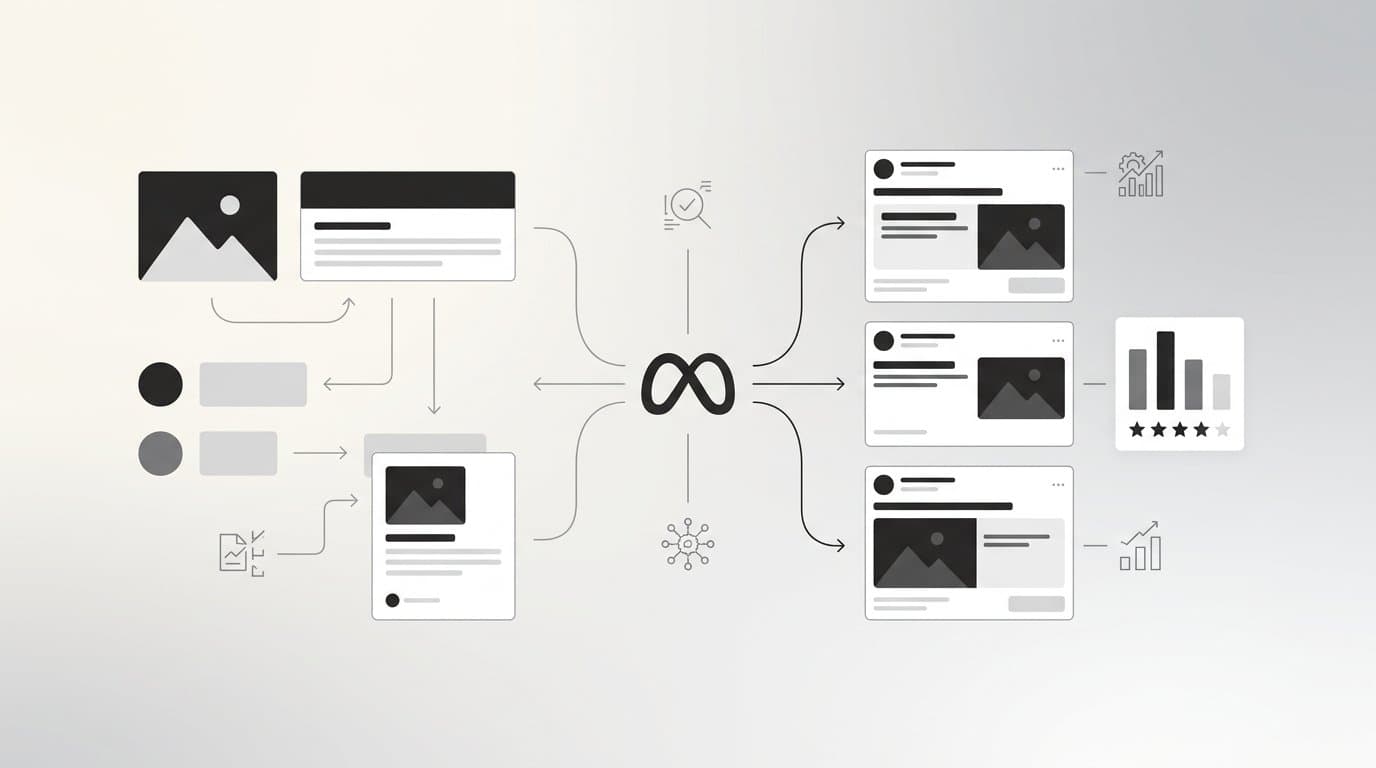
Creative volume is a strategic advantage in this framework. The more variations you test systematically, the faster you accumulate winners and the richer your data becomes. This is where tools like AdStellar's Bulk Ad Launch capability become operationally significant. Instead of manually building each variation, you can mix multiple creatives, headlines, audiences, and copy combinations and generate every variation at scale, launching hundreds of combinations in the time it used to take to build a handful.
One practice that separates high-performing teams from the rest is the creative hypothesis log. Before launching any test, document a specific prediction: "We believe leading with the problem statement in the hook will outperform leading with the product benefit because our audience is pain-aware but solution-unaware." Then track whether the result confirms or contradicts the hypothesis.
This does two things. It forces disciplined thinking before the test runs, which improves test design. And it creates a record of your team's evolving understanding of your audience. Six months of logged hypotheses and results is an asset. It tells you not just what worked, but why, and gives new team members a foundation to build on rather than starting from scratch.
The goal is not to run more tests. It is to run better tests and extract more learning from each one.
What Separates High-Converting Ads from Forgettable Ones
Strip away the aesthetics and every high-converting Meta ad is built from the same core components, each performing a specific job. Understanding those jobs is what lets you build ads that work rather than ads that just look good.
The Hook: For video, this is the first three seconds. For static ads, it is the primary visual and headline combination that registers in a fraction of a second. The hook's only job is to stop the scroll and earn the next moment of attention. It does not need to sell anything. It needs to create enough curiosity, relevance, or emotional resonance that the viewer pauses. Strong hooks often lead with a specific problem, an unexpected statement, or a visual that is immediately recognizable to the target audience.
The Value Proposition: Once you have attention, you have a few seconds to communicate what is in it for them. The most common mistake here is vagueness. "High quality products" and "solutions that work" communicate nothing. Specificity wins. What specific outcome does your product deliver? What specific problem does it solve? The more precisely you can describe the value in terms your audience already uses to think about their own situation, the more effective the ad becomes.
Social Proof Signals: Trust is a conversion variable, and social proof is one of the fastest ways to build it within an ad. This can take many forms: customer counts, review ratings, testimonial quotes, recognizable logos, or UGC-style visuals that imply real-world use. The key is that social proof should feel earned and specific, not generic. "Thousands of happy customers" is weaker than a specific, credible testimonial from someone your audience can identify with.
The Call to Action: Your CTA should match the funnel stage. Asking a cold audience to "Buy Now" creates friction. Asking them to "Learn More" or "See How It Works" reduces it. For retargeting campaigns where purchase intent is higher, direct CTAs perform well. Match the ask to where your audience is in their decision process.
Headline and primary text strategy deserves its own note. Write for scanners, not readers. Most people will read your headline and the first line of your primary text before deciding whether to engage further. Lead with your most compelling point. Do not bury the value proposition in the third paragraph.
Finally, landing page alignment is a creative performance factor that is frequently underestimated. If your ad promises a specific outcome or offer and your landing page delivers something different in tone, message, or design, conversion rates suffer. The handoff from ad to landing page should feel seamless. The visitor should feel like they have arrived exactly where they expected to be.
The Data Layer: Spotting Winners and Cutting Losers
Creative intuition gets you to a hypothesis. Data tells you whether you were right. Building a clear framework for reading creative performance metrics is what separates teams that scale efficiently from teams that burn budget on underperformers.
Different metrics tell you different things at different stages of the funnel. At the top of the funnel, where you are measuring engagement and relevance, focus on CTR (click-through rate) and hook rate, which is the percentage of viewers who watch past the first few seconds of a video. Low CTR on a cold audience typically signals a weak hook or a creative that is not resonating with the audience it is reaching. Low hook rate specifically tells you the opening is not doing its job.
Further down the funnel, CPA (cost per acquisition) and ROAS (return on ad spend) tell you whether the creative is driving actual business outcomes, not just clicks. A creative can generate strong CTR and still produce poor CPA if the message attracts the wrong kind of clicks or sets expectations the landing page does not meet.
Frequency is your early warning system for creative fatigue. As frequency rises, watch for declining CTR and rising CPM as signals that your audience has seen the creative enough times that it has stopped working. This is your cue to refresh, not to increase budget.
One of the most important principles in creative scoring is benchmarking against your own historical data rather than generic industry averages. Industry benchmarks are useful for orientation, but your specific audience, offer, and funnel have their own performance baseline. Tools like AdStellar's AI Insights surface leaderboards that rank your creatives, headlines, copy, and audiences against your own goals and benchmarks, so you are always evaluating performance in context rather than against an abstract standard.
The decision framework for creative management has three modes. Pause underperformers that have had sufficient spend and time to prove themselves but have not met your benchmarks. Iterate on near-winners: creatives that show promising signals on one metric but are falling short on another. Often a single element change, a different headline or a revised CTA, can push a near-winner into a proven performer. Scale proven winners by increasing budget gradually and monitoring for the frequency signals that indicate fatigue is approaching.
AdStellar's Winners Hub keeps your best-performing creatives, headlines, and audiences in one place with real performance data attached, so when you are ready to build your next campaign, you are starting from your highest-performing assets rather than a blank slate.
AI and the New Creative Production Reality
The traditional creative production workflow has always been a bottleneck. Brief the designer, wait for concepts, revise, brief the copywriter, align on messaging, produce the video, edit, review, and finally launch. Weeks of elapsed time for a handful of ad variations. In an environment where creative fatigue is a structural challenge and volume is a competitive advantage, that timeline is a liability.
AI is collapsing that timeline in meaningful ways. Platforms like AdStellar now make it possible to generate image ads, video ads, and UGC-style avatar content directly from a product URL, without a designer, video editor, or actor in the loop. You can clone competitor ads from the Meta Ad Library for inspiration, let AI build creatives from scratch based on your brief, and refine any output through chat-based editing. What used to take a creative team two weeks can now happen in minutes.
This is not about replacing creative thinking. It is about removing the production friction that slows creative thinking down. When your team is not waiting on design resources, they can test more hypotheses, iterate faster, and build a richer library of creative assets in the same timeframe.
AI-powered campaign builders add another layer of strategic value. AdStellar's AI Campaign Builder analyzes your past campaign performance, ranks every creative, headline, and audience by what has historically driven results, and builds complete Meta campaigns with that context embedded in every decision. Every recommendation is explained transparently, so you understand the strategy behind the output, not just the output itself. And critically, the system gets smarter with every campaign that runs through it.
This creates a compounding advantage. Early on, the AI is working with limited data. Over time, as more campaigns run through the system, the recommendations become more precise, the creative decisions become more informed, and the gap between your results and those of advertisers relying on manual processes widens. It is a flywheel: better data leads to better creative decisions, which leads to better performance, which generates better data.
For performance marketers managing significant Meta budgets, this is not a marginal efficiency gain. It is a structural shift in what is operationally possible with a given team size and resource level.
Building the System, Not Just the Ad
A strong meta ad creative strategy is not a campaign. It is an operating system. The five pillars covered in this guide work together: choosing the right format for each objective, running structured tests that generate compounding learnings, building ads with the anatomical components that convert, using data to make fast and confident decisions about what to scale and what to cut, and leveraging AI to keep creative production moving at the speed the platform demands.
None of these pillars work in isolation. Great creative anatomy does not help if you have no testing framework to identify what is working. A testing framework generates no value without the data infrastructure to read results clearly. And all of it stalls without a production system that can keep up with the volume that systematic testing requires.
The shift to treat creative as a strategic discipline rather than a production task is the single most important mindset change for performance marketers operating on Meta today. Budgets will not save weak creative. Targeting precision will not compensate for an ad that fails to earn attention. But a systematic, data-informed, AI-accelerated creative operation can compound over time in ways that create a durable competitive advantage.
AdStellar connects all of these elements in one platform, from AI creative generation to bulk campaign launch to winner identification through AI Insights and the Winners Hub. If you are ready to build a creative system that scales, Start Free Trial With AdStellar and be among the first to launch and scale your ad campaigns faster with an intelligent platform that automatically builds and tests winning ads based on real performance data.