Most ads fail before they even start. Not because the product is bad, not because the targeting is off, but because the ad opens by talking about itself instead of talking about the person seeing it. Features, benefits, awards, taglines. The viewer's brain files it under "irrelevant" and the thumb keeps scrolling.
The problem solution ad format fixes this at the root. Instead of leading with what a product does, it leads with what the viewer is already feeling. It meets them in the middle of a frustration they recognize, sits with that frustration just long enough to make it feel real, and then presents the brand as the obvious next step. The shift sounds simple, but the effect on engagement and conversion can be dramatic.
This format has deep roots in direct response copywriting, often associated with the PAS framework (Problem, Agitate, Solution) that copywriters like Dan Kennedy helped popularize across direct mail and early digital advertising. The underlying principle has not changed: people are more motivated to move away from pain than toward gain. Behavioral economists call this loss aversion. Advertisers who understand it build ads that feel less like interruptions and more like conversations.
If you are running Meta ads and want a repeatable creative framework that works across image, video, and carousel formats, this guide breaks down exactly how the problem solution structure works, how to write it, how to test it, and how to scale what resonates.
The Psychology Behind Why This Format Works
Scroll behavior on Meta is fast and largely unconscious. A user moving through their feed is not evaluating ads. They are pattern-matching, and the pattern they are looking for is "things that are relevant to me right now." Most ads trigger the wrong pattern. They look like ads, feel like ads, and get treated like ads.
The problem solution format creates a different kind of pattern interrupt. When an opening line names a specific frustration the viewer has actually experienced, something shifts. The brain recognizes itself in the content. That recognition creates a momentary pause, and that pause is the most valuable real estate in digital advertising.
But naming the problem is only the first move. Here is where most advertisers misunderstand the framework. They state the problem and immediately pivot to the solution, skipping the step that actually makes the solution land: agitation.
Agitation is the bridge. It takes the problem from a surface-level observation and makes the viewer feel the weight of it. What happens if this problem goes unsolved? What has it already cost them? What opportunity are they missing because of it? One or two sentences that answer these questions transform the problem from something acknowledged into something felt. And when the solution arrives after that emotional buildup, it lands with genuine contrast rather than as just another claim.
This arc mirrors how humans naturally move toward decisions. First, we recognize a gap between where we are and where we want to be. Then we feel the discomfort of that gap acutely enough to motivate action. Then we seek something that closes it. Ads built on this arc do not feel like advertising. They feel like a conversation that happens to end with a product recommendation. That is the psychological mechanism that makes this format consistently outperform feature-led creative.
The other reason this format works particularly well on Meta is context. Feed and Stories environments are high-distraction, low-commitment spaces. A viewer owes you nothing. The problem solution structure earns attention by being immediately useful to the right person, which also means it naturally filters out the wrong audience. Someone who does not have the problem you name will scroll past. Someone who does will stop. That self-selection improves not just engagement but downstream conversion quality.
Anatomy of a High-Converting Problem Solution Ad
Understanding the psychology is one thing. Building the actual ad is another. Every strong problem solution ad has three distinct layers, and each one has a specific job to do.
The Problem Hook: The opening line or visual must name a specific, recognizable pain point. Specificity is everything here. "Tired of wasting money on ads?" is generic. "Running Facebook ads for three weeks and still no sales?" is specific. The first version could apply to almost anyone. The second version speaks directly to a Meta advertiser who has been in the trenches long enough to feel the frustration. The right person reads that and thinks: "This is about me."
Vague problem statements produce vague results because they do not trigger the recognition response that creates the pause. The more precisely you name the frustration, the more the right audience self-selects, and the less you spend on clicks from people who were never going to convert anyway.
The Agitation Layer: This is the step most advertisers skip, and skipping it is expensive. After naming the problem, spend one to two sentences deepening it. Show the consequence. Point to what it is costing the viewer in time, money, confidence, or opportunity.
For a Meta advertiser, agitation might sound like: "Every day you wait, your competitors are testing creatives, finding winners, and pulling ahead. You are paying to learn lessons they already figured out." That is not melodrama. That is a credible consequence that makes the problem feel urgent rather than abstract. When the solution arrives after that kind of setup, it does not feel like a sales pitch. It feels like relief.
The Solution Reveal and CTA: The transition from problem to solution should feel like exhaling. The product or service is introduced as the direct answer to exactly what was just described, not as a list of features, but as a resolution to the specific pain that was named.
The call to action that follows should match the emotional state of the viewer. Someone who has just been reminded of a frustration and shown a clear exit is ready to act. A low-friction CTA like "See how it works" or "Start free" meets that energy. A long-form CTA that asks for a lot of commitment can break the spell. Keep it simple, direct, and proportional to the ask.
Formats and Placements That Amplify the Framework
The problem solution structure is format-agnostic in principle, but some creative formats carry it more naturally than others. Knowing which format fits which context lets you adapt the framework without diluting it.
Video Ads: Video is the natural home for this format because it can show the problem before cutting to the solution. A viewer watches someone describe a frustration they recognize, feels the agitation build, and then sees the resolution play out. UGC-style video works especially well because a real person voicing a frustration reads as authentic rather than scripted. When a first-person problem statement is delivered by someone who looks and sounds like the viewer, the guard comes down. The brain stops processing it as an ad and starts processing it as a recommendation from someone like them.
In video, the problem needs to land in the first three seconds. That is not a guideline, it is a hard constraint set by how quickly viewers decide whether to keep watching. If the hook is not immediately recognizable, the view is gone.
Static Image Ads: The problem solution format absolutely works in static creative, but the distribution of weight shifts. The headline carries the problem, and the visual or subheadline delivers the solution. Split-panel or before-and-after layouts are a common and effective execution because they communicate the arc visually without requiring the viewer to read a word. The contrast does the work.
For static ads, the headline is doing the job that the first three seconds of video does. It needs to be specific, punchy, and immediately relevant to the target audience.
Placement Considerations on Meta: Where your ad appears affects how much room the format has to develop. Feed placements, both Facebook and Instagram, allow for longer copy that can fully develop the problem, build agitation, and deliver the solution with some breathing room. Stories and Reels demand a compressed version where the hook and payoff happen within seconds. The structure is the same, but the pacing is radically tighter.
Adapting the format for each placement is not optional if you want it to perform. A feed-length problem setup dropped into a Story placement will lose the viewer before the solution ever arrives.
Writing Problem Solution Copy That Actually Resonates
The most common mistake in writing this kind of copy is using polished marketing language to describe a raw human frustration. It creates a mismatch the viewer feels immediately, even if they cannot articulate it. The copy sounds like someone who has never had the problem trying to describe it to someone who has.
The fix is straightforward: use the language your audience already uses. Customer reviews, support tickets, Reddit threads, Facebook groups, and community forums are full of exact phrases people use when they are describing their own pain. These are not research sources in the traditional sense. They are a vocabulary guide. When your ad uses the same words and phrases the viewer uses internally, the recognition is instant and visceral.
For a Meta advertiser, that might mean the difference between "inefficient ad spend" and "watching your budget disappear with nothing to show for it." Both describe the same problem. Only one sounds like a real person who has lived it.
Avoiding the Extremes: There is a calibration challenge in this format. Make the problem sound too catastrophic and you lose credibility. Make the solution sound too perfect and you lose trust. Both extremes push the viewer into skepticism rather than recognition. The goal is credible empathy: acknowledging a real frustration at its actual weight, then offering a solution that is believable rather than miraculous.
Testing Multiple Problem Angles: Different segments of your audience feel different versions of the same core pain. A product that saves time might resonate with one segment because of wasted hours, with another because of missed opportunities, and with a third because of the frustration of doing repetitive work that should not require their attention. These are not the same emotional entry point, and they should not be treated as the same ad.
Testing multiple problem angles is not just a best practice. It is how you discover which version of the pain your audience cares about most. One angle might generate strong clicks but weak conversions, suggesting the problem resonates but the solution framing does not match. Another might generate fewer clicks but much higher conversion rates, suggesting it is reaching a more qualified segment. Both signals teach you something about how your audience thinks.
Testing and Scaling the Format Without Guesswork
The problem solution format is a framework, not a single ad. Treating it as a one-time creative execution misses most of the value. The real leverage comes from systematically testing variations across each layer of the structure.
Think of the three layers as three independent variables. The problem hook can be tested across multiple pain points. The agitation layer can be tested with different consequences or framings of the cost. The solution reveal can be tested with different angles on what the product actually does for the viewer. Each combination is a distinct hypothesis about what will resonate with your audience.
Running these tests manually is where most advertisers hit a ceiling. Building out a dozen problem solution variations across different creatives, headlines, and copy combinations, then tracking performance across all of them, is time-consuming enough that most teams end up testing far fewer variations than they should. The result is a narrower view of what works and a slower path to finding the combinations that actually scale.
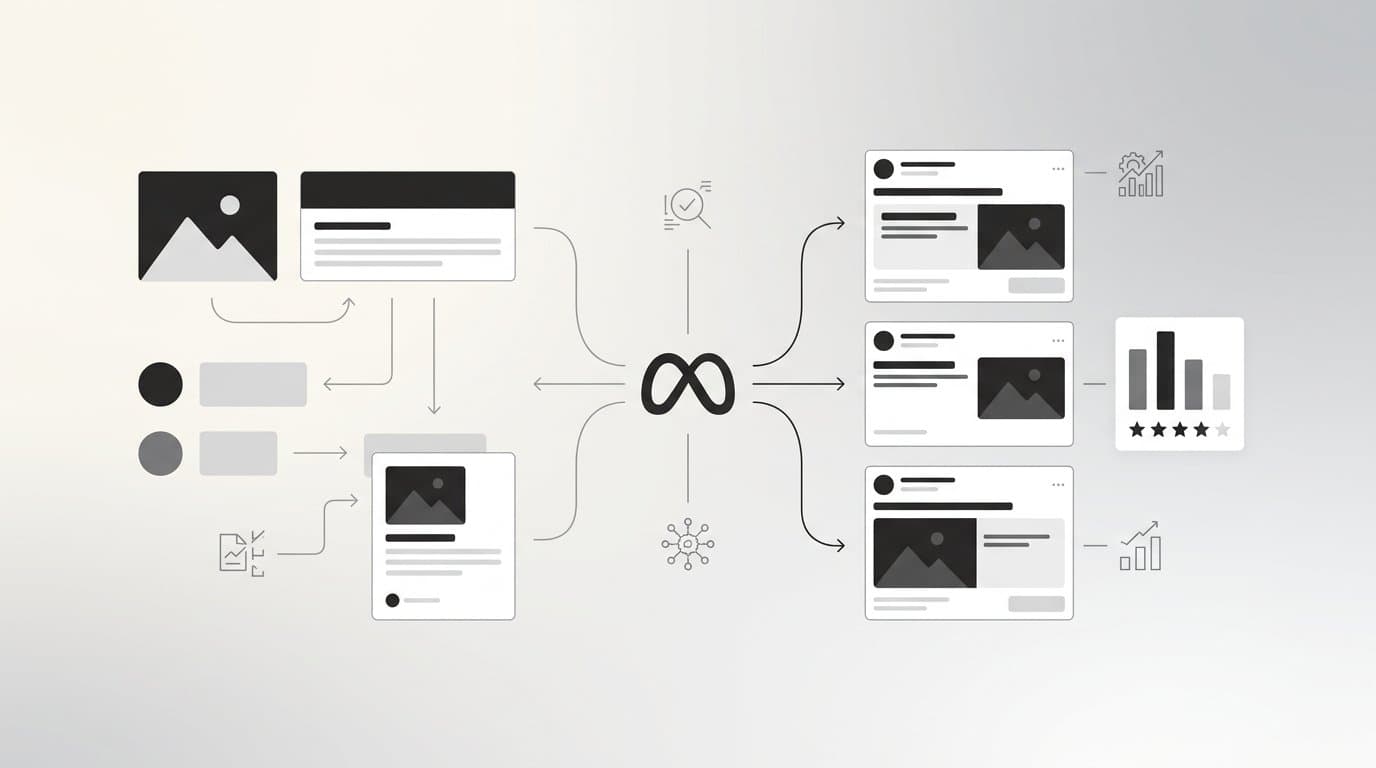
This is where tooling matters. AdStellar's Bulk Ad Launch feature lets you generate hundreds of ad variations in minutes by mixing multiple creatives, headlines, audiences, and copy combinations at both the ad set and ad level. Every combination gets launched to Meta without requiring you to manually build each one. The scale of testing that used to require a large team and significant time can happen in a fraction of the time.
Once those variations are live, AdStellar's AI Insights surface the top performers through leaderboards that rank creatives, headlines, copy, and audiences by real metrics like ROAS, CPA, and CTR. You set your target goals, and the AI scores everything against your benchmarks. Instead of manually reviewing dozens of ad combinations to find the signal in the noise, you can see immediately which problem hooks are generating the highest CTR and which solution framings are producing the best conversion rates.
That distinction matters. A high-CTR problem hook that produces low conversions tells you the problem resonates but the solution framing or landing page experience is not closing the gap. A lower-CTR hook that converts at a high rate tells you it is reaching a more qualified segment. Both are useful signals, and tracking them separately gives you a repeatable playbook rather than just a winning ad.
The AI Campaign Builder takes this further by analyzing your past campaigns, ranking every creative, headline, and audience by performance, and using that history to build the next round of campaigns with more informed decisions. The system gets smarter with every iteration, which means your problem solution testing compounds over time rather than starting from scratch with each new campaign.
From Framework to Live Campaign
The best way to start with this format is also the simplest: one problem, one agitation statement, one solution reveal. Resist the urge to layer in complexity before the core structure is working. Get a single problem solution ad live, see how it performs, and use that data as the foundation for what comes next.
Once you have a working version, your Winners Hub data becomes your most valuable creative asset. AdStellar's Winners Hub collects your best-performing creatives, headlines, audiences, and copy in one place with real performance data attached. When you are ready to build the next round of problem solution ads, you are not starting from a blank page. You are starting from a set of proven elements that you can recombine, iterate on, and test in new configurations.
This is how the format compounds. Each test teaches you something specific about how your audience thinks about their own pain. Which problem statements create recognition. Which agitation angles create urgency. Which solution framings create the desire to act. Over time, you build a detailed map of your audience's psychology that no amount of upfront research could have produced. The ads get better not because you got luckier but because you got more informed.
The problem solution format is not a trend or a tactic that will age out. It is grounded in how people actually make decisions, which does not change. What changes is the specific language, the platforms, the formats, and the tools available to test and scale it. The underlying structure stays durable because the underlying psychology stays constant.
The Bottom Line
The reason the problem solution ad format keeps working across decades of advertising is not complicated. It respects how buyers actually think. It does not ask viewers to care about a product before giving them a reason to care. It starts with what they already care about, their own frustrations, and earns the right to introduce a solution by first proving it understands the problem.
For Meta advertisers specifically, this format is a reliable creative framework precisely because it is built for high-distraction environments. It earns the scroll-stop with a hook that creates recognition, builds momentum with agitation that creates urgency, and converts with a solution reveal that creates relief. When those three layers are working together, the ad does not feel like an ad. It feels like the right answer at the right moment.
The difference between teams that get occasional wins with this format and teams that build a durable creative engine is systematic testing. Not one problem solution ad, but dozens of variations tested across different problem angles, agitation framings, and solution reveals, with clear performance data guiding which combinations to scale.
If you want to build that engine without needing a full creative team or spending weeks manually building and reviewing ad variations, Start Free Trial With AdStellar and be among the first to launch and scale your ad campaigns faster with an intelligent platform that automatically builds, tests, and surfaces winning problem solution ads based on real performance data.