Navigating the world of demand-side platforms can feel overwhelming. With dozens of options, each claiming unique strengths in audience targeting, inventory access, and reporting capabilities, choosing the right partner is critical for campaign success. This guide cuts through the marketing noise to deliver a direct, comprehensive analysis of the top demand-side platforms available to performance marketers, agencies, and in-house growth teams today.
To fully grasp the functionality of these powerful tools, it's helpful to understand the ecosystem they operate in. If you're new to the concept, our guide on Programmatic Advertising provides essential context for how DSPs automate media buying. Essentially, a DSP is your single interface for purchasing and managing ad inventory across multiple ad exchanges, from connected TV (CTV) and video to display and native. The right DSP gives you the control and data needed to reach specific audiences at scale, optimize for performance, and maximize your return on ad spend.
This resource is designed to be your go-to reference for making an informed decision. We will move beyond generic feature lists and provide a detailed breakdown for each platform, covering:
- Key Features & Strengths: What makes each DSP stand out.
- Ideal Use Cases: Who the platform is best for, from DTC brands to B2B SaaS.
- Pricing & Contract Models: An honest look at costs and commitment levels.
- Pros & Cons: A balanced assessment of benefits and limitations.
Each entry includes screenshots and direct links, giving you a clear view of the user experience and easy access to further exploration. We also include a look at how AI-first platforms like AdStellar are changing the game. By the end of this article, you will have a clear, actionable framework for selecting the best demand-side platform to meet your specific advertising goals. Let's dive in.
1. The Trade Desk (Kokai)
As one of the largest independent demand side platforms, The Trade Desk is a mainstay for agencies and enterprise advertisers aiming for broad, transparent reach across the open internet. Its position as a leader among top demand side platforms is solidified by its extensive inventory, especially within the Connected TV (CTV) space, where it maintains deep partnerships. The platform’s recent evolution to the Kokai interface marks a significant shift toward AI-driven campaign management.
The introduction of Koa, its agentic AI, offers Adaptive Trading Modes that allow media buyers to choose between maintaining manual control for specific tactics or letting the AI optimize toward performance goals. This dual approach provides flexibility that many traders appreciate. Furthermore, The Trade Desk is a key proponent of the Unified ID 2.0 (UID2) framework, positioning itself for a cookieless future with a focus on privacy-forward identity solutions and clean room integrations. This focus on future-proofing programmatic advertising, which operates differently from direct-response channels like search, is a core strength. For a deeper dive into these differences, you can explore the distinctions between PPC and programmatic advertising.
Key Details & Use Cases
- Best For: Large agencies and in-house enterprise teams needing scaled, cross-channel campaigns with a strong focus on CTV and video.
- Key Strength: Unmatched access to CTV inventory and robust log-level data reporting, providing visibility often missing from walled gardens.
- Pricing & Access: Requires a direct contract or "seat" for access. Pricing is typically based on a percentage of media spend, though specifics are not public. It is not a self-serve platform for small businesses.
Pros & Cons
| Pros | Cons |
|---|---|
| Leading CTV access and partner ecosystem | Seat access required; not for small advertisers |
| Strong log-level data for transparency | Migration to Kokai has created a learning curve |
| Flexible AI control with Trading Modes | Pricing is not publicly listed and can be complex |
Website: https://www.thetradedesk.com
2. Google Display & Video 360 (DV360)
As the enterprise-level DSP within the Google Marketing Platform, Display & Video 360 (DV360) is a cornerstone for advertisers deeply invested in the Google ecosystem. Its primary draw is the native integration with other Google products, allowing for a more unified workflow. Advertisers can seamlessly share audiences from Google Analytics 360, sync creative assets from Campaign Manager 360, and access exclusive YouTube inventory, making it one of the top demand side platforms for large-scale, data-driven campaigns.
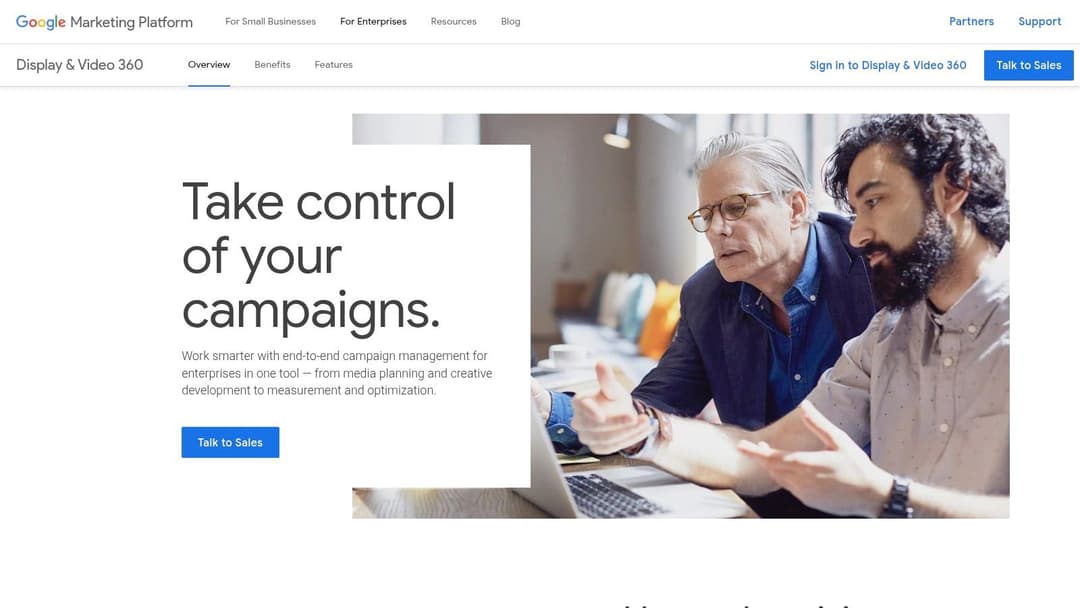
The platform is structured into five integrated modules: Campaigns, Audiences, Creatives, Inventory, and Insights, giving teams granular control over each facet of the advertising process. Google’s AI underpins its bidding and forecasting tools, providing robust automation options. For advertisers focused on premium video, DV360 offers curated and biddable CTV auctions, alongside access to Programmatic Guaranteed deals that secure inventory from top-tier publishers. Figuring out if this integrated approach is the right fit involves weighing its benefits against other options; a guide on how to select the right ad platform can provide a useful framework for this decision.
Key Details & Use Cases
- Best For: Large advertisers and agencies already using the Google Marketing Platform who need deep integration and direct access to YouTube ad formats.
- Key Strength: Unmatched data interoperability with the Google stack (Analytics 360, Campaign Manager 360) and exclusive YouTube buying capabilities.
- Pricing & Access: Requires an enterprise contract or access through a certified reseller. Pricing is based on a percentage of media spend and is not publicly available.
Pros & Cons
| Pros | Cons |
|---|---|
| Tight integration with Google ecosystem | Enterprise sales model; not for small advertisers |
| Extensive premium CTV reach and partner connectivity | Public scrutiny requires strict policy compliance |
| Direct access to exclusive YouTube ad inventory | Pricing and terms are not publicly listed |
Website: https://marketingplatform.google.com/about/display-video-360/
3. Amazon DSP
Amazon DSP holds a unique position among top demand side platforms by granting advertisers access to its massive repository of first-party e-commerce data. Its primary advantage is the ability to build audiences based on actual shopping behaviors, like product views, past purchases, and brand affinity demonstrated directly on Amazon.com. This allows brands to reach high-intent consumers both on Amazon's own properties (like IMDb TV, Twitch, and Fire TV) and across the open web.
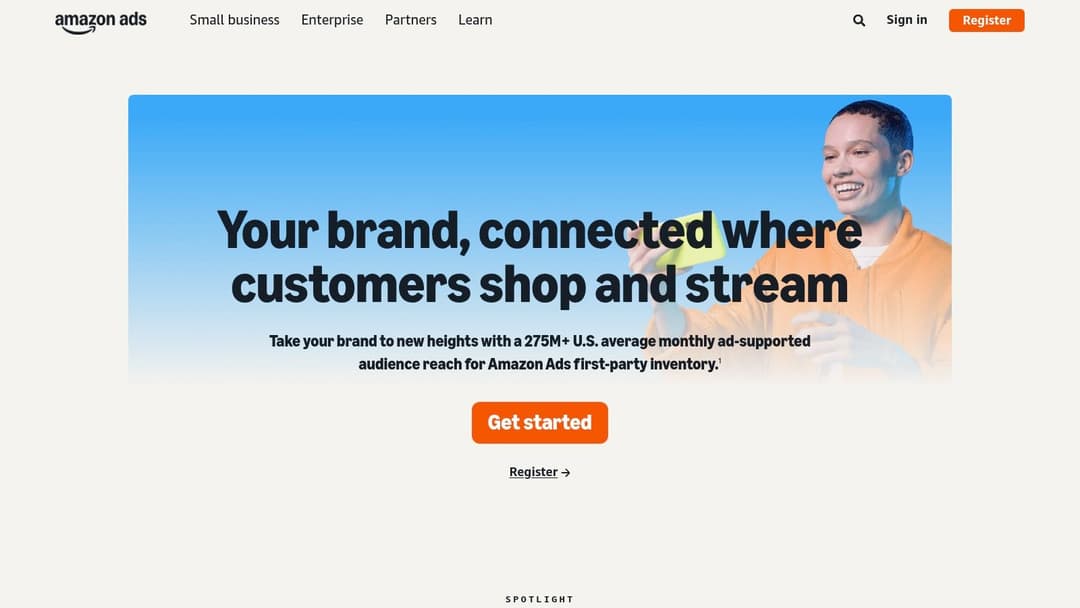
The platform offers both managed-service and self-service options, catering to different advertiser needs and investment levels. A key component is its integration with Amazon Marketing Cloud (AMC), a clean room environment that enables deep, custom attribution and analysis. This closed-loop measurement helps brands understand how their off-Amazon media spend influences on-Amazon sales, providing a clear view of campaign incrementality. While Amazon's platform uses its own machine learning, advertisers exploring broader applications of artificial intelligence can learn more about how AI for ads is being applied across different channels.
Key Details & Use Cases
- Best For: E-commerce brands, CPG companies, and advertisers whose products are sold on Amazon, aiming to connect ad spend directly to retail outcomes.
- Key Strength: Unrivaled first-party retail and purchase intent data for precise audience targeting and closed-loop measurement via AMC.
- Pricing & Access: Self-service access can be gated. Managed-service typically requires a high minimum spend, often cited around $50,000 USD, though this can vary.
Pros & Cons
| Pros | Cons |
|---|---|
| Unique commerce and purchase intent data | Managed service has a high minimum spend |
| Strong streaming TV and video supply | Self-service access is not guaranteed for all |
| Closed-loop measurement with AMC | Best for brands with a presence on Amazon |
Website: https://advertising.amazon.com
4. Yahoo DSP
Yahoo DSP has carved out a strong position among top demand side platforms by combining its extensive first-party data with a direct pipeline to premium publisher inventory. It offers an omnichannel solution that appeals to advertisers looking for brand safety and robust identity tools. The platform's commitment to both authenticated and unauthenticated targeting makes it a flexible choice for advertisers navigating the shift away from third-party cookies.
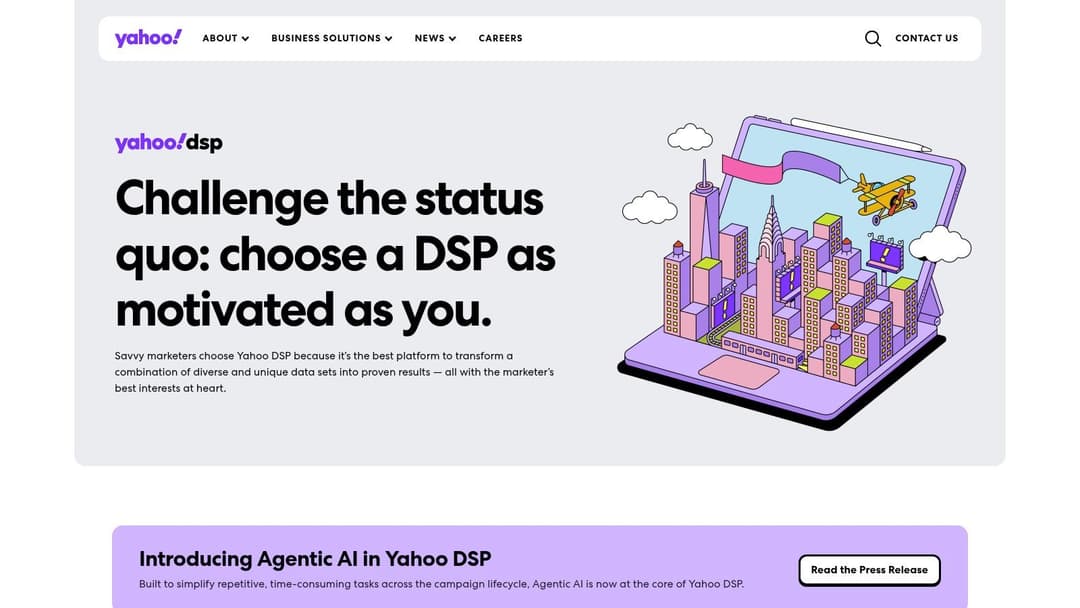
A key differentiator is Yahoo Backstage, which provides a direct path to curated, premium publisher supply, minimizing intermediaries and increasing media efficiency. On the identity front, Yahoo's ConnectID offers a durable solution for reaching audiences, while its Next-Gen solutions integrate ID-less and contextual targeting options, including audiences from Comscore. This dual approach to identity, combined with expanding CTV partnerships, positions Yahoo as a serious contender for advertisers focused on premium video and display. For campaigns that rely on tailoring messages to these varied audiences, exploring what dynamic creative optimization is can provide significant performance lifts.
Key Details & Use Cases
- Best For: Advertisers wanting access to premium, brand-safe inventory with strong identity and contextual targeting options.
- Key Strength: A direct-to-publisher supply path via Yahoo Backstage and a balanced identity toolkit (ConnectID plus ID-less solutions).
- Pricing & Access: Access is managed through the Yahoo sales team or approved partners; commercial terms are not publicly available.
Pros & Cons
| Pros | Cons |
|---|---|
| Solid CTV and premium publisher access | Feature depth can vary by region and partner deals |
| Privacy-forward targeting and identity toolkit | Commercial terms require direct sales contact |
| Ongoing feature releases and client education | CTV partnerships are growing but may be less extensive than some leaders |
Website: https://www.yahooinc.com/yahoo-dsp
5. FreeWheel Buyer Cloud (Beeswax BaaS)
Owned by Comcast, FreeWheel Buyer Cloud offers a unique proposition in the DSP market by combining a turnkey demand side platform with the highly customizable Beeswax Bidder-as-a-Service (BaaS). This dual offering positions it as a powerful solution for sophisticated advertisers who demand transparency, control, and direct access to premium video inventory. The platform's strength lies in its ability to be deployed as a single-tenant environment, giving buyers complete ownership over their bidding logic and data.
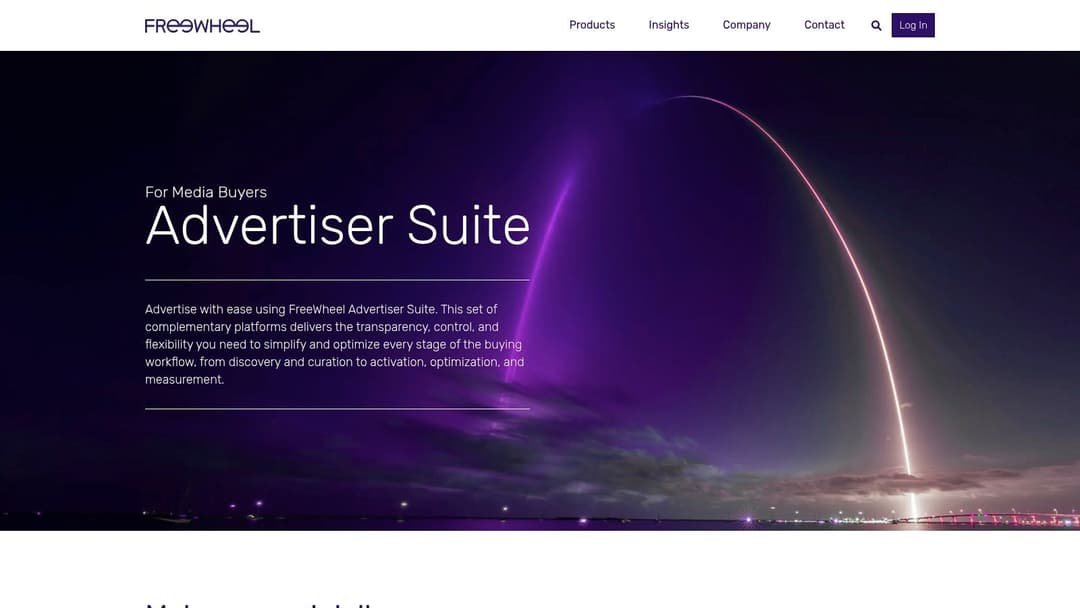
Unlike many top demand side platforms that operate as black boxes, FreeWheel's BaaS architecture provides unfiltered log-level data, allowing advertisers to build custom algorithms and optimize their supply paths with precision. This level of technical control is ideal for large advertisers looking to reduce hidden fees and gain a competitive edge in premium CTV and video environments. The platform also allows for deep integrations with various data sources, a critical factor to consider as the industry evaluates the role of third-party data moving forward. For those wanting a deeper understanding, exploring the nuances of third-party data can provide valuable context.
Key Details & Use Cases
- Best For: Technically savvy in-house teams, large agencies, and broadcast companies needing a customizable bidding solution for premium video.
- Key Strength: Bidder-as-a-Service (BaaS) architecture that provides maximum control, transparency, and the ability to deploy custom bidding algorithms.
- Pricing & Access: Requires an enterprise contract with pricing tailored to the specific deployment (BaaS or turnkey DSP). It is not designed for small or mid-sized advertisers.
Pros & Cons
| Pros | Cons |
|---|---|
| Extreme customization with BaaS capabilities | Requires significant technical expertise to manage |
| Unfiltered log-level data and reporting | Not a simple self-serve platform; enterprise-only access |
| Direct access to FreeWheel’s premium video supply | Tailored pricing can be complex and is not public |
Website: https://www.freewheel.com/beeswax
6. StackAdapt
StackAdapt has carved out a significant space among top demand side platforms by focusing on usability, strong client support, and a self-serve model that appeals to mid-market advertisers and agencies. It provides a robust, AI-forward platform for omnichannel campaigns, covering everything from native and display to CTV, audio, and even emerging channels like in-game advertising and Digital Out-of-Home (DOOH). The platform is frequently praised for its approachable interface, which lowers the barrier to entry for programmatic advertising.
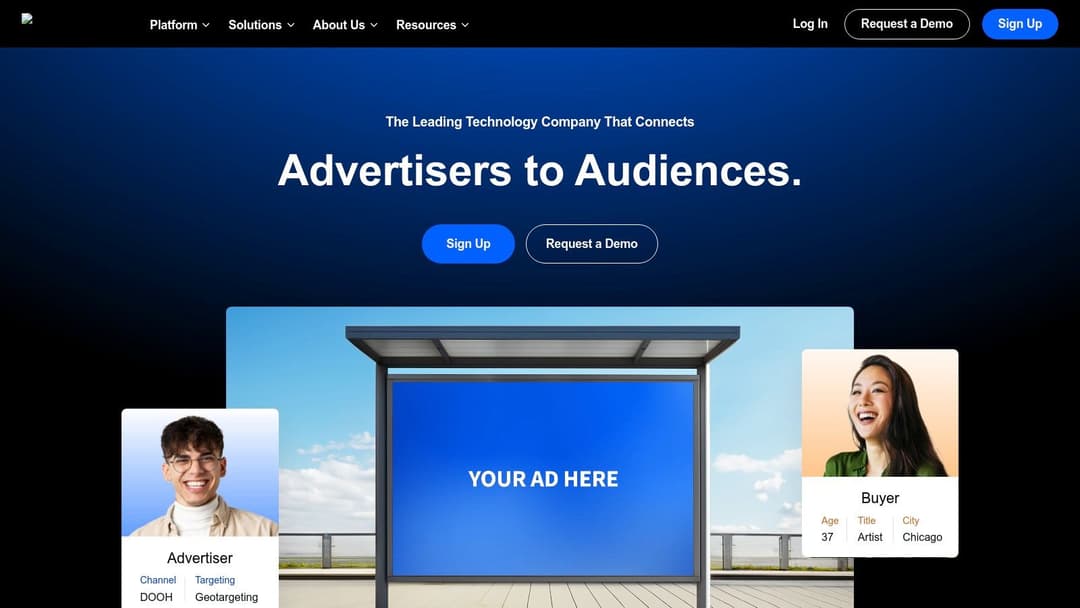
A key differentiator for StackAdapt is its commitment to education and creative tooling. The platform offers extensive resources and fast onboarding, making it easier for teams to get up to speed. Features like its in-platform AI assistant and Creative Studio allow advertisers to iterate on messaging and optimize assets directly within the workflow. This combination of powerful channel access and practical, user-friendly tools makes it a strong contender for teams that need performance without the enterprise-level complexity or steep access requirements of other DSPs.
Key Details & Use Cases
- Best For: Mid-market brands and digital marketing agencies needing a versatile, self-serve platform for omnichannel campaigns.
- Key Strength: An intuitive user interface combined with excellent customer support and educational resources, making programmatic accessible.
- Pricing & Access: Operates on a self-serve model, though specific commercial terms and initial campaign minimums can vary by account. It is generally more accessible than enterprise-only DSPs.
Pros & Cons
| Pros | Cons |
|---|---|
| Approachable UI and fast onboarding | Advanced API depth is not as extensible as some enterprise DSPs |
| Strong client support and educational resources | Commercial terms vary and may have initial minimums |
| Creative tooling to iterate messaging in-platform | Lacks the exclusive inventory deals of larger, scaled DSPs |
Website: https://www.stackadapt.com
7. Basis DSP (Basis Technologies)
Basis Technologies presents a unique proposition by positioning its DSP within a broader, unified advertising automation platform. Instead of focusing solely on programmatic buying, Basis is engineered for teams that manage campaigns across multiple channels, including direct buys, search, and social. Its inclusion among top demand side platforms is earned by its ability to centralize operations and provide a single source of truth for planning, activation, and reporting across disparate marketing efforts. This makes it a powerful tool for agencies and in-house teams tired of juggling multiple logins and spreadsheets.
The platform’s core strength is its Unified Reporting Hub, which ingests data from programmatic, search, social, and direct channels to give marketers a complete view of performance. This integrated approach extends to workflow automation, with features for task management and financial reconciliation built directly into the system. For more advanced users, the DSP Enterprise API offers a documented way to build custom buying tools and integrations, giving teams programmatic control without having to build a DSP from scratch.
Key Details & Use Cases
- Best For: Mid-to-large agencies and marketing teams that need to unify programmatic operations with search, social, and direct buying workflows.
- Key Strength: A unified interface and reporting dashboard that consolidates data and automates tasks across multiple advertising channels, not just programmatic.
- Pricing & Access: Access requires an enterprise contract. The full value is realized when adopting multiple modules of the Basis platform, making it a significant commitment for teams only needing a standalone DSP.
Pros & Cons
| Pros | Cons |
|---|---|
| Streamlines operations for mixed-channel teams | Full benefits require adopting more than just the DSP module |
| Centralized reporting and workflow automation | Enterprise contract makes it less accessible for smaller teams |
| Strong API support for custom solutions | May be an overly heavy solution for single-channel needs |
Website: https://basis.com
8. Quantcast Platform (DSP)
The Quantcast Platform is a demand side platform built around an AI-driven advertising engine, positioning itself as a strong choice for performance marketers. It stands out by using its Ara™ predictive engine, which analyzes live data from the open internet to find and influence audiences most likely to convert. This focus on autonomous optimization and predictive modeling makes it an appealing option for teams aiming to simplify campaign workflows without sacrificing results.
Unlike many top demand side platforms that require significant upfront commitments, Quantcast offers a more accessible entry point. The platform provides trial and no-minimum offers to ease onboarding, a significant advantage for small to mid-sized businesses or agencies wanting to test its capabilities. Its cookieless solutions, powered by the Audience Graph, provide a future-facing approach to targeting that operates effectively in environments without third-party cookies. The platform also includes tools like built-in creative scoring, which helps advertisers understand creative effectiveness before scaling campaigns.
Key Details & Use Cases
- Best For: Performance-focused advertisers, e-commerce brands, and agencies looking for automated optimization with low-friction onboarding.
- Key Strength: Powerful predictive audience modeling using live intent signals and a very accessible, performance-oriented platform structure.
- Pricing & Access: Self-serve access is available with trial offers. Pricing is based on a percentage-of-spend media fee with transparent documentation and optional add-ons.
Pros & Cons
| Pros | Cons |
|---|---|
| Easy onboarding with trial/no-minimum offers | Inventory is broad but not exclusive to major walled gardens |
| Strong performance-oriented bidding and measurement | Platform fees are percentage-based with optional add-ons |
| Detailed reporting with API connectivity | Less focused on brand campaigns compared to performance |
Website: https://www.quantcast.com
9. Adobe Advertising (Advertising Cloud DSP)
For enterprises already embedded in the Adobe Experience Cloud, Adobe’s Advertising Cloud DSP is a natural extension for programmatic media buying. Its core advantage lies in its native integration with Adobe Analytics and the Adobe Real-Time Customer Data Platform (RT-CDP). This allows for seamless first-party data activation, creating a unified view of the customer journey from website interaction to ad exposure and conversion, a powerful combination that solidifies its place among top demand side platforms.
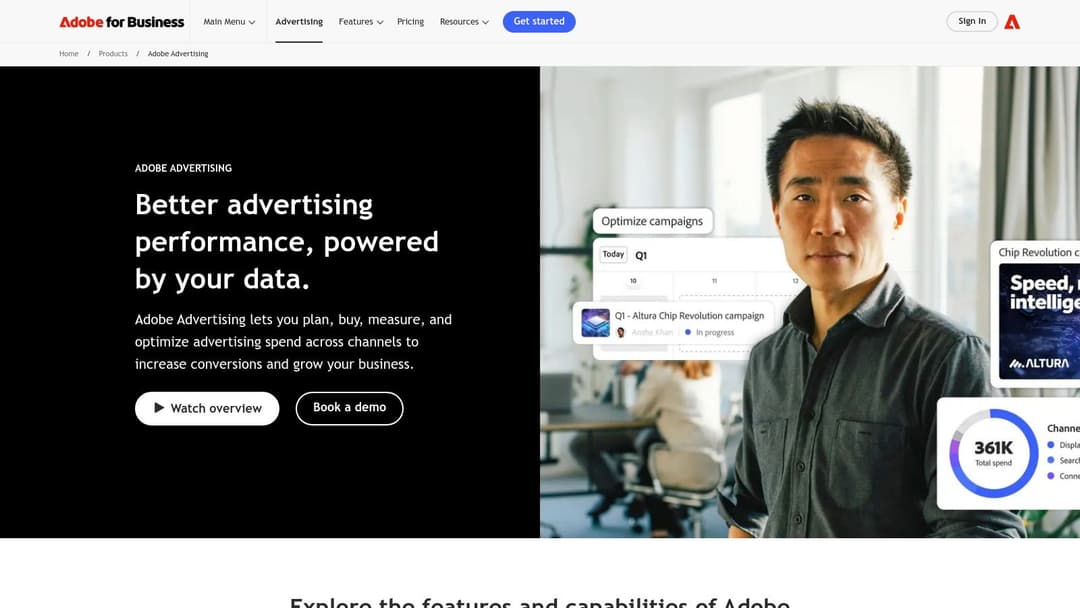
The platform is designed for cross-channel orchestration, with a workflow in its Campaign Home interface that brings campaign management into one central hub. It features optimization algorithms built to work with Adobe's data stack, and emerging integrations with partners like Amazon Ads point to its expanding ecosystem. For large organizations, this provides a level of data governance and audience consistency that is difficult to achieve with disparate systems.
Key Details & Use Cases
- Best For: Enterprise-level brands heavily invested in the Adobe Experience Cloud stack that need to activate their first-party data.
- Key Strength: Deep integration with Adobe Analytics and RT-CDP, enabling sophisticated audience segmentation and measurement.
- Pricing & Access: Sold as part of Adobe's enterprise offerings, requiring a direct sales contract. Pricing is not public and access is limited to large organizations.
Pros & Cons
| Pros | Cons |
|---|---|
| Unifies analytics and advertising data | Deployment can be heavy for non-enterprise teams |
| Strong for creative and marketing team collaboration | Access is tied to larger Adobe enterprise deals |
| Excellent first-party data activation capabilities | Less suited for advertisers not using Adobe's stack |
Website: https://business.adobe.com/products/advertising/performance-optimization.html
10. Criteo Commerce Media Platform (Commerce Max DSP)
Criteo has evolved far beyond its retargeting origins to become a major player in the commerce media space. Its Commerce Max DSP is built specifically for brands and agencies focused on driving retail outcomes, making it one of the top demand side platforms for e-commerce. The platform uniquely bridges the gap between onsite retail media (sponsored product ads on retailer websites) and offsite programmatic advertising across the open internet, using a massive first-party commerce dataset.
This integration allows advertisers to run full-funnel campaigns that are directly tied to sales performance. Criteo’s Commerce Audiences are built from real-time shopper signals, enabling precise targeting based on purchase history and intent. The platform also offers closed-loop measurement, providing clear attribution from ad exposure to final purchase, both online and in-store. This direct connection to transactional data is a significant advantage for performance-focused marketers who need to justify every dollar of ad spend with tangible results.
Key Details & Use Cases
- Best For: E-commerce brands, DTC companies, and agencies managing retail clients who need to connect upper-funnel awareness with lower-funnel conversions.
- Key Strength: Deep integrations with hundreds of retailers, providing access to onsite inventory and first-party data for powerful offsite targeting and closed-loop reporting.
- Pricing & Access: Commercial terms and pricing models vary. Access requires contacting Criteo’s sales team directly for a managed or self-service seat.
Pros & Cons
| Pros | Cons |
|---|---|
| Strong for e-commerce performance | Commerce focus makes it less ideal for general brand campaigns |
| Closed-loop measurement ties ads to sales | Commercial terms and pricing are not publicly available |
| Self-service retail media capabilities | May require complementary platforms for non-retail objectives |
Website: https://www.criteo.com/platform/commerce-max/
11. RTB House
RTB House has carved out a distinct space among top demand side platforms by building its entire ad engine on deep learning algorithms. This focus allows for exceptionally granular, real-time decisioning at the individual impression level, making it a powerful choice for performance-focused advertisers, particularly in e-commerce and retail. The platform excels at both dynamic retargeting and prospecting campaigns, using its AI to predict user value and bid accordingly.
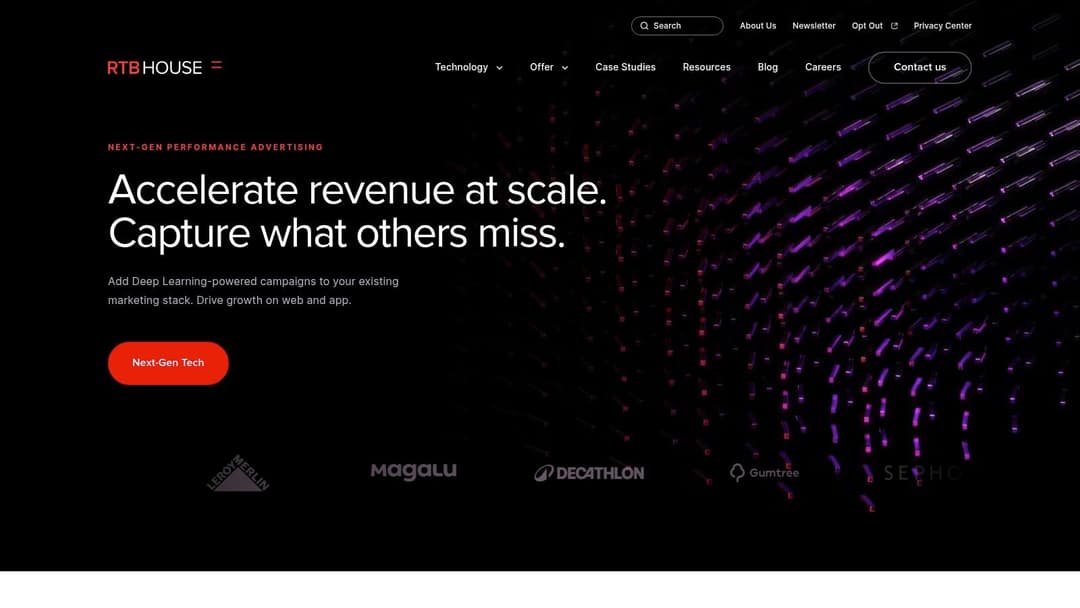
Its commitment to a privacy-forward future is evident in its IntentGPT contextual targeting solution. This generative AI technology analyzes page content to understand nuance and user intent without relying on identifiers, offering a robust alternative for ID-light environments. RTB House is also known for its dynamic and shoppable creative formats, which are designed to drive direct conversions. The platform’s ability to activate first-party signals and provide privacy-conscious options makes it a strong contender for brands preparing for the post-cookie world.
Key Details & Use Cases
- Best For: E-commerce and retail brands focused on incremental conversions from retargeting and prospecting.
- Key Strength: Deep learning-based bidding for superior performance outcomes and advanced, privacy-safe contextual targeting with IntentGPT.
- Pricing & Access: Access is typically provided as a managed or co-managed service. Commercial terms are customized and not publicly available; interested parties must contact RTB House directly.
Pros & Cons
| Pros | Cons |
|---|---|
| Proven incremental conversion focus for retail | Often delivered as managed service, not pure self-serve |
| Privacy-forward contextual options for cookieless ads | Commercial terms are custom and not transparently listed |
| Strong dynamic and shoppable creative capabilities | May have a steeper learning curve for teams used to full self-serve |
Website: https://www.rtbhouse.com
12. Nexxen DSP (formerly Amobee/Tremor/Unruly)
Nexxen DSP represents the unification of several ad tech powerhouses, including Amobee, Tremor Video, and Unruly, into a single platform with a strong focus on advanced TV. It earns its spot among the top demand side platforms by offering unique inventory and data sources tied directly to the television screen itself. This includes programmatic native placements on Smart TV home screens and proprietary audience data derived from ACR (Automatic Content Recognition) technology through its VIDAA integration.
The platform’s core strength is its ability to connect advertisers with audiences across all screens, with a particular advantage in CTV and streaming environments. Its Nexxen Data Platform allows for the onboarding and enrichment of first-party data, layering it with exclusive ACR and streaming behavior insights not widely available elsewhere. This makes it a go-to choice for brands aiming to build awareness and drive upper-funnel metrics through high-impact video and TV-centric activations. The platform provides both self-serve and managed service options, offering flexibility for different team structures and expertise levels.
Key Details & Use Cases
- Best For: Advertisers and agencies prioritizing CTV reach, particularly those looking for unique Smart TV placements and ACR-driven audience targeting.
- Key Strength: Proprietary ACR data and access to native Smart TV home-screen inventory, enabling distinct upper-funnel campaign strategies.
- Pricing & Access: Access is typically arranged through enterprise contracts handled by the Nexxen sales team. Commercial terms are not public and are customized based on advertiser needs.
Pros & Cons
| Pros | Cons |
|---|---|
| Differentiated CTV inventory and ACR data | Best value is for CTV-focused advertisers |
| Flexible self-serve or managed buying modes | Enterprise contracts required for access |
| Strong cross-screen measurement capabilities | Less ideal for purely display-focused plans |
Website: https://nexxen.com
Top 12 DSPs: Side-by-Side Comparison
| Platform | Core features | Best for | Unique selling points | UX & pricing |
|---|---|---|---|---|
| The Trade Desk (Kokai) | Agentic AI (Koa), Adaptive Trading Modes, broad CTV & open web, UID2 | Enterprise agencies buying programmatic CTV at scale | Leading CTV reach, log‑level visibility, trader control vs AI | Streamlined Kokai UI; seat access required; media% pricing |
| Google Display & Video 360 (DV360) | Unified display/video/CTV/audio, YouTube & Analytics native ties, Google bidding | Advertisers deep in Google stack, large cross‑channel buys | Tight Google ecosystem integration, premium CTV inventory | Enterprise complexity; frequent updates; pricing via sales |
| Amazon DSP | First‑party purchase signals, self‑ or managed service, AMC measurement | Retail/e‑commerce brands needing purchase intent + closed‑loop insights | Amazon commerce data, strong streaming TV supply | Managed high‑touch or gated self‑serve; managed minima (~$50k) |
| Yahoo DSP | ConnectID, ID‑less/contextual tools, Backstage publisher pipeline | Brands seeking premium publishers with privacy‑forward options | Direct publisher access, privacy toolkit, CTV expansion | Good client education; regional feature variance; sales pricing |
| FreeWheel Buyer Cloud (Beeswax BaaS) | Single‑tenant BaaS, custom bid logic, premium video/CTV supply, log‑level data | Advanced buyers wanting customization and transparency | High control, white‑label, deep premium video connectivity | Technical resources needed; enterprise contracts |
| StackAdapt | Omnichannel (CTV, native, in‑game, DOOH), creative studio, AI assistant | Mid‑market teams and agencies prioritizing usability | Fast onboarding, creative tooling, strong support | Approachable UI; possible campaign minimums; varied pricing |
| Basis DSP (Basis Technologies) | Unified reporting, DSP API, workflow automation across channels | Teams centralizing multi‑channel operations and APIs | Centralized ops, multi‑channel governance, automation | Best with full platform adoption; enterprise pricing |
| Quantcast Platform (DSP) | Audience Graph, predictive modeling, autonomous optimization, cookieless | Performance marketers seeking easy trial onboarding | Trial/no‑minimum offers, live intent signals, predictive modeling | Simplified workflows; % fees + optional add‑ons |
| Adobe Advertising (Advertising Cloud) | First‑party activation (RT‑CDP), Analytics integration, cross‑cloud orchestration | Brands standardized on Adobe Experience Cloud | Strong identity/data foundation, shared assets & governance | Enterprise‑grade deployment; sold via Adobe sales |
| Criteo Commerce Media Platform (Commerce Max) | Retail publisher access, commerce audiences, dynamic product ads | E‑commerce and DTC brands focused on retail media outcomes | Onsite + offsite commerce activation, closed‑loop measurement | Self‑service retail options; pricing via sales |
| RTB House | Deep learning at impression level, dynamic/shoppable creatives, IntentGPT contextual | Retail/e‑commerce advertisers focused on conversion lift | Deep learning decisioning, privacy‑forward contextual targeting | Often managed/co‑managed; custom commercial terms |
| Nexxen DSP (formerly Amobee/Tremor/Unruly) | Smart TV home‑screen placements, ACR/VIDAA data, advanced‑TV focus | Brands prioritizing CTV / advanced TV reach and reach | ACR‑driven audiences, native Smart TV inventory at scale | Flexible self‑serve or managed; enterprise contracts |
Final Thoughts
Our journey through the world of top demand side platforms has revealed a diverse and powerful set of tools, each with its own specific strengths and ideal applications. From the enterprise-grade omnipotence of The Trade Desk and Google's DV360 to the retail-centric power of Amazon DSP and Criteo, the right platform is not a one-size-fits-all solution. It's a strategic decision that hinges entirely on your business model, campaign objectives, technical resources, and budget.
The key takeaway is that selection must be purpose-driven. You wouldn't choose a highly technical, bidder-as-a-service platform like FreeWheel's Buyer Cloud for a simple display remarketing campaign, just as you wouldn't rely solely on a specialized CTV-first platform if your primary goal is lower-funnel e-commerce conversions. The most successful advertisers align their DSP choice with their core business needs, not just a list of features.
Recapping the Core Themes
Throughout our analysis of the industry's leading DSPs, several critical themes emerged that should guide your decision-making process:
- Transparency is Not a Given: Platforms vary wildly in their transparency regarding media costs, data fees, and supply paths. Always ask pointed questions about fee structures and log-level data access. Tools like Basis DSP often win agency business by prioritizing transparent, unified operations.
- Inventory Access Varies: While many DSPs boast broad access, some have unique, proprietary advantages. Amazon DSP’s access to its own retail site traffic is a prime example, as is Criteo's deep network of retail media partners. Consider where your target audience spends their time and which platform has the most direct and efficient path to reach them.
- The Rise of Specialization: The market is moving beyond generalist DSPs. We see this with StackAdapt's focus on native and contextual advertising, Quantcast's audience-first modeling, and Nexxen's consolidated strength in video and CTV. Choosing a specialist can deliver superior performance if their focus aligns with your primary channel.
- Usability vs. Control: There is a clear trade-off between ease of use and granular control. A platform like Yahoo DSP offers a more accessible entry point, while The Trade Desk (Kokai) and DV360 provide immense depth and customization for experienced teams willing to manage that complexity.
Your Action Plan for Choosing a DSP
Feeling overwhelmed by the options is normal. The key is to transform this information into a structured evaluation process. Here are your next steps:
- Define Your Primary Use Case: Be brutally honest about your main goal. Is it driving B2B leads? Scaling DTC sales? Increasing brand awareness through CTV? Write it down. This singular focus will immediately narrow your list. For instance, an e-commerce brand should heavily vet Amazon DSP and Criteo, while a B2B SaaS company might prioritize StackAdapt or even The Trade Desk for its broad reach.
- Assess Your Team's Capabilities: Do you have a dedicated programmatic trader or a team of them? Or is campaign management one of many responsibilities for a small marketing team? This will determine if you need a self-serve platform with a steep learning curve or a managed-service or more intuitive UI.
- Request Specific Demos: Do not accept a generic sales pitch. Prepare a list of questions based on your use case. Ask them to walk you through setting up a campaign that mirrors your own goals. Inquire directly about integrations with your CRM, analytics, and attribution tools.
- Scrutinize the Contract and Pricing: Minimum spend commitments are a major factor. Some of the top demand side platforms require significant monthly or annual investment. Understand the percentage-of-media-spend model, platform fees, and any extra costs for data segments or support.
Making the right choice from this list of top demand side platforms is a critical step in scaling your advertising efforts. It requires careful research, internal assessment, and a clear vision of your goals. By matching the platform’s core strengths to your specific needs, you position your brand to not just participate in the programmatic ecosystem, but to truly excel within it.
Is your team stretched thin managing complex DSPs or struggling to get the performance you need from social ads? AdStellar AI complements your programmatic strategy by automating campaign creation, management, and optimization across platforms like Facebook and TikTok. Let our AI handle the daily optimizations so you can focus on the high-level strategy that a DSP requires. Discover how at AdStellar AI.