Video ads consistently outperform static images on Meta platforms. Most performance marketers already know this. The problem is not belief in video. The problem is bandwidth.
Coordinating scripts, sourcing talent, managing shoots, waiting on editors, handling revision cycles, and then doing it all over again for every new variation is genuinely exhausting. And by the time a video finally clears approval and goes live, the creative angle you were testing may have already lost relevance in a fast-moving market.
This creates a frustrating gap: you know video works, but production keeps slowing you down. Whether you are running campaigns for a single brand or managing dozens of client accounts, the production pipeline is often the single biggest constraint on how fast you can test, iterate, and scale.
The good news is that the bottleneck is not inevitable. There are proven ways to dramatically reduce production time without sacrificing creative quality or strategic impact. The seven strategies below target specific stages of the production process where time typically gets lost, from the initial concept phase all the way through to launch and iteration.
Some of these strategies involve rethinking how you structure your existing creative workflow. Others involve tools that remove entire stages of production altogether. All of them are designed to help you move faster, test more, and scale what actually works.
1. Repurpose High-Performing Static Ads Into Video
The Challenge It Solves
Starting every video ad from a blank slate is one of the most inefficient habits in performance marketing. You already have static ads that have been tested, validated, and proven to resonate with your audience. Ignoring that asset base when planning video production means duplicating creative development work that has already been done.
The Strategy Explained
Repurposing high-performing static ads into video does not require a full production team or a new creative brief. The core idea is to take the visual elements, messaging, and value propositions that are already working and apply motion to them.
This can mean animating text overlays, adding subtle movement to product images, layering in background motion, or building a simple slideshow sequence that tells the same story your static ad tells. The creative logic stays intact. You are just translating it into a format that performs better in Meta feeds.
Think of it like this: if a static ad has already proven that a particular headline and visual combination converts, you are not guessing when you build a video around it. You are starting from evidence.
Implementation Steps
1. Pull your top-performing static ads from the last 90 days, prioritizing those with strong CTR or ROAS relative to your benchmarks.
2. Identify the core visual and copy elements that make each ad work: the hero image, the headline, the value proposition, and the CTA.
3. Use motion design tools or an AI creative platform to animate those elements into a 15 to 30-second video format suitable for Feed, Stories, and Reels.
4. Launch the video version alongside the original static ad to directly compare performance and validate the format shift.
Pro Tips
Do not try to add complexity during the repurposing process. Your goal is to preserve what already works, not redesign the ad. The simpler the motion, the faster the turnaround. Keep the hook in the first two seconds to capture attention before the scroll. If you want to understand the full scope of Facebook video ad production time, the gap between traditional and repurposed approaches becomes immediately clear.
2. Build a Modular Creative System
The Challenge It Solves
Traditional video production treats every ad as a standalone project. That means every new variation requires a new shoot, a new edit, and a new round of revisions. For teams managing high-volume campaigns, this approach does not scale. The production queue becomes a permanent backlog.
The Strategy Explained
A modular creative system breaks video ads into interchangeable components: hooks, body segments, and CTAs recorded and edited as separate pieces. Once you have a library of these components, producing a new ad variation means assembling existing parts rather than starting from scratch.
This is a recognized best practice among performance marketing agencies managing multiple clients and campaigns simultaneously. Instead of producing ten complete ads, you produce five hooks, three body segments, and four CTAs, then combine them into dozens of distinct variations.
The efficiency gain compounds over time. Every new component you record adds to a library that makes every future production session faster. Teams that adopt this system consistently find it easier to reduce Facebook ad creation time without cutting corners on creative quality.
Implementation Steps
1. Map your typical ad structure: identify the hook (first two to three seconds), the body (the core value proposition or demonstration), and the CTA (the closing action prompt).
2. Plan a batch recording session focused on creating multiple versions of each component rather than complete ads end to end.
3. Organize your component library by category, product, and performance data so your team can quickly find and remix the right pieces.
4. Establish a naming and tagging convention so components can be retrieved and assembled quickly as new campaigns are planned.
Pro Tips
Record hooks in multiple emotional tones: curiosity, urgency, social proof, and problem-awareness. Different audiences respond to different emotional entry points, and having variety in your hook library lets you test without additional filming.
3. Use AI to Generate Video Ad Creatives From a Product URL
The Challenge It Solves
Scripting, filming, and editing are each time-intensive stages on their own. Strung together, they can stretch a single video ad's production timeline from days into weeks. For marketers who need to test multiple angles simultaneously, this pace makes meaningful creative testing nearly impossible.
The Strategy Explained
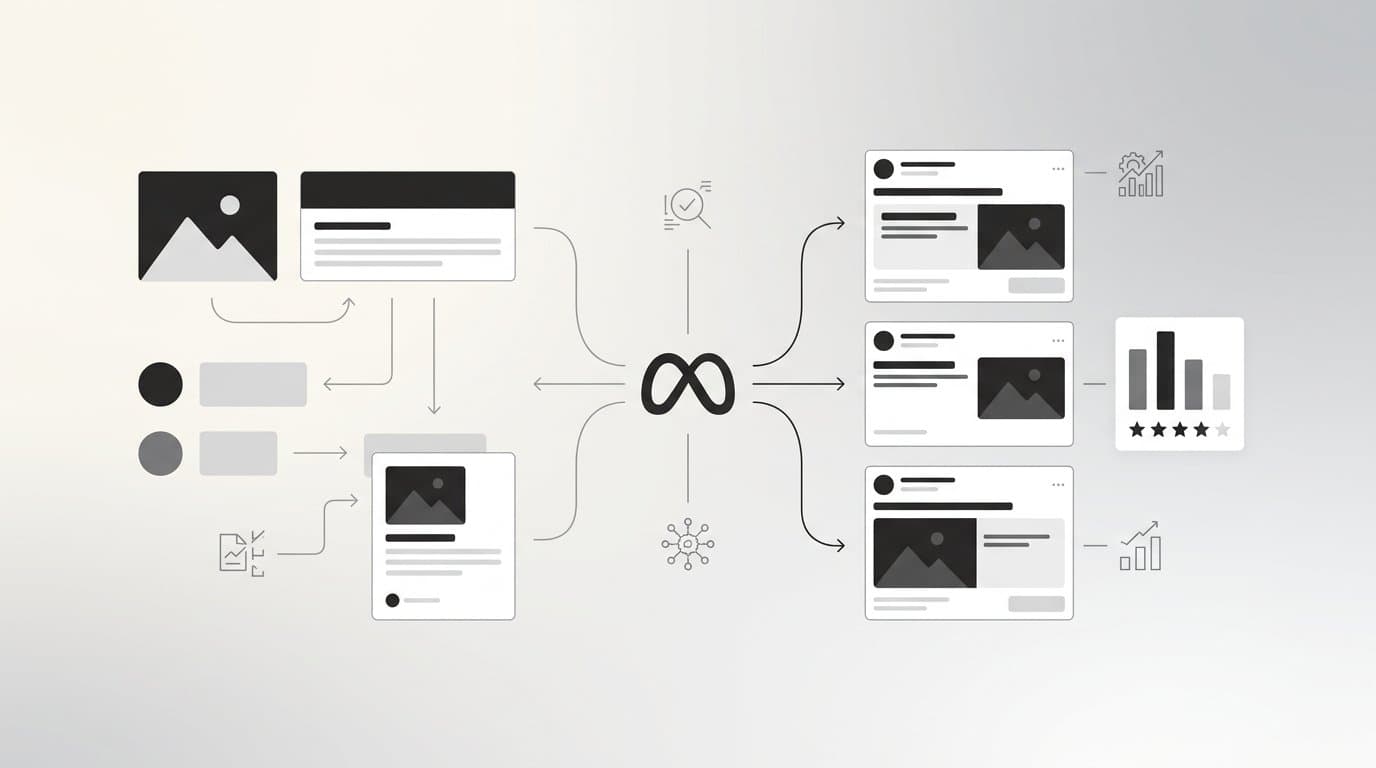
AI-powered creative tools have changed the production economics of video advertising in a fundamental way. Instead of moving through each traditional production stage, you can now generate a complete video ad from a product URL or a short brief, then refine it through chat-based editing.
This is not a future capability. Platforms like AdStellar allow you to input a product URL and receive complete video ad creatives, including image ads, video ads, and UGC-style avatar content, without a designer, video editor, or actor involved. You can then refine the output through a conversational editing interface until the creative matches your vision.
The shift this represents is significant. Production time that used to be measured in days or weeks compresses into minutes. That changes how many creative angles you can test, how quickly you can respond to market shifts, and how efficiently you can allocate your team's time. Exploring the best AI video ad platforms for ecommerce reveals just how far this technology has advanced.
Implementation Steps
1. Identify the product or offer you want to advertise and gather the core URL and any existing brand assets.
2. Input the product URL into an AI creative platform and review the initial creative output across available formats.
3. Use the chat-based editing interface to refine messaging, adjust visual elements, and align the creative with your campaign objectives.
4. Export the finalized video creative and load it directly into your campaign structure for launch.
Pro Tips
Generate multiple creative variations in the same session rather than perfecting a single ad. AI generation is fast enough that producing five to ten variations takes roughly the same time as producing one, and having multiple versions ready for testing is far more valuable than having one polished ad.
4. Clone Competitor Ads and Adapt Them Faster Than Starting From Scratch
The Challenge It Solves
Creative ideation is one of the most time-consuming and unpredictable stages of video ad production. Brainstorming angles, writing briefs, and developing concepts from scratch takes significant time, and there is no guarantee the resulting idea will resonate with your audience. Starting from a proven creative structure eliminates much of that uncertainty.
The Strategy Explained
The Meta Ad Library is a publicly available tool that lets you view active ads from any Facebook page. Performance marketers have long used it as a competitive intelligence resource, but it is also one of the fastest ways to shortcut the creative ideation stage.
The approach is not about copying competitor ads verbatim. It is about identifying video structures, hooks, and formats that are clearly working in your market, then adapting them with your brand, offer, and messaging. If a competitor has been running the same video ad for months, that is a strong signal that it is performing. Their ad spend is doing your testing for you.
Tools like AdStellar take this further by allowing you to clone competitor ads directly from the Meta Ad Library and adapt them within the platform, replacing the creative development stage with a structured adaptation process that moves far faster. This is part of a broader shift toward automated Facebook creative production that is reshaping how performance teams operate.
Implementation Steps
1. Search the Meta Ad Library for competitors in your category and filter for active ads that have been running for an extended period.
2. Analyze the video structure: note the hook format, the pacing, the core message, and the CTA approach.
3. Document the structural elements you want to adapt and brief your team or AI tool on how to apply your brand and offer to that framework.
4. Produce and launch your adapted version, then use performance data to determine whether the structure translates to your audience.
Pro Tips
Look beyond direct competitors. Brands in adjacent categories targeting similar audiences often develop creative formats that translate well across markets. Borrowing structure from a non-competitor reduces the risk of your ad looking derivative while still benefiting from a proven framework.
5. Produce Multiple Variations in One Session With Bulk Creation
The Challenge It Solves
Most production teams approach video creation one ad at a time. This means every new variation requires scheduling, setup, recording, and editing as a separate project. When you need to test multiple hooks, messages, or formats, the calendar fills up fast and the output stays limited.
The Strategy Explained
Batch production combined with bulk creation tools fundamentally changes the output-to-effort ratio. The idea is to consolidate all your recording into a single session, capturing multiple hooks, body segments, and CTAs back to back, and then use a bulk creation platform to generate and launch every possible combination simultaneously.
AdStellar's Bulk Ad Launch feature is built specifically for this workflow. You bring multiple creatives, headlines, audiences, and copy variations into the platform, and it generates every combination and launches them to Meta in clicks rather than hours. What would normally require days of setup across multiple campaigns can be completed in a single working session.
This approach also makes your testing more statistically meaningful. Instead of running a handful of variations and waiting weeks for conclusive data, you can launch a large set of combinations simultaneously and identify winners much faster. For teams that find Facebook ad testing too time consuming, bulk creation is often the single most impactful change they can make.
Implementation Steps
1. Plan your batch recording session around a matrix of variables: decide in advance how many hooks, body segments, and CTAs you want to capture.
2. Record all components in a single session, treating each element as a standalone piece rather than part of a specific complete ad.
3. Import all components into a bulk creation tool and define the combination rules: which hooks pair with which CTAs, which copy goes with which audience segments.
4. Review the generated combinations, approve the full set for launch, and push them live to Meta simultaneously.
Pro Tips
Prepare your scripts and talking points before the recording session, not during it. Every minute spent thinking during a batch session is a minute of production time lost. The session itself should be execution only, with all creative decisions made in advance.
6. Use UGC-Style Avatar Ads to Skip the Filming Stage Entirely
The Challenge It Solves
UGC-style content is widely recognized among Meta advertising practitioners as one of the strongest-performing formats, particularly for direct-to-consumer brands. Its authenticity tends to reduce ad fatigue and build trust in ways that polished studio productions often cannot. The problem is that traditional UGC production is logistically complex: recruiting creators, coordinating availability, managing deliverables, handling revisions, and repeating the process for every new angle.
The Strategy Explained
AI-generated avatar ads replicate the UGC format without any of the production logistics. Instead of recruiting a creator and scheduling a shoot, you select an avatar, input your script, and generate a video that looks and feels like authentic user-generated content. No filming, no coordination, no revision cycles waiting on a third party.
AdStellar's AI Ad Creative feature includes UGC-style avatar content generation as part of its core toolkit. You can produce avatar ads from a product URL, refine the script and delivery through chat-based editing, and have a finished creative ready for launch in a fraction of the time traditional UGC sourcing requires. The strategies behind high-converting AI UGC video ads go deeper into how to maximize this format's effectiveness.
For agencies managing multiple client accounts, this is particularly valuable. You can produce UGC-style variations for different products, audiences, and offers simultaneously without the overhead of managing a creator network.
Implementation Steps
1. Identify the product, offer, or message you want to communicate in UGC format and write a conversational script that matches how a real customer would speak about it.
2. Select an avatar that aligns with your target audience's demographics and the tone of your brand.
3. Generate the initial avatar ad and review it for pacing, delivery, and visual alignment with your campaign objectives.
4. Use chat-based editing to refine the script or delivery until the creative meets your meets your standards, then export and launch.
Pro Tips
Write avatar scripts in a genuinely conversational tone, not marketing copy read aloud. The effectiveness of UGC-style ads comes from their authenticity. If the script sounds like an ad, the format loses its advantage. Think about how a satisfied customer would actually describe the product to a friend.
7. Let Performance Data Drive Your Next Production Decision
The Challenge It Solves
Many production teams spend time and budget creating video ads based on intuition, brand preferences, or what looks good rather than what the data says works. This leads to a cycle where production effort is disconnected from performance outcomes, and the same types of underperforming creatives get reproduced with slightly different aesthetics.
The Strategy Explained
Using performance data to guide production decisions is a foundational principle in performance marketing, but most teams do not apply it systematically enough. The goal is to make every new production effort a direct response to what your current data is telling you: which hooks are generating the most engagement, which CTAs are driving the strongest conversion rates, which formats are earning the best ROAS.
AdStellar's AI Insights feature surfaces this information through creative leaderboards that rank your ads, headlines, copy, audiences, and landing pages by real metrics including ROAS, CPA, and CTR. You set your target goals, and the AI scores everything against your benchmarks so you can immediately see what is working and what is not.
The Winners Hub takes this further by collecting your best-performing creatives, headlines, and audiences in one place with full performance data attached. When you are planning your next production session, you start from a clear picture of what your audience has already responded to, not a blank creative brief. Pairing this with real-time ad optimization tools creates a feedback loop that continuously sharpens your creative output.
Implementation Steps
1. Review your creative leaderboard before every new production planning session to identify which elements are currently performing above benchmark.
2. Analyze your top performers for common patterns: are certain hooks consistently outperforming? Are specific CTAs driving stronger conversion? Is one format generating better engagement than others?
3. Use those patterns to define the creative brief for your next production session, prioritizing variations that build on proven elements rather than introducing entirely new approaches.
4. After launching new creatives, monitor performance against your benchmarks and update your Winners Hub so the data cycle continues to improve your next production decision.
Pro Tips
Treat your Winners Hub as a living brief. Before briefing your team or generating new creatives with AI, spend ten minutes reviewing what is currently winning and why. This single habit can eliminate a significant amount of production effort spent on angles that your data has already ruled out.
Your Implementation Roadmap
Video ad production does not have to be the bottleneck that limits your entire marketing operation. Each strategy in this article targets a specific stage of the pipeline where time typically gets lost, and together they represent a complete rethinking of how video advertising can work.
You do not need to implement all seven at once. Start by identifying your biggest current bottleneck. If ideation and scripting are slowing you down, start with competitor ad cloning and AI creative generation. If filming logistics are the problem, avatar ads and repurposing static assets will give you the fastest relief. If you are producing enough creative but not testing it efficiently, bulk creation and performance-driven production decisions are where to focus first.
The most effective path forward is not to produce more video with more resources. It is to produce smarter video faster with better tools. Platforms like AdStellar make it possible to go from product URL to live Meta campaign without a single designer, video editor, or actor involved. AI generates your creatives, builds your campaigns, launches hundreds of variations at once, and surfaces your winners automatically.
If you are ready to stop letting production timelines limit your advertising output, Start Free Trial With AdStellar and see how fast your video ad pipeline can actually move.