The campaign brief is approved. The deadline is 48 hours away. And your video ad folder is completely empty.
If you've managed Meta ad campaigns for any length of time, that sinking feeling is familiar. Video consistently outperforms static ads across Meta placements, and most performance marketers know it. But knowing that doesn't make the production process any faster. It just makes the gap between what you need and what you have feel more painful.
The frustrating reality is that video ad production is genuinely complex. It's not just editing footage together. It's a long chain of dependencies, approvals, technical requirements, and coordination tasks that stack up in ways most teams don't fully account for until they're already behind schedule. And the faster Meta's algorithm burns through creatives, the more pressure teams feel to produce more, faster, with the same resources.
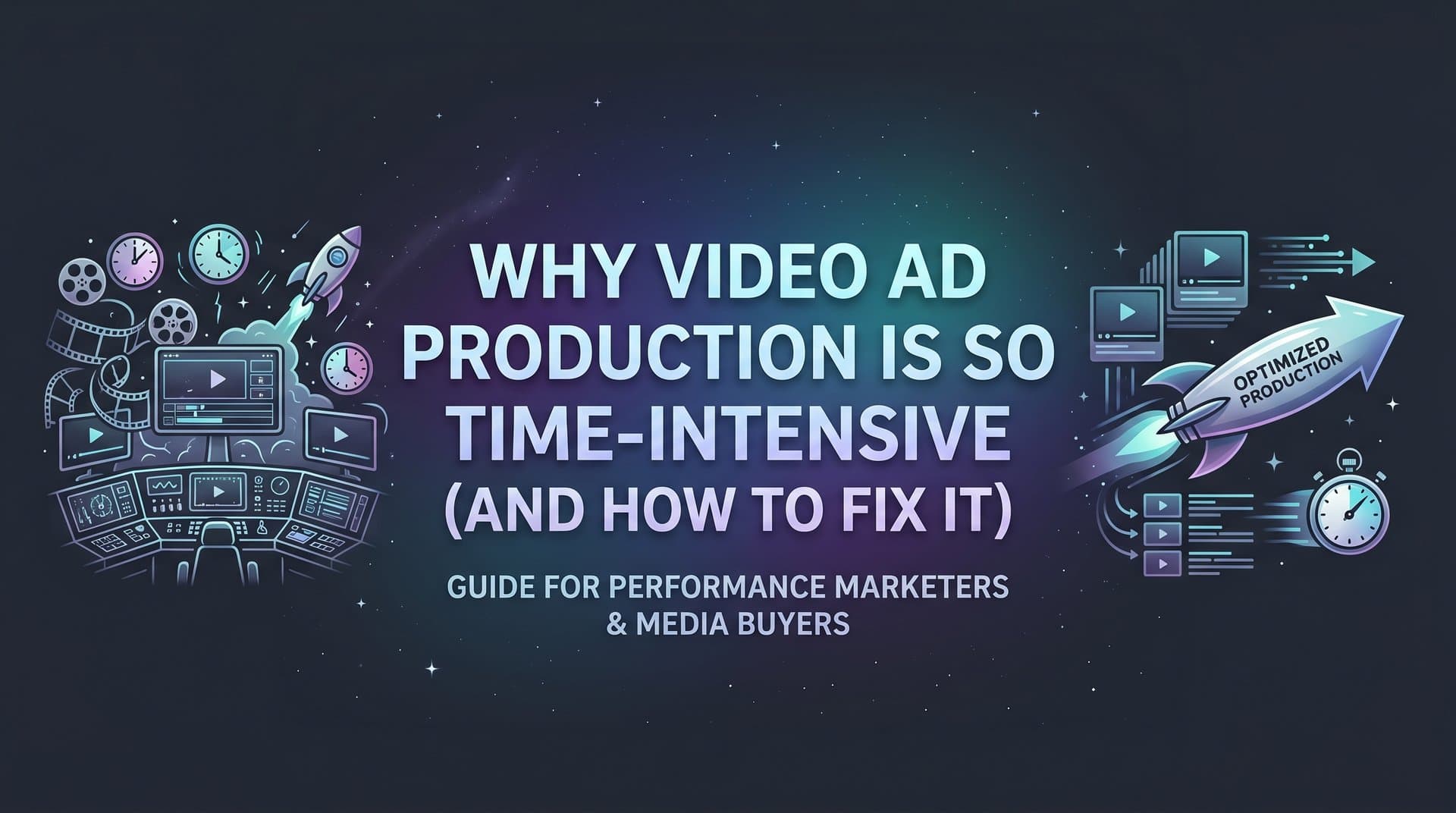
This article breaks down exactly where video ad production time goes, what slow production actually costs beyond hours, and how modern performance marketing teams are using AI to compress timelines that used to take weeks into something that takes minutes. If you've ever felt like video production is the ceiling on your campaign velocity, you're not wrong. But it doesn't have to stay that way.
The Hidden Complexity Behind a 30-Second Ad
Most marketers, when they think about producing a video ad, picture the editing stage. Someone sitting at a timeline, cutting clips, adding music, dropping in a logo. That mental model dramatically underestimates what actually goes into a finished ad.
Before a single frame gets edited, a full upstream production chain has to complete. Concept development comes first: what's the hook, what's the narrative structure, what emotion does this ad need to trigger in the first three seconds? Then scripting, which for a 30-second ad can require multiple drafts before stakeholders align on tone, messaging hierarchy, and the call to action. After scripting comes asset sourcing: product footage, lifestyle imagery, brand elements, voiceover talent, or on-screen talent if you're going that route.
Only after all of that is locked can filming or animation begin. And only after filming is wrapped and reviewed can editing start. This sequential dependency structure means that a delay at any upstream stage cascades through everything that follows. A script revision on Tuesday doesn't just push Tuesday's work back. It pushes the entire production schedule back by however long the revision cycle takes.
Approval gates compound the problem. Most organizations have at least two or three stakeholders who need to sign off on creative before it goes live. Each approval gate introduces a waiting period. Feedback arrives in scattered channels: email, Slack, comment threads in shared documents. Consolidating that feedback, interpreting it, implementing changes, and routing the updated version back for re-approval can add days to what should be a straightforward step.
Then there's the variation problem. A single approved concept doesn't produce a single ad. Meta advertising best practice requires testing multiple versions: different hooks, different copy overlays, different calls to action. And each version needs to be exported in multiple aspect ratios to cover all placements. A 9:16 vertical for Stories and Reels. A 1:1 square for the feed. A 4:5 portrait for mobile. A 16:9 horizontal if you're running in-stream. One core concept can realistically require six to ten separate exports, each needing to be checked against platform specs before upload.
The compounding effect of all this is significant. What looks like a single video ad is actually a production project with a dozen interdependent tasks, multiple stakeholders, and a technical export checklist at the end. Teams that only budget time for editing routinely find themselves scrambling at every other stage of the process.
Where the Clock Really Gets Eaten: The Six Biggest Time Drains
Understanding the production chain is one thing. Knowing exactly where time disappears is another. Three areas consistently account for the majority of delays in video ad production, and each one compounds the others.
Talent Coordination: If your video ad involves people, whether that's actors, UGC creators, or even just a spokesperson filmed on a phone, you're dealing with scheduling, outreach, contracts, briefing, and the inevitable reality that not every shoot goes as planned. UGC-style ads have become a dominant format on Meta because they feel native to the feed and tend to drive strong engagement. But sourcing real UGC creators means identifying talent, negotiating rates, sending product, waiting for content to be filmed, reviewing the footage, and frequently requesting reshoots when the result doesn't match the brief. This process alone can take longer than every other production stage combined. And if the creative doesn't perform, you start over.
Revision Cycles and Stakeholder Approvals: Creative briefs get misinterpreted. What reads as "energetic and bold" to a copywriter reads as "too aggressive" to a brand manager. What the performance team wants to test conflicts with what the creative director considers on-brand. Feedback arrives in fragments: a comment here, a Slack message there, a voice note from someone who didn't read the brief. Each round of revisions requires the editor or agency to reopen the project, implement changes, re-export, and route back for review. In practice, this cycle can add multiple business days per round, and most projects go through more than one round.
Technical Formatting and Platform Compliance: Meta's ad platform has specific requirements that go beyond simply uploading a video file. Aspect ratios must match the placement. File sizes must fall within limits. Text overlays must respect safe zones so they don't get cropped on different devices. Captions need to meet accessibility standards. Each variation needs to be individually checked and corrected if it falls outside spec. When you're managing six to ten exports per concept across multiple campaigns, this manual QA process becomes a meaningful time sink. And errors caught after upload mean starting the export process again.
What makes these three drains particularly damaging is how they interact. A revision request delays the final edit, which delays the export, which delays the compliance check, which delays the launch. A reshoot request from a UGC creator pushes back the entire downstream timeline. Every bottleneck in the chain amplifies the ones that follow it, and teams often don't see the full impact until they're already days behind where they expected to be.
The result is a production process that feels perpetually behind, even when everyone is working hard. The problem isn't effort. It's the structure of traditional video production itself.
The Real Cost Beyond Hours: What Slow Production Actually Kills
Slow video ad production doesn't just cost time. It costs performance, budget, and competitive position in ways that don't always show up on a production timeline but absolutely show up in campaign results.
Delayed Testing Means Delayed Learning: Every day a creative spends in production is a day you're not collecting performance data. When it takes weeks to move from concept to live ad, you're losing weeks of signal about what resonates with your audience. Winning creatives get identified later. Budgets stay allocated to underperformers longer because you don't have better options ready to swap in. The cumulative effect on ROAS over a quarter is significant, even if no single delay looks catastrophic in isolation.
Creative Fatigue Accelerates Faster Than Production Can Keep Up: Meta's algorithm serves ads repeatedly to the same audience segments. Over time, those audiences become desensitized to the same creative, engagement drops, CPMs rise, and the ad's performance deteriorates. Performance marketers widely recognize creative fatigue as one of the primary reasons campaigns plateau. The fix is straightforward in theory: refresh creatives regularly. In practice, if your production pipeline takes weeks, you cannot refresh fast enough to stay ahead of fatigue. By the time a new creative is ready, the window where it would have made the biggest impact has already passed.
Agency and Freelancer Costs Scale With Complexity: Every additional revision round has a price. Rush fees for tight deadlines are real. Reshooting sessions cost money. When a UGC creator delivers footage that doesn't match the brief and needs to be redone, you're paying twice for the same deliverable. These costs are often treated as one-off exceptions, but in practice they're structural. They happen repeatedly because the production process is complex, feedback is imprecise, and deadlines are always tighter than the timeline allows. Budget that goes toward revision rounds and rush fees is budget that could be funding media spend instead. Teams looking to control these expenses can find practical guidance in proven strategies to slash ad creative production costs without sacrificing quality.
The deeper issue is that slow production creates a scarcity mindset around creative. When producing a video ad is expensive and time-consuming, teams become conservative. They produce fewer variations. They test less. They stick with what worked before because the cost of producing something new and having it fail feels too high. That conservatism is rational given the constraints, but it's also exactly what prevents teams from finding the next winning creative before their competitors do.
How AI Is Collapsing the Video Ad Production Timeline
The production bottlenecks described above are real, but they're not inevitable. AI-powered tools are fundamentally changing what's possible in the video ad creation process, not by making traditional production faster, but by replacing the most time-intensive parts of it entirely.
Eliminating the Talent Coordination Problem: AI-generated video ads and UGC-style avatar ads remove the dependency on human talent entirely. Instead of sourcing creators, scheduling shoots, sending product, waiting for footage, reviewing it, and requesting reshoots, a marketer inputs a product URL or a brief and receives video ad variations in minutes. The avatar-based UGC format replicates the feel of native, creator-style content without any of the coordination overhead. There are no contracts, no scheduling conflicts, no reshoots. The entire talent management layer of traditional production simply disappears.
Replacing Revision Cycles With Real-Time Refinement: Chat-based creative editing changes the feedback loop from a multi-day process to an immediate one. Instead of writing feedback in an email, waiting for an editor to interpret it, and then waiting again for the revised version to come back, marketers adjust visuals, copy, structure, and tone through direct prompts and see the changes in real time. The back-and-forth that used to span days compresses into minutes. And because the marketer is in direct control of the refinement process, there's no interpretation layer where intent gets lost between the feedback and the output.
Solving the Variation and Format Problem at Scale: Bulk variation generation addresses one of the most tedious parts of the production process. AI platforms can produce dozens of video variations across different hooks, headlines, formats, and copy overlays simultaneously. What used to require individual exports, manual format adjustments, and compliance checks for each variation can now be generated in a single workflow. The result is not just faster production but a fundamentally different scale of output. Teams that previously tested three or four variations per campaign can now test twenty or thirty, dramatically accelerating the pace at which they identify winning creatives. Platforms built for this kind of output are covered in depth in this roundup of the best AI video ad platforms for ecommerce.
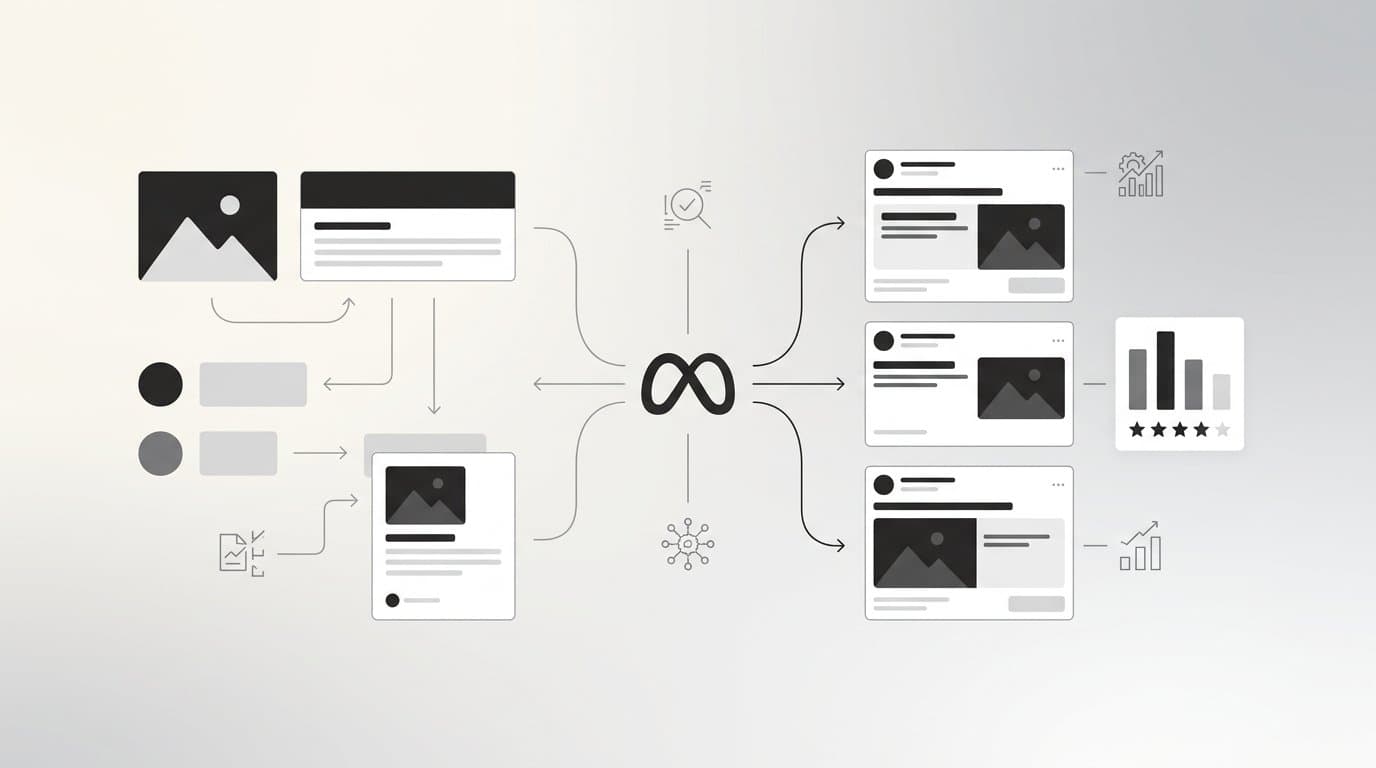
AdStellar's AI Creative Hub is built around exactly this model. Marketers can generate image ads, video ads, and UGC-style creatives directly from a product URL, clone competitor ad formats from the Meta Ad Library, or build from scratch with AI assistance. Chat-based editing allows refinements without leaving the platform. The result is a creative production workflow where the traditional bottlenecks, talent, revisions, and format exports, are replaced by a process that operates at a fundamentally different speed.
From Single Asset to Full Campaign: Closing the Loop with Automation
Faster creative generation solves one half of the production bottleneck. But if the campaign setup process still takes hours in Ads Manager, the overall time savings are only partial. The full value of AI-accelerated creative production is realized when it connects directly to campaign launch and performance analysis.
Building Campaigns With Historical Intelligence: One of the most time-consuming parts of campaign setup is deciding what to test. Which audience segments? Which headlines? Which creative paired with which copy? Without data to guide those decisions, teams either rely on intuition or spend significant time reviewing past campaign results manually. AI campaign builders change this by analyzing historical performance data before a single ad goes live. They rank every creative, headline, and audience by past performance and use that ranking to build complete campaign structures. Instead of guessing, you're launching with a data-informed starting point. And because the AI explains its reasoning, you understand the strategy rather than just accepting the output.
Bulk Launching Replaces Manual Ad Set Construction: Once creatives are generated and campaign structure is defined, the traditional next step is building individual ad sets in Ads Manager: selecting audiences, assigning creatives, writing headlines, setting budgets, and repeating that process for every variation you want to test. For a meaningful multivariate test, this can take hours. Bulk ad launching compresses that process dramatically. Multiple creatives, headlines, audiences, and copy variations can be mixed and matched, with every combination generated and launched to Meta in clicks rather than hours. The manual construction work that used to consume an afternoon becomes a workflow measured in minutes.
Surfacing Winners Without Manual Dashboard Review: After launch, the traditional workflow requires regularly reviewing campaign dashboards to identify which variations are performing, which are underperforming, and where budget should shift. Performance leaderboards and goal-based scoring automate this analysis. AI insights rank every creative, headline, audience, and landing page by real metrics like ROAS, CPA, and CTR, scored against the benchmarks you set. Instead of spending time in dashboards, you see winners surfaced automatically. And with a Winners Hub that stores your best-performing elements with full performance data attached, those winning formats are immediately available to inform the next campaign cycle.
AdStellar's platform is designed to connect all of these stages. The AI Campaign Builder analyzes past performance and builds complete Meta ad campaigns with full transparency into every decision. Bulk Ad Launch connects creative output directly to Meta without manual Ads Manager construction. AI Insights leaderboards surface winners in real time. The creative-to-campaign loop that traditionally required days of coordination, setup, and analysis closes in a single platform workflow.
Building a Faster Video Ad Workflow That Actually Scales
The shift that matters most here isn't just about saving time on any single campaign. It's a change in how you think about video ad production altogether.
The traditional mindset treats each video ad as a significant production investment, which leads to caution, conservatism, and fewer tests. The faster mindset treats video ads as testable hypotheses: produce many, identify winners quickly, and reinvest in what works. Speed and volume of testing matter as much as creative quality, because you cannot know what will resonate until you put it in front of an audience.
In practice, this workflow looks like this. Generate video and UGC-style creatives using AI, either from a product URL, a brief, or by cloning a competitor format from the Meta Ad Library. Use bulk launching to test those variations across multiple audiences, headlines, and copy combinations simultaneously. Let performance data surface the winners through leaderboard rankings and goal-based scoring. Clone the winning formats into the next campaign cycle, carrying forward what worked and building on it.
Each cycle gets faster and more informed than the last. The AI gets smarter with each campaign because it has more performance history to draw on. The Winners Hub accumulates proven creative elements that can be reused and remixed. And because the entire workflow lives in one platform, from creative generation to campaign launch to winner identification, there's no handoff friction between stages.
AdStellar handles this entire loop without requiring designers, video editors, or actors. The production complexity that used to be the ceiling on campaign velocity becomes, instead, the foundation for a system that compounds over time.
The Bottom Line on Video Ad Production
Video ad production has been one of the most persistent bottlenecks in performance marketing, not because teams aren't working hard enough, but because the traditional production model is structurally slow. Sequential dependencies, talent coordination, revision cycles, format exports, and manual campaign setup all stack up in ways that make speed genuinely difficult to achieve.
That's changing. AI-powered platforms are collapsing the timeline at every stage: generating creatives without talent, refining them without email threads, launching variations without manual Ads Manager construction, and surfacing winners without manual dashboard analysis. The weeks-long process that once defined video ad production can now happen in a fraction of the time.
If you're ready to see what that looks like in practice, Start Free Trial With AdStellar and go from product URL to live video ad campaign in minutes, not weeks. No designers, no video editors, no actors required. Just a faster path from creative to conversion.