The creative bottleneck is killing your Meta ad performance. You know you need to test dozens of variations to find winners. You understand that volume is the name of the game in performance marketing. But between designer queues, revision rounds, and budget constraints, you're lucky to launch five new creatives per month.
Meanwhile, your competitors are flooding the feed with fresh angles, testing relentlessly, and iterating at speeds that seem impossible. The gap isn't strategy or budget. It's production capacity.
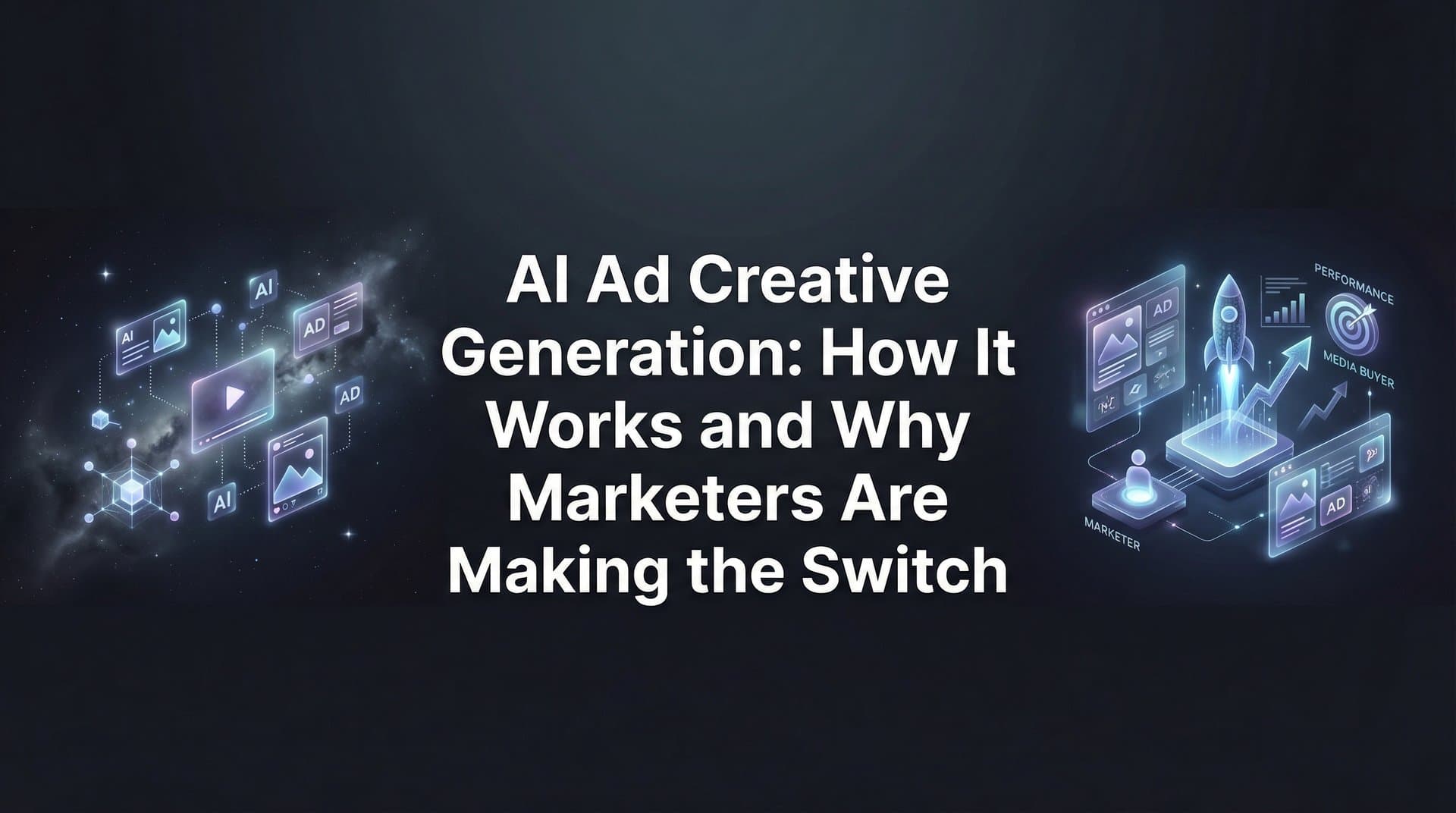
AI ad creative generation changes the equation entirely. Instead of waiting days for a single design revision, you can generate dozens of variations in minutes. Instead of choosing between testing volume and creative quality, you get both. This technology isn't just making creative production faster. It's fundamentally reshaping how performance marketers approach Meta advertising.
This guide breaks down exactly how AI ad creative generation works, what it can actually produce for your campaigns, and how to evaluate whether it belongs in your workflow. No hype, no speculation. Just the mechanics, capabilities, and practical considerations you need to make an informed decision.
How AI Creates Original Ad Content From Scratch
AI ad creative generation uses generative models trained on patterns from successful advertising creative. Think of it like this: the AI has analyzed millions of high-performing ads across industries, learning what visual compositions drive engagement, how text placement affects readability, and which color combinations capture attention in crowded feeds.
When you feed the system a product URL, it doesn't just grab your product image and slap it into a template. It analyzes your product, understands your brand elements, and generates original compositions that combine proven advertising principles with your specific offering. The AI considers visual hierarchy, emotional triggers, and platform-specific best practices to create something new.
This is fundamentally different from template-based tools. Templates give you preset layouts where you swap in your logo and product shot. Generative AI creates original compositions every time. One product URL might generate a lifestyle scene with your product integrated naturally. Another generation might create a benefit-focused layout with dynamic text overlays. Same input, completely different creative approaches.
The learning component matters more than most marketers realize. Performance data feeds back into the system. When certain visual patterns consistently drive conversions in your campaigns, the AI weights those patterns more heavily in future generations. It's not just creating variations. It's learning what works specifically for your audience and optimizing accordingly.
The technology leverages similar foundations to image generators like DALL-E and Midjourney, but it's trained specifically on advertising creative patterns rather than general imagery. That specialization means it understands ad-specific concepts like clear value propositions, compelling calls-to-action, and scroll-stopping visual hooks that generic image generators miss.
Color psychology plays a role too. The AI recognizes that certain color combinations perform differently across industries and campaign objectives. A health supplement brand might see better results with clean whites and greens suggesting wellness, while a limited-time offer might benefit from urgency-driving reds and oranges. The system applies these principles automatically based on your inputs.
Text placement isn't arbitrary either. The AI understands mobile-first design principles, knowing that Meta users scroll vertically on smartphones. It positions headlines and key messages in the safe zones that remain visible even when videos autoplay muted or when users scroll quickly through their feeds.
The real power emerges when you combine generation with iteration. You're not locked into the first output. Chat-based refinement lets you adjust messaging, shift visual elements, or emphasize different product features without starting over. The AI maintains context across iterations, building on what you've already approved rather than generating completely random alternatives. This approach to AI marketing creative generation represents a fundamental shift in how performance teams operate.
The Full Spectrum of AI-Generated Ad Formats
Image ads remain the foundation of most Meta campaigns, and AI handles them with surprising sophistication. Feed a product URL into a capable system and you'll get static visuals that range from clean product-focused shots to lifestyle imagery showing your offering in context. Text overlays get generated automatically, positioning headlines and benefit statements exactly where they'll capture attention without overwhelming the visual.
The lifestyle integration deserves special attention. The AI doesn't just paste your product onto a stock background. It generates scenes where your product appears naturally. A skincare product might appear on a minimalist bathroom counter with morning light. A fitness supplement could show up in a gym setting with subtle branding that feels authentic rather than forced.
Video ads unlock another dimension entirely. You don't need video editing skills or expensive production. The AI generates motion through animation, transitions, and dynamic elements that transform static concepts into engaging video content. Product demos can highlight features through animated callouts. Promotional offers can build urgency with countdown timers and motion graphics.
Think about what traditionally requires a video editor: transitions between scenes, text animations that emphasize key points, zoom effects that draw attention to product details, background music selection that matches your brand tone. AI handles all of it based on best practices learned from high-performing video ads across your industry.
UGC-style content represents the newest frontier, and it's solving a real problem. User-generated content consistently outperforms polished brand content because it feels authentic. But authentic UGC requires real creators, coordination, and often multiple revision rounds. AI avatars deliver that authentic talking-head feel without the logistics.
These aren't obviously fake animations. Modern AI avatars can deliver scripted content with natural expressions, realistic voice inflections, and gestures that mimic genuine creator content. For products where testimonial-style delivery resonates, this format lets you test different scripts, angles, and presentation styles without recruiting actual creators for every variation. Tools like an Instagram ad creative generator can produce these formats optimized for each platform's specifications.
The format flexibility matters because different audiences respond to different creative types. Some products sell better with clean product shots that emphasize features. Others need lifestyle context to help prospects visualize usage. Still others benefit from the social proof feeling of UGC-style presentation. AI lets you test across all these formats without specialized production for each.
Variation creation within formats multiplies your testing capacity even further. Start with one strong concept and the AI can generate dozens of versions: different headlines emphasizing different benefits, color variations optimized for different emotional responses, layout adjustments that test various visual hierarchies. Each variation is original, not just a minor tweak.
The Complete Workflow From Concept to Campaign
Starting with a product URL is the simplest entry point. Paste in your product page and the AI extracts everything it needs: product images, descriptions, key features, pricing, and brand elements. Within seconds, you're reviewing multiple creative directions, each emphasizing different value propositions or visual approaches.
Competitive research through the Meta Ad Library offers another powerful starting point. Every active ad on Meta platforms is publicly viewable there. When you spot a competitor's ad that's clearly getting traction, you can clone the concept directly. The AI analyzes their approach and generates similar creatives with your product and messaging. You're not copying. You're starting from proven patterns and adapting them to your offering.
Text prompts give you maximum creative control when you have a specific vision. Describe exactly what you want and the AI generates it: "Product shot on marble surface with soft shadows and gold accents, headline emphasizing premium quality." The specificity you provide directly influences the output quality.
The iterative refinement process turns good creatives into great ones. Your first generation might nail the visual but miss the messaging tone. Chat-based editing lets you adjust: "Make the headline more urgent" or "Shift the product placement to the left third of the frame." The AI maintains context, building on what's already working rather than starting from scratch.
This conversational refinement feels natural because you're describing changes in plain language rather than learning design software. "Add a limited-time offer badge in the top right" or "Change the background to a warmer tone" get interpreted and executed immediately. No technical skills required.
Bulk variation creation is where AI truly separates itself from traditional production. Take your refined concept and multiply it into dozens of testable versions instantly. Different headlines testing various benefit angles. Color schemes optimized for different emotional triggers. Layout variations that test visual hierarchy hypotheses. Each combination becomes a unique ad ready for testing. Understanding what dynamic creative optimization offers can help you maximize these variations automatically.
The direct platform integration completes the workflow. In systems built for performance marketing, your generated creatives don't just export as files. They launch directly to Meta with optimized audiences, campaign structures, and tracking in place. You move from concept to live campaign without switching tools or manually building ad sets.
Why Manual Creative Production Can't Keep Pace
The testing volume requirement in performance marketing creates an impossible math problem for traditional production. Finding winning creative typically requires testing many variations. You might test five different value propositions, three visual styles, and four headline approaches. That's sixty unique ads just to cover one testing matrix.
Manual production means each of those sixty ads requires individual work. A designer creates each visual. A copywriter crafts each headline variation. Someone coordinates all the pieces. Even with efficient workflows, you're looking at days or weeks to produce what AI generates in minutes. This is exactly why so many teams experience a Facebook ads creative testing bottleneck that limits their growth.
The cost barrier hits smaller teams especially hard. Hiring designers, coordinating with freelancers, or using agencies adds up quickly when you need high testing volume. Many marketers end up testing fewer variations than they know they should simply because the production cost becomes prohibitive. They're making strategic compromises based on production constraints rather than testing best practices.
Speed-to-market challenges compound the problem. Trends move fast on social platforms. A viral moment or seasonal opportunity might have a window measured in days. Traditional production timelines mean you're often executing on opportunities after they've already peaked. By the time your creative is ready, the moment has passed.
The revision bottleneck frustrates everyone involved. Your first creative attempt rarely nails it. You need to test, learn, and iterate. But each revision round with traditional production means another email thread, another design queue, another delay. The back-and-forth that should take minutes stretches into days.
Designer bandwidth becomes the limiting factor on your entire testing strategy. Even with great designers on your team, they can only produce so much. When creative production capacity determines how many tests you can run, you're letting production constraints drive your marketing strategy. That's backwards.
Quality consistency across high volumes presents another challenge. When you need dozens of variations, maintaining brand consistency and quality standards across all of them requires careful oversight. One designer might interpret your brand differently than another. Freelancers might not fully grasp your positioning. Manual production at scale introduces quality variance.
Choosing AI Ad Creative Tools That Actually Deliver
Platform integration separates tools built for performance marketers from those built for general creative work. Export-only tools might generate decent creatives, but then you're manually uploading to Meta, building campaign structures, and connecting tracking. That fragmentation kills efficiency and breaks the feedback loop between creative and performance.
Look for systems that launch directly to Meta. Your generated creatives should flow seamlessly into campaign builders that handle audience targeting, budget allocation, and tracking setup. The entire workflow from generation to live campaign should happen in one platform. Every tool switch introduces friction and opportunity for errors. Exploring top AI-driven ad creative generation tools can help you identify which platforms offer this seamless integration.
Performance feedback loops make the difference between a creative tool and a creative system. Can the platform see which of your generated ads actually drive conversions? Does it learn from your winners and apply those insights to future generations? The best tools create a compounding advantage where each campaign makes the next one smarter.
Real-time insights and leaderboards show you which creatives, headlines, and visual approaches are winning based on actual metrics like ROAS, CPA, and CTR. When your creative tool can rank every element by performance and let you instantly reuse winners, you're building a systematic testing operation rather than just generating more ads.
Format flexibility across images, video, and UGC-style content ensures you're not locked into one creative approach. Different products and audiences respond to different formats. Your tool should handle the full spectrum so you can test across formats without juggling multiple platforms.
Bulk launching capability matters when you're serious about testing volume. Can the tool generate hundreds of ad variations and launch them all at once? Mixing multiple creatives with different headlines, audiences, and copy variations at both ad set and ad level should be straightforward, not a manual nightmare. Effective ad creative testing automation handles this complexity for you.
Winner organization and reusability determine whether you're building assets or just running campaigns. Your best-performing creatives, headlines, and audiences should be saved automatically with their performance data attached. Being able to select any proven winner and instantly add it to your next campaign creates efficiency that compounds over time.
Competitive cloning capabilities accelerate your research-to-execution cycle. When you can analyze competitor ads from the Meta Ad Library and generate similar creatives with your product, you're starting from proven patterns rather than guessing. This isn't copying. It's intelligent adaptation of what's already working in your space.
Building a Systematic AI Creative Testing Framework
Start with competitive research to establish your baseline. Spend time in the Meta Ad Library studying what's working in your space. Which creative approaches are your successful competitors running consistently? Those long-running ads aren't there by accident. They're proven winners worth analyzing and adapting.
Clone and improve rather than starting from scratch. When you identify a competitor's strong creative, use AI to generate your version with improvements. Maybe their headline is solid but the visual feels cluttered. Maybe their offer is compelling but the call-to-action is weak. Start from their proven foundation and iterate from there.
Build your testing framework around systematic variation. Don't just generate random creatives and hope something works. Test specific hypotheses: Does benefit-focused messaging outperform feature-focused? Do lifestyle visuals beat product-only shots? Does urgency language improve conversion rates? Structure your AI generation to answer these questions. A solid Meta ads creative testing strategy ensures you're learning from every campaign.
Use bulk launching to test at meaningful scale. Generate dozens of variations across your key testing dimensions and launch them all simultaneously. The volume lets you reach statistical significance faster and identify patterns that smaller tests would miss. More data means better decisions.
Track everything with goal-based scoring. Set your target metrics for ROAS, CPA, or whatever matters most to your business. When your platform scores every creative element against those benchmarks, you can instantly identify what's working and what's not. No manual spreadsheet analysis required.
Feed winners back into your generation process. When certain visual patterns, headline structures, or messaging angles consistently perform well, use them as templates for future generations. The AI should learn from your specific results, not just general advertising principles. This creates a compounding advantage where each campaign improves the next. Building a Meta ads winning creative library ensures your best performers are always accessible for future campaigns.
Document your learnings systematically. Which product benefits resonate most with your audience? What visual styles drive the highest engagement? Which call-to-action phrases convert best? These insights inform not just your AI creative generation but your entire marketing strategy. You're building institutional knowledge, not just running campaigns.
Your Next Move in Performance Marketing
AI ad creative generation removes the bottleneck between strategy and execution. You no longer have to choose between testing volume and production quality. You don't have to let designer bandwidth limit your marketing ambition. The technology handles the production while you focus on strategy, testing, and optimization.
The shift is fundamental. You move from hoping a creative works to systematically testing at scale. From waiting on production queues to launching dozens of variations instantly. From manual iteration to AI-powered learning loops that improve with every campaign. This isn't incremental improvement. It's a different way of operating.
The marketers winning right now aren't necessarily smarter or better funded. They're testing more, learning faster, and iterating at speeds that manual production can't match. They've replaced production constraints with systematic testing frameworks. They're building compounding advantages where each campaign makes the next one stronger.
Ready to transform your advertising strategy? Start Free Trial With AdStellar and be among the first to launch and scale your ad campaigns 10× faster with our intelligent platform that automatically builds and tests winning ads based on real performance data.
AdStellar handles the complete workflow from creative generation through campaign launch and winner identification. Generate image ads, video ads, and UGC avatar content from product URLs or competitor ads. Launch hundreds of variations with bulk ad creation. Track performance with AI-powered leaderboards that rank every creative element by your actual goals. Build your systematic testing operation on a platform designed specifically for performance marketers who understand that volume and speed win.