Media buying has reached an inflection point. The platforms are more sophisticated than ever, audience targeting options multiply by the quarter, and creative testing demands have exploded—yet you're still working with the same 24 hours in a day. Every campaign requires meticulous planning, endless spreadsheet management, and constant optimization adjustments. Meanwhile, your competitors are launching campaigns in minutes and scaling operations without adding headcount.
The difference? They've embraced AI-powered campaign management.
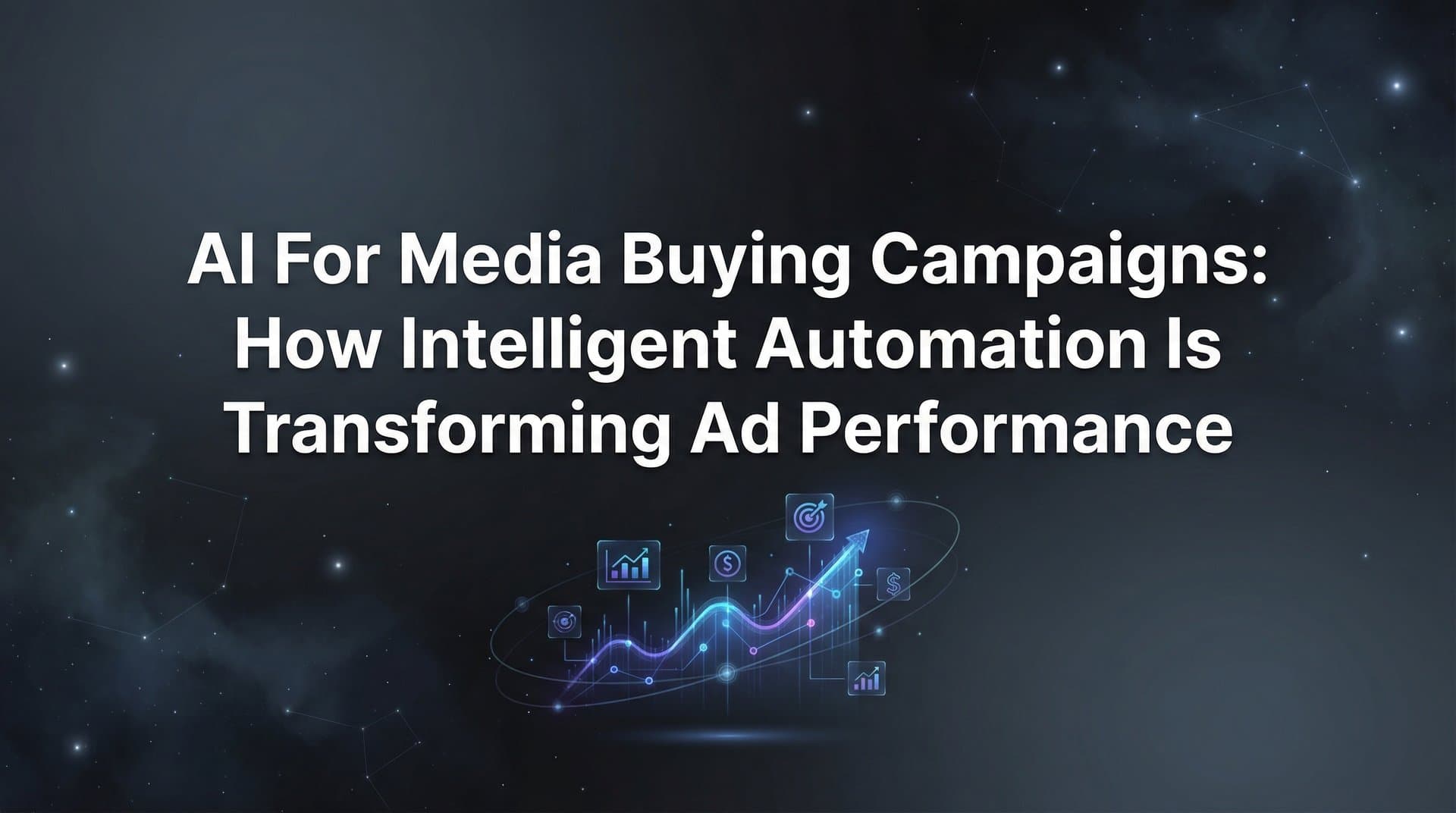
Artificial intelligence isn't just another marketing buzzword—it's fundamentally reshaping how high-performing media buyers plan, launch, and optimize campaigns. We're talking about systems that analyze thousands of data points in seconds, identify winning patterns humans would miss, and autonomously build campaigns that outperform manual setups. This article breaks down exactly how AI transforms media buying operations, from the underlying technology to practical applications that deliver measurable results.
From Spreadsheets to Smart Systems: How Media Buying Evolved
Traditional media buying follows a familiar pattern. You start with market research, analyzing demographics and competitor strategies. Then comes campaign planning—deciding on budget allocation, selecting targeting parameters, and mapping out your creative approach. Next, you manually configure each campaign element in the ad platform: audiences, placements, bidding strategies, ad sets. Finally, you monitor performance and make optimization adjustments based on what the data reveals.
This workflow worked fine when campaigns were simpler. But today's media buying environment is exponentially more complex.
Consider what modern campaign management actually requires. You're juggling multiple ad platforms, each with distinct interfaces and optimization algorithms. You're testing dozens of creative variations simultaneously to identify winners. You're monitoring performance metrics across campaigns, making real-time budget adjustments based on ROAS signals. You're analyzing audience overlap, creative fatigue patterns, and seasonal performance trends.
The human brain excels at strategic thinking and creative problem-solving. Where it struggles? Processing massive datasets at speed, recognizing subtle patterns across thousands of data points, and executing repetitive tasks without error. A media buyer can absolutely identify that "audience segment A performs better than segment B." What they can't do efficiently is analyze 47 audience segments across 12 campaigns, cross-reference that data with 200+ creative variations, and instantly recalculate optimal budget distribution—all while launching three new test campaigns.
That's where machine intelligence enters the picture. Media buying automation tools now handle the data-heavy, pattern-recognition tasks that create bottlenecks in traditional workflows. They process historical performance data to predict which audiences will convert. They analyze creative elements to determine which combinations drive results. They monitor campaign performance in real-time and adjust budgets automatically based on predefined goals.
The transformation isn't about replacing media buyers—it's about eliminating the tedious, time-consuming tasks that prevent them from focusing on strategy and creative direction. When AI handles campaign construction and optimization, media buyers reclaim their time for the high-value work that actually moves the needle.
The Intelligence Behind Automated Campaign Performance
Modern AI-powered media buying platforms operate on three core capabilities that fundamentally change campaign performance: predictive audience targeting, intelligent creative optimization, and dynamic budget allocation. Let's break down how each one works.
Predictive Audience Targeting: Traditional targeting relies on demographic assumptions and platform-suggested audiences. AI targeting analyzes your historical conversion data to identify the specific characteristics of people who actually buy from you—not just who fits a demographic profile.
The system examines past campaign performance across multiple dimensions: which age ranges converted at the highest rates, what interest combinations drove the most purchases, which geographic regions delivered the best ROAS, and how these factors interact with each other. Instead of guessing that "women aged 25-34 interested in fitness" might work, AI identifies that "women aged 27-33 in urban areas who engage with wellness content and have purchased health products in the past 90 days" consistently outperform broader segments.
This precision targeting eliminates wasted ad spend on audiences unlikely to convert. You're not casting a wide net and hoping—you're reaching the specific people most likely to respond based on actual behavioral patterns. Understanding targeted advertising in social media becomes essential for maximizing these AI-driven capabilities.
Creative Optimization: Which headline drives more clicks? Does the lifestyle image outperform the product shot? Should your call-to-action emphasize the discount or the unique value proposition? These questions typically require weeks of A/B testing to answer.
AI creative optimization accelerates this process by analyzing performance data from your existing ads to identify winning patterns. The system examines which creative elements—headlines, images, ad copy, calls-to-action—correlate with your desired outcomes. It recognizes that certain headline structures consistently generate higher engagement, that specific visual styles drive conversions, and that particular messaging angles resonate with different audience segments.
More importantly, AI doesn't just identify what worked—it understands why. The system recognizes that your audience responds better to benefit-focused headlines than feature-focused ones, or that user-generated content outperforms polished product photography for your specific market. This insight then informs future creative selection, creating a continuous improvement loop.
Real-Time Budget Allocation: Manual budget management means checking campaign performance daily (or weekly) and making adjustment decisions based on what you observe. By the time you realize a campaign is underperforming and shift budget elsewhere, you've already burned through ad spend that could have been deployed more effectively.
AI budget allocation monitors performance continuously and redistributes spend in real-time based on which campaigns deliver against your goals. If Campaign A is generating conversions at $15 CPA while Campaign B sits at $45 CPA, the system automatically shifts more budget to Campaign A. When a previously high-performing campaign shows signs of creative fatigue, AI reduces its allocation before performance deteriorates significantly.
This dynamic optimization happens at a speed and scale impossible for human management. The system processes performance signals across all active campaigns simultaneously, making micro-adjustments throughout the day to maximize overall account performance. Your budget flows automatically to wherever it generates the best results at any given moment.
Inside the AI Campaign Building Process
Understanding how AI actually constructs campaigns reveals why the technology delivers such dramatic time savings. Modern platforms use a multi-agent approach where specialized AI systems handle different aspects of campaign creation—similar to how an agency team divides responsibilities among specialists.
The process begins with page analysis. An AI agent examines your website or landing page to understand your offer, identify key value propositions, and extract relevant information about your product or service. This isn't simple text scraping—the system comprehends context, recognizes primary messaging, and identifies the elements most likely to resonate with potential customers.
Next, a structure architect agent designs the campaign framework. Based on your goals and the page analysis, it determines the optimal campaign structure: how many ad sets to create, which audience segments to target, what bidding strategy to employ, and how to organize the campaign for efficient testing and scaling. This architectural decision-making typically requires experienced media buyers to weigh multiple factors—AI handles it in seconds by referencing patterns from thousands of successful campaigns.
A targeting strategist agent then builds audience segments. Drawing on historical performance data and platform insights, it identifies the specific audience characteristics most likely to drive conversions for your offer. The system considers demographic factors, interest targeting, behavioral signals, and lookalike audience opportunities—creating a targeting strategy optimized for your specific goals rather than generic platform recommendations.
Simultaneously, a creative curator agent selects the best-performing ad elements from your asset library. It analyzes which images, videos, headlines, and ad copy have driven results in past campaigns, then assembles combinations predicted to perform well with your target audiences. This isn't random mixing—the system understands which creative elements work together effectively and which audience segments respond to different messaging approaches.
A copywriter agent generates ad copy variations that align with your brand voice while incorporating proven messaging patterns. The system creates multiple headline and description options, ensuring you have sufficient variation for effective testing without the hours typically required for manual copywriting.
Finally, a budget allocator agent distributes your campaign budget across ad sets based on predicted performance. Rather than splitting budget evenly or guessing at allocation, the system assigns spend based on which combinations of targeting and creative are most likely to deliver results.
What makes this approach powerful isn't just speed—it's transparency. Advanced AI platforms show you the rationale behind every decision. Why did the system choose this audience segment? What performance data informed the budget allocation? Which creative elements were selected and why? This visibility ensures you understand and can validate AI recommendations rather than accepting black-box outputs. Exploring how an AI agent for Facebook ads operates provides deeper insight into this autonomous optimization process.
The entire workflow—from page analysis to campaign deployment—completes in under 60 seconds. Tasks that previously required hours of manual configuration now happen automatically, with full transparency into the decision-making process.
Multiplying Output Without Multiplying Resources
The most immediate impact of AI-powered media buying shows up in operational capacity. You can suddenly accomplish in a day what previously required a week—or manage campaign volumes that would normally demand a much larger team.
Bulk launching capabilities exemplify this scaling advantage. Traditional campaign creation is inherently sequential: you build one campaign, configure its settings, create ad sets, upload creatives, review everything, then launch. Want to test 10 different audience-creative combinations? That's 10 separate build-review-launch cycles.
AI platforms handle bulk operations natively. You can launch dozens of campaign variations simultaneously, testing multiple audiences against various creative approaches in a single deployment. Bulk Facebook ad creation for media buyers means you gather performance data exponentially faster, identify winning combinations sooner, and iterate more rapidly than competitors stuck in sequential workflows.
The continuous learning loop amplifies these efficiency gains over time. Every campaign you launch feeds data back into the AI system. The platform learns which audience characteristics predict conversions for your specific offers, which creative patterns drive engagement with your target market, and which campaign structures deliver optimal ROAS. Each iteration makes the system smarter, improving future campaign performance without additional effort from you.
This creates a compounding advantage. Your first AI-built campaign might perform comparably to a manually constructed one. But by campaign 10, the system has accumulated substantial performance data specific to your business. By campaign 50, it's identified patterns and optimizations you'd never discover through manual testing. The gap between AI-powered operations and traditional approaches widens with every campaign you run.
For agencies and teams managing multiple clients or product lines, unified dashboards transform account management. Instead of logging into separate ad accounts, switching between interfaces, and manually compiling performance reports, you access all campaigns from a single platform. AI scoring systems rank campaigns based on your custom goals, instantly highlighting what's working and what needs attention.
This centralized visibility means you can effectively manage far more accounts than traditional workflows allow. A media buyer who previously handled 5-7 client accounts can now oversee 15-20 without sacrificing campaign quality or strategic oversight. The AI handles campaign construction and optimization; the media buyer focuses on strategy, creative direction, and client communication.
Where AI Media Buying Delivers Maximum Impact
AI-powered campaign management benefits most media buying operations, but certain scenarios see particularly dramatic improvements. Understanding where the technology creates the biggest advantage helps you prioritize implementation.
High-Volume E-Commerce Operations: E-commerce campaigns demand constant creative refresh. What works this week might fatigue next week. You're testing new product launches, seasonal promotions, and ongoing catalog sales simultaneously. Managing this creative volume manually means your team spends more time building campaigns than analyzing performance.
AI platforms excel in this environment. The system automatically generates campaign variations using different product images, headline approaches, and promotional angles. It identifies which creative patterns drive conversions for specific product categories, then applies those insights across your catalog. When creative fatigue sets in, AI detects the performance decline and automatically rotates in fresh variations—maintaining campaign effectiveness without manual intervention. Meta ads for ecommerce automation particularly benefits from these intelligent rotation capabilities.
The bulk launching capability particularly benefits e-commerce operations. Instead of manually creating campaigns for 20 new products, you deploy all 20 simultaneously with AI-optimized targeting and creative. What previously consumed days of campaign setup time now happens in minutes.
Agency Environments: Agencies face a unique scaling challenge. Each client requires customized campaigns, distinct brand voices, and different performance goals. Traditional workflows mean your team capacity directly limits how many clients you can serve effectively. Adding clients requires hiring more media buyers—a costly, slow scaling approach.
AI transforms this equation. Your team can manage significantly more client accounts because the system handles campaign construction and optimization automatically. A media buyer focuses on strategic decisions and client communication rather than manual campaign configuration. The continuous learning loop means each client's campaigns improve over time as the AI accumulates performance data specific to their audience and offers. Many agencies now leverage a dedicated Facebook ads platform for agencies to streamline multi-client management.
The unified dashboard view becomes essential for agency operations. Your team sees all client campaigns in one place, with AI scoring highlighting which accounts need attention and which are performing well. This visibility enables proactive account management rather than reactive firefighting.
Performance Marketing Teams: When ROAS is your primary metric, optimization speed directly impacts profitability. Every hour a campaign runs at suboptimal performance represents lost revenue. Traditional optimization cycles—check performance daily, analyze results, make adjustments, wait for new data—introduce delays that cost money.
AI optimization happens in real-time. The system continuously monitors performance signals and adjusts campaigns instantly based on what's working. Budget flows automatically to high-performing campaigns. Underperforming ad sets pause before burning significant spend. Creative variations that show promise receive increased allocation for faster validation.
This real-time optimization compounds over weeks and months. Small daily improvements accumulate into substantial ROAS gains. Performance marketing teams using AI platforms often report 30-50% efficiency improvements simply from eliminating the lag time inherent in manual optimization workflows. Understanding the Facebook automation vs manual campaigns comparison helps quantify these efficiency gains.
Implementing AI in Your Media Buying Operations
Transitioning to AI-powered media buying doesn't require ripping out your entire workflow. The most successful implementations follow a strategic integration approach that builds on your existing operations.
Start by evaluating AI platforms based on your specific needs. Campaign volume matters—platforms designed for agencies managing hundreds of campaigns offer different features than those optimized for individual businesses running 10-20 campaigns monthly. Your primary goals matter too. If creative testing is your bottleneck, prioritize platforms with strong creative optimization capabilities. If audience targeting presents your biggest challenge, focus on systems with advanced predictive targeting features.
Integration capabilities deserve careful consideration. The best AI platforms connect directly with your ad accounts through official APIs, ensuring secure data access and seamless campaign deployment. They should also integrate with your attribution tracking systems, enabling the AI to optimize based on your actual conversion data rather than platform-reported metrics. Reviewing Meta ads software for media buyers helps identify platforms with the integration depth your operations require.
Historical performance data fuels AI effectiveness. Before implementation, organize your past campaign data so the system can analyze what's worked for your specific business. This includes campaign structures that delivered results, audience segments that converted well, creative elements that drove engagement, and budget allocation patterns that maximized ROAS. The more quality historical data you provide, the smarter your AI system starts.
Don't expect to automate everything immediately. The most effective approach balances AI automation with strategic human oversight. Let AI handle campaign construction, audience targeting, creative selection, and budget optimization—the data-heavy, repetitive tasks where machine intelligence excels. You focus on strategic decisions: overall campaign direction, brand messaging guidelines, creative concept development, and interpreting results to inform broader marketing strategy.
This division of labor plays to each party's strengths. AI processes data faster and recognizes patterns more reliably than humans. Humans understand market context, brand positioning, and strategic nuance better than AI. Combining both creates better outcomes than either could achieve alone.
Plan for a learning period. Your first AI-built campaigns establish the performance baseline. As the system accumulates data specific to your business, campaign effectiveness improves. Most teams see meaningful performance gains within 2-3 weeks and substantial improvements by the 6-8 week mark as the AI's continuous learning loop kicks in. Learning how to build Facebook campaigns faster accelerates this initial implementation phase.
The New Standard for Competitive Media Buying
AI for media buying campaigns isn't emerging technology—it's the current reality for high-performing marketing operations. The transformation we've explored throughout this article represents a fundamental shift in how campaigns are planned, built, and optimized. Faster deployment, smarter targeting, continuous optimization, and scalable operations aren't future possibilities—they're available advantages today.
The competitive implications are clear. Media buyers using AI platforms launch campaigns in minutes while competitors spend hours on manual setup. They test at scale while others run limited experiments. They optimize in real-time while traditional approaches wait for daily performance reviews. These advantages compound over weeks and months, creating performance gaps that widen over time.
But here's what matters most: AI doesn't replace the strategic thinking and creative judgment that make great media buyers valuable. It eliminates the tedious, time-consuming tasks that prevent them from focusing on strategy. When machines handle data processing and campaign construction, humans reclaim their time for the high-value work that actually differentiates performance—understanding market positioning, developing compelling creative concepts, and making strategic decisions that algorithms can't replicate.
The media buyers thriving in this new environment aren't resisting automation—they're embracing it as the tool that multiplies their capabilities. They're launching more campaigns, testing more variations, and managing larger operations than ever before, all while maintaining the strategic oversight that drives real results.
Ready to transform your advertising strategy? Start Free Trial With AdStellar AI and be among the first to launch and scale your ad campaigns 10× faster with our intelligent platform that automatically builds and tests winning ads based on real performance data.