TikTok moves fast. By the time you finalize a creative brief, shoot the video, edit it, and get approval, the trend you were targeting is already yesterday's news. Meanwhile, your competitors are churning out fresh content daily, testing new angles, and capturing attention while you're stuck in production limbo.
The platform's algorithm doesn't reward perfection. It rewards speed, authenticity, and volume. Users scroll past polished brand content in milliseconds, but they stop for raw, relatable creative that feels like it belongs in their feed. The challenge isn't creating one great TikTok ad. It's creating dozens of them, testing constantly, and iterating based on what actually works.
This is where AI changes everything. Instead of waiting weeks for creative production, you can generate scroll-stopping TikTok ad variations in minutes. Instead of hiring creators for every concept, you can use AI avatars that deliver authentic UGC-style content at scale. Instead of guessing which creative will perform, you can test hundreds of variations and let the data tell you what works.
These seven strategies show you exactly how to leverage AI for TikTok ad creative that captures attention, drives engagement, and converts viewers into customers. No massive production budgets required. No endless creative bottlenecks. Just practical, proven approaches that help you move as fast as the platform demands.
1. Lead with UGC-Style AI Avatars Instead of Polished Brand Content
The Challenge It Solves
Traditional brand content sticks out like a sore thumb on TikTok. The moment users see a polished corporate video with perfect lighting and scripted dialogue, they scroll past. They came to TikTok for authentic creator content, not advertising that feels like it belongs on TV.
Working with human creators solves the authenticity problem but creates new challenges. Coordinating with multiple creators, managing revisions, and scaling content production becomes expensive and time-consuming. You're dependent on creator availability, and every new concept requires another round of briefings and back-and-forth.
The Strategy Explained
AI-generated UGC avatars deliver the authentic creator aesthetic TikTok users respond to, without the logistical complexity of working with human creators. These avatars speak directly to camera in a casual, conversational style that mirrors how real TikTok creators present content.
The key is making the avatar feel like a real person sharing a genuine recommendation, not a corporate spokesperson reading a script. Think of it like having a friend explain why they love a product, complete with natural pauses, casual language, and relatable delivery. The avatar becomes your scalable creator, ready to test new angles and messaging variations whenever you need them. This approach aligns with how the best AI TikTok video ad generators create content that feels native to the platform.
This approach works because it meets TikTok users where they are. They're scrolling through content from creators they follow, and your ad blends seamlessly into that experience instead of interrupting it.
Implementation Steps
1. Select an AI avatar that matches your target audience demographic and feels authentic to your brand voice, avoiding overly polished or corporate-looking options.
2. Write scripts in a conversational, first-person style as if the avatar is sharing their personal experience with your product, including natural speech patterns like "honestly," "actually," or "the thing is."
3. Generate multiple avatar variations with different backgrounds, outfits, and delivery styles to test which resonates best with your audience.
4. Start videos with an immediate hook that addresses a pain point or makes a bold claim in the first two seconds, before the avatar even introduces what they're talking about.
Pro Tips
Keep avatar videos under 30 seconds and front-load the value proposition. TikTok users decide whether to keep watching in the first three seconds, so your strongest message needs to land immediately. Test different avatar personalities to find which style connects with your specific audience. Some products work better with energetic, enthusiastic delivery, while others perform better with calm, informative presentation.
How AdStellar Accelerates Your TikTok Ad Creative Production
The strategies outlined above require a platform that can handle rapid creative generation, systematic testing, and performance-driven optimization. AdStellar brings these capabilities together in a unified system designed specifically for scaling ad creative production across TikTok and other paid social channels.
The platform addresses the core challenge facing TikTok advertisers: maintaining the volume and velocity of creative testing that the platform demands. While traditional creative production tools focus on making individual ads look perfect, AdStellar prioritizes generating the quantity of variations needed to identify what actually performs.
Intelligent Creative Generation
AdStellar's AI analyzes your product information, brand guidelines, and campaign objectives to generate complete video ads optimized for TikTok's format. You provide direction through natural language prompts, and the system handles the technical execution of creating scroll-stopping creative.
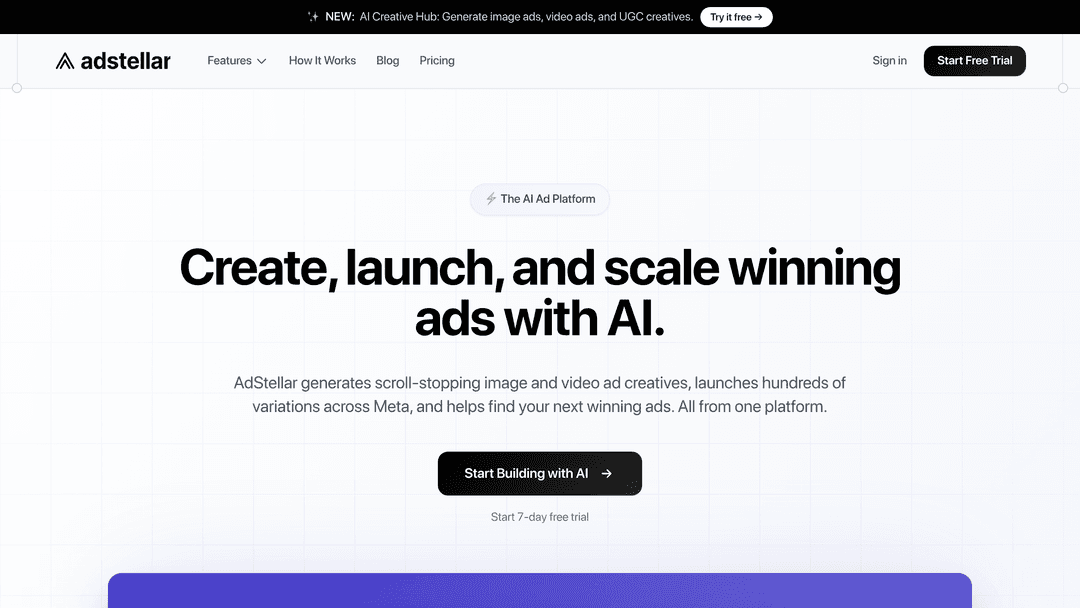
The platform supports multiple input methods to fit different workflow needs. You can start from a product URL and let the AI extract key selling points, upload existing creative assets to remix and vary, or describe your concept from scratch and have the system build it entirely. This flexibility means you can generate fresh creative regardless of what resources you have available.
For UGC-style content, the platform offers AI avatars that deliver the authentic, creator-focused aesthetic TikTok users respond to. These avatars can be customized to match your target demographic and brand voice, creating the impression of genuine user recommendations rather than corporate advertising.
Systematic Variation and Testing
Once you have a core creative concept, AdStellar enables bulk variation generation across multiple dimensions. You can systematically test different hooks, benefit sequences, visual styles, and calls-to-action without manually creating each version. The platform generates these variations based on your specifications, ensuring each one maintains your brand consistency while testing a specific variable.
This systematic approach to variation transforms creative testing from an art into a science. Instead of guessing which elements might improve performance, you test them methodically and let actual user behavior determine what works. The platform handles the production complexity while you focus on strategic decisions about what to test and why.
Performance-Driven Optimization
AdStellar integrates directly with your ad account data to track performance at the creative element level. The platform's AI analyzes which hooks stop the scroll, which benefit sequences drive conversions, and which visual approaches deliver the best return on ad spend. This granular analysis surfaces insights you'd miss with manual campaign review.
The system learns from every campaign you run, building a knowledge base of what works for your specific audience. Over time, the AI's creative recommendations become increasingly tailored to your performance history rather than generic best practices. This continuous learning loop means your creative production gets smarter and more efficient with each campaign cycle.
Streamlined Workflow Integration
The platform consolidates what typically requires multiple tools and manual processes into a single workflow. Creative generation, variation testing, performance analysis, and optimization recommendations all happen within the same system. This integration eliminates the context switching and data transfer that slows down traditional creative production.
For teams managing multiple products or frequent campaign launches, AdStellar's bulk capabilities become particularly valuable. You can generate creative for an entire product catalog, test variations across different audience segments, and identify your best performers without the briefing and coordination overhead of traditional production workflows.
Getting Started
The platform is designed for rapid onboarding and immediate value. You can start generating creative within minutes of account setup, without technical configuration or complex training. The interface uses natural language interaction, so you describe what you want in plain English rather than learning specialized terminology or complicated settings.
Most teams begin with a single campaign to test the platform's capabilities, then expand to broader creative testing as they become comfortable with the workflow. The system adapts to your pace and complexity needs, supporting everything from simple A/B tests to sophisticated multi-variable experiments across dozens of creative variations.
AdStellar handles the production complexity that typically bottlenecks creative testing on TikTok. By removing the time and resource constraints of traditional production, the platform lets you focus on strategic decisions about messaging, positioning, and audience targeting while the AI executes the creative production at the speed and volume TikTok's algorithm demands.
2. Clone Competitor Winners and Iterate with AI Variations
The Challenge It Solves
Starting from scratch with TikTok ad creative is risky. You're guessing at what might work instead of building on proven frameworks. Competitors in your space have already spent thousands testing different angles, formats, and messaging. Ignoring that intelligence means repeating their expensive mistakes.
But you can't just copy competitor ads directly. You need to understand what makes them work, then adapt those winning elements to your own product and brand voice in a way that feels fresh and authentic.
The Strategy Explained
The Meta Ad Library shows you exactly which TikTok ads your competitors are running right now. Browse ads from successful brands in your category and identify patterns in the ones they keep running for weeks or months. If they're still spending money on an ad after 30 days, it's performing.
AI tools let you analyze these winning ads and recreate the framework with your own product. You're not copying the ad. You're identifying the structure, hook, and format that works, then using AI to generate your own version with fresh creative and messaging. Many marketers study Facebook ad creative examples to understand what frameworks translate across platforms.
This approach dramatically reduces your testing risk. Instead of launching completely unproven concepts, you're starting with frameworks that already have market validation. You're standing on the shoulders of competitors who've already done the expensive trial-and-error work.
Implementation Steps
1. Search the Meta Ad Library for competitors and adjacent brands in your category, filtering for video ads running on TikTok and sorting by longest-running campaigns.
2. Identify the core framework of successful ads including the hook structure, problem-solution flow, visual style, and call-to-action approach.
3. Use AI to recreate the framework with your product, adjusting the specific pain points, benefits, and examples to match your offering while maintaining the proven structure.
4. Generate multiple variations of your adapted creative, testing different hooks, benefits, and visual styles within the same overall framework.
Pro Tips
Look for ads that have been running consistently for 30-90 days. These are proven winners worth studying and adapting. Pay special attention to the first three seconds of competitor ads. The hook that stops the scroll is often the most valuable element to understand and iterate on. Don't limit yourself to direct competitors. Brands in adjacent categories often have winning frameworks you can adapt to your product.
3. Generate Bulk Creative Variations for Rapid Testing
The Challenge It Solves
TikTok's algorithm rewards fresh creative and punishes repetition. Ad fatigue sets in faster on TikTok than on any other platform, meaning the creative that crushed it last week might be dead this week. You need a constant stream of new variations to maintain performance.
Traditional production can't keep pace with this demand. By the time you produce five creative variations, test them, and analyze results, you've lost weeks. The platform has moved on, and so has your audience's attention.
The Strategy Explained
AI bulk generation lets you create hundreds of ad variations from a single concept in minutes instead of weeks. You start with one winning framework, then systematically vary every element: the hook, the visuals, the benefits highlighted, the call-to-action, and the overall flow.
Think of it like running a massive creative experiment where you test every possible combination to find the absolute best performers. You might generate 50 variations with different hooks, 30 variations with different benefit orders, and 20 variations with different visual styles. The AI handles the production work while you focus on strategy and analysis. This is where AI ad creative generation truly shines.
This volume-based approach transforms your testing timeline. Instead of waiting weeks to test a handful of concepts, you can launch comprehensive tests in days and get meaningful performance data while it's still actionable.
Implementation Steps
1. Start with one core concept or framework that you want to test at scale, identifying the key variables you want to test such as hooks, benefits, visuals, or calls-to-action.
2. Create a matrix of variations for each variable, such as five different hooks, four different benefit sequences, and three different visual styles.
3. Use AI to generate every combination of these variables, creating dozens or hundreds of unique ad variations that test different approaches within your core framework.
4. Launch all variations simultaneously with equal budget allocation, allowing the platform's algorithm to surface the best performers through real user engagement data.
Pro Tips
Focus your bulk variations on the elements that matter most for TikTok performance: the hook in the first three seconds and the visual style. These drive the initial scroll-stop decision. Generate variations in batches of 20-50 rather than hundreds at once. This keeps your testing manageable while still giving you meaningful volume. Use AI to systematically test one variable at a time so you can isolate what's actually driving performance differences.
4. Use AI to Match TikTok's Native Content Formats
The Challenge It Solves
TikTok has its own visual language. Duets, stitches, green screen effects, and trending templates are how creators communicate on the platform. When your ads ignore these native formats, they immediately signal "this is an ad" and users scroll past.
Creating content in these native formats manually requires deep platform expertise and constant trend monitoring. By the time your team learns a new format and produces content using it, the trend has often already peaked.
The Strategy Explained
AI tools can adapt your messaging to TikTok's native content formats automatically, creating ads that leverage trending templates, popular effects, and platform-specific features without requiring manual video editing expertise.
The goal is making your ad feel like it belongs in the TikTok ecosystem. When users see a duet-style ad or content using a trending effect, their brain registers it as native content first and advertising second. That split-second of engagement is all you need to deliver your message. A robust AI ad creative platform can help you adapt to these formats quickly.
This strategy works because it respects how users actually consume content on TikTok. They're not on the platform to watch traditional ads. They're there for the unique content formats that make TikTok different from every other social platform.
Implementation Steps
1. Monitor TikTok's trending page and creative center to identify which content formats and effects are gaining traction with your target audience.
2. Identify how these trending formats could showcase your product or message, such as using a before-and-after split screen or a trending audio clip that relates to your value proposition.
3. Use AI to generate ads in these native formats, incorporating trending effects, templates, and visual styles while maintaining your core messaging.
4. Test multiple native format variations simultaneously to identify which platform-specific features resonate best with your audience.
Pro Tips
Don't chase every trend. Focus on formats that naturally align with your product and message. A forced trend integration performs worse than authentic content that ignores trends entirely. Pay attention to format longevity. Some TikTok trends last weeks, while others peak and die in days. Invest AI creative resources in formats showing sustained engagement. The duet and stitch formats work particularly well for product demonstrations and social proof, as they let you respond to existing content or creator testimonials.
5. Leverage AI Performance Scoring to Surface Winners Faster
The Challenge It Solves
When you're running dozens or hundreds of creative variations, manually analyzing performance becomes impossible. You're drowning in data across multiple campaigns, ad sets, and individual ads. By the time you identify your winners, you've already spent significant budget on underperformers.
Traditional campaign analysis focuses on aggregate metrics that hide creative-level insights. You might know a campaign is working, but you don't know which specific creative elements are driving that success or which ones are dragging down performance.
The Strategy Explained
AI performance scoring systems analyze every creative element in your campaigns and rank them by actual results against your specific goals. Instead of manually comparing CTR, CPA, and ROAS across hundreds of ads, the AI identifies patterns and surfaces the top performers automatically. This is where an intelligent ad creative selector becomes invaluable.
These systems track performance at the element level, not just the ad level. They identify which hooks generate the highest engagement, which benefit sequences drive the most conversions, and which visual styles deliver the best ROAS. This granular insight lets you double down on winning elements and eliminate underperformers with confidence.
The real power comes from speed. AI can identify winning creative patterns in hours or days instead of weeks, letting you reallocate budget to top performers while creative is still fresh and effective.
Implementation Steps
1. Define your primary performance goals before launching campaigns, whether that's ROAS, CPA, conversion rate, or engagement metrics specific to your business objectives.
2. Tag creative elements systematically so AI can track performance at the component level, including hooks, benefits, visual styles, and calls-to-action.
3. Set up AI scoring to evaluate every creative element against your goals, creating leaderboards that rank your best-performing hooks, visuals, and messaging approaches.
4. Review AI insights daily during active testing periods to identify winners early and shift budget away from underperformers before they consume significant spend.
Pro Tips
Let ads run long enough to gather statistically significant data before making decisions. AI scoring is only as good as the data it analyzes. For most TikTok campaigns, this means at least 48-72 hours and a minimum number of impressions. Set up automated alerts for creative that exceeds your target metrics so you can scale winners immediately. Create a winners library of top-performing elements you can reuse and recombine in future campaigns, building institutional knowledge of what works for your specific audience.
6. Create Product-to-Video Ads Directly from URLs
The Challenge It Solves
Traditional creative production starts with lengthy briefing documents. You need to explain your product, identify key benefits, gather assets, and communicate your vision to designers and video editors. This process introduces delays, miscommunication, and multiple revision rounds before you have a single testable ad.
For businesses with large product catalogs or frequent launches, this briefing bottleneck makes it impossible to create timely, relevant creative at scale. By the time you've briefed creative for your new product line, the launch window has passed.
The Strategy Explained
AI tools can extract product information directly from your website or product pages and generate complete video ads automatically. You provide a URL, and the AI analyzes the page content, identifies key features and benefits, pulls relevant visuals, and creates a video ad optimized for TikTok's format and best practices.
This approach eliminates the briefing phase entirely. The AI understands your product by analyzing how you already describe it on your website, then translates that information into engaging video creative. For businesses with multiple products or frequent updates, this means you can generate fresh creative for every SKU without manual briefing work. The best AI ad creative generators can handle this entire workflow seamlessly.
The time savings are dramatic. What used to take days or weeks of briefing and production now happens in minutes, letting you test creative for new products or seasonal promotions while they're still timely and relevant.
Implementation Steps
1. Ensure your product pages contain clear, detailed information about features, benefits, and use cases that AI can extract and translate into ad messaging.
2. Provide the product URL to your AI creative tool and specify your target audience, key selling points you want emphasized, and any brand guidelines the creative should follow.
3. Review the AI-generated video ad and use chat-based editing to refine specific elements like the hook, benefit order, or visual style without starting from scratch.
4. Generate multiple variations from the same URL by adjusting the AI's focus, such as emphasizing different benefits, targeting different audience segments, or testing different creative styles.
Pro Tips
The quality of your product page directly impacts the quality of AI-generated ads. Invest time in writing clear, benefit-focused product descriptions that give the AI strong source material to work with. Use this approach for rapid testing of new products or seasonal campaigns where speed matters more than perfect creative. You can always refine top performers manually later. Generate ads for your entire product catalog and test them simultaneously to identify which products resonate most with your TikTok audience, informing both your creative and product strategy.
7. Build a Continuous Learning Loop Between Creative and Performance
The Challenge It Solves
Most teams treat creative production and performance analysis as separate, disconnected processes. You create ads, launch them, analyze results, then start the creative process over from scratch. This approach wastes the expensive learning you've paid for with your ad spend.
Every campaign generates valuable insights about what resonates with your audience, but those insights rarely make it back to inform future creative decisions. You keep testing the same losing approaches because there's no systematic way to capture and apply performance learnings.
The Strategy Explained
A continuous learning loop means your AI creative system gets smarter with every campaign you run. Performance data from completed campaigns automatically informs future creative recommendations, so the AI suggests hooks, benefits, and formats based on what's actually worked for your specific audience, not generic best practices. This is the foundation of effective ad creative testing automation.
This creates a compounding advantage over time. Your first AI-generated campaign might perform similarly to manual creative. But your tenth campaign benefits from nine previous rounds of learning, with the AI automatically favoring creative elements that have proven successful and avoiding approaches that consistently underperform.
The system becomes your institutional memory, capturing and applying insights that would otherwise be lost when team members leave or campaigns end. Every dollar you spend on testing makes future campaigns smarter and more effective.
Implementation Steps
1. Ensure your AI creative platform integrates with your campaign performance data, automatically pulling results from Meta Ads Manager or your attribution platform.
2. Tag every creative element consistently across campaigns so the AI can track performance patterns over time, identifying which hooks, benefits, and formats consistently drive results.
3. Review AI recommendations before each new campaign to understand what the system has learned and why it's suggesting specific creative approaches based on your historical data.
4. Feed both wins and losses back into the system by marking top performers for reuse and documenting why certain approaches failed so the AI can avoid similar mistakes in future campaigns. Building a winning creative library helps preserve these insights.
Pro Tips
The learning loop improves with volume. The more campaigns you run and the more variations you test, the smarter the AI becomes at predicting what will work for your specific audience. Don't override AI recommendations without testing them first. The system might identify patterns you've missed based on comprehensive data analysis across all your campaigns. Set up quarterly reviews to analyze what the AI has learned about your audience, using these insights to inform broader marketing strategy beyond just ad creative.
Putting It All Together
These seven strategies work best when implemented progressively, not all at once. Start with UGC-style AI avatars to establish your foundation of authentic, platform-native creative. This alone will improve your TikTok ad performance by making your content feel less like advertising and more like the creator content users actually engage with.
Once you're comfortable with AI avatar creation, layer in competitor analysis and bulk variation testing. These strategies multiply your testing velocity, helping you identify winners faster and at lower cost than traditional production methods.
As your volume increases, implement AI performance scoring to manage the complexity and surface insights you'd miss with manual analysis. This is where the real efficiency gains happen. You're no longer drowning in data or missing winning creative patterns.
The product-to-video capability and continuous learning loop represent the advanced implementation stage. These strategies eliminate remaining bottlenecks and create compounding advantages that improve every campaign you run.
The marketers winning on TikTok right now are not the ones with the biggest production budgets or the most creative talent. They're the ones who've embraced AI to move faster, test more variations, and let performance data guide their creative decisions instead of intuition or guesswork.
Your competitive advantage on TikTok comes from volume and velocity. Can you test more creative variations than your competitors? Can you identify winners faster? Can you scale successful creative before it fatigues? AI makes all of this possible without proportionally increasing your team size or production costs.
Ready to transform your advertising strategy? Start Free Trial With AdStellar and be among the first to launch and scale your ad campaigns 10× faster with our intelligent platform that automatically builds and tests winning ads based on real performance data.