In 2026, the Meta advertising ecosystem is more competitive than ever. Winning isn't just about budget; it's about deploying creative that stops the scroll, builds trust, and compels action. Generic ads get ignored, but strategically designed creatives can unlock serious growth. This guide breaks down 10 proven facebook ad creative examples that top brands use to scale their campaigns.
We'll move beyond surface-level showcases to provide a deep strategic analysis of why they work. Each example includes actionable takeaways and specific replication tips. To truly unlock performance, it's essential to understand the various creative formats available; explore the Top 10 Types of Facebook Ads to master the fundamentals before diving into these advanced strategies. Understanding the container is the first step to filling it with compelling content.
This article dissects the anatomy of high-performing creative, from hook-first video ads to user-generated content (UGC) that feels organic and trustworthy. You will gain a clear understanding of:
- The psychological triggers behind effective ads.
- Frameworks for building a high-volume testing machine.
- Tactics for both direct-to-consumer and B2B campaigns.
We'll also highlight how AI platforms like AdStellar are changing this process, automating the generation, testing, and scaling of hundreds of creative variations to find winning combinations faster than ever. Prepare to transform your creative strategy from guesswork into a data-driven engine for growth.
1. Video Ads with a Hook-First Strategy
In a feed where users scroll at a blistering pace, the first second of your ad is everything. This is the core principle behind the hook-first video strategy, a critical approach for modern Facebook ad creative examples. These short videos, typically 6 to 15 seconds long, are designed to stop the scroll by deploying an immediate "pattern interrupt" or "curiosity gap" within the first 1-3 seconds.
This strategy prioritizes capturing attention before revealing the product or brand. Think of Glossier’s mesmerizing before-and-after makeup transformations or the famous Purple Mattress egg-drop test. These ads don't start with a logo; they start with an action or a question that makes you pause and want to see the outcome.
Why It Works & How to Replicate It
The effectiveness of this method comes from its alignment with user behavior on social media. People are conditioned to consume content quickly, and a strong visual hook respects their time while sparking intrigue. It’s a powerful way to earn a few extra seconds of their attention.
Key Takeaway: The goal isn't just to be seen; it's to be watched. A hook-first video sacrifices an immediate brand introduction for a much higher chance of holding viewer attention long enough to deliver a message.
To apply this strategy, focus on these actionable steps:
- Test Multiple Hooks: Create 3-5 distinct variations of the first three seconds of your video. Test a question, a surprising visual, a bold text claim, or a quick-cut sequence to see which one performs best.
- Design for Sound-Off: Assume most users will watch without audio. Use dynamic on-screen text, captions, and clear visual storytelling to communicate your core message.
- Structure Your Narrative: Aim to introduce your product or brand by the 50% mark of the video, after you’ve successfully hooked the viewer. A strong call-to-action should follow immediately after.
For an in-depth guide on crafting video content for the platform, you can also learn how to create a winning short video for Facebook that captures attention effectively. Mastering the short-form format is a foundational skill, and you can explore more about the strategic use of video in advertising to build on these concepts.
2. Carousel Ads with Progressive Storytelling
Carousel ads are a dynamic format that allows advertisers to showcase multiple images or videos within a single ad unit. A progressive storytelling approach takes this a step further by using each card to build a cohesive narrative. Instead of just displaying different products, these Facebook ad creative examples guide users through a sequential journey, with each swipe revealing a new part of the story, a product benefit, or a step in a process.
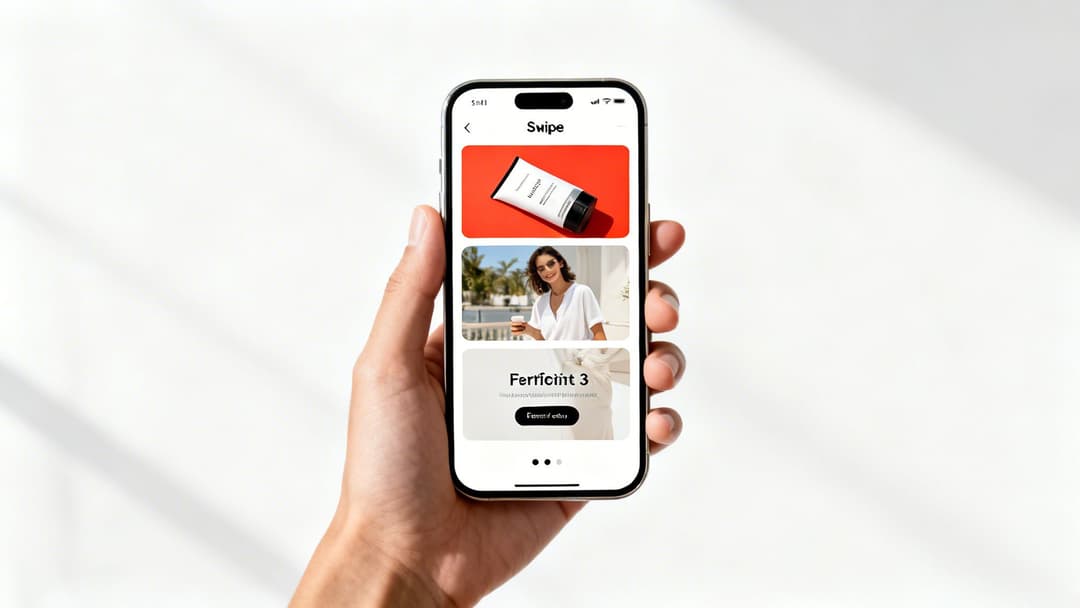
This method is popular with brands like Airbnb, which might use a carousel to tour a destination from location to amenities, and Sephora, which often shows a before-and-after sequence (problem → product → application → result). The goal is to encourage interaction by making the user an active participant in discovering your message.
Why It Works & How to Replicate It
This strategy is effective because it taps into our natural curiosity and desire for story completion. By presenting information in a logical sequence, you can communicate more complex ideas or showcase multifaceted products without overwhelming the viewer. The interactive nature of swiping through cards also increases engagement and time spent with the ad.
Key Takeaway: A storytelling carousel turns a passive ad view into an active discovery process. Each swipe deepens the user's understanding and investment in your narrative, making the final call-to-action more compelling.
To apply this strategy, focus on these actionable steps:
- Create a Narrative Arc: Plan your cards like a mini-storyboard. Start with a problem or a strong hook, introduce your product as the solution, demonstrate its benefits or features, and conclude with a clear CTA.
- Maintain Visual Consistency: Use consistent branding, fonts, and color schemes across all cards to create a unified and professional look. Visual cues, like arrows or partial images that span cards, can encourage users to swipe.
- Test Your Card Sequence: Don't assume one narrative flow is best. Test different arrangements, such as leading with a customer testimonial versus a product feature, to see which sequence generates the most clicks or conversions. Start with 3-5 cards for optimal performance.
This technique is especially potent on visual platforms, and you can get more ideas by exploring effective ways to use carousel ads on Instagram as well.
3. User-Generated Content (UGC) Ads
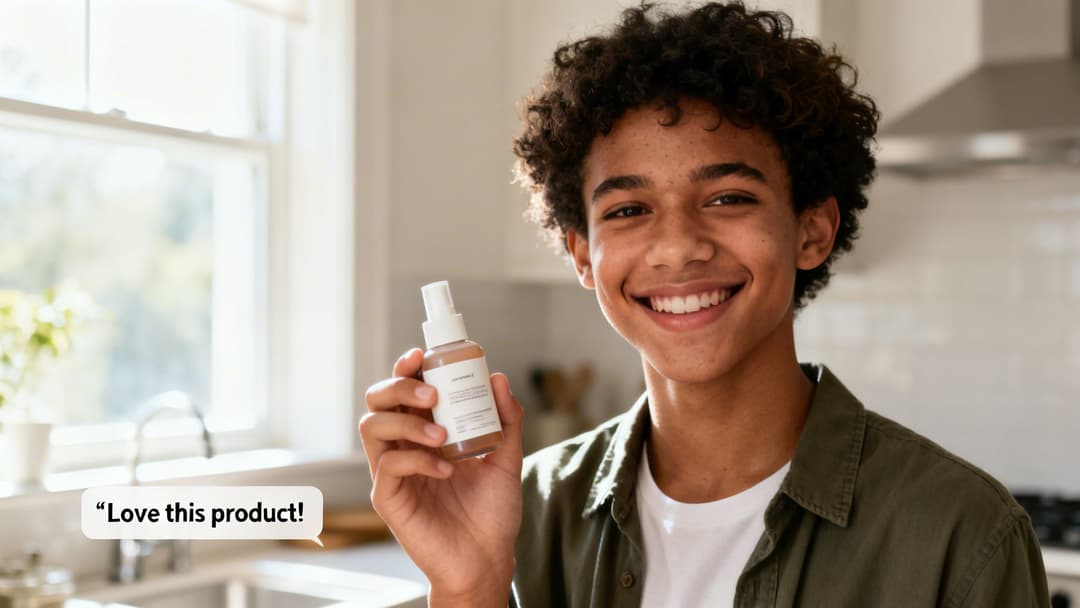
In an advertising world saturated with polished, professional content, User-Generated Content (UGC) ads cut through the noise with authenticity. This strategy involves featuring real customer photos, videos, and testimonials instead of studio-shot assets. It leverages genuine customer experiences to build social proof and trust, making your brand feel more relatable and credible to potential buyers.
This approach taps into the power of peer recommendations, which often carry more weight than a brand’s own marketing claims. Brands like Glossier, with its #GlossierGirl campaign, and Peloton, with its real member transformation stories, have built entire communities by showcasing their customers as the heroes of their brand narrative. These types of facebook ad creative examples feel less like ads and more like authentic endorsements.
Why It Works & How to Replicate It
The effectiveness of UGC comes from its ability to disarm skepticism. When prospective customers see people who look like them genuinely enjoying a product, it lowers their guard and builds an immediate sense of trust. This social proof is a powerful psychological trigger that validates a purchase decision before it's even made.
Key Takeaway: UGC shifts the focus from "what the brand says" to "what real people do." It's a powerful way to demonstrate product value through the eyes of an actual customer, making your marketing more believable and effective.
To apply this strategy, focus on these actionable steps:
- Source Content Systematically: Encourage submissions by running contests, creating a dedicated hashtag, or using platforms like Billo or Stackla to find and manage content. Always secure proper rights and permissions before using any customer-created assets in your ads.
- Embrace Authenticity: Test a mix of content. While some high-quality UGC works well, intentionally "rough" or unpolished videos and photos can often perform better because they feel more genuine and native to the social feed.
- Enhance for Clarity: Overlay text or a testimonial quote onto the visual to reinforce the message. Including the customer's name and location (with permission) can further boost the ad’s credibility and make the story more compelling.
4. Retargeting Ads with Dynamic Product Feeds
For e-commerce brands, few strategies are as effective as showing users the exact products they’ve already expressed interest in. This is the foundation of retargeting with dynamic product ads, a highly personalized approach that pulls product information directly from your catalog. The creative automatically updates based on user browsing behavior, showing items they viewed, added to their cart, or even complementary products.
These ads serve as a powerful and automated reminder, re-engaging warm audiences with high purchase intent. Instead of generic brand messaging, the user sees the specific pair of shoes they almost bought or the lamp they added to their wishlist. Major retailers like Amazon and ASOS have perfected this, displaying tailored carousels of products that feel uniquely curated for each individual user.
Why It Works & How to Replicate It
The success of this method lies in its extreme relevance. By closing the gap between consideration and conversion, dynamic ads combat cart abandonment and browsing drop-off. They present a low-friction path back to purchase, often at the exact moment a user is ready to reconsider. These Facebook ad creative examples are a cornerstone of modern e-commerce marketing.
Key Takeaway: Stop showing generic ads to your warmest audience. Dynamic product ads work because they move beyond brand awareness and speak directly to a user's demonstrated product interest, significantly boosting conversion rates and ROAS.
To apply this strategy, focus on these actionable steps:
- Maintain a Healthy Product Feed: Your product catalog is the engine of this strategy. Ensure it is updated daily with accurate inventory, high-quality images, and correct pricing to avoid showing sold-out items or creating a poor user experience.
- Segment Your Creative Templates: Don't use a one-size-fits-all approach. Create distinct ad templates for different audience segments. For example, a template for cart abandoners could include an urgency message ("Items are selling fast!"), while one for recent viewers might focus on product benefits.
- Implement Sequential Messaging: Guide users along their journey. Set up a sequence that shows a simple reminder on day 1, introduces a sense of urgency on day 3, and potentially offers a small discount by day 7 to close the deal. This prevents ad fatigue and nurtures the lead effectively.
For a deeper dive into setting up these powerful campaigns, you can explore more about mastering Facebook retargeting ads and their technical requirements.
5. Benefit-Driven Copy Ads with Bold Headlines
In an image-saturated feed, sometimes the clearest message wins. This is the foundation of benefit-driven copy ads, a powerful type of Facebook ad creative example that prioritizes clear, compelling text over complex visuals. These ads lead with a large, bold headline that communicates a specific outcome, value proposition, or solution to a user's problem.
This approach flips the script by making the copy the primary visual element. Think of Slack’s classic "Where Work Happens" or Asana's "Work less, accomplish more." These ads don't rely on flashy imagery; they use high-contrast text and a direct, benefit-focused promise to stop the scroll and immediately qualify the audience.
Why It Works & How to Replicate It
The power of this strategy lies in its directness and clarity. By leading with the end benefit, you instantly connect with users who are actively seeking that solution, cutting through the noise with a message that speaks directly to their needs. It removes guesswork and makes the value proposition impossible to miss.
Key Takeaway: When your value proposition is strong enough to stand on its own, let it. A bold, benefit-driven headline can be more visually arresting than a generic stock photo, capturing high-intent users with unmatched efficiency.
To apply this strategy, focus on these actionable steps:
- Lead with a Quantifiable Outcome: Craft headlines that promise a specific result. Use phrases like "Save 10 Hours Weekly," "Increase Your Sales by 30%," or "Eliminate Data Entry."
- Keep Headlines Concise: Aim for a maximum of 5-8 words. The goal is to make the benefit digestible in a single glance. Use power words like unlock, maximize, and discover to make your promise feel more tangible.
- Structure Your Copy: Use the problem-agitate-solve framework in the description text. Start by highlighting the pain point your headline solves, expand on the frustration it causes, and then present your product as the clear solution.
Mastering the art of persuasive text is a core skill for any advertiser. To deepen your understanding, you can find more guidance on how to write effective Facebook ad copy that converts.
6. Collection Ads (Immersive Shopping Experience)
Collection Ads turn the Facebook feed into an interactive, full-screen storefront, offering one of the most powerful facebook ad creative examples for e-commerce brands. When a user taps on this ad, it opens an Instant Experience, a fast-loading, app-like catalog of products. This format allows users to browse a curated selection, view details, and click to purchase without ever leaving the Facebook platform.
This approach is designed to dramatically reduce friction in the mobile shopping journey. Instead of sending users to a potentially slow-loading website, Collection Ads create a seamless discovery and shopping process directly within the ad itself. Brands like ASOS and Wayfair use this to showcase seasonal fashion lines or themed furniture collections, guiding users from initial interest to a product page in a single, fluid motion.
Why It Works & How to Replicate It
The success of Collection Ads stems from their ability to satisfy user intent immediately. They capitalize on the impulse to shop by providing a rich, browsable catalog the moment a user shows interest. This native shopping environment feels intuitive and fast, which is critical for converting mobile users who have little patience for slow or clunky websites.
Key Takeaway: The goal is to move beyond a single product and present a curated lifestyle or solution. Collection Ads are less about selling one item and more about selling a complete look, a room's aesthetic, or a seasonal trend, increasing the average order value potential.
To apply this strategy for your own brand, focus on these actionable steps:
- Curate Thematically: Don't just show random products. Build collections around themes like "New Summer Arrivals," "Gifts for Dad," or "Work from Home Essentials." This provides context and makes browsing more engaging.
- Lead with a Hero: Use your most visually appealing product or a top-seller as the main creative (the image or video that appears in the feed) to entice users to open the full collection.
- Optimize Product Feeds: Ensure your product catalog is up-to-date with high-quality, consistently styled images, accurate pricing, and clear descriptions. A well-managed feed is the backbone of an effective Collection Ad.
- Segment and Test: Create different collections for distinct audience segments. For instance, show a collection of running shoes to an audience interested in fitness and a collection of casual sneakers to a lifestyle audience. Monitor which themes resonate best.
7. Before-and-After Ads with Transformation Storytelling
Few ad formats are as instantly compelling as the before-and-after comparison. This classic approach uses side-by-side imagery or video to present a clear, visual story of transformation. It’s a powerful tool in the world of Facebook ad creative examples because it bypasses lengthy explanations and gets straight to the point: demonstrating tangible results.

This method is a staple for brands in the health, wellness, and beauty industries. Think of fitness programs like Beachbody showcasing dramatic weight loss journeys or skincare brands like Olay displaying visible reductions in fine lines. The ad’s power comes from showing, not just telling, the value of a product or service.
Why It Works & How to Replicate It
The effectiveness of this ad type is rooted in human psychology. We are wired to seek proof and are naturally drawn to stories of change and improvement. Before-and-after ads provide instant social proof, answering the viewer's core question: "Will this actually work for me?"
Key Takeaway: The goal is to make the product's outcome undeniable. A well-executed before-and-after ad builds trust and creates a strong desire for the promised result by providing tangible, visual evidence.
To apply this strategy successfully, consider these steps:
- Prioritize Authenticity: Use genuine customer results with their permission. Stock photos or overly edited images can destroy credibility. Including a customer’s name, age, or location adds a layer of authenticity.
- Frame the Transformation: Add context by including a specific timeframe, such as "30-Day Results" or "After 6 Months." This makes the outcome feel more achievable and concrete for potential customers.
- Ensure Compliance: Be mindful of advertising policies. Meta and the FTC have strict guidelines about making unsubstantiated claims. Ensure your results are typical and that your ad copy includes necessary disclaimers.
8. Testimonial and Review Ads with Social Proof
Trust is a powerful currency in advertising, and nothing builds it faster than authentic customer voices. Testimonial and review ads are Facebook ad creative examples that put social proof front and center. These creatives prominently feature customer quotes, star ratings, or review excerpts directly on the ad visual, creating immediate credibility.
This approach moves beyond the brand's own claims and uses third-party validation to persuade potential customers. Examples range from Slack showcasing specific team outcomes in case studies to e-commerce brands overlaying 5-star Trustpilot ratings on product images. The core idea is to let satisfied customers do the selling for you.
Why It Works & How to Replicate It
The effectiveness of testimonial ads comes from their ability to overcome audience skepticism. A new user might doubt a brand's marketing message but is far more likely to believe a peer's genuine experience. This social proof shortens the consideration phase and reduces the perceived risk of making a purchase.
Key Takeaway: The goal is to build trust through authenticity. By featuring real customer feedback, you substitute your own sales pitch with a more believable and relatable form of validation.
To apply this strategy, focus on these actionable steps:
- Source Verifiable Reviews: Pull testimonials from trusted platforms like G2, Trustpilot, or your own verified customer list. Displaying the platform's logo adds another layer of credibility.
- Highlight Specific Outcomes: Don't just use vague praise. Feature reviews that mention concrete results, such as "cut our meeting time in half" or "my skin cleared up in two weeks."
- Test Video vs. Static: Create short video testimonials (25-30 seconds) showing a customer speaking directly to the camera. Test these against static image ads that feature a powerful quote and the customer's photo for authenticity.
- Vary the Angles: A/B test different types of testimonials. Pit reviews about product quality against those praising customer service or overall value to see which message resonates most with your target audience.
9. Animated Explainer Ads with Motion Graphics
When your product or service is complex, abstract, or just plain hard to describe, animated explainer ads are a powerful tool. These videos use motion graphics, text, and voiceover to break down complicated ideas into simple, engaging visual stories. This format is one of the most effective Facebook ad creative examples for SaaS, tech, and B2B companies.
Brands like Asana, Grammarly, and Slack have mastered this approach. They don’t just show their software interface; they animate the problem their user faces and then visually demonstrate how their product provides the perfect solution. The movement and clean graphics capture attention, while the simplified narrative makes the value proposition crystal clear in seconds.
Why It Works & How to Replicate It
The strength of animated explainers lies in their ability to simplify and clarify. Abstract benefits like "improved workflow" or "seamless collaboration" become tangible when represented by smooth-moving shapes and icons. This visual storytelling makes a complex B2B service feel as easy to understand as a consumer product.
Key Takeaway: Animation allows you to control the narrative completely. You can visualize abstract concepts and guide the viewer’s focus to the exact benefits you want to highlight, without the distractions of a real-world setting.
To apply this strategy, focus on these actionable steps:
- Simplify to the Core: Boil down your entire product or service to its 2-3 most critical benefits. Each benefit should get just a few seconds of screen time, represented by a simple icon or animation.
- Design for Sound-Off First: While a good voiceover is important, your ad must communicate its message without it. Use bold, animated text and clear on-screen graphics to tell the story visually. Captions are a must.
- Pace It Quickly: Your animation should move fast. Aim for a new visual concept or point every 1-2 seconds to keep the viewer engaged and prevent them from scrolling away. A quick pace signals high value and information density.
- Test Different Story Angles: Create two versions of your ad. One can be problem-focused, showing the "pain" before your solution. The other can be solution-focused, immediately demonstrating the positive outcome your product delivers.
10. Lookalike and Audience-Specific Message Variations
Instead of showing the same ad to everyone, this strategic approach involves creating multiple ad variations with messaging and creative tailored to specific audience segments. Each version speaks directly to a distinct customer group's unique pain points, motivations, and goals, leading to higher resonance and conversion rates.
This is a common practice among high-performing advertisers. For instance, a SaaS company might show an ad about scalability to an enterprise audience while showing another ad about easy setup to a small business audience. Similarly, a fitness brand could target beginners with ads focused on "getting started" and advanced users with ads about "breaking plateaus." The creative and copy are built for the audience, not the other way around.
Why It Works & How to Replicate It
This method is effective because relevance drives results. When an ad's message perfectly matches a user's specific problem or aspiration, they are far more likely to stop, engage, and convert. It transforms a generic ad into a personalized solution, significantly improving metrics like click-through rate and return on ad spend (ROAS).
Key Takeaway: The strongest connection is a specific one. Tailoring your message to individual audience segments shows you understand their world, making your offer feel more like a personal recommendation than a mass-market advertisement.
To apply this strategy, focus on these actionable steps:
- Segment Your Audiences: Start by segmenting your lookalike audiences based on your best customer cohorts, such as high lifetime value (LTV) customers, recent purchasers, or highly engaged users.
- Craft Message Variations: For each audience segment, develop 2-3 distinct messaging angles. Lead with an audience-specific pain point in the headline and use imagery that reflects their demographics and aspirations.
- Build and Test: Test if your segmented messaging outperforms a broad, one-size-fits-all approach. Monitor which audience-message combinations deliver the best performance and use that data to refine your strategy.
To get the most out of this approach, a deep understanding of audience creation is essential. You can learn how to build powerful audiences for your campaigns by reading more about effective strategies for Facebook Lookalike Audiences.
10 Facebook Ad Creative Types Compared
| Ad Format / Strategy | Implementation complexity | Resource requirements | Expected outcomes | Ideal use cases | Key advantages |
|---|---|---|---|---|---|
| Video Ads with Hook-First Strategy | Medium–High — needs tight creative direction and rapid edits | High — professional video or quality UGC, editing resources | High engagement, lower CPV/CPC, fast learnings via variations | E‑commerce/DTC visual products, growth teams testing many creatives | Strong immediate attention capture, algorithm-favored, scalable testing |
| Carousel Ads with Progressive Storytelling | Medium — sequencing and narrative planning required | Medium–High — multiple images/videos and copy per card | Improved CTR and conversions; communicates multi-step story | Multi‑benefit products, comparison shopping, retargeting journeys | Narrative depth, A/B sequence testing, mobile swipe engagement |
| User-Generated Content (UGC) Ads | Low–Medium — curation and rights management | Low — low production cost but needs sourcing and permissions | High trust and conversion, resonates with younger audiences | E‑commerce/DTC with active communities, budget-conscious scaling | Authenticity, low cost, fast scalable production |
| Retargeting Ads with Dynamic Product Feeds | High — catalog, feed and segmentation setup required | Medium — technical integration and quality product assets | Very high conversion rates and strong ROAS for shoppers | E‑commerce with large catalogs, cart abandoners, product browsers | Personalized at scale, automated, shows exact viewed products |
| Benefit-Driven Copy Ads with Bold Headlines | Low — focused on copywriting and layout | Low — simple visuals or backgrounds, strong copy talent | Clear value communication; good for awareness and consideration | B2B SaaS, service offerings, education campaigns | Fast to produce, easy to test, communicates value succinctly |
| Collection Ads (Immersive Shopping Experience) | Medium–High — catalog + in‑app UX configuration | Medium — catalog images, checkout integration, product curation | Lower friction purchases, higher mobile conversions for impulse buys | Mobile-first retailers, curated seasonal collections | In‑app browsing and instant checkout, reduced abandonment |
| Before-and-After Ads with Transformation Storytelling | Medium — requires authentic proof and compliance | Medium — real customer assets, testimonials, quality photos | High engagement and conversion in result-driven categories | Health, beauty, fitness, service offerings showing outcomes | Visual proof of efficacy, aspirational impact, shareable content |
| Testimonial and Review Ads with Social Proof | Low–Medium — collect and format reviews, manage rights | Low — uses existing reviews/assets but needs curation | Builds trust and reduces objections; improves conversion in high-consideration buys | B2B SaaS, service businesses, trust-building campaigns | High credibility, addresses objections, cost-effective to refresh |
| Animated Explainer Ads with Motion Graphics | High — storyboard, animation, voiceover and timing | High — animation talent, VO, longer production timelines | Strong for explaining complex products; good awareness/consideration | B2B SaaS, technical products, education-focused campaigns | Simplifies complex ideas, polished presentation, shareable |
| Lookalike & Audience-Specific Message Variations | High — audience segmentation and campaign complexity | Medium–High — multiple tailored creatives and data needs | Higher conversion and lower CPA through better audience fit | High-volume testing, multi‑persona B2B, segmented e‑commerce | Personalization improves ROAS, targeted message-audience fit |
From Examples to Execution: Building Your Winning Creative System
The journey through these diverse and effective Facebook ad creative examples reveals a powerful truth about modern advertising: success isn't about finding a single magic bullet. It's about building a robust creative system. From the immediate attention-grab of a hook-first video to the personalized journey of a dynamic retargeting ad, each example demonstrates a specific strategic principle designed to connect with an audience on a deeper level.
We've seen how top advertisers don't just create ads; they build entire communication frameworks. They understand that a carousel ad can tell a progressive story, that user-generated content provides unmatched authenticity, and that a well-crafted before-and-after visual can communicate value faster than any block of text. The common thread is a commitment to understanding the audience's mindset at every stage of the funnel and delivering creative that speaks directly to their needs, desires, and objections.
Core Principles for Your Creative Engine
Distilling the insights from the ads we’ve analyzed, a few core principles emerge as non-negotiable for achieving top-tier performance on Meta's platforms.
Strategic Diversity is Key: Relying on a single ad format is a recipe for creative fatigue and diminishing returns. Your ad account should look like a portfolio, blending high-impact video, storytelling carousels, authentic UGC, and direct-response collection ads to engage users across different contexts and preferences.
Audience-Message Match is Everything: The success of message variations for lookalike audiences proves that one-size-fits-all copy is dead. The most effective advertisers tailor their messaging, pain points, and benefit highlights to specific audience segments. A message that resonates with a cold prospect will likely fall flat with a loyal customer, and vice versa.
Testing is Not an Event, It's a Process: High-performing brands operate with a philosophy of relentless iteration. They are constantly testing new hooks, headlines, visuals, and calls to action. They don't just launch a campaign and hope for the best; they launch a series of structured experiments designed to uncover pockets of performance and find winning combinations. This approach transforms advertising from a gamble into a data-driven science.
Turning Inspiration into Actionable Output
Seeing great facebook ad creative examples is one thing; consistently producing them at the scale needed to win is another challenge entirely. The manual process of creating dozens of variations, setting up campaigns, and tracking performance is a significant bottleneck for most marketing teams. It consumes valuable time that could be spent on strategy, analysis, and bigger-picture growth initiatives.
This operational drag is precisely where the gap between knowing what to do and actually doing it widens. How can a small team possibly replicate the sheer volume of creative testing that a major brand does? The answer lies in moving from a manual workflow to an automated system.
Your immediate next step is to audit your own creative process. Ask yourself:
- How long does it take us to concept, create, and launch 20 unique ad variations?
- Are we systematically testing different hooks, body copy, and headlines against our key audiences?
- Do we have a clear, data-backed process for identifying our winning creatives and scaling the budget accordingly?
If the answers to these questions reveal inefficiencies or gaps, it’s a clear signal that your operational process is holding back your strategic potential. The examples in this article aren't just creative ideas; they are blueprints for a more agile and data-informed advertising machine. Building that machine is your path to sustainable, scalable growth on Facebook and beyond.
Ready to stop manually building ads one by one and start implementing these strategies at scale? AdStellar AI automates the entire creative workflow, allowing you to generate, launch, and analyze hundreds of ad variations based on the very principles discussed in this article. Turn these powerful facebook ad creative examples from inspiration into your own high-performing reality with AdStellar AI.