Every performance marketer knows the grind: you've nailed your targeting, your creative is strong, but now you need 15 different ad copy variations to test. You sit there, staring at a blank document, trying to come up with fresh angles for the same product. "Free shipping" for the third time this month. Another "limited time offer" that sounds exactly like the last one. By variation seven, you're recycling the same hooks with slightly different words.
This is where most Facebook campaigns plateau. Not because the strategy is wrong, but because human copywriters hit a creativity wall long before they've generated enough variations to truly test what works. You need volume to win in Facebook's auction system, but creating that volume manually is exhausting and time-consuming.
Automated ad copywriting changes this equation entirely. Instead of spending hours brainstorming headlines and primary text, AI-powered systems generate dozens of high-quality variations in minutes. These aren't random word combinations or generic templates. Modern automated copywriting uses sophisticated language models trained on millions of successful ads to create copy that actually resonates with your target audience. The result? More testing, faster optimization, and significantly less time spent on the repetitive work of ad creation.
The AI Engine Behind Modern Ad Copy Generation
Automated copywriting for Facebook ads isn't magic. It's the practical application of natural language processing and machine learning models that have been trained on massive datasets of high-performing advertising content. Think of it as having a copywriter who has analyzed millions of successful Facebook ads across every industry, memorized what works for different audiences, and can instantly apply those patterns to your specific product or service.
The technology works by breaking down successful ad copy into its core components: hooks that grab attention, value propositions that communicate benefits, social proof elements that build trust, and calls-to-action that drive conversions. Machine learning models identify which combinations of these elements perform best for different audience segments, product categories, and campaign objectives.
When you feed product information into an automated copywriting system, the AI doesn't just fill in templates. It analyzes your product's features, benefits, and target audience, then generates copy variations that emphasize different angles. One variation might lead with a pain point solution. Another might focus on aspirational benefits. A third could emphasize social proof or scarcity. The system creates this diversity because it understands that different messaging resonates with different segments of your audience.
What makes this particularly powerful for Facebook advertising is the feedback loop. As your ads run and generate performance data, sophisticated systems learn which copy patterns drive the best results for your specific business. The AI identifies that certain headline structures get higher click-through rates, or that particular primary text formats lead to better conversion rates. This performance data continuously refines the model's understanding of what works for your audience.
The shift from manual to AI-assisted copywriting fundamentally changes how marketing teams operate. Instead of spending three hours writing variations for a single campaign, that same marketer can generate 50 variations in ten minutes, then spend their time on strategic decisions: which angles to test, how to structure the campaign, and how to interpret the results. The creative energy that used to go into repetitive copywriting now goes into higher-level strategy and optimization.
What Makes Automated Copy Systems Actually Work
Bulk Variation Generation: The most immediate benefit of automated copywriting is sheer volume. A skilled copywriter might produce 10-15 quality variations in an hour. An AI system generates 50-100 variations in minutes. This isn't about replacing quality with quantity. It's about achieving both simultaneously. Each variation explores a different angle, tests a different hook, or emphasizes a different benefit. When you launch these variations, you're not guessing which message will resonate. You're letting Facebook's algorithm and your audience data tell you.
Audience-Aware Adaptation: Generic copy performs generically. The most effective automated systems don't just generate copy. They adapt messaging based on who will see it. If you're targeting new parents, the AI emphasizes convenience and safety. For fitness enthusiasts, it focuses on performance and results. For budget-conscious shoppers, it leads with value and savings. This audience awareness happens because the AI has learned from performance data which messaging angles work best for different demographic and psychographic segments.
The system analyzes your audience parameters, then generates copy variations that speak directly to those people's priorities and pain points. You're not manually writing separate copy for each audience segment. The AI handles that adaptation automatically, creating messaging that feels personalized even when it's generated at scale.
Performance-Based Learning: This is where automated copywriting becomes truly powerful. Static templates produce static results. Systems that learn from performance data get better over time. As your campaigns run, the AI tracks which headlines generate the highest click-through rates, which primary text formats lead to the best conversion rates, and which calls-to-action drive the most purchases.
This creates a continuous improvement loop. The AI doesn't just generate copy based on general best practices. It generates copy based on what actually works for your specific business, product, and audience. If your data shows that questions outperform statements in headlines, future variations will include more question-based hooks. Understanding copywriting tips for conversions helps you guide the AI toward even better results.
From Product Information to Published Ads
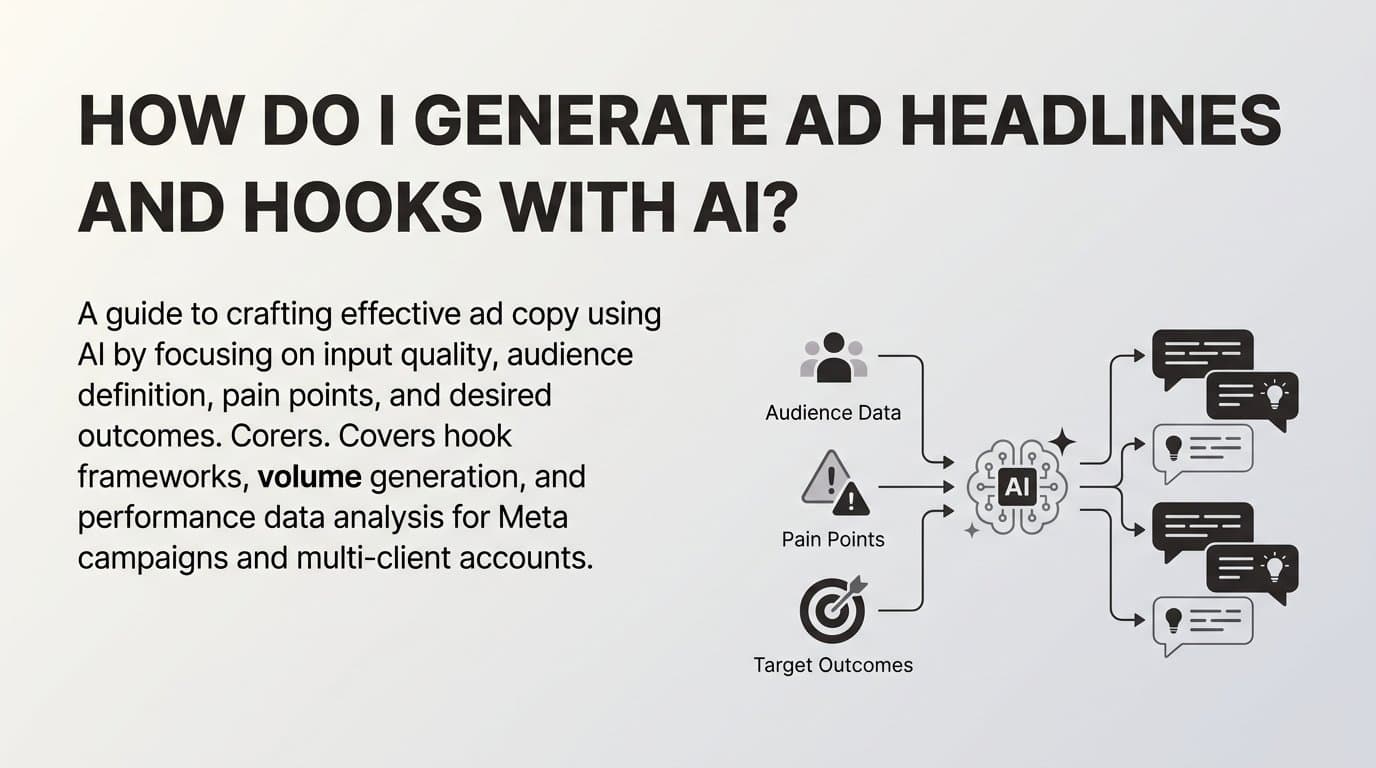
Understanding the practical workflow helps demystify how automated copywriting actually functions in a real campaign setup. The process typically starts with product information. You provide a product URL, and the AI analyzes everything: product descriptions, features, benefits, pricing, reviews, and even competitor positioning. This analysis becomes the foundation for copy generation.
The system extracts key selling points, identifies primary benefits, and understands the target customer based on the product category and positioning. From this analysis, it generates multiple copy variations exploring different angles. Some variations might emphasize the problem your product solves. Others focus on aspirational outcomes. Still others highlight unique features or competitive advantages.
What separates effective automated systems from basic template tools is the refinement capability. You're not stuck with the AI's first output. Chat-based editing lets you guide the copy in specific directions. You might say "make this more urgent" or "focus on the time-saving benefit" or "create a version for busy professionals." The best AI Facebook ad copywriting tools understand these instructions and generate new variations accordingly.
This interactive refinement process combines AI efficiency with human strategic thinking. The AI handles the heavy lifting of generating variations and exploring different angles. You provide the strategic direction and brand voice guidance. The result is copy that maintains your brand's personality while achieving the volume and variation needed for effective testing.
The final step in the workflow is where integrated platforms show their value. Instead of copying AI-generated copy into Facebook Ads Manager manually, advanced systems let you launch directly to Meta. You select your copy variations, pair them with creatives and audiences, and the platform builds complete ad sets ready to publish. This integration eliminates the tedious copying and pasting that traditionally slows down campaign launches.
The Mathematics of Variation Testing
Facebook's ad auction rewards advertisers who find winning combinations quickly. The platform's algorithm identifies ads that generate engagement and conversions, then shows those ads to more people at better costs. But finding those winners requires testing multiple variations. This is where the volume advantage of automated copywriting becomes a competitive edge.
Consider the traditional approach: you write 5 headlines, 3 primary text variations, and 2 descriptions. That's 30 possible combinations if you test every permutation. Creating those variations manually takes hours. With automated copywriting, you generate 20 headlines, 15 primary text variations, and 10 descriptions in the same time. That's 3,000 possible combinations.
More variations mean faster winner identification. When you test 3,000 combinations instead of 30, Facebook's algorithm has more data points to analyze. It identifies top performers more quickly, allocates budget more efficiently, and scales winners faster. The advertisers who can test more variations more quickly gain a significant advantage in the auction.
Bulk launching capabilities make this volume practical. You're not manually creating 3,000 ads. The system generates every combination of copy, creative, and audience variations, then launches them as structured campaigns. An automated Facebook ads testing platform creates all variations and organizes them into ad sets automatically.
The real power emerges when you layer AI insights on top of this testing volume. Leaderboards rank every element by actual performance metrics: which headlines drive the lowest CPA, which primary text generates the highest ROAS, which calls-to-action produce the best conversion rates. You're not drowning in data. You're seeing exactly which copy elements work and which don't, based on real campaign results.
This data-driven approach removes guesswork from optimization. Instead of wondering whether "Get Started Today" outperforms "Shop Now," you see the actual performance difference. Instead of debating whether benefit-focused or feature-focused copy works better, the data shows you. This feedback loop continuously improves your copy strategy, making each new campaign smarter than the last.
Understanding Where Automation Excels and Where It Needs Help
Automated ad copywriting delivers the most value in specific scenarios. E-commerce campaigns benefit enormously because product-focused copy follows predictable patterns: highlight benefits, address objections, create urgency, and drive action. AI excels at generating variations on these themes, testing different angles, and identifying what resonates with different customer segments.
Lead generation campaigns similarly benefit from automation. The copy structure is consistent: identify a pain point, present your solution, and encourage sign-up. Automated systems generate variations that test different pain points, emphasize different solution benefits, and experiment with various calls-to-action. The volume of variations helps identify which messaging drives the most qualified leads.
App install campaigns and high-volume testing scenarios represent ideal use cases. When you're running campaigns across multiple products, audiences, and objectives simultaneously, automated copywriting becomes essential. You simply cannot manually write enough variations to test effectively at that scale. Understanding Facebook ads copywriting at scale helps you maximize these opportunities.
That said, human oversight remains crucial in specific areas. Brand voice requires human judgment. While AI can learn your general tone and style, maintaining subtle brand personality nuances across all copy still benefits from human review. Most effective workflows involve AI generating the variations and marketers refining them to ensure brand consistency.
Compliance and sensitive messaging demand human attention. If you're advertising in regulated industries or dealing with sensitive topics, automated copy should be reviewed before launch. The AI generates starting points, but human judgment ensures the messaging meets legal requirements and maintains appropriate sensitivity.
The most successful approach combines AI efficiency with human creativity. Let automation handle the volume work: generating variations, exploring different angles, and testing multiple approaches. Apply human expertise to strategic decisions: which angles to emphasize, how to position against competitors, and how to evolve messaging based on market changes. This combination delivers both the scale needed for effective testing and the strategic thinking that drives breakthrough campaigns.
Implementing Automated Copy in Your Workflow
When evaluating automated copywriting tools for Facebook advertising, certain capabilities separate truly useful platforms from basic template generators. Look for systems that generate copy from product information rather than requiring you to fill out forms. The best tools analyze product URLs, extract key information, and create variations automatically.
Integration with campaign building matters significantly. If you have to copy AI-generated text into Facebook Ads Manager manually, you've only solved half the problem. Platforms that let you generate copy and launch campaigns in the same interface save substantial time and reduce errors that happen during manual transfer. A comprehensive automated Facebook ads platform handles both generation and deployment seamlessly.
Performance tracking integration is equally important. The system should connect your copy variations to actual campaign results. You need to see which headlines drove the best CPA, which primary text generated the highest CTR, and which calls-to-action produced the most conversions. A dedicated Facebook ad performance tracking platform feeds this data back into the AI, improving future copy suggestions.
Setting up your first automated workflow is straightforward with the right platform. Start with a single product or campaign. Provide the product information, review the AI-generated variations, refine anything that needs adjustment for brand voice, then launch a test campaign. Start small to understand how the system works and how to interpret the results.
Measure your initial results against your previous manual approach. Track time saved in copy creation, volume of variations tested, and speed to identifying winners. These metrics demonstrate the practical value beyond just the performance results. You're not just looking for better ROAS. You're measuring whether automation actually makes your workflow more efficient.
Building a winners library transforms automated copywriting from a one-time tool into a continuous improvement system. As campaigns run and performance data accumulates, save your top-performing copy elements. High-converting headlines, effective primary text formats, and strong calls-to-action become assets you can reuse and remix in future campaigns. The AI learns from these winners, incorporating successful patterns into new variations. Over time, your copy quality improves because the system understands what works specifically for your business and audience.
Transforming How You Approach Facebook Advertising
Automated ad copywriting represents more than a time-saving tool. It fundamentally changes how performance marketers approach Facebook advertising. The constraint of manual copywriting has traditionally limited testing volume. You could only test as many variations as you had time to write. This limitation meant slower optimization cycles, fewer winning ads discovered, and campaigns that plateaued before reaching their full potential.
AI removes this constraint. You can now test 50 variations as easily as you previously tested 5. This volume advantage compounds over time. More variations mean faster winner identification. Faster winner identification means quicker scaling. Quicker scaling means better ROAS and lower customer acquisition costs. The competitive advantage goes to advertisers who can test more, learn faster, and optimize continuously.
The shift also changes where marketers spend their creative energy. Instead of grinding through repetitive copywriting tasks, you focus on strategy: which products to promote, which audiences to target, how to position against competitors, and how to evolve messaging based on market trends. The AI handles execution. You handle strategic thinking.
This doesn't mean creativity becomes less important. It means creativity gets applied differently. You're not writing individual ad variations. You're designing testing strategies, identifying new angles to explore, and making decisions about which winning patterns to scale. The creative work becomes more strategic and less tactical.
The marketers who adopt automated copywriting earliest gain the most significant advantage. While competitors manually write 10 variations per campaign, you're testing 100. While they spend hours on copywriting, you're analyzing performance data and scaling winners. The efficiency gap creates a performance gap that compounds over time.
Ready to transform your advertising strategy? Start Free Trial With AdStellar and be among the first to launch and scale your ad campaigns 10× faster with our intelligent platform that automatically builds and tests winning ads based on real performance data. From AI-generated copy and creatives to bulk campaign launching and performance tracking, everything you need to dominate Facebook advertising exists in one platform. The question isn't whether automated copywriting works. It's whether you can afford to keep writing ads manually while your competitors scale with AI.