Your Instagram ad just hit a 4.2% CTR and a $12 CPA. The comments are rolling in, the engagement numbers look incredible, and for the first 72 hours, you're convinced you've cracked the code. Then day four arrives. CTR drops to 2.8%. Day five brings a $19 CPA. By day seven, the same creative that was printing money is barely breaking even, and you're left wondering what went wrong.
Nothing went wrong. You just experienced creative burnout, and on Instagram, it happens faster than most marketers expect.
Here's the reality: Instagram's visual-first environment and Meta's algorithm create the perfect conditions for rapid creative fatigue. What works brilliantly today can become invisible noise by next week. But this isn't an unavoidable reality. It's a solvable problem once you understand the mechanics behind why creatives burn out and how to build systems that stay ahead of fatigue.
How Instagram's Algorithm Accelerates Creative Fatigue
Meta's algorithm doesn't just show your ad to people. It tracks how many times each person sees it, how they respond, and whether engagement is trending up or down. This creates a feedback loop that can work against you surprisingly fast.
When someone sees your ad for the first time, they might stop scrolling, read the copy, maybe even click through. The second time they see it, they recognize it and scroll past. The third time? They don't even register it consciously. Meta's algorithm notices this declining engagement and interprets it as a signal that your ad is losing relevance.
This is where frequency comes into play. Frequency measures how many times, on average, each person in your audience has seen your ad. For cold audiences who've never interacted with your brand, fatigue typically sets in when frequency hits 2 to 3. For warm audiences who already know you, that tolerance extends slightly higher, but the principle remains the same: repeated exposure without variation kills performance.
The algorithm responds to declining engagement by reducing your ad's distribution priority. Fresh content gets preferential treatment in the auction system because Meta knows new ads generate better engagement. Your week-old creative, even if it was a monster performer initially, now competes at a disadvantage against newer ads in the same auction. Understanding Meta ad creative burnout patterns helps you anticipate these algorithmic shifts.
Audience size plays a critical role in how quickly this happens. If you're targeting a narrow audience of 50,000 people with a $100 daily budget, you're cycling through that pool rapidly. Each person sees your ad multiple times within days, accelerating the path to fatigue. A broader audience of 500,000 people with the same budget spreads exposure more thinly, extending your creative's lifespan.
Instagram's visual-first environment makes creative staleness more noticeable than on other platforms. Users scroll Instagram specifically to see fresh, engaging visual content. They're primed to spot repetition. A creative that might hold up longer on Facebook, where users tolerate more text and varied content types, becomes stale faster on Instagram where the visual bar is higher and user expectations for novelty are more demanding.
The platform rewards movement, color, and visual variety. Static images without variation give the algorithm nothing new to show. Video content and dynamic formats maintain engagement longer because they offer more visual information per impression, but even these formats eventually succumb to fatigue if shown to the same people repeatedly.
What Accelerates Your Path to Burnout
Budget concentration is the first accelerator most marketers overlook. When you pump a high daily budget into a single creative or a small set of ads, you're essentially paying to exhaust your audience's attention faster. A $500 daily budget split across three creatives means each ad gets heavy rotation. Your audience sees the same visuals repeatedly within a compressed timeframe, and fatigue sets in within days rather than weeks.
The math is straightforward: more money concentrated on fewer creatives equals faster burnout. This doesn't mean you should reduce your budget. It means you need more creative variations to distribute that spend across, preventing any single asset from overexposing your audience.
Static creative formats accelerate burnout because they offer zero variation in repeated exposures. A single image ad shows the exact same visual every single time someone scrolls past it. There's no movement, no changing element, nothing new to catch attention on the second, third, or fourth view. The human brain is wired to filter out repetitive visual patterns. After a few exposures, your static image becomes part of the background noise users instinctively ignore.
Video content and UGC-style creatives maintain engagement longer because they introduce variation within the format itself. A video has different frames, movement, and evolving visual elements that can capture attention even on repeat views. UGC creatives feel more authentic and less like traditional ads, which gives them slightly more tolerance before users start filtering them out. But even these formats eventually burn out without rotation. Similar challenges affect Facebook ad creative burnout, though the timeline differs slightly between platforms.
Narrow audience targeting creates the third major accelerator. Precision targeting is valuable for reaching the right people, but it comes with a trade-off. When you target a highly specific audience segment like "women aged 25 to 34 in Los Angeles interested in sustainable fashion and yoga," you're working with a limited pool. That precision means the same people see your ads repeatedly within days.
This is particularly problematic when combined with retargeting. If you're showing ads to website visitors from the past 30 days, you might be working with an audience of just a few thousand people. High frequency is almost inevitable. These audiences burn out faster because there's simply not enough people to spread impressions across.
The creative format itself matters. Single images without variation are the fastest to fatigue. Carousel ads extend lifespan slightly because they offer multiple images, but users still see the same carousel repeatedly. Video ads hold attention longer, and UGC-style content maintains engagement best because it feels less like advertising. But all formats eventually succumb to the same fate without a rotation system in place.
Spotting Burnout Before It Destroys Performance
Frequency score is your first warning signal. When you see frequency climbing past 2 for cold audiences or past 3.5 for warm audiences, burnout is approaching. This metric tells you how many times, on average, each person has seen your ad. Rising frequency without corresponding increases in conversions means people are seeing your ad repeatedly without taking action.
Check your frequency daily, especially in the first week of any campaign. If it's climbing faster than expected, you need to introduce creative variations or expand your audience before performance tanks completely.
CTR decline is the second critical metric. A healthy ad maintains relatively stable CTR over time. When you see CTR dropping 20% or more from initial performance levels, creative fatigue is setting in. People are scrolling past your ad because they've seen it before and already decided not to engage.
The pattern is usually gradual at first, then accelerates. You might see CTR dip from 4% to 3.5% over a few days, which seems minor. Then it drops to 2.8%, then 2.1%, and suddenly you're at 1.3% wondering when it all fell apart. The early decline is your signal to act, not the catastrophic drop that comes later. Implementing proper Instagram ad creative testing methods helps you identify these patterns before they become critical.
Rising CPM indicates your ad is losing auction priority. When Meta's algorithm sees declining engagement, it reduces your ad's distribution efficiency. You end up paying more to reach the same number of people because your ad is no longer considered highly relevant. If your CPM increases 30% or more while your audience and targeting remain constant, creative fatigue is likely the culprit.
The burnout timeline varies based on creative type and budget level. Static image ads with concentrated budgets can burn out in 3 to 5 days. Video content typically lasts 7 to 10 days before showing significant fatigue. UGC-style creatives might extend to 10 to 14 days, especially if they feel authentic rather than overly produced.
Budget level accelerates or extends these timelines. A $50 daily budget might stretch a creative's lifespan to two weeks because impressions accumulate more slowly. A $500 daily budget can exhaust the same creative in less than a week because you're cycling through your audience much faster.
Set up monitoring that catches fatigue early rather than waiting for performance to collapse. Create custom dashboards that track frequency, CTR, and CPM together. When all three metrics start moving in the wrong direction simultaneously, that's your definitive signal that creative burnout is underway and you need fresh variations immediately.
Building a Creative Rotation System That Works
The volume game is non-negotiable. You need multiple creative variations ready before launching any campaign. This isn't about creating one perfect ad and hoping it lasts. It's about building a library of variations that can rotate in as older creatives fatigue.
Start with a minimum of five creative variations per campaign. This gives you enough depth to rotate without constantly scrambling to produce new content. For higher-budget campaigns or smaller audiences where burnout happens faster, aim for ten or more variations ready to deploy.
These variations don't need to be completely different concepts. They can share the same core message but present it through different visual approaches, angles, or formats. One variation might lead with product benefits. Another might use customer testimonials. A third could focus on the problem your product solves. Each variation gives your audience something new to engage with while maintaining consistent messaging. Using an Instagram ad creative generator can help you produce these variations efficiently.
Rotation strategies keep content fresh without starting from scratch every time. The simplest approach is sequential rotation: launch with three creatives, monitor performance for three to five days, then swap out the lowest performer for a fresh variation. This keeps two winning creatives running while continuously introducing new options.
A more sophisticated approach uses performance-based rotation. Set performance thresholds for CTR and CPA. When a creative falls below your CTR threshold or rises above your CPA threshold for two consecutive days, automatically pause it and activate a fresh variation from your library. This ensures you're always running your strongest performers while preventing burned-out creatives from dragging down overall campaign performance.
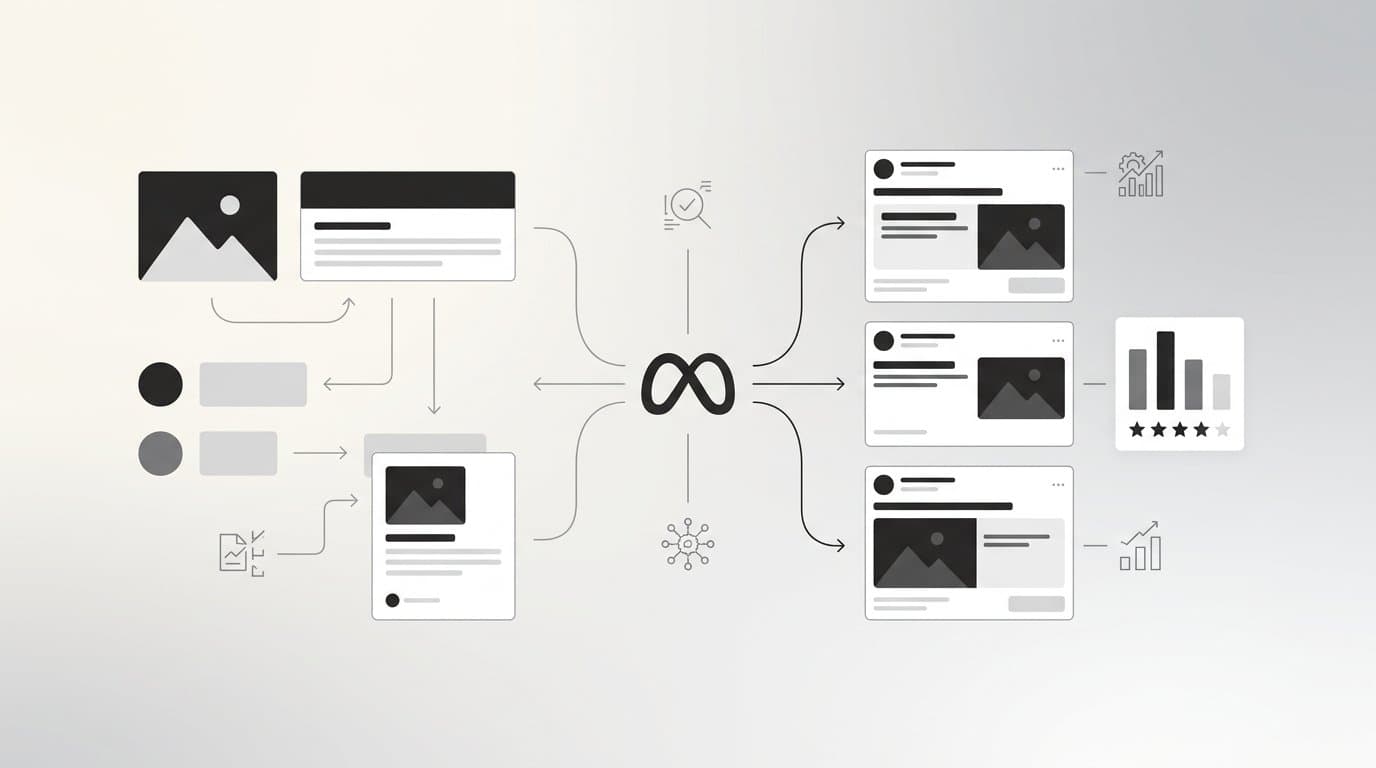
Bulk ad launching creates the variation depth needed to combat burnout at scale. Instead of manually creating individual ads one at a time, bulk launching lets you mix multiple creatives, headlines, audiences, and copy variations at both the ad set and ad level. You might combine five creatives with three headline variations and two audience segments, generating thirty unique ad combinations in minutes rather than hours.
This approach transforms creative rotation from a bottleneck into a sustainable system. When you can generate hundreds of variations quickly, you're no longer constrained by production capacity. You can test aggressively, rotate frequently, and maintain fresh content without burning out your creative team.
The key is building variation into your initial campaign structure rather than treating it as something you address after burnout occurs. Launch with depth from day one. Have your rotation schedule planned before your first ad goes live. Know which creatives will replace current ones when fatigue signals appear. This proactive approach prevents the performance gaps that happen when you're scrambling to create new content after your ads have already tanked.
How AI Keeps You Ahead of Creative Fatigue
AI-generated creatives solve the production bottleneck that makes high-volume creative strategies impractical for most teams. Traditional creative production requires designers, video editors, and significant time investment for each new variation. AI eliminates these constraints by generating scroll-stopping image ads, video ads, and UGC-style creatives in minutes rather than days.
This speed enables the volume needed to combat burnout effectively. Instead of producing three creatives per campaign and hoping they last, you can generate twenty variations exploring different angles, visual styles, and messaging approaches. When one creative starts showing fatigue, you have fresh options ready to deploy immediately. Exploring AI powered Instagram ads opens up possibilities that manual production simply cannot match.
The variation isn't just cosmetic. AI can create fundamentally different creative approaches from the same product or message. One variation might emphasize product features with clean product photography. Another could use lifestyle imagery showing the product in context. A third might generate UGC-style content that feels like authentic customer content rather than polished advertising. This diversity in creative approach extends overall campaign longevity because each variation appeals to different audience segments and maintains engagement in different ways.
Performance data becomes the fuel for smarter creative production. AI doesn't just generate creatives randomly. It analyzes which creative elements maintain engagement longest, which visual styles drive the best CTR, and which messaging angles produce the lowest CPA. This intelligence feeds back into the next creative batch, creating a continuous improvement loop.
If your UGC-style creatives consistently outperform polished product shots, the AI prioritizes generating more UGC variations. If bright, high-contrast visuals maintain engagement longer than muted tones, future creatives incorporate that learning. The system gets smarter with every campaign, producing creatives that are increasingly optimized for sustained performance rather than just initial impact.
The continuous learning loop transforms burned-out ads from failures into valuable data points. When a creative fatigues, the AI analyzes what worked initially, why engagement declined, and which elements from that creative should be preserved or modified in future variations. A headline that drove strong initial CTR might be worth testing again with different visuals. A visual style that maintained engagement longer than average becomes a template for new creatives.
This approach shifts creative production from a constant starting-from-scratch process to an iterative refinement system. Each campaign builds on insights from previous ones. Your creative library becomes increasingly effective over time because it's informed by real performance data rather than guesswork about what might work.
AI also enables rapid response to fatigue signals. When your monitoring system flags declining CTR and rising frequency, you don't need to wait days for a designer to create new variations. You can generate fresh creatives immediately, test them against current performers, and maintain campaign momentum without the performance gaps that traditionally occur during creative transitions.
Your Anti-Burnout Campaign Framework
Start every campaign with a minimum of five creative variations ready to launch. This is your baseline defense against burnout. More is better, especially for high-budget campaigns or narrow audiences, but five gives you enough depth to rotate without constant production pressure.
Set up monitoring before your first ad goes live. Track frequency, CTR, and CPM daily. Create alerts that notify you when frequency exceeds 2.5 for cold audiences or when CTR drops more than 15% from initial performance. Early detection prevents the catastrophic performance drops that happen when you catch fatigue too late.
Plan your rotation schedule in advance. Know which creatives will replace current ones when fatigue signals appear. Have performance thresholds defined: if CTR drops below X or CPA rises above Y for two consecutive days, pause that creative and activate a fresh variation. This removes decision-making friction when you're in the middle of managing active campaigns. Implementing creative testing automation can streamline this entire process.
Balance creative volume with audience breadth. If you're working with a small, highly targeted audience, you need more creative variations to prevent burnout. If you're targeting a broader audience, you can run fewer creatives longer because impressions spread across more people. The tighter your targeting, the more creative depth you need.
Use bulk ad launching to create variation depth efficiently. Mix multiple creatives, headlines, and copy variations at both the ad set and ad level. Generate dozens of unique combinations that share core messaging but present it through different angles. This creates the variation volume needed to sustain performance without requiring dozens of completely unique creative concepts.
Build a winners library as you identify high-performing elements. When a creative, headline, or visual style consistently outperforms others, save it for future campaigns. This library becomes your starting point for new campaigns, letting you launch with proven elements rather than starting from scratch every time. Proper creative library management ensures your best assets are always accessible.
Leverage AI for continuous creative production. Use AI-generated creatives to maintain the volume and variation needed to stay ahead of fatigue without burning out your team. Let performance data guide which creative approaches to emphasize in future batches, creating a self-improving system that gets better with every campaign.
Staying Ahead of the Burnout Curve
Creative burnout isn't a sign your ad was bad. It's a natural consequence of how Instagram's algorithm prioritizes fresh content and how human attention responds to repeated exposure. The ads that perform brilliantly today will inevitably fatigue. That's not a problem to solve once. It's a reality to build systems around.
The marketers who win on Instagram aren't the ones creating perfect ads. They're the ones building systems that continuously produce fresh variations, monitor performance closely, and rotate creatives before fatigue destroys campaign performance. They understand that sustained success comes from volume and variation, not from finding the one magical creative that lasts forever.
Your anti-burnout framework is straightforward: launch with creative depth, monitor fatigue signals daily, rotate proactively rather than reactively, and use AI to maintain the production volume needed to stay ahead of the curve. This approach transforms creative burnout from a campaign killer into a manageable aspect of Instagram advertising that you plan for and systematically address.
The difference between campaigns that maintain stable performance and those that spike then crash comes down to preparation and systems. Prepare your creative variations before launch. Build monitoring systems that catch fatigue early. Create rotation schedules that keep content fresh. Use AI to maintain production velocity without exhausting your team. These aren't optional optimizations. They're the baseline requirements for sustainable Instagram advertising in 2026.
Ready to transform your advertising strategy? Start Free Trial With AdStellar and be among the first to launch and scale your ad campaigns 10× faster with our intelligent platform that automatically builds and tests winning ads based on real performance data. Generate scroll-stopping creatives, launch complete campaigns with AI-optimized audiences and copy, and let the platform surface your winners while rotating out fatigued creatives automatically. No designers, no video editors, no burnout. One platform from creative to conversion.