Instagram's 2 billion monthly active users represent a massive opportunity for businesses seeking qualified leads—but most advertisers struggle to move beyond vanity metrics like likes and follows. The platform's visual-first nature and sophisticated targeting capabilities make it uniquely powerful for lead generation when approached strategically.
The challenge? Converting scrollers into subscribers, browsers into buyers, and engagement into actual revenue. While Instagram excels at brand awareness, transforming that attention into qualified leads requires a fundamentally different approach than simply boosting posts and hoping for the best.
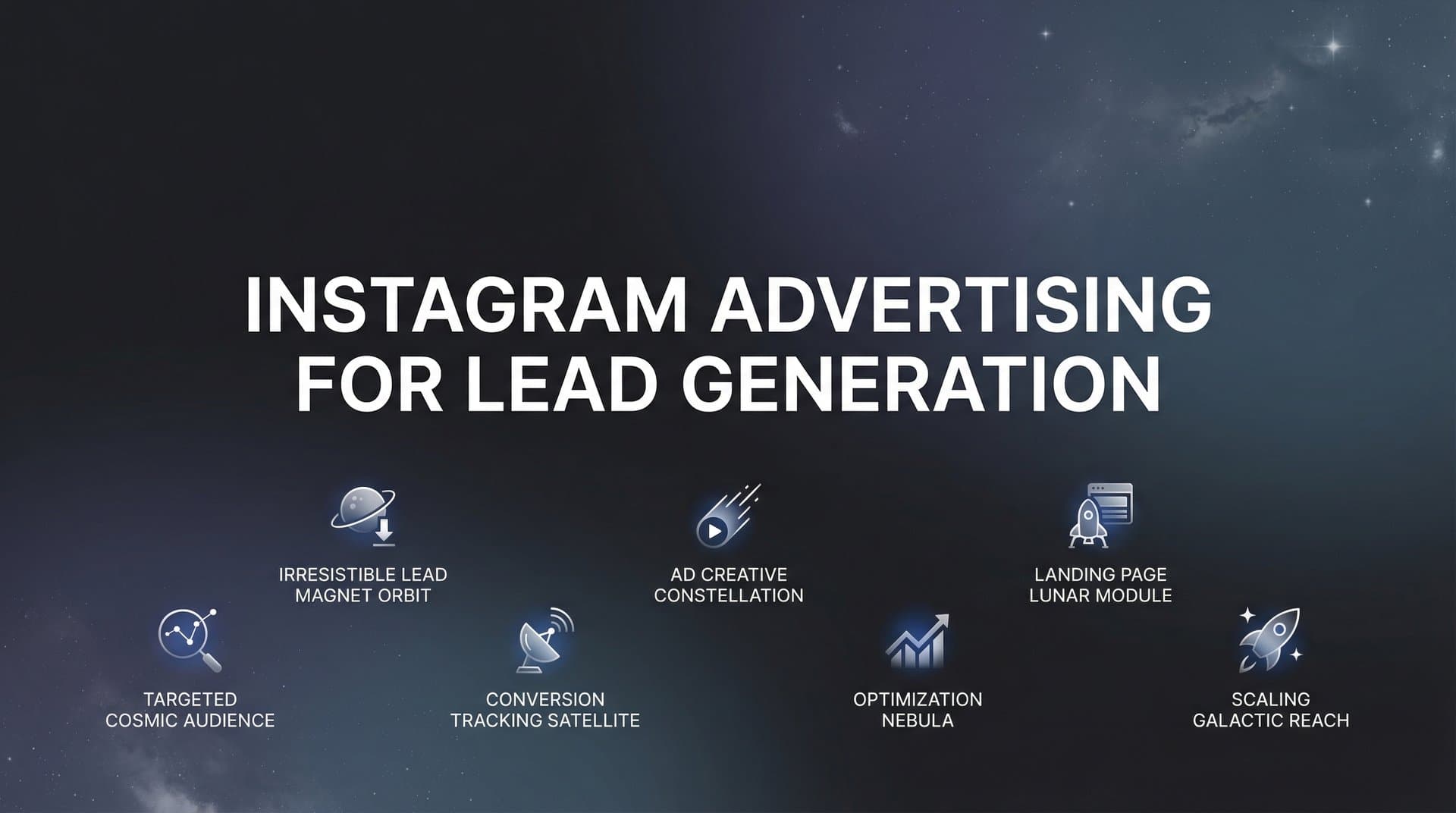
This guide breaks down seven battle-tested strategies that transform Instagram advertising from a brand awareness tool into a lead generation engine. Whether you're running campaigns for an agency client or scaling your own business, these approaches will help you capture high-intent prospects ready to take action.
1. Master Instagram's Native Lead Forms
The Challenge It Solves
Mobile users abandon external landing pages at alarming rates. When your Instagram ad sends someone to a website, you're introducing load times, navigation friction, and the mental barrier of leaving the app. Each of these friction points bleeds potential leads, especially on mobile devices where attention spans measure in seconds.
Instagram's native lead forms eliminate this problem entirely by keeping users inside the app they're already using. No page loads, no new tabs, no "Where's the form?" confusion.
The Strategy Explained
Instagram Lead Ads use Meta's pre-fill functionality to automatically populate form fields with information the platform already knows about users—name, email, phone number, and more. Users simply review the pre-filled information, make any corrections, and submit. The entire process takes seconds.
This approach dramatically reduces the cognitive load and time investment required to become a lead. Instead of typing on a tiny mobile keyboard, users tap twice and they're done. The result? Completion rates that often exceed traditional landing page forms by significant margins.
The key is designing forms that balance information gathering with user patience. Request only what you absolutely need for follow-up. Every additional field decreases completion rates, so prioritize ruthlessly.
Implementation Steps
1. Create a new campaign in Meta Ads Manager and select "Lead generation" as your objective, then choose Instagram as your placement.
2. Design your lead form with a clear headline explaining the value proposition, then select which fields to include—start with just name and email for maximum completion rates.
3. Add a custom question if you need to qualify leads (budget range, timeline, specific interest), but limit yourself to one additional question maximum.
4. Set up instant download of leads through Meta's API or integrate with your CRM using native connections to ensure immediate follow-up.
5. Create a compelling thank-you screen that sets expectations for next steps and includes a website link for users who want to learn more immediately.
Pro Tips
Test different custom questions to find the balance between lead quality and quantity. A budget qualifier might reduce volume but dramatically improve lead quality. Also, respond to new leads within five minutes whenever possible—speed-to-contact directly correlates with conversion rates. Consider using automation tools to trigger immediate email sequences or Slack notifications when new leads arrive.
2. Build Story Ads That Stop the Scroll
The Challenge It Solves
Instagram Stories move fast. Users swipe through content at lightning speed, and ads that look like traditional advertisements get skipped instantly. The vertical, full-screen format demands creative that feels native to the experience rather than interrupting it.
Standard horizontal ads or repurposed content from other platforms stick out like a sore thumb in Stories, triggering immediate skip reflexes. You need creative specifically designed for how people actually use Stories.
The Strategy Explained
Effective Story ads mimic organic content in format while delivering strategic messaging. Think vertical video shot on mobile devices, user-generated content aesthetics, and interactive elements that encourage engagement. The goal is to create a pattern interrupt that feels like discovery rather than advertising.
Strong hooks in the first second are non-negotiable. Use motion, bold text overlays, or unexpected visuals to stop the thumb mid-swipe. Then deliver value quickly—you have maybe three seconds to communicate why someone should care before they move on.
Interactive elements like polls, quizzes, or swipe-up prompts (now "See More" links) transform passive viewers into active participants. This engagement signals quality to Instagram's algorithm while simultaneously qualifying interest.
Implementation Steps
1. Shoot or source vertical video content (9:16 aspect ratio) that looks native to Stories—think mobile-first, not production studio polished.
2. Add a text hook in the first frame that immediately communicates value or creates curiosity, using large, readable fonts designed for mobile viewing.
3. Include a clear call-to-action around the 3-5 second mark, using language that creates urgency without feeling pushy ("Swipe up to claim your guide" works better than "Learn more").
4. Test interactive stickers like polls or quizzes to boost engagement rates, which can improve your ad delivery and reduce costs over time.
5. Create multiple variations testing different hooks, visual styles, and CTAs to identify what resonates with your specific audience.
Pro Tips
User-generated content or testimonial-style videos often outperform polished brand content in Stories because they feel authentic. Consider running campaigns asking customers to share their experiences, then use that content (with permission) in your ads. Also, test adding captions to all video content—many users watch Stories with sound off, and captions ensure your message lands regardless. For optimal visual impact, ensure you're using the best size for Instagram photos and videos across all your creative assets.
3. Deploy Lookalike Audiences From Best Customers
The Challenge It Solves
Cold targeting based on interests and demographics casts a wide net that captures many wrong-fit prospects alongside your ideal customers. You end up paying for clicks and leads from people who will never convert into paying customers, wasting budget on unqualified traffic.
The fundamental problem is that demographic and interest targeting relies on assumptions about who your customers are, rather than actual data about who they really are. These assumptions are often wrong or incomplete.
The Strategy Explained
Lookalike audiences use Meta's machine learning to find Instagram users who share characteristics with your best existing customers or leads. You provide a source audience of known high-value contacts, and Meta's algorithm analyzes hundreds of data points to identify similar users across the platform.
The quality of your source audience directly determines the quality of your lookalike. A list of your top 20% customers by lifetime value will generate far better results than a list of all email subscribers. The more specific and high-quality your seed audience, the more precise Meta's matching becomes.
Start with smaller lookalike percentages (1-2%) for the closest matches, then expand to larger percentages (3-5%) as you scale. Smaller percentages target users most similar to your source, while larger percentages broaden reach at the cost of precision.
Implementation Steps
1. Export your best customer data (email addresses and phone numbers) from your CRM, focusing on customers who have purchased multiple times or have high lifetime value.
2. Create a Custom Audience in Meta Ads Manager by uploading this customer list, ensuring you have at least 100 contacts for effective matching.
3. Build a 1% lookalike audience from this Custom Audience, selecting your target country or region for the lookalike expansion.
4. Create a separate ad set targeting this lookalike audience with messaging that speaks to the problems your best customers came to you to solve.
5. Monitor performance for at least a week, then create additional lookalike percentages (2%, 3%, 5%) to test broader reach while maintaining quality.
Pro Tips
Create multiple source audiences based on different customer behaviors—one from purchasers, another from high-engagement leads who haven't bought yet, and a third from customers who purchased specific products. Test lookalikes from each to see which generates the best lead quality for your specific goals. Also, refresh your lookalike audiences quarterly as your customer base evolves to ensure targeting stays current. For a deeper dive into audience targeting strategies, explore automated targeting for Instagram ads to streamline this process.
4. Create Carousel Ads That Educate and Qualify
The Challenge It Solves
Single-image ads force you to communicate everything in one frame, which often means either overwhelming viewers with information or oversimplifying your value proposition. Complex products or services struggle to convey their benefits in a single static image, leading to unqualified clicks from people who don't understand what you're offering.
This mismatch between what you're selling and what prospects expect creates friction throughout your funnel. You pay for clicks that go nowhere because the ad didn't properly set expectations.
The Strategy Explained
Carousel ads let you tell a story across multiple cards, with each card building on the previous one. This format allows progressive disclosure—introducing concepts sequentially rather than all at once. You can use early cards to hook attention and establish context, middle cards to demonstrate value or explain features, and final cards to deliver a strong call-to-action.
The sequential nature also acts as a self-qualification mechanism. Users who swipe through multiple cards are demonstrating higher interest than those who scroll past after one image. By the time someone reaches your final card with the CTA, they've invested attention and are more likely to convert.
Each card should work independently while contributing to the overall narrative. Users might enter your carousel at any card, so avoid strict dependencies where card three makes no sense without card one.
Implementation Steps
1. Map out a 3-5 card story structure starting with a pattern-interrupt hook, followed by benefit-focused cards, and ending with a clear call-to-action.
2. Design each card with a single focal point—one image, one headline, one key message per card to avoid visual overwhelm.
3. Use the first card to address the core problem your audience faces, making it immediately relevant and swipe-worthy.
4. Dedicate middle cards to demonstrating specific benefits or features, using before/after comparisons, customer results, or step-by-step processes.
5. End with a strong CTA card that summarizes the value proposition and tells users exactly what action to take next.
Pro Tips
Test different card orders—Meta's algorithm can automatically optimize card sequence based on performance, showing the highest-performing card first to each user. Also, consider using the final card as a lead magnet offer rather than a direct sales pitch. A valuable free resource (guide, template, audit) can generate higher-quality leads than asking for a demo or purchase in the first interaction. An AI ad builder for Instagram campaigns can help you rapidly create and test multiple carousel variations to find winning combinations faster.
5. Implement Retargeting Sequences
The Challenge It Solves
Most prospects aren't ready to become leads on first exposure to your brand. They need multiple touchpoints to build trust, understand your value proposition, and reach a decision point. Relying solely on cold traffic campaigns means constantly paying to reach new people while ignoring the warm audience that already knows you exist.
This approach leaves money on the table. Users who engaged with your content, visited your website, or watched your videos have already demonstrated interest—they just need nurturing to convert.
The Strategy Explained
Retargeting sequences create a multi-touch journey that meets prospects where they are in the buying process. Someone who watched 75% of your video receives different messaging than someone who visited your pricing page but didn't convert. This segmentation allows you to deliver increasingly specific, relevant messages as prospects demonstrate deeper interest.
The key is building Custom Audiences based on specific engagement behaviors, then creating ad campaigns tailored to each segment. Your messaging becomes more direct and conversion-focused as audience warmth increases. Top-of-funnel retargeting might focus on education and value demonstration, while bottom-of-funnel retargeting addresses specific objections or offers incentives.
Sequential retargeting also allows you to tell longer stories. Card one introduces a concept, card two (shown days later) goes deeper, card three addresses objections, and card four delivers the conversion ask. This spacing prevents ad fatigue while building familiarity.
Implementation Steps
1. Create Custom Audiences for different engagement levels: video viewers (25%, 50%, 75%, 95%), website visitors by page, Instagram profile visitors, and lead form openers who didn't submit.
2. Build a campaign structure with separate ad sets for each retargeting audience, allowing different budgets and creative for each segment.
3. Design creative that acknowledges previous engagement—"You watched our video about X, here's what happens next" feels more personal than generic messaging.
4. Set frequency caps (2-3 impressions per week maximum) to prevent ad fatigue while maintaining presence in prospects' feeds.
5. Exclude converted leads from retargeting campaigns immediately to avoid wasting budget showing lead generation ads to people who already submitted forms.
Pro Tips
Create exclusion audiences to prevent message overlap. If someone is in your "visited pricing page" audience, exclude them from your "watched video" retargeting to ensure they see the more relevant, higher-intent messaging. Also, test offering different lead magnets to retargeting audiences than you show cold traffic—case studies or comparison guides often work better for warm audiences than introductory content. Understanding advertising cost on Instagram helps you allocate budget effectively between cold prospecting and retargeting campaigns.
6. Leverage Reels Ads for Top-of-Funnel
The Challenge It Solves
Traditional Feed ads often come with higher costs as competition for placement increases. Meanwhile, your retargeting audiences can only grow as large as your top-of-funnel awareness campaigns allow. Without consistent new prospect flow, your entire funnel stagnates regardless of how well your conversion campaigns perform.
You need cost-effective ways to introduce your brand to new audiences at scale, building the awareness that feeds your entire lead generation system.
The Strategy Explained
Reels placement offers competitive CPMs because Meta is aggressively promoting the format to compete with TikTok. This creates an opportunity for advertisers willing to create native-feeling Reels content. The full-screen, immersive format captures attention differently than Feed ads, and the algorithm often delivers broader reach at lower costs.
The strategy isn't to generate leads directly from Reels—though it can happen—but to efficiently build awareness and engagement that feeds your retargeting sequences. A user who watches your Reel enters your retargeting audience, where you can nurture them with more conversion-focused messaging over time.
Reels ads work best when they prioritize entertainment or education over direct selling. The format rewards content that feels native to the Reels experience: quick cuts, trending audio, hook-driven storytelling, and value delivered in under 30 seconds.
Implementation Steps
1. Create short-form vertical video content (15-30 seconds) that leads with a strong hook addressing a specific pain point or curiosity gap.
2. Use trending audio when relevant to your message—Reels with popular audio often receive algorithmic boosts in distribution.
3. Add captions to ensure your message lands even when sound is off, and use on-screen text to reinforce key points.
4. Set up a traffic or video views campaign optimized for reach and engagement rather than immediate conversions, keeping costs low.
5. Create Custom Audiences of users who watched 50% or more of your Reels, then retarget them with conversion-focused campaigns.
Pro Tips
Test both educational content (how-to tips, industry insights) and pattern-interrupt content (surprising statistics, myth-busting, contrarian takes) to see what drives the most engagement with your target audience. Also, consider creating Reels series where each video ends with a teaser for the next, encouraging users to follow your account and increasing the chances they'll see your retargeting ads as familiar rather than intrusive. For brands looking to systematize this approach, an Instagram campaign builder for brands can streamline the creation and management of multi-format campaigns.
7. Scale Winners With AI-Powered Automation
The Challenge It Solves
Manual campaign management becomes a bottleneck as you scale. Testing different audiences, creative variations, and messaging combinations requires building dozens of ad sets, monitoring performance, identifying winners, and launching new variations. This process consumes hours of time and often introduces delays that cost money—winning combinations sit unscaled while you're busy building the next test.
The sheer volume of data makes it difficult to spot patterns quickly. By the time you manually identify that a specific creative performs best with a particular audience segment, you've already spent budget on underperforming combinations.
The Strategy Explained
AI-powered advertising platforms analyze performance data across all your campaigns to identify winning patterns—which creatives drive the best results, which audiences convert most efficiently, which headlines generate the highest click-through rates. Then they automatically generate and launch new campaign variations that combine these winning elements.
This automation transforms testing from a linear process into a parallel one. Instead of testing one variable at a time over weeks, AI systems can test multiple combinations simultaneously and scale winners immediately. The continuous learning loop means each campaign informs the next, with the system getting smarter about what works for your specific business over time.
The key advantage isn't just speed—it's the ability to spot non-obvious patterns humans might miss. AI can identify that a particular creative works exceptionally well with a specific lookalike audience but underperforms with others, then automatically create campaigns exploiting that insight. Leveraging AI for Instagram advertising campaigns allows you to scale testing and optimize performance around the clock.
Implementation Steps
1. Connect your advertising accounts to an AI platform that integrates directly with Meta's API for real-time data access and campaign management.
2. Feed the system historical performance data so it can identify existing patterns in what's worked for your campaigns in the past.
3. Define your conversion goals and key performance metrics so the AI knows what "winning" means for your specific business objectives.
4. Review AI-generated campaign recommendations and rationale to understand why certain combinations are being suggested before launching.
5. Monitor performance dashboards that surface insights about which elements are driving results, using this intelligence to inform your broader strategy.
Pro Tips
Start by using AI to scale proven winners rather than exploring entirely new approaches. Let the system identify your top 20% of creative and audience combinations, then deploy it to create variations and scale those winners before expanding into new territory. Also, use the AI's performance insights to inform your creative production—if the system consistently identifies that certain visual styles or messaging angles outperform others, create more assets in those directions. Agencies managing multiple accounts should explore Instagram advertising tools for agencies designed specifically for multi-client workflows.
Putting It All Together
Effective Instagram advertising for lead generation requires a systematic approach that moves beyond hoping for results. Native lead forms reduce friction at the conversion point. Story and Reels ads capture attention in the formats where users are most engaged. Lookalike audiences ensure you're reaching prospects who actually match your best customers. Carousel ads educate and qualify before prospects even click. Retargeting sequences nurture warm audiences toward conversion. And AI-powered automation helps you identify and scale what's working faster than manual management ever could.
The brands winning at Instagram lead generation aren't just creative—they're systematic about testing, learning, and scaling what works. Start by implementing one strategy fully before adding complexity. Master native lead forms before building elaborate retargeting sequences. Prove you can generate quality leads from one audience before expanding to five.
For teams managing multiple campaigns or agencies handling numerous clients, speed becomes a competitive advantage. The faster you can identify winning combinations and scale them, the more efficiently you capture leads before competitors saturate your audiences. Start Free Trial With AdStellar AI and be among the first to launch and scale your ad campaigns 10× faster with our intelligent platform that automatically builds and tests winning ads based on real performance data. Seven specialized AI agents analyze your top-performing creatives, headlines, and audiences—then build, test, and launch new variations for you at scale, transforming weeks of manual work into minutes of strategic oversight.