So, you’re wondering what it really costs to advertise on Instagram? While there's no single price tag, the numbers we see in the wild give us a solid starting point. On average, you can expect a cost-per-click (CPC) to hover around $1.42, with the cost-per-thousand-impressions (CPM) landing closer to $9.68.
Think of these figures as a baseline—the ground floor from which your actual costs will either climb or fall.
Breaking Down Your Potential Instagram Ad Spend
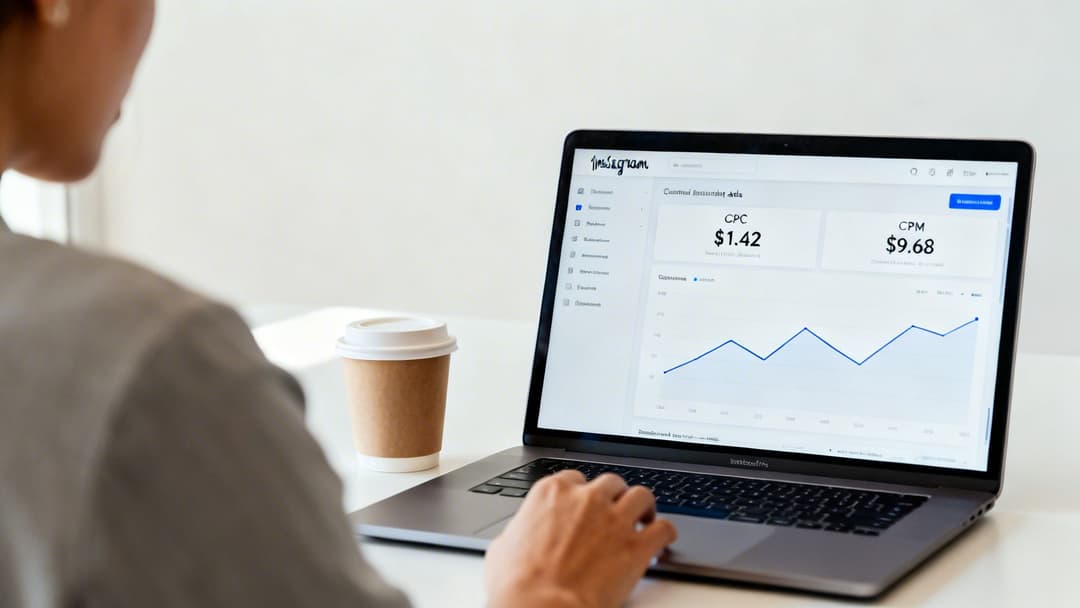
It’s best to think of Instagram’s ad system less like a fixed menu and more like a live auction floor. The price you ultimately pay is always in flux, shifting based on who you're trying to reach, when you're reaching them, and just how good your ad actually is.
This guide will walk you through the key benchmarks you need to know. More importantly, we'll unpack the specific factors you can actually control to squeeze the most value out of every single dollar you spend.
Mastering these variables is what separates simply spending money from making smart, strategic investments that drive a real, measurable return. It’s not about just paying for ads; it's about learning to work the auction to your advantage.
To get started, let's put some of the most common metrics into a quick-reference table. This will give you a bird's-eye view of what to expect before we dive into the details.
Instagram Advertising Cost Benchmarks at a Glance
This table provides a quick summary of average costs for different Instagram advertising metrics, helping marketers set baseline expectations for their campaigns.
| Metric | Average Cost Range | Notes for Performance Marketers |
|---|---|---|
| Cost Per Click (CPC) | $0.50 – $3.00+ | Varies wildly based on audience competition. Highly targeted, high-intent audiences will be on the pricier end. |
| Cost Per Mille (CPM) | $7.00 – $15.00+ | This is your "cost of entry." Higher in competitive markets like North America and for premium placements like the main Feed. |
| Cost Per Action (CPA) | $10.00 – $50.00+ | Highly dependent on the action's value (e.g., a newsletter sign-up vs. a high-ticket purchase). Your creative and landing page have a huge impact here. |
| Cost Per Lead (CPL) | $5.00 – $25.00+ | For lead gen campaigns, this is your north star. Cost is influenced by the perceived value of your offer and the friction in your sign-up form. |
These numbers are a great starting point, but they're just averages. Your own results will depend entirely on your strategy, industry, and execution. Let's look at the data behind these benchmarks.
Key Cost Benchmarks to Know
The cost of advertising on Instagram isn't static; it's been on a steady upward climb. Recent data shows the average CPC has hit $1.42, a noticeable jump from last year's $1.30. In the same vein, the global CPM has climbed to $9.68, which is an 11% increase year-over-year. You can dig into the numbers yourself in this detailed statistical report.
Of course, these costs also swing pretty dramatically depending on where you're advertising and what kind of ad you're running.
- Regional Differences: If you're targeting North America, get ready to pay a premium. The average CPM there is $12.97, with Western Europe not far behind at $11.45.
- Format Impact: It's no surprise that video ads cost more upfront, with a CPM of $10.55 compared to $8.91 for static images. But don't let that scare you—they often crush static images when it comes to driving actual conversions.
Understanding these benchmarks is crucial. They aren't just numbers on a screen; they are signals from the market that reflect competition and user behavior. Use them to set realistic expectations for your own campaigns.
By getting a handle on these initial figures, you're in a much better position to dive into the nuts and bolts of Instagram advertising. From here on out, we'll explore how you can influence these costs and build a budget that lines up perfectly with your business goals.
Understanding the Metrics That Define Your Ad Spend
To get a handle on your Instagram ad costs, you first have to speak the platform's language. The entire ad auction is built on a few key metrics, and knowing them isn't just a technicality—it's the core of your strategy.
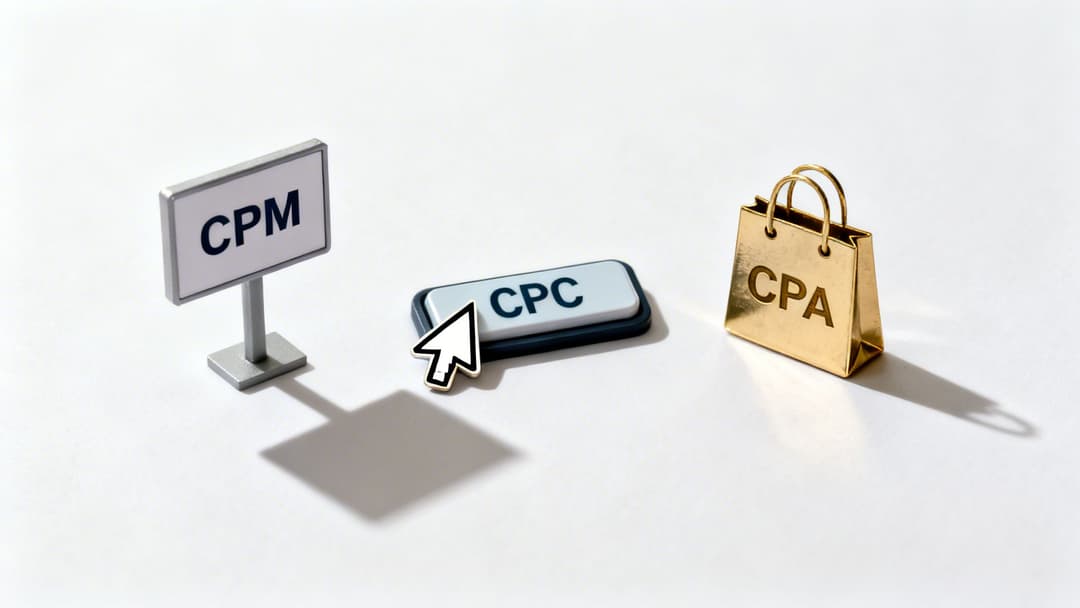
Think of it like buying a billboard on a busy highway. You could pay for every thousand cars that drive by (Cost Per Mille or CPM), which guarantees eyeballs. A more focused approach is to pay only when a driver actually slows down to read your sign (Cost Per Click or CPC), signaling real interest.
But the real game-changer? Paying only when a driver pulls off at the next exit and walks into your store (Cost Per Action or CPA). That’s a results-driven model, tying every dollar you spend directly to a real outcome.
The Core Three Pricing Models
Each of these models lines up with a different business goal, whether you're chasing broad awareness or direct sales. Picking the right one is your first move toward building a predictable and profitable ad machine.
Cost Per Mille (CPM): This is what you pay for every 1,000 impressions (views). It’s the go-to for brand awareness campaigns where the name of the game is getting your ad in front of as many relevant people as possible.
Cost Per Click (CPC): Here, you pay every time someone clicks on your ad. This is perfect for driving traffic to a landing page or blog post because a click shows a much higher level of intent than a simple view.
Cost Per Action (CPA): To really dial in your Instagram ad costs, you need to master what is Cost Per Acquisition (CPA) and what it means for your budget. This is where you only pay when a user completes a valuable action—making a purchase, signing up for a newsletter, or downloading your app. It's pure performance.
Key Takeaway: Your campaign objective dictates your pricing model. Awareness goals lean on CPM, traffic goals use CPC, and conversion goals are measured by CPA. Aligning these is non-negotiable for an efficient ad spend.
Tying Metrics to Your Budget
The beauty of Instagram ads is their flexibility. It can be surprisingly cost-effective, especially for engagement. For instance, the cost per engagement (CPE) for actions like likes and comments can be as low as $0.01 to $0.05.
When you want someone to visit your website, clicks (CPC) typically run between $0.50 to $0.95. Meanwhile, baseline impressions (CPM) can start around $2, but expect that to climb toward $5 to $10 for premium placements like Reels.
Ultimately, these numbers are all connected. A great ad with a high click-through rate will lower your CPC. A landing page that converts like crazy will bring down your CPA. Mastering these metrics is how you figure out your true ROI and start making your ad spend work for you. You can learn more about how to connect your ad spend to real-world profits by reading our guide on what is Return On Ad Spend.
The Key Factors That Actually Influence Your Ad Costs
Ever wonder why your ad costs swing wildly from one week to the next? It's not random. The advertising cost on instagram is decided by a live, dynamic auction where Meta’s algorithm is constantly weighing several key variables. Mastering these factors is how you shift from simply spending money to making strategic investments.
The auction doesn't just reward the highest bidder; it rewards the advertiser who provides the most value to the user. Think of it like a popularity contest where your ad’s quality and relevance matter just as much as your budget. Let's break down the main drivers that actually set the price you pay.
Your Audience Targeting
This is arguably the biggest cost driver. Are you targeting a broad, general audience or a hyper-specific niche?
- Broad Audiences: Targeting millions of users is often cheaper on a CPM basis, but it can lead to a lot of wasted spend and lower conversion rates. You pay less for eyeballs, but they're less likely to be the right ones.
- Niche Audiences: Zeroing in on a small group of high-intent users (like a Lookalike Audience from your best customers) is far more competitive, and therefore, more expensive. You pay a premium for that precision because these users are much more likely to convert.
The real skill is finding the sweet spot between reach and relevance. Starting broad with Meta's Advantage+ audience tools can help you discover pockets of opportunity before you start narrowing your focus.
Ad Placements and Formats
Where your ad appears on the platform—whether it's the Feed, Stories, Reels, or the Explore page—directly impacts its cost. Some placements are just more premium real estate than others. A prominent spot in the main Feed, for instance, is usually more competitive than an ad in the Explore tab.
Pro Tip: Don't just assume the most expensive placement is the best one for you. Reels, for example, can often deliver incredibly efficient results thanks to their engaging, full-screen format. Letting Meta’s algorithm run with Advantage+ placements is a great way to discover which spots deliver the lowest cost for your specific objective. For more details, learn about the impact of different placements in advertising in our full guide.
Ad Quality and Relevance Score
Meta cares deeply about the user experience. If your ad is high-quality, engaging, and genuinely relevant to your audience, the algorithm will actually reward you with lower costs. It measures this through engagement rates (likes, comments, shares) and what’s known as a relevance score.
An ad with a high click-through rate (CTR) signals to the algorithm that users find it valuable, so Meta will show it to more people for less money. On the flip side, a poor-quality ad gets penalized with higher costs and its reach gets throttled.
Seasonality and Competition
The ad auction is a marketplace, pure and simple. That means prices are driven by supply and demand, and they definitely fluctuate throughout the year.
For example, costs skyrocket during Q4 when every brand is fighting for attention during the Black Friday and holiday shopping frenzy. In contrast, you might find costs dip in the middle of summer. Smart marketers plan for these spikes and use the quieter periods for testing and learning when it's cheaper to do so.
Your Bidding Strategy
Your bidding strategy is your instruction to Meta on how to spend your money. Choosing "Highest Volume" (what used to be called Lowest Cost) tells the algorithm to get you the most results possible within your budget, but your costs can be unpredictable.
Setting a "Cost Per Result Goal," on the other hand, gives you more control over your CPA. The catch is that it might limit your ad's reach if your target is too low for the auction to win placements. Testing both strategies is the only way to find the right balance between cost-efficiency and scale for your campaign goals.
How to Build a Realistic Instagram Ads Budget
Let’s get one thing straight: throwing a random number at your Instagram ad spend is just guesswork. To build a budget you can actually count on—and defend to your boss—you need to stop thinking about ad spend as an expense and start treating it as a calculated investment.
The best way to do this is to work backward. It all starts with a single, concrete business goal. Do you need 50 new customers this month? Great. That number is now the anchor for every calculation we’re about to make. We're turning the abstract question of "how much should I spend?" into a data-driven answer.
Start With Your Goal and Work Backward
Forecasting a budget doesn't have to be complicated. Once you know your target, you can plug your own business metrics into a simple formula to get a surprisingly accurate estimate. The key is knowing how well your website already converts visitors into paying customers.
Of course, several moving parts influence the costs in this formula, like your audience targeting, ad placements, and the overall quality of your ads. Each piece of the puzzle directly impacts the final price you pay.
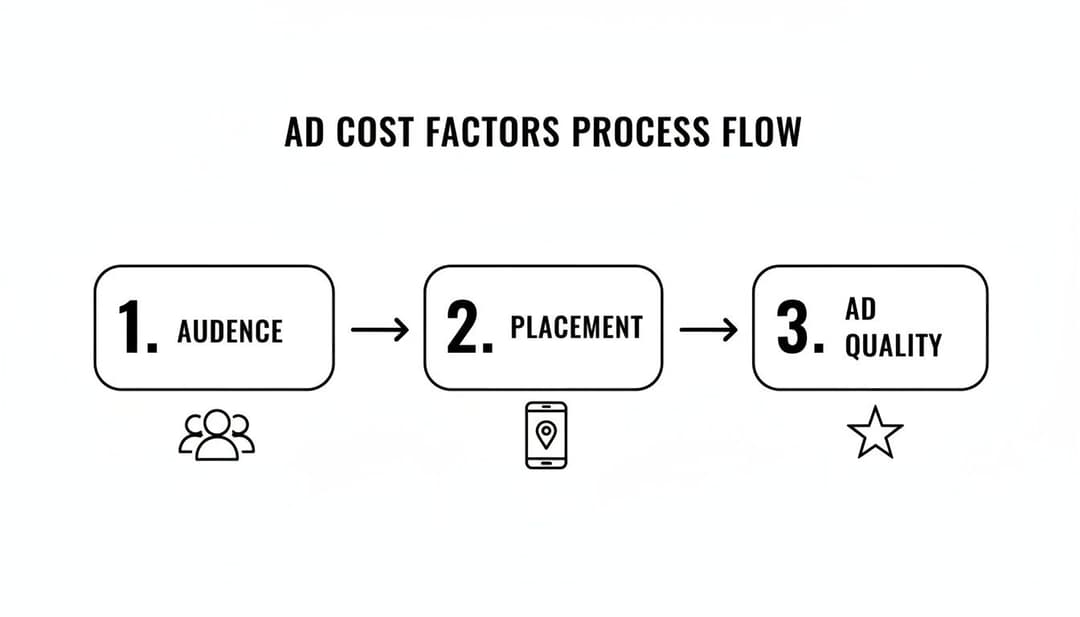
Optimizing all three is the secret to keeping your campaign costs down.
Now, let's put this into practice with a simple calculation. To create a data-backed budget, we need a few key numbers: our target sales goal, our website's conversion rate, and our estimated Cost Per Click (CPC).
Here is a step-by-step model that breaks down how you can forecast your own budget based on a specific business goal.
Sample Instagram Ad Budget Calculation Model
| Step | Calculation Element | Example Value | Formula / Rationale |
|---|---|---|---|
| 1 | Define Your Goal | 50 New Customers | Start with a specific, measurable outcome. This is your target. |
| 2 | Identify Website Conversion Rate | 2% (or 0.02) | Found in Google Analytics. This tells you what percentage of visitors become customers. |
| 3 | Estimate Your Average CPC | $1.50 | Based on industry benchmarks or your own historical campaign data. |
| 4 | Calculate Clicks Needed | 2,500 Clicks | Goal / Conversion Rate (50 / 0.02) = 2,500 |
| 5 | Calculate Total Budget | $3,750 | Clicks Needed x Avg. CPC (2,500 x $1.50) = $3,750 |
Based on this model, you'd need to budget approximately $3,750 to hit your goal of 50 new customers. This reverse-engineered approach provides a solid foundation for your spending and connects every dollar directly to a performance outcome.
For a deeper look into planning your finances, check out our complete guide on effective marketing budget allocation.
Dedicate a Budget for Testing
A smart budget doesn't just fund what you know works—it also funds the discovery of what will work next. This is where a dedicated testing budget comes in. Set aside 10-20% of your total spend for pure experimentation.
Think of this as your innovation fund. It’s where you get to test new creative, try out different audience segments, and play with fresh ad copy without messing with the performance of your core, money-making campaigns.
While your main budget is busy driving immediate results with proven winners, your testing budget is hunting for the next round of winners. It’s a small investment that fights off ad fatigue and continuously uncovers cheaper, more efficient ways to get customers. In the long run, it's what will drive your advertising costs down.
Tried-and-True Tactics to Lower Your Instagram Ad Costs
Knowing what drives your Instagram ad costs is one thing, but actually controlling those costs is where the magic happens. This is where a smart strategy translates directly into real savings. Seasoned performance marketers don’t rely on guesswork; they have a specific playbook to drive down costs while scaling up results, making sure every dollar is working as hard as it possibly can.
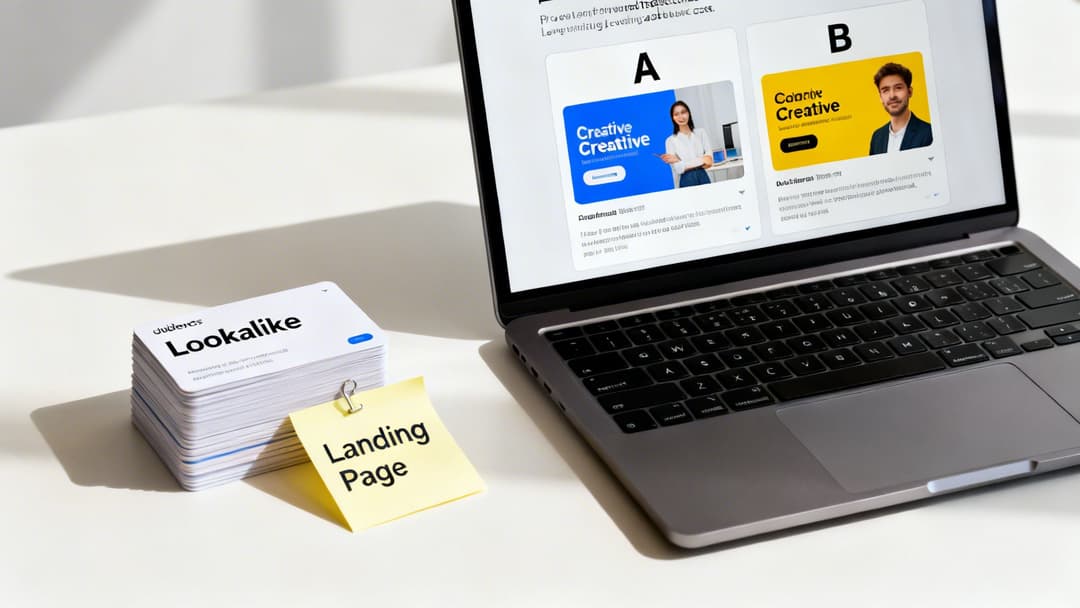
These aren’t complex, gatekept secrets. They're disciplined practices that give you a consistent edge in the ad auction. By focusing on a few key areas—your audience, your creative, and what happens after the click—you can systematically cut the waste and boost your return on ad spend (ROAS).
Refine Your Targeting with High-Value Audiences
The quickest way to slash your costs is to stop showing ads to the wrong people. Simple, right? While broad targeting has its moments, precision is what drives profitability. This means getting beyond basic interest targeting and tapping into your own first-party data to build powerful, high-intent audiences.
- Custom Audiences: Start by uploading your customer lists, website visitor data, or a list of users who have engaged with your Instagram profile. These are warm audiences who already know your brand, making them much, much cheaper to convert.
- Lookalike Audiences: Once you have a solid Custom Audience (think your top 10% of customers by lifetime value), you can ask Meta to find millions of new users who share their traits. A 1% Lookalike audience is an incredible tool for finding your next best customers with uncanny accuracy.
Implement Rapid and Continuous A/B Testing
Your ad creative is the single biggest lever you can pull to improve performance. Seriously. Even a tiny improvement in your click-through rate (CTR) can have a massive ripple effect, dramatically lowering your CPC and CPA. The only way to find those winning ads is to test everything, all the time.
Don't just test one or two variations and call it a day. A real testing framework means iterating on multiple elements at once.
- Test Different Hooks: Try opening with a question, a bold statistic, or a raw, user-generated content (UGC) style video in the first three seconds.
- Vary Your Creative Formats: Pit a static image against a carousel and a Reel. You might be surprised which format your audience actually prefers.
- Experiment with Ad Copy: Test long-form, story-driven copy against short, punchy, direct calls to action. See what sticks.
The whole point of A/B testing isn't just to find one "winner." It's to build a continuous learning system that constantly surfaces new insights. This keeps ad fatigue from creeping in and driving your costs sky-high. This proactive approach is fundamental if you want to lower your overall customer acquisition cost.
Trust the Algorithm with Automatic Placements
It’s tempting to micromanage your placements, hand-picking only the spots you think will perform best, like the main Feed or Stories. But this often backfires. You end up limiting your reach and forcing yourself to compete in the most crowded and expensive auctions.
Instead, select Advantage+ Placements (what used to be called Automatic Placements). This gives Meta’s algorithm the freedom to find the cheapest impressions for your goal across its entire network. The system is shockingly good at sniffing out pockets of low-cost inventory in places you’d never think to look, like the Audience Network or Facebook Marketplace, which ultimately drives down your overall CPM.
While you're optimizing your paid campaigns, some brands also look at more direct ways to grow their presence, like the option to buy Instagram followers, viewing it as another form of investment into their platform growth.
Optimize Your Landing Page Experience
Finally, remember that your ad is only half the journey. You can have the best, most compelling ad in the world, but if it sends people to a slow, confusing, or clunky landing page that isn't mobile-friendly, your conversion rate will crater. When that happens, your CPA will inevitably skyrocket.
Your post-click experience is just as important as your ad creative. For a deeper dive on this, learn more about how to reduce customer acquisition cost in our dedicated guide.
Common Questions About Instagram Ad Costs
Even when you have a solid strategy mapped out, specific questions about your advertising cost on Instagram always pop up. The day-to-day reality of managing a live ad budget means you’re constantly making quick, informed decisions. Let's tackle some of the most common—and pressing—questions marketers face when putting real money on the line.
Having clear, actionable answers ready helps you navigate the inevitable bumps in the road, whether it's setting an initial daily budget or figuring out why your costs just shot up overnight. This is the kind of practical knowledge that turns good marketers into great ones.
What Is a Good Daily Budget for Instagram Ads?
There's no magic number here, but a great starting point for testing a brand-new campaign is $20 to $50 per day.
Why that range? It's generally enough to feed the algorithm the data it needs to start finding your audience, but it won’t burn a hole in your pocket while you're still figuring things out. You can gather meaningful performance data without taking on a huge upfront risk.
The first major goal is to get at least 50 conversions per ad set, per week. Hitting this number helps you escape the dreaded "learning phase" much faster, where performance can feel frustratingly unstable. Once you've identified a winning ad set with a positive return, you can start scaling that budget with confidence.
A "good" budget isn't a fixed dollar amount. It's a number that's sustainable for your business while being large enough to let the algorithm do its job effectively.
Why Did My Instagram Ad Costs Suddenly Increase?
A sudden, scary spike in your ad costs almost always comes down to one of three culprits: ad fatigue, a surge in competition, or an algorithm reset. Each one can throw a wrench in a perfectly stable campaign, but they all have solutions.
Here's how to figure out what's going on:
- Ad Fatigue: This is the classic one. Your audience has simply seen your ad too many times. They start ignoring it, engagement drops, the algorithm penalizes you, and your costs climb. The fix? Constantly refresh your creatives to keep your message feeling new and interesting.
- Increased Competition: The ad auction is all about supply and demand. During peak seasons like Black Friday or other major holidays, more advertisers jump into the auction, driving up prices for everyone.
- Algorithm Changes: Sometimes, even a small tweak to your targeting, creative, or bid strategy can hit the reset button on the algorithm's learning process. This can cause a temporary cost increase as it recalibrates and finds its footing again.
You can get a better sense of how all the pieces of an ad fit together by checking out our guide on what are impressions on Instagram.
Is the Lowest Cost Bidding Strategy a Waste of Money?
Not at all—but you absolutely have to know when to use it. The "Lowest Cost" bidding strategy (which Meta now often calls "Highest Volume") is built to do one thing: spend your entire budget to get the maximum number of results possible. It’s fantastic for campaigns where sheer volume is the name of the game.
This strategy really shines when you're testing new audiences or running top-of-funnel campaigns designed to build brand awareness. The downside? It can lead to unpredictable costs per result, which is a major risk for conversion-focused campaigns that live and die by tight profit margins.
For any campaign where you need to maintain a specific Cost Per Action (CPA) to stay profitable, a "Cost Cap" or "Cost Per Result Goal" strategy gives you far more control and predictability. Think of it this way: use "Lowest Cost" for exploration and "Cost Cap" for stable, scalable performance.
Ready to stop guessing and start scaling? AdStellar AI is the AI-powered platform that helps you launch, test, and scale Meta ad campaigns 10x faster, turning your creative ideas into high-performing campaigns with less manual work. Find out how our AI can help you cut waste and maximize your return on ad spend. Discover more at https://www.adstellar.ai.